6 min read

Akiva's Son Stood All Night While His Bride Waited

On his wedding night Rabbi Akiva's son asked for sandals, opened Torah, and left his bride to keep pace until dawn.

Curated by Arthur · Told by Maggid ·
Table of Contents
  1. Sandals on the Wedding Night
  2. A House Where the Heart Goes
  3. The Fool Who Must Inherit
  4. Three Sons and One Will
  5. Goodness Found Before Dawn
Akiva's Son Stood All Night While His Bride Waited Click for full size

Sandals on the Wedding Night

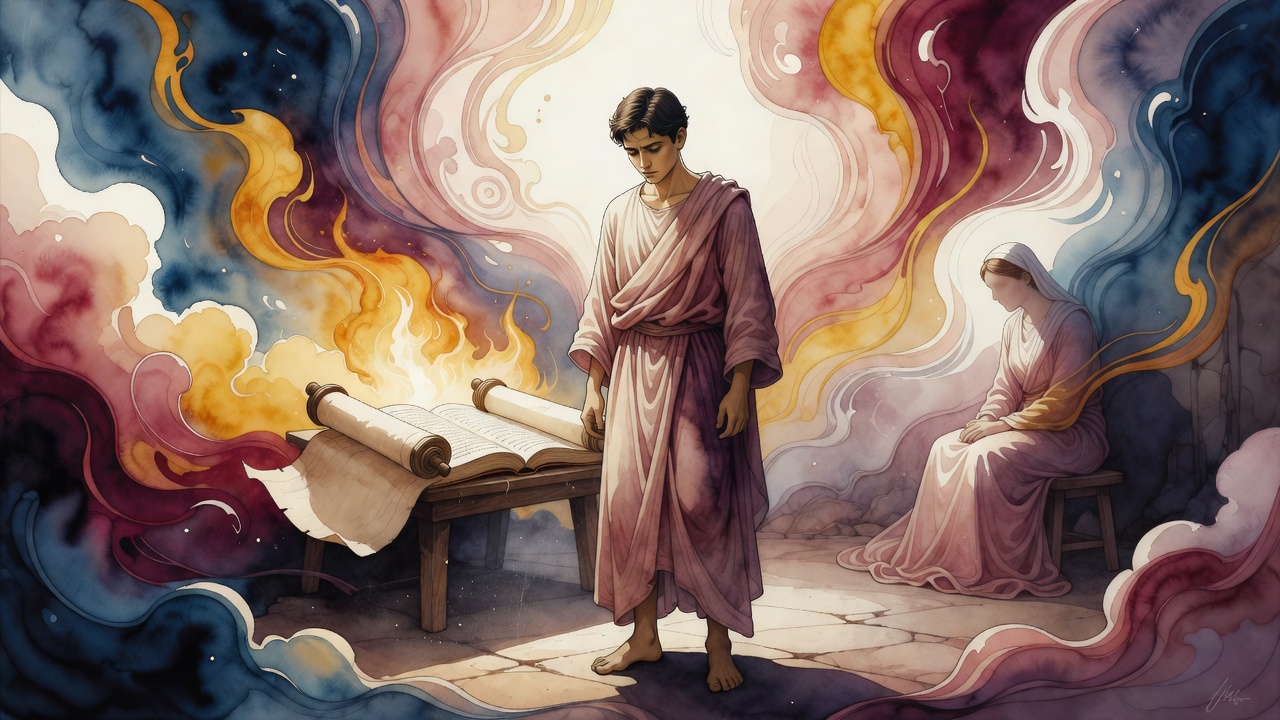
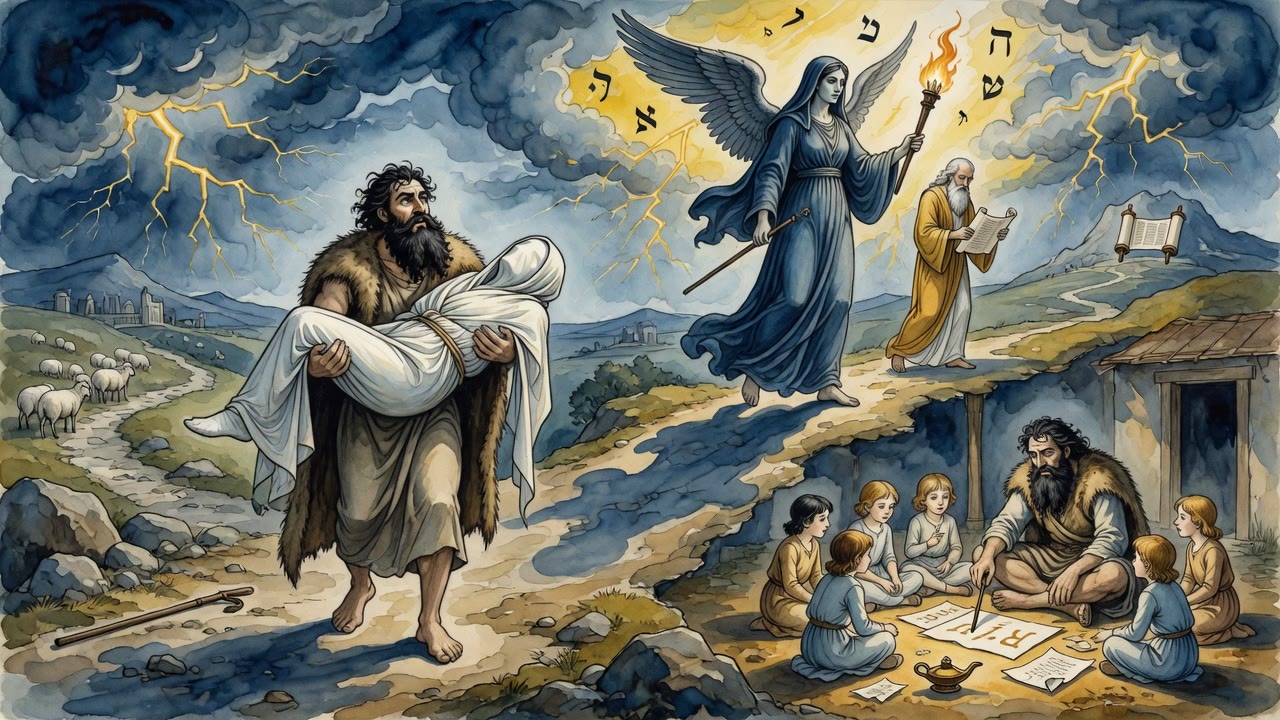
Rabbi Akiva's son stood when the bride entered. The house had been prepared for a feast, the lamps were full, the bed waited behind a curtain, and the guests had already blessed the couple under the canopy. He did not take her hand. He asked for his sandals.

"Grandmother," he said to the young woman who had just become his wife, "bring them."

She brought the sandals. He laced them and opened a scroll. All night he read aloud from the Torah, verse after verse, until the oil in the lamps thinned and the sky over the courtyard went gray. She did not sleep either. She opened a book of her own and read it cover to cover, matching him without a word of complaint. When morning came, Rabbi Akiva found his son and asked the question fathers ask after a first night.

"Did you find something or not?"

"I found something," the son said.

Akiva answered with a proverb older than both of them. "If one finds a wife, he finds goodness." The goodness was not a joke about missed pleasure. It was the strange peace of a house where study had not been abandoned at the door of desire.

A House Where the Heart Goes

Elsewhere the sages had already drawn a fence around moments when speech does harm. Do not try to appease a man in the hour of his anger. Do not comfort a mourner while the dead still lies before him. Do not question a man in the hour of his vow. Do not push into a house on the day of its calamity. Silence can be the only kindness that fits the room.

The wedding night was not anger or mourning. It was another kind of threshold. The son of Akiva chose not to fill the first night with soft words he had not earned. He filled it with Torah, and the bride filled it with her own reading. Their hearts went where their bodies stood. The house learned their rhythm before it learned their laughter.

When a son is born, the older midrash says, peace and provision seem to enter the world with him, because the household of antiquity measured a male child as one who would one day bring bread. The son of Akiva brought a different bread. He brought the loaf of learning, and the bride measured herself against it rather than against the bed. The room held two kinds of hunger, and both were fed without shame.

The Fool Who Must Inherit

Far from that wedding, a man wrote a will that made the judges of his town scratch their heads. "My son shall not inherit me unless he becomes a fool." The phrase sounded like a curse. Rabbi Yose son of Rabbi Yehudah went to ask Rabbi Yehoshua ben Korḥa what such a dyetiki could mean.

They peeked through a doorway first. They saw the old sage beating his hands and feet, a reed in his mouth, being led about by his own child like a plaything. They hid, then entered properly and put the case to him. He laughed.

"By your lives, the very incident you ask about has just now happened to me."

He taught them that a person with children becomes foolish in the world's eyes, soft where he was hard, willing to crawl for a child's game. The testator had not meant idiocy. He had meant fatherhood. The inheritance waited for the day the son would know the foolish tenderness of having a child of his own. Until then, the gold stayed sealed, like a scroll not yet opened on a wedding night.

Three Sons and One Will

In another household a dying father divided his fortune by wisdom rather than by birth order. He knew his three sons too well to trust a simple split. One son spent lavishly, trying to prove worth through grand gestures. One son hoarded every coin, believing preservation alone was wisdom. The youngest took his portion and did something quieter. He gave charity to the poor, supported scholars in their learning, and used what remained to build a modest trade that could outlast him.

When the executor reviewed their choices, the will chose the third path. Wealth that only shows itself, or only hides itself, is not yet wisdom. Wealth that feeds Torah and the poor has already begun to live past the grave. The father had taught from beyond his last breath the same lesson Akiva's son lived on the first night: what you do when no feast is watching is the true inheritance.

Goodness Found Before Dawn

Akiva's proverb sat across all these rooms. A wife found is goodness, not because marriage erases study, but because a partner who can keep pace with a night of Torah has already shown the quality of the house. The bride who fetched sandals and opened her own book was not a servant. She was the first proof that the son's fire would not burn the marriage down.

The sages who warned against empty comfort in calamity would have recognized the discipline. On a night made for private joy, the couple chose a public good: words of Torah spoken until the pearl of morning. Their first quarrel, if it came later, would have to climb over that shared night. Fathers who write strange wills, sons who refuse to inherit until they can be fools for their children, brides who read until dawn, all orbit the same pressure. What will the house serve when no one is watching?

Akiva's son answered with sandals and a scroll. The pearl of that answer still hangs over the wedding night like a lamp that does not need the sun.


← All myths
From the tradition

Sources

4 sources

The texts behind this telling. Some cards carry a translation of the source; others are our own retelling of it, and each card says which. Every card links out to the original.

Midrash Tehillim 59:3Midrash Tehillim

Retold in our words. Read the original at the link below.Rabbi Mike Feuer, Jerusalem Anthology · CC-BY

I've got a story for you, tucked away in Midrash Tehillim 59, that’s a real head-scratcher. It involves Rabbi Akiva, his son, and a rather unusual wedding night.

The tale begins with Rabbi Akiva's son marrying a woman. Now, what do you think he did when she entered his house? Did he celebrate? Did they get to know each other? Nope. He stood all night and read from the Torah! He even asked his wife, addressing her as "Grandmother," to bring him his sandals so he could continue studying. Night after night, she dutifully brought him his sandals while he studied until dawn. She, in turn, would open a book and read it from cover to cover.

The next morning, Rabbi Akiva, ever the observant father, approached his son and asked, "Did you find something or not?" His son replied, "I found something." To which Rabbi Akiva responded, "If one finds a wife, he finds goodness." It's an intriguing statement, especially given the… unconventional start to their marriage. What "goodness" was he referring to? Perhaps the dedication of his son, or the patience of his new daughter-in-law?

But that's not all! The Midrash (rabbinic interpretive commentary) doesn’t stop there. It offers another interpretation of the saying, "If one finds a wife, he finds goodness," linking it to the story of Michal, the daughter of Saul, and her love for David.

Remember that dramatic scene from the Book of Samuel? Saul, consumed by jealousy, sends men to David's house to kill him. As we find in Midrash Rabbah, this is what prompts the verse "To the chief musician, 'Do not destroy.'" So how did David escape Saul's clutches?

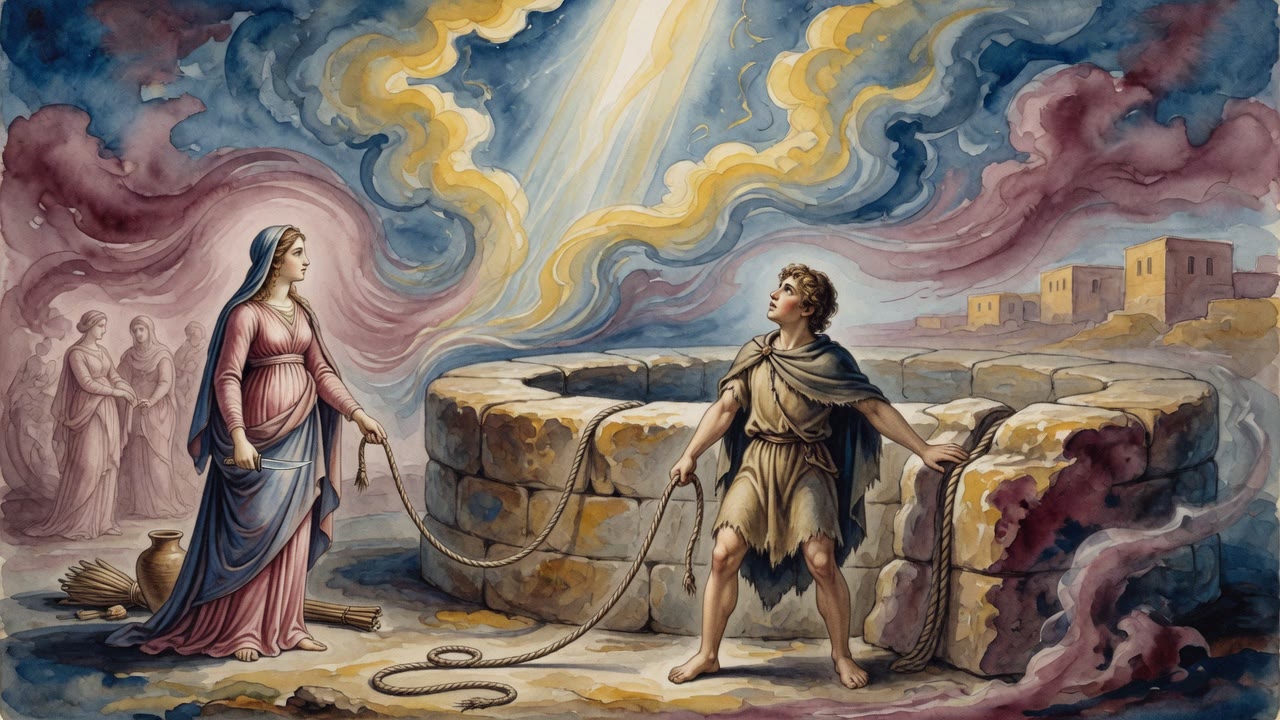
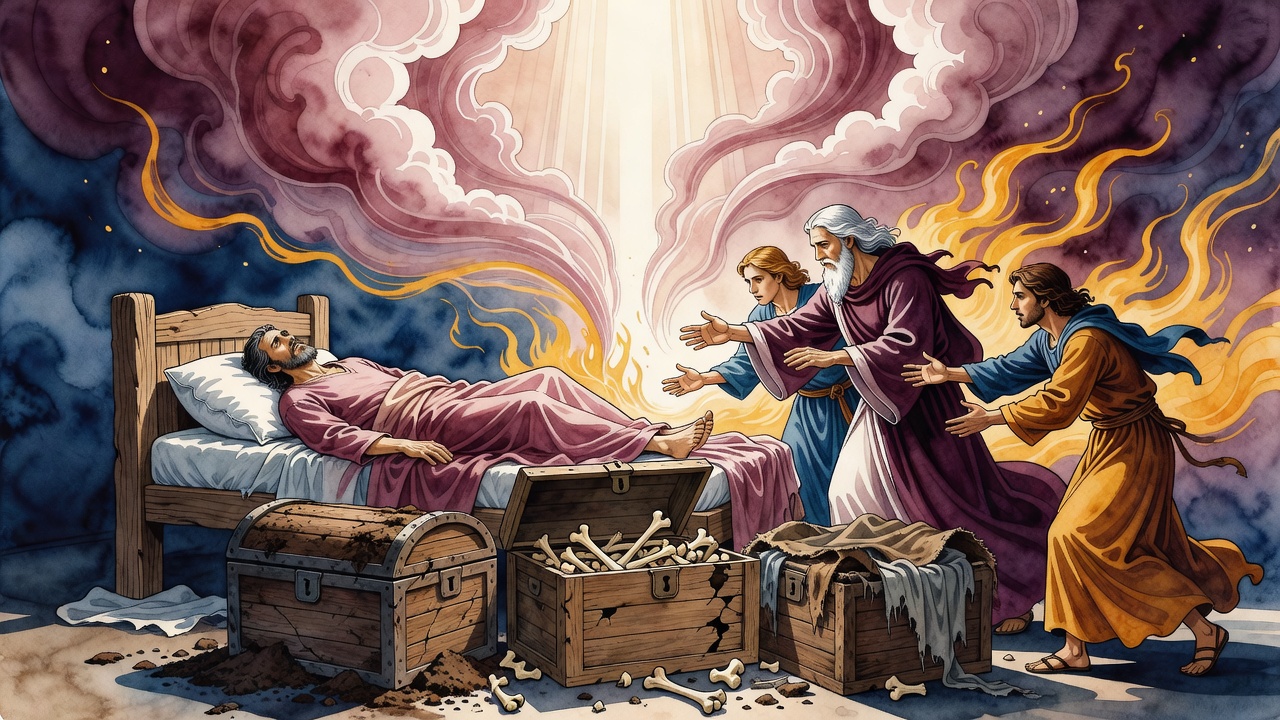
Rabbi Ibu and other rabbis offer slightly different accounts, but the core of the story remains the same. One version suggests David had two doors, escaping through the unguarded one. Another, perhaps even more dramatic, says he had only one door, heavily guarded. So, what did Michal do? She took a teraphim – a statue, sometimes considered a household idol – and placed it in David's bed, covering it with a blanket. When Saul's messengers arrived, she claimed David was sick and couldn't be disturbed.

Deception! Intrigue! It's all there!

But the deception doesn't end there. To make the ruse more convincing, she put goat's hair under the statue’s head, as it is written, "And Michal took the statue." Saul, unconvinced, ordered them to bring David, bed and all. And what did they find? The statue!

Needless to say, Saul was furious. He accused Michal of betraying him and helping his enemy escape. But Michal, ever resourceful, retorted that Saul had threatened her life if she didn't help David. Because of her fear, she trembled and fainted, as it is written, "And the queen was greatly troubled."

The Midrash then takes a fascinating turn, connecting Michal's defiance to the symbolism of a calf that refuses to accept a yoke, referencing (2 Samuel 3:5): 'And the sixth [son's] name was Yitream, born to David from his wife, Ahinoam the Yizre'elite.' This, the Midrash claims, is Michal. Just as the calf doesn't accept a yoke, so Michal did not accept a yoke from her father, but she reprimanded him.

So, what are we to make of these two stories? The son who studies Torah all night, and the wife who bravely deceives her father to save her husband? Both are framed as examples of finding "goodness" in marriage. Perhaps the Midrash is suggesting that goodness isn't always found in conventional romance or obedience. Maybe it's found in dedication, even if that dedication takes an unusual form. Maybe it's found in loyalty and bravery, even when it means defying authority.

These stories, like so many in Jewish tradition, leave us with more questions than answers. What does finding "goodness" in a relationship mean to you?

Full source
Yalkut Shimoni on Nach 846:1Yalkut Shimoni

Retold in our words. Read the original at the link below.Sefaria Community Translation · CC0

“They still bear fruit in old age” (Ps. 92:15). Rabbi Yehoshua ben Korḥa said: [The verse refers to] one who produces foolish behavior (nivim). There was an incident involving a man who made a dyetiki (a legal testament) and said: “My son shall not inherit me unless he becomes a fool.” Rabbi Yose son of Rabbi Yehudah went to ask Rabbi Yehoshua ben Korḥa about this case. They peeked in from outside and saw him beating his hands and his feet, with a reed placed in his mouth, and he was being led along by his son. When they saw this, they hid themselves. They entered and asked him about the case. He began to laugh and said to them: “By your lives! The very incident you asked me about has just now happened to me.” He said to them: “From here we learn that when a person has children, it is as though he becomes foolish" [and the man who left a testament meant that his son should not inherit him until he has his own kids]

Full source
Exempla of the Rabbis, No. 399Exempla of the Rabbis (Gaster, 1924)

Retold in our words. Read the original at the link below.The Exempla of the Rabbis, Moses Gaster (1924) · Public Domain

A wealthy man lay dying, and he knew his three sons well enough to worry. They were good boys, but reckless with money, the kind who would burn through an inheritance before the first year of mourning was over.

So the dying man devised a will unlike any other. He left instructions that his fortune would be divided not equally, but according to wisdom. Each son would be given a test, and only the one who demonstrated true understanding would receive the bulk of the estate.

The eldest son spent lavishly, trying to prove his worth through grand gestures and public displays. The second son hoarded every coin, refusing to spend a single penny, believing that preservation alone was wisdom. But the youngest son did something unexpected. He took his portion and invested it wisely, giving charity to the poor, supporting scholars in their learning, and using what remained to build a modest but sustainable trade.

When the executor of the will reviewed their choices, the answer was clear. The youngest son had understood what his father always knew: true wealth is not in spending or saving, but in using what you have for purposes that outlast you. The Torah teaches that wisdom is more precious than rubies (Proverbs 3:15), and this dying father had found a way to teach that lesson from beyond the grave.

The tale circulated widely among medieval Jewish communities as a reminder that the wisest inheritance a parent can leave is not gold, but the judgment to use it well.

Full source
Yalkut Shimoni on Torah 16:2Yalkut Shimoni on Torah

Translation of the source text.Torat Emet (Yalkut Shimoni) · CC-BY-NC

"Male and female He created them" (Genesis 1:27). Rabbi Yitzchak said: When a male comes into the world, peace comes into the world. "Male" [zachar] is like "loaf" [kar], as it is written, "send a lamb [kar]" and so on (Isaiah 16:1); once a male comes, his loaf comes with him. "Male" [zachar] is like "provision" [kar], as it is written (2 Kings 6:23), "and he prepared for them a great provision [kerah]." But a female has nothing with her: a female comes empty [clean of provision], and gets nothing until she asks for her food.

Full source