Three Chests of Earth, Bones, and Rags on a Deathbed
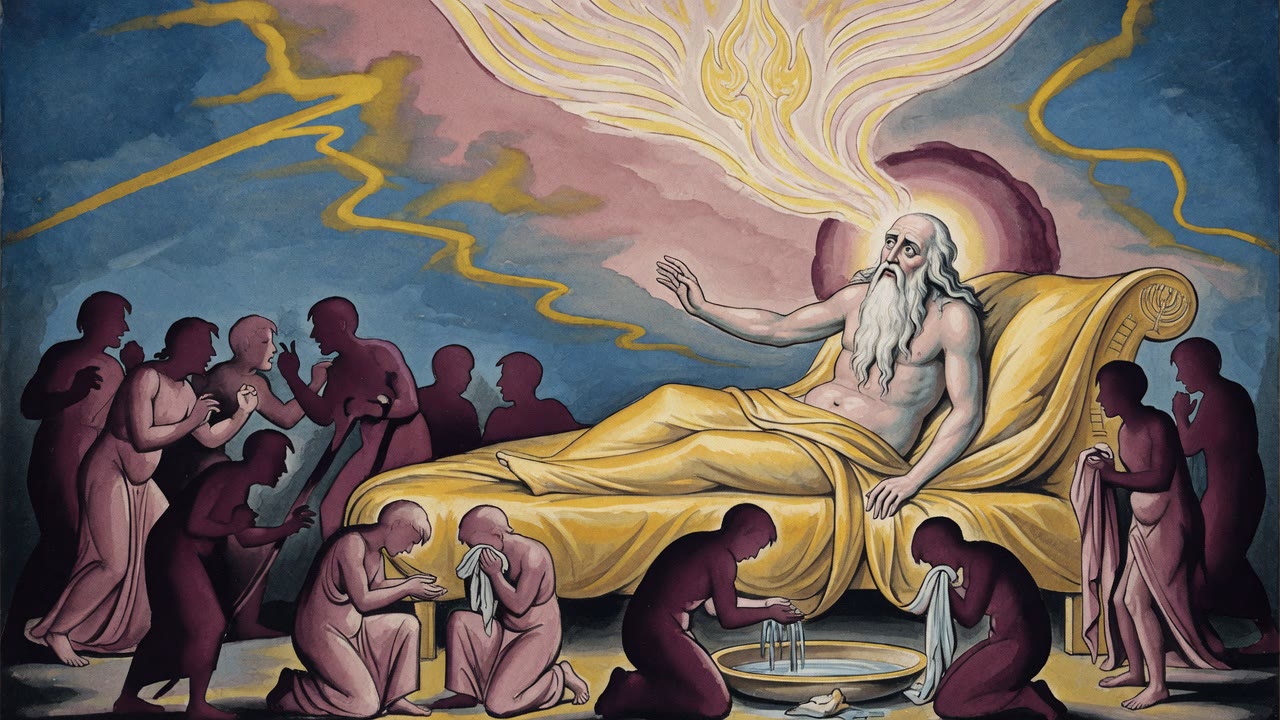
Three brothers stood around a bed that still held their father's shape. The will was three wooden chests that smelled of dust.
Table of Contents
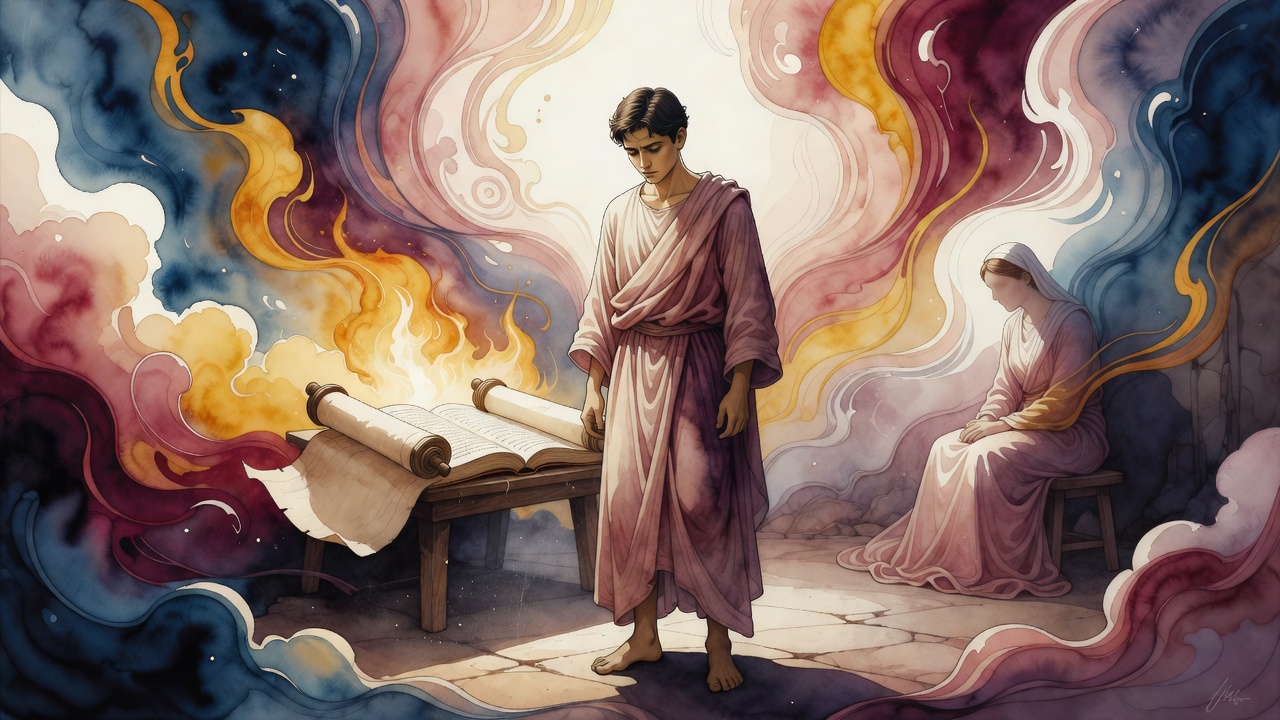
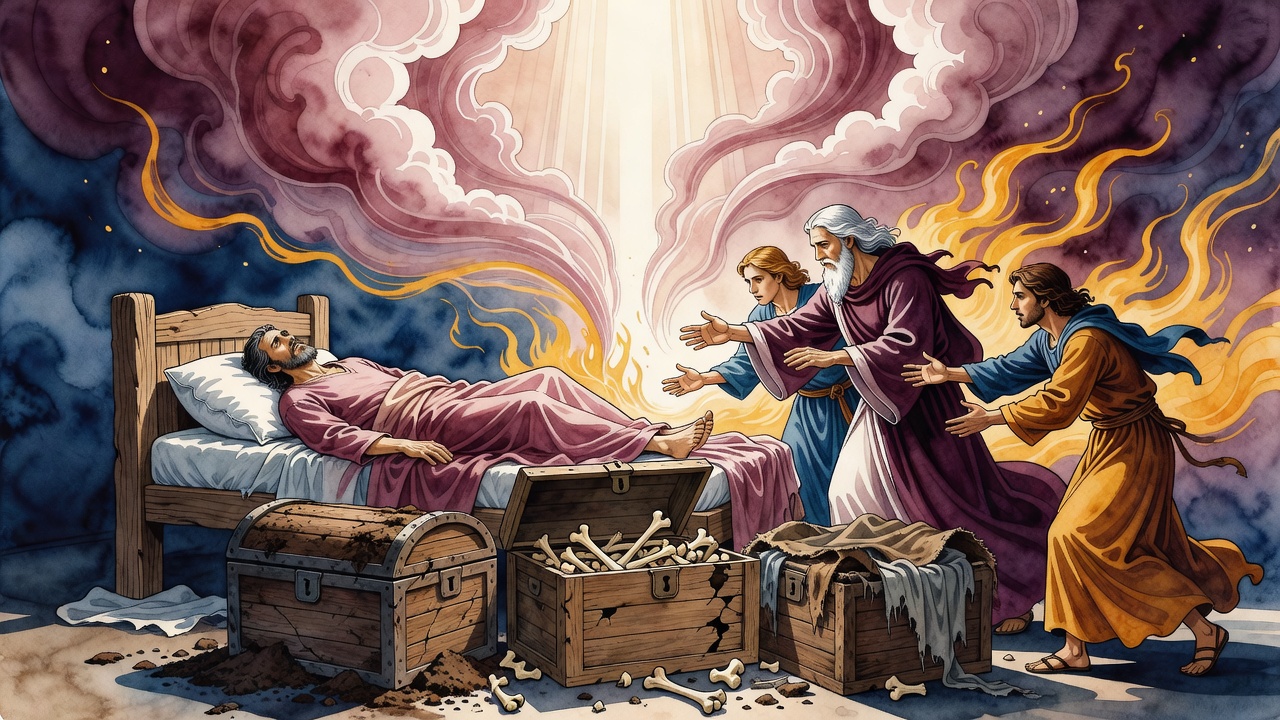
Three brothers stood around a bed that still held the shape of their father. Outside the house the flocks bleated and the fields lay wet from last night's rain. Inside, the old man had already closed his eyes for the last time, and the will he left them was three wooden chests that smelled of dust.
 Click for full size
They pried the lids. Earth. Bones. Rags. No coins. No deeds. No rings. One brother laughed once, the dry laugh of a man who thinks he has been insulted on purpose. Another sat down hard on a stool. The third said only, "He was rich."
The house still held land titles, cattle tallies, chests of dyed cloth in other rooms. Still the last word their father had chosen to leave them looked like refuse. They argued until the light moved across the floor. Then they carried the three chests to a sage known for reading strange documents as if they were maps of a living mind.
R. Banaah Asked What the House Still Held
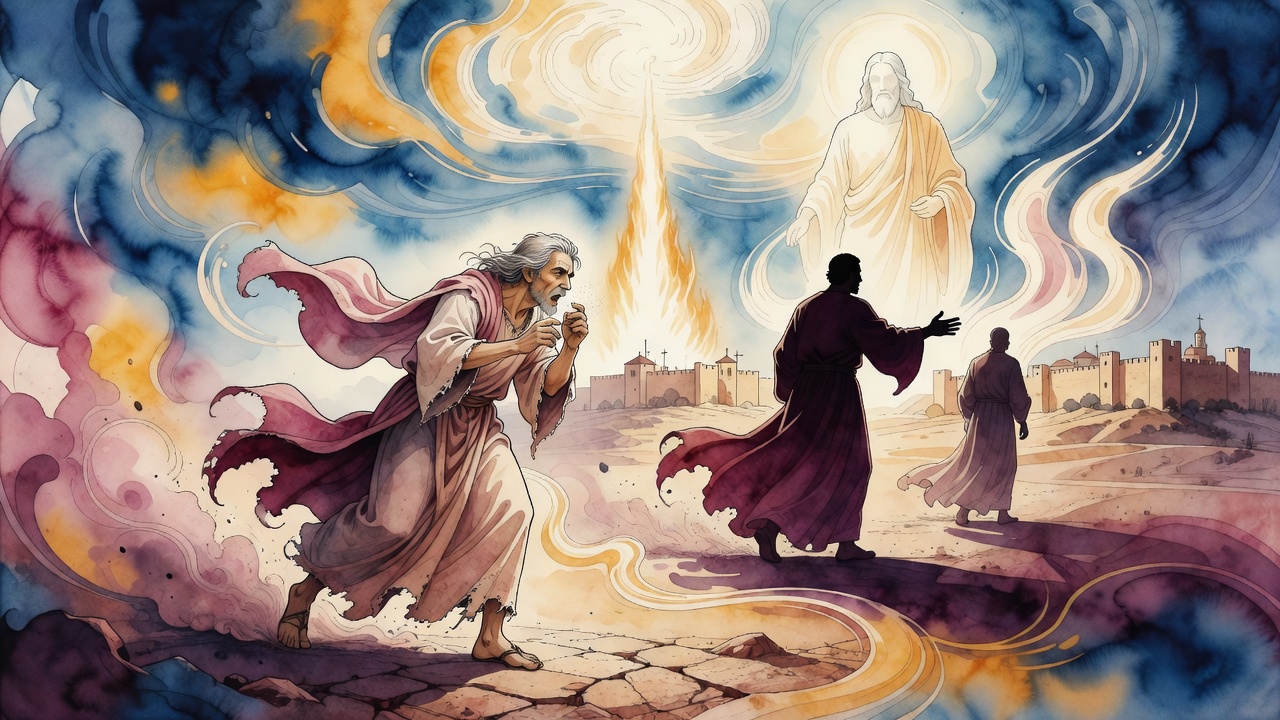
R. Banaah did not open the chests as if they were a joke. He set his hands on the wood and asked questions that sounded almost too simple.
"Did your father leave land?"
"Yes."
"Flocks and herds?"
"Yes."
"Costly garments, jewelry, the finery of a house?"
"Yes."
Each answer clicked against the next. The chest of earth was not dirt for a grave. It was the land. The chest of bones was not a curse. It was the cattle and sheep whose bones would one day lie in the field. The chest of rags was not poverty. It was the house and every garment folded inside it. The father had divided a whole fortune into three humble signs so that no son could claim the other had been favored by a glittering token.
The insult drained out of their shoulders. What they had almost burned as trash was the whole estate, coded so cleanly that greed could not dress itself in gold leaf.
Zion Weighed Its Children in Gold
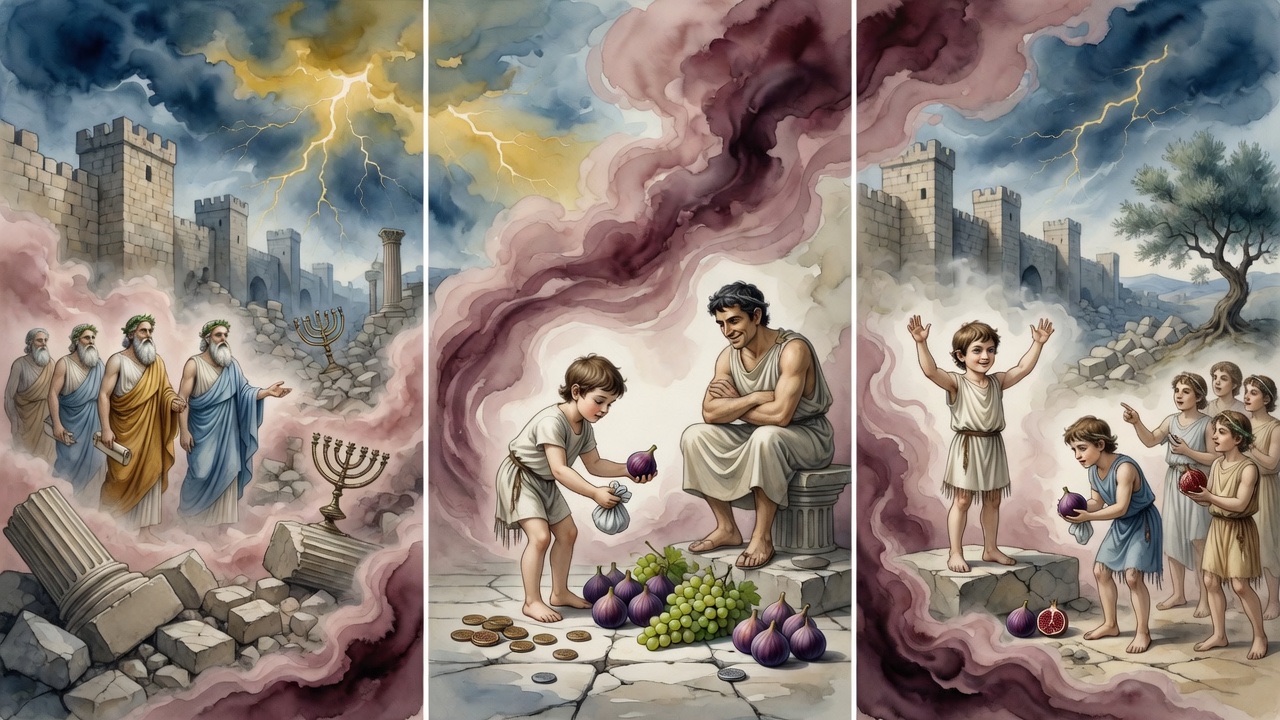
In Jerusalem, worth had once been measured in the open. A man from another town who married a Jerusalemite woman paid her weight in gold. A Jerusalemite man who married a woman from elsewhere received his weight in gold. The city treated marriage as a scale of honor, not only of affection.
When a groom took a bride of higher standing, he spent more on the wedding tables than on the household stores, so her honor filled the room. When she came from a lower station, he spent more on the house than on the feast, so his own rank would not shout over hers. None of them entered a feast until the invitation arrived twice, lest a messenger's slip pull the wrong guest into a quarrel that could burn a city.
Those customs sat in another century's mouth beside three ugly boxes. The precious sons of Zion, who were valued in gold, became earthenware jugs, the work of a potter's hands (Lamentations 4:2). Gold can look like clay. Clay can hold gold. The dying father learned to hide a fortune inside earth, bone, and cloth so that justice would not need a market price to be seen.
The Code Opened Under Pressure
The sons had wanted a list. Names of fields. Counts of sheep. The father gave them pressure instead. He forced them to bring their bewilderment to a man who asked about reality rather than about resentment. Only when they admitted what the house still held did the symbols speak.
R. Banaah's patience was not softness. It was a method. He would not let three living heirs rewrite a dead man's intent into insult. He made them say aloud the property they already knew existed, until the chests could not be read as cruelty.
Outside, the flocks still called. The land still waited for plows. The rags in the third chest were not rags once the house was named. Inheritance became visible the moment the brothers stopped looking for treasure that glittered and started answering questions that were true.
What Remained After the Lids Closed
They carried the chests home lighter than they had carried them out. Not because the weight had changed. Because the meaning had. Earth meant fields. Bones meant herds. Rags meant a household's living cloth. Equal division without a single coin on the table.
In Jerusalem, a second invitation kept a feast from turning into a blood feud. In this quieter house, a second look kept a fortune from being thrown into a ditch. The father is gone. The sage goes home. The brothers stand in a yard that still smells of rain and animals, holding three ugly boxes that now hold everything.
← All myths