Jacob Made His Sons Purify Themselves Before the Last Blessing
Levi's jaw tightened and Simeon's eyes found the floor. Their father opened his mouth to give them the date of the end, and the words left his head.
Table of Contents
 Click for full size
The Summons Across the Land
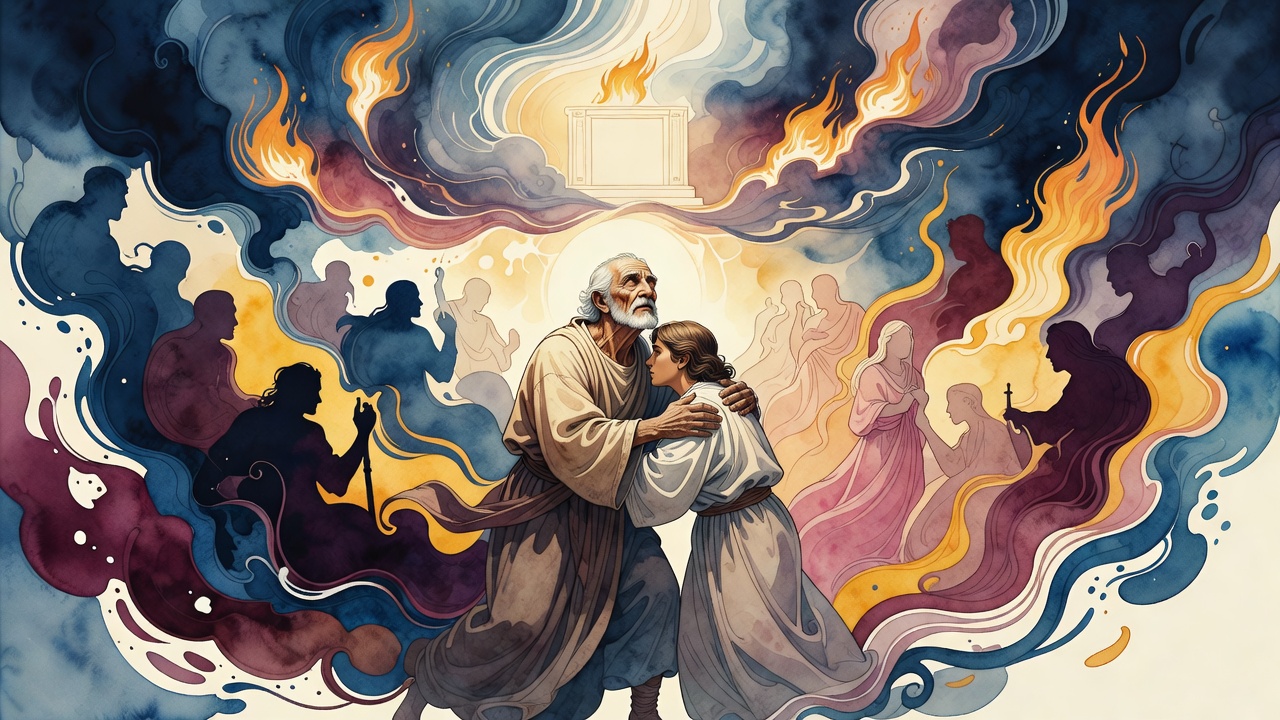
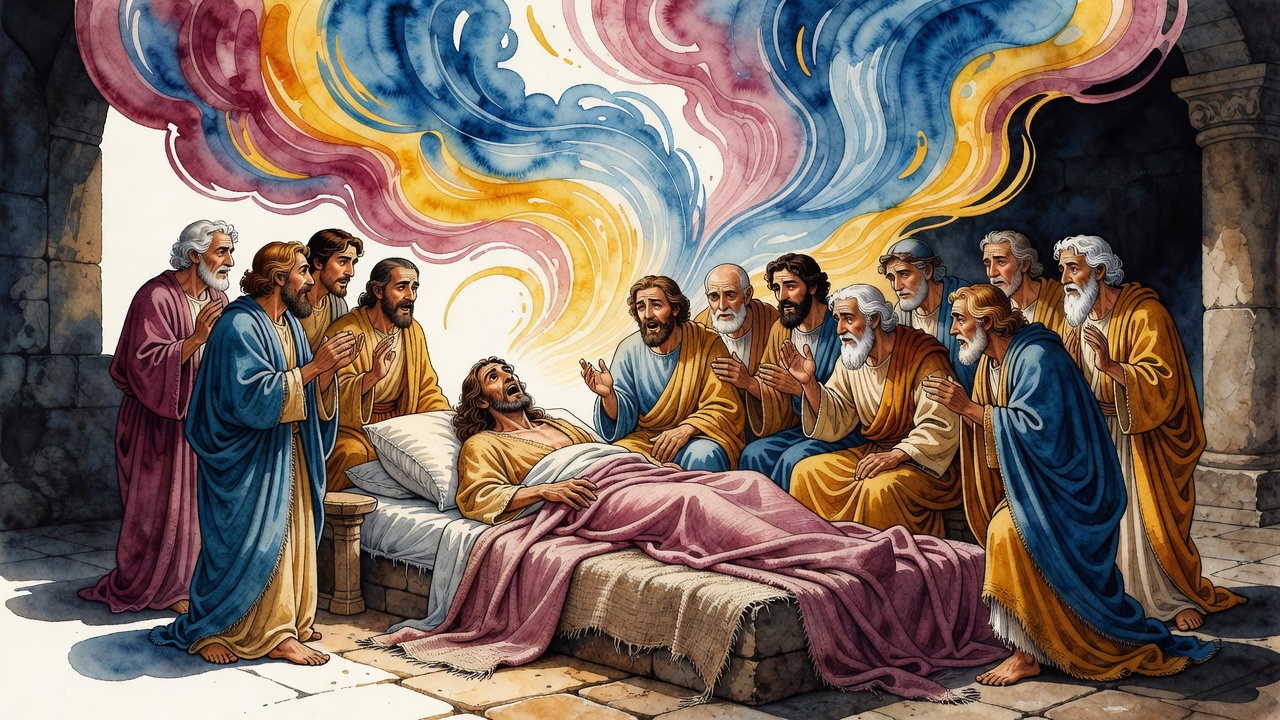
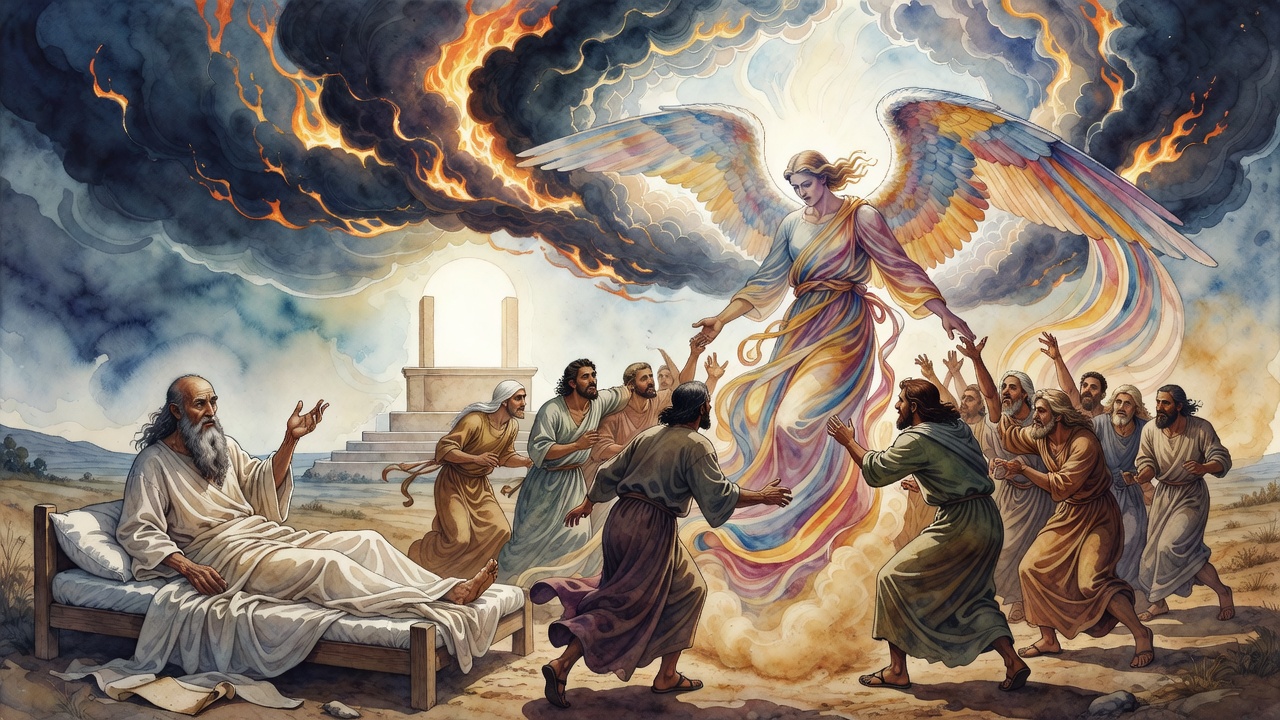
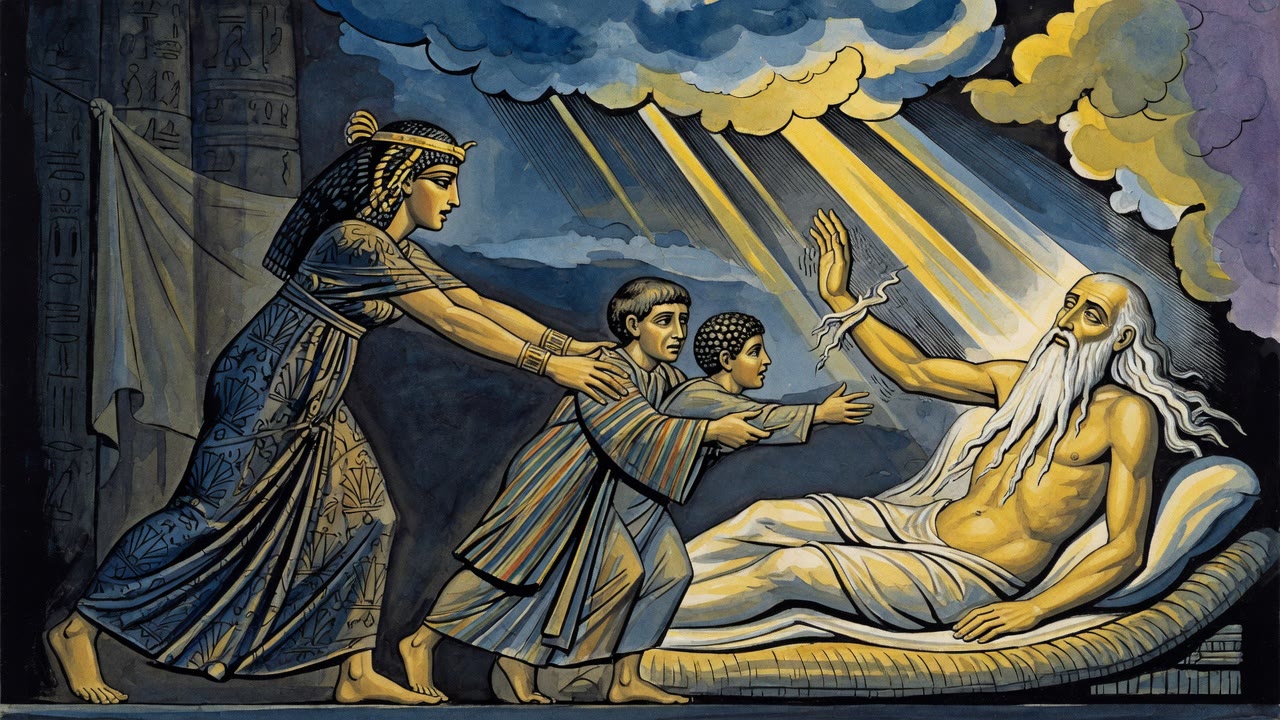
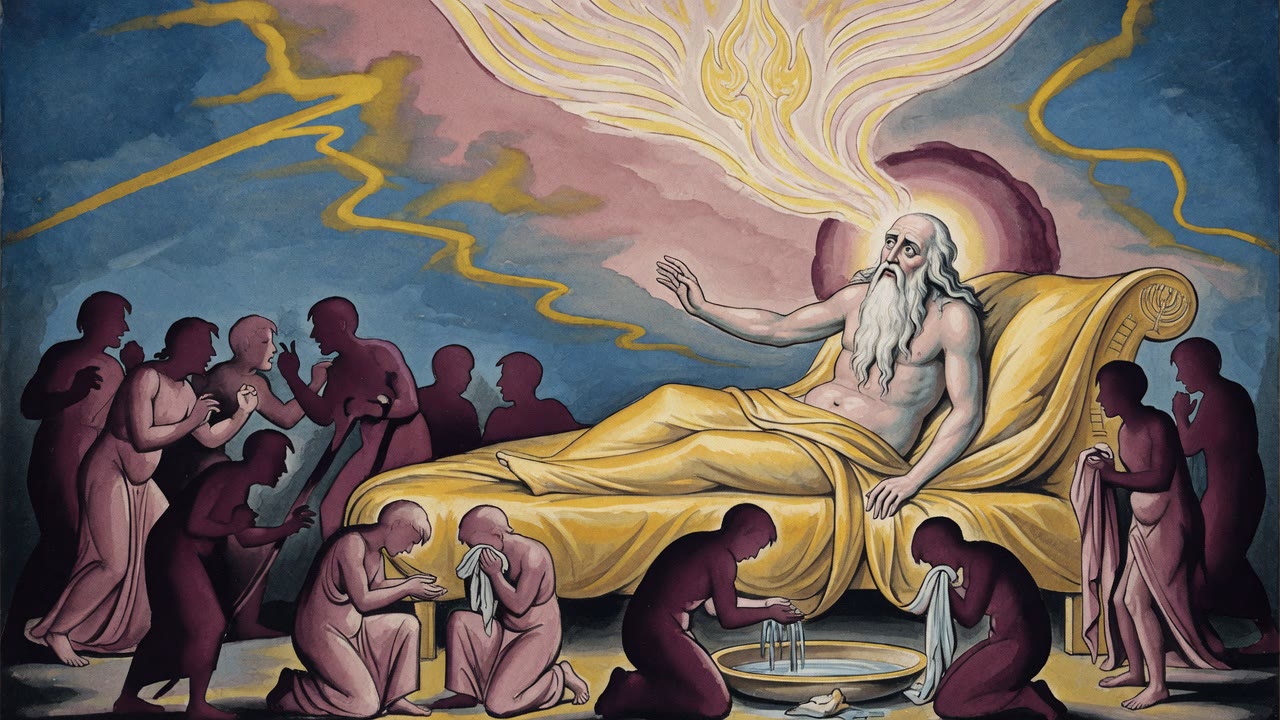
Jacob sent for his sons from every pasture and camp. This was not a feast. He wanted them clean. Purification first, blessing second. A man about to speak destiny into twelve lives cannot pour that speech into unwashed vessels. Angels brought the sons to a golden bed. The room smelled of age, oil, and fear.
Jacob looked at the circle of faces and named the first law of their survival. "Take heed that no dissensions spring up among you, for union is the first condition of Israel's redemption." He ordered an Academy, a house of learning and judgment, so knowledge would outlive any one strong arm. The sons shifted. Some remembered old sales and old lies. Some remembered Egypt and the brother who ruled there.
Levi's jaw tightened. Simeon's eyes found the floor. Judah stood as if balance itself were a duty. Jacob watched them the way a shepherd watches weather on a ridge. One quarrel in this room could become a century of knives.
The Secret That Fled
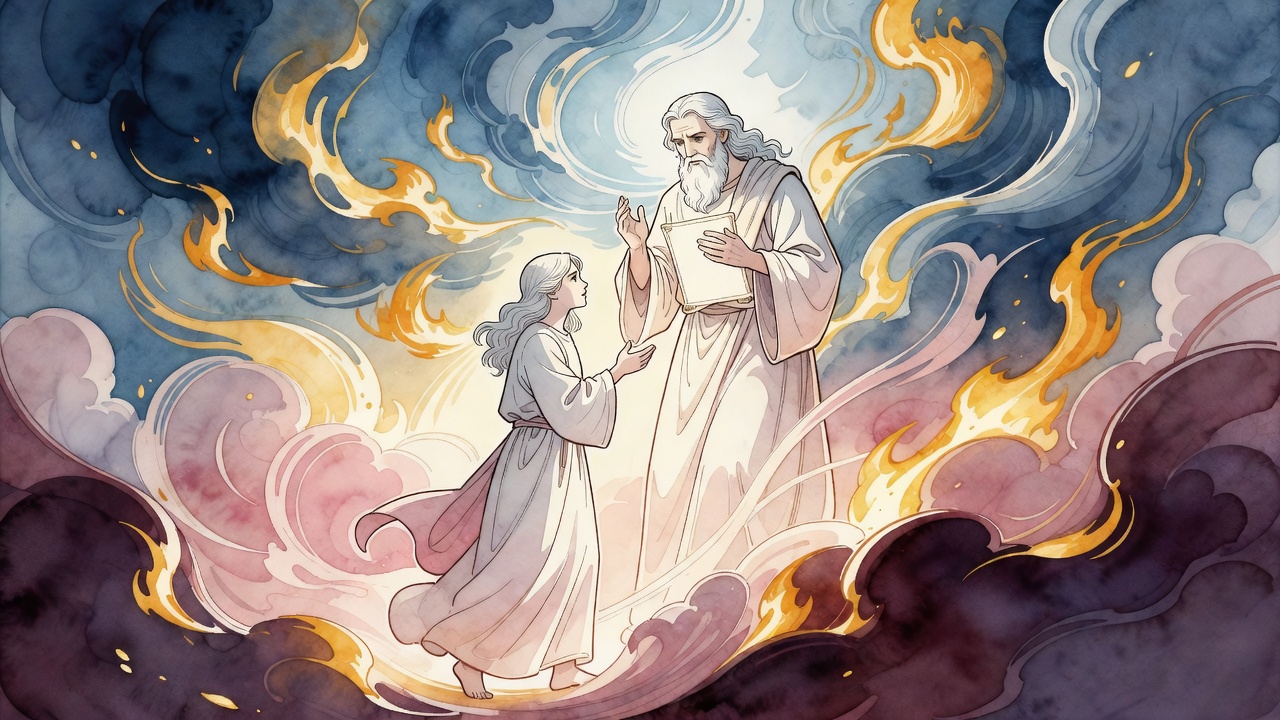
Jacob opened his mouth to give them a great secret concerning the end of time. The words rose. Then the Shekhinah (שכינה), the divine presence, visited him for a flash and left, and the secret left with it. His mind went blank where prophecy had been. He felt the emptiness the way a man feels a coin stolen from a closed fist.
The same pattern had haunted Isaac, who meant to reveal an end and found the knowledge taken. Jacob understood the warning. Heaven would not hand the calendar of redemption to a family still capable of civil war. Clean bodies were not enough if the hearts stayed split.
He blessed what he could bless. He refused to pretend the missing vision was still his to give. The sons waited for fireworks and received a father's trembling honesty instead. Outside, Egypt's wind moved the palms. Inside, twelve futures waited without a date stamp.
Jacob's hand found the edge of the golden bed. Wood and metal. Solid things. The end of days had slipped through fingers that once held a ladder-dream and an angel's hip. He gave them tribes, not timelines.
A Lie Built for Peace
After Jacob died, fear returned in Egypt. The brothers stood before Joseph and claimed their father had commanded forgiveness before he died. "So shall ye say unto Joseph: Forgive, I pray thee now, the transgression of thy brethren, and their sin" (Genesis 50:16-17). Jacob had never said it. He trusted Joseph's piety too much to invent a scene of bloodshed that would not come.
The Torah lets the false report stand for the sake of peace. Peace-offerings, the teachers say, were instituted because whoever brings one brings peace into the world. As long as sacrifice rose, peace had a public address. After the Temple fell, days filled with curses found no altar to answer them. In the brothers' mouths the invented command was a peace-offering made of words.
Joseph wept. He did not audit the citation. He heard the need under the lie and chose not to become the blade they feared. A man who once tested them with spy charges now accepted a fiction that kept blood off the floor. Peace is considered so heavy that even scripture will carry a falsehood for its sake.
Between the golden bed and the Egyptian court, the family learned two arts: purify before blessing, and sometimes speak a softer truth than the dead left behind.
What Unity Costs
On the golden bed Jacob had asked for purity and union. In Egypt the brothers bought a fragile union with a pious fiction. Both scenes press the same pressure. Redemption does not arrive through a clever secret first. It arrives through men who refuse to tear each other apart while waiting for the end.
Jacob's lost prophecy still hangs over the family like an unfinished map. The Academy he demanded is the practical answer to that blank. Study, judgment, shared table, shared law. The Shekhinah (the Divine Presence) may hide a date. It does not hide the work of keeping twelve temperaments from becoming twelve knives.
Outside, Egypt's grain stores breathed dust. Inside, a dynasty learned that peace sometimes wears the face of a sentence Jacob never spoke, and that a father who dies without revealing the end still leaves the only order that matters: stay clean enough, and close enough, to receive whatever blessing still comes.
Years later, when sacrifices still rose in a Temple not yet built in their day, peace would have smoke and blood as its public grammar. For Jacob's sons, the grammar began with washed hands around a bed and a careful lie that kept a brother from becoming a judge of blood.
← All myths