5 min read

Judah Stakes the World to Come for Benjamin

Judah pledges his share in the world to come so Benjamin may go to Egypt, while Jacob demands purity before the last blessing.

Curated by Arthur · Told by Maggid ·
Table of Contents
  1. A Pledge Heavier Than Silver
  2. The Spy Charge Waiting in Egypt
  3. Years Later, a Golden Bed
  4. What Judah Bought
  5. Blessing Without the Last Secret
Judah Stakes the World to Come for Benjamin Click for full size

A Pledge Heavier Than Silver

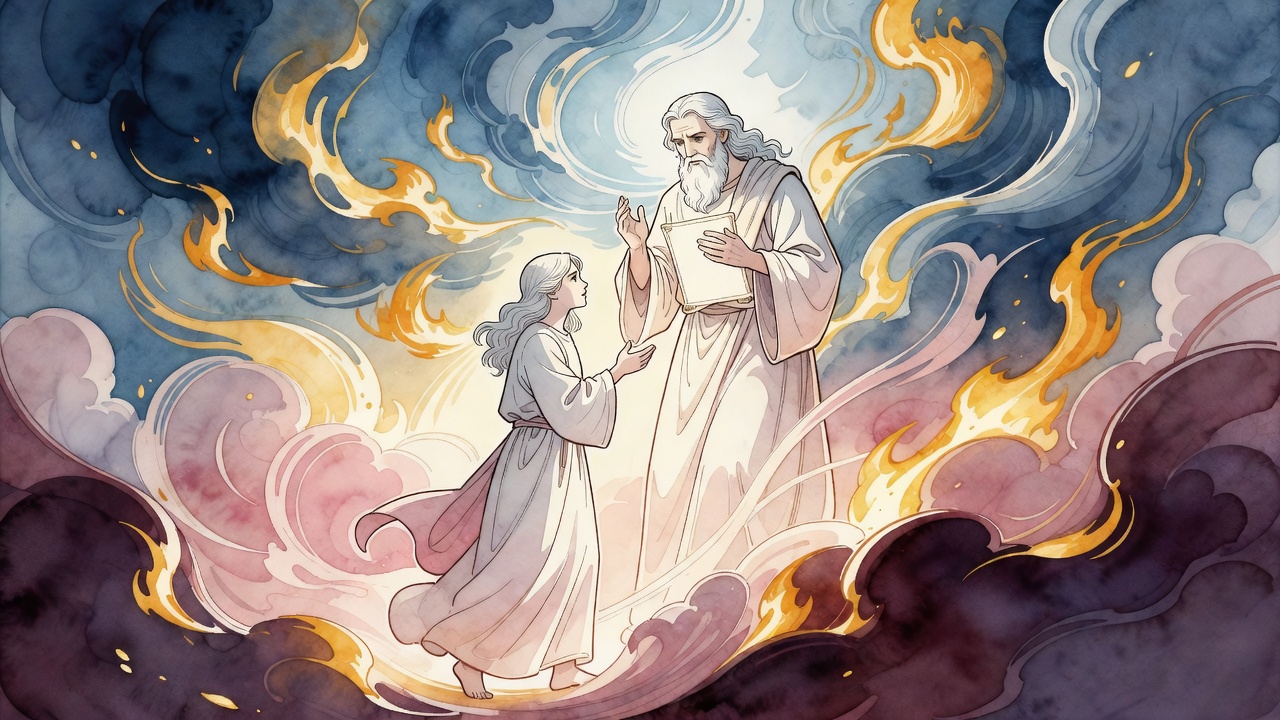
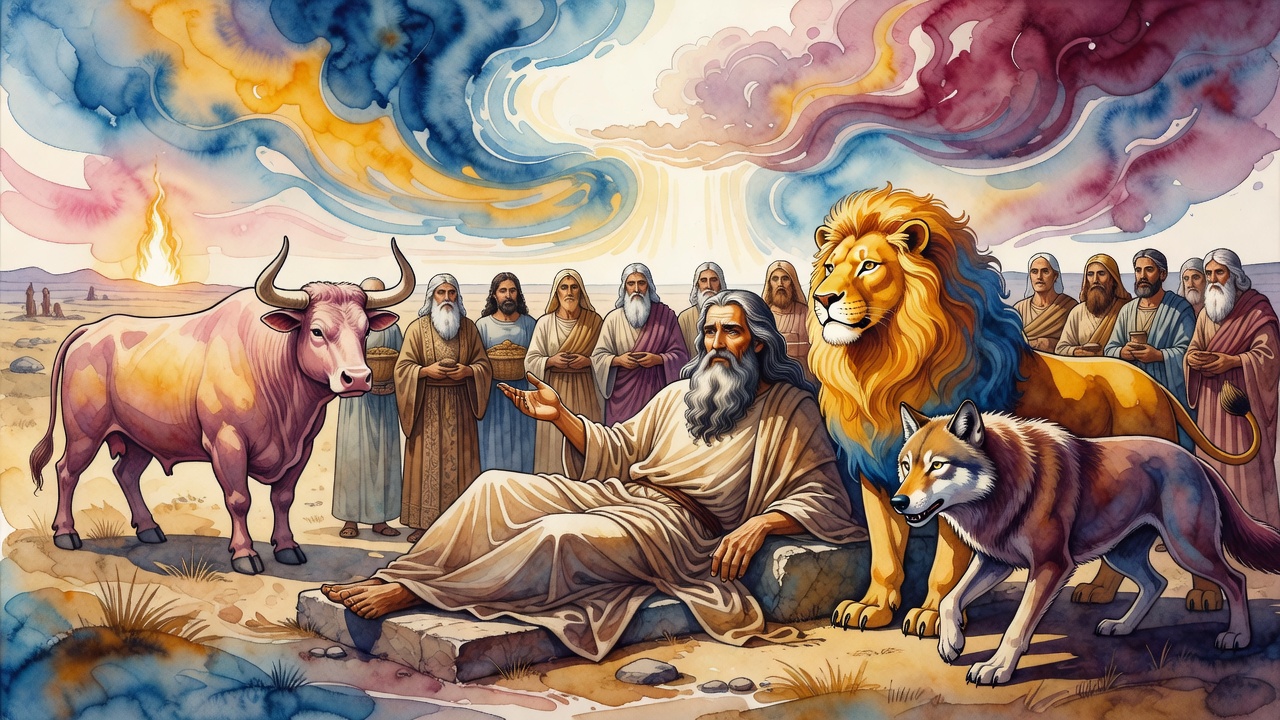
Judah stood before Jacob and put his portion in the world to come on the table like a deed. Joseph was already "lost." Simeon sat hostage in Egypt. Now the viceroy demanded Benjamin, and Jacob's face closed like a door. Judah did not offer more coins. He offered olam ha-ba, his share in the life of the world to come, as collateral that Benjamin would return safe.

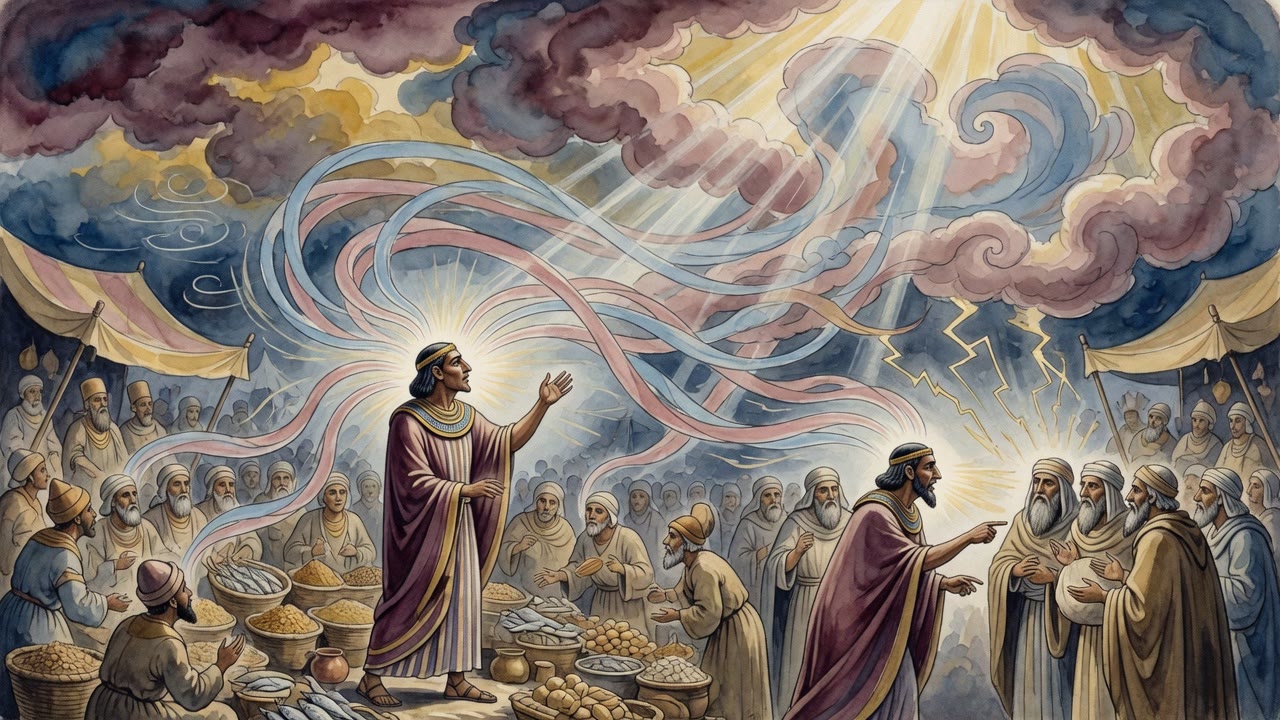
Jacob heard the weight and yielded. A father who had been tricked by a bloody coat could still recognize a vow that cost more than livestock. The brothers packed gifts that would impress a foreign court: murex purple, balms, oils, honey hard as stone. Jacob doubled the money, practical even in dread. Then he asked if they needed anything else. They said, Your prayer.

Money, present, brother, and intercession. Only then did the road to Egypt open under a sky that still felt like a test.

The Spy Charge Waiting in Egypt

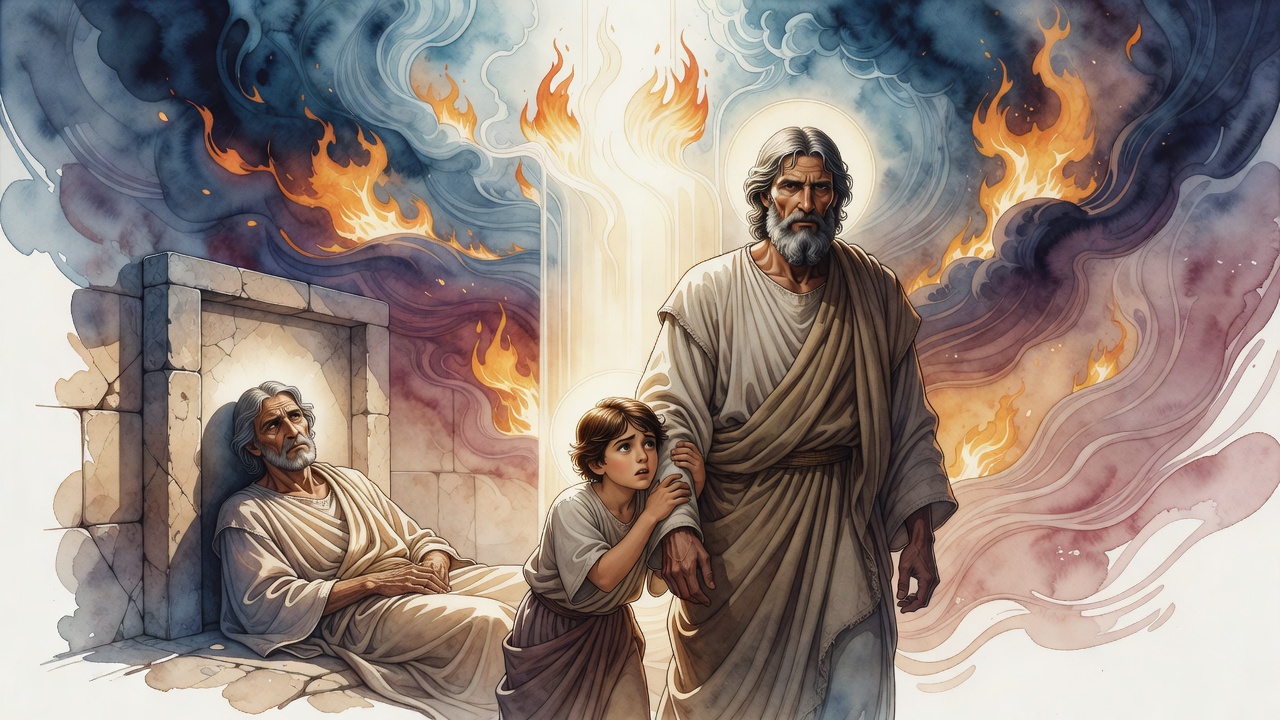
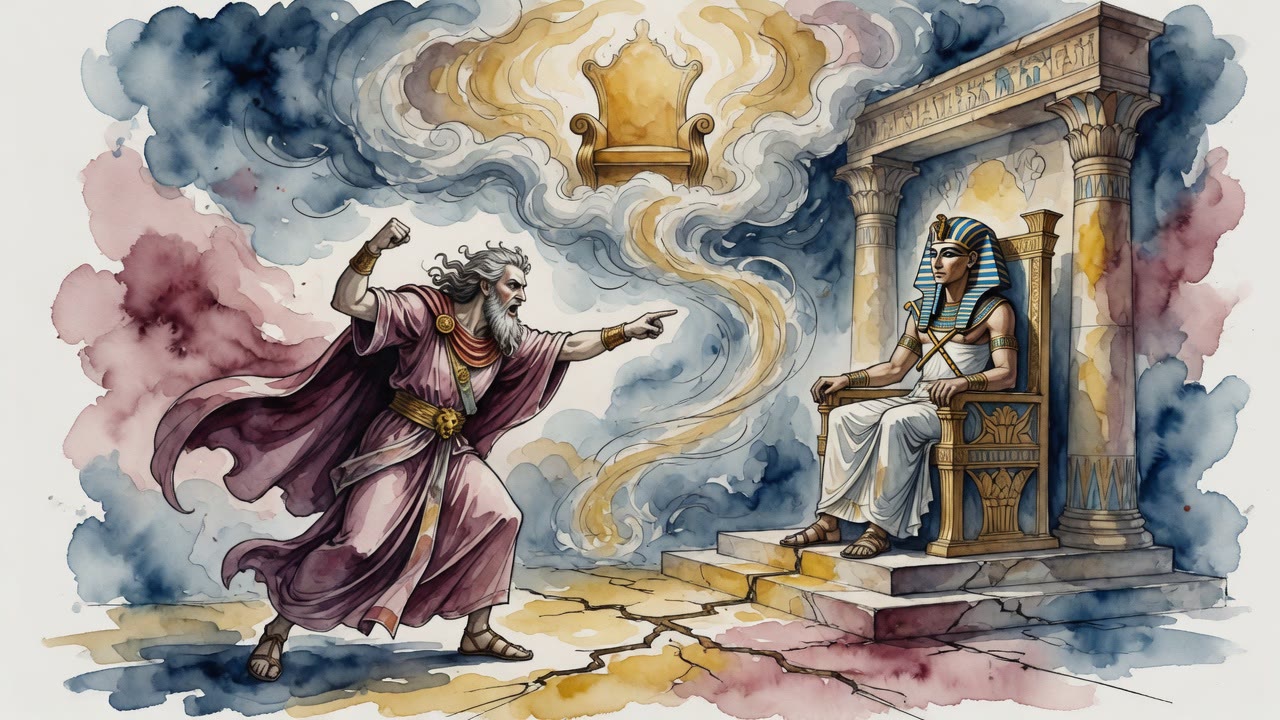
They did not know the man with the power was Joseph. They knew he had called them spies and twisted their own violent speech against them. If a master would not release a brother, they had said, they would kill the master. Joseph named that answer proof of danger to Egypt, linked it to Shechem, and demanded the youngest as the only path to innocence.

Judah's pledge at home was the only way to meet that demand without breaking Jacob outright. The man who once engineered a sale into slavery now staked eternity on a boy's safe return. Character, if it changes, shows its change in what it is willing to lose.

Benjamin walked among them smaller than the history he carried. Every step south was a step Judah had bought with his future praise.

Years Later, a Golden Bed

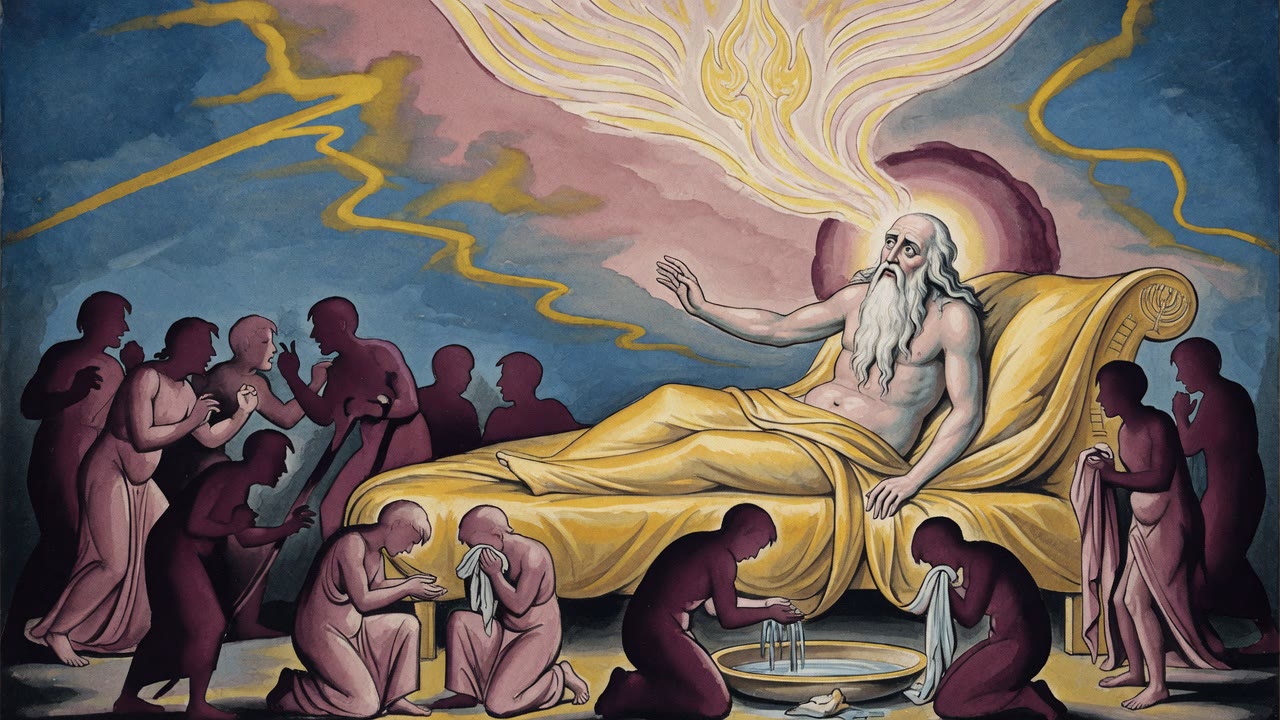
Time folded forward to another room. Jacob, near death, summoned sons from across the land to purify themselves before a final blessing. Angels, the legend says, helped gather them to a golden bed. Union first, he warned. No dissensions. Unity is the first condition of Israel's redemption. He ordered an Academy, a house of learning and governance, because a people without a center of study will not outlast famine or feast.

He nearly spoke a great secret concerning the end of days. The Shekhinah (God's indwelling presence) visited and departed, and the secret went with it, erased from his mind as memory was once blocked for Isaac when an unworthy ear almost received the end-time map. Some knowledge refuses even a patriarch's tongue when the hour is wrong.

The sons who had once needed a pledge for Benjamin now needed clean hands for a blessing. The family story kept demanding preparation before gift.

What Judah Bought

In Egypt the drama would run through cups and accusations until Joseph wept and names collapsed into recognition. The seed of that reunion was Judah's offer of the world to come. Without Benjamin, no reveal. Without Judah's stake, no Benjamin. Without Jacob's prayer, the caravan would have felt like pure human risk.

Purple dye and pistachio oil were for a ruler's eyes. The pledge was for a father's ears and for heaven's ledger. Judah, who had known the dark of a sale, chose a different economy. He put his forever on the line for a brother's tomorrow.

Jacob, who had been cheated by sons before, chose to trust a vow that could not be faked with goat blood. The house began to tilt toward repair before anyone in Egypt cried.

Blessing Without the Last Secret

When Jacob finally blessed, he did it without the apocalypse timeline he almost released. The sons received tribal futures, not a calendar of the end. That restraint is also love. A family addicted to final secrets can forget present unity. He had already said the urgent part. Stay together. Build a house of learning. Arrive clean enough for words that bind.

Judah's earlier pledge sits in the same moral landscape. Sacrifice future crown of soul for present rescue of a brother. Jacob's lost secret sits beside it. Refuse to speak what heaven will not sponsor, even when sons lean in hungry for certainty.

Between Egypt's court and the golden bed runs one pressure: brothers must become a people, not a sequence of private survival tricks. Benjamin was the child who forced the issue. Judah was the adult who paid in the only currency left. Jacob was the father who prayed, packed double silver, and later demanded purity before he opened his mouth to bless.

The world to come stayed on the ledger until Benjamin returned. Then a different account began, one that would end in a family's embrace under an Egyptian roof and, years after, in a deathbed that would not hand over the end of days.


← All myths
From the tradition

Sources

3 sources

The texts behind this telling. Some cards carry a translation of the source; others are our own retelling of it, and each card says which. Every card links out to the original.

Legends of the Jews 1:230Legends of the Jews

Retold in our words. Read the original at the link below.The Legends of the Jews by Louis Ginzberg (1909) · Public Domain

Remember, he'd already "lost" his beloved Joseph, and Simeon was being held hostage. Sending Benjamin, his youngest, felt like tempting fate. But Judah stepped up.

Judah, in a moment of incredible selflessness, offered his portion in the world to come, his very olam ha-ba, as collateral. He solemnly vowed to bring Benjamin back safe and sound. He put everything on the line. According to Legends of the Jews, Jacob, seeing this commitment, finally relented.

It wasn't just a matter of sending them empty-handed, was it? They needed to appease this powerful Egyptian ruler, who they didn't even realize was Joseph in disguise. So, they gathered gifts. Not just any gifts, but things that would impress even a king.

We're talking about treasures that would be considered wonders outside of Israel. The text mentions the murex, that special snail that produces the incredibly valuable Tyrian purple dye. They also brought various kinds of balm, almond oil, pistachio oil, and even honey as hard as stone. Ginzberg, in Legends of the Jews, really paints a picture of these exotic, precious offerings.

And, ever practical, Jacob doubled the money they'd originally taken, anticipating price increases. It's a small detail, but it speaks volumes about his care and foresight.

So, there they were, ready to begin this perilous journey. Money? Check. Gifts? Check. But Jacob, ever the patriarch, knew there was something more, something beyond the material.

He turns to his sons, laying it all out: "Here is money, and here is a present, and also your brother. Is there aught else that you need?" And what did they reply? "Yes, we need this, besides, that thou shouldst intercede for us with God."

They understood that earthly gifts and careful planning could only go so far. They needed divine intervention. They needed their father's prayers.

Then, Jacob offered a powerful plea. "O Lord, Thou who at the time of creation didst call Enough! to heaven and earth when they stretched themselves out further and further toward infinity, set a limit to my sufferings, too, say unto them, Enough! God Almighty give you mercy before the ruler of Egypt, that he may release unto you Joseph, Simon, and Benjamin." We find a similar sentiment echoed in Midrash Rabbah.

Did you catch that imagery? Jacob is invoking the very moment of creation, when God set boundaries to the infinite. He's asking for a limit to his own pain, a divine "Enough!" It's a powerful, desperate prayer from a father on his knees.

Is it enough? Are the gifts, the money, the prayer enough to sway fate and bring his sons home? And maybe, just maybe, that's enough.

Full source
Legends of the Jews 1:392Legends of the Jews

Retold in our words. Read the original at the link below.The Legends of the Jews by Louis Ginzberg (1909) · Public Domain

A monumental work compiled by Rabbi Louis Ginzberg, Jacob summoned his sons from all over the land. But this wasn't just a social call. He needed them to purify themselves, to make themselves "clean," so that the blessing he was about to bestow upon them would truly take root. The idea that spiritual preparation is necessary to receive divine favor.

That wasn't all. He had another command, a crucial one for the future of their people: to establish an Academy. A place of learning, of governance, a central hub for their intellectual and spiritual lives. He understood that knowledge and community were essential for survival.

Picture this scene: the sons, brought before their father by angels (yes, angels!), standing around his golden bed. Jacob, with the weight of generations on his shoulders, speaks. His message is simple, yet profound: "Take heed that no dissensions spring up among you, for union is the first condition of Israel's redemption." Unity. It's a theme that echoes throughout Jewish history, the idea that strength lies in togetherness.

Here's where it gets really interesting. Jacob was on the verge of revealing a "great secret… concerning the end of time." Imagine the anticipation! The weight of that knowledge!

But then, in a flash, it was gone.

The Shekinah, the divine presence, visited him for a fleeting moment, and just as quickly departed. And with it went the secret, erased from Jacob's mind. Poof!

Why?

Legends of the Jews draws a parallel to Jacob's own father, Isaac. Remember when Isaac intended to bless Esau? God inflicted a loss of memory upon him to prevent him from revealing the secrets of the end of days to someone deemed unworthy. It seems this divine intervention runs in the family!

What are we to make of this? Why this tantalizing glimpse, this near-revelation, only to be snatched away? Was it a test? A reminder that some things are beyond our grasp? Or perhaps, as some suggest, the timing simply wasn't right. The sons needed to prove their unity, their worthiness, before such profound knowledge could be entrusted to them.

What was that great secret? And what would have happened if Jacob had been able to reveal it? Perhaps the real lesson here isn't about knowing the future, but about focusing on the present, on unity, on learning, and on preparing ourselves to receive whatever blessings, and whatever secrets, may come our way.

Full source
Legends of the Jews 1:217Legends of the Jews

Retold in our words. Read the original at the link below.The Legends of the Jews by Louis Ginzberg (1909) · Public Domain

The biblical Joseph is often remembered as this wise, almost saintly figure. But what if I told you there was a moment, a crucial encounter with his brothers, where he seemed.. less than perfect? Years after being sold into slavery by his own family, Joseph, now a powerful official in Egypt, is confronted by his unsuspecting brothers. They don't recognize him, of course. This sets the stage for a tense and revealing exchange, one that exposes not only their past actions but also Joseph's own complex motivations.

The drama unfolds when Joseph, testing his brothers, poses a hypothetical question: "But suppose his master should refuse to surrender him for any price in the world, what would you do?"

Their response? Cold. Calculating. "If he yields not our brother to us, we will kill the master, and carry off our brother."

Ouch.

Talk about a revealing answer. It's a stark reminder of the brothers' capacity for violence, a trait that has haunted them since the incident at Shechem. According to Ginzberg's retelling in Legends of the Jews, Joseph immediately pounces on their words.

"Now see how true my words were, that ye are spies," he accuses. "By your own admission ye have come to slay the inhabitants of the land. Report hath told us that two of you did massacre the people of Shechem on account of the wrong done to your sister, and now have ye come down into Egypt to kill the Egyptians for the sake of your brother. I shall be convinced of your innocence only if you consent to send one of your number home and fetch your youngest brother hither."

It's a masterful manipulation. Joseph twists their words, using their history of violence against them. Is he justified? Is he simply testing them, pushing them to their limits to see if they've truly changed? Or is there a hint of revenge in his actions? Is he perhaps acting with the same kind of self-righteousness that led them to sell him into slavery in the first place?

The text leaves us with so many questions. It's a reminder that the stories we inherit are not always simple tales of good versus evil, but rather intricate portraits of human nature in all its messy glory. It is worth pondering, in these moments of confrontation, who is really being tested? And who is really being judged?

Full source