Parshat Vayigash5 min read

Joseph Hears Every Tongue in Egypt's Markets

A merchant lied about weights in a dialect meant to exclude outsiders. A woman prayed for a sick child in words the street thought private. Joseph walked on.

Curated by Arthur · Told by Maggid ·
Table of Contents
  1. The Market That Spoke Ten Ways
  2. Brothers at the Gate
  3. The Price of Innocence
  4. What the Chariot Remembered
Joseph Hears Every Tongue in Egypt's Markets Click for full size

The Market That Spoke Ten Ways

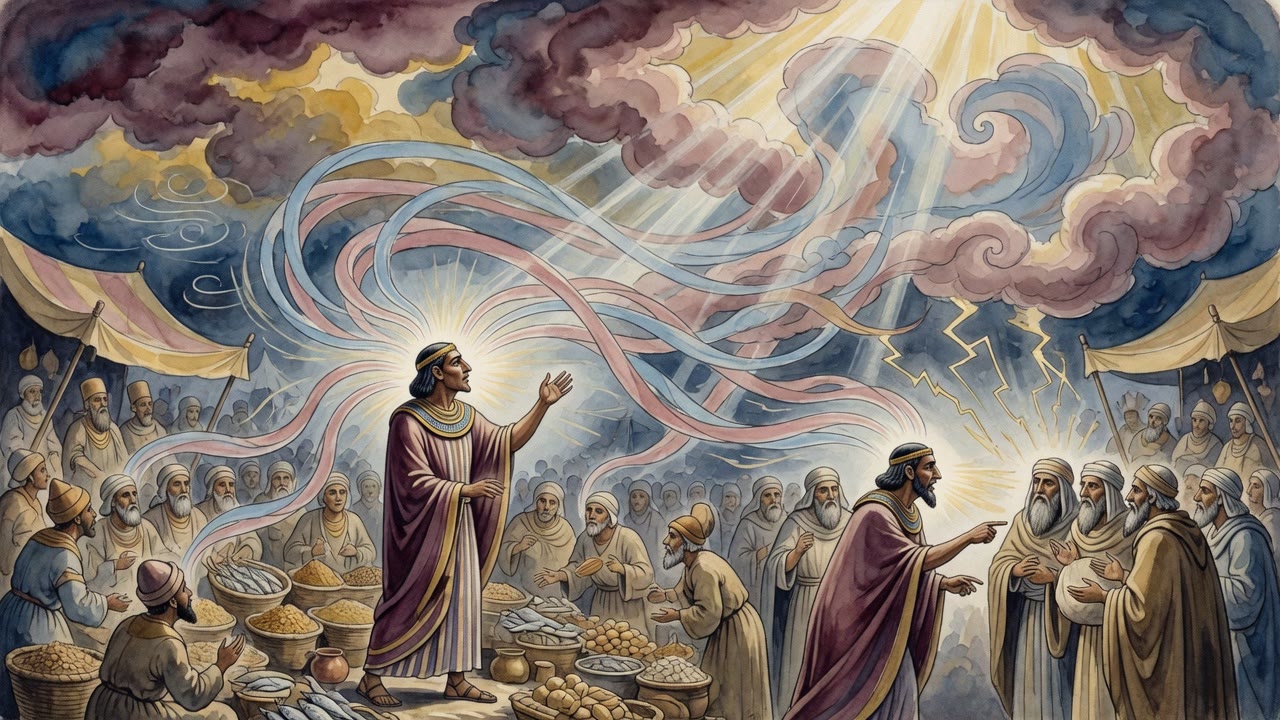
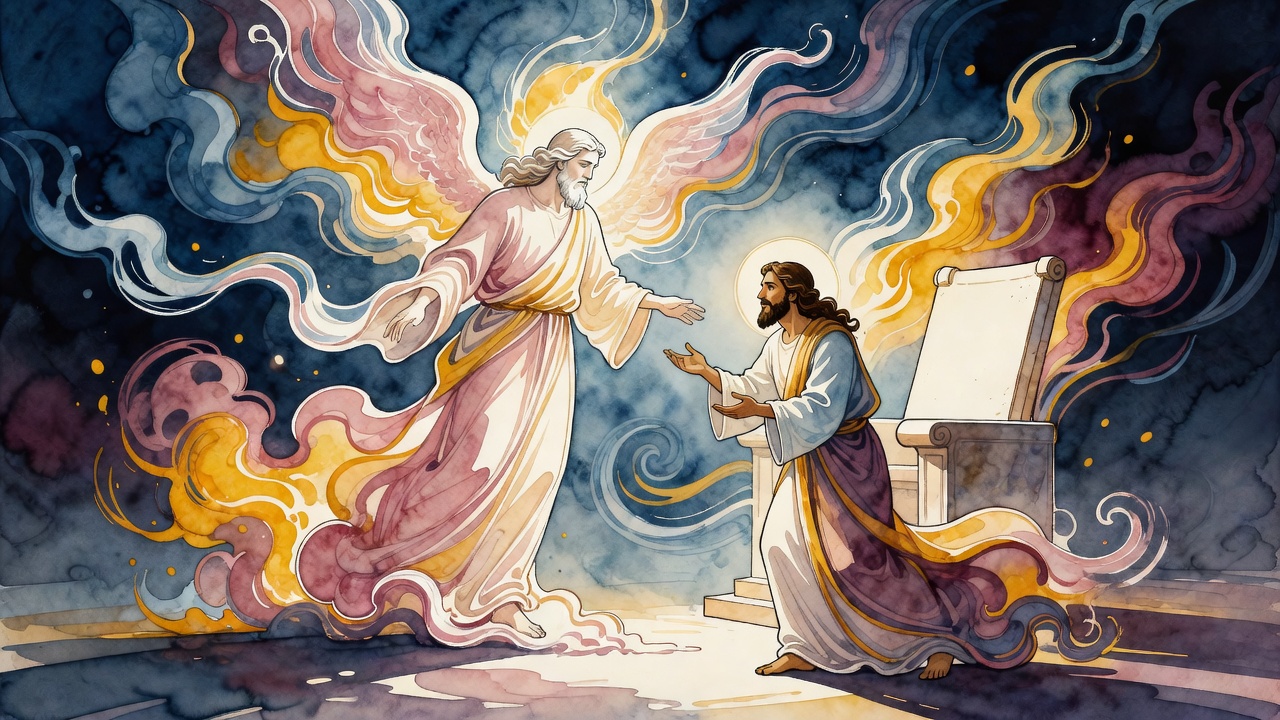
Joseph walked the Egyptian markets and the air split into a dozen mouths. Canaanite bargains. Nubian curses. A Greek sailor haggling for grain. A Midianite counting on his fingers in a tongue Joseph had never studied. He understood them all. The gift sat in him like a second hearing. Scripture would later call it a testimony appointed in Joseph when he went out over the land of Egypt, when the Holy One heard a speech he had not known (Psalms 81:5). Joseph only knew that no secret could hide inside a foreign word when he chose to listen.

A merchant lied about weights in a dialect meant to exclude outsiders. Joseph heard the lie and the number under it. A woman prayed for a sick child in a language the street thought private. He did not answer. He only walked on, heavier with knowledge than with gold. Power without languages is half-blind. Languages without restraint are a weapon. He held both and kept his face still.

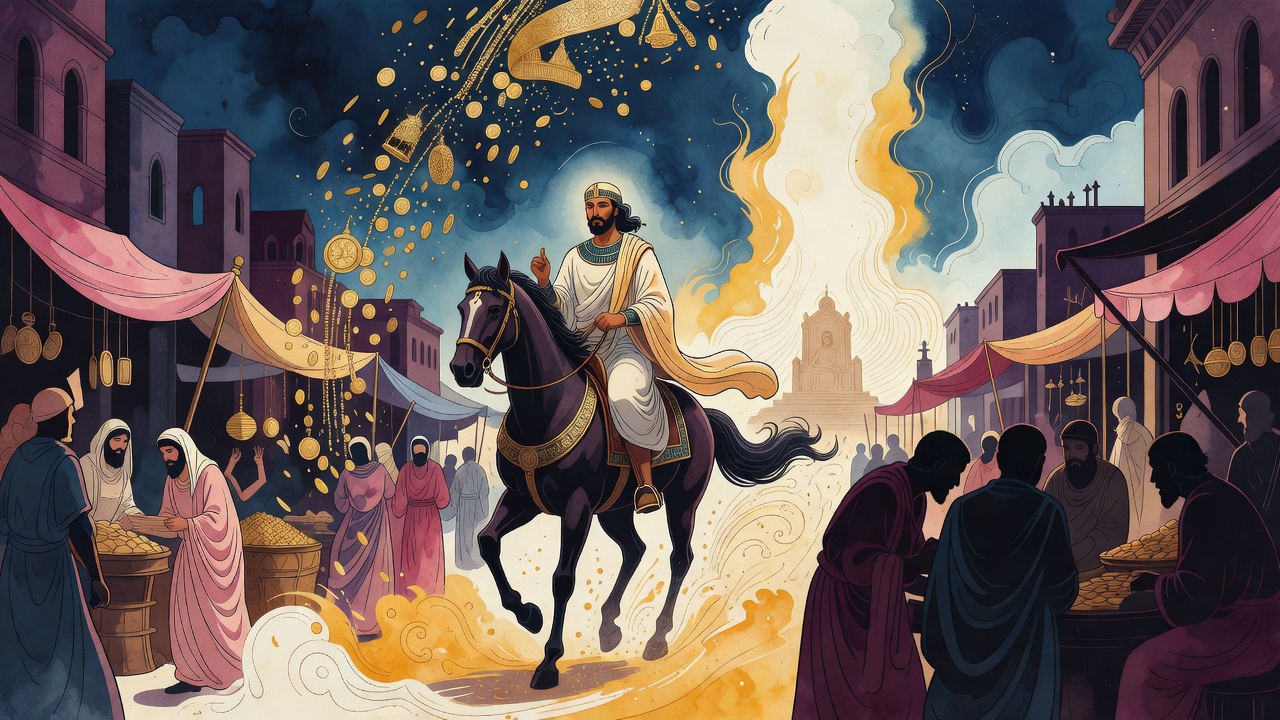
He rode a chariot after that, power heavy on the rails. Egyptian girls climbed walls and threw gold rings for a glance. His name ran ahead of him. Nobody's eye degraded him. Integrity held when praise tried to loosen it. A fruitful bough does not bend for every hand that reaches (Genesis 49:22). The rings hit the dust. Joseph looked forward, not up at the walls.

Brothers at the Gate

Years later the same ears heard Hebrew again. Ten brothers bowed for bread and did not know the face above the throne. Joseph's hands stayed still. His stomach remembered a pit and a sale and a coat torn for a story. He let the old language enter and did not smile. The market gift turned courtroom cold.

He asked them hard questions. He watched their eyes for the violence that once lived easily in their mouths. When he pressed the case of a missing brother, they answered with steel. If a master would not surrender their brother for any price, they said, they would kill the master and carry the boy off. The words landed like Shechem's blood still drying on the wind.

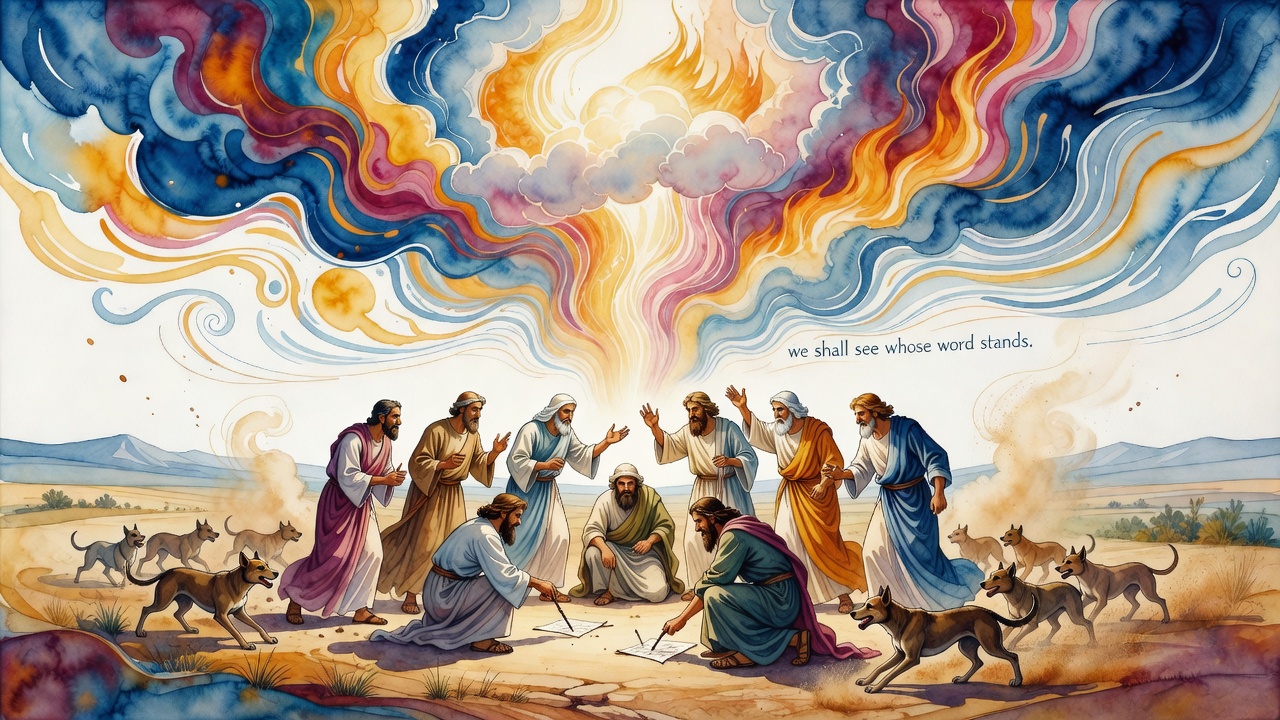
Joseph seized the sentence. "Now see how true my words were, that ye are spies. By your own admission ye have come to slay the inhabitants of the land. Report hath told us that two of you did massacre the people of Shechem on account of the wrong done to your sister, and now have ye come down into Egypt to kill the Egyptians for the sake of your brother."

The brothers flinched as if the room itself had learned Canaanite history. Joseph had not needed spies of his own. He had their mouths.

The Price of Innocence

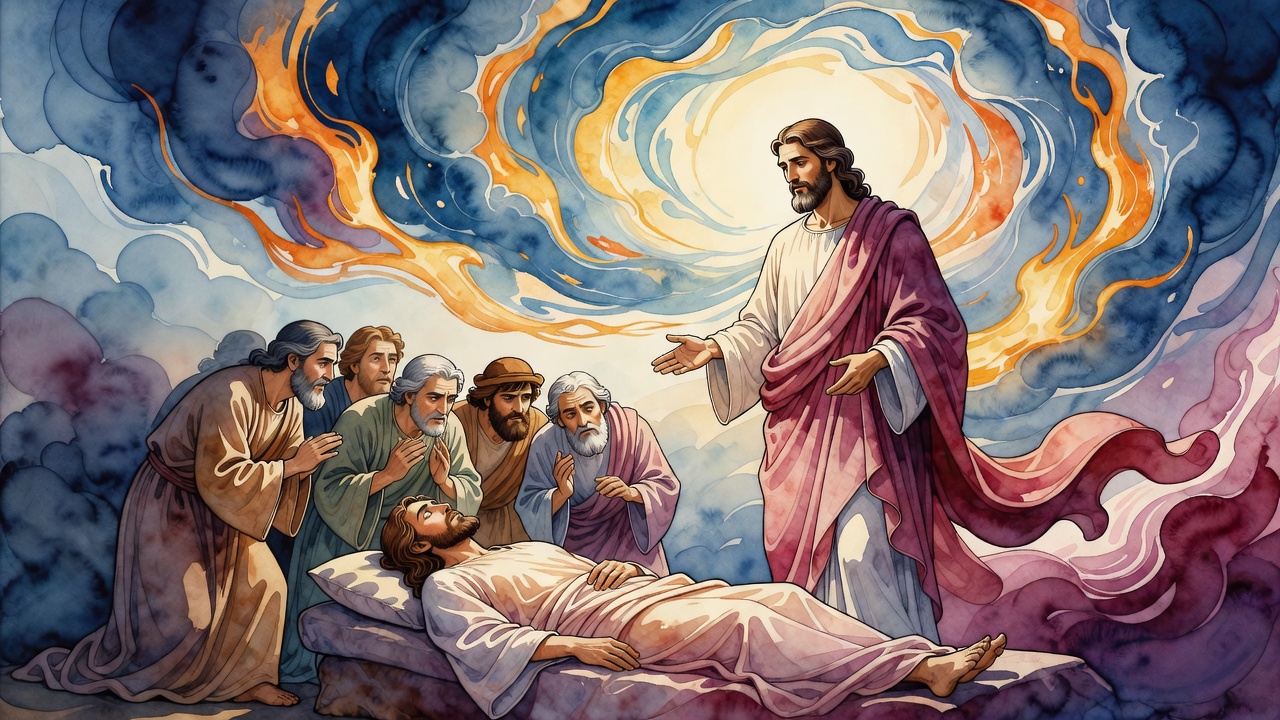
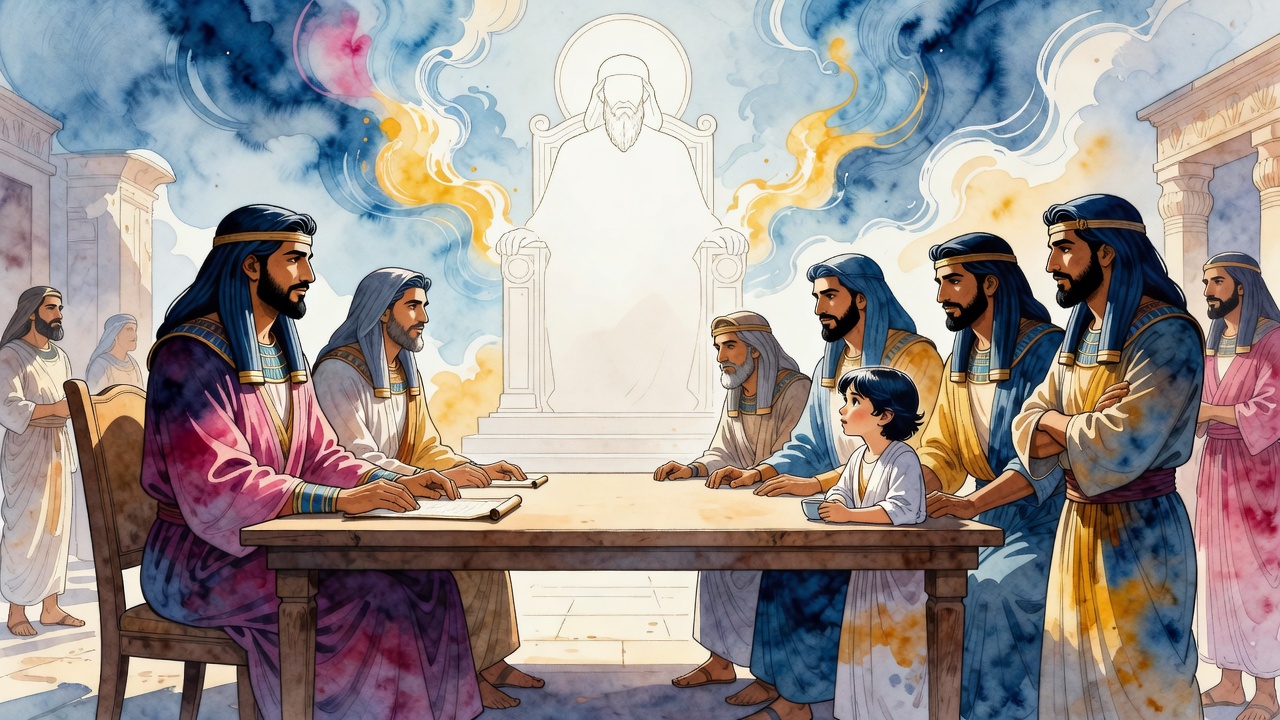
He set the test in plain speech. One of them must go home and fetch the youngest. Until Benjamin stood under Egyptian light, the charge of espionage would stick like pitch. The brothers looked at one another and heard, in a foreign court, the echo of their own old cruelty. Joseph understood every plea they muttered in Hebrew, every half-prayer, every blame they tried to pass between them.

They did not know the interpreter was unnecessary. The gift of languages was also a gift of judgment. Markets had taught him how men hide. A throne taught him how men break. Reuben's voice cracked on a memory of a dry pit. Judah measured risk like a man who has sold a brother once and will not survive selling another. Joseph catalogued each tone the way he once catalogued grain.

Grain sacks filled. Silver returned in the dark of bags. A cup would later find its way into a traveler's pack. Joseph was not finished with them. Mercy, if it came, would come after the knife of truth had finished its work. He sent them north with enough food to keep a father alive and enough fear to keep the past awake.

What the Chariot Remembered

At night Joseph walked the same markets in memory, rings flashing, voices thick as dust, and he measured the distance between a boy sold and a man who could sentence his sellers to death. He did not degrade himself with the easy revenge of the street. He degraded them with accuracy. He named the violence they still carried and forced it into the open air.

When Benjamin finally arrived, Joseph's composure would crack like a sealed jar. For this hour the market gift and the court accusation were one tool. Hear every tongue. Pin every crime. Make the brothers stand under their own words until those words could no longer hold a lie.

Egypt slept. Joseph did not. Somewhere in Canaan a father waited for sons who might not return. Somewhere in Joseph's chest a boy still cried from a dry pit. The man on the throne kept both sounds in the same room and refused to choose which one would rule the morning. The chariot waited for dawn. So did the test.

In the end the languages of Egypt had only prepared him for this: to hear his brothers clearly, and to make them hear themselves.


← All myths

From the tradition

Sources

2 sources

The texts behind this telling. Some cards carry a translation of the source; others are our own retelling of it, and each card says which. Every card links out to the original.

Pirkei DeRabbi Eliezer 39:9Pirkei DeRabbi Eliezer

Retold in our words. Read the original at the link below.Pirke de Rabbi Eliezer, trans. Rabbi Gerald Friedlander, London (1916) · CC-BY

That's just a glimpse into the incredible story of Joseph in Egypt, as recounted in Pirkei DeRabbi Eliezer, a fascinating ancient Jewish text.

This isn't just the Joseph of the multi-colored coat we remember from childhood. This is Joseph working through the complexities of a foreign land, wielding not just power, but also an almost supernatural understanding. The text paints a vivid picture: Joseph walks through the bustling marketplaces of Egypt, a cacophony of voices swirling around him. But here's the thing: he understands them all. Pirkei DeRabbi Eliezer connects this ability to a verse from Psalms (81:5), "He appointed it in Joseph for a testimony, when he went out over the land of Egypt, when I heard the speech of one that I knew not." It's more than just language skills; it's a divine gift, a sign of his unique role.

It doesn't stop there.

The scene: Joseph, now a powerful figure, rides through the land in his chariot. The Egyptian girls, captivated by his presence, climb the walls, throwing golden rings, hoping for just a glance. It's a powerful image of admiration and desire. But here's the real kicker: despite all this attention, Joseph remains untainted. Pirkei DeRabbi Eliezer emphasizes that "nobody's eye degraded him." He maintains his integrity, his inner strength. He’s respected by everyone.

The text beautifully links this to (Genesis 49:22), "Joseph is a fruitful bough… his daughters run over the wall." This verse, usually interpreted as a blessing of prosperity, takes on a new layer of meaning here. It’s not just about material wealth; it's about the magnetic pull of Joseph's character, the way he inspires admiration and devotion without succumbing to temptation.

What does this all mean? Is it just a nice story? Or is there something deeper at play?

Perhaps it's about the importance of remaining true to yourself, even when surrounded by unfamiliar cultures and temptations. Joseph is the ultimate example of someone who not only survives but thrives in a foreign land, all while maintaining his moral compass. He understands the language of the people, yes, but even more importantly, he understands the language of integrity. And maybe, just maybe, that's a lesson we can all take to heart, no matter where our own journeys lead us.

Full source
Legends of the Jews 1:217Legends of the Jews

Retold in our words. Read the original at the link below.The Legends of the Jews by Louis Ginzberg (1909) · Public Domain

The biblical Joseph is often remembered as this wise, almost saintly figure. But what if I told you there was a moment, a crucial encounter with his brothers, where he seemed.. less than perfect? Years after being sold into slavery by his own family, Joseph, now a powerful official in Egypt, is confronted by his unsuspecting brothers. They don't recognize him, of course. This sets the stage for a tense and revealing exchange, one that exposes not only their past actions but also Joseph's own complex motivations.

The drama unfolds when Joseph, testing his brothers, poses a hypothetical question: "But suppose his master should refuse to surrender him for any price in the world, what would you do?"

Their response? Cold. Calculating. "If he yields not our brother to us, we will kill the master, and carry off our brother."

Ouch.

Talk about a revealing answer. It's a stark reminder of the brothers' capacity for violence, a trait that has haunted them since the incident at Shechem. According to Ginzberg's retelling in Legends of the Jews, Joseph immediately pounces on their words.

"Now see how true my words were, that ye are spies," he accuses. "By your own admission ye have come to slay the inhabitants of the land. Report hath told us that two of you did massacre the people of Shechem on account of the wrong done to your sister, and now have ye come down into Egypt to kill the Egyptians for the sake of your brother. I shall be convinced of your innocence only if you consent to send one of your number home and fetch your youngest brother hither."

It's a masterful manipulation. Joseph twists their words, using their history of violence against them. Is he justified? Is he simply testing them, pushing them to their limits to see if they've truly changed? Or is there a hint of revenge in his actions? Is he perhaps acting with the same kind of self-righteousness that led them to sell him into slavery in the first place?

The text leaves us with so many questions. It's a reminder that the stories we inherit are not always simple tales of good versus evil, but rather intricate portraits of human nature in all its messy glory. It is worth pondering, in these moments of confrontation, who is really being tested? And who is really being judged?

Full source