5 min read

Joseph Set a Table to Test His Brothers in Egypt

Joseph seated Egypt, himself, and his brothers apart, then listened for the truth. Benjamin would reveal whether the old cruelty had died.

Curated by Arthur · Told by Maggid ·
Table of Contents
  1. The Old Accusation Came Back as Food
  2. The Question Was Buried in the Pit
  3. Benjamin Became the Measure
  4. The Wagons Had to Carry Proof Home

Joseph built the test with a table before he built it with a silver cup.
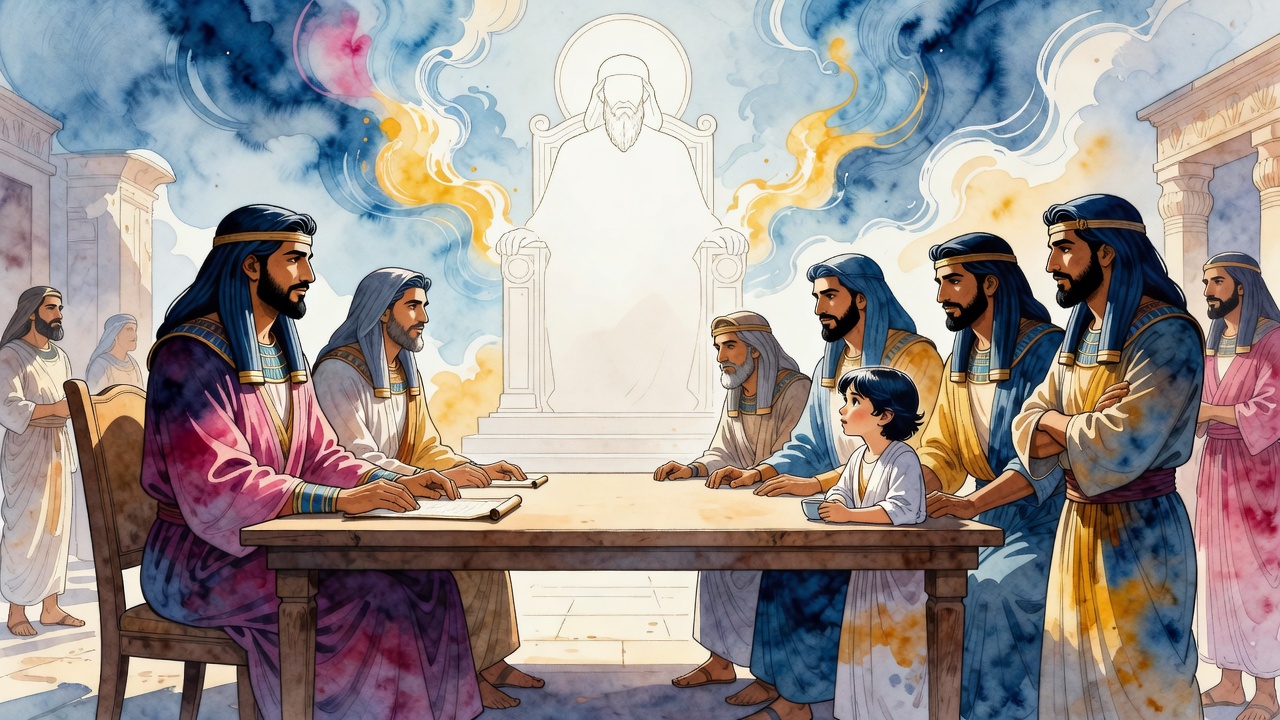
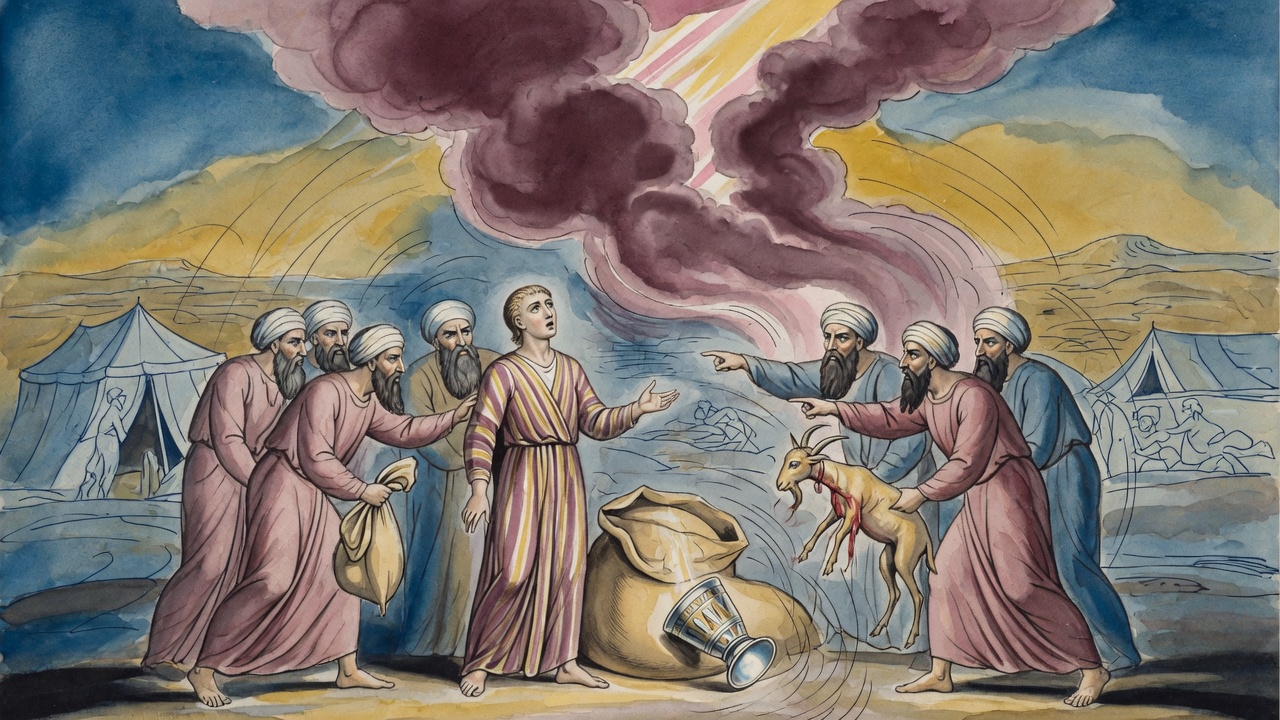
He sat apart. The Egyptians sat apart. His brothers sat apart. Three groups at one meal, divided by power, custom, memory, and the unsaid thing lying under every dish. The sons of Jacob hesitated over the food. Egypt considered their food strange, and they considered Egypt's food dangerous. Nothing about the meal could become simple.

That suited Joseph. A clean reunion would have told him nothing.

The Old Accusation Came Back as Food

Years earlier, Joseph had carried reports about his brothers to Jacob. In the old wounds between them lay claims about animals, conduct, and whether the sons of Leah and the sons of the handmaids were being treated rightly. Now the brothers sat in Egypt, suspicious of what had been served to them, and the suspicion curled back toward Joseph like smoke.

He watched them from the height of office. They did not know his face. They knew only an Egyptian ruler who seemed to see too much.

The table gave him what a prison and a throne had taught him to value: words under pressure. Men reveal themselves when the room is arranged against them. They reveal themselves when hunger, fear, shame, and etiquette tug in different directions. Joseph did not need them comfortable. He needed them true.

The Question Was Buried in the Pit

He pressed them about the missing brother.

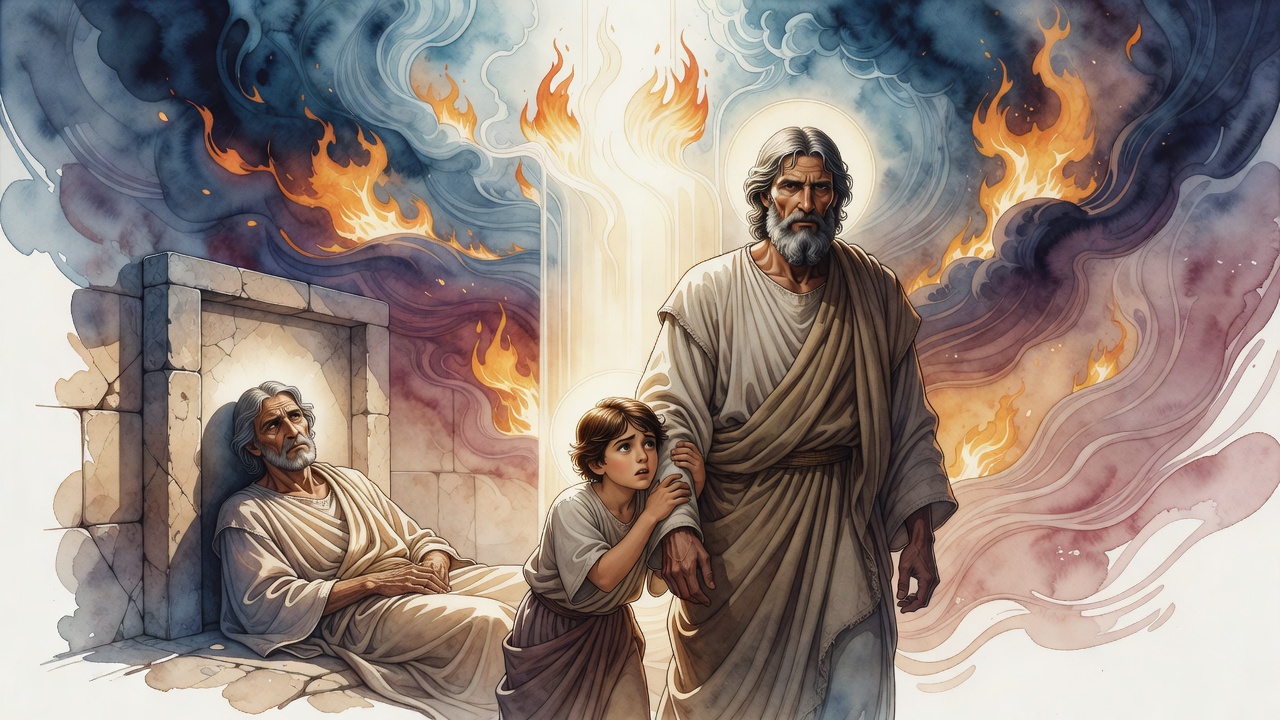
Had they thrown clods of earth on his corpse. The question sounded grotesque because Joseph wanted to hear how far the lie would go. They had told their father he was dead. They had watched a pit swallow him. They had sold him into a life that could easily have ended as death. But had they buried him. Had they covered his body. Would they add earth to the lie.

Joseph listened with terrible precision.

They did not say they had covered him. In that omission he heard the old piety still breathing. A poor man is like a dead man, he reasoned. To say Joseph was dead was not wholly false after what they had done to him. The pit had been a kind of grave. But they would not claim a burial that never happened. Their words were bent, not severed from truth.

That was not enough. The old cruelty might still be alive under careful speech.

Benjamin Became the Measure

So Joseph turned the test toward Benjamin.

Benjamin was the second son of Rachel, the child who had replaced Joseph in Jacob's visible love, the brother who had not stood at the pit. If the brothers still hated the favored son, they could abandon him. Egypt would give them cover. A ruler's accusation, a found cup, a sentence of slavery. They could walk home lighter, as they had once walked home without Joseph.

Joseph made the room into the old crime and waited to see whether anyone would step differently.

This time Judah stepped forward. This time a brother spoke not about profit, but about the father's life bound up with the child. This time the sons of Jacob would not leave Rachel's son behind. The family had returned to the pit, and the pit did not get its second victim.

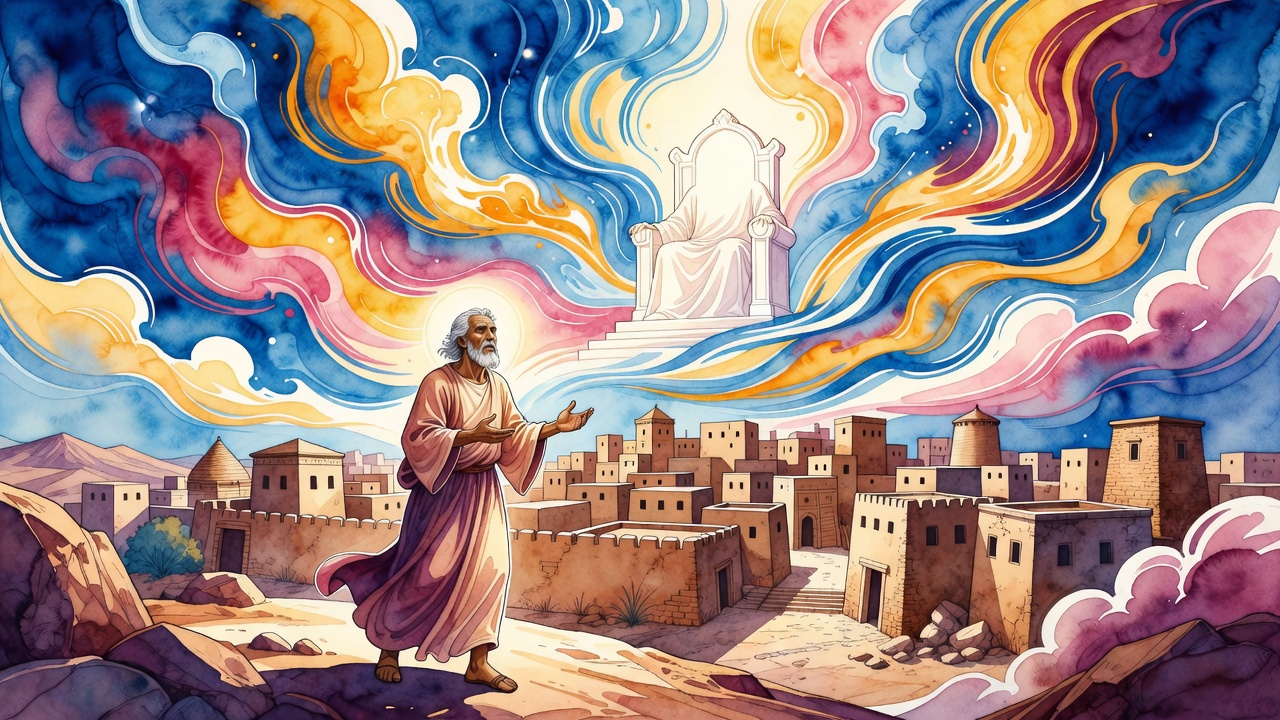
Only then could Joseph let his hidden name tear through the room.

The Wagons Had to Carry Proof Home

Even after the revelation, truth had one more wall to cross.

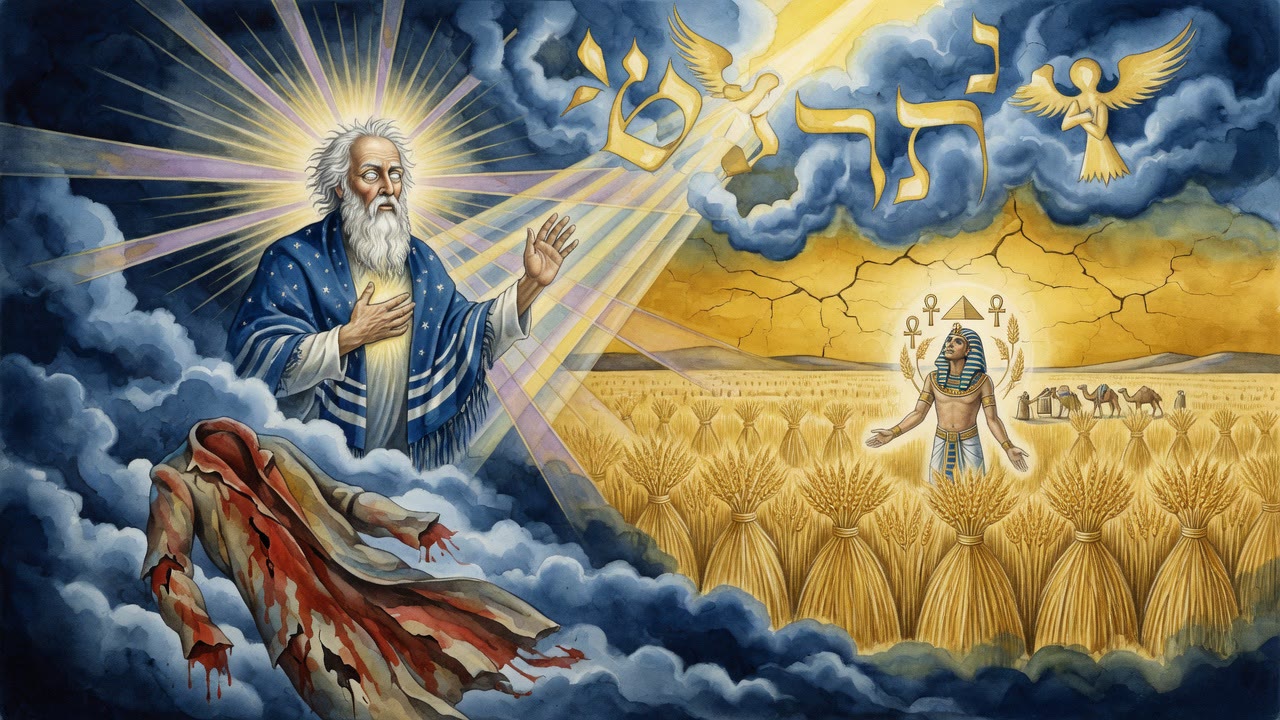
Jacob had lived too long with a bloodied garment. When his sons came home saying Joseph lived and ruled Egypt, his heart went numb. Liars carry their past into true speech, and the truth can die in the listener's ear before it reaches the heart.

Joseph knew this. He sent wagons, a sign loaded with memory. The old man saw them, heard the words Joseph had spoken, and the spirit of Jacob revived. The brothers who once brought fabric dipped in blood now brought proof that life had survived their lie.

When Joseph came to meet Jacob, he came crowned with Pharaoh's honor, then stepped down before his father. Power had not erased the son. The test had not merely exposed the brothers. It had cleared a road for the family to stand in one place again, wounded but not lost.


← All myths
From the tradition

Sources

5 sources

The texts this telling draws on, in full. Open a card to read inline, or expand it for a wider, quieter read.

Legends of the Jews 1:244Legends of the Jews

It wasn't exactly a warm family reunion around the dinner table. According to Ginzberg's retelling in Legends of the Jews, the whole meal was fraught with tension, suspicion, and some seriously awkward seating arrangements.

The table is set, but it's divided into three sections. One for Joseph, one for his brothers, and one for the Egyptians. Segregation at its finest. But why?

Well, the sons of Jacob were hesitant to even touch the food in front of them. Why? They were worried that the dishes hadn't been prepared according to kashrut, the Jewish dietary laws. Legends of the Jews suggests this was a sort of divine payback aimed at Joseph. Apparently, he had once accused his brothers of not being careful enough about these very laws. Ouch.

The awkwardness doesn't end there. The Egyptians couldn't eat with Jacob's sons either. Why? Because the Israelites ate the flesh of animals that the Egyptians considered sacred. Can you imagine the dinner conversation? "So, uh, how about those cows..?"

It just goes to show, sometimes even a simple meal can be loaded with history, cultural differences, and a whole lot of family baggage. Makes you think about the unspoken rules and tensions simmering beneath the surface of your own family gatherings, doesn't it? Food, often meant to bring people together, here serves as a stark reminder of division and past grievances. A powerful image,.

Full source
Legends of the Jews 1:310Legends of the Jews

Legends of the Jews turns to Joseph Tests His Brothers Over Benjamin's Freedom.

Joseph, now a powerful figure in Egypt, is testing his brothers. He's been playing coy, hiding his true identity. He wants to see if they’ve changed, if they regret what they did to him all those years ago when they sold him into slavery. He starts by asking them a seemingly simple question: "Did you throw clods of earth upon his corpse?"

This isn't just about the past; it’s about the present, and about the future of their family. Joseph is listening intently, not just to their words, but to the nuances, the unspoken truths lurking beneath the surface. He's become a master of observation, a skill honed, no doubt, during his years of hardship and rise to power.

Joseph, in his own mind, begins to analyze their response. “My brethren are as pious as aforetime,” he thinks, "and they speak no lies." He’s giving them the benefit of the doubt, at least initially. They told him Joseph was dead, and in a way, he was. “A poor man is like unto a dead man,” Joseph reasons. When they abandoned him, he was as good as gone to them. They even stood beside his "grave," that is, the pit they threw him into. But, Joseph notes, they carefully avoided saying they covered him with earth. To do so would be a blatant falsehood.

It's a fascinating insight into Joseph's thought process, isn't it? He’s picking apart their words with the precision of a Talmudic scholar analyzing scripture. He is looking for the truth, but also perhaps hoping to find some sign of remorse.

Then comes the turning point. Joseph, unable to contain himself any longer, accuses them: "Ye lie when ye say that your brother is dead. He is not dead. You sold him, and I did buy him. I shall call him, and set him before your eyes." He then dramatically calls out, "Joseph, son of Jacob, come hither! Joseph, son of Jacob, come hither! Speak to thy brethren who did sell thee!"

Imagine the scene! The brothers, already on edge, are now frantically looking around, searching for a phantom Joseph. According to Ginzberg's retelling in Legends of the Jews, they turned their eyes "hither and thither, to the four corners of the house." Their minds are racing, filled with fear and disbelief. Is this a trick? A curse? A nightmare?

And then, the revelation. Joseph declares: "Why look ye here and there? Behold, I am Joseph your brother!"

The impact is devastating. “Their souls fled away from them,” we are told. They are utterly speechless, paralyzed by the shock of recognition and the weight of their past actions. They are confronted with the living embodiment of their guilt. They can make no answer. It's a moment of profound reckoning. Only through divine intervention, a miracle, are their souls returned to them. Their very souls are said to have fled. That's how powerful guilt and shame can be. The weight of their secret, buried for so long, has finally surfaced, and it almost destroys them. As we find in Midrash Rabbah, the consequences of our actions, especially those rooted in betrayal and deceit, can have a profound and lasting impact, not just on others, but on ourselves as well.

What does this story teach us? Perhaps it's a reminder that the truth, however painful, eventually comes to light. Or maybe it's a lesson about the enduring power of family, forgiveness, and the possibility of redemption, even after years of separation and wrongdoing. Joseph's story, enriched by these legends, is a powerful evidence of the complexities of human relationships and the enduring search for truth and reconciliation.

Full source
Bereshit Rabbah 94:3Bereshit Rabbah

Out of the blue, his sons return from Egypt with news that Joseph is not only alive, but a powerful ruler! It's a moment of incredible joy, but also… disbelief.

The Torah tells us in (Genesis 45:25), “They went up from Egypt, and they came to the land of Canaan, to Jacob their father.” And then, the bombshell: “They told him, saying: Joseph is still alive, and he is ruler over the entire land of Egypt. His heart was faint because he did not believe them.”

Why didn't he believe them? Rabbi Ḥiyya, in Bereshit Rabbah 94, offers a powerful insight: “What is the plight of the liar? Even if he says truthful matters, he is not believed.” Had Jacob's sons perhaps stretched the truth in the past? Had their past actions sown seeds of doubt that now bloomed in this crucial moment? It’s a sobering thought. How our past actions can impact our present credibility.

The story doesn't end there. (Genesis 45:27) continues, “They spoke to him all the words of Joseph that he had spoken to them, and he saw the wagons that Joseph sent to convey him, and the spirit of Jacob their father was revived.” What was it about those wagons that finally broke through Jacob's disbelief?

The midrash (rabbinic interpretive commentary), in Bereshit Rabbah, gives us a fascinating detail. Apparently, the wagons Pharaoh sent were adorned with idols! Can you imagine the shock? Judah, ever the staunch defender of monotheism, immediately burned them. The text notes that this tribe is experienced in burning idols, referencing II (Samuel 5:21) and I (Chronicles 14:12). It's a powerful image: a decisive act of faith amidst a moment of profound emotional upheaval.

But there's another layer to this. Rabbi Levi, in the name of Rabbi Yoḥanan bar Shaul, offers a different interpretation. Joseph anticipated Jacob’s disbelief. He instructed his brothers to remind Jacob of something specific: the last thing they studied together before Joseph disappeared – the passage of the beheaded calf, the egla arufa. This ritual, described in Deuteronomy 21, deals with unresolved guilt and atonement when a murder occurs and the perpetrator is unknown. So Joseph was telling his brothers "If he doesn't believe you, remind him of the egla arufa."

Why this specific halakha, this specific law? What was Joseph trying to convey? Perhaps it was a coded message, a sign that only Jacob would understand, a way to prove his identity and his unchanged connection to his father's teachings. The word "wagons" in Hebrew is haagalot, and the midrash connects this word to the teaching of the egla arufa. "He saw the wagons [haagalot]…and the spirit…was revived.”

Finally, Jacob believes! “Israel said: Enough, Joseph my son is still alive; I will go and see him before I die” (Genesis 45:28). The Hebrew word for "Enough" is "rav." But the midrash sees something deeper here. “Israel said: Enough [rav]” – the power of my son Joseph is great [rav], as many troubles befell him, but still he remained in his righteousness much more than I did, as I sinned when I said: “My way is hidden from the Lord” (Isaiah 40:27).

Wow. Jacob isn't just relieved; he's in awe of Joseph's resilience and righteousness. He contrasts Joseph's unwavering faith with his own moment of despair, when he felt abandoned by God. It’s a moment of profound self-reflection. Jacob acknowledges his own failings while celebrating his son's strength.

And yet, even in this moment of humility, Jacob finds hope. “But I am certain that I have a portion in ‘how great is Your goodness’ (Psalms 31:20).” According to the Etz Yosef commentary, based on Tanhuma Vayigash 9, Jacob knew through divine inspiration that if none of his sons were to die during his lifetime, he would be assured of a place in the World to Come.

What a powerful pattern of faith, doubt, reconciliation, and hope! This passage in Bereshit Rabbah isn't just a story about Jacob and Joseph; it's a story about the human condition. It reminds us that even in our darkest moments, even when disbelief threatens to overwhelm us, the spark of faith, the power of connection, and the hope for redemption can still be rekindled. And sometimes, all it takes is a wagon… or a memory of a shared teaching… to revive our spirits.

Full source
Legends of the Jews 1:335Legends of the Jews

The story unfolds as Jacob, after years of heartbreaking separation, is finally reunited with his beloved son, Joseph, in Egypt. Imagine the scene: Joseph, now a powerful figure adorned with the royal crown – yes, the very crown of Pharaoh himself, granted to him for this momentous occasion. Can you picture the splendor?

He approaches his father in a grand procession. The verse reads, Joseph, showing proper respect, dismounts his chariot some fifty ells (an ancient measurement, roughly equivalent to the length of a forearm) from his father. He walks the remaining distance on foot. What a powerful image of humility! The princes and nobles of Egypt, witnessing this, follow his example.

As Jacob sees the approaching procession, his heart overflows with joy. So much so that, even before recognizing Joseph, he bows down in reverence. A natural reaction, wouldn't you think? A father overwhelmed with emotion at seeing his long-lost son, now a figure of such importance.

This act, carries a consequence. According to Ginzberg's retelling in Legends of the Jews, this moment of allowing his father to bow before him becomes a critical turning point. A punishment, we are told, was visited upon Joseph.

What was this punishment? An untimely death. The story suggests that Joseph did not live out the full span of years allotted to him because of this perceived transgression.

Why? What’s so wrong with a father showing his son respect?

It's a complex question, isn't it? Perhaps the story is a reminder of the delicate balance between earthly power and familial piety. Maybe it serves as a warning against allowing worldly success to overshadow the fundamental obligations we have to our parents and elders.

We're left to ponder the weight of leadership, the subtle ways in which even seemingly innocent actions can have profound consequences. The story of Joseph's reunion with Jacob is not simply a heartwarming tale of familial reconciliation; it’s a reminder that even in triumph, humility and reverence remain paramount. What do you think? What lesson resonates most deeply from this ancient narrative?

Full source
Targum Pseudo-Jonathan on Genesis 43:32Targum Pseudo-Jonathan on Genesis

The banquet is served on three separate tables. Joseph at one. His brothers at another. The Egyptian officials at a third. The Torah notes the separation briefly. Targum Pseudo-Jonathan explains it without blinking.

"It was not proper for the Mizraee to eat bread with the Yehudaee, because the animals which the Mizraee worshipped the Yehudaee ate" (Genesis 43:32). Egypt worshipped the ram and the bull. The Hebrews slaughtered them for dinner. A shared table was unthinkable.

The Targum is not prudish about this. It names the theological collision plainly. Two civilizations cannot sit at the same meal when the main course of one is the god of the other. Culinary law, in Judaism, is inseparable from theology. What you eat declares what you do not worship.

This detail also sharpens the poignancy of the scene. Joseph, who will soon reveal himself to his brothers, eats at his own Egyptian-style table, alone. He cannot sit with his brothers without giving himself away as a Hebrew. He cannot sit with the Egyptians without turning his back on his father's house. So he sits by himself, a ruler in a room of three unbridgeable tables, wearing a mask in front of everyone.

The sages hear in this verse a warning that echoes throughout exile: you can rise to the top of a foreign court, but the seating chart will always remind you where you actually belong. Joseph's solitary table is, in the Targum's telling, the first glimpse of the long Jewish pattern, present at the meal, separated by law, trusted with the kingdom, never quite at home.

Full source