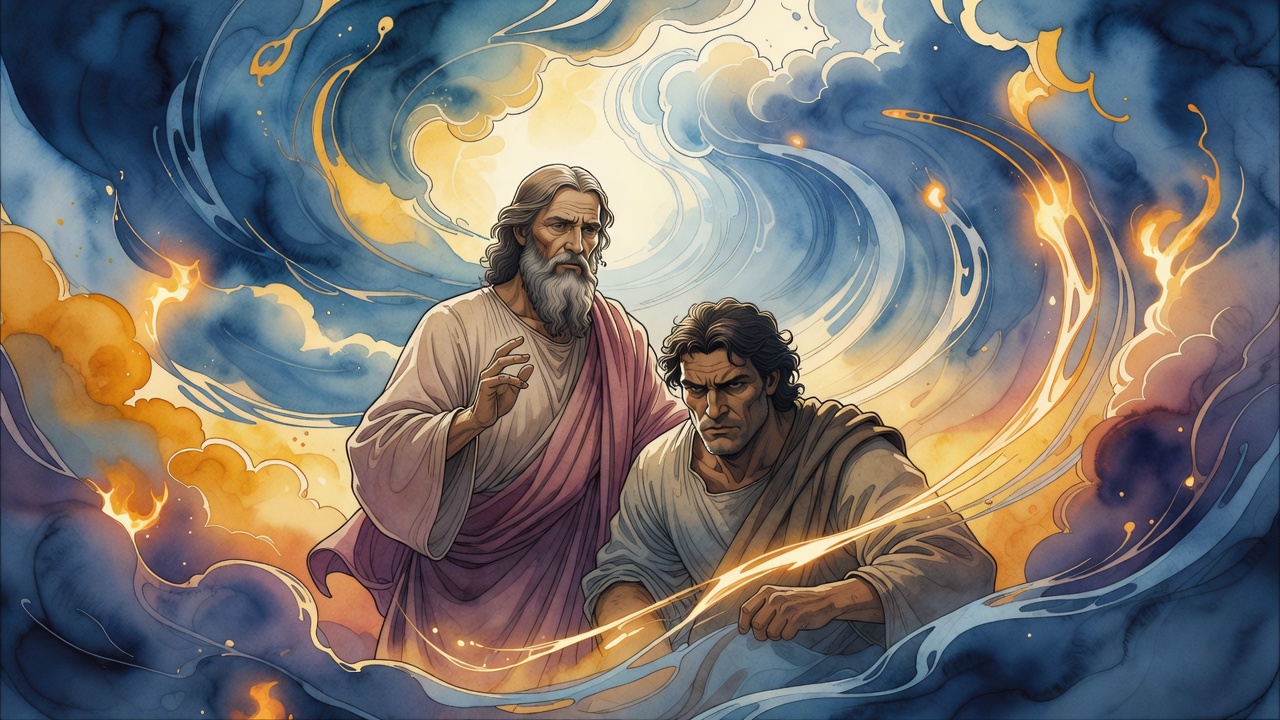
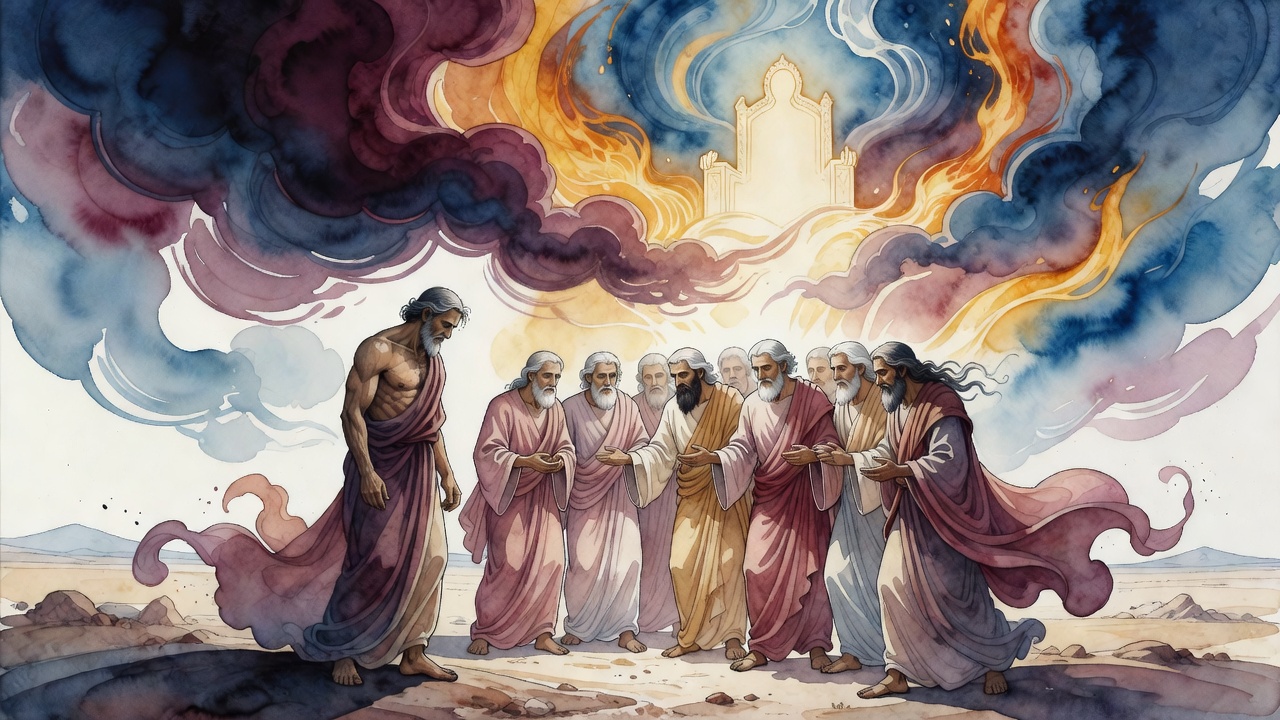
An Angel Assembles Jacob's Scattered Sons
Jacob called for his sons and the corridors stayed empty. Twelve grown men, and not one of them in the room where he was dying.
Table of Contents
Jacob said gather, and the house in Egypt did not move.
 Click for full size
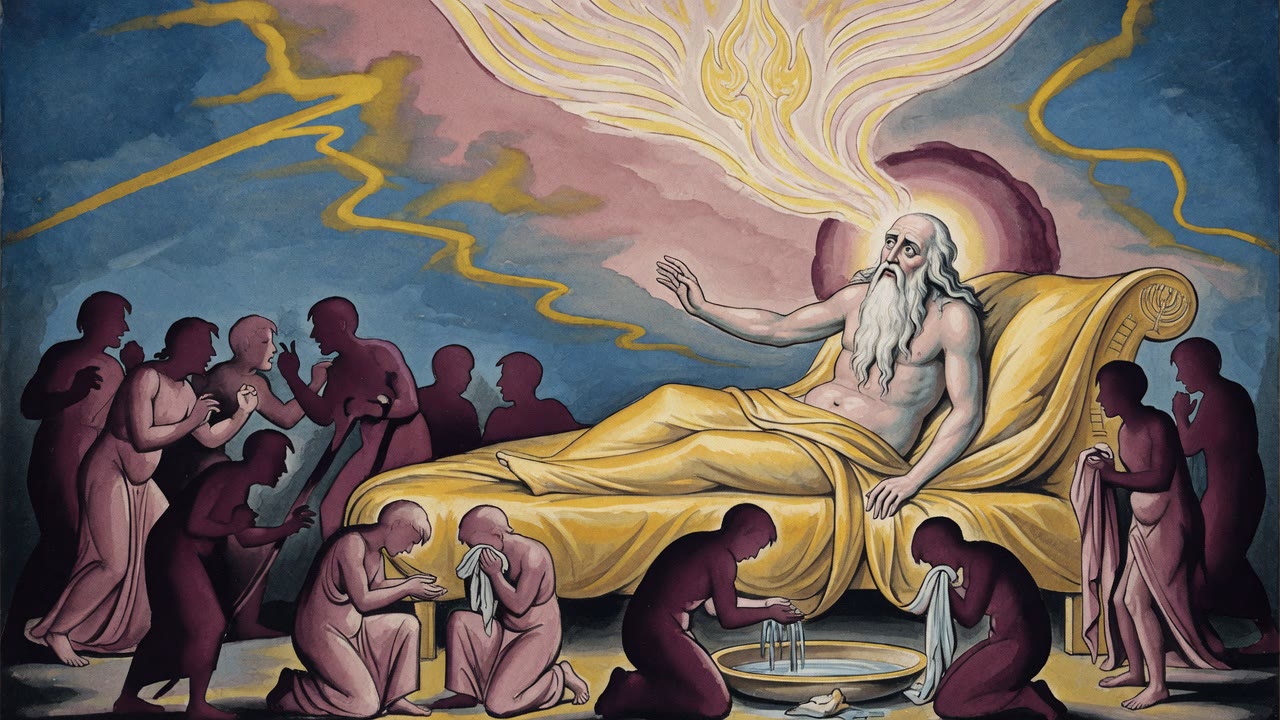
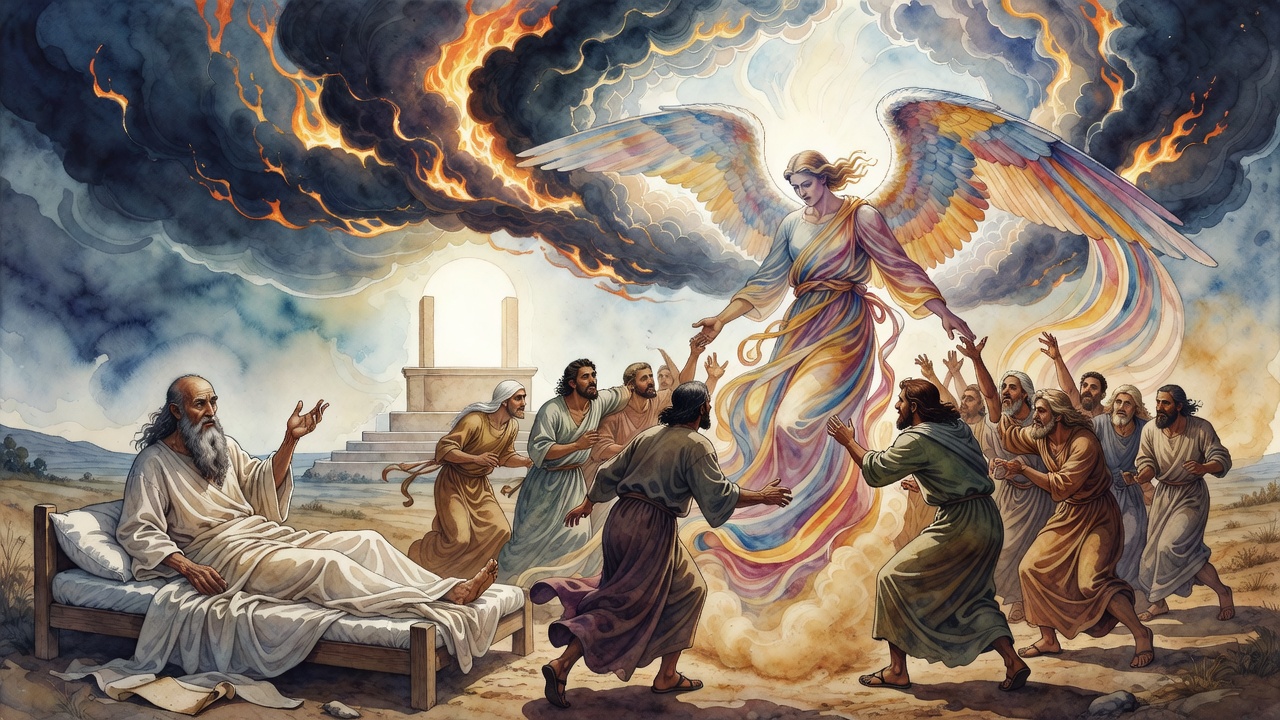
His breath was thinning. Twelve sons, scattered through Goshen. Not one of them in the room. Joseph had a palace. The others had old wounds and separate weather. A dying father's voice does not fill a corridor that long (Genesis 49:1).
The House Did Not Answer Him
He tried again. The next breath changed the verb. "Assemble and hear, sons of Jacob, and listen to Israel your father" (Genesis 49:2). The first word had been his. The second was a summons that needed more than a tired throat.
The bed could not reach them. Goshen was a scatter of houses. Grown men do not come because an old man asks, not after a coat, not after a pit, not after years of eating at different tables.
Jacob closed his eyes. He could not chase anyone down a hall. He could only speak, and speech was already leaving him.
An Angel Drove the Sons In
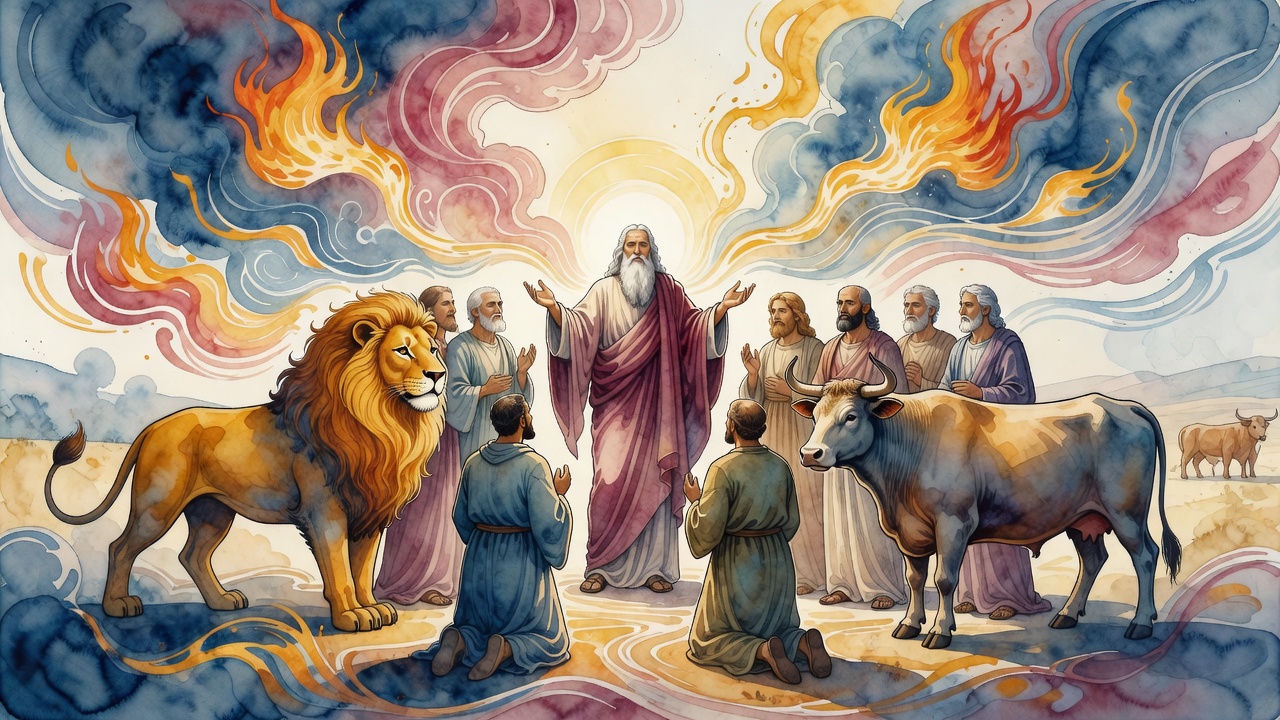
Then the corridors filled. An angel assembles nothing by asking. He moved through the house the way a wind herds smoke, pushing grown men who had not meant to walk together. Doors opened that had been shut. Joseph came down from power. Reuben came with the old firstness still on him. Simeon and Levi came side by side, as they always had when trouble needed a blade. Judah came last of the early ones, already carrying a weight that did not yet have a name.
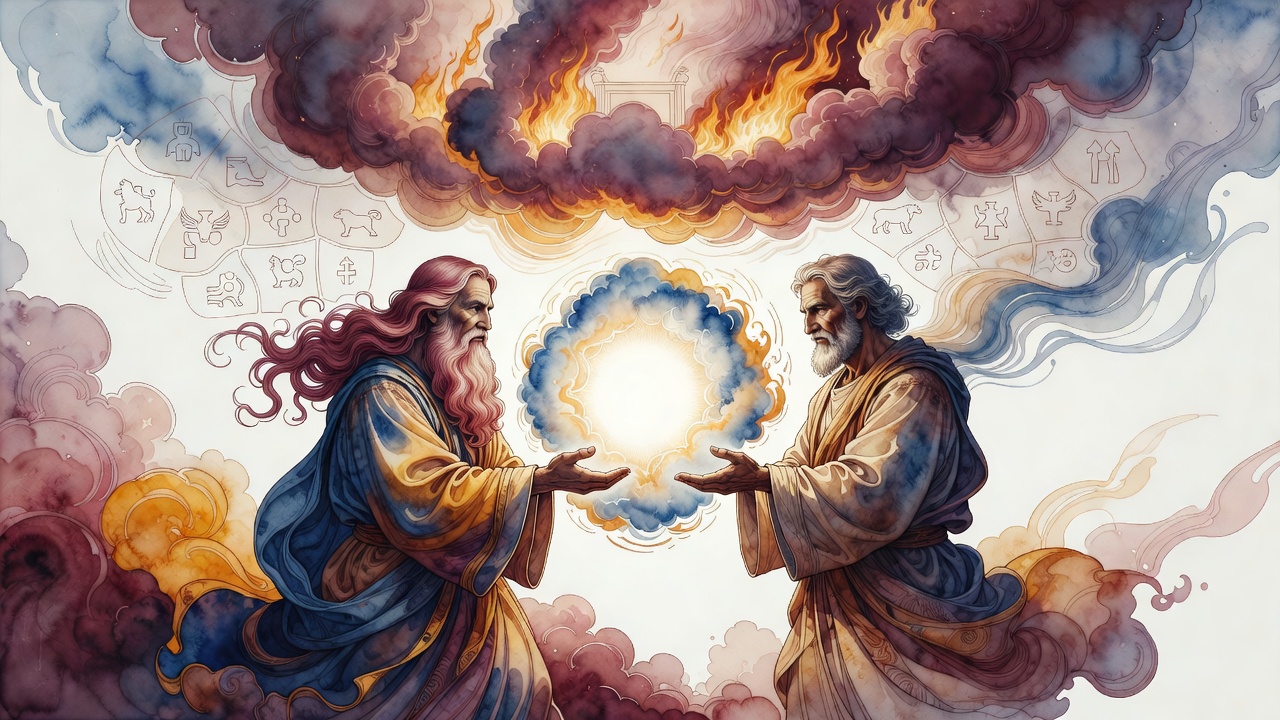
The Ruach HaKodesh, the Divine Spirit, was in the room as well, some said later. Jacob felt only the sudden crowd. Twelve faces. One air. The reunion itself arrived before any blessing left his lips. Presence was the first gift. Speech came second.
A servant stood in the doorway with a summons still in his hand, unused. Heaven had not waited for him.
He Asked About a Split Heart
Jacob looked at the twelve the angel had forced into one air. "Listen to the God of Israel your father who is in Heaven. Do you have, perhaps, in your heart, a split over the Holy One?"
He needed to know, before he closed his eyes, that the twelve would not split the Name the way they had once split a coat.
They did not look at Joseph. They did not look at the place where a coat had been. They spoke together.
"Hear, Israel our father. As you have no split in your heart over the Holy One, so there is none in ours. The Lord is our God. The Lord is one."
The Shema (שמע), Hear, left their mouths as an answer to a dying man, not yet as a twice-daily law. Jacob's lips moved. "Blessed be the name of His glorious kingdom for ever and ever."
The room had been a scatter. It was now a listening. Long before stone synagogues, a deathbed in Egypt became the first room of that sentence.
God Completed the Sentences
Jacob cried out to God on High, the way a man cries when he still has work and almost no breath. He asked that the Almighty complete for him what he was about to speak. Each son would take a sentence. Each sentence would have to stand after the body on the bed was gone.
God agreed. He would give each one what he deserved. The blessings were not flattery poured on a favorite. They were a court held in soft speech, with a dying man as the only visible judge and heaven as the seal.
Reuben heard firstness broken open. Judah heard a scepter that would not depart. Joseph heard a bow that held under pressure. Simeon and Levi heard a scattering. Each name took a sentence that would outlive the house in Goshen.
The angel had done the hard work of presence. Jacob did the harder work of truth without the strength to chase anyone. He could only speak. They had to stand close enough to be wounded by accuracy, close enough that no one could pretend he had meant another brother.
When the room emptied into history, the verbs remained: gather, assemble, hear, listen. A nation would keep repeating them long after Egypt forgot the shape of that bed.
Outside, the Nile kept its own calendar. Inside, a family that heaven had to assemble learned what it costs to be one people under one Name.
← All myths