5 min read

Eliezer Sucked Dust and Won Two Portions

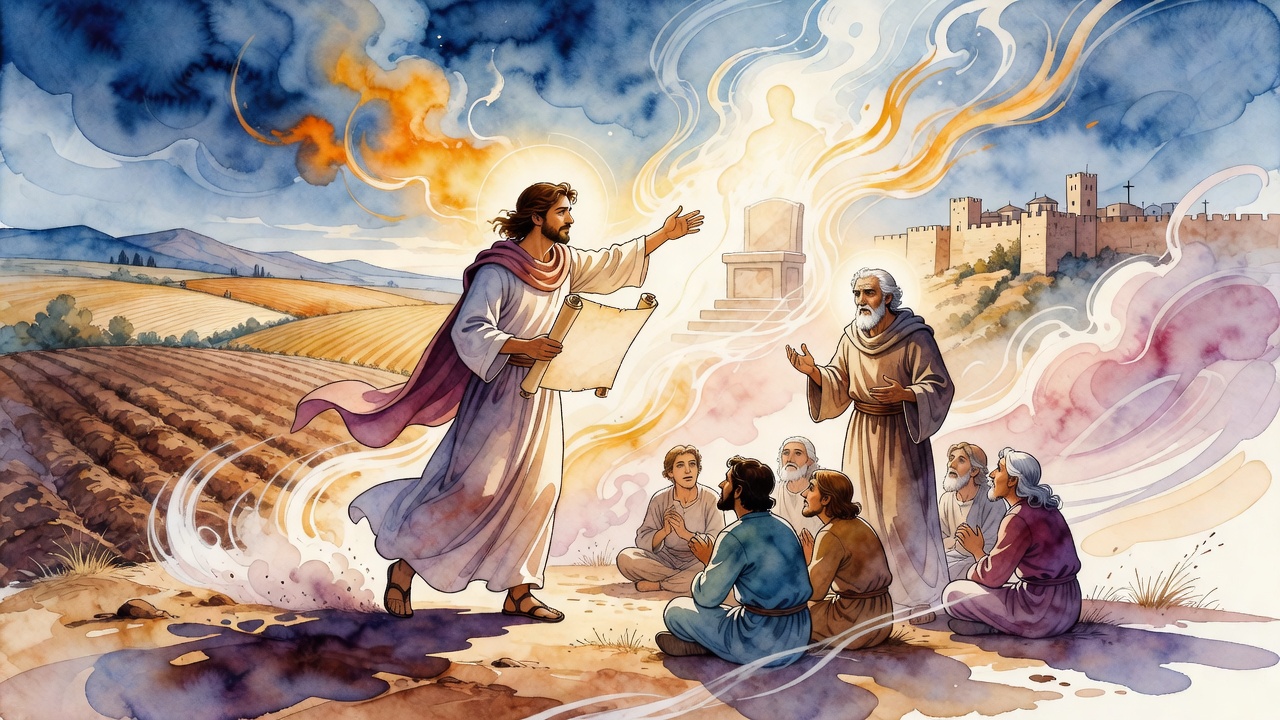
Eliezer left his father's herds to study Torah in Jerusalem. He had no bread, so he ate dust. His father came to cut him off and gave him double.

Curated by Arthur · Told by Maggid ·
Table of Contents
  1. Flight Toward the City
  2. A Sack of Dust
  3. The Father at the Door
  4. Four Crowns Before the Handing On
Eliezer Sucked Dust and Won Two Portions Click for full size

Flight Toward the City

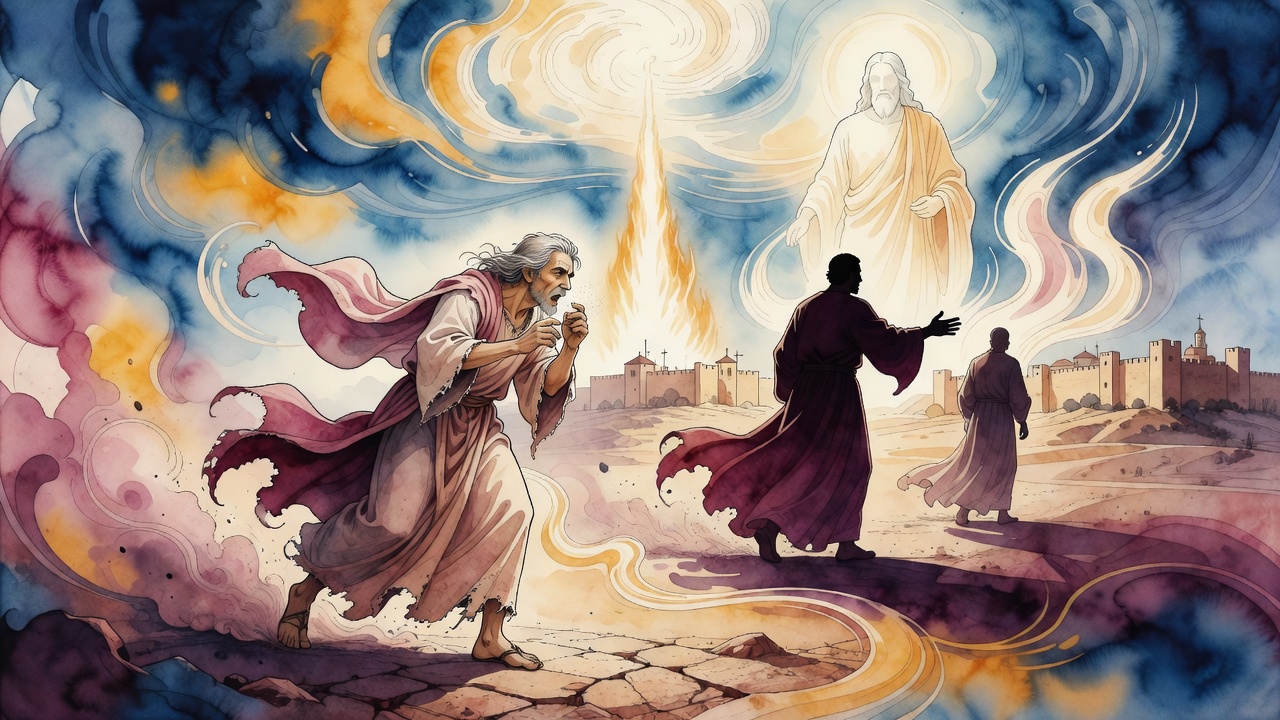
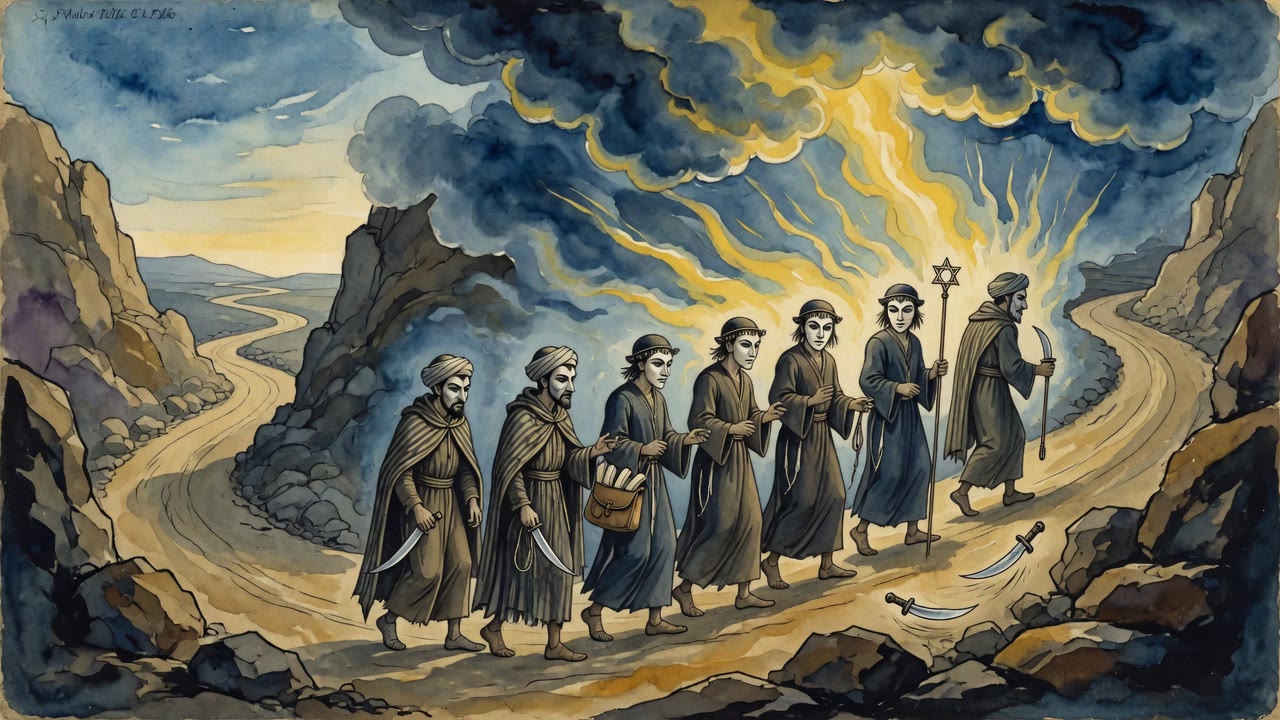
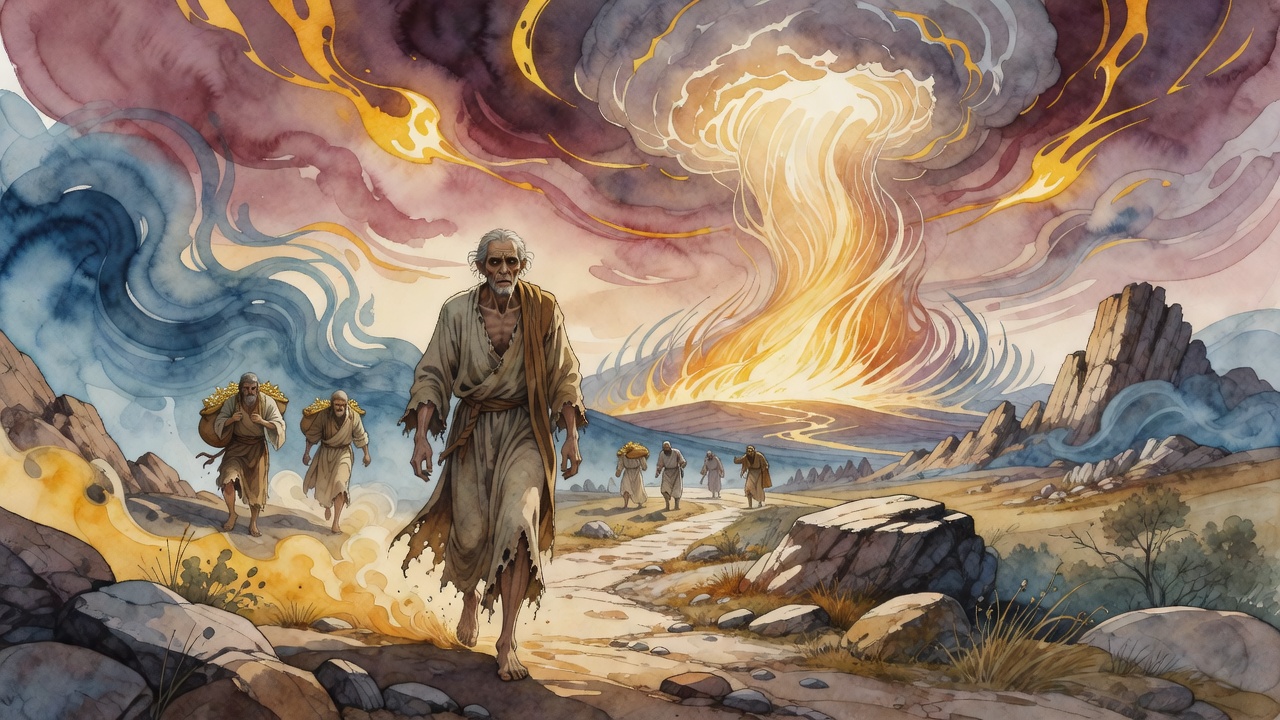
Eliezer ben Hyrcanus was a youth of the palace, son of a man bound to kings and commanders. When danger rose and his father fled with cattle and camels, Eliezer fled too, but not toward safety with the herd. He fled to Jerusalem with neither bread nor coin and entered the holy city like a pauper whose name still smelled of courts.

He found Rabban Yohanan ben Zakkai teaching Torah in a house that did not ask for pedigrees at the door. Eliezer sat among the students. Days passed. His breath grew foul. They covered their faces in silence, too polite or too shocked to name the smell. The master understood before they spoke: this was not sickness of the mouth. It was the stench of hunger worked into the teeth and tongue.

The palace son had chosen a different wealth and was paying for it in private, still too proud or too pure to beg in the streets of the city he had chosen over camels.

A Sack of Dust

Students searched the inns until a woman showed them one sack that traveled with the boy. They opened it and found only dust. Eliezer pressed his face into the earth and sucked as a man drinks from a wineskin, extracting what moisture and grit could keep a body upright for another hour of listening. Astonished, Rabban Yohanan set money aside so Eliezer could eat as he once had in his father's house. His breath healed. The secret left the mouth. The student remained.

Years passed over the same benches. The mouth that had tasted dust learned to open the parashah until the room leaned in. Tallit and tefillin (small boxes of scripture bound to arm and head) settled on shoulders that had once been empty of bread. The boy who would not beg became the man others came to hear.

The Father at the Door

Jealous brothers told Hyrcanus that Eliezer had abandoned him to feast in Jerusalem while the father suffered exile with the herds. The rumor was half true and all poison. The father came on the Sabbath to disinherit his son before all Israel, to cut a name from the ledger in public so the cut would hold.

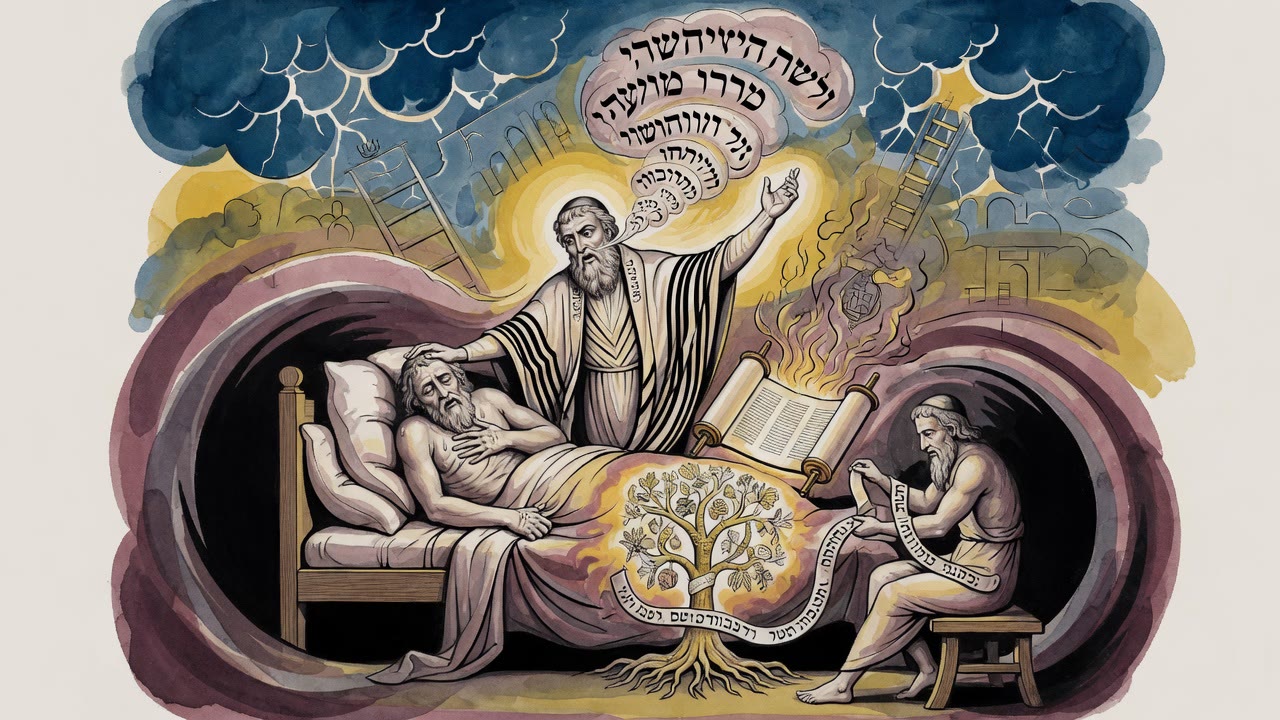
He expected a wastrel soft with stolen comfort. He found a scholar wrapped in fringes, seated on the chair, expounding the parashah of Amraphel before the multitude with a clarity that made the old man's anger lose its map. His heart turned in the doorway. He rose upon the bench and declared: I came to cut you off. Now I give you two portions more than your brothers.

The sentence of exile became a double inheritance because the evidence in the house of study outweighed the rumor at home. Dust had been the price of the first years. Double portion was the public correction of a father's error, spoken where everyone could hear the reversal.

Four Crowns Before the Handing On

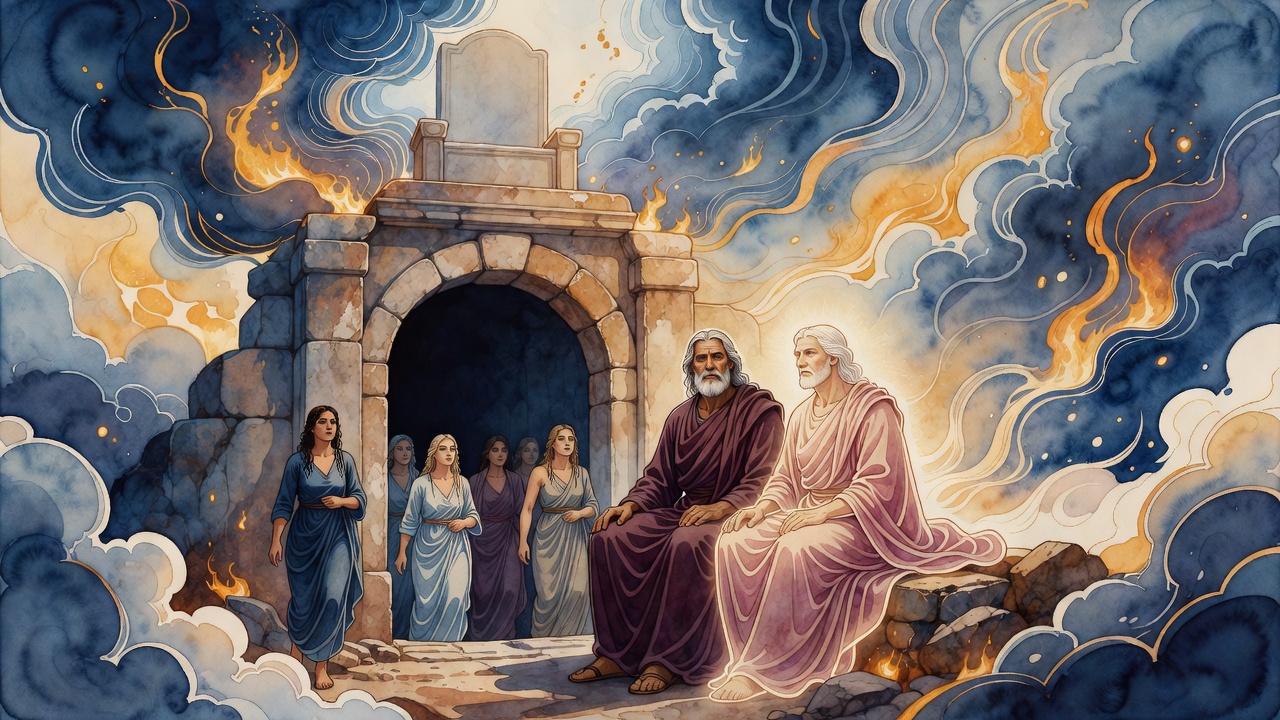
Before there was an Aaron to serve, before any Levite mounted the platform, before the first ram smoked on the altar, Moses held four firsts at once. He served as high priest during the seven days of consecration, the millu'im, wearing an office he would later hand to his brother. He set Eleazar on the duchan as chief over the princes of the Levites. He turned the whole ram to smoke with his own hand. He alone was summoned up the mountain for the tablets, the Torah, and the commandment written to instruct them.

Priesthood, platform, offering, and teaching all pass first through Moses' hand, then onward to those who will carry them for the people. Eliezer's path is not Moses' office, but it rhymes hard enough to bruise: the one who takes on Torah when the house offers camels and courts may look like a traitor to the family ledger and still be first in the only ranking Heaven keeps.

Hyrcanus came to erase a name and wrote it larger. The boy who sucked dust sat clothed in commandment and taught. Inheritance followed learning, not the other way around, and the brothers who had sent the rumor went home with thinner portions and a story they could not unsay.

In the house of study the chair is warm where Eliezer sat. Outside, camels wait for a father who no longer needs the rumor. Dust still clings to an empty sack in a forgotten inn, proof of the years before the double portion was spoken aloud.

In the house of study the chair is warm where Eliezer sat. Outside, camels wait for a father who no longer needs the rumor. Dust still clings to an empty sack in a forgotten inn, proof of the years before the double portion was spoken aloud.


← All myths
From the tradition

Sources

2 sources

The texts behind this telling. Some cards carry a translation of the source; others are our own retelling of it, and each card says which. Every card links out to the original.

Midrash Tanchuma Buber, Lech Lecha 10:1Midrash Tanchuma Buber, Lech Lecha

Translation of the source text.Midrash Tanchuma (Buber), Public Domain, on Sefaria · CC-BY-SA

There is a story about Rabbi Eliezer ben Hyrcanus, who was a child of the palace; and his father was attached to the government and to the affairs of the army commanders. In time, Rabbi Eliezer's father went to another place. When he sensed that they were coming, he said to his sons: Let us arise and flee from before them. At once he called his witnesses and his servants. He said: Bring me the cattle and the camels. They loaded the goods upon the cattle, and Hyrcanus and his sons fled. But Rabbi Eliezer did not go with his father; rather he fled to Jerusalem. And he took in his hand neither a loaf nor a coin nor anything at all, but entered Jerusalem like a poor man.

And he saw Rabban Yohanan ben Zakkai sitting and teaching Torah, with the students sitting before him at the lesson. When they finished the lesson, he would tell them haggadah, and afterward he would say mishnah. He entered and sat beside Rabban Yohanan ben Zakkai. He spent two or three weeks before him, and he came to speak before the students, and they would smell the foul odor of his mouth, and they would conceal it and say nothing. Again he came to speak, and they would conceal it and say nothing. Again he came to speak, and they would conceal it and say nothing. Rabban Yohanan ben Zakkai knew that the odor of his mouth did not speak of something bad that was within his mouth, but rather came from hunger, for he was not eating anything.

Rabban Yohanan ben Zakkai said to the students: By your lives, examine the matter and find out what is the affair of this student, whether he is hungry, and what he eats. And they went about all Jerusalem and asked the innkeepers: Is there a haver lodging here? They said to them: No. They came to a certain woman. They said to her: Is there a haver lodging here? She said to them: Yes. Does he have anything here? She said to them: He has one sack. They said to her: Show it to us. At once she brought it before them. They opened it and found in it dust, for he would put his head into it and suck as upon a wineskin. They went and told Rabban Yohanan ben Zakkai, and he was amazed at the matter, and he saw the righteousness that was in the hand of Rabbi Eliezer, that he did not demand of any man, saying, Give me something. At that hour he set aside much money for him, so that he might eat good foods, as he had been accustomed to in his father's house, where he would eat and drink well, until the odor of his mouth was healed.

He spent before Rabban Yohanan ben Zakkai one, two, and three years, until Rabbi Eliezer's father returned to his place. When he came to his place and remained there a month and two months and Rabbi Eliezer his son did not come, it grieved him to say that he had abandoned him and gone off to Jerusalem. And the brothers of Rabbi Eliezer said to their father: See what Eliezer your son has done, he abandoned you and went off to Jerusalem to eat fattened delicacies, while you carried yourself away from your house and went after him. Were it a bad matter, he would not leap to take an inheritance. And how great is the difference between us and your son! We gave our lives for you and did not abandon you, but he did not come to see your distress; and now, if he hears that some matter has befallen you, he is destined to come to us and share with us. At that hour he said to them: In such-and-such a manner he shall inherit nothing from me. They said to him: When you die, you remove him. He said to them: Call me a tablet. They said to him: It will be of no use. There is in Jerusalem a certain nasi, and his name is Rabban Yohanan ben Zakkai, and he supports him; and when you die, he will surely come, and he will say, Who says that his father removed him? And we shall bring out the writing, and he will say, It is a forgery, you made it, and I do not believe it, until we come to a court of law.

He said to them: Since you have said this before me, even though Rabban Yohanan ben Zakkai praises him, I will remove him. At that hour his sons mounted him upon a carriage, and he entered Jerusalem on the eve of the Sabbath. He said: I will not remove him except on the Sabbath in the house of study, when? At the hour when all the congregation assembles. He entered to sit in the house of study, and all Israel entered according to their custom to hear the homily that Rabbi Eliezer was expounding before the multitude upon the chair, with the hazzan standing before him. His father saw him wrapped in his prayer-shawl with tefillin upon his head. At once he saw, for he had supposed that he had gone off to evil ways. When he saw him sitting upon his chair and expounding, Hyrcanus stood upon the bench and said before the people of Jerusalem: I did not come up to Jerusalem except to excommunicate you, Eliezer my son, and also to remove you from the inheritance; now behold, I give you two portions more than your brothers. And upon what matter was Rabbi Eliezer expounding at that hour? Our Rabbis said: On this matter (Genesis 14:1), "And it came to pass in the days of Amraphel." Rabbi Eliezer ben Hyrcanus opened: This is as Scripture says (Psalms 37:15), "Their sword shall enter into their own heart", all that matter which is at the head of the parashah.

Full source
Midrash Tanchuma Buber, Noach 20:5Midrash Tanchuma Buber, Noach

Translation of the source text.Midrash Tanchuma (Buber), Public Domain, on Sefaria · CC-BY-SA

Moses was first with the priesthood, with the platform (duchan), with the sacrifices, and with the Torah.

[With the priesthood, in that he served in the high priesthood during the seven days of consecration (of Aaron and his sons).]

With the platform, in that he set Eleazar upon the platform, as it is stated (in Numbers 3:32): "And the prince of the princes of the Levites was Eleazar..."

And with the sacrifices: From where is this shown? (Leviticus 8:21): "And Moses turned the whole ram into smoke upon the altar."

And with the Torah: From where is this shown? As it is stated (in Exodus 24:12): "Come up to Me to the mountain [and be there, and I will give you the stone tablets, and the Torah and the commandment, which I have written to instruct them]."

Full source