Translation of the source text.William Davidson Edition - Vocalized Aramaic + William Davidson Edition - English · CC-BY-NC
whenever a person searches it for figs to eat, he finds figs in it, as the figs on a tree do not ripen all at once, so that one can always find a recently ripened fig, so too, with matters of Torah. Whenever a person meditates upon them, he finds in them new meaning. Rabbi Shmuel bar Naḥmani said: What is the meaning of that which is written: “A loving hind and a graceful roe, let her breasts satisfy you at all times, and be you ravished always with her love” (Proverbs 5:19)?
Why were matters of Torah compared to a hind? To tell you that just as with a hind, its womb is narrow and it is cherished by its mate each and every hour like the first hour, so too, matters of Torah are cherished by those who study them each and every hour like the first hour. “And a graceful roe” is expounded as follows: That the Torah bestows grace upon those who study it. “Let her breasts satisfy you at all times”; why were matters of Torah compared to a breast?
Just as with a breast, whenever a baby searches it for milk to suckle, he finds milk in it, so too, with matters of Torah. Whenever a person meditates upon them, he finds new meaning in them. “And be you ravished always with her love”; your love for Torah should always distract you from worldly matters, as was the case with Rabbi Elazar ben Pedat. They said of him, of Rabbi Elazar, that he would sit and engage in Torah study in the lower marketplace of Tzippori, and his cloak was lying in the upper marketplace of Tzippori.
His mind was so focused on Torah study that he would act in this unusual manner. In this regard, the Gemara relates that it was taught in a baraita that Rabbi Yitzḥak ben Elazar said: One time a person came to take this cloak for himself and found a serpent on it guarding it. In further praise of the Torah and those who study it, a Sage of the school of Rav Anan taught: What is the meaning of that which is written: “You that ride on white donkeys, you that sit on rich cloths, and you that walk by the way, tell of it” (Judges 5:10)?
“You that ride on white donkeys”; these are Torah scholars, who travel from city to city and from province to province to study Torah. “White [tzeḥorot]” are those who make it clear as noon [tzahorayim], i.e., who make the Torah comprehensible. “You that sit on couches [midin]” refers to those who judge [danin] an absolutely true judgment. “And you that walk”; these are the masters of Bible, who are the least important of the scholars.
“By the way”; these are the more important masters of Mishna. “Tell of it”; these are the masters of Talmud, the most important of all, as all their conversation is about matters of Torah. The Gemara continues with this topic: Rav Sheizvi said in the name of Rabbi Elazar ben Azarya: What is the meaning of that which is written: “The slothful man [remiyya] will not roast [yaḥarokh] his catch” (Proverbs 12:27)?
The deceitful [rammai] hunter will not live [yiḥyeh] a long life [ya’arikh]. A deceitful hunter continues to hunt more and more animals without holding on to the animals he has already caught. Similarly, someone who continues to study new material without reviewing what he has already learned will not be successful. Rav Sheshet said: Will a deceitful hunter have something to roast?
One who acts in this way is a fool, but it is hard to describe him as deceitful. When Rav Dimi came from Eretz Yisrael to Babylonia, he said: This is comparable to a hunter who is hunting birds; if he breaks the wings of the birds one by one as he captures them so that they will be unable to fly off again, his prey will be secured, and if not, they will not be secured. According to this explanation, the word rammai is interpreted as cunning rather than deceitful.
A cunning hunter secures his prey; similarly, a cunning student reviews each lesson and thereby retains that which he learns. Similarly, Rabba said that Rav Seḥora said that Rav Huna said: What is the meaning of that which is written: “Wealth gotten through vanity [hevel] shall be diminished; but he that gathers little by little shall increase” (Proverbs 13:11)? If a person turns his Torah into bundles [ḥavilot, derived from the word hevel by replacing the heh with a ḥet], studying large amounts at the same time, his Torah will diminish.
And if not, i.e., if he learns little by little and reviews what he has learned, he that gathers little by little shall increase. Rabba said: The Sages know this, but nevertheless transgress it, i.e., they fail to heed this advice. Rav Naḥman bar Yitzḥak said: I did this, learning little by little and regularly reviewing what I had learned, and my learning has indeed endured. The Gemara continues to discuss methods of Torah study.
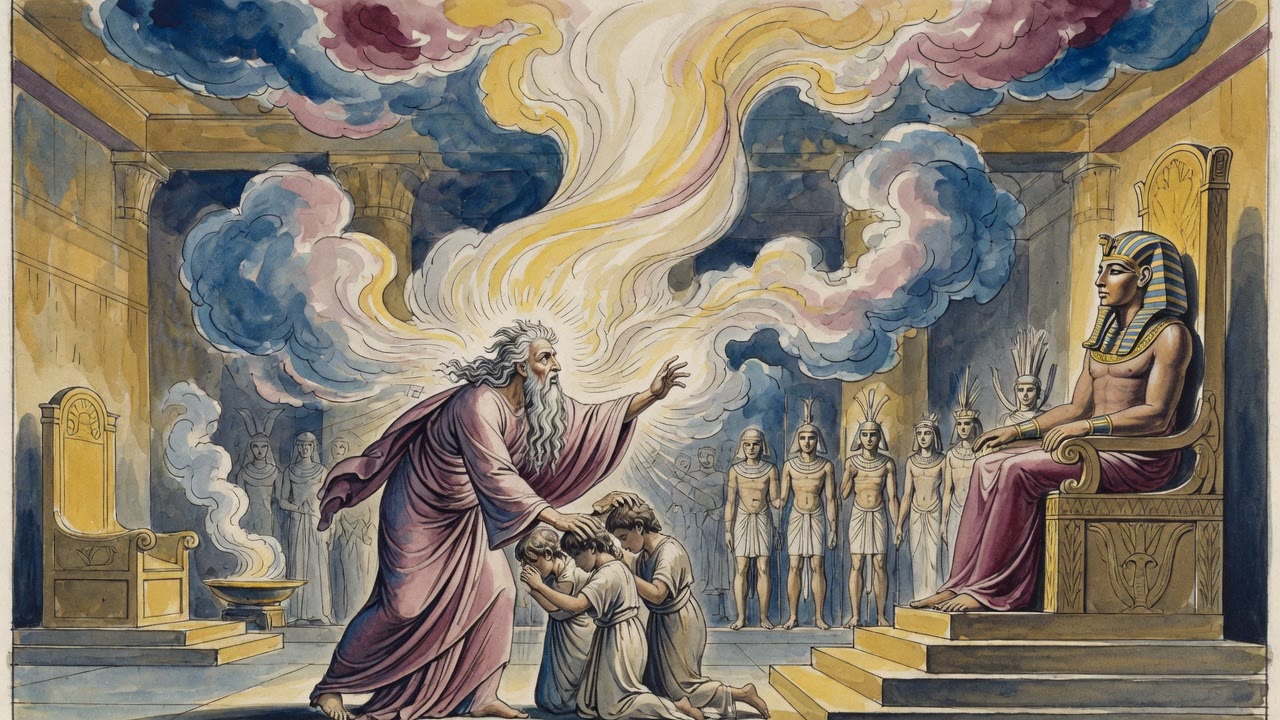
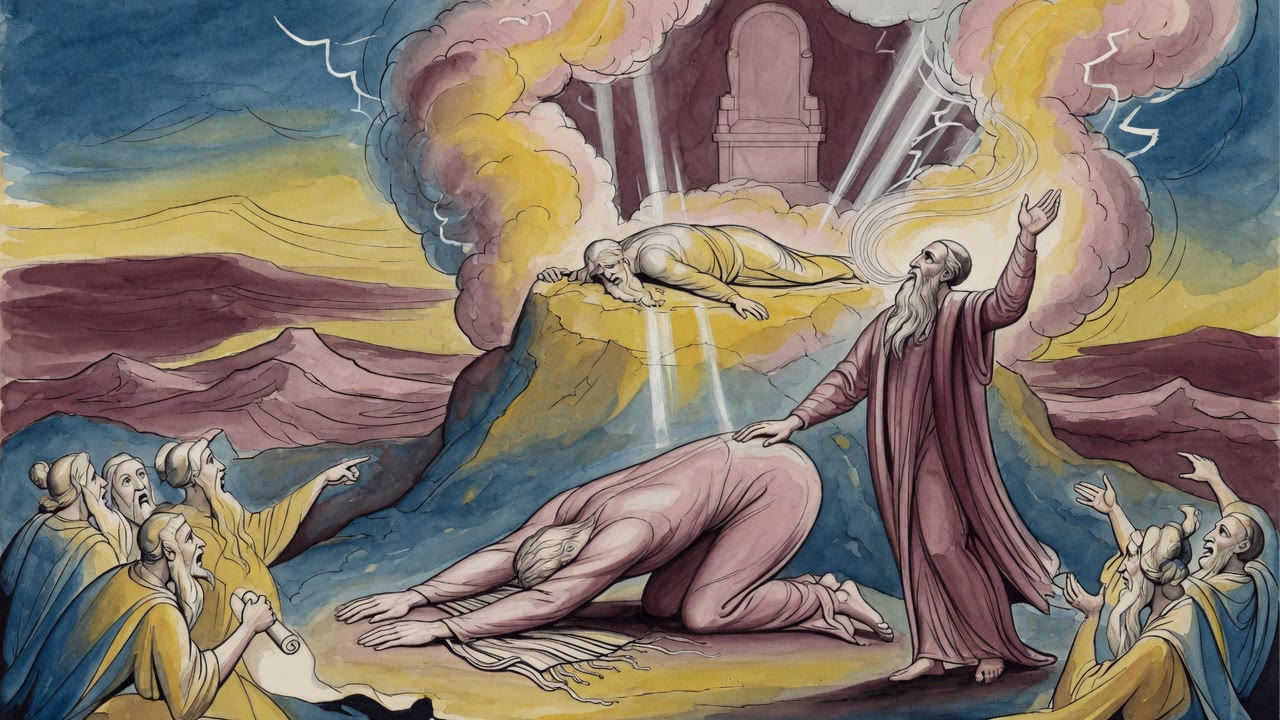
The Sages taught the following baraita: What was the order of teaching the Oral Law? How was the Oral Law first taught? Moses learned directly from the mouth of the Almighty. Aaron entered and sat before him, and Moses taught him his lesson as he had learned it from God.
Aaron moved aside and sat to the left of Moses. Aaron’s sons entered, and Moses taught them their lesson while Aaron listened. Aaron’s sons moved aside; Elazar sat to the right of Moses and Itamar sat to the left of Aaron. Rabbi Yehuda disagreed with the first tanna with regard to the seating arrangements and said: Actually, Aaron would return to sit to the right of Moses.
The elders entered and Moses taught them their lesson. The elders moved aside, and the entire nation entered and Moses taught them their lesson. Therefore, Aaron had heard the lesson four times, his sons heard it three times, the elders heard it twice, and the entire nation heard it once. Moses then departed to his tent, and Aaron taught the others his lesson as he had learned it from Moses.
Aaron then departed and his sons taught the others their lesson. His sons then departed and the elders taught the rest of the people their lesson. Hence everyone, Aaron, his sons, the elders and all the people, heard the lesson taught by God four times. From here Rabbi Eliezer said: A person is obligated to teach his student his lesson four times.
And it follows by way of an a fortiori inference: If Aaron, who learned from Moses himself, and Moses had received the Torah directly from the mouth of the Almighty, needed this regimen; an ordinary student learning from the mouth of an ordinary teacher, how much more so must he review his studies four times. Rabbi Akiva says: From where do we derive that a person is obligated to teach his student until he learns the material and understands it?
As it is stated: “Now therefore write this song for you, and teach it to the children of Israel; put it in their mouths, that this song may be a witness for me against the children of Israel” (Deuteronomy 31:19). This verse indicates that one must teach Torah to others. And from where do we derive that one must teach his students until the material is organized in their mouths? As it is stated: “Put it in their mouths,” so that they should be capable of teaching it to others.
And from where do we derive that a teacher must show his students the reasons for the teachings? As it is stated: “Now these are the judgments which you shall set before them” (Exodus 21:1), which indicates that the lesson must be set out in logical fashion for the students. With regard to the manner in which the Oral Law was taught, the Gemara asks: They should all have studied from Moses himself four times.
The Gemara answers: The teaching was divided in this manner in order to give honor to Aaron and his sons, and also to give honor to the elders. The Gemara asks why a different method was not adopted, one which would have involved less trouble for Moses: Aaron should have entered and studied from Moses; his sons should then have entered and studied from Aaron; the elders should then have entered and studied from Aaron’s sons; and then they should have gone out and taught all of the Jewish people.
The Gemara answers: Since Moses had studied directly from the mouth of the Almighty, it would be more effective for everyone to hear the Torah at least once from Moses himself. The Master said in the baraita that Rabbi Yehuda says: Actually, Aaron would return to sit to the right of Moses, i.e., no matter how many people were present Aaron always sat to Moses’ right. The Gemara asks: In accordance with whose opinion was it taught in a baraita dealing with the rules of etiquette: If three people were walking along the way, the teacher should walk in the middle and the greater of the two students should be to his right and the lesser one should be to his left?
Shall we say that it is the opinion of Rabbi Yehuda and not that of the Sages? According to the Sages, the greater of the two students should be positioned to the left of the teacher so that the student’s right side faces his teacher. The Gemara answers: You can even say that this baraita was taught in accordance with the opinion of the Sages, and the reason they said that Aaron remained to Moses’ left even after the others entered is due to the trouble to Aaron if he would have to stand up and sit down again.
Having discussed the importance of reviewing one’s Torah study, the Gemara relates that Rabbi Perida had a certain student whom he would have to teach four hundred times, and only then would he learn the material, as he was incapable of understanding it otherwise. One day they requested Rabbi Perida’s presence for a mitzva matter after the lesson. Rabbi Perida taught his student four hundred times as usual, but this time the student did not successfully learn the material.
Rabbi Perida said to him: What is different now that you are unable to grasp the lesson? He said to him: From the time that they said to the Master that there is a mitzva matter for which he is needed, my mind was distracted from the lesson and every moment I said: Now the Master will get up, now the Master will get up to go and perform the mitzva and he will not complete the lesson. Rabbi Perida said to him: Pay attention this time and I will teach you, and know that I will not leave until you have fully mastered the lesson.
He taught him again an additional four hundred times. Due to the merit of Rabbi Perida’s great devotion to his students, a Divine Voice emerged and said to him: Is it preferable to you that four hundred years be added to your life, or that you and the rest of your generation will merit the World-to-Come? He said: I prefer that I and my generation merit the World-to-Come. The Holy One, Blessed be He, said to the angels: Give him both; he shall live a very long life and he and the rest of his generation will merit the World-to-Come.
The Gemara continues its discussion with regard to methods of Torah study: Rav Ḥisda said: The Torah can be acquired only with mnemonic signs that aid the memory, as it is stated: “Put it in their mouths.” Do not read the phrase as: Put it [simah], but rather as: Its sign [simanah], thus indicating that mnemonic signs aid in memorizing the material. Rav Taḥalifa of the West, i.e., from Eretz Yisrael, heard this statement and went and said it before Rabbi Abbahu, who said: You learn this idea from there; we learn it from here, as the verse states: “Set up signposts [tziyyunim] for yourself; establish you markers” (Jeremiah 31:20), which is understood to mean: Establish mnemonic signs for the Torah.
And from where may it be inferred that this term tziyyun denotes a sign? As it is written in a different verse: “And when they that pass through shall pass through the land, and any sees a human bone, he shall set up a sign [tziyyun] by it” (Ezekiel 39:15), i.e., a sign that there is a source of ritual impurity at that spot. Rabbi Eliezer said that we learn this same idea from here: “Say to wisdom, you are my sister, and call understanding, your kinswoman [moda]” (Proverbs 7:4), which means: Establish signs [moda’im] that convey knowledge of the Torah. Rava said with regard to this verse: Set appointed times [mo’adim] for Torah study.

 Click for full size