5 min read

Rabbi Yochanan's Arms Lit the Sickroom Where Rabbi Elazar Wept

Rabbi Yochanan bared luminous arms in a dark sickroom. Rabbi Elazar wept not for Torah or poverty, but because that beauty would rot in the ground.

Curated by Arthur · Told by Maggid ·
Table of Contents
  1. Light from Bare Arms
  2. The Day Rabbi Would Not Be Named Dead
  3. The Ship of Many Beams
  4. What the Sages Allowed Themselves to Mourn
  5. Hands Raised and Hands That Held
Rabbi Yochanan's Arms Lit the Sickroom Where Rabbi Elazar Wept Click for full size

Light from Bare Arms

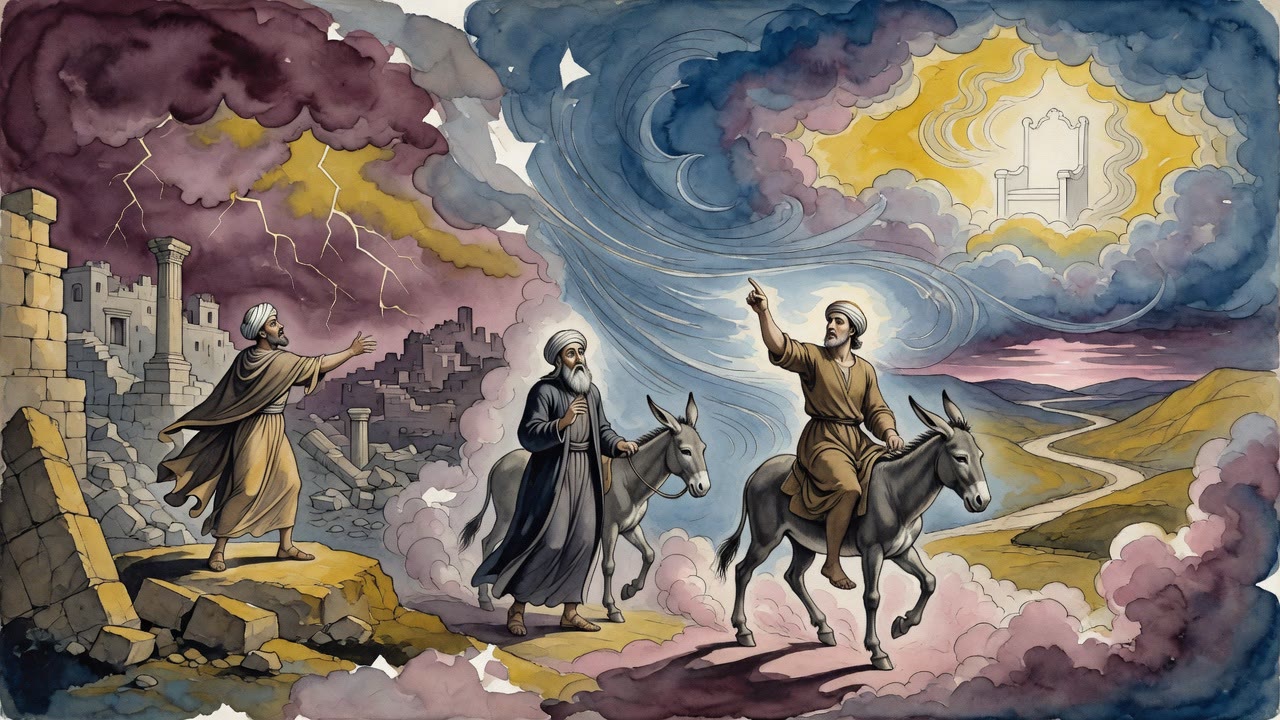
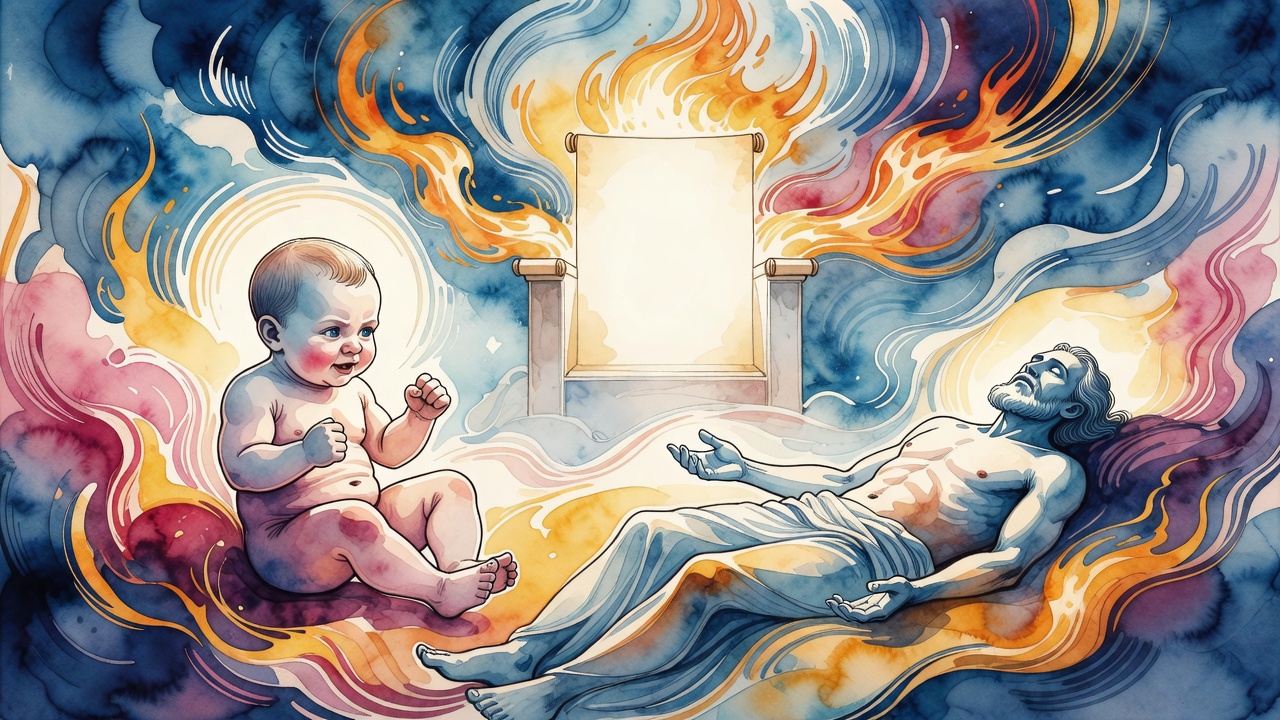
Rabbi Yochanan pushed open the shutters of a room that had forgotten daylight. Rabbi Elazar lay inside, gravely ill, the household too worn by watching to light lamps. Yochanan sat on the edge of the bed. In the academy they said women watched him from balconies and prayed their children might look like him. He uncovered his arms. The sickroom filled with light. Skin did the work of a torch.

Rabbi Elazar looked at those forearms and began to weep. Yochanan spoke gently. "Why are you crying? Is it because you did not learn enough Torah? Whether one does much or little, what matters is that the heart is directed toward Heaven. Is it poverty? Not everyone merits two tables, one in this world and one in the next." Elazar shook his head. "I am crying for this beauty. For your arms. That they too will rot in the ground." Yochanan wept with him. "Yes," he said. "For that, it is right to weep."

The Day Rabbi Would Not Be Named Dead

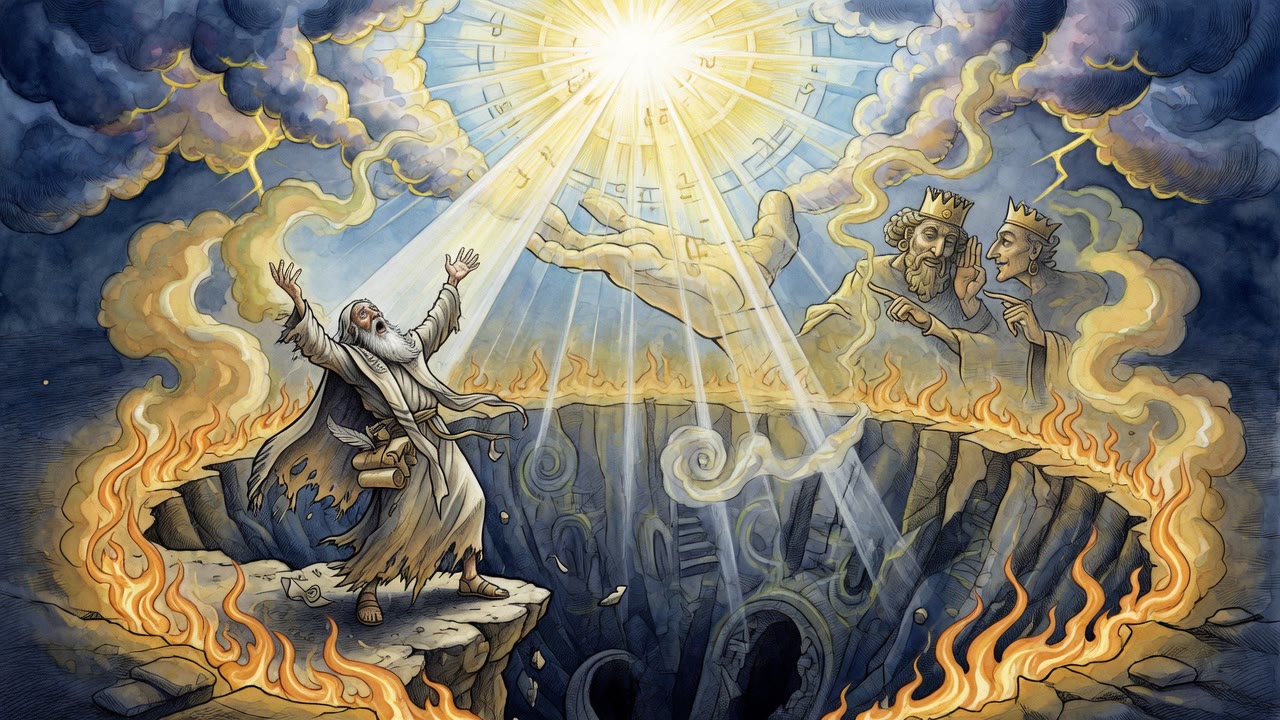
Generations earlier, when Rabbi Judah HaNasi, simply called Rabbi, was dying, the sages declared a public fast and prayed without rest. They decreed that anyone who announced his death would be stabbed with a sword. They tried to hold the soul in the body by force of words. From the upper floor his handmaid, a woman of her own wisdom, saw that her master's suffering had gone past what prayer should prolong. She took a clay jar and hurled it from the roof. The crash startled the sages. Their concentration broke for a breath. In that breath Rabbi's soul departed.

Before the end he had summoned his sons. Care for my wife, he said. Keep the lamp burning, the table set, the bed prepared as if I still lived. He named Gamliel his successor and Shimon head of the court. Then he raised ten fingers toward heaven. "Master of the Universe, it is revealed before You that I toiled with all ten of my fingers in Torah, and I did not take even the benefit of my little finger from this world." He had been among the wealthiest Jews of his generation. His fingers, he claimed, had been for Torah alone.

The Ship of Many Beams

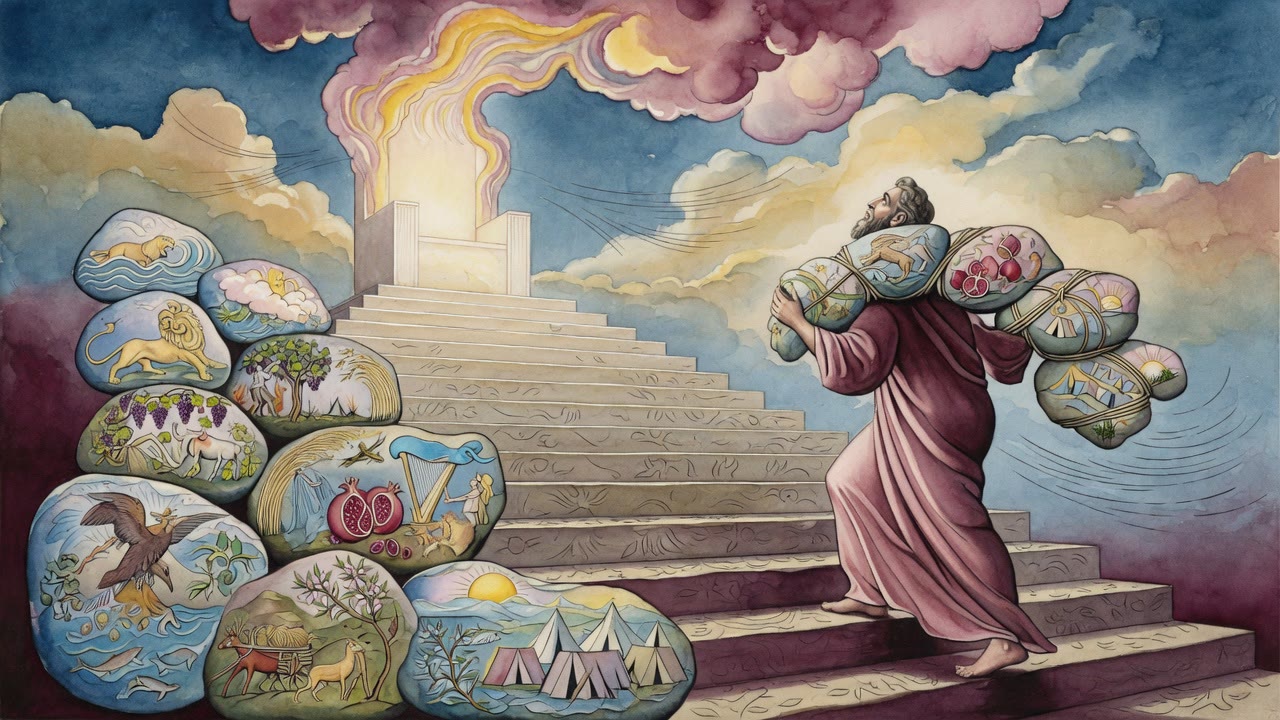
On another deathbed Rabbi Yose began to weep, and his students were surprised. His life had been full of learning and teaching. He told them he wept because he had not taken enough part in the deliberations of the court, the Beit Din where communal rulings were made. Then he gave them a parable. "Israel is like a ship. Every member of the community is a beam. If even one beam comes loose, the whole vessel is in danger of foundering."

He was not weeping over sins of commission. He was weeping over absence: hours not given, arguments not joined, rulings left to other mouths. In the rabbis' eyes the pious person does not stand aside from the hard work of communal judgment, because the community is a ship, and the beam that refuses weight endangers every other plank.

What the Sages Allowed Themselves to Mourn

Yochanan and Elazar did not cry for lost chapters or lost coin. They cried because a beautiful arm will stop being beautiful and return to dust. Jewish teaching has answers for many griefs. For this one it mostly has company in tears. Rabbi's handmaid did not silence prayer out of cruelty. She broke a jar so a soul could leave a body that had finished its work. Rabbi Yose wept for the meetings he had skipped, as if absence itself were a leak in the hull.

Three rooms, three kinds of dying. In one, beauty faces its end and two sages refuse to pretend that flesh is only a tool. In another, a nation tries to hold its teacher by decree and a servant frees him with pottery. In the third, a scholar measures his life not by books finished but by beams he failed to brace. Mortality is not only the end of breath. It is the accounting of light, of pain, of presence.

Hands Raised and Hands That Held

Rabbi showed ten fingers and claimed no private use of them. Yochanan showed two arms and admitted they would rot. The contrast is not hypocrisy. One man had spent wealth on others and still feared he might have taken a finger's worth of ease. The other had spent beauty without buying a single extra day. Both knew the body is on loan. The handmaid knew it too when she chose mercy over spectacle. The students of Rabbi Yose learned that a living community needs more than brilliant absentees.

When the lamp is kept burning after Rabbi's death, when the table stays set, the house rehearses a presence that has already gone. When Yochanan weeps for arms, he rehearses a presence that will go. Between those gestures the ship still needs every beam willing to take weight while it can.


← All myths
From the tradition

Sources

3 sources

The texts behind this telling. Some cards carry a translation of the source; others are our own retelling of it, and each card says which. Every card links out to the original.

Gaster, Exempla No. 223 (Berakhot 5b)The Exempla of the Rabbis (1924)

Retold in our words. Read the original at the link below.The Exempla of the Rabbis, Moses Gaster (1924) · PD-US-pre-1929

Rabbi Yochanan went to visit his colleague Rabbi Elazar, who was gravely ill. The room was dark, shutters closed, lamps unlit, the particular dimness that comes when a household has been too exhausted by illness to attend to details.

Rabbi Yochanan sat beside the bed. He was famous in the academy for his physical beauty, the Talmud describes him as so handsome that women who saw him would gaze from their balconies, praying their children might resemble him. He uncovered his arms.

The room filled with light. His skin was so luminous that his bare forearms illuminated the sickroom the way a torch would have.

The Tears of a Dying Man

Rabbi Elazar, lying on his bed, looked at Rabbi Yochanan's arms. And began to weep.

Rabbi Yochanan asked gently, "Why are you crying? Is it because you did not learn enough Torah? We have a principle, whether one does much or little, what matters is that the heart is directed toward Heaven. Is it because of poverty? Not everyone merits two tables, one in this world and one in the next. And not everyone needs both."

Rabbi Elazar shook his head. "I am crying for this beauty. For your arms. That they too will rot in the ground."

Rabbi Yochanan wept with him. "Yes," he said. "For that, it is right to weep."

The Exempla's Weight

This passage, preserved in Berakhot 5b and collected by Gaster in 1924, is one of the Talmud's quietest meditations on mortality. The two Sages did not cry for lost learning, lost wealth, or lost opportunity. They cried for the simple, unfixable fact that a beautiful arm will one day stop being beautiful and will return to dust.

Jewish theology has answers for many kinds of grief. For this one, it mostly has tears.

Full source
Exempla of the Rabbis, No. 232Exempla of the Rabbis (Gaster, 1924)

Retold in our words. Read the original at the link below.The Exempla of the Rabbis, Moses Gaster (1924) · Public Domain

The death and last will of Rabbi Judah HaNasi, simply called "Rabbi", was one of the most solemn moments in the history of the Jewish people. The Talmud (Ketubot 104a, Jerusalem Talmud Kilayim 9:3) records the events in extraordinary detail.

On the day Rabbi Judah was dying, the sages declared a public fast and prayed without ceasing for his recovery. They decreed that anyone who announced his death would be stabbed with a sword. So desperate were they to delay the inevitable.

Rabbi Judah's handmaid, a woman renowned for her own wisdom, saw from the upper floor of the house that her master's suffering was unbearable. She took a clay jar and hurled it from the roof. The crash momentarily startled the sages below and interrupted their prayers. In that instant of broken concentration, Rabbi Judah's soul departed.

Before his death, Rabbi Judah summoned his sons and gave them his final instructions. He told them to take care of his wife, to keep the lamp burning, the table set, and the bed prepared as if he were still alive. He appointed his son Gamliel as his successor and Shimon as the head of the court.

Most remarkably, he raised his ten fingers toward heaven and prayed: "Master of the Universe, it is revealed and known before You that I toiled with all ten of my fingers in Torah, and I did not derive even the benefit of my little finger from this world." He had been the wealthiest Jew of his generation. But he claimed to have enjoyed none of it. His wealth was used entirely for others. His fingers were for Torah alone.

Full source
Gaster, The Exempla of the Rabbis (1924), no. 132The Exempla of the Rabbis (1924)

Retold in our words. Read the original at the link below.The Exempla of the Rabbis, Moses Gaster (1924) · PD-US-pre-1929

On his deathbed, Rabbi Yose began to weep. His students, surprised, asked why. He had been a great scholar, a faithful teacher, a man whose life by any reasonable accounting had been well spent.

He told them he was weeping because he had not taken sufficient part in the deliberations of the Court of Justice, the Beit Din where rulings were made for the community.

Then he gave his students a parable that became famous. "Israel is like a ship," he said. "Every member of the community is a beam. If even one beam comes loose, the whole vessel is in danger of foundering."

The teaching, preserved as exemplum no. 132 in Moses Gaster's 1924 The Exempla of the Rabbis, recasts the entire notion of communal responsibility. Rabbi Yose was not weeping over sins of commission. He was weeping over absence. The hours he had not given. The arguments he had not joined. The rulings he had let others make without his voice in the room. In the Rabbis' eyes, the truly pious person does not stand aside from the hard work of communal decision-making, because the community is a ship, and the beams that choose not to hold weight put everyone else at risk.

It is a line worth remembering. A ship that loses one beam does not get a little more fragile. It eventually sinks.

Full source