6 min read

Ben Sira's Cry From the Jaws of Sheol and the Grave

Cornered at the pit's edge, slandered into a king's ear and ringed by fire, an old scribe of Jerusalem cries out and God hauls him back to the living.

Curated by Arthur · Told by Maggid ·
Table of Contents
  1. The Grave Opened Its Mouth
  2. A Whisper Poured Into the King's Ear
  3. The Circle of Fire Drew Close
  4. He Cried Out and Called God Father
  5. Back Into the Light of the Living

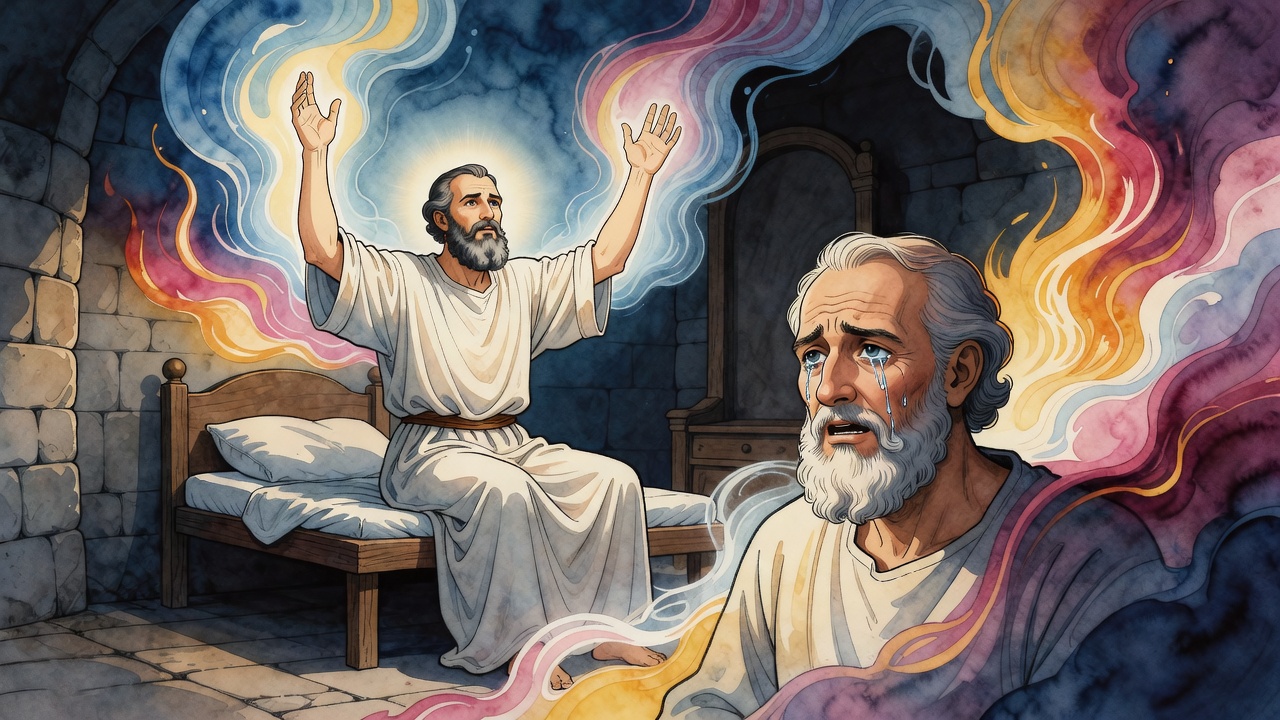
The old scribe of Jerusalem could smell the grave before he saw it. Ben Sira had spent his life bent over ink and parchment, weighing proverbs, teaching the young men of the city how a wise man guards his tongue. Now his own life hung on the tongues of other men, and those tongues were lying.
Ben Sira's Cry From the Jaws of Sheol and the Grave Click for full size

They had circled him the way jackals circle a wounded ox. Not with swords, not yet. With words. A whisper here, a false report there, passed from mouth to mouth until it reached the ears that could order a man killed.

The Grave Opened Its Mouth

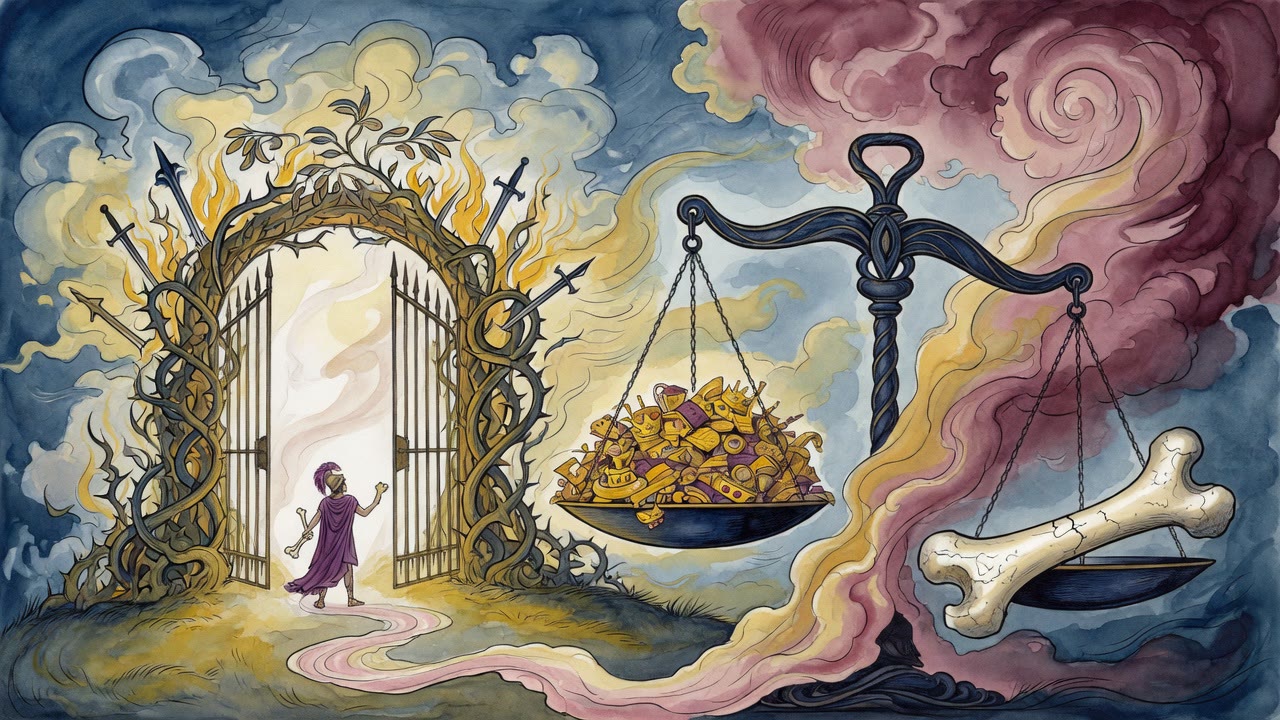
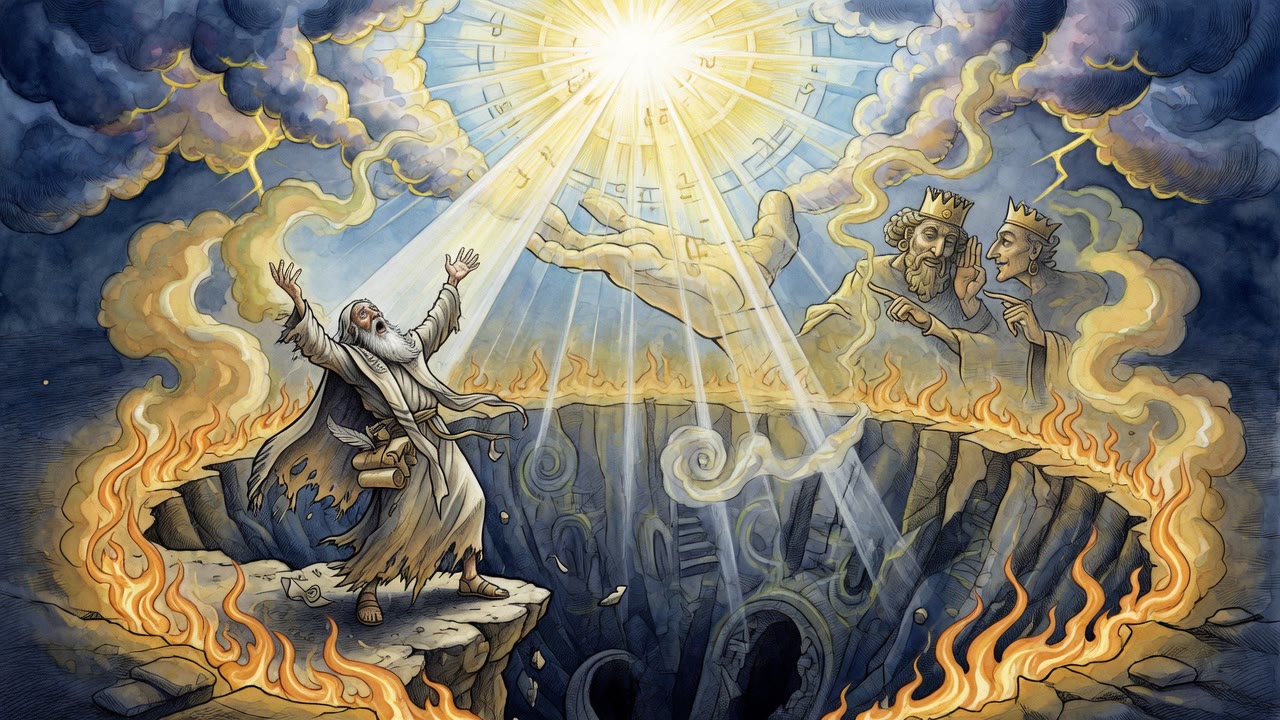
He felt Sheol under his feet like a floor gone soft. The pit was no metaphor to him that night. It was a mouth, and it had already begun to close over his head. He could feel the cold at the seam of it, the damp breath of the place where the dead go down and do not climb back up.

His own flesh, he was certain, was already turning toward that rot. Every ache in his body felt like the first spade of earth thrown on him. Men who had eaten at his table now watched for him to stumble, and when a man is watched that closely, every misstep becomes a trap. One wrong word. One slip on the stairs of the great house. That was all they needed.

A Whisper Poured Into the King's Ear

The worst of it never came from a blade. It came from the lips of men who turned aside to lies. They took his name and bent it, and they carried the bent thing up the marble stairs to the king.

Ben Sira knew how a report travels through a palace. It does not need to be true. It needs only to be repeated, low and steady, into the one ear that holds a man's life. He could almost hear the words dripping there, patient as poison. The scourge of the tongue, the old teachers called it, and now the scourge was laid across his own back. He had warned others of it a hundred times. He had never thought to be the one it flayed.

The Circle of Fire Drew Close

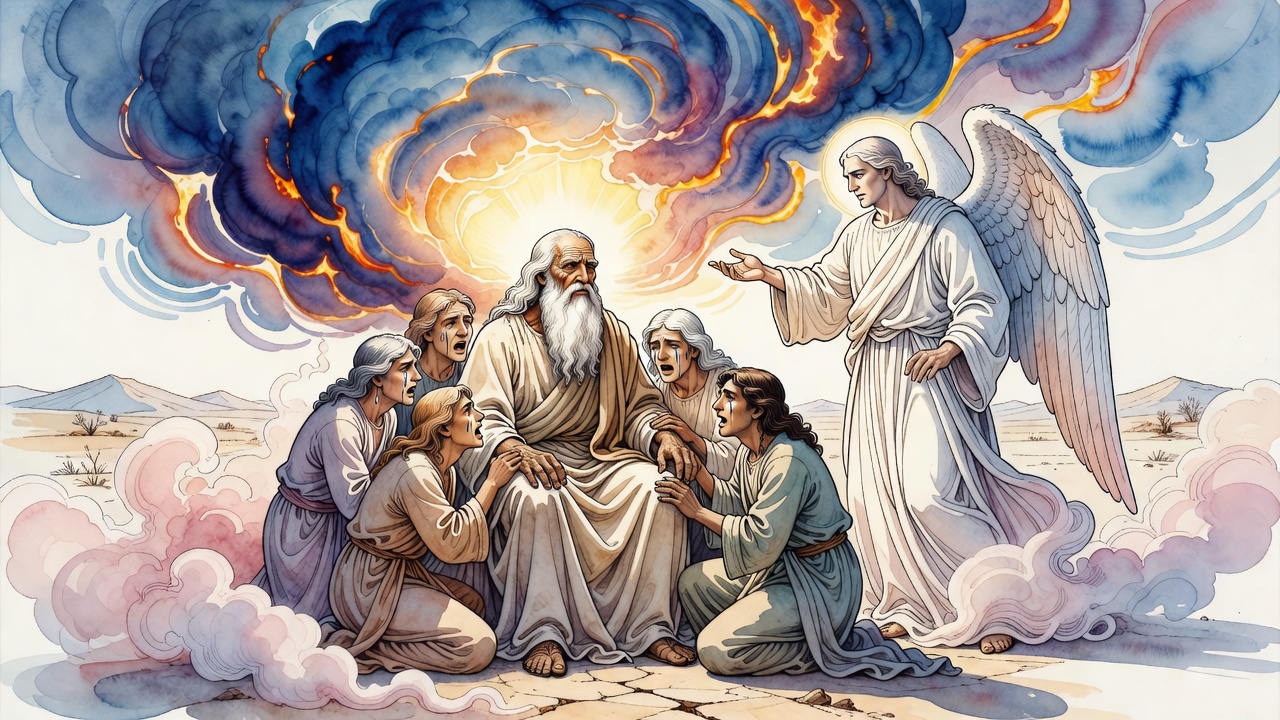
Then the enemies stopped whispering and closed the ring. On every side he felt them press in, and behind them something worse, a heat drawing its circle tighter, a fire that seemed to have no wall he could break through. Smoke thickened in his throat until he could not swallow. Snares at his feet. Hands reaching for his life. Flame at his back. There was no gap in the wall of them, no door, no friend left standing in a doorway.

He looked for a man to pull him out and found none. He looked for a rescuer among the powerful, and their faces turned away. The floor of Sheol (the underworld of the dead) pressed up from below. The fire pressed in from every side. And in that narrow place, with nothing human left to reach for, the old scribe did the one thing his whole life had trained him to do. He opened his mouth. Not to defend himself. To pray.

He Cried Out and Called God Father

"You are my father," he said into the dark, "and the mighty one of my rescue. Do not abandon me in the day of trouble, in the day of ruin and desolation."

He did not bargain. He did not spread out his good deeds like a man arguing a case before a judge. He held onto the Name instead, over and over, the way a drowning man holds his last breath. "I will praise your name without stopping. I will keep you in my mouth with prayer." It was not eloquence. It was the raw sound a person makes when the grave already has him by the ankle and he still believes that someone above the pit can hear.

And someone heard.

Back Into the Light of the Living

Ben Sira felt it before he could explain it, a strength under him where a moment before there had been only the soft floor of the pit. The ring of fire did not consume him. The snare did not spring shut. The slander that had climbed all the way to the king did not, in the end, bring him down.

He was bought back out of every evil, lifted clear of the trouble that had swallowed him whole. His flesh, which he had already surrendered to corruption, still held to his bones. His foot came up out of the hand of Sheol. When he stood again among the living, blinking in ordinary daylight, he understood that he had been hauled back over the lip of the grave by a strength that was never his own.

So he sang. Not a quiet, private thanks, but a song flung upward with the raised horn of a rescued man. "Give thanks to the one who is good, whose mercy has no end. Give thanks to the Shield of Abraham, the Rock of Isaac, the Mighty One of Jacob." The teacher who had once warned others about the poison of the tongue now carried a testimony instead of a proverb, and he set it down in ink so that no one who ever stood at the edge of the pit would stand there believing that no voice could reach the bottom.


← All myths
From the tradition

Sources

2 sources

The texts behind this telling. Some cards carry a translation of the source; others are our own retelling of it, and each card says which. Every card links out to the original.

Ben Sira 51:3Ben Sira

Retold in our words. Read the original at the link below.The Wisdom of Ben Sira, Cambridge University Press (1899) · CC-BY

It’s one the ancient text of Ben Sira, or Sirach, addresses with raw honesty.

Ben Sira, a book from around the 2nd century BCE, isn't part of the Tanakh as defined by rabbinic tradition, but it holds a cherished place in Jewish tradition and was widely quoted by the rabbis. It's filled with wisdom, poetry, and prayers that speak to the challenges of everyday life. And Chapter 51… well, it's a powerful cry for deliverance.

This section reads like a heartfelt prayer, a personal testimony of someone who has faced immense hardship. Imagine the speaker, weary but resolute, recounting God's unwavering support. "Thou hast kept back my flesh from corruption," he proclaims. A sense of being saved from something truly awful, something decaying and destructive.

The lines that follow? They cut deep. "And hast delivered my foot from the hand of Sheol." Sheol, the Hebrew term often translated as "the grave" or "the underworld," represents the ultimate threat, the end of all things. To be saved from its grasp is to be granted a second chance, a reprieve from oblivion.

But the threats aren't just physical. The prayer continues, "Thou hast delivered me from the evil report of the people; From the scourge of (?) the tongue, and from the lip of them that go aside to lies." Ouch. Gossip, slander, outright lies – these are weapons that can wound just as deeply as any sword. We all know how damaging words can be. This part of the prayer acknowledges the pain and the very real danger of being targeted by malicious tongues. It speaks to the fear of being misrepresented, of having your reputation destroyed by those who seek to harm you.

"Thou wast with me against them that rose up against me; Thou hast holpen me according to thy great mercy." There's a palpable sense of relief here, a recognition that the speaker wasn't alone in their struggle. Divine help arrived, not because of any merit on the speaker's part, but because of God's boundless compassion.

The final lines we’re looking at today drive the point home: "Out of the snare of them that watched for my halting (?); And from the hand of them that sought my life. From many troubles thou hast saved me; And from chokings of flaming fire.." The imagery is intense! Snares, hidden enemies, threats to life itself, and the terror of being consumed by fire. These are not just metaphors; they represent real dangers, both physical and spiritual. The "snare of them that watched for my halting" evokes the image of being stalked, of having every misstep scrutinized and exploited. The "chokings of flaming fire" suggests a near-death experience, a brush with utter destruction.

Perhaps it's the reassurance that even in the darkest of times, when we feel surrounded by enemies and overwhelmed by adversity, we are not alone. Perhaps it's the reminder that words have power, and we must be mindful of the impact they have on others. Or maybe it's simply the comforting knowledge that even centuries ago, people wrestled with the same fears and anxieties that we do today, and found solace in faith and prayer. Whatever resonates with you, Ben Sira 51 offers a timeless message of hope, resilience, and the enduring power of the human spirit.

Full source
Ben Sira 51:12Ben Sira

Retold in our words. Read the original at the link below.The Wisdom of Ben Sira, Cambridge University Press (1899) · CC-BY

It's in those moments that People often turn to something greater, something beyond ourselves. And that's precisely what we find in the words attributed to Ben Sira.

This passage, found in Ben Sira 51, is a raw, deeply personal prayer of gratitude and a plea for salvation. It's a voice crying out from the depths, acknowledging both the pain and the unwavering hope in a divine presence.

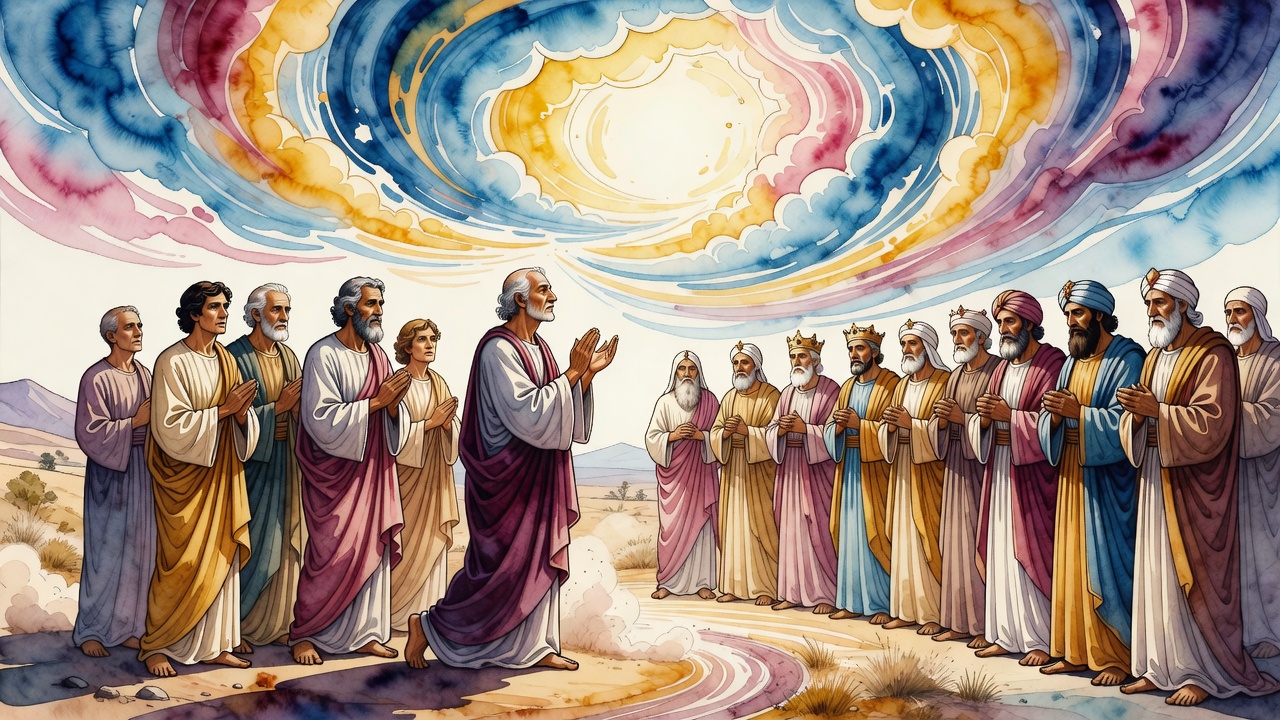
"And I exalted the Lord, saying, Thou art my Father; For thou art the mighty one of my salvation. Leave me not in the day of trouble; In the day of wasteness and desolation." image: God as a father, a source of strength, a refuge in times of trouble. It's a powerful and intimate connection. The speaker isn't just addressing a distant deity; it's a heartfelt conversation with a loving parent. The plea "Leave me not" resonates with our own fears of abandonment, of being left to face the darkness alone.

It doesn't stop there. The tone shifts from supplication to praise: "I will praise thy name continually; And I will remember thee with prayer. Then the Lord heard my voice; And gave ear unto my supplication."

There's a profound lesson here: even in our darkest moments, the act of remembering, of praying, can be a lifeline. And, more importantly, it is heard. There is a responsive presence.

"And he ransomed me from all evil; And freed me in the day of trouble. Therefore I gave thanks, and I will sing praise; And I will bless the name of the Lord."

Salvation isn't just a concept; it's a tangible experience. It's the feeling of being freed from the grip of despair, of finding light in the darkness. And the natural response? Unadulterated gratitude. A song of praise erupts.

The passage then unfolds into a litany of thanks, a rhythmic repetition that emphasizes the enduring nature of God's mercy: "O give thanks unto the Lord, for he is good; For his mercy endureth for ever."

This isn't just a generic expression of thanks; it's a specific acknowledgment of God's actions throughout history. It's a celebration of God's role as the protector of Israel, the creator of all things, the redeemer, the gatherer of outcasts, the builder of Jerusalem and its Temple. "O give thanks unto him that keepeth Israel; For his mercy endureth for ever. O give thanks unto him that gathereth the outcasts of Israel; For his mercy endureth for ever. O give thanks unto him that buildeth his city and his sanctuary; For his mercy endureth for ever."

And it extends to the figures central to the Israelite faith: "O give thanks unto the Shield of Abraham; For his mercy endureth for ever. O give thanks unto the Rock of Isaac; For his mercy endureth for ever. O give thanks unto the Mighty One of Jacob; For his mercy endureth for ever." These are not just names; they are symbols of covenant, of promise, of unwavering faith across generations.

The passage culminates in a powerful affirmation of God's ultimate sovereignty: "O give thanks unto the King of the kings of kings; For his mercy endureth for ever." This isn't just a statement of power; it's an assertion of hope. Even in the face of earthly rulers and worldly challenges, there is a higher power at work, a force for good that transcends all else.

"And he will lift up the horn of his people: A praise for all his righteous ones; Even for the children of Israel, a people near unto him. Praise ye the Lord." The lifting of the horn is symbolic of renewed strength and dignity. It's a promise of restoration, of hope for the future.

So, what does this ancient prayer offer us today? Perhaps it's a reminder that even in our darkest hours, we are not alone. That there is a source of strength, a wellspring of mercy, that is always available to us. And that even the simple act of giving thanks, of remembering the good, can be a powerful act of faith and a pathway to hope. What will you give thanks for today?

Full source