5 min read

Born With Fists and Dying With Open Hands

A newborn clamps on the world as if it could be owned. A corpse opens empty palms. Wisdom, Ben Sira says, still grows in the belly of the faithful.

Curated by Arthur · Told by Maggid ·
Table of Contents
  1. The Clamp and the Release
  2. Wisdom in the Belly
  3. Teachers Before Generals
  4. What the Open Hand Still Holds
  5. Between the First Cry and the Last Quiet
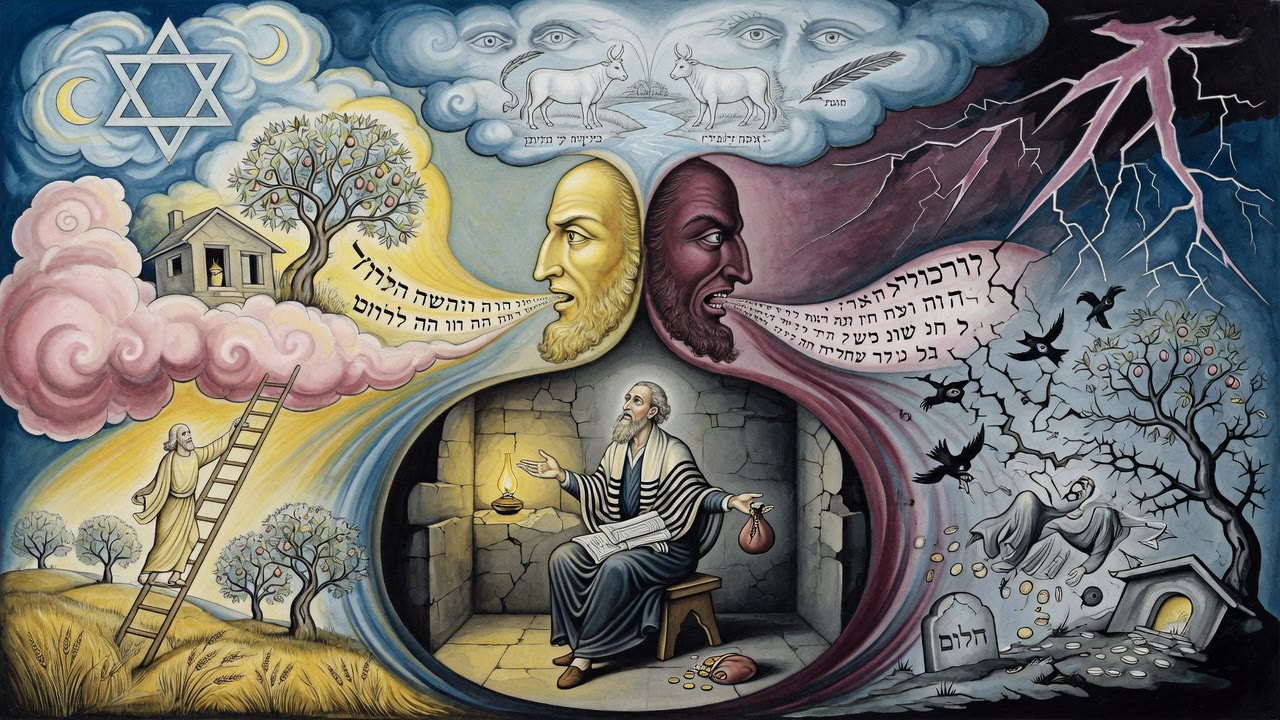
Born With Fists and Dying With Open Hands Click for full size

The Clamp and the Release

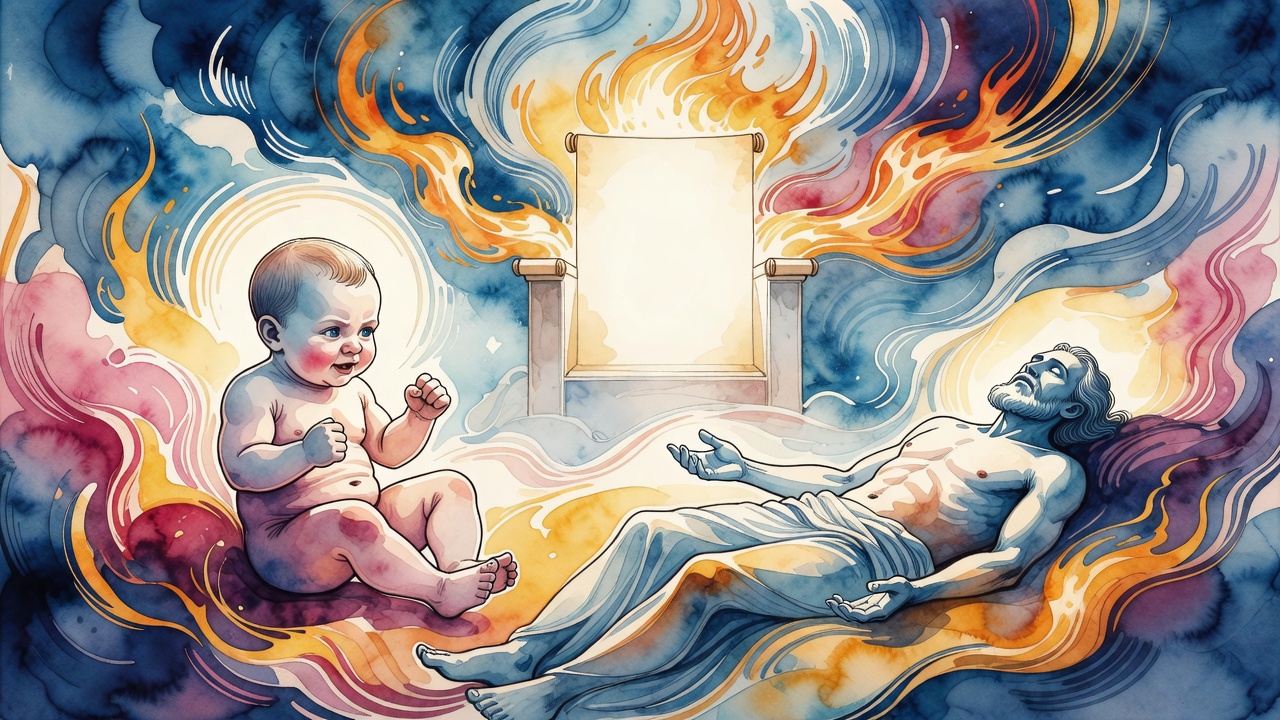
The midwife saw it before the father did. The infant's hands came out already clenched, tiny fists ready to take. Years later, when that same body cooled on a board, the hands lay open. Nothing in the palms. The sages turned the two pictures into one line of theology. Why is a man born with fists and laid out with open hands? On the way in he wants to grasp everything. On the way out he carries nothing.

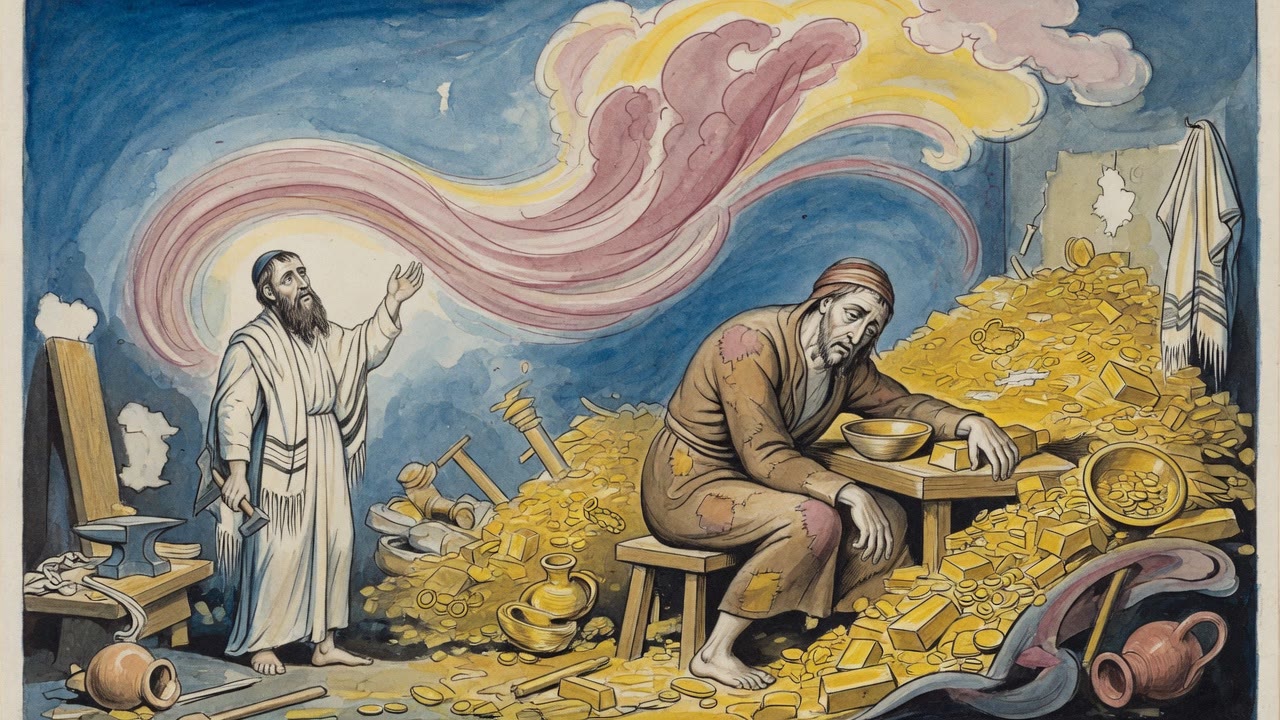
Cold water morning and evening, they said, cleans a face better than cosmetics. Plain living does work no ointment can fake. The fist and the open hand belong to that same blunt school. Life is not a warehouse you empty into the grave. It is a corridor you walk with whatever wisdom you earned, not whatever gold you squeezed. A neighbor who counted coins at every birth blessing missed the point of the baby's grip. The grip is a prophecy, not a business plan.

Wisdom in the Belly

Ben Sira, writing in the second century BCE, refuses to treat wisdom as a private club. God gave her freely. He poured her out upon all His works. She is with all flesh according to His gift, and He supplied her to those who love Him. Fear of the Lord is the beginning. For the faithful she gestates in the belly, growing the way a child grows, slow and bodily, not like a slogan learned for show.

"Fear the Lord and do good by Him, and at the end of your days he will bless you." Awe that never becomes deed is only a clenched feeling. Ben Sira wants the hands busy with good while they can still close around a tool. From eternity wisdom was prepared for the people of integrity, and the kindness holds for their offspring. The open hand at death can still leave a living inheritance if the belly spent its years gestating more than appetite. A poor farmer and a scribe stand under the same pour of wisdom. The difference is who lets it take root.

Teachers Before Generals

The proverb collection will not stop at mortality. A town without a school should be abolished. Jerusalem fell, the sages said, because the young were not taught. The one who teaches a child creates the child a second time. Teachers guard the state more truly than generals. Learn first, philosophize afterward. The order is not a suggestion.

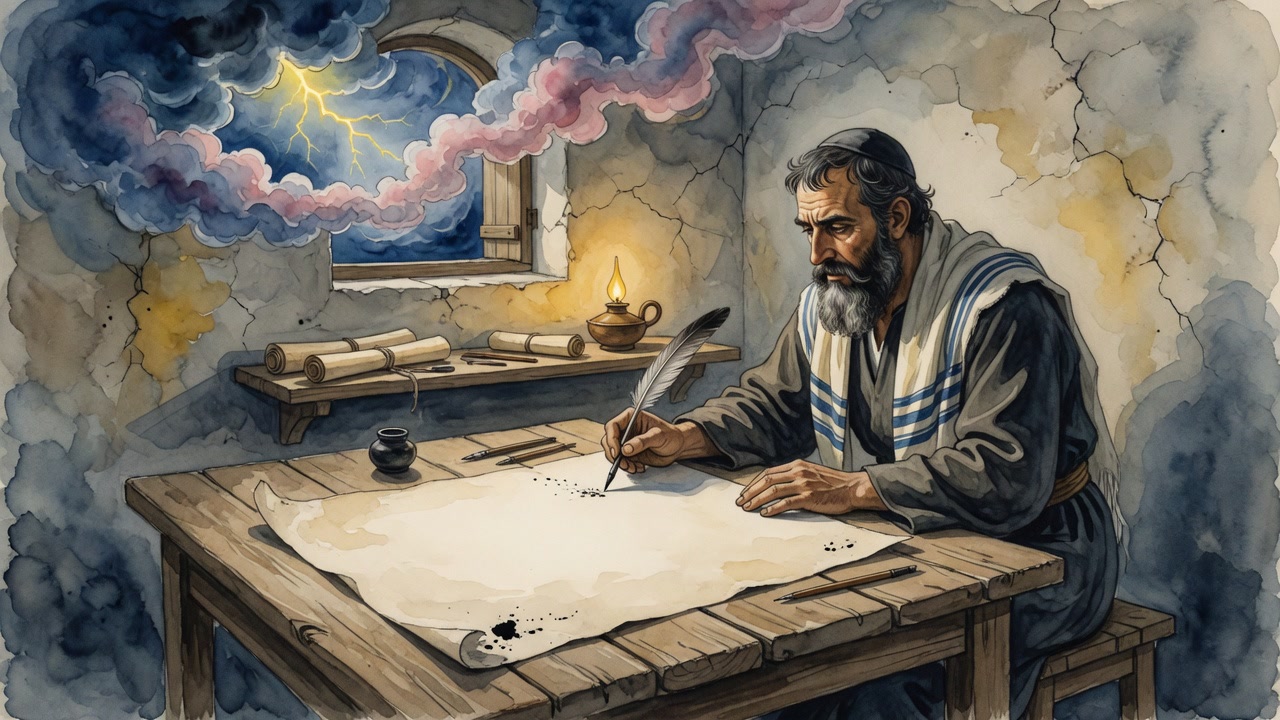
Writing on clean paper is easier than writing on paper already smudged, yet both labors are honorable. The child and the elder both need ink. Knowledge does not arrive by inheritance the way a field does. Morning by morning a person earns it with the same hands that once arrived as fists. A student on fire can light a wet log. Two dry logs and one wet: the dry ones kindle the wet. A man who searches for a brother without faults will die without a brother. Find the fault and stay. The open hand at the end of life is emptier if it never held a pupil's shoulder in correction and care.

What the Open Hand Still Holds

At a burial the fists of the mourners tell a different story. They clench in grief, then loosen to shovel earth. Ben Sira's wisdom poured on all flesh means the dead man's neighbor, not only his scholar cousin, was offered the same gift. Some took it. Some left it on the table. The corpse cannot correct the choice. The living still can.

A father who never opened a book may still have opened his door. A sage who filled shelves may still have died with a spiritual fist closed around status. The proverb and the Ben Sira hymn refuse to let either man hide behind the other's failure. Flesh receives wisdom by desire of God. Flesh also dies empty of furniture. The only cargo that fits the shroud is what became part of the person: fear that turned into good, teaching that turned into other lives.

Between the First Cry and the Last Quiet

Listen to a birth room and a death room on the same day. One fills with a cry and a clamp. The other fills with a hush and a release. Between them stretch the years when a person either gestates wisdom or only collects objects that will not fit in a shroud. The midrash's short line and Ben Sira's long blessing meet in that middle stretch like two witnesses signing one document.

Open the hand before the body forces the gesture. Teach someone while the paper is still clean enough to take ink. Fear the Lord in a way that makes the fingers useful. When the final opening comes, it will still be empty of silver, and it may yet be full of a life that spent itself on more than grasping. That is the only wealth the open hand can honestly claim.


← All myths

From the tradition

Sources

2 sources

The texts behind this telling. Some cards carry a translation of the source; others are our own retelling of it, and each card says which. Every card links out to the original.

Proverbial Sayings and TraditionsHebraic Literature (1901)

Retold in our words. Read the original at the link below.Project Gutenberg eBook #14368, Hebraic Literature · PD-US-pre-1929

The sages loved short sayings that carried a whole theology in a line. Here are a handful gathered from rabbinic tradition.

Cold water morning and evening is better than all the cosmetics in the world. Plain living cleans a face no ointment can match.

The question is asked: why is a man born with his hands clenched into fists, but lies in death with his hands open? Because on the way into the world a man wants to grasp everything; on the way out he carries nothing.

Two dry logs and one wet, the dry ones will kindle the wet. A student with fire can light the one who is slow to catch.

The man who searches for a brother without faults will end his life without a brother. Find the fault and stay anyway.

A town without a school should be abolished. Jerusalem itself was destroyed because the education of the young was neglected. The one who teaches a child, the rabbis said, is as if he created the child a second time. Teachers are the guardians of the state, not its generals.

Learn first, philosophize afterward. The order is not negotiable.

To what shall we compare the one who teaches a child? To one who writes on clean paper. And the one who teaches the old? To one who writes on paper already smudged. Both are honorable. The first is simply easier.

Be eager to acquire knowledge. It does not come to you by inheritance.

Wisdom is not what you will pass down, it is what you will earn, morning by morning, with your own two hands.

Full source
Ben Sira 1:15Ben Sira

Retold in our words. Read the original at the link below.The Wisdom of Ben Sira, Cambridge University Press (1899) · CC-BY

" Now, who is this "her"? Interpretations vary, but many scholars see this as referring to Torah itself, the divine teachings. the Torah isn't just a set of rules, is it? It's a living, breathing guide, a source of profound connection for those who truly seek it, a gift from God to all who desire it.

Here's the kicker: you don't just get wisdom. According to Ben Sira, it begins with something else entirely. "The fear of the Lord is glory and honor, and greatness and a crown of splendor." Whoa, "fear"? But the Hebrew term, yirat Adonai, is better understood as awe, reverence, and a deep respect for the divine. It’s recognizing something bigger than yourself, something worthy of your utmost attention.

What does this awe lead to? Joy! "The fear of the Lord gladdens the heart, and grants joy, and grace, and length of days." It's not about being scared, it's about finding happiness and meaning within that reverence. That acknowledging something larger than yourself can actually bring you more joy.

Ben Sira continues, "Fear the Lord and do good by Him, and at the end of your days he will bless you." It’s not enough to just feel that awe. It has to translate into action. Doing good in the world, living a life of purpose, that's what truly honors God. And that, ultimately, is what brings blessings.

Then comes the heart of the matter: "The fear of the Lord is the beginning of wisdom, and for the faithful it gestates in the belly." It gestates in the belly! Isn’t that a powerful image? Wisdom isn't something you just learn from a book. It’s something that grows within you, nurtured by your faith and your actions. It's a slow, organic process, like a child growing in the womb.

And finally, a promise: "From eternity it has been prepared for those who have integrity, and His grace is faithful to their offspring." This wisdom, this connection to the divine, isn't just for us. It's a legacy, something we can pass on to future generations. As Ginzberg points out in Legends of the Jews, the merits of the fathers are indeed passed on to the children, a tradition we see echoed throughout Jewish thought.

So, what does it all mean? Perhaps wisdom isn't about having all the answers. Maybe it’s about cultivating a sense of awe, living a life of purpose, and nurturing that inner seed of understanding. Maybe it’s about recognizing that we're all part of something much larger than ourselves and striving to live in harmony with it. Maybe that's the true beginning of wisdom.

Full source