6 min read

He Walked on Hot Coals Beside the Killer

A Jerusalem scribe took a seat near a court officer who could end a life with a nod. Ben Sira called that nearness a walk on hot coals and netting.

Curated by Arthur · Told by Maggid ·
Table of Contents
  1. The Chair Too Close to the Sword
  2. Hot Coals Under Ordinary Sandals
  3. The Mistake He Almost Made
  4. Leaving the Net
He Walked on Hot Coals Beside the Killer Click for full size

The Chair Too Close to the Sword

Yehudah the scribe was offered a seat at the left hand of the officer who kept the prison keys. The officer smiled with clean teeth. The room smelled of wax and iron. Outside, a man still hung from a post for a debt the city had decided to call treason. Yehudah sat. The pay was triple his old rate for copying contracts in the lower market.
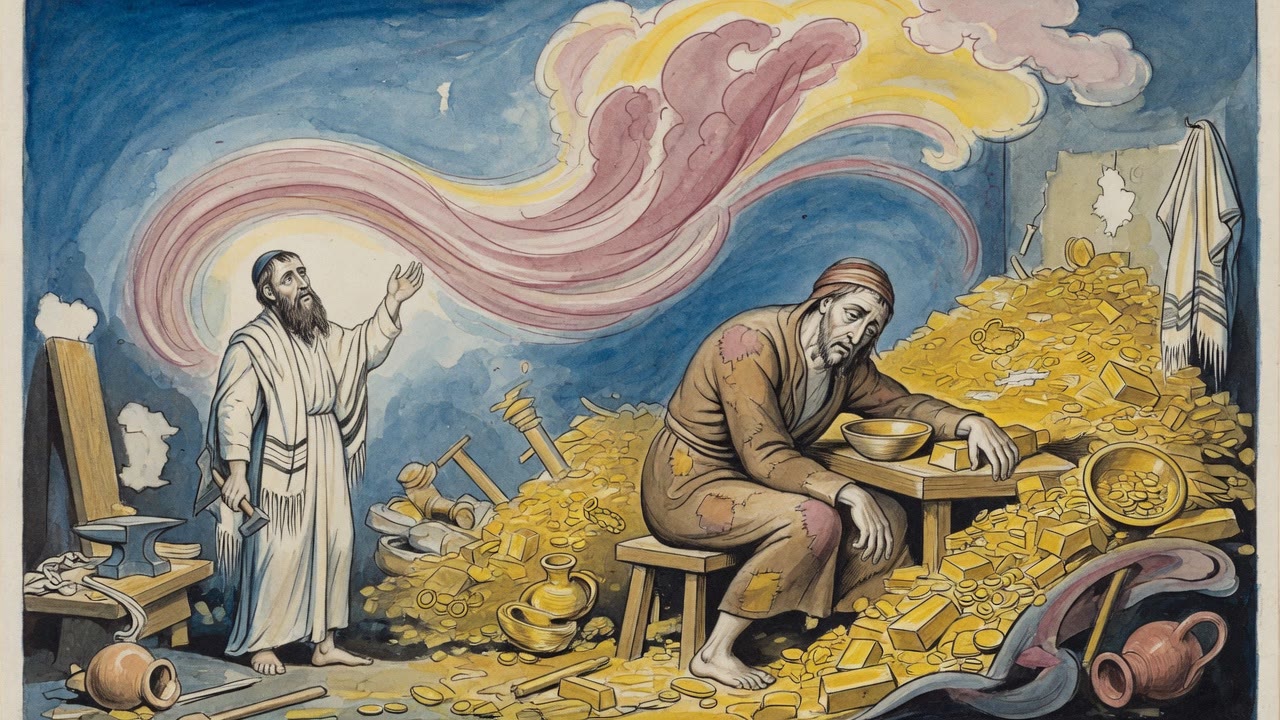
He told himself he was only ink. He told himself the sword was not his. On the third day the officer joked about a prisoner who had begged for water, and the joke ended with a shrug that meant the water never came. Yehudah laughed once, late, and hated the sound of his own throat. The laugh sat in the room afterward like a third man.

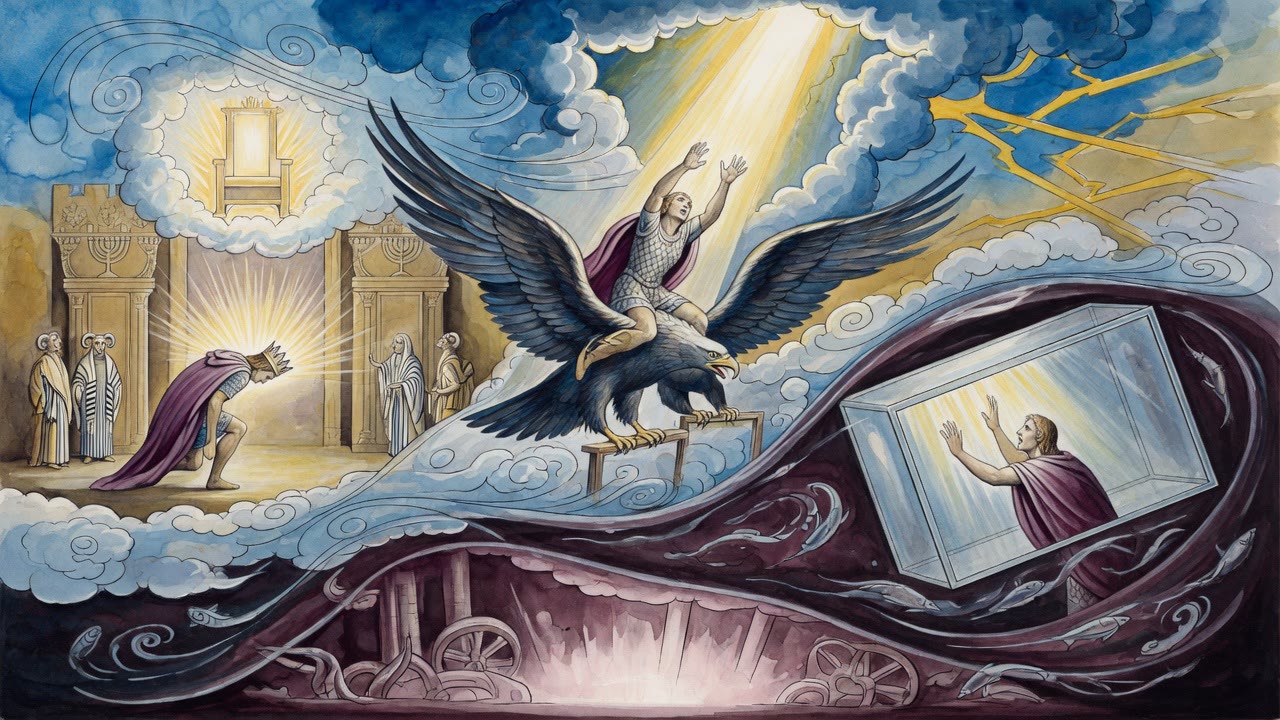
Ben Sira's warning lived in the study house he had left behind. Keep far from a person who has authority to kill, Ben Sira taught, and the fear of death loosens. If a man stands close, he must not err, lest the officer take his soul. Yehudah was close. He could feel the heat through the floorboards. He began to dream of coals under ordinary sandals, red and quiet, waiting for a misstep.

Hot Coals Under Ordinary Sandals

The officer began to use him. "Write this name." "Lose that petition." "Sign that the man confessed." Yehudah's hand hesitated on the first false line. The officer's fingers rested lightly on the hilt at his belt. No threat spoken. Recognition enough. Yehudah wrote. The ink looked blacker than usual. He washed his hands three times that night and still felt the reed between his fingers.

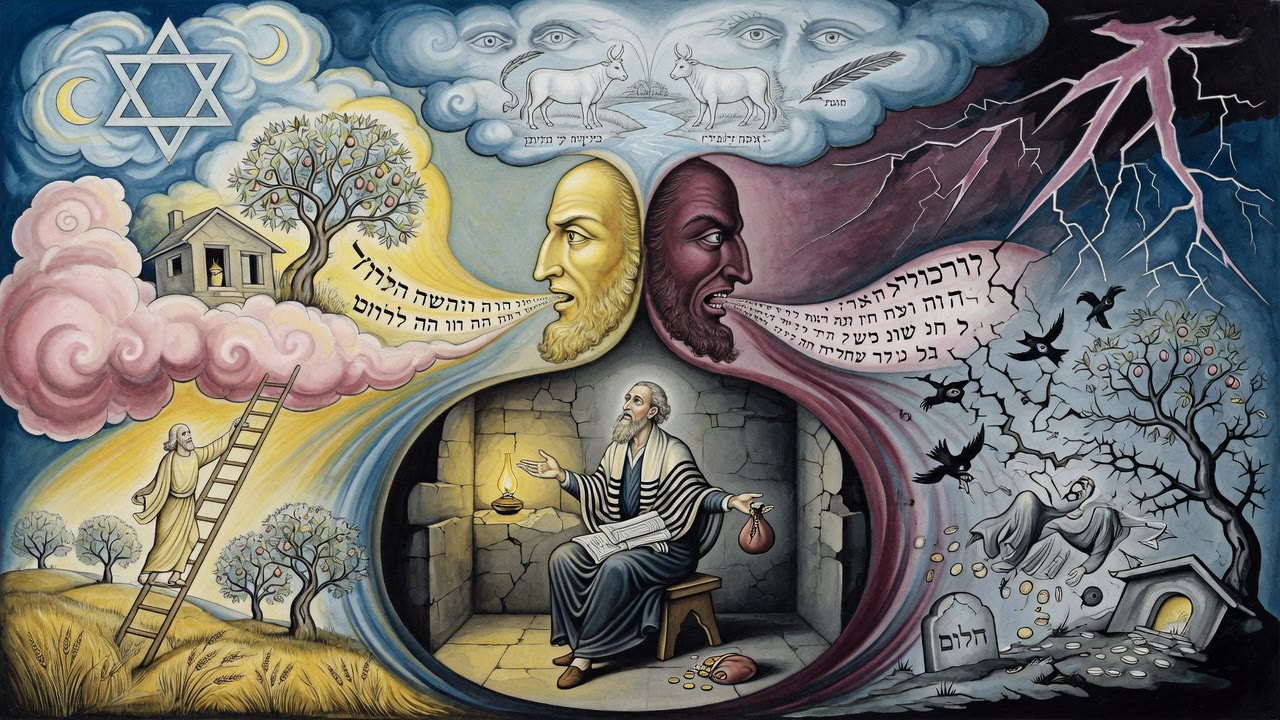
He was stepping on hot coals. He was walking in a net whose cords he had mistaken for honor. At night he dreamed of the post outside the gate and woke tasting copper. His wife asked why he flinched when the door latch clicked. He said the city was full of noise. He did not say he had sold the quiet of his own name.

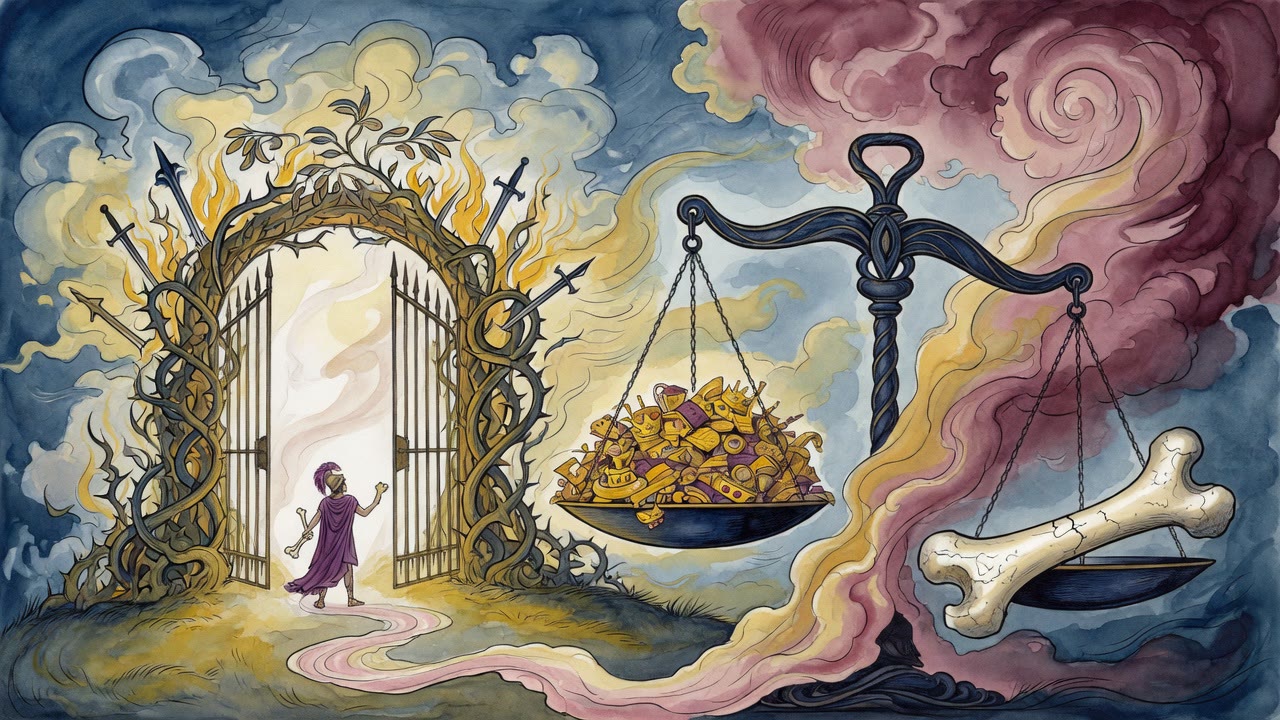
Pride had brought him. He had esteemed himself among the men of his people, the clever boy who rose. Ben Sira said abase pride very exceedingly, for the hope of man is the worm. Yehudah saw the worm clearly now. It waited in every man who thought nearness to power was the same as safety. He remembered the line about not being hasty to cry that a breach is upon him, and about committing himself to God. He had cried breach for less than this and run toward the wrong shelter.

The Mistake He Almost Made

A widow came with a sealed plea. Her son had been taken for a quarrel that should have been a fine. She pressed a small coin into Yehudah's palm and whispered the officer's weakness for bribes from the other side. "Write him free," she said. "You sit so near."

Yehudah almost did it. Not for the coin. For the look in her eyes that made him remember he still had a soul that could reproach him. Then he pictured the officer reading the corrected roll, smiling, and deciding a scribe who alters rolls is a man who knows too much. Lest he take your soul. The phrase was no longer poetry. It was procedure. He also heard another warning: conspire not to commit a second sin, for in one a man shall not go unpunished. Covering a false line with a false freedom would not wash the first ink. It would only double it.

He returned the coin. He told the widow the true hours when petitions were read in public, when other eyes could watch. He did not become a hero. He became careful in a new way. With all his power he began to acquire different friends: a teacher who still ate simple bread, a craftsman who refused court work, a man who feared God more than keys. Let righteous men be your bread masters, Ben Sira said. Yehudah changed who broke bread at his table.

Leaving the Net

The exit cost him. The officer called him soft. A rumor moved that Yehudah had grown pious and useless. His pay fell. His seat moved farther from the sword, then out of the room entirely. He copied contracts again in the lower market, slower money, cleaner sleep. His wife did not complain about the smaller purse. She complained less about the latch.

On his last day in the iron room he watched the officer condemn a man with a nod so small a stranger would have missed it. Yehudah felt the old heat rise through the floor and understood Ben Sira's map: nearness to the power to kill is not influence. It is a furnace that cooks the near ones first. He also understood humility's practical face. Esteem yourself less among the men of the people, and the sprint toward burning chairs slows.

He did not sow a second sin to cover the first false lines. He could not unwrite them. He could stop. In the congregation at the gate he kept his mouth from false justifications. When men asked how the officer's court worked, he said only, "Keep far." Some laughed. A few listened. The ones who listened lived longer.

Years later a student found him copying a marriage contract and asked if power was always unclean. Yehudah set down the reed. "Power that can end a breath is a coal," he said. "Hold it only if God Himself set it in your hand. If a man hands it to you for pay, you are already burning." Then he finished the contract, signed his name cleanly, and felt no heat under his feet.


← All myths
From the tradition

Sources

3 sources

The texts behind this telling. Some cards carry a translation of the source; others are our own retelling of it, and each card says which. Every card links out to the original.

Ben Sira 9:23Ben Sira

Retold in our words. Read the original at the link below.The Wisdom of Ben Sira, Cambridge University Press (1899) · CC-BY

Ben Sira turns to Stay Far From Those Who Wield Power to Kill.

He starts with a stark warning: "Keep far from a person who has authority to kill, and you will not be apprehensive of death." But It's not just about physical danger. It’s about the potential for abuse of power in any relationship, any situation. Ben Sira is saying, be mindful of who wields influence over you, and how they wield it. And, "if you are close, do not make a mistake, lest he take your soul." Heavy stuff. He continues, "Recognize that you are stepping on hot coals, and in a net you are walking. That feeling of constant vigilance, of knowing that one wrong step could lead to disaster.

So, what’s the antidote? How do we navigate this potentially treacherous world? Ben Sira shifts gears, offering advice on building a support system. "With all your power, acquire friends, and consult with the wise." Friendship isn’t just a nice-to-have; it’s a survival strategy. And not just any friends – wise friends. People who can offer counsel, perspective, and maybe even help you avoid those hot coals.

It's not just about seeking wisdom from others. It's also about being discerning about who you confide in. "With intelligent people should be your calculations, and all your secrets only between yourselves." Keep your inner circle tight. Share your vulnerabilities, your plans, your dreams, only with those you truly trust.

Then comes a seemingly odd piece of advice: "Let righteous men be your bread masters, and fear of the Lord your trappings." What does that even mean? "Bread masters" could refer to those who provide for you, those you depend on. Ben Sira suggests choosing people of integrity, people who are guided by a sense of something larger than themselves, yirat Adonai, “fear of the Lord,” which really means awe and reverence for something beyond ourselves. This concept infuses their actions with ethical considerations. Your “trappings,” the things you surround yourself with, should reflect that same sense of reverence.

Finally, Ben Sira concludes with a thought on the power of wisdom and skillful work: "With the handiwork of wisdom, will it be straight, and a leader in the midst of his people is wise." Or, as an alternative translation puts it: "The work of craftsmen will be praised, and the leader of the people will be wise in his speech." It's a reminder that wisdom isn't just an abstract concept. It manifests in our actions, in our creations, in the way we lead and communicate.

So, what’s the takeaway? Ben Sira offers us a practical guide to navigating a world filled with potential pitfalls. Be mindful of power dynamics. Cultivate wise friendships. Guard your inner circle. And strive to live a life guided by integrity and wisdom. It’s a tall order, but then again, nobody ever said walking on hot coals was easy.

Full source
Ben Sira 7:20Ben Sira

Retold in our words. Read the original at the link below.The Wisdom of Ben Sira, Cambridge University Press (1899) · CC-BY

Ben Sira, also known as Sirach or the Wisdom of Ben Sira, is a book of ethical teachings. It’s part of the Apocrypha, writings that are preserved outside the rabbinic canon. But even if it's not in the Hebrew Bible, it contains profound and practical advice, and this particular section, which we'll call Ben Sira 7, is all about humility and how to treat others with respect.

First, it says, "Esteem not thyself among the men of thy people." In other words, don't think you're better than anyone else. Remember, "wrath will not tarry." Bad things can happen when you let pride take over. It’s a

Then comes a real zinger: "Abase pride very exceedingly; For the hope of man is the worm." Whoa. Heavy stuff. What does it mean? Well, it's a stark reminder of our mortality. No matter how high and mighty we get, eventually, we all return to the earth. Our ultimate destiny, if we allow pride to consume us, is to become worm food. It’s a humbling thought.

Next, Ben Sira tells us, "Be not in haste to say, A breach is upon me; Commit thyself unto God, and delight in his way." Don't jump to conclusions when things go wrong. Instead, trust in God and find joy in following His path. This is about faith and resilience in the face of adversity. Easier said than done. Now, let's "Exchange not a friend at a price; Neither a brother that is attached for gold of Ophir." Don't sell out your friends or family for money, even if it's a king's ransom from the legendary land of Ophir. Some say Ophir was located in Africa, others in India. Regardless, we're talking serious money. True friendship and familial bonds are more valuable than any material wealth. Think about the people in your life who truly matter. Are you treating them accordingly?

"Despise not a wise wife; Seeing she is well-favoured above rubies." A wise woman is a treasure. Don't take her for granted. Recognize her worth. In a time when women were often undervalued, this is a powerful statement about appreciating the intelligence and value of a good wife.

Finally, Ben Sira addresses how we treat those who work for us: "Evil entreat not a servant that laboureth truly; Nor a hireling that giveth his soul." Don't mistreat your employees. Treat them with respect and fairness. The phrase "giveth his soul" suggests someone who is fully dedicated to their work. They deserve our gratitude and fair compensation.

So, what's the takeaway from all this? It’s really about living a life of humility, gratitude, and respect. It's about remembering our place in the world, valuing our relationships, and treating everyone with dignity, no matter their status. It's about striving to be a better person, day by day. And isn't that something we can all aspire to?

Full source
Ben Sira 7:8Ben Sira

Retold in our words. Read the original at the link below.The Wisdom of Ben Sira, Cambridge University Press (1899) · CC-BY

We all do. But what if that little shortcut could lead to a whole heap of trouble?

That's the kind of wisdom we find in the Book of Ben Sira, a treasure trove of practical and ethical advice written in Hebrew during the Second Temple period. It's not part of the standard Jewish biblical canon, but it's deeply respected and often quoted. a small piece of it, Chapter 7, and see what it has to offer us.

"Sow not upon the furrows of unrighteousness; lest thou reap it sevenfold." Ouch. Ben Sira starts strong, doesn't he? Don't plant your seeds – your actions – in fields of injustice. Because if you do, the harvest will be a whole lot of pain. Sevenfold, he says! It's a powerful reminder that our actions have consequences, and unethical behavior tends to boomerang, amplified.

Next, Ben Sira turns to ambition. "Seek not of God dominion; nor likewise of a king a seat of honour." Are you chasing power? Are you angling for a position of authority? He's not necessarily saying ambition is bad, but… maybe check your motives. Are you truly serving, or are you seeking personal glory? Humility, it seems, is key.

And what about self-justification? "Justify not thyself before God; and before a king profess not understanding." Ever been caught in a mistake and immediately started making excuses? We’ve all been there. Ben Sira cautions against that. Don't try to weasel your way out of responsibility, especially not before God or those in authority. And don't pretend to know more than you do – it's better to be honest and learn.

Then comes a warning about leadership itself: "Seek not to be a ruler; if thou hast not ability to quell pride." Leadership is a heavy burden. If you can’t control your own ego, how can you possibly lead others effectively? This isn't just about political leadership; it applies to any position of influence, even within our own families or communities.

"Lest thou fear the person of the noble; and suffer lucre to corrupt thine integrity." Don’t be swayed by status or money. It's easy to be intimidated by someone powerful or tempted by wealth. But Ben Sira warns against letting those things compromise your principles. Integrity, he says, is more valuable than either.

Then, a word about public shaming: "Condemn not thyself in the congregation at the gate; and cast not thyself down in the assembly." The "gate" and the "assembly" were public spaces, places of judgment and community. Don't publicly humiliate yourself, Ben Sira advises. Don't engage in self-destructive behavior that brings shame upon yourself in the eyes of the community.

Finally, a stark warning: "Conspire not to commit a second sin; for in one thou shalt not be unpunished." Don't compound your mistakes. One wrong action doesn't justify another. Don't think you can get away with repeated offenses. The consequences, he implies, are inevitable.

So, what's the takeaway from this little snippet of Ben Sira? It's a call to ethical living, to humility, and to taking responsibility for our actions. It's a reminder that our choices matter, that integrity is paramount, and that true strength lies not in power or prestige, but in living a righteous life. It's a challenge to examine our motives, to tame our egos, and to strive to be better versions of ourselves. Pretty relevant advice, wouldn't you say, for a world that feels as complex and challenging as ever?

Full source