5 min read

Angels Wore Two Ashkelon Brothers' Faces While Neighbors Planned a Robbery

Two brothers left for Jerusalem while neighbors planned to loot them. Angels wore their faces at home, and covenant merit kept the road guarded.

Curated by Arthur · Told by Maggid ·
Table of Contents
  1. While the Brothers Climbed
  2. How Fair Are Your Feet
  3. Blessed Is the God Who Did Not Forsake Them
  4. Daughter of Abraham, Covenant Between the Thighs
  5. The King's Orchard
Angels Wore Two Ashkelon Brothers' Faces While Neighbors Planned a Robbery Click for full size

While the Brothers Climbed

Two wealthy brothers from Ashkelon locked nothing carefully enough for the men who watched their doors. The brothers went up to Jerusalem for the festival with gifts and clean clothes and the ordinary fear of roads. Their neighbors smiled them out of the city and then spoke of empty rooms, open chests, a night of easy theft while the pious were busy with songs.

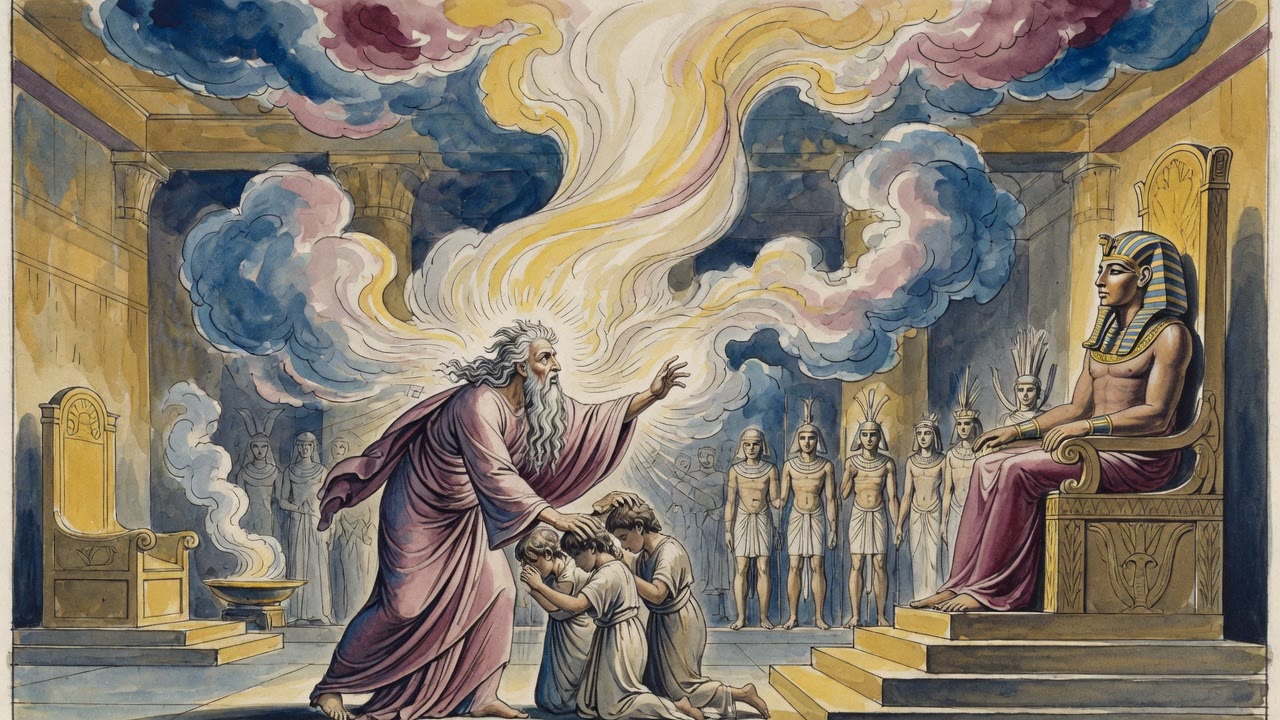
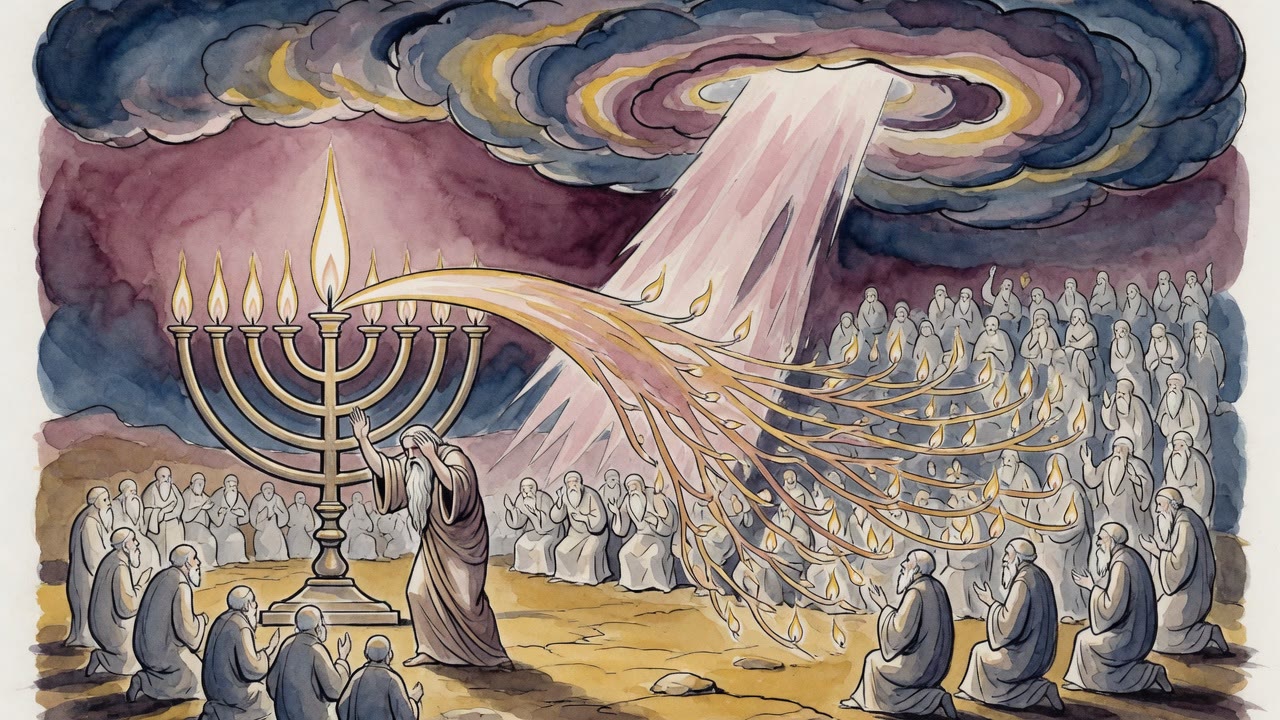
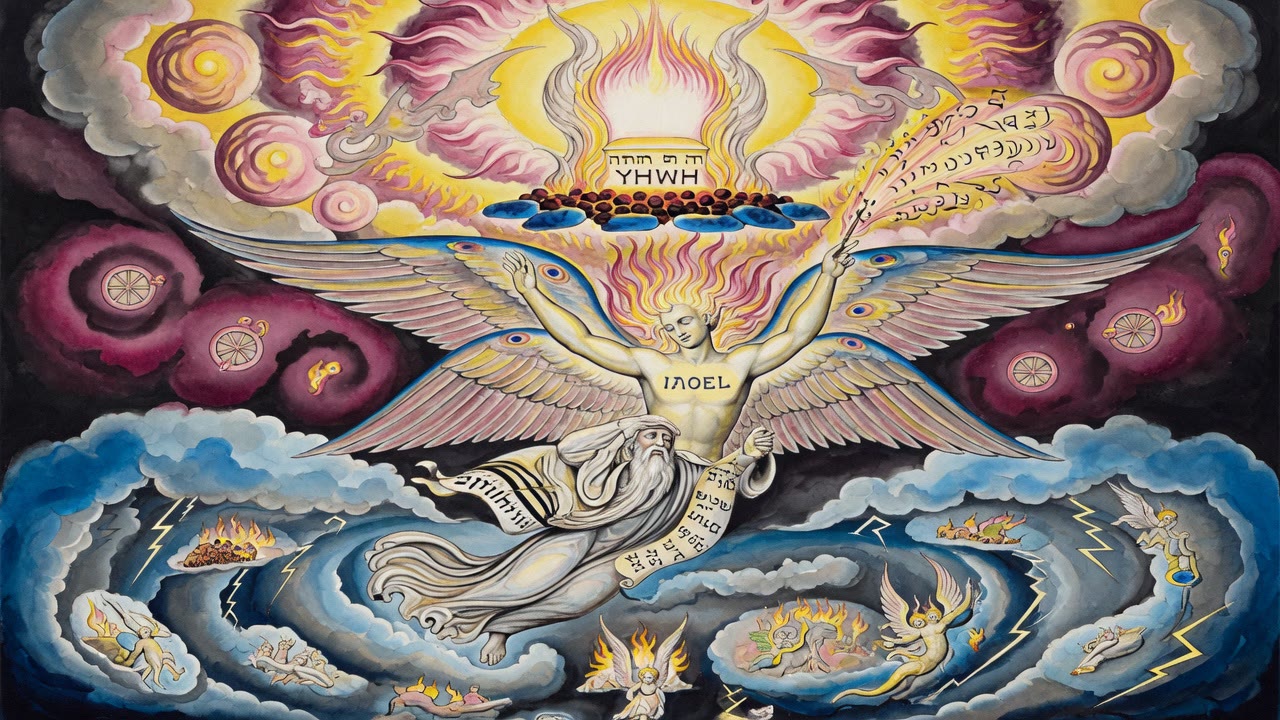
The neighbors did not know the houses were already occupied. God sent angels in the brothers' image. The figures went in and out as if the owners had never left, carrying nothing thieves could name, speaking nothing neighbors could overhear. Wicked eyes saw the familiar faces and lost their courage. The plot cooled on the street while the real brothers stood in the courts of the House and let the festival take their hours.

How Fair Are Your Feet

Song of Songs praises feet in sandals, daughter of a nobleman (Song of Songs 7:2). Rabbi Yudan heard not fashion but festival steps, the pe'amim of "Three times a year all your males shall appear" (Exodus 23:17). The daughter of the nobleman is Israel, child of beloved Abraham, called noble among the peoples (Psalms 47:10).

Rabbi Eliezer and Rabbi Yehoshua, "two mountains of the world" in the midrash's praise, taught that the merit of that road was a barrier against trouble. A man leaves for the festival and forgets to lock his house; a snake guards the threshold until he returns. Chickens left open stay whole while cats lie torn before them, the predator ruined and the flock intact. A pile of wheat stands ringed by lions that do not feed. The Ashkelon brothers are the human face of the same claim: the road to Jerusalem does not leave the home naked when the steps are fair.

Blessed Is the God Who Did Not Forsake Them

When the brothers came home, dust of the road still on their hems, they shared what they had brought from the festival. Bread and words. The neighbors, stunned, confessed the planned looting as if confession could wash the intent. "Blessed is the God of the Jews, whom they did not forsake, and He did not forsake them," they said. Angels in the brothers' likeness had kept the thresholds. Trust had been answered with more than locks and more than luck.

The confession is part of the miracle. Theft uncommitted still needs a mouth to admit the intent. The midrash lets the wicked neighbors become witnesses against their own plan, forced into praise by empty hands.

Daughter of Abraham, Covenant Between the Thighs

Another reading of the same poetry calls Israel daughter of Abraham the nobleman. Rabbi Yoḥanan tied the rounded thighs of the verse to the luxuries Israel enjoys through the merit of brit milah, the covenant cut between the thighs. Rabbi Ḥiyya asked why the eighth blessing of the Amidah (the standing prayer recited daily) is healing, and answered: circumcision is on the eighth day, and "My covenant was with him, life and peace" (Malachi 2:5). Life and peace sit next to the knife on purpose.

The midrash does not hide the danger. Infants have died from the cut. How many, the text asks, and does not give a soft number. Rabbi Natan, traveling in Cappadocia, met a mother whose sons had died after circumcision. When she brought a fourth child, yellow-fleshed and lacking the blood of readiness, he delayed the cut until strength returned. The boy lived and was named Natan. Covenant is not casual blood. It is craft under a master workman's hand, ornaments like the capital of a pillar or the hollow of a pearl, work of the Holy One in the world, risk included.

The King's Orchard

Rabbi Shmuel told of a king who planted nuts, apples, and pomegranates and asked his son only for a sample of fruit so he could rejoice in his own handiwork. So God asks Israel to consecrate the firstborn (Exodus 13:2) and to bring males up three times a year (Exodus 23:17). The uncircumcised cannot make that pilgrimage. The road and the covenant lock together: feet fair in sandals because the body already carries Abraham's mark, and houses guarded because the feet kept the appointment.

The Ashkelon brothers walked that road. Angels walked their floors without stealing a coin. Neighbors learned the Name the hard way, without loot to show for the education, only a blessing forced out of failed greed.

On the road home the brothers argued lightly over which court had held the thicker crowd. They did not know their faces had been borrowed by heaven. They did not know the neighbors had watched those faces lock doors and open them again until fear replaced greed. When the confession came, one brother looked at the other and understood that the festival steps had been doing more work than their sandals could feel. Fair feet, the Song said. The angels had answered the compliment in kind.


← All myths
From the tradition

Sources

2 sources

The texts behind this telling. Some cards carry a translation of the source; others are our own retelling of it, and each card says which. Every card links out to the original.

Shir HaShirim Rabbah 2:1Shir HaShirim Rabbah

Retold in our words. Read the original at the link below.The Sefaria Midrash Rabbah, 2022 · CC-BY

Ever read the Song of Songs and thought, "Wow, that's...intense?" It's a book of love poetry, after all, and some of the imagery can feel pretty direct. Take the verse, "How fair are your feet in sandals, daughter of a nobleman. Your rounded thighs are like ornaments, the handiwork of a master craftsman" (Song of Songs 7:2).

Rabbi Yudan, in Shir HaShirim Rabbah, raises a good point: is this really just about feet? Praising someone, even an ordinary person, with such language might feel a little…demeaning. So, what's really going on here?

The Rabbis, in their infinite wisdom, often looked beyond the literal. They saw layers of meaning, hidden depths waiting to be uncovered. Rabbi Yudan suggests that the verse isn't about physical feet at all. Instead, it's about the "steps" (paamei) of the pilgrimage festivals. This interpretation comes from the Torah itself, which states, "Three times (pe'amim) a year, all your males shall appear before the Lord God" (Exodus 23:17). So, the verse becomes a praise of Israel's dedication in traveling to Jerusalem for these special holidays.

Wait, there's more! What about the fact that feet are sometimes bare, sometimes covered? It doesn’t quite fit. Another interpretation, found in Shir HaShirim Rabbah, suggests the verse praises Israel for observing mitzvot (commandments) related to shoes, specifically the ritual of ḥalitza (the ceremony where a widow removes the shoe of her brother-in-law who refuses to marry her). And who is this "daughter of a nobleman"? Why, that's Israel, the "daughter of my beloved," because Abraham was so beloved by God!

Rabbi Berekhya even shares a teaching attributed to "two mountains of the world," Rabbi Eliezer and Rabbi Yehoshua. They say that the merit of traveling to Jerusalem for these festivals was so great that it served as a barrier against troubles.

And this isn't just a nice idea. Shir HaShirim Rabbah goes on to illustrate it with stories, anecdotes that bring this concept to life. We hear of someone who forgets to lock their doors before heading to Jerusalem, only to find a snake guarding their home upon their return. Another leaves their chickens unprotected, but finds cats torn to pieces before them, the chickens unharmed. A pile of wheat is left unguarded, but lions stand sentinel around it. These aren't just lucky coincidences; they are examples of divine protection.

Rabbi Pinḥas tells of two wealthy brothers from Ashkelon with wicked neighbors. These neighbors planned to loot and destroy the brothers' homes while they were away in Jerusalem. But God sent angels in their image to watch over their houses. When the brothers returned and generously shared what they brought back from Jerusalem, the neighbors were astonished. They confessed their evil intentions and marveled at the power of the God of the Jews, who protected those who trusted in Him. "Blessed is the God of the Jews, whom they did not forsake, and He did not forsake them... their God sent angels in their image who would go in and out of their houses, because they put their trust in Him," fulfilling the promise of "How fair are your feet."

These stories, rooted in Shir HaShirim Rabbah, aren't just quaint tales. They are powerful reminders that our actions, our devotion, and our trust in something greater than ourselves can create a shield of protection, a buffer against the challenges of the world. What "steps" are we taking that might be fairer than we realize, more powerful than we imagine? What blessings might we be unknowingly inviting into our lives simply by showing up, by making the journey, by putting our faith into action?

Full source
Shir HaShirim Rabbah 2:3Shir HaShirim Rabbah

Retold in our words. Read the original at the link below.The Sefaria Midrash Rabbah, 2022 · CC-BY

Shir HaShirim Rabbah, the commentary on the Song of Songs, and unpacking just such a verse. Get ready for a journey through noble lineage, the power of brit milah (circumcision), and God's loving artistry.

Our verse begins with the phrase "Daughter of a nobleman." Now, who is this noble daughter? The Midrash (rabbinic interpretive commentary) doesn't leave us guessing. It identifies her as the daughter of Abraham, the patriarch himself! Abraham, called noble, as it says in (Psalms 47:10), "The noblemen of the people have assembled, the people of the God of Abraham…" So, in this context, the "daughter" refers to Israel itself, the entire people seen as the offspring, the inheritors of Abraham's legacy. Pretty powerful stuff. But the verse doesn't stop there. It continues, "Your rounded thighs…" Rabbi Yoḥanan offers a fascinating interpretation: all the luxuries and delicacies that Israel enjoys in this world are thanks to the merit of brit milah, the covenant of circumcision, which is performed "between the thighs." It's a striking connection, linking physical ritual to worldly blessings.

Rabbi Ḥiyya takes it a step further. He asks, why did the Sages establish healing as the eighth blessing of the Amidah prayer, the central prayer of Jewish worship? His answer? It corresponds to circumcision, which is performed on the eighth day! This connection is cemented by the verse in (Malachi 2:5), "My covenant was with him, life and peace." We see how deeply intertwined the tradition sees physical health and spiritual covenant.

Let's address a challenging aspect: "Like ornaments [ḥala’im]," but the text notes this is similar to the Hebrew word for illnesses [ḥalayim]. The commentary acknowledges the inherent risk. How many babies, it asks, are circumcised and, tragically, die as a result? It's a stark reminder of the vulnerability involved. Yet, the merit of this mitzvah (commandment) is so great that the Jewish people observe it scrupulously, despite the danger.

Rabbi Natan even shares a personal anecdote. He recounts traveling to Cappadocia and encountering a woman whose sons kept dying after circumcision. When she brought her fourth child to him, he noticed the child’s flesh was yellow and that the child was lacking "the blood of circumcision". He instructed them to wait until the child had strengthened. They followed his advice, circumcised the child later, and he survived. They even named him Natan, after the rabbi! This story emphasizes the importance of careful consideration and the potential for life-saving wisdom within the tradition.

The Midrash then shifts metaphors. "Like ornaments," it asks, what are these ornaments similar to? Rabbi Ḥonya says they're like the capital of a pillar, a foundational support. The Rabbis say they're like the hollow of a pearl, a precious, hidden beauty. And who crafted these ornaments? "The handiwork of a master craftsman," the text declares, the handiwork of the Holy One, blessed be He, in the world.

Rabbi Shmuel brings it all together with a powerful analogy. A king plants an orchard filled with nut trees, apple trees, and pomegranate trees, and entrusts it to his son. He asks nothing in return, only that when the trees bear fruit, his son bring him a sample so that he may see his handiwork and rejoice.

Similarly, the Holy One asks nothing of Israel, only that when a firstborn son is born, they consecrate him to God's name. As it is written: “Consecrate every firstborn to Me” (Exodus 13:2). And when they ascend for the pilgrim festivals, they bring all their males to appear before God. Moses even cautions Israel: “Three times during the year [all your males shall appear before…the Lord]” (Exodus 23:17). And as the text points out, since one who is uncircumcised cannot make the pilgrimage (Yevamot 72a), it's implied that the son has been circumcised.

So, what do we take away from all this? It's a multi-layered exploration of lineage, covenant, and divine artistry. It reminds us that our traditions are not just abstract concepts, but living, breathing connections to our ancestors and to the Holy One. And it challenges us to see the beauty and meaning woven into even the most challenging aspects of our heritage. How will you carry these insights forward?

Full source