5 min read

Joseph Wept Alone When Benjamin Walked Into the Hall

Ten of the men on the floor had sold him to a caravan. The eleventh was his mother's other son. He got as far as ordering dinner before he broke.

Curated by Arthur · Told by Maggid ·
Table of Contents
  1. The Hall Went Quiet
  2. Every Brother He Could Have Been
  3. Behind the Door
  4. Out Where Nobody Is Watching
  5. The Sister Who Ran to Meron
Joseph Wept Alone When Benjamin Walked Into the Hall Click for full size

The Hall Went Quiet

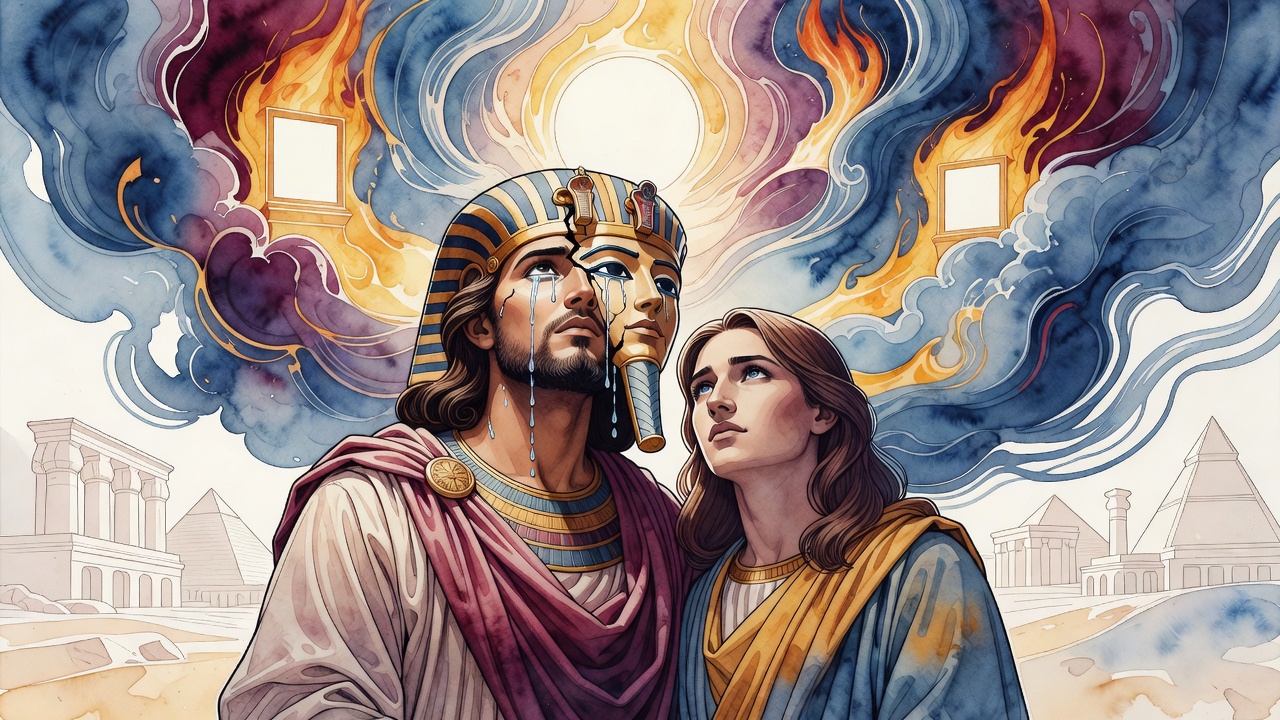
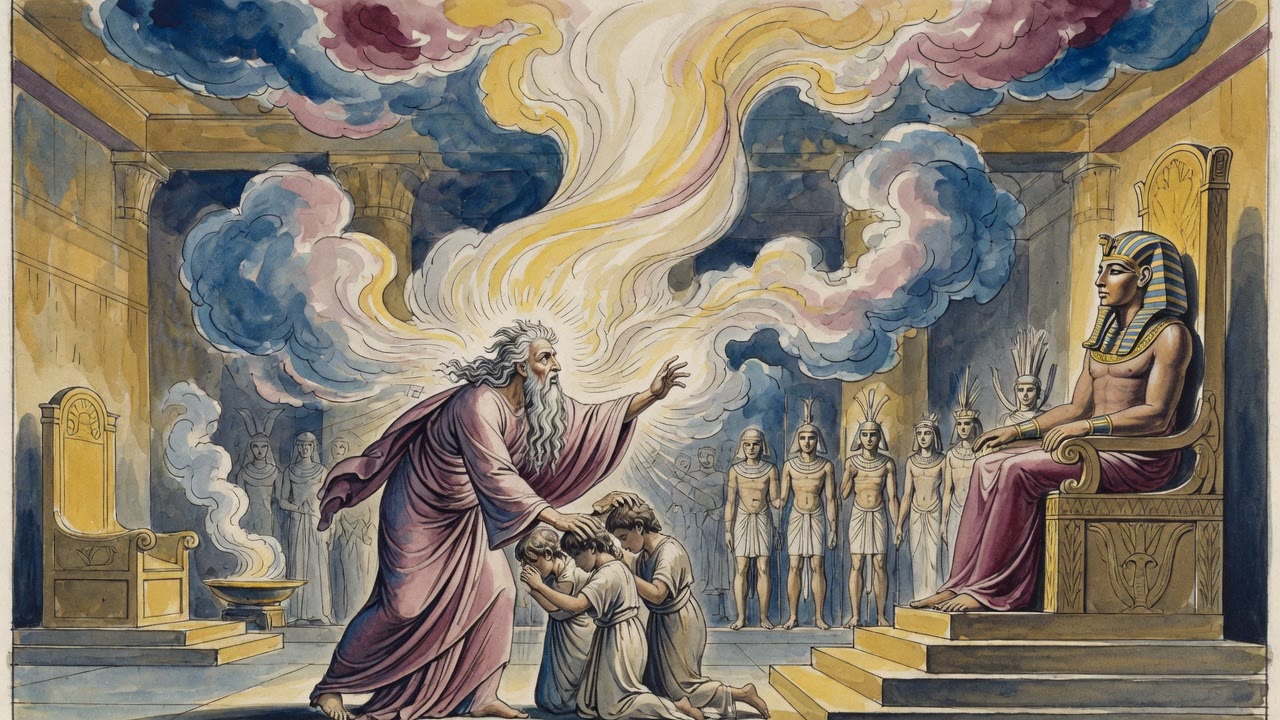
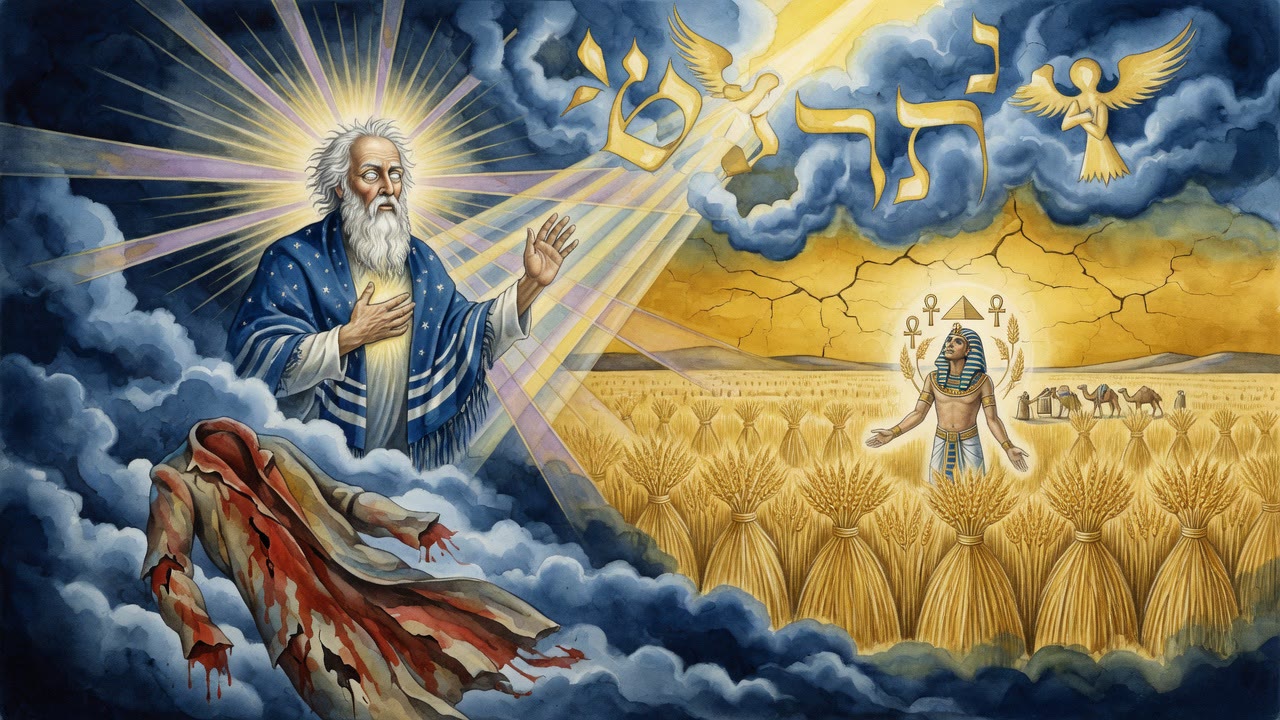
Eleven men came in out of the sun and stood on the stone floor waiting to be told what the ruler of Egypt wanted with them. Ten of them had sold their brother to a caravan. Joseph sat above them in linen and paint with an interpreter at his elbow, because they still did not know he understood every word they said.

Then he looked past the ten and saw the youngest one.

Benjamin was grown. He had been a small boy in a tent the last time. He was the only other person alive who had come out of Rachel, and he was standing there in a travel-stained cloak among men who had gone home and told their father a lie.

Joseph got out an order about slaughtering an animal and preparing a meal, and his voice did what it was supposed to do, and then he stopped speaking.

Every Brother He Could Have Been

There was no shortage of models for what he might do next.

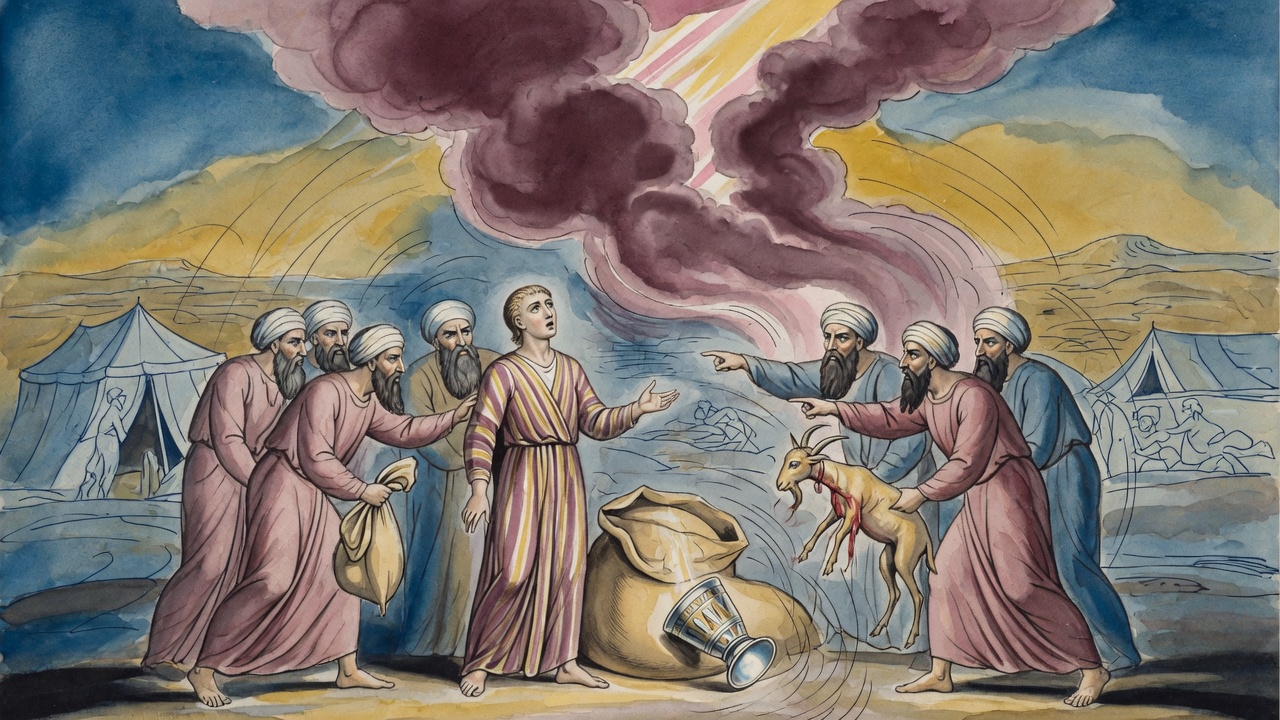
Cain took Abel out to the field and killed him there. Ishmael hated Isaac. Esau hated Jacob and worked out the arithmetic of it out loud, counting off the days of mourning for their father as the date when he could finally do it. And the ten men breathing on the floor in front of Joseph had looked at their father's favorite and been unable to say one civil word to him.

That was the family record. A brother is the person best placed to destroy you, and every one of them had proved it.

Joseph had the whole room under his hand. He could have called the guard and had the ten of them in irons before the meat came off the fire, and there was not a court in Egypt that would have asked him why. He had rehearsed it. He had had twenty-two years to rehearse it.

Behind the Door

He got up and left the room, which a ruler of Egypt can do without explaining himself.

There was a chamber off the hall. He went into it and shut the door and it came out of him all at once, with his hands on his knees, the way a man cries when he has held something down for twenty-two years and then watches it walk in through a door wearing his own mother's face.

He could not kiss Benjamin. That was the whole trouble. Kiss him in that hall and the disguise is finished, the ten know, the story of Egypt's second-in-command collapses, and whatever he still needed to do to those ten is over before it starts. So he did the crying behind a door, alone, on a floor nobody else was allowed to walk on.

Then he washed his face and went back out and said, "Set on bread."

Out Where Nobody Is Watching

There is one place a man can grab his brother and not pay for it, and it is not a palace.

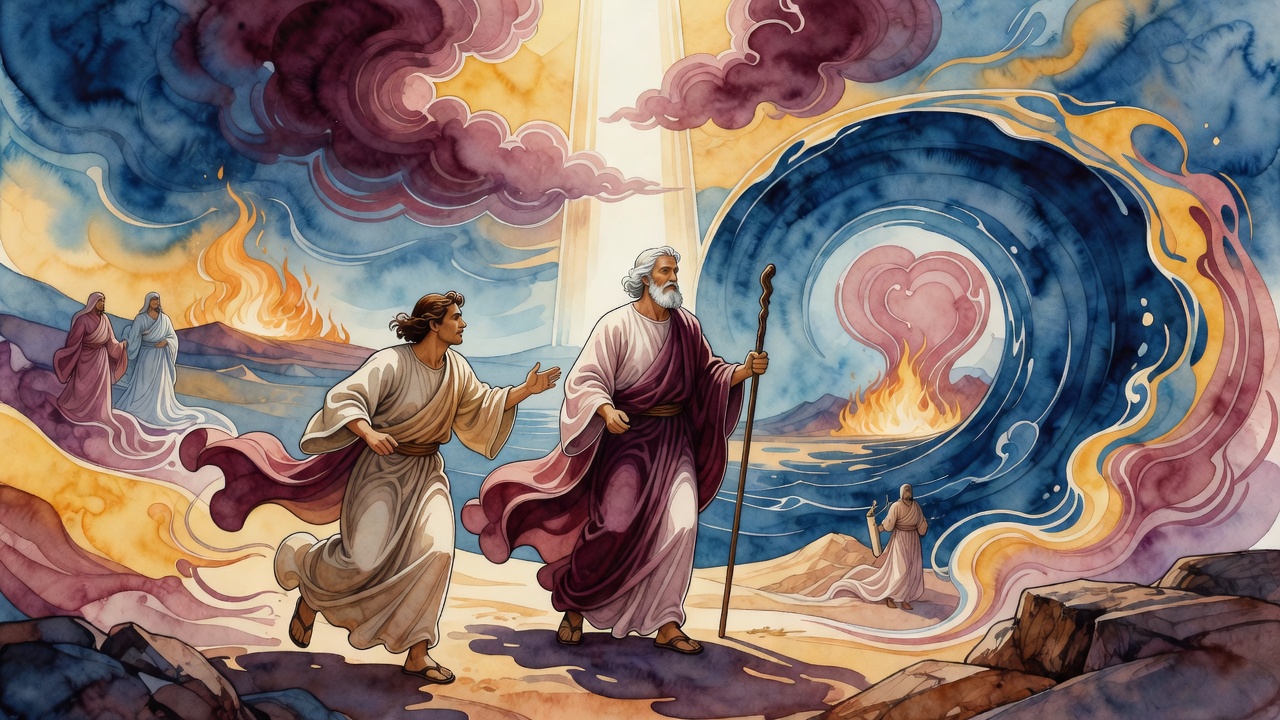
Years later Moses came back from Midian and walked into the desert country east of everything settled, and Aaron came out from Egypt to meet him at the mountain of God. No court. No interpreter. No ten men watching to see what it meant. Aaron reached his brother and kissed him, and there was nobody standing there to make anything of it, because in the wilderness there is nobody standing there at all.

The Sister Who Ran to Meron

Long after both of them, a house in Meron caught fire.

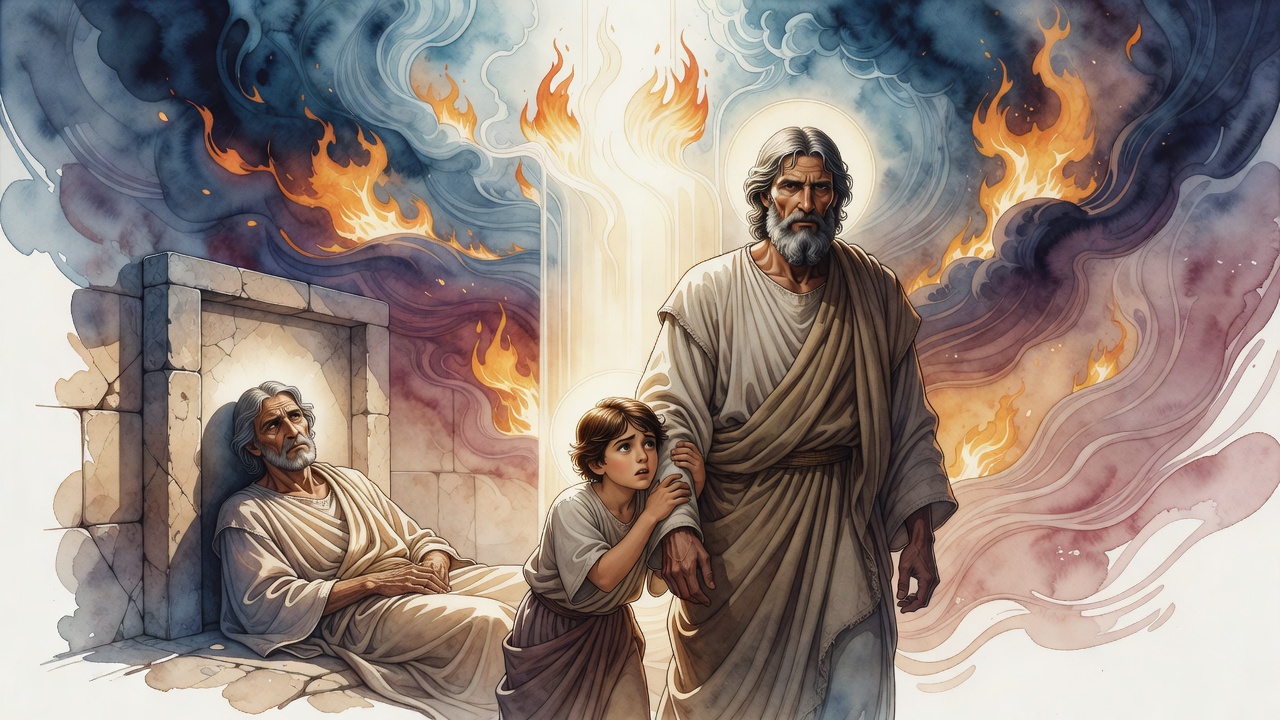
The man who lived in it got out. His sister lived an hour's walk away in Gush Halav, and she saw the smoke over the ridge and understood whose roof was under it, and she ran the whole way in the open, in daylight, past everybody.

She found him standing in the street covered in ash, with his eyebrows gone and his hands black, and she took hold of him and would not stop kissing him, in front of the neighbors, in front of the men still throwing water at the walls.

Somebody must have looked at her, because she answered it without being asked.

"This does not shame me," she said. "My brother was in trouble and he has come out of it."


← All myths
From the tradition

Sources

2 sources

The texts behind this telling. Some cards carry a translation of the source; others are our own retelling of it, and each card says which. Every card links out to the original.

Shir HaShirim Rabbah 1:1Shir HaShirim Rabbah

Retold in our words. Read the original at the link below.The Sefaria Midrash Rabbah, 2022 · CC-BY

The Song of Songs, that most passionate and allegorical of biblical books, wrestles with that very feeling. to a fascinating interpretation from Shir HaShirim Rabbah, a classical midrashic (rabbinic interpretive commentary) commentary on the Song of Songs, and see what we can uncover.

The verse we’re unpacking is (Song of Songs 8:1): "If only you were like a brother to me, who suckled the breasts of my mother! I would find you outside; I would kiss you, yet they would not despise me." It's a verse brimming with yearning, hinting at a relationship that transcends the ordinary. But what kind of brotherly love are we really talking about here?

The midrash immediately jumps into a series of thought experiments. "Like what brother?" it asks. Cain to Abel? Yikes. Remember that story? "Cain arose against Abel his brother, and killed him," as (Genesis 4:8) grimly reminds us. Definitely not the kind of brotherly affection the verse is aiming for!

Okay, how about Ishmael and Isaac? Nope. The midrash reminds us that Ishmael hated Isaac. Esau and Jacob? Again, no dice. "Esau hated Jacob," says (Genesis 27:41). Joseph’s brothers to Joseph? They were jealous, as (Genesis 37:11) tells us. So, if all these famous brotherly relationships are tainted with hatred and jealousy, where do we find the kind of pure, unadulterated love the verse is seeking?

The midrash pivots: "One who suckled the breasts of my mother – that is to say, like Joseph to Benjamin." Ah! Now we’re getting somewhere. Joseph, who loved his younger brother Benjamin wholeheartedly. Remember when "Joseph saw Benjamin with them" (Genesis 43:16)? The story goes on to say that Joseph wept when he saw Benjamin (Genesis 43:30). This is a love that moves you to tears; a love that overcomes obstacles.

Next, the midrash explores the phrase, "I would find you outside; I would kiss you." What does "outside" even mean in this context? "Outside," we're told, "is the wilderness, which is outside the settled area." A place of vulnerability, of rawness, away from the constraints of society. And the kiss? The midrash offers the example of Moses and Aaron. "He went, and he met him at the mountain of God, and he kissed him" (Exodus 4:27). A kiss of reunion, of shared purpose, filled with emotion.

Finally, "They would not despise me." This speaks to the fear of judgment, the worry about what others will think. Rabbi Pinḥas shares a story to illustrate this: Two siblings lived in different towns, Meron and Gush Ḥalav. When the house of the one in Meron caught fire, his sister from Gush Ḥalav rushed to him, hugging, embracing, and kissing him. She declared, "This does not demean me, as my brother was in dire straits and was delivered from them." Her love transcended social expectations.

Isn't that powerful? This midrash isn't just about sibling relationships; it's about the yearning for authentic connection, a bond so strong it defies societal norms and expectations. It's about finding that love in unexpected places, even in the "wilderness" of our lives. It's a reminder that true love – like the love between Joseph and Benjamin, or the reunion of Moses and Aaron – is worth fighting for, even if it means challenging the status quo.

Full source
Shir HaShirim Rabbah 2:1Shir HaShirim Rabbah

Retold in our words. Read the original at the link below.The Sefaria Midrash Rabbah, 2022 · CC-BY

Ever read the Song of Songs and thought, "Wow, that's...intense?" It's a book of love poetry, after all, and some of the imagery can feel pretty direct. Take the verse, "How fair are your feet in sandals, daughter of a nobleman. Your rounded thighs are like ornaments, the handiwork of a master craftsman" (Song of Songs 7:2).

Rabbi Yudan, in Shir HaShirim Rabbah, raises a good point: is this really just about feet? Praising someone, even an ordinary person, with such language might feel a little…demeaning. So, what's really going on here?

The Rabbis, in their infinite wisdom, often looked beyond the literal. They saw layers of meaning, hidden depths waiting to be uncovered. Rabbi Yudan suggests that the verse isn't about physical feet at all. Instead, it's about the "steps" (paamei) of the pilgrimage festivals. This interpretation comes from the Torah itself, which states, "Three times (pe'amim) a year, all your males shall appear before the Lord God" (Exodus 23:17). So, the verse becomes a praise of Israel's dedication in traveling to Jerusalem for these special holidays.

Wait, there's more! What about the fact that feet are sometimes bare, sometimes covered? It doesn’t quite fit. Another interpretation, found in Shir HaShirim Rabbah, suggests the verse praises Israel for observing mitzvot (commandments) related to shoes, specifically the ritual of ḥalitza (the ceremony where a widow removes the shoe of her brother-in-law who refuses to marry her). And who is this "daughter of a nobleman"? Why, that's Israel, the "daughter of my beloved," because Abraham was so beloved by God!

Rabbi Berekhya even shares a teaching attributed to "two mountains of the world," Rabbi Eliezer and Rabbi Yehoshua. They say that the merit of traveling to Jerusalem for these festivals was so great that it served as a barrier against troubles.

And this isn't just a nice idea. Shir HaShirim Rabbah goes on to illustrate it with stories, anecdotes that bring this concept to life. We hear of someone who forgets to lock their doors before heading to Jerusalem, only to find a snake guarding their home upon their return. Another leaves their chickens unprotected, but finds cats torn to pieces before them, the chickens unharmed. A pile of wheat is left unguarded, but lions stand sentinel around it. These aren't just lucky coincidences; they are examples of divine protection.

Rabbi Pinḥas tells of two wealthy brothers from Ashkelon with wicked neighbors. These neighbors planned to loot and destroy the brothers' homes while they were away in Jerusalem. But God sent angels in their image to watch over their houses. When the brothers returned and generously shared what they brought back from Jerusalem, the neighbors were astonished. They confessed their evil intentions and marveled at the power of the God of the Jews, who protected those who trusted in Him. "Blessed is the God of the Jews, whom they did not forsake, and He did not forsake them... their God sent angels in their image who would go in and out of their houses, because they put their trust in Him," fulfilling the promise of "How fair are your feet."

These stories, rooted in Shir HaShirim Rabbah, aren't just quaint tales. They are powerful reminders that our actions, our devotion, and our trust in something greater than ourselves can create a shield of protection, a buffer against the challenges of the world. What "steps" are we taking that might be fairer than we realize, more powerful than we imagine? What blessings might we be unknowingly inviting into our lives simply by showing up, by making the journey, by putting our faith into action?

Full source