Akiva Told Rome Why God Leaves the World Unfinished
Summoned before Rome's ruler and governor, Rabbi Akiva flings a fortune in medicine to the pigs and shows why God left the world unfinished.
Table of Contents
 Click for full size
The Summons to the Governor's Hall
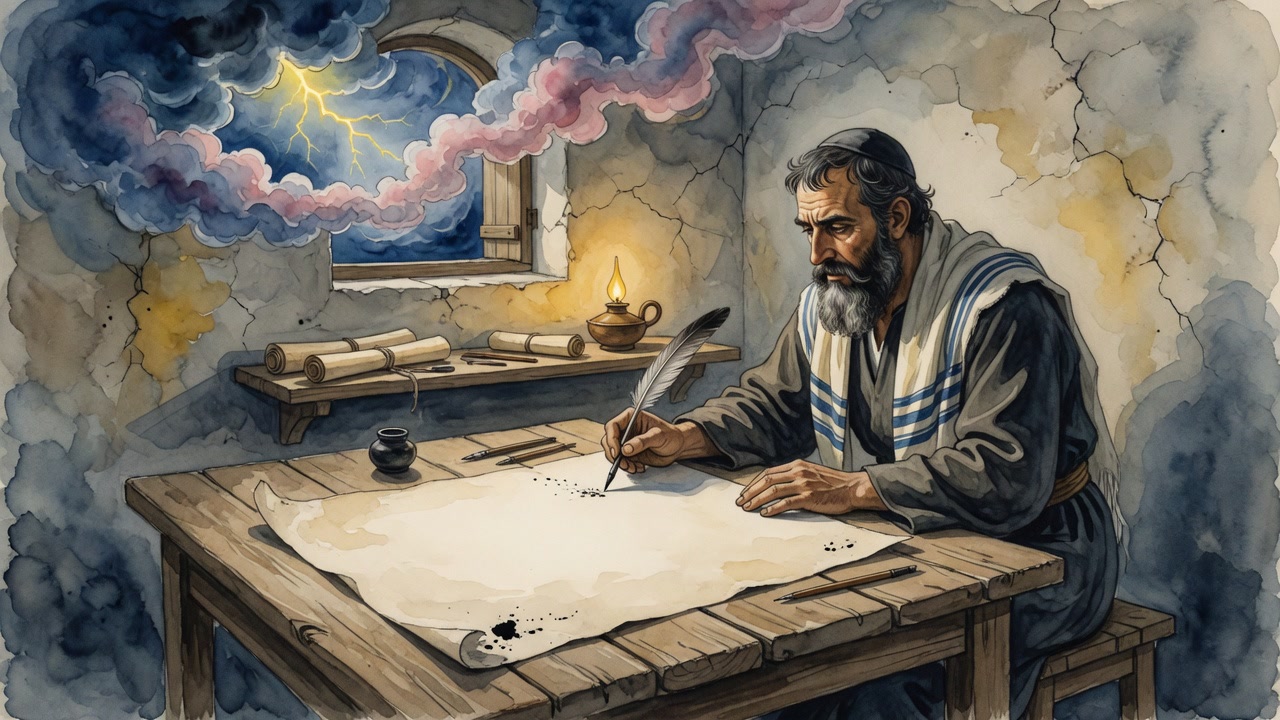
Rabbi Akiva walked into the Roman hall knowing the questions had been sharpened before he arrived. Rome's ruler sat above him, and Turnus Rufus the governor stood at his side, and between them they had laid out a morning of traps dressed up as philosophy. They did not want an answer. They wanted the old sage to stumble in front of the whole court, so that the God he served would stumble with him.
The ruler opened with Scripture, quoting it back at Akiva the way a prosecutor quotes a man his own letters. God gives wisdom to the wise, the verse said, and knowledge to those who already understand. "If your God were just," the emperor said, "He would pour wisdom into the fool, who has none and needs it most. Instead He hands it to the man who is already clever. Where is the fairness in that?"
The Trap About Wisdom and Fools
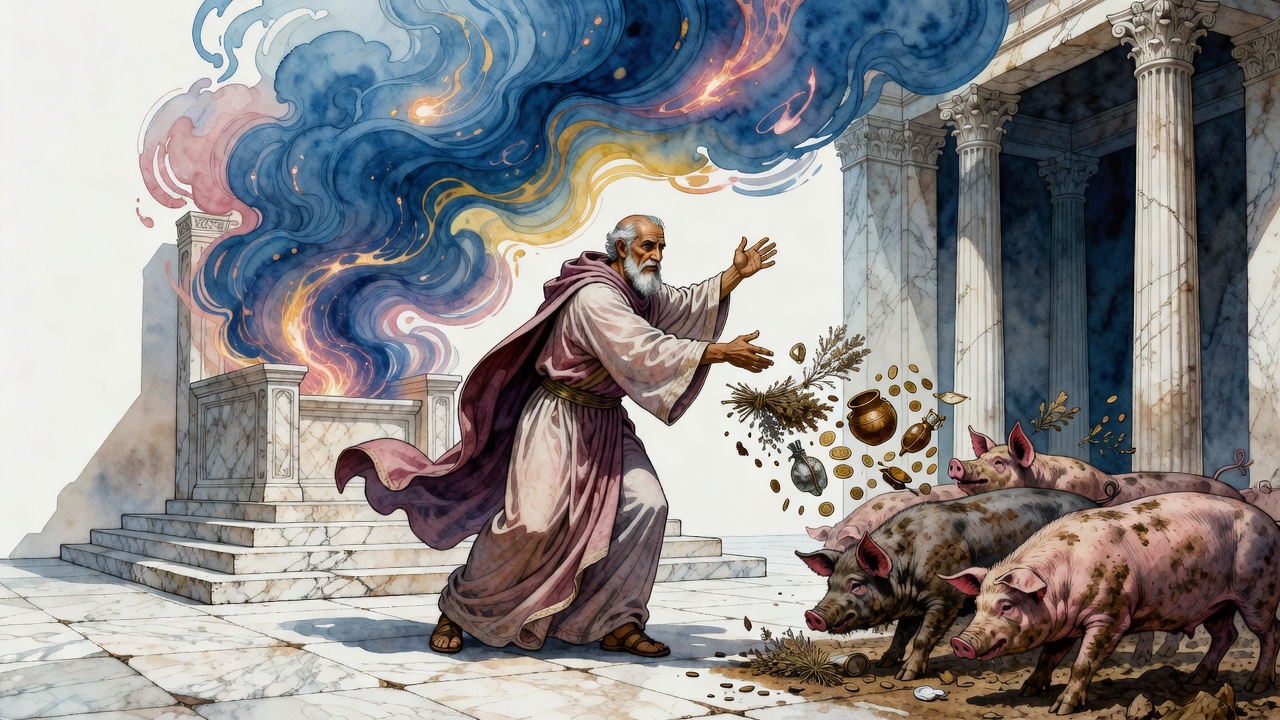
Akiva did not argue the verse. He let the question hang in the air, bowed low, and went home. Within days word climbed back to the palace that the old sage had fallen sick. The emperor, who wanted Akiva healthy enough to be humiliated properly, sent a physician and a remedy worth a thousand denars, a cure so costly that only an emperor could have paid for it.
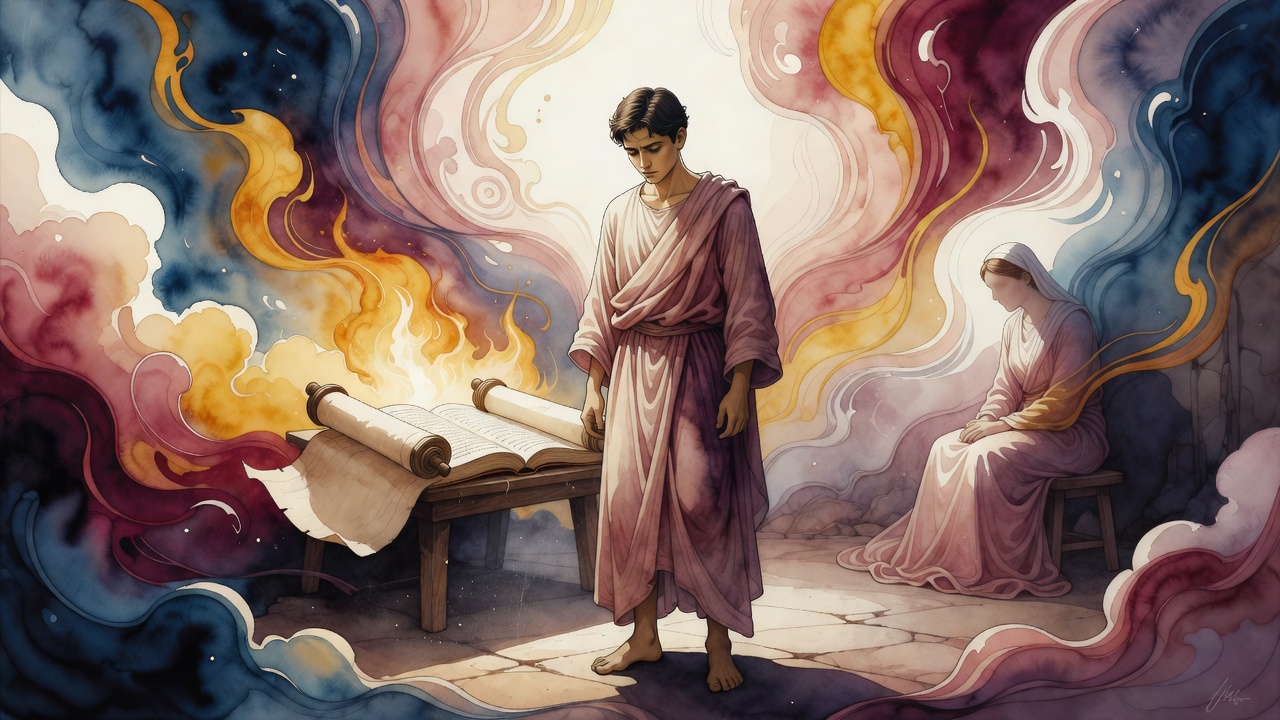
Akiva took the sealed medicine, carried it out to the yard where the swine were penned, and threw the whole thousand-denar cure into the mud. The pigs shoved their snouts through it and trampled what they did not swallow.
The Medicine in the Pigsty
When the report reached the palace, the emperor was furious. A fortune in medicine, fouled in a pig yard. He summoned Akiva back and demanded to know how a man reputed wise could throw something so precious to animals that could not know its worth.
"You have just answered your own question," Akiva said. "You gave your finest medicine to me because you knew I would use it. You would never have poured it into the trough on purpose. It would be lost on a creature that cannot tell a cure from slop." He let the ruler hear his own outrage turned back around. "This is why the Holy One gives wisdom only to the wise. Poured into a fool, it is thrown to the swine. The gift is only as good as the vessel ready to hold it."
Which Hands Make the Finer Thing
Turnus Rufus took the floor before the court could laugh. He had a trap of his own, and he believed it airtight. "Whose works are more beautiful," he asked, "the works of your God, or the works of flesh and blood?"
"The works of flesh and blood," Akiva answered at once.
The governor smiled. "Look at the heavens and the earth. Can you make anything like them?"
"Do not argue with me about things above mortal reach," Akiva said, "matters no human being has any power over. Speak to me of things that lie in human hands."
Turnus Rufus went straight for the wound he had been aiming at from the start. "Then why do you circumcise your sons? If God wanted the child cut, why did He not make him that way?"
"I knew you would arrive here," Akiva said. "That is exactly why I told you the works of flesh and blood are the finer ones."
Wheat, Flax, and the Cord the Mother Cuts
Akiva called for props. Bring me ears of grain, he said, and bring me fine loaves of bread. They set the raw wheat down beside the baked bread. "This is the work of God," Akiva said, lifting the grain. "This is the work of human hands," he said, lifting the loaf. "Now tell me the wheat is the better thing to eat." Then he called for stalks of flax and for finished garments woven in Beth-shean, and set the rough stalks beside the cloth. "The flax is God's. The garment is a man's. Which of the two would you wear?"
The governor had one thrust left. "Since your God desires the cutting, why does the infant not come out of the womb already circumcised?"
"And why does the child come out still joined to his mother by the cord?" Akiva said. "Why must she cut that herself? A baby arrives unfinished on purpose. The wheat waits for the oven, the flax waits for the loom, the child waits for the knife. The Holy One left the world raw so that human hands would finish it. He gave the commandments to refine the ones who keep them." He named his verse the way the emperor had named his: the word of the Lord is refined, David had sung, and the refining was the whole design.
Akiva walked out of the hall having spent a fortune in medicine on a pen full of pigs and turned every Roman trap into the same answer. Rome had built its glory on marble it had cut, roads it had laid, and bread it had baked, and had never once suspected that its own busy hands were the argument against it.
← All myths