Noah's Dove Left the Ark and Never Came Back
Noah opens the ark window a last time; the dove finds home and does not return, while covenant waters fall or rise with the mark Israel keeps.
Table of Contents
 Click for full size
The Window and the Hand
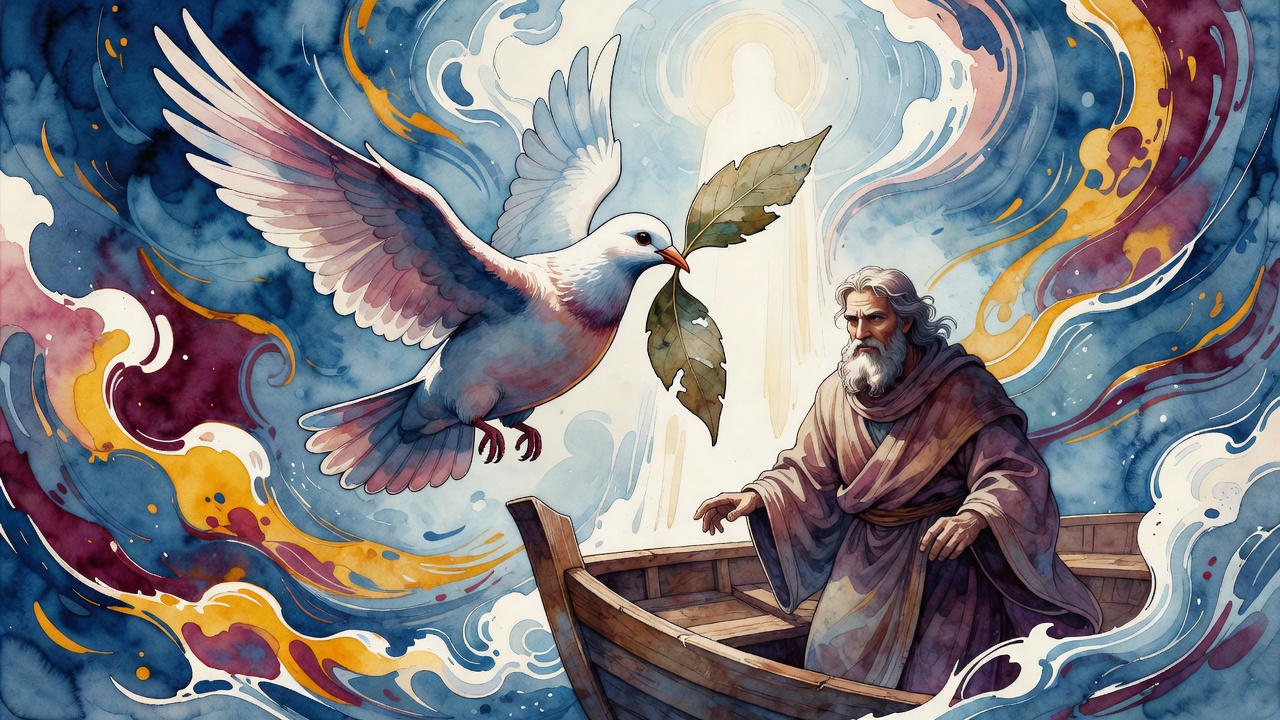
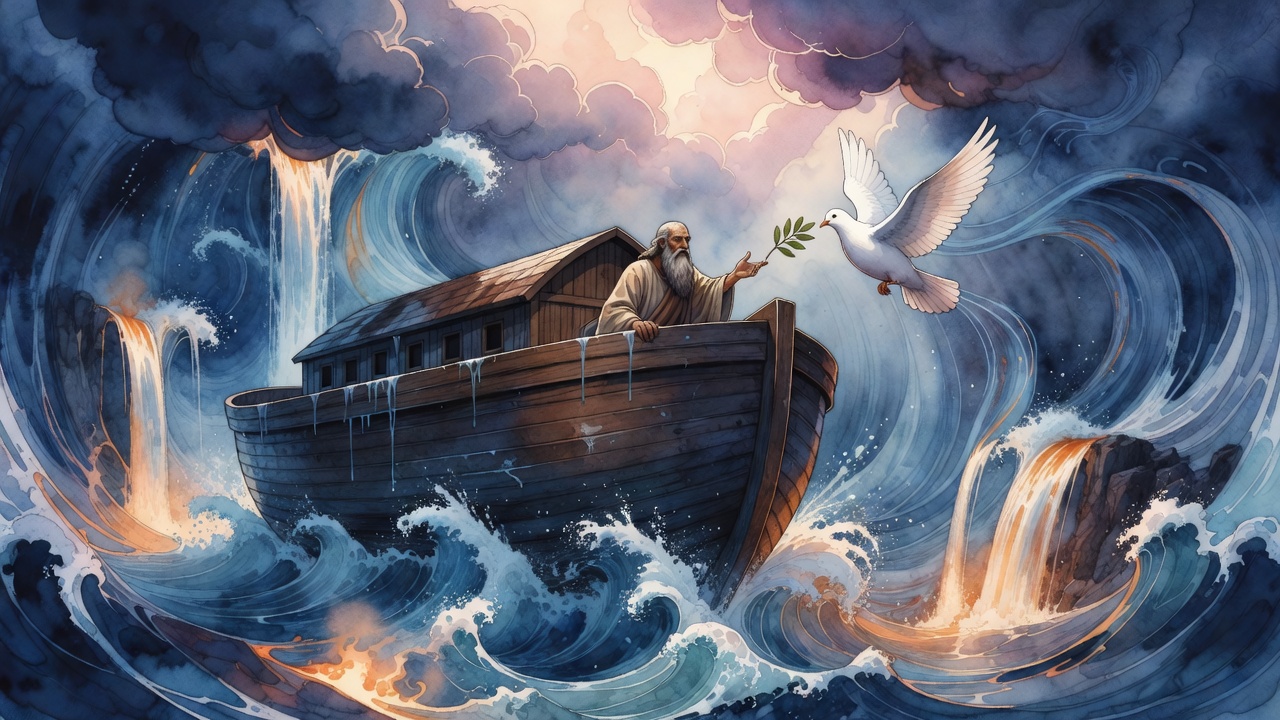
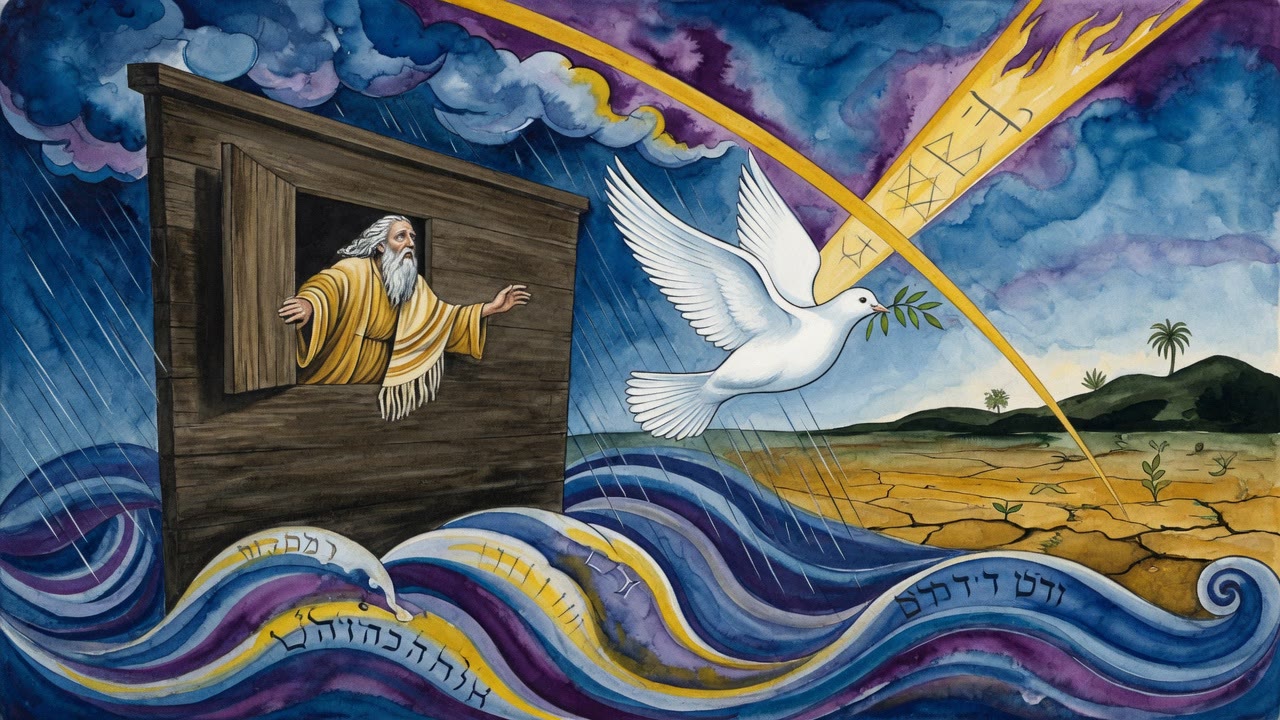
Noah set his palm on the window latch and felt the wood swollen with old rain. The world outside had been water for so long that dry was a rumor. He had sent the dove before. He would send her again. This time, when she left, she did not come back at all (Genesis 8:12). The empty return was its own message: she had found a place that was no longer the ark. Home had reappeared as branches, as mud that could hold a foot, as air that did not taste only of drowned things.
Noah's throat worked around a prayer he did not polish. Opening is not only carpentry. Opening is the moment a man admits the sealed season may be ending. Later mystic readers would hear in that opening the same verb that opens Pharaoh's daughter to pity when she sees the basket-child, and the psalm that begs, open my lips (Psalm 51:17). Compassion and prayer both begin with a hinge moving.
Waters That Rise With Broken Covenant
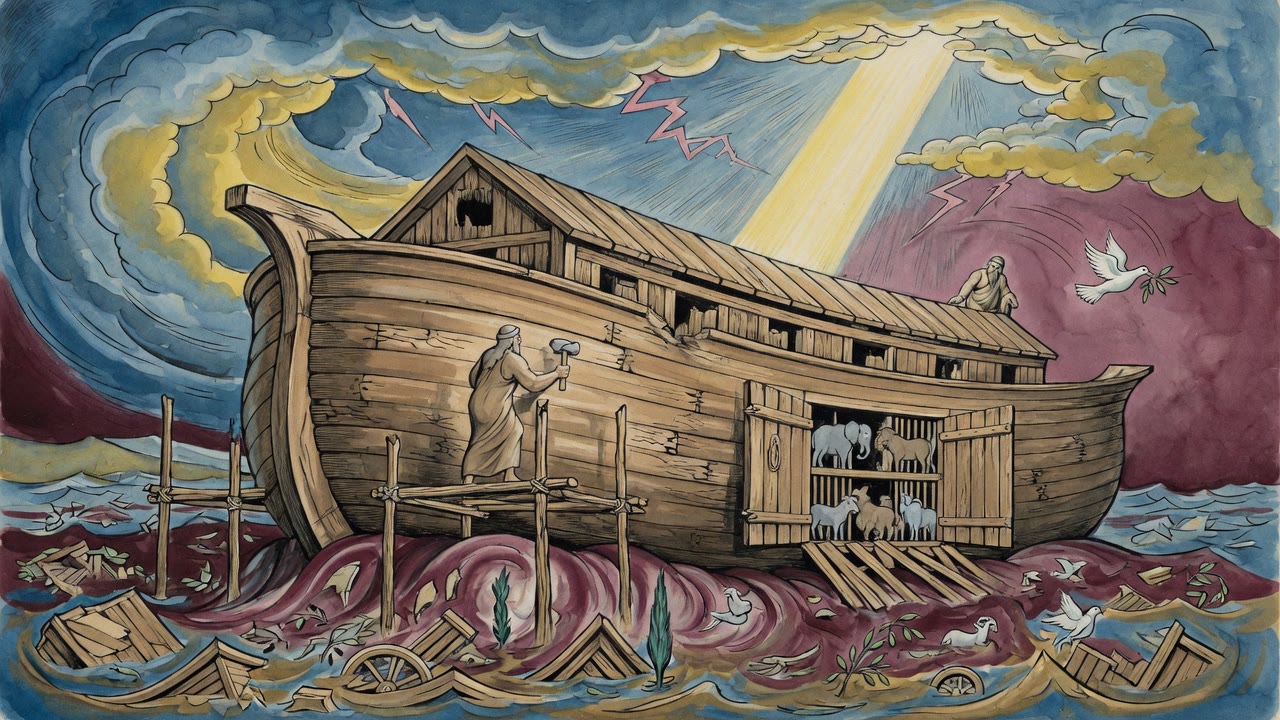
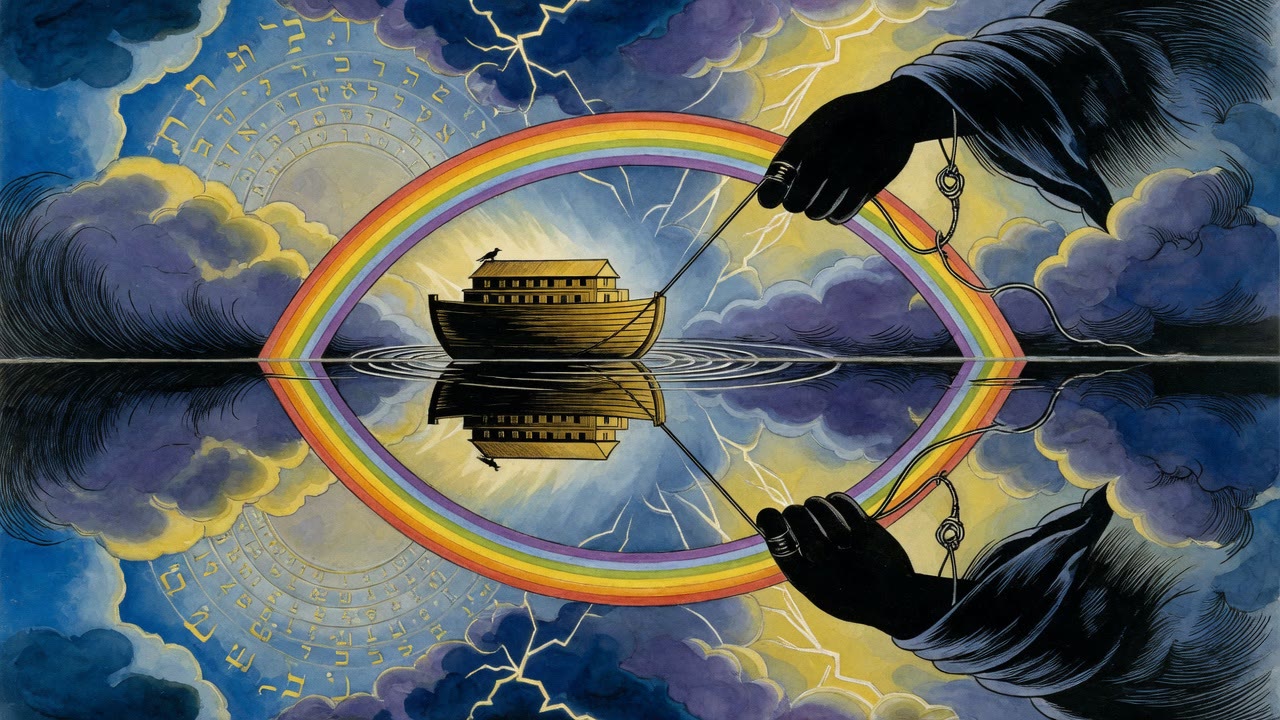
The flood had begun as judgment on a world swollen with robbery and denial. Rabbinic memory adds mockery: men who said they could stamp the waters down with feet or sheets of iron while Noah built for one hundred twenty years under laughter. Water was chosen because it opposes dust, the stuff of human bodies, and because life's own element can become the instrument of end. In the Tikkunei Zohar the waters also speak a later language. When Israel fails the covenant mark, raging waters of the nations strengthen. When the covenant is kept, the waters decrease toward the tenth month, toward the small letter yod that hints at Malkhut and the bow set in the cloud as promise (Genesis 9:13). The flood is history and also a diagram of what rises when a people forgets the cut that binds them.
Noah did not need the diagram to feel the weight. He needed a bird that did not return.
She Who Cleaves
The dove, in that mystical hearing, is not only a scout. She figures the Shekhinah (God's indwelling presence) seeking cleavage to the Holy One, the leave-taking of father and mother for a joining that remakes a world (Genesis 2:24). When she does not return, the severance and the reunion both flash: she has found the place of clinging and will not come back to the sealed wooden past. Noah remains on the ark a little longer, a righteous man still responsible for animals and family, while the dove has already chosen the reborn earth as her address.
That asymmetry hurts and heals. The human stays with duty. The symbol flies into the future first.
Ararat and the Altar
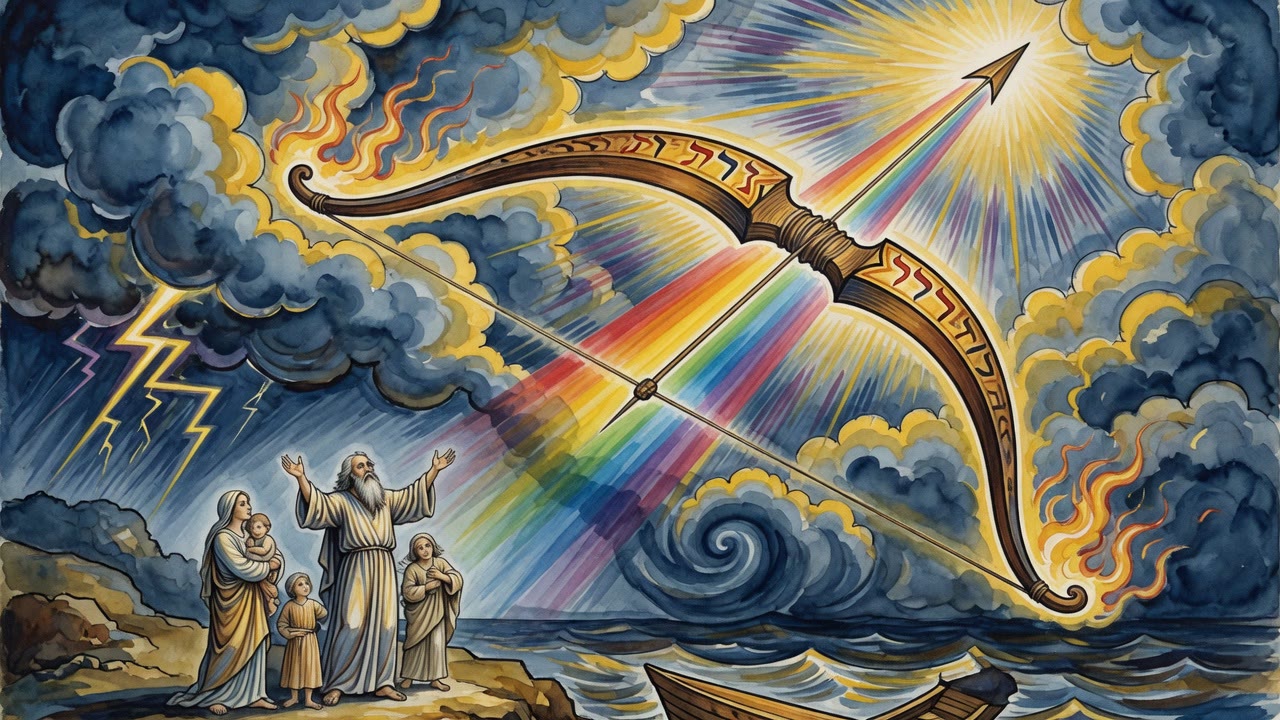
When the ark ground against mountain, Noah's first full-body work on wet stone was sacrifice. Smoke rose. The covenant answered with a bow in cloud, a refusal to drown the world the same way again. The Jewish Encyclopedia's sober map of the tale still leaves room for the midrashic heat: pride, licentiousness, robbery, and denial as fuels of the judgment; two strands of telling braided into one scroll; a rainbow as sign rather than ornament. For Noah, the sign was enough to plant vines and risk a future that could again choose well or badly.
Children later ask why the dove is praised more than the raven. Elders answer that return and non-return are both missions. The raven's failure and the dove's final absence are two reports from the edge of a cleaned world. The absence is not abandonment of Noah. It is proof that the world can hold a nest again.
Noah lowered his hand from the window. The latch rested. Somewhere beyond sight a dove walked on mud that would become field. The ark still smelled of animals and old fear. He began the work of unloading a future, one cage and one child at a time, while the empty sky where the bird did not return kept shining like a door left open on purpose.
Below deck, animals shifted as if they too felt the missing wingbeats. Noah's family asked if they should worry. He shook his head and kept one ear toward the window. Worry had been the whole voyage. This new silence was different: not the silence of endless rain, but the silence of a messenger who has clocked out because the job is done. He blessed that silence under his breath.
When the covenant bow stood in cloud, children of later ages would paint it pretty. Noah saw it as a boundary on divine rage and a demand on human repair. Keep covenant, the mystic strand says, and the waters that stand for hostile powers lose height. Break covenant, and the old flood's grammar returns in new languages of pressure. The dove's refusal to come back is the first soft proof that a world after judgment can host ordinary nesting again. Noah's altar smoke rose into that proof. He planted. He failed in other ways later. Still the non-returning bird remained the cleanest sentence the sky wrote him: go live where she already lives.
← All myths