God Turns the War Bow Away in the Clouds
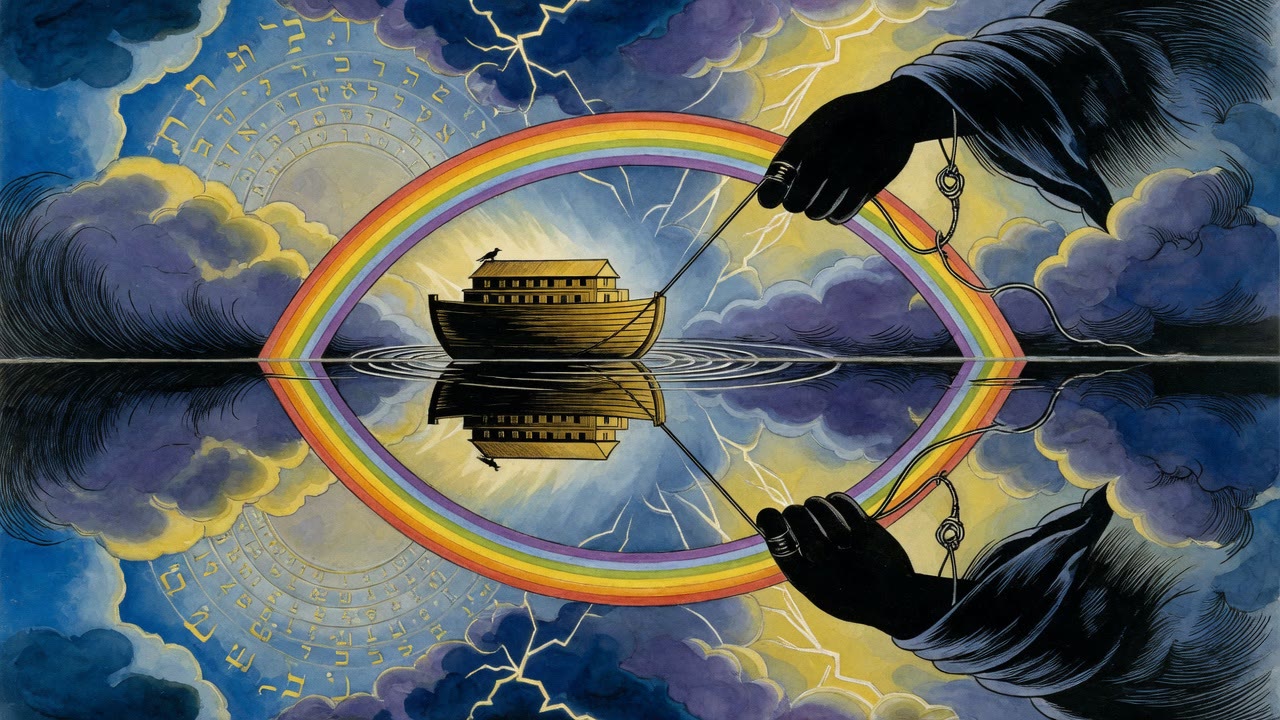
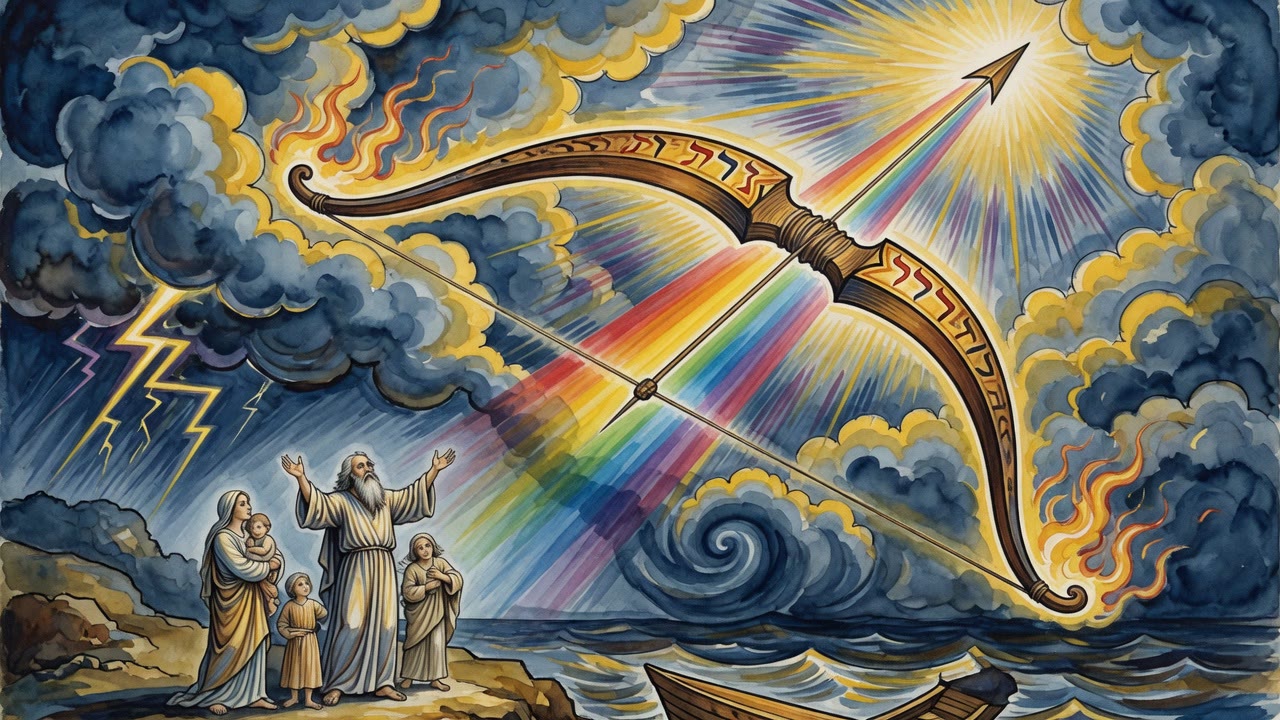
After the flood God sets a war-bow in the cloud, point turned from earth, so Noah's shaking household can trust the world will not drown twice.
Table of Contents
 Click for full size
Wet Ground, Shaking Hands
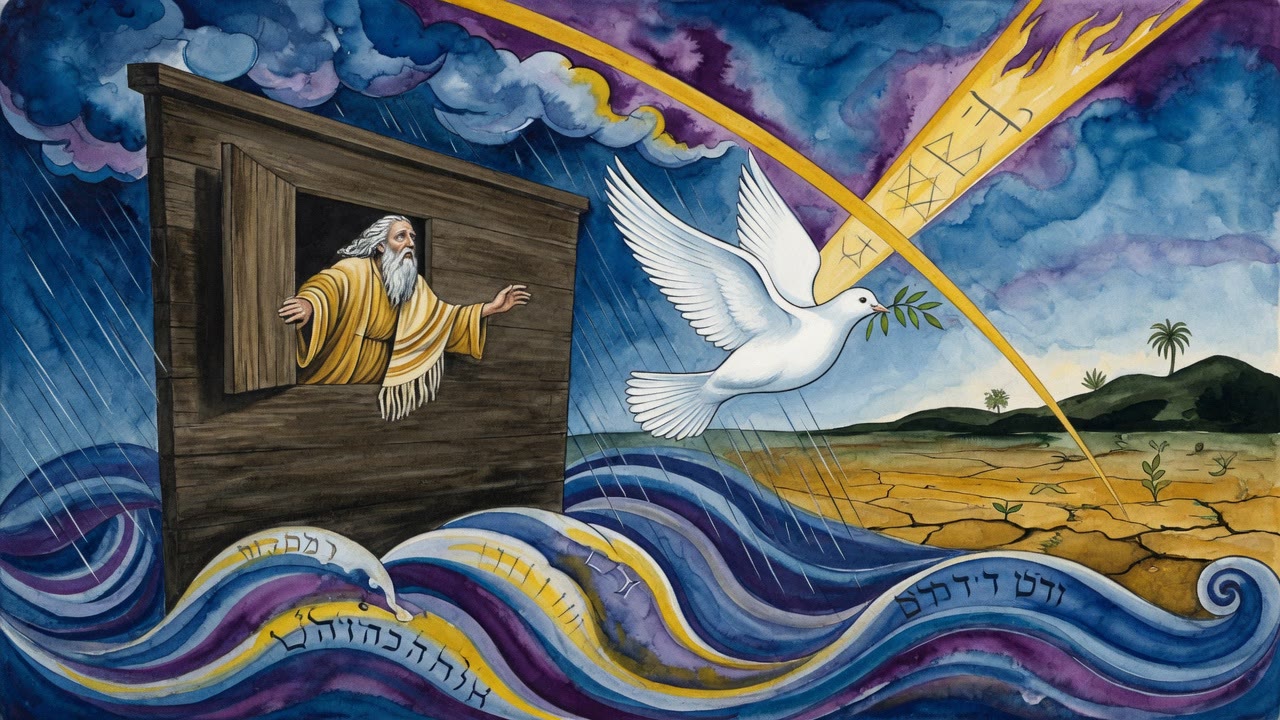
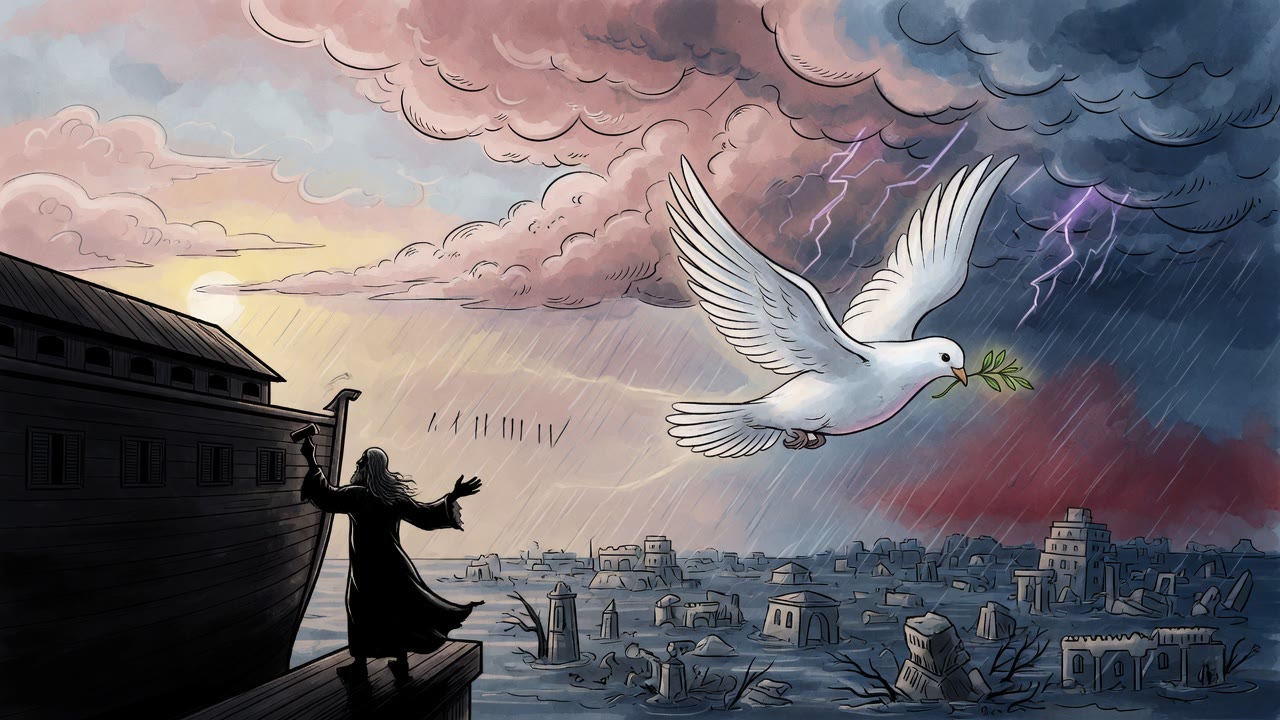
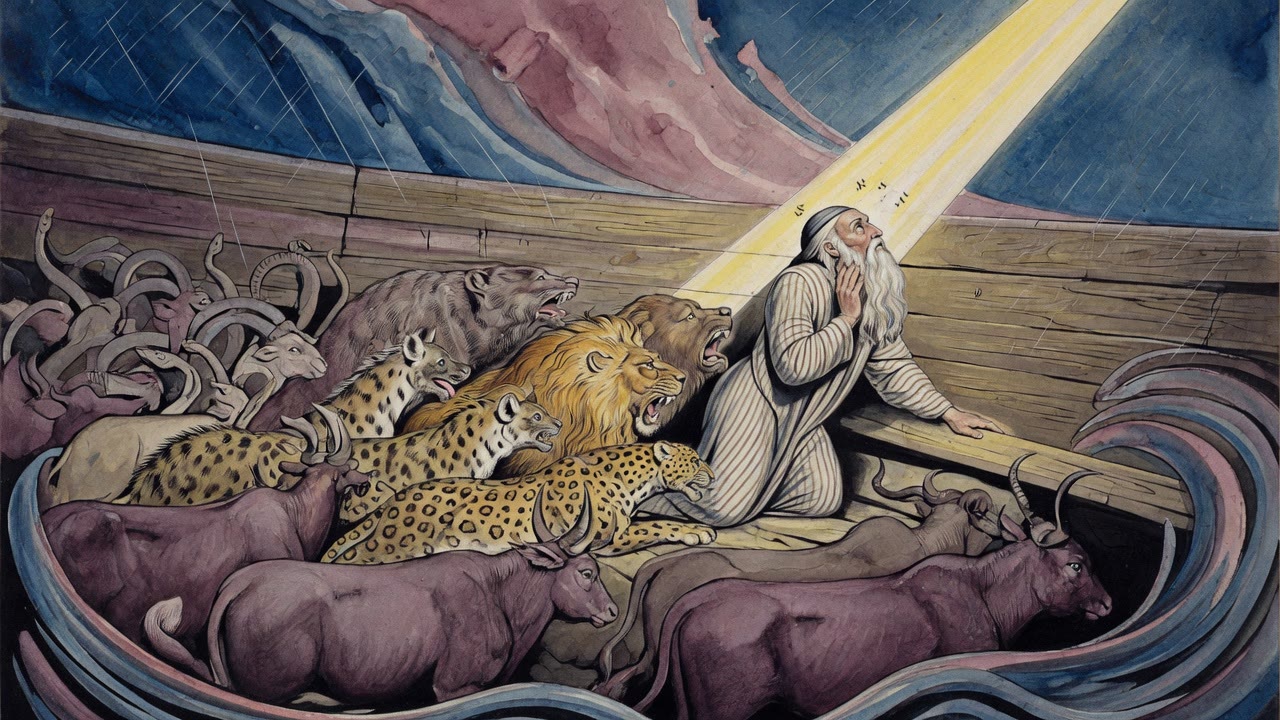
Noah stepped onto mud that still remembered being ocean. His sons watched the sky as if it might change its mind. Animals spilled out and did not know which direction was home. The altar smoke rose thin and straight, a nervous prayer with a backbone.
Then God spoke of a covenant that would outlast every storm-cell of human failure. Never again would all flesh be cut off by the waters of a flood (Genesis 9:11). The promise needed a sign a child could point at without reading a scroll. Not a mountain. Not a bird. A bow in the cloud.
Noah tilted his head. A bow is a weapon. A bow is also a curve of color after terror. Both meanings hung in the air with the smoke. His knees still remembered the pitch of the deck. Solid earth felt like a rumor that might dissolve.
The Weapon Pointed Up
Qeshet (קשת), the bow, belongs to war when it faces a target. Here the arc hung with its violence turned away from the earth. Heaven laid down arms in public. The token was not a forgetful knot for the divine memory. It was restraint made visible, power choosing not to finish what power could finish.
Noah's household stared until their necks hurt. For Noah the first sight was simple. The sky had a new sentence written across it: I can destroy, and I choose not to erase you again by water.
Rain still fell in ordinary seasons. Ordinary rain no longer meant the end of maps. Japheth whispered the word covenant as if testing whether the mud would hold it. Shem answered with a nod too full for speech. Ham watched the colors and said nothing anyone could trust.
Lord and God in One Mouth
When Torah names the Holy One as both Lord and God, it holds judgment and mercy in a single address. After a flood, that double name matters. Lord can command the deep. God can bind Himself by promise to the trembling. Noah heard both registers in the covenant speech.
The family did not argue theology on the mudflat. They felt the difference in their lungs. Air was breathable. The bow made the breath trustworthy. Judgment had spoken in water. Mercy now spoke in color, without canceling the memory of water.
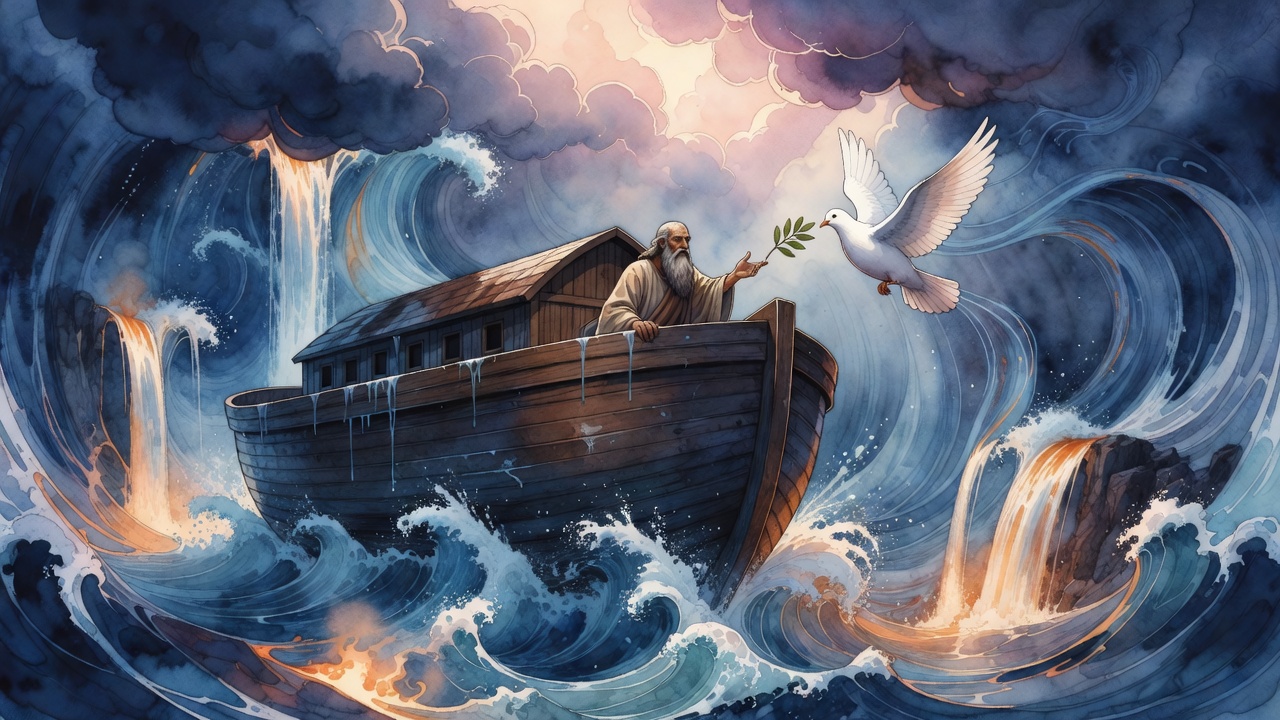
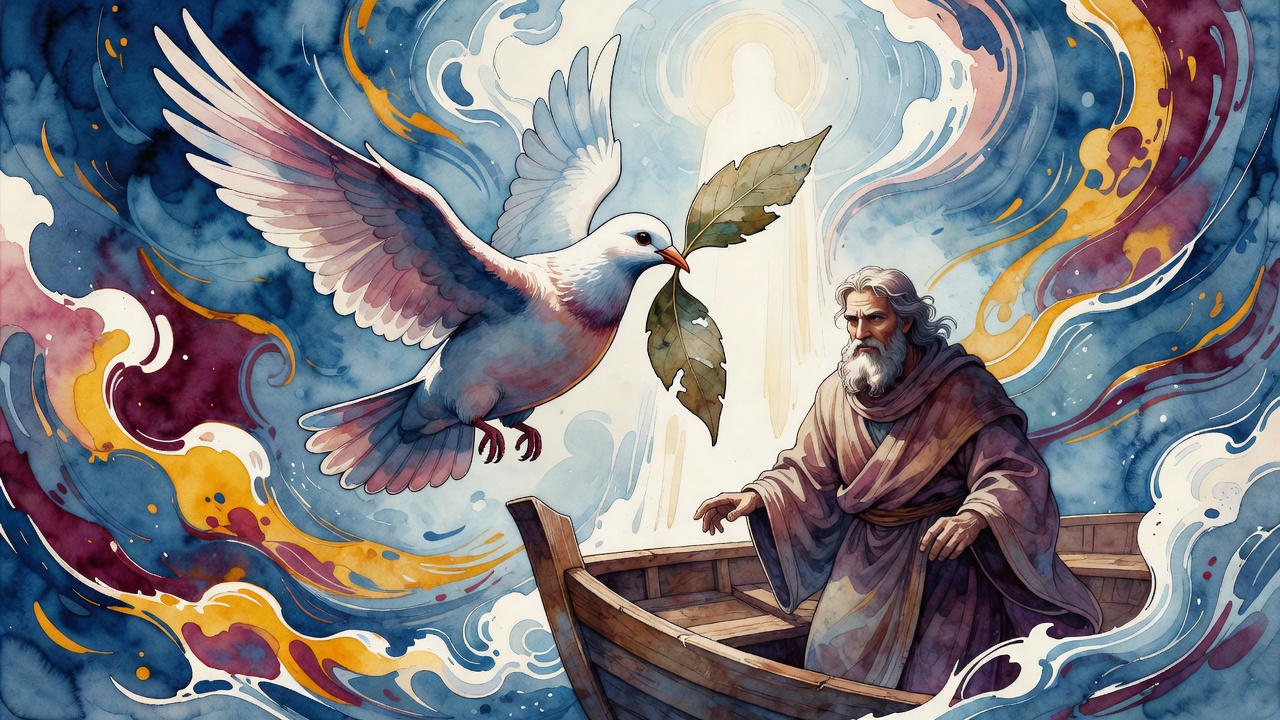
Somewhere a raven croaked. Somewhere a dove was already free of the ark's inventory. The rainbow did not cancel the need for virtue. It canceled the fear that one more season of human failure would end the experiment of flesh under heaven.
A Sign for the Survivors
God does not need a mnemonic. Humans do. Every time cloud and sun conspire to paint the arc, a survivor's nerve can unclench. The covenant is with every living creature, not only with scholars (Genesis 9:12-13). Cattle under the arc are included. Birds under the arc are included. The world is not a disposable draft.
Noah planted and later drank too deep, because survival is not the same as perfection. The bow still stood in principle over his failure. Mercy is not soft-headedness. Mercy is a decision that the weapon stays aimed at the empty air while human beings learn again how to walk.
His sons learned to say the promise aloud when thunder rolled, not as magic against weather, but as loyalty to a God who had already chosen the harder path of patience. Thunder without total erasure is a different kind of sound.
Color After Judgment
Years later, when cities rose again and self-love found new markets, the rainbow would still interrupt the afternoon like an argument against despair. Some would shrug. Some would bless. Some would remember that a bow is also a threat retired from service.
Noah, old and vine-stained and still first of a second humanity, could look up and see the original treaty. The flood had answered a world that corrupted His way. The bow answered the fear that answer would become the only language heaven knew.
Between water and color, the household of the ark learned how to live under a sky that keeps its word. The war bow hung unstrung by choice. That choice is the thin bright line on which every later covenant stands when the clouds gather again. Noah taught the children to look, then to look away, then to live as if the colors meant the ground would stay.
On certain evenings the arc doubled, a second faint ribbon above the first. Noah took it as emphasis, not excess. A promise repeated is still one promise. Children pointed until their mothers pulled the hands down, not from fear of beauty, but from the old caution that glory is not a toy for staring.
A year later, when the first ordinary flood of a river frightened a new village, someone raised a finger to a faint bow after the rain and the panic loosened its grip. Memory of total water made partial water survivable. That is what a covenant does when it hangs where eyes can reach it without a priest's permission.
← All myths