Parshat Noach6 min read

Noah Covered the Blood and God Hung the Bow in the Cloud

Off the ark, Noah taught his sons to bury blood in dust, and heaven answered with a bow, a feast, and a warning about the days they would lose.

Curated by Arthur · Told by Maggid ·
Table of Contents
  1. The First Blood Spilled on a Washed World
  2. Do Not Let the Soul Be Eaten With the Flesh
  3. The Bow He Hung Where Nobody Could Miss It
  4. Abraham Said the Same Words to His Son
  5. The Generations That Lost the Count
Noah Covered the Blood and God Hung the Bow in the Cloud Click for full size

The First Blood Spilled on a Washed World

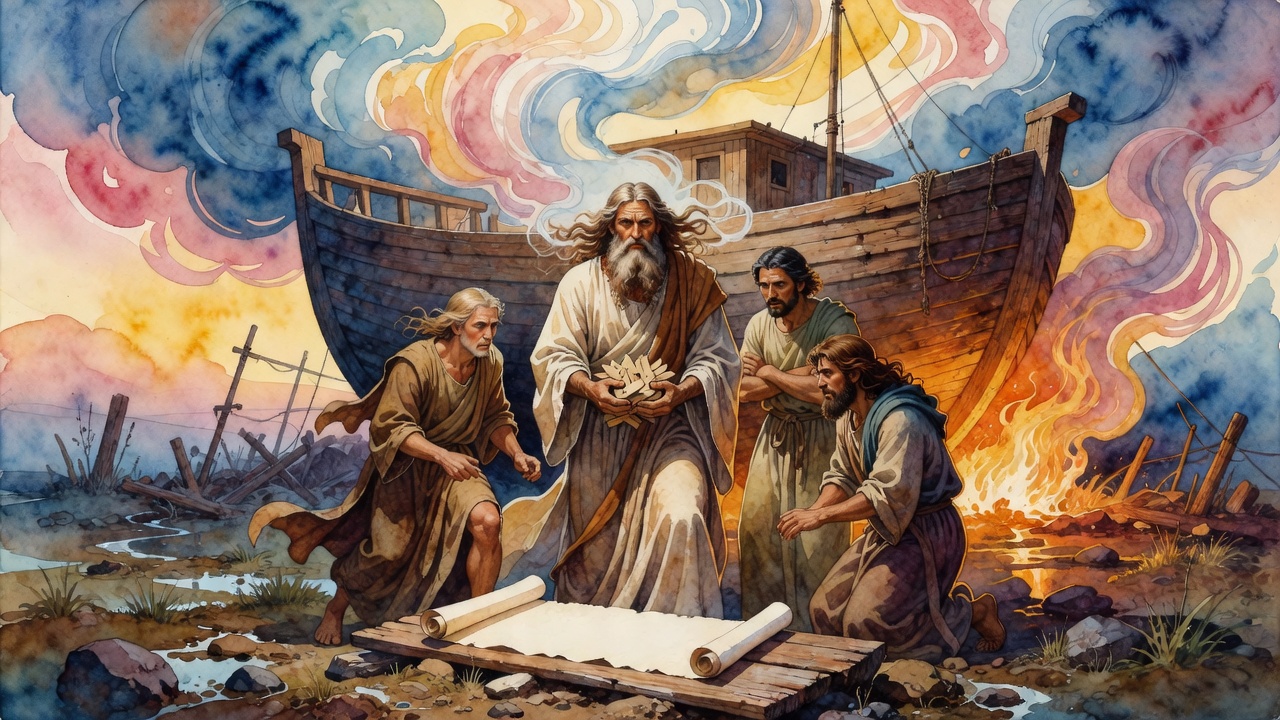
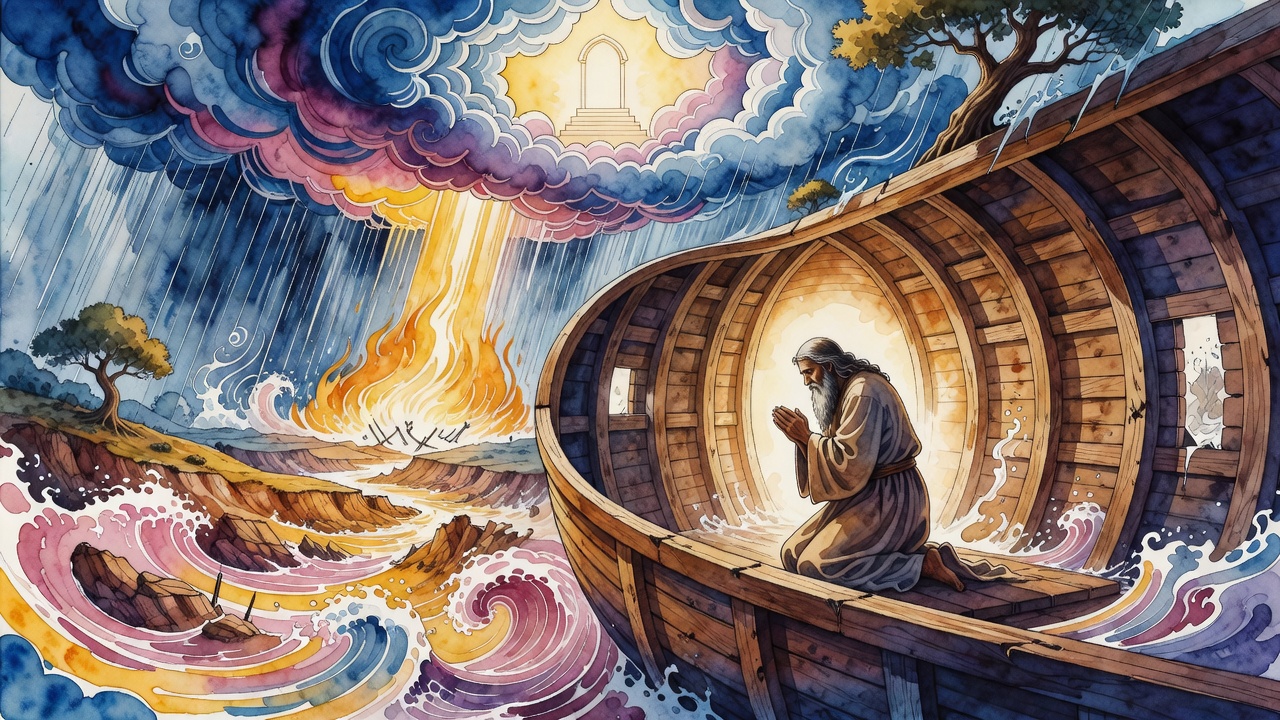
The ground outside the ark still smelled of silt when Noah cut the throat of a young ram. His sons stood close enough to be splashed. The blood ran down the wet slope into a hollow the flood had scoured out, and Noah went down on his knees in it, dug both hands through the mud, and buried the pool before it finished soaking in.

Shem asked what he was doing.

"Cover the blood," Noah said, still kneeling. "I have been commanded to testify this to you, and to your children, and to all flesh."

Ham and Japheth waited for the rest. Their father had spent a year listening to water shove against a hull, and he came out with rules he would not bend. The first was about meat.

Do Not Let the Soul Be Eaten With the Flesh

"Do not let the soul be eaten with the flesh," Noah told them. The soul sat in the blood. A man who swallowed the one swallowed the other, and he had turned himself into the sort of creature the water had just scrubbed off the earth. Then Noah opened the account that would stay open behind them forever. "So that your own blood, which is your life, will not be required at the hand of any flesh that sheds it on the earth."

Every soul poured out would be sought back. Not from men only. From the ox that gored, from any animal that killed a man and walked away from the puddle it had made.

Then he told them what the dirt does when it drinks.

"The earth will not be clean from the blood that has been shed upon it. Only through the blood of him who shed it will the earth be purified, throughout all its generations."

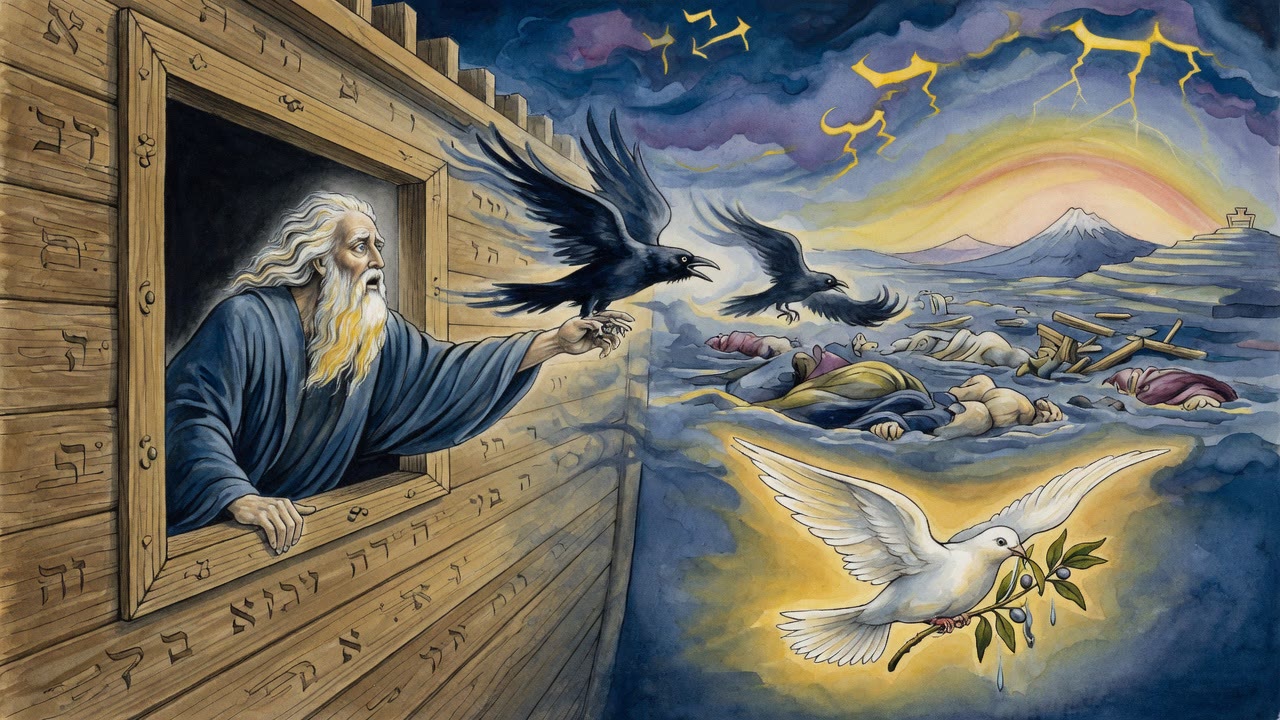
The slope under their sandals had been rinsed of an entire generation, and the water took a year to drain. Noah had watched it go down through a window.

"Work judgment and righteousness," he said, "that you may be planted in righteousness over the face of the whole earth, and your glory lifted up before my God, who saved me from the waters of the flood."

The Bow He Hung Where Nobody Could Miss It

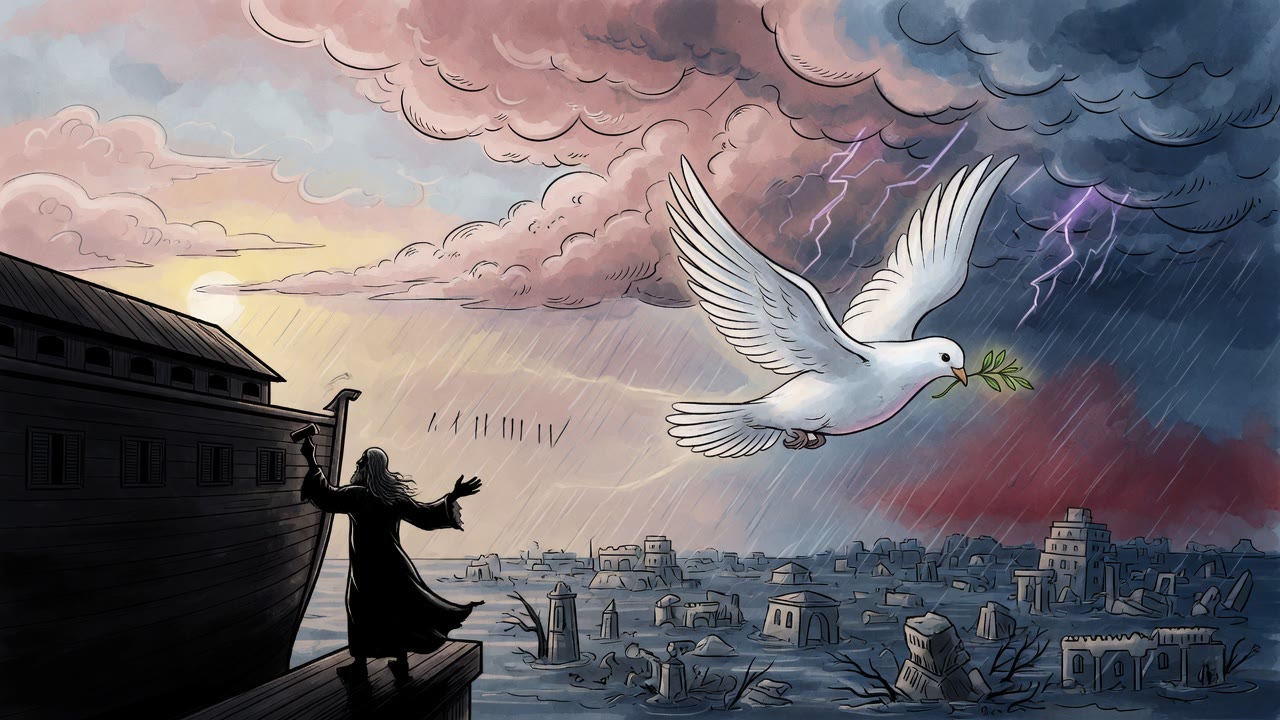
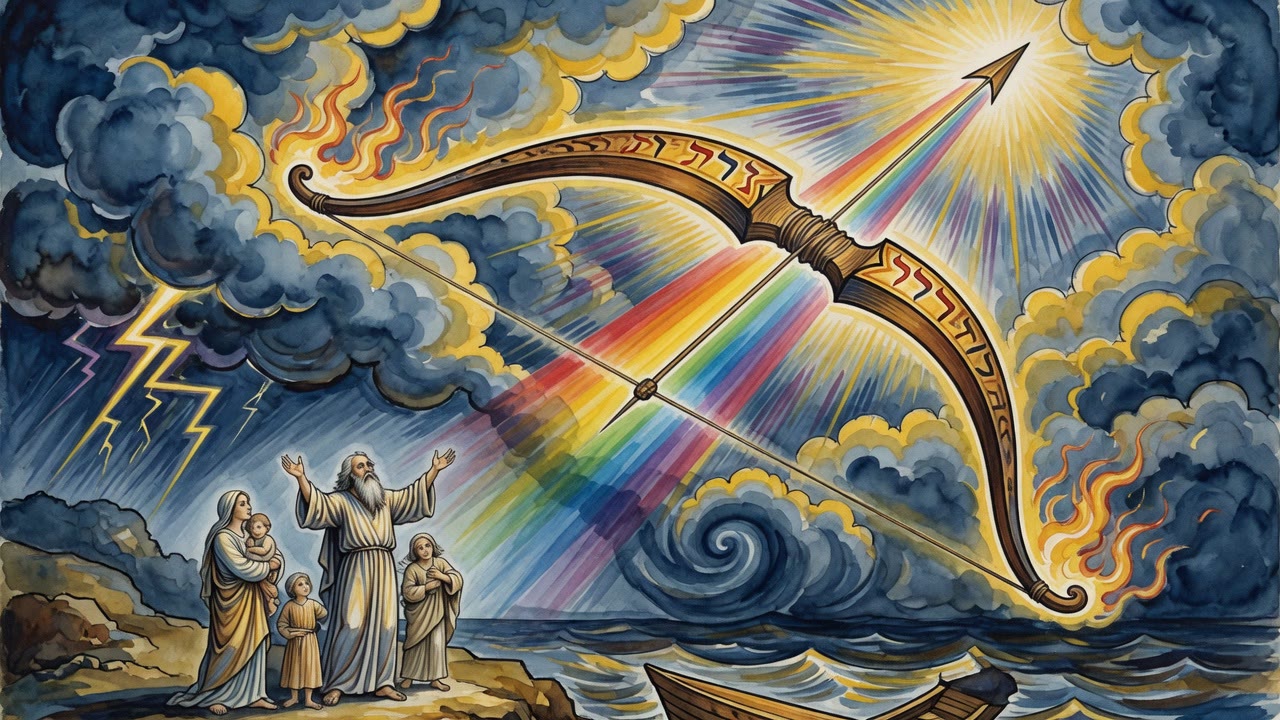
God answered the altar smoke with a sign, and He put it where every living creature would have to look at it. He set His bow in the cloud. The waters would never again come over the earth to destroy it. Whenever the sky went black and then cracked open into color, the promise reasserted itself over people who had not asked for it.

The sign came with a date attached.

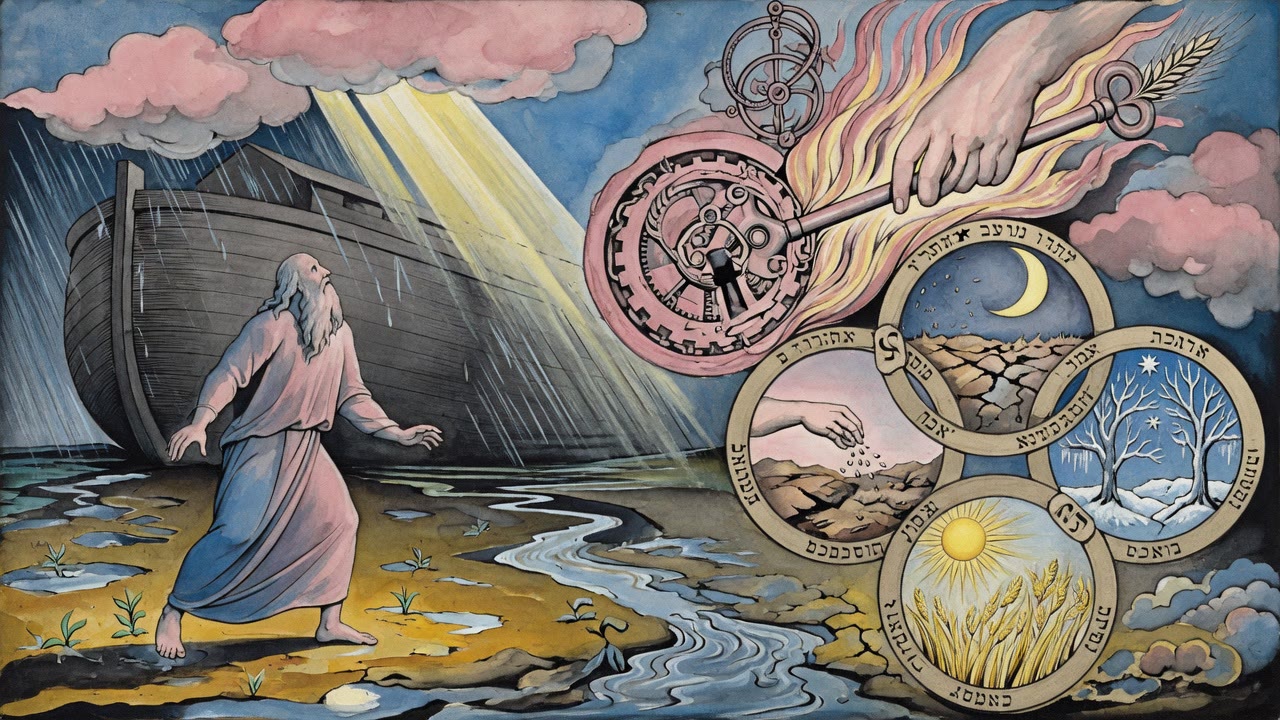
It stood ordained and written on the heavenly tables that the Feast of Weeks be celebrated in that month, once a year, to renew the covenant every year. Not commemorated. Renewed. The bow needed no upkeep, but the covenant hanging under it had to be picked up by hand every twelve months, on the exact day the tables named.

The festival turned out to be older than the men swearing to it. It had been kept in heaven from the day of creation until the days of Noah, twenty-six jubilees and five weeks of years, angels holding the day open while the earth below had nobody left to hold anything. Noah's sons swore to take over the counting.

Abraham Said the Same Words to His Son

The charge traveled down the generations. Abraham, old, called Isaac in and said it again almost word for word, the way a man repeats an instruction he is afraid will die in his mouth.

"Be on your guard, my son, against blood. Be on your guard exceedingly. Cover it with dust."

Blood is the soul, he told him, and he did not stop at the butchering. He went straight to the courts. "Take no gifts for the blood of man, lest it be shed with impunity, without judgment."

A payment can close a case. It cannot clean a field. The earth cannot be cleansed from the blood of a man except by the blood of the one who shed it, so a purse pushed across a table only teaches the next killer the going rate.

Then the old man's voice turned, and the warning came out the far side as a blessing. "That you may be accepted before the Lord, the Most High God, for He is the defense of the good, and that you may be preserved from all evil, and that He may save you from every kind of death."

The Generations That Lost the Count

The same tables that fixed the day also carried the years when nobody would bother to find it.

Commandment and covenant go first. Then feasts, months, Sabbaths, jubilees, all judgments, slipping out of their hands like coins through a torn seam. They set the festival table on a day heaven never marked and call it the appointed time. The bread is right, the blessing is right, the hour is wrong.

Men ride out with bows and swords to force them back into the way, and the forcing works on nobody. Much blood is shed on the earth, one man by another, and those who survive do not turn from their wickedness. They exalt themselves to deceit and wealth instead, each reaching across a boundary line for what belongs to his neighbour, in fields where blood soaks into ground that no hand kneels to cover.

And they name the great name. Out loud, in the correct cadence, on the wrong day, not in truth and not in righteousness.

The bow stays in the cloud above those fields, exactly where God hung it, holding a promise open for people who have stopped counting the days on which they were supposed to answer it.


← All myths

From the tradition

Sources

4 sources

The texts behind this telling. Some cards carry a translation of the source; others are our own retelling of it, and each card says which. Every card links out to the original.

Book of Jubilees 7:46Book of Jubilees

Retold in our words. Read the original at the link below.Sefaria Community Translation · CC-BY

It’s a thread woven through so much of Jewish thought, and it surfaces powerfully in the Book of Jubilees.

This ancient text, considered canonical by some but not included in the standard Hebrew Bible, offers a fascinating perspective, particularly on the weighty responsibilities placed upon humanity after the Flood. It's a text that whispers secrets of a world reborn.

Specifically, in Chapter 7, we find a crucial commandment passed down to Noah and his children. It’s a commandment echoing through the ages, a stark reminder of the sanctity of life: "cover the blood, for thus have I been commanded to testify to you and your children, together with all flesh."

What does it mean to "cover the blood"? It's more than just a practical instruction. It speaks to a profound respect for the life force that blood represents. The nefesh, the soul, is intrinsically linked to the blood. To treat it carelessly is to diminish the very essence of being.

And the warning continues: "And suffer not the soul to be eaten with the flesh, that your blood, which is your life, may not be required at the hand of any flesh that sheddeth (it) on the earth." This is a serious indictment! It's saying that if you disrespect life, if you spill blood without cause, you will be held accountable. The life force itself demands justice. The act of consuming blood alongside the flesh is a violation of this sacred bond.

Why is this so important? Because, as the text powerfully states, "For the earth will not be clean from the blood which hath been shed upon it; for (only) through the blood of him that shed it will the earth be purified throughout all its generations." This is a powerful image. The earth itself bears witness to acts of violence. It absorbs the spilled blood and cries out for purification. Only through justice, through holding those who shed blood accountable, can the earth be cleansed. It’s a cosmic principle, a spiritual ecology.

This concept of the earth being affected by human actions resonates deeply.: Our actions have consequences that ripple outwards, impacting not only ourselves and our communities, but the very planet we inhabit.

The passage concludes with a call to action, a hopeful vision: "And now, my children, hearken: work judgment and righteousness that ye may be planted in righteousness over the face of the whole earth, and your glory lifted up before my God, who saved me from the waters of the flood."

To work with judgment and righteousness, to strive for ethical conduct. This isn't just about avoiding bloodshed; it's about actively creating a world where justice prevails. It’s about being "planted in righteousness," taking root and flourishing in a world that reflects God's saving grace.

So, what does this ancient text offer us today? Perhaps it's a reminder to consider the consequences of our actions, to respect the sanctity of life in all its forms, and to strive for a world where justice and righteousness prevail. A world where the earth itself can finally find peace.

Full source
Book of Jubilees 21:26Book of Jubilees

Retold in our words. Read the original at the link below.Sefaria Community Translation · CC-BY

It’s a theme woven deep into our sacred texts. And one place where this connection is powerfully articulated is in the Book of Jubilees.

Jubilees, a text not included in the canonical Hebrew Bible but considered scripture by some, including Ethiopian Jews, offers a unique perspective on biblical narratives. And Chapter 21 gives us a particularly stark warning regarding blood.

The passage speaks directly, almost intimately, urging: "be on thy guard, my son, against blood, be on thy guard exceedingly; cover it with dust." This isn't just a practical hygiene tip. It's a deep spiritual caution. Why this intense focus? Because, as Jubilees states, blood "is the soul." To consume blood is to consume the very essence of life.

This idea resonates with what we find elsewhere in Jewish tradition. The Torah itself forbids the consumption of blood (Leviticus 17:10-14), emphasizing that the life force resides within it. By covering the blood with dust, it's as if we're returning that life force back to the earth, acknowledging its sacredness and avoiding its desecration.

But the warning doesn’t stop there. It escalates, addressing the shedding of human blood and the profound consequences that follow. "And take no gifts for the blood of man, lest it be shed with impunity, without judgment; for it is the blood that is shed that causeth the earth to sin, and the earth cannot be cleansed from the blood of man save by the blood of him who shed it."

This is powerful stuff. It connects the act of bloodshed directly to the land itself. The earth, in this view, is not just a passive stage for human drama; it's an active participant, a witness that absorbs the stain of violence. And that stain, that sin, cannot be simply wished away or atoned for with a simple offering. Jubilees argues for a radical, almost terrifying, justice: "blood for blood."

This concept of retributive justice can be challenging. It raises difficult questions about vengeance and the cycle of violence. Is this simply an endorsement of “an eye for an eye”? Or is there something deeper at play here?

Perhaps it's about the severity of the crime. The taking of a human life is not merely a transgression against an individual; it’s a wound inflicted upon the entire world. And Jubilees suggests that only by acknowledging the immensity of that loss, by understanding the gravity of the act, can we even begin to approach atonement.

The chapter concludes with a promise, conditional upon adherence to these strictures: "that thou mayest be accepted before the Lord, the Most High God; for He is the defence of the good: and that thou mayest be preserved from all evil, and that He may save thee from every kind of death." It's a promise of protection, of divine favor, but it’s a protection earned through righteousness, through respect for life, and through a deep understanding of the consequences of violence.

So, what do we take away from this ancient text? It's more than just a set of rules about blood. It's a profound meditation on the sacredness of life, the consequences of violence, and the enduring quest for justice and atonement. It challenges us to confront the uncomfortable truths about our own capacity for both good and evil, and to strive, always, to choose life.

Full source
Book of Jubilees 6:25Book of Jubilees

Retold in our words. Read the original at the link below.Sefaria Community Translation · CC-BY

The Book of Jubilees, treasured as scripture by some ancient Jewish communities like the Essenes of Qumran, retells the Torah with a storyteller's eye for detail. And chapter 6 lingers on one of the most hopeful scenes in all of Genesis.

It starts with a promise. A promise that echoes through the ages. After the great flood, God gives Noah and his sons a sign. A sign that reassures them, and us, that such a catastrophe will never happen again. What is this sign?

"He set His bow in the cloud…" The familiar version gives us it: the rainbow. A breathtaking symbol of the eternal covenant between God and humanity. A vibrant reminder of hope and resilience after devastation. The Book of Jubilees emphasizes that this isn't just a pretty phenomenon; it's a divinely ordained symbol with profound significance.

Here’s where it gets really interesting. The Book of Jubilees connects this post-flood covenant with another important element of our tradition: the Feast of Weeks, or Shavuot (the Festival of Weeks).

The verse reads, "For this reason it is ordained and written on the heavenly tables, that they should celebrate the feast of weeks in this month once a year, to renew the covenant every year.” The rainbow covenant, the promise of no more floods, is intrinsically linked to the celebration of Shavuot.

According to the Book of Jubilees, Shavuot isn't just about receiving the Torah at Mount Sinai, as we traditionally understand it. It's also a yearly renewal of the covenant made with Noah, a reaffirmation of God’s promise to protect and sustain the world. It's about remembering the past and looking forward to a future free from destruction.

And the text doesn’t stop there. It adds a cosmic dimension: "And this whole festival was celebrated in heaven from the day of creation till the days of Noah-twenty-six jubilees and five weeks of years." So, Shavuot, in this view, isn't just a human celebration; it’s a celestial event, observed in heaven since the very beginning of time.

What does it all mean? Well, the Book of Jubilees gives us a wider lens through which to view our traditions. It suggests that Shavuot is more than just the anniversary of receiving the Torah. It's a yearly reminder of God's unwavering commitment to humanity, symbolized by the rainbow, and celebrated throughout the cosmos. It is about remembering covenants, renewing promises, and rejoicing in the enduring bond between humanity and the Divine. It’s a story woven into the fabric of creation itself.

So, the next time you see a rainbow, or celebrate Shavuot, perhaps you'll remember this ancient perspective, and feel a deeper connection to the covenants that bind us all.

Full source
Book of Jubilees 23:35Book of Jubilees

Retold in our words. Read the original at the link below.Sefaria Community Translation · CC-BY

The Book of Jubilees, an ancient Jewish text, speaks to this feeling with a stark warning. It paints a picture of a future where people have drifted far from their spiritual and ethical foundations.

The text laments that people will turn away "on account of the law and the covenant; for they have forgotten commandment, and covenant, and feasts, and months, and Sabbaths, and jubilees, and all judgments." Commandment, covenant – the very bedrock of their relationship with the Divine. Feasts, months, Sabbaths, jubilees – the cycles of time that were meant to connect them to something bigger than themselves. All forgotten.

Where the things that bind us together as a community are simply… overlooked?

The Book of Jubilees doesn’t just stop at forgetting. It goes on to describe a descent into conflict: "And they will stand (with bows and) swords and war to turn them back into the way; but they will not return until much blood hath been shed on the earth, one by another."

It’s a grim vision of people resorting to violence, trying to force others back onto the "right" path. But tragically, even after bloodshed "those who have escaped will not return from their wickedness to the way of righteousness." The cycle of violence and alienation continues.

Why? What’s driving this downward spiral? The Book of Jubilees suggests it’s a relentless pursuit of self-interest: "but they will all exalt themselves to deceit and wealth, that they may each take all that is his neighbour's." A world consumed by greed, where people are willing to deceive and exploit each other for personal gain. Sound familiar?

And here's perhaps the most chilling part: "and they will name the great name, but not in truth and not in righteousness." They'll invoke the Divine, but their hearts will be far from it. It's a profound disconnect between outward piety and inner corruption. They’ll go through the motions, say the words, but the essence of faith – truth, righteousness, genuine connection – will be missing.

So, what are we to make of this ancient warning? Is it simply a prophecy of doom, or does it offer a lesson for our own time? Perhaps it’s a call to remember what truly matters. To reconnect with the rhythms of our lives, to uphold our covenants with each other, and to strive for truth and righteousness in all that we do. The Book of Jubilees challenges us to examine our own lives and ask: are we truly living in alignment with our values? Are we honoring the sacred in our everyday actions?

Full source