Noah Watched the Deep Close and Counted the Flood's New Moons
After the deluge Noah watches the abyss seal, open, and bare the mountain tops on new moons that Jubilees commands him to remember.
Table of Contents
 Click for full size
When the Depths Finally Shut
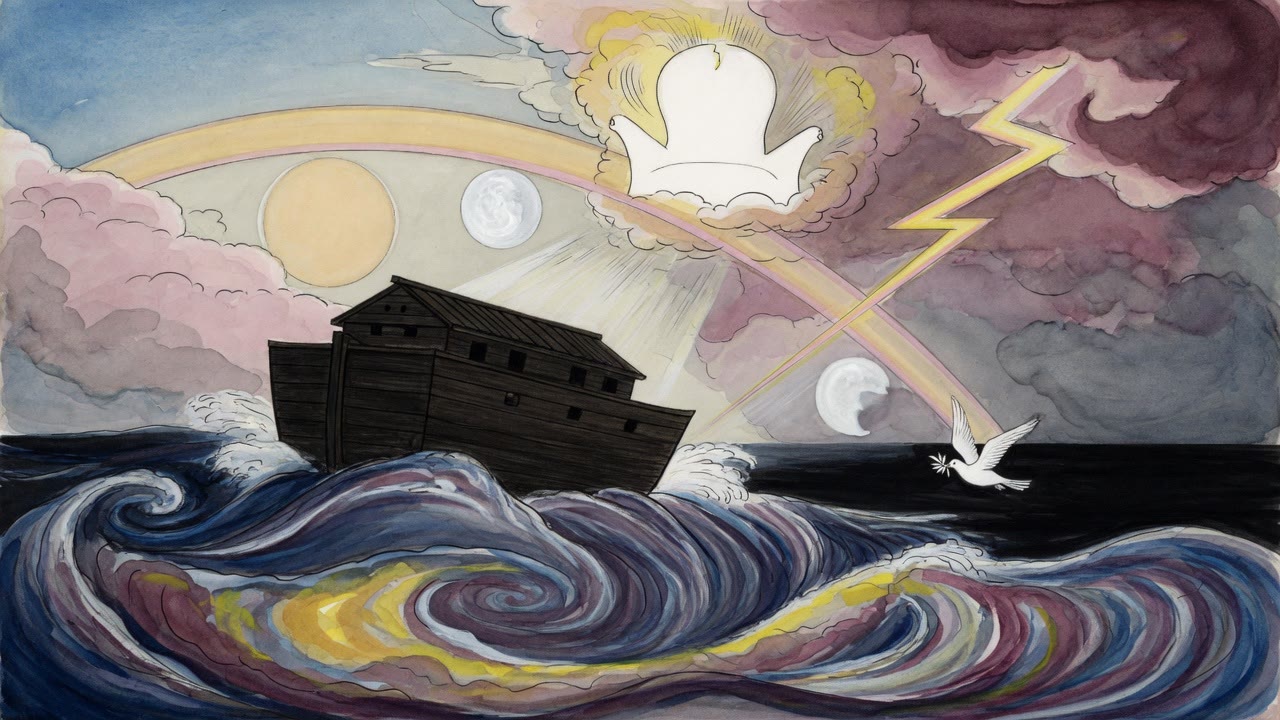
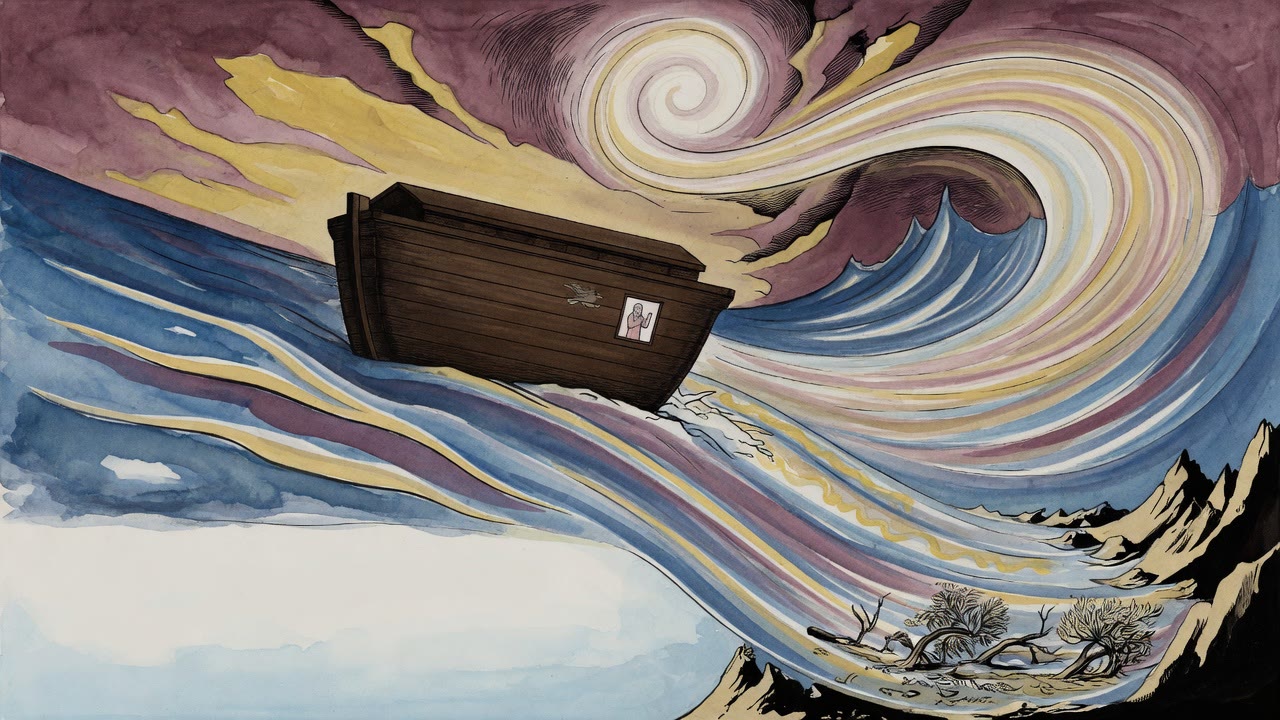
The ark still stank of animals and fear when the calendar turned. On the new moon of the fourth month, the mouths of the depths of the abysses beneath were closed. Water that had climbed for months met a sealed throat. The world did not become dry in an hour. It became possible.
Noah felt the change in the wood under his palm before he saw it in the sky. The endless roar thinned. Boards that had groaned under pressure began to speak in smaller voices. Somewhere below, the deep obeyed a date.
Jubilees does not treat that new moon as a footnote. It treats it as a hinge worthy of memory, a day when destruction stopped drinking from underground springs and the remnant could start counting toward land.
Three Months Later, the Earth Swallows Back
On the new moon of the seventh month, the mouths of the abysses of the earth opened again, not to kill but to receive. Waters began to descend into them. What had risen as judgment left as weight pouring home. The flood did not vanish by magic alone. It drained into appointed throats.
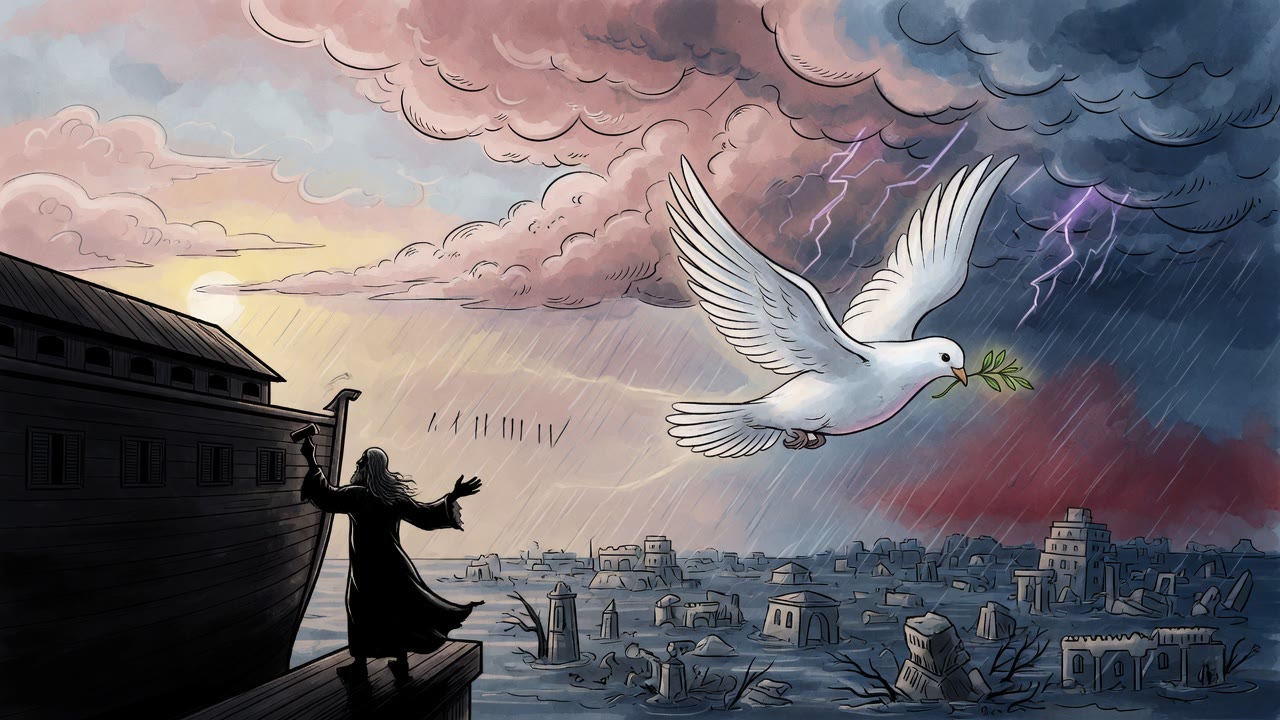
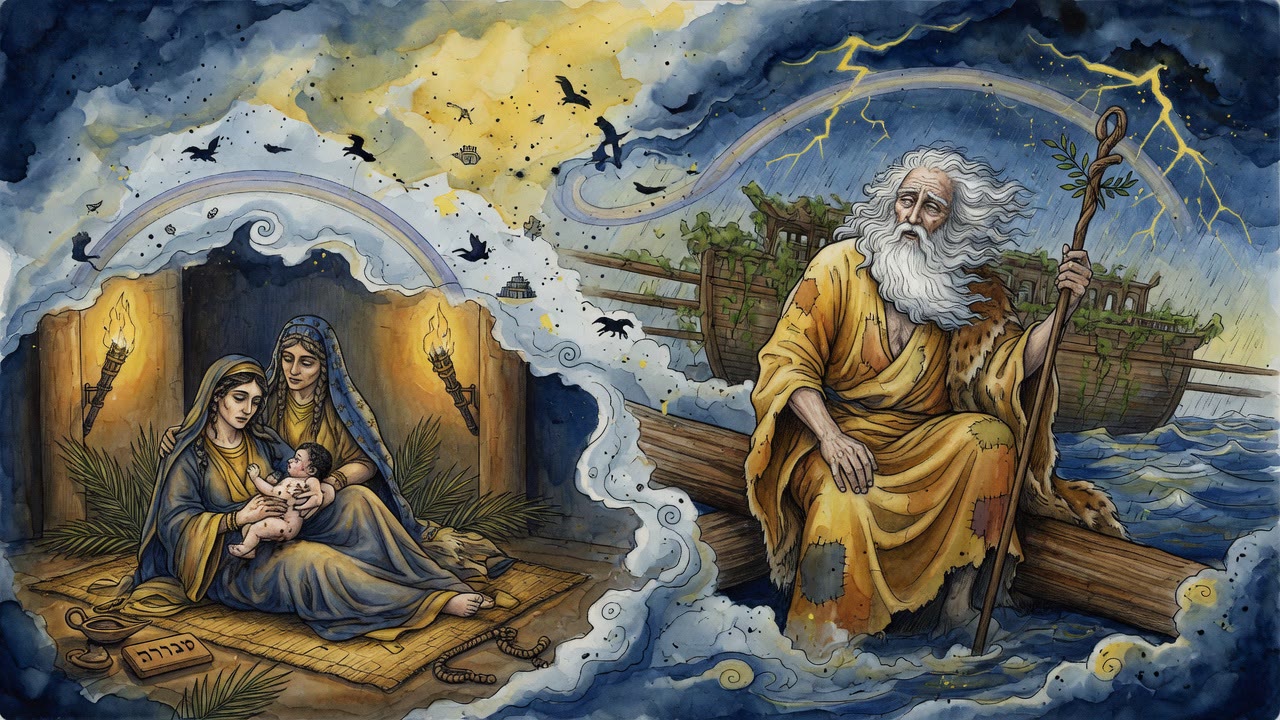
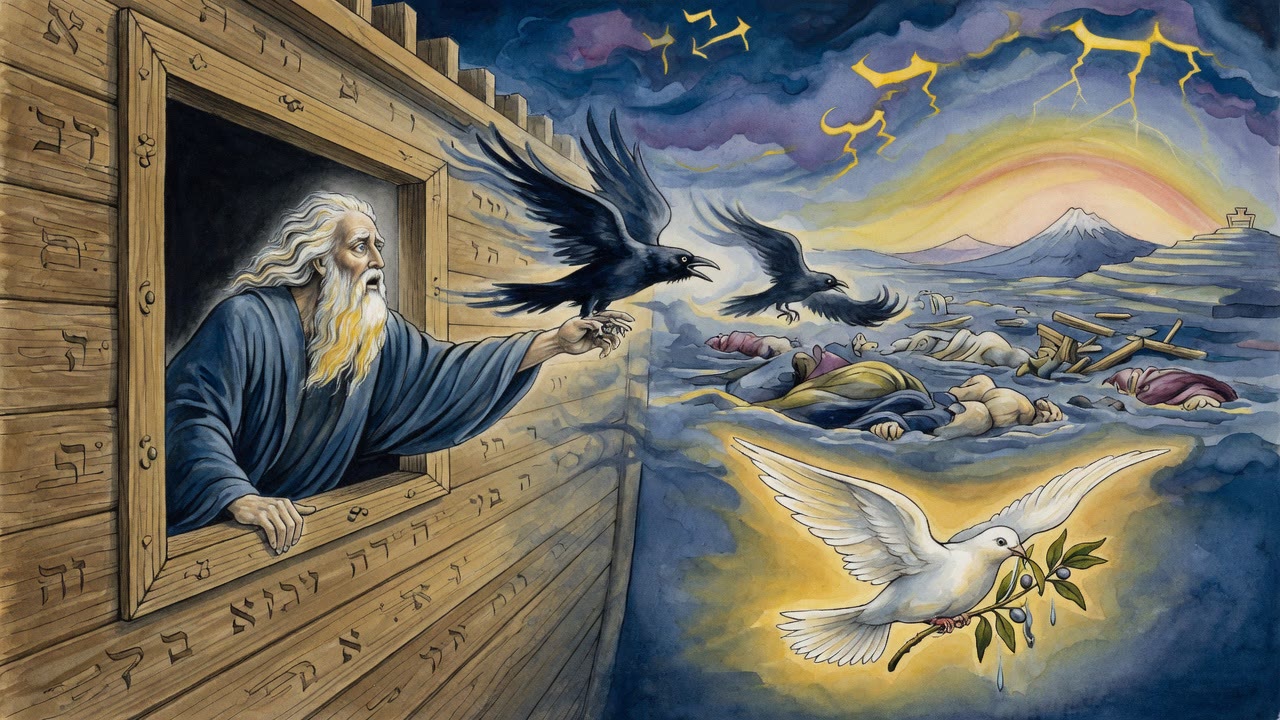
Noah watched the line of the horizon for a promise that still refused to show peaks. His sons moved among cages and stalls. A raven tested the air and came back useless. Doves would try later. The air still carried the memory of a drowned generation, a smell of wet timber and old fear that no closed hatch could keep out.
"And the Lord destroyed everything from off the face of the earth," Jubilees says, "because of the wickedness of their deeds, and because of the blood which they had shed." Survival did not erase the reason for the water. Noah counted animals the way a priest counts vessels after a fire: not to celebrate inventory, but to confirm that mercy had left someone to inventory at all.
Ham argued over feed. Shem checked seams. Japheth watched the sky for a color that was not storm. The ark was still a prison that floated, even as the deep began to drink its own flood back.
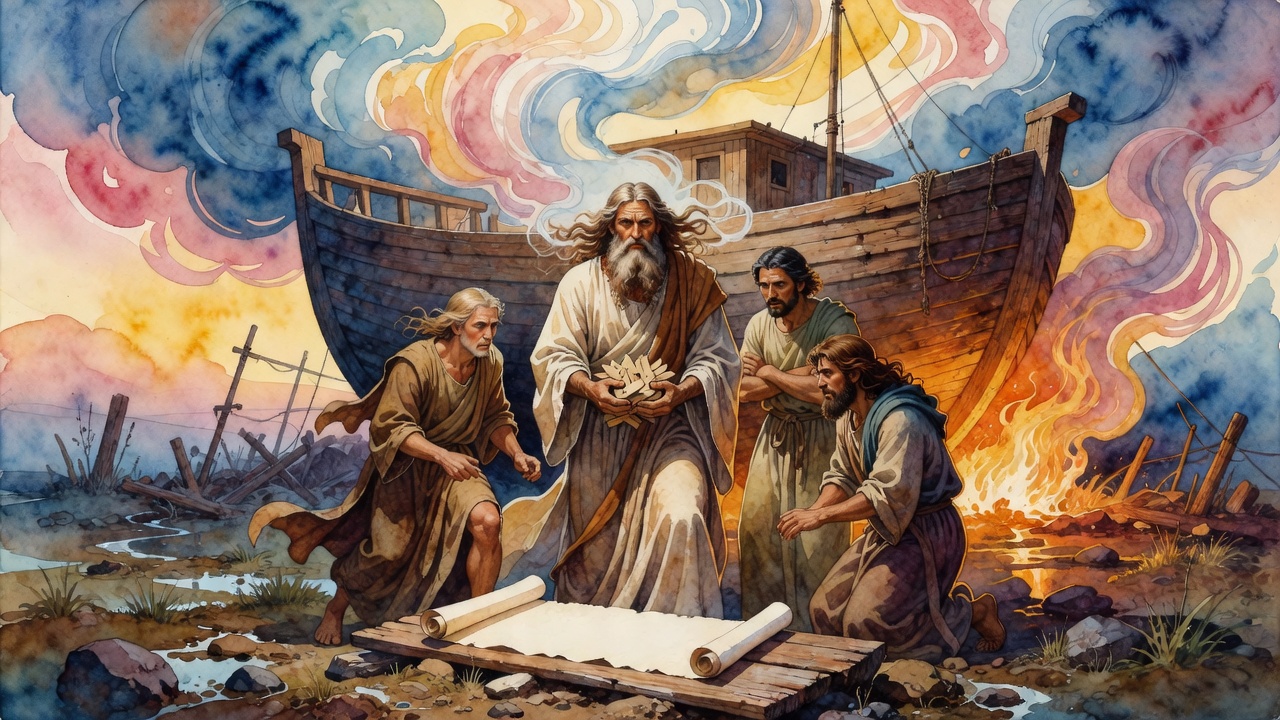
Noah turned to Shem, Ham, and Japheth. "And we were left, I and you, my sons, and everything that entered with us into the ark." The sentence was inventory and grief at once. Being left is not the same as being whole.
Mountaintops and a Glad Old Man
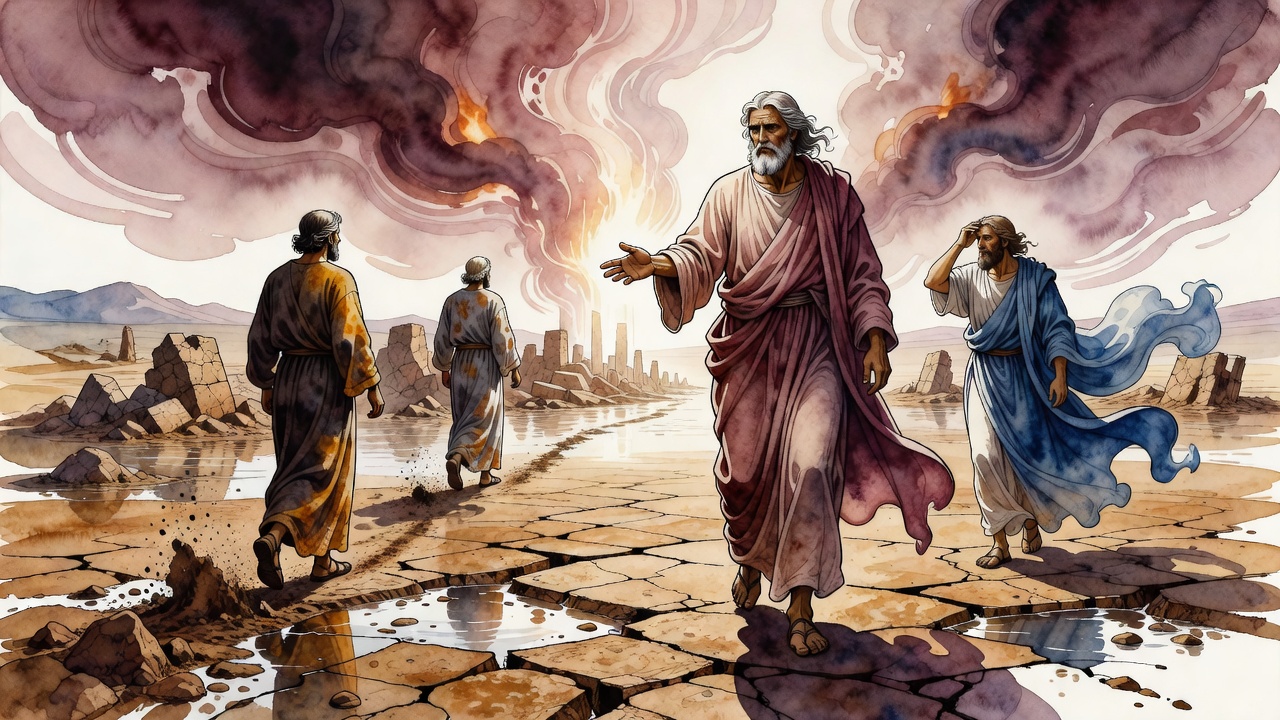
On the new moon of the tenth month the tops of the mountains were seen, and Noah was glad. Gladness here is not a feast. It is the first clean breath after months of pitch and prayer. Stone points broke the skin of the water like teeth of a world that still existed.
Between fourth, seventh, and tenth months, Jubilees draws a map of recovery in three strokes: stop the fountains, open the drains, reveal the heights. Each new moon is a commandment of attention. Forget the dates and the flood becomes only chaos. Keep them and the flood becomes a story with joints.
Birds would go out later. An altar would smoke later. First came the gladness of seeing rock again and knowing the deep had work other than murder.
Food, Blood, and the Rules of a Washed Earth
When speech from heaven returned in fuller measure, it came with a table and a ban. "Behold I have given unto you all beasts, and all winged things, and everything that moveth on the earth, and the fish in the waters, and all things for food; as the green herbs, I have given you all things to eat." Then the cut. "But flesh, with the life thereof, with the blood, ye shall not eat."
The washed world did not reopen as lawless plenty. Blood stayed sacred. Life stayed claimed. Noah's family stepped onto mud that still remembered corpses, carrying a diet that remembered the soul in the blood. The same book that dated the abyss also dated the ethics of eating after catastrophe.
Noah's burden after survival was not only building vineyards. It was teaching sons who had seen the end of cities that the next age would still answer for blood.
Why the Calendar Keeps the Terror Honest
Without new moons, the flood is a blur of rain. With them, it is a sequence a body can mark: sealed mouths, open drains, bare peaks. Jubilees wants Israel to inherit that sequence so that later generations do not reduce Noah to a children's boat. Priests who later bless months are, in this telling, standing in a line that began when an old man on wet boards watched the abyss take orders by date.
Children in later ages would draw arks with smiling animals. The new moons refuse that cartoon. They keep the terror dated, the relief dated, the first gladness dated, so that covenant time never pretends the water was gentle.
Gladness on the tenth month does not cancel the fourth month's sealing or the seventh month's swallowing. Joy stands on top of engineering from heaven. The ark becomes a clock as much as a vessel.
On the mud, Noah still heard water in his sleep. On the page, the new moons keep that water from lying about how it left. The remnant counted. The deep obeyed. The mountains showed their teeth, and an old man was glad in a world that had almost erased gladness as a possible word.
← All myths