6 min read

Noah May Eat Meat but Not the Blood of Life

God handed Noah the animals to eat and then stopped him at the bowl. A beast that kills a man is the smaller danger. A brother knows where to strike.

Curated by Arthur · Told by Maggid ·
Table of Contents
  1. The Bowl Under the Throat
  2. Warm and Fiery
  3. From the Hand of Every Beast
  4. From the Hand of a Man's Brother
  5. The Greater Court

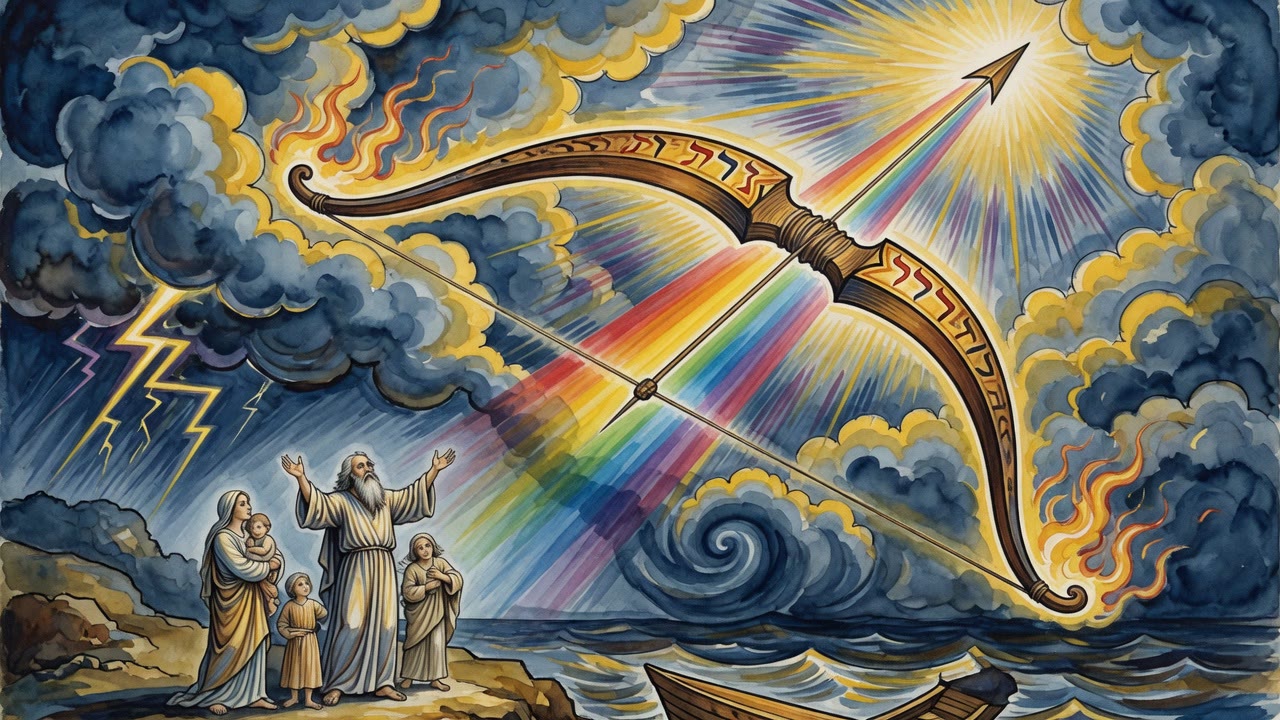
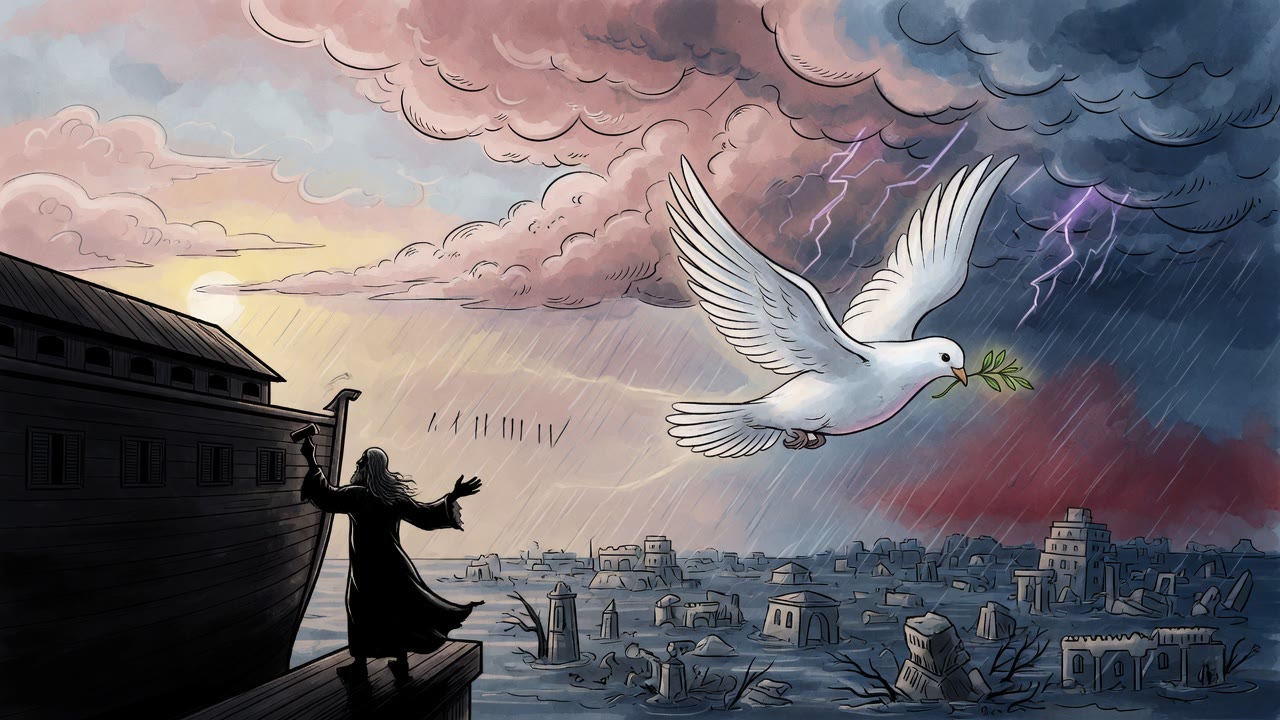
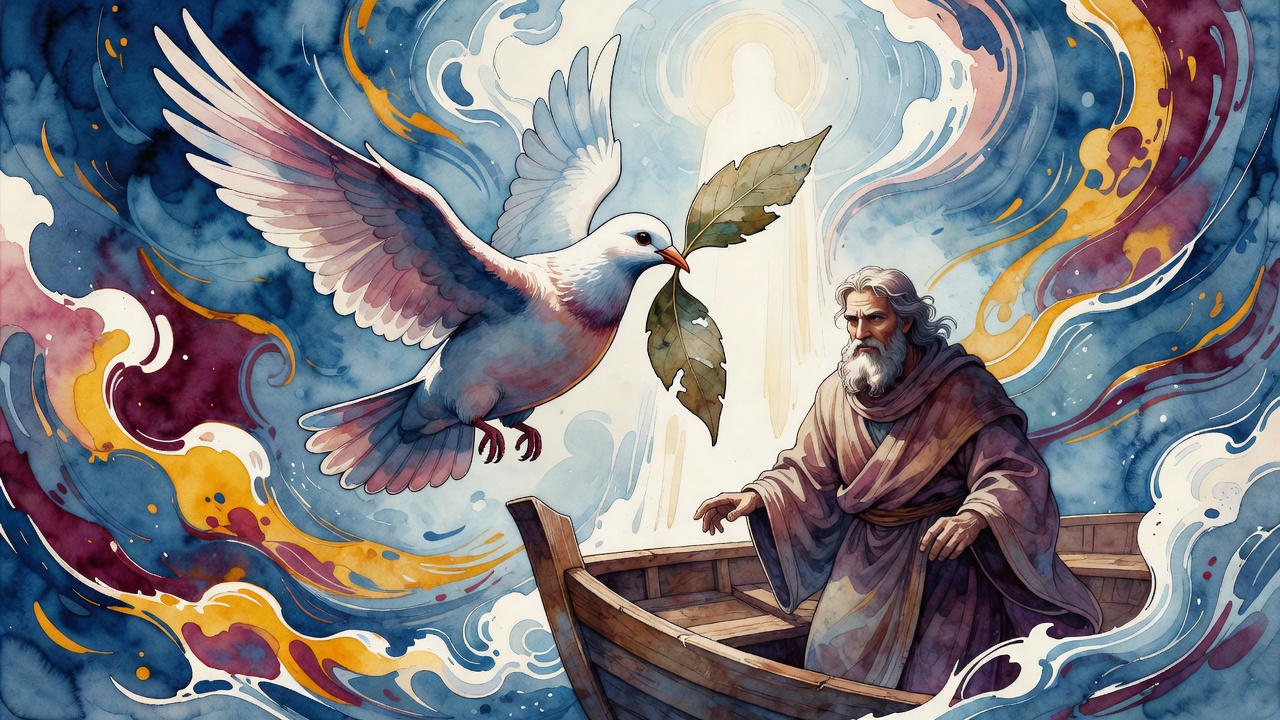
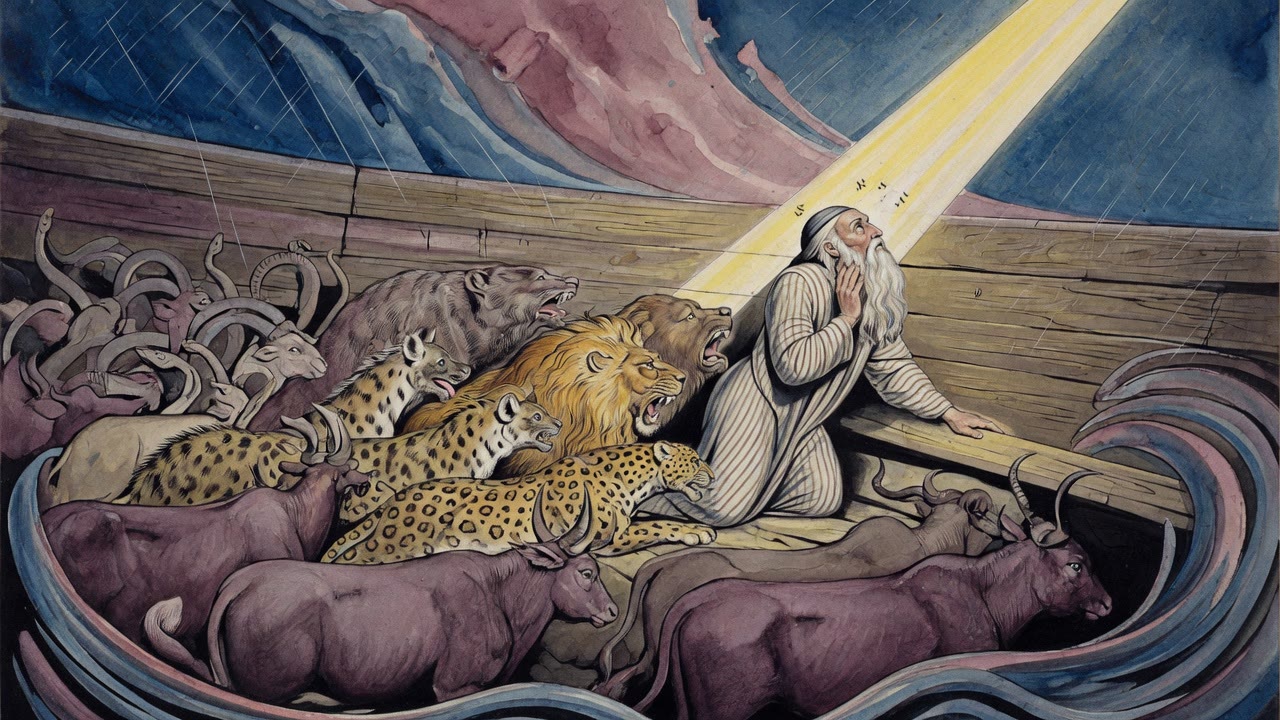
Noah put the knife to the throat of a clean animal on ground that had been under water a season earlier, and his hand was not steady.
Noah May Eat Meat but Not the Blood of Life Click for full size

Before the flood nobody had eaten meat. Green things had been the whole diet since the garden. Now every moving thing that lived was food (Genesis 9:3), the permission sat over the new grass like heat, and his sons were standing too close and watching his hands.

He cut. Then he set a bowl under the wound.

The Bowl Under the Throat

"Flesh with the life of it, which is the blood of it, you shall not eat" (Genesis 9:4). The meat was theirs. The dark stream running into the bowl was not.

A living thing is not one soul. It is three, stacked. There is the part that feeds and grows, which a vine has as well. There is the part that sees and hears and smells and wants, which every animal in the herd has. And above those, in a man only, sits the part that reasons, and that part came into Adam the day God breathed into his face, and it has nothing to do with blood at all.

Blood carries the middle one. That is why flesh is crowded with appetite and empty of thought. Spirit and blood are two different substances and anyone can hold them apart in speech, and nobody has ever found them apart in a body. They run mixed. Open a man and the veins come up heavier with blood and lighter with air, and the channels that carry breath come up the other way round, every vessel keeping its own proportion of the two out to the ends of the fingers.

Noah tipped the bowl into the dirt. "That part was never ours," he said.

Warm and Fiery

There is a second thing the phrase carries, and it has nothing to do with butchery.

Ask what the blood of a soul would be, if a soul had blood, and the answer is the warm fiery quality in a person, the thing that stands up when something comes at it. Courage. A man with that in him does not spend his life negotiating with his own stomach. He can sit at a loaded table and hardly notice, because the heat in him is going somewhere else.

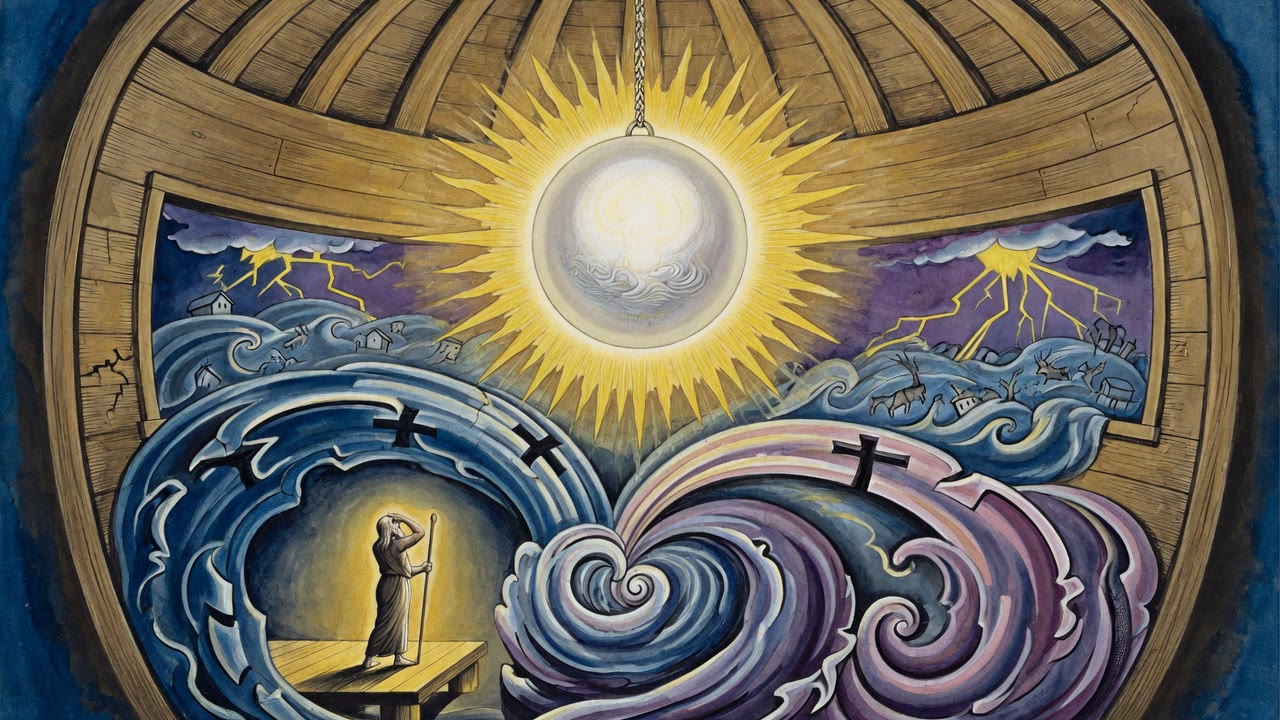
Noah wiped the blade on the grass. He had spent a year in a dark hull rationing fodder to animals that would have eaten him if the door had opened, and he had some notion of what the heat was for.

From the Hand of Every Beast

Then the rest of the speech came, and it left the subject of food entirely. The blood of your lives will I require, God said. From every beast will I require it, and from the hand of man, from the hand of every man's brother, will I require the life of man (Genesis 9:5).

Beasts come first in the sentence and they are the lesser half of it. A wolf that takes a child took a stranger. It never sat at the same fire. It never had the child in its power and picked the hour. Whatever it destroys it destroys from outside, and it kills what it was never given any authority over.

Noah had watched wolves for a year through a gap in the boards. They frightened him less than what he remembered of the towns.

From the Hand of a Man's Brother

Brother is the word that does the damage, and it is doing three jobs at once.

Every man alive is kin to every other. Not by treaty. By birth, out of one mother, and the mother is rational nature, and that makes the whole race a household whether it cares for the arrangement or not.

And the ugliest fighting in any household happens between the ones who share a wall. Over a field to be divided, over which of them sits higher at the table. A stranger has to guess where a man is soft. A brother has known since childhood, and when he moves he goes straight at it, because he carries all your inner circumstances by heart.

Last, the word is a warning read out in advance. Whoever kills gets handed back exactly what he gave, and nobody will pity him while it happens, because the man on the ground was not a stranger to him. He was blood.

The Greater Court

Noah's grandsons shoved each other by the fire that night over nothing at all. He stepped between them with the morning's stain still on his sleeve and said one thing. "He watches for the ones who cannot speak."

A man can kill and walk out of a town and never meet a single avenger, and the people who saw it will shrug and say the world does not care. It does not follow. The killer who got clear has already been arrested. He is standing, at this minute, in front of a court that convenes above every human court and sits specifically to answer for people who were handled shamefully and had nobody.

The boys sat down. Noah went and washed the knife, and the blade came up clean, and behind him in the grass the dark patch had already sunk into the ground where the rest of it had gone.


← All myths
From the tradition

Sources

4 sources

The texts behind this telling. Some cards carry a translation of the source; others are our own retelling of it, and each card says which. Every card links out to the original.

The Midrash of Philo 4:1The Midrash of Philo

Retold in our words. Read the original at the link below.The Works of Philo Judaeus, trans. C. D. Yonge, London, H. G. Bohn, 1854-1890 · Public Domain

The Midrash of Philo preserves this as a question on Scripture, not a finished ruling:

What is the meaning of the expression, "You shall not eat flesh in the blood of its life?" (Genesis 9:4).

The entry records the question Philo poses. It does not supply an answer the source does not give.

Source: The Midrash of Philo 4:1.

Full source
The Midrash of Philo 4:2The Midrash of Philo

Retold in our words. Read the original at the link below.The Works of Philo Judaeus, trans. C. D. Yonge, London, H. G. Bohn, 1854-1890 · Public Domain

A fascinating corner of this exploration, guided by the writings of Philo of Alexandria, a Jewish philosopher who lived in the first century CE. He offers a unique perspective on the nature of the soul, drawing on both Jewish scripture and Greek philosophical thought.

Philo grapples with the question of where exactly the soul resides, and what it's made of. He suggests that God, in His commands, hints that blood is the substance of the soul – but only a certain kind of soul. Specifically, the soul connected to our senses and our vitality. What about the rational, intellectual soul? That, according to Philo, is something else entirely.

He posits that we humans actually have a tripartite soul – three parts! There's the nutritive part, concerned with basic survival; the part connected to our senses; and then, the highest part, the one that dwells in reason. It’s this rational part that, according to Philo, echoing the sacred writer Moses, is "the substance of the divine spirit." Remember the creation story? "God breathed into his face the breath of life" (Genesis 2:7). That breath, Philo suggests, is what constitutes our rational life.

What about the blood? Well, according to Philo, "The blood exists in every breath of flesh." (Deuteronomy 12:23). He emphasizes that blood is the "breath of all flesh" precisely because our flesh is where we experience senses and passions, but not intellect or higher thought.

And here's where it gets even more interesting. Philo distinguishes between the spirit and the blood, saying that "the spirit of blood" intimates that they are two distinct things. The essence of the soul, he argues, is truly spirit. However, this spirit isn't separate from the body. It's interwoven and mingled with the blood. It's all connected!

He uses the analogy of veins and "breathing channels" – perhaps he means arteries and veins – to illustrate this. These vessels carry both air and blood, each in different proportions, a carefully balanced mixture. Philo's description sounds remarkably like an ancient, philosophical take on the circulatory system!

But then, Philo takes a turn towards the metaphorical. He suggests that the "blood of the soul" can also be seen as that warm, fiery virtue we call courage. Someone filled with this courage, this wisdom, will despise fleeting pleasures, focusing instead on higher pursuits.

Conversely, someone who lives a profligate life, wandering aimlessly and indulging in laziness, is simply "fall[ing] upon his belly, as a reptile creeping upon the earth, and greedily licking up earthly things." Such a person, Philo argues, closes their life without ever tasting that "heavenly food" that souls desirous of wisdom receive.

He paints a picture of humanity as complex beings, with different layers to our souls. He urges us to strive for the highest part, the rational part connected to the divine, rather than being consumed by earthly desires. It's a call to live a life of purpose, guided by reason and a thirst for wisdom. It's a reminder that we are more than just flesh and blood; we are also vessels of the divine breath.

Full source
The Midrash of Philo 5:1The Midrash of Philo

Retold in our words. Read the original at the link below.The Works of Philo Judaeus, trans. C. D. Yonge, London, H. G. Bohn, 1854-1890 · Public Domain

Ever stumble across a verse in the Torah that just. sticks in your craw? A line that looks simple at first, but the more you chew on it, the more questions it raises?

That's exactly how I feel about (Genesis 9:5)." (Genesis 9:5). What on earth does that mean?

It’s a verse about accountability, sure. About the sanctity of life, definitely. But…requiring blood from a beast? What's that all about?

This verse comes right after the flood, after Noah and his family have repopulated the earth. God is giving them. And us, a new set of rules for this new world. And right there, smack-dab in the middle of the rules about not eating blood and the permission to eat meat, we get this line about requiring the blood of souls.

The ancient rabbis, masters of interpretation that they were, wrestled with this verse for centuries. They saw layers of meaning that we might easily miss today. And their answers are fascinating.

One way to understand it, according to The Midrash of Philo, is to see it as a cosmic balancing act. We all know the expression "an eye for an eye..."? This verse is echoing that sentiment. If an animal sheds human blood, then that animal's blood will be required in return. It's a stark reminder that human life is precious, and that there are consequences for taking it.

But who is "man's brother" in this verse? The simple answer is: another human being. But the implications are much deeper than that.

The verse implies that even the most primal act of violence, fratricide, has profound repercussions. "From the hand of man's brother will I require the life of man". It is a warning against any act of violence.

So, what’s the takeaway here? I think it's this: Life is sacred. Every single life. And we are all interconnected. What we do to one another matters. It ripples outward, affecting not only our immediate community but the entire world.

This verse, (Genesis 9:5), isn't just some dusty old law. It's a call to action. A call to recognize the preciousness of life, to act with compassion, and to build a world where violence is replaced with understanding and peace. It's a tall order, I know. But isn't that what we're all striving for, in the end?

Full source
The Midrash of Philo 5:2The Midrash of Philo

Retold in our words. Read the original at the link below.The Works of Philo Judaeus, trans. C. D. Yonge, London, H. G. Bohn, 1854-1890 · Public Domain

Philo, in his unique way, dives into this very question, and his insights, drawn from his interpretation of scripture, are surprisingly relevant even today. He speaks of two kinds of creatures that inflict injury: beasts and men. Now, it first appears the wild animals are the bigger threat. Philo actually suggests the opposite. He argues that beasts, in a way, are less culpable because they lack the intimate knowledge to truly wound us. They operate from a distance, often driven by instinct.

Then there are men. And specifically, he calls them "brothers."

Why this emphasis on brotherhood? Philo uses this term to highlight a few crucial points. First, that we are all interconnected. We are family, sharing a common origin – what he calls "rational nature." This echoes the creation story, where we all descend from the same source.

Here’s where it gets painful. Philo points out that the most bitter and devastating conflicts often erupt between those closest to us – between siblings. disputes over inheritance, power struggles within families. these are age-old stories, aren't they? And the tragedy, as Philo sees it, is that these conflicts are so much more devastating because brothers know each other's vulnerabilities. They know exactly where to strike to inflict the deepest pain. They know "what kind of attack they must employ in their present warfare."

And that’s why Philo uses the term "brothers" to warn us about the severe consequences awaiting those who commit such acts. He suggests that murderers, especially those who betray familial bonds, will face a particularly harsh judgment. They haven't harmed strangers; they've harmed their own flesh and blood.

Philo beautifully describes God as the "protector and overseer" of those slain by man. Even if earthly justice seems to fail, even if the wicked escape immediate punishment, Philo assures us that they are already held accountable before a higher power – the divine judgment-seat. This is a powerful image of ultimate justice, a comforting thought for those who have suffered injustice.

But Philo doesn't stop at the literal interpretation. He also explores the allegorical, the "inward sense" of these words. He sees the soul as a precious entity that must be guarded against destructive influences. In this context, the "beasts" represent those external forces that threaten to corrupt us, the "furious men threatening calamitous death". And the "men brothers?" Those are our own destructive thoughts and words – the internal voices that can do the most damage, those "thoughts and words uttered by mouth and tongue" that, because they arise from within, can cause immense harm.

So, what does this all mean for us today? Perhaps it's a call to be mindful of our relationships, especially with those closest to us. To recognize the power of our words and actions, and to strive for understanding and compassion, even in the face of conflict. And maybe, just maybe, to find solace in the idea that even when earthly justice fails, there is a higher power watching over us, offering protection and ultimately, holding everyone accountable.

Full source