5 min read

Elisha Saw Metatron Sit and Became Acher

One glimpse above wiped his ledger of merits blank. When he died, fire burned over his grave until Rabbi Meir spread a cloak across it.

Curated by Arthur · Told by Maggid ·
Table of Contents
  1. Four Enter the Orchard
  2. Before Metatron Was Metatron
  3. The Voice That Named Him Out
  4. Fire on the Grave
  5. What Sitting Cost
Elisha Saw Metatron Sit and Became Acher Click for full size

Four Enter the Orchard

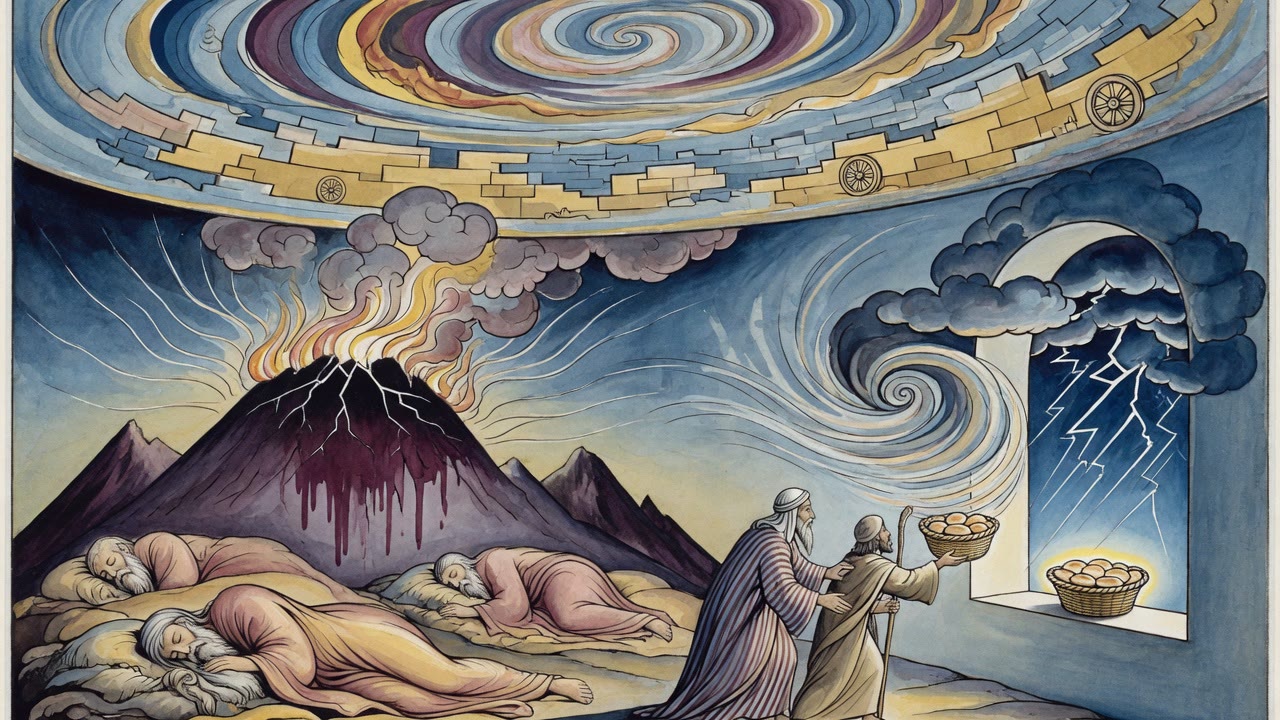
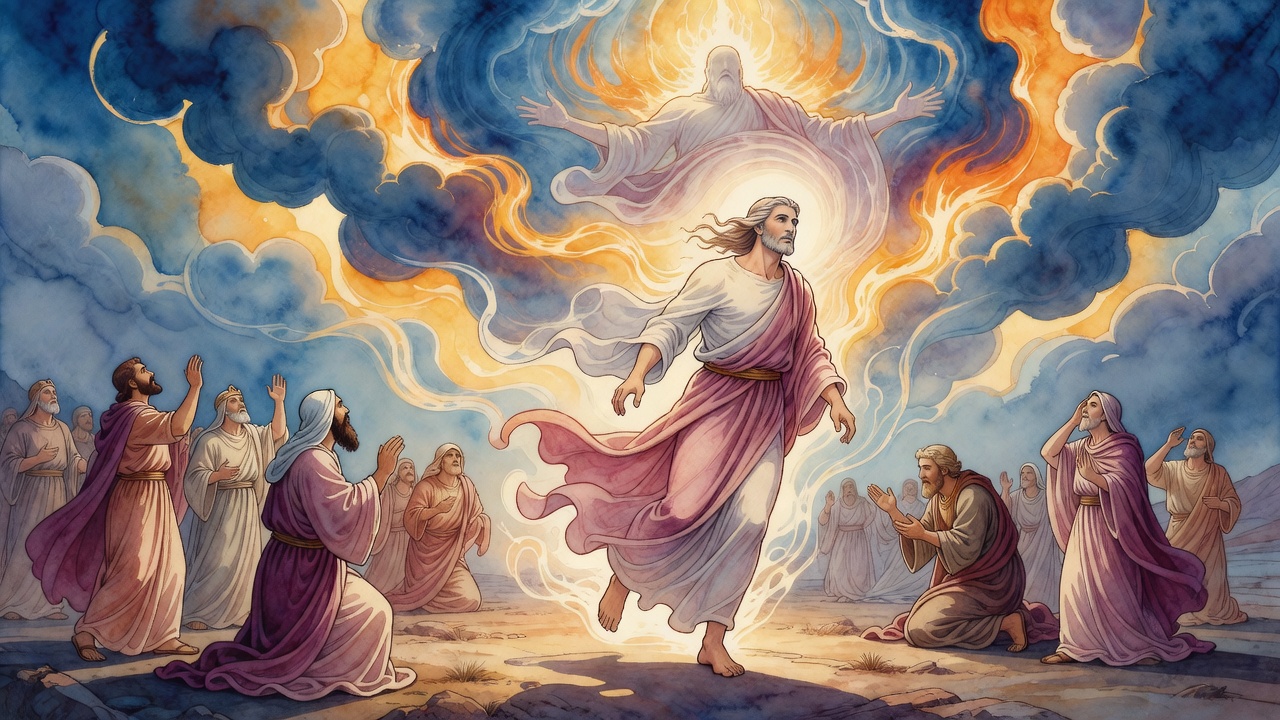
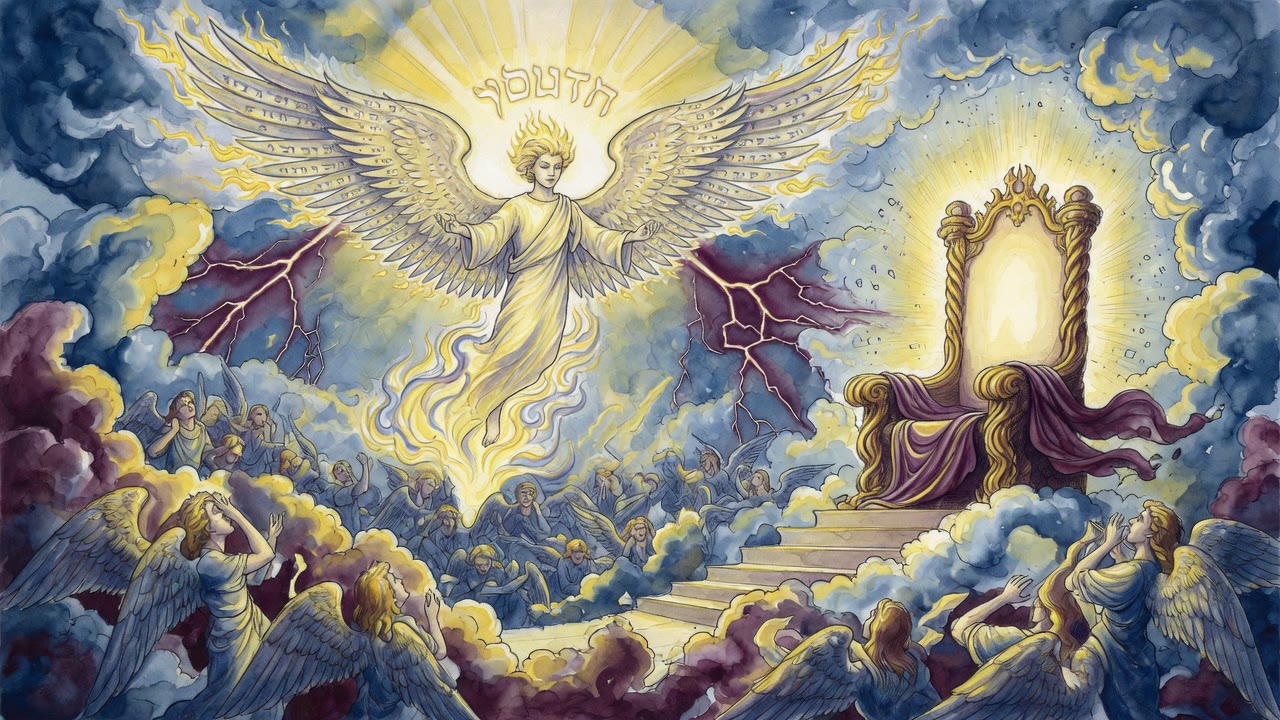
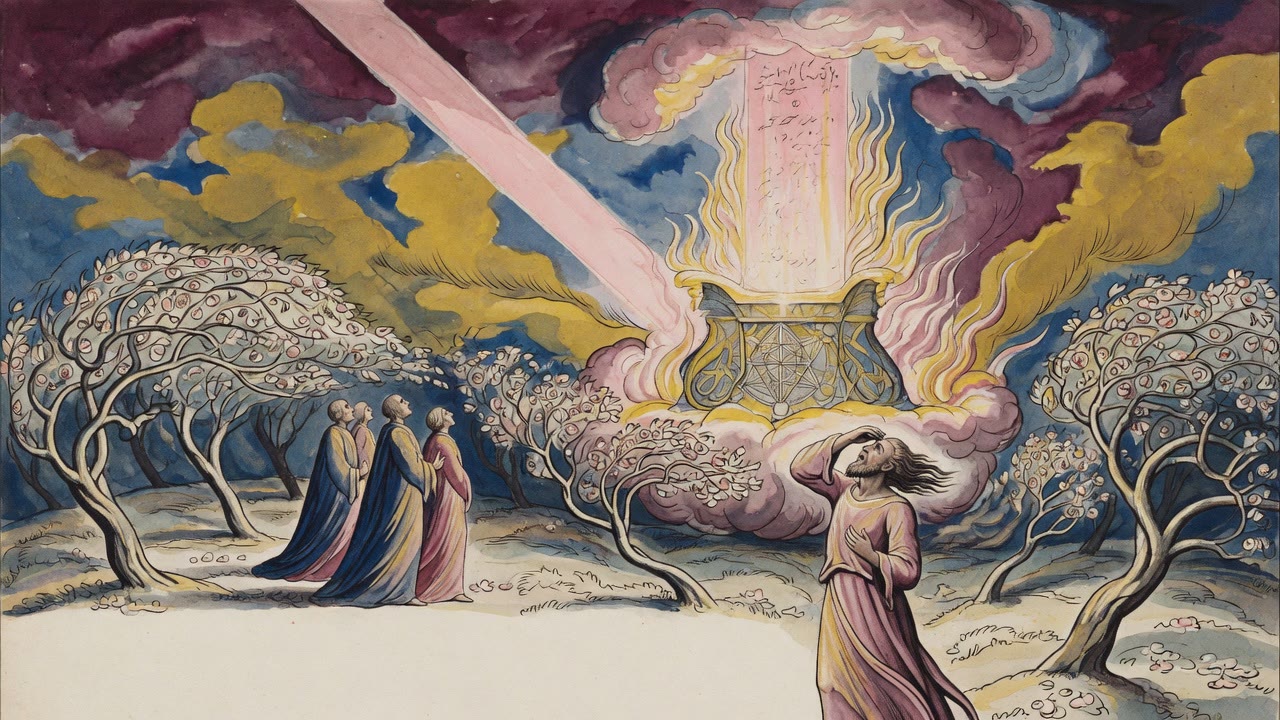
Elisha ben Abuyah entered Pardes with three companions and came out renamed. The tradition would call him Acher, the Other. He was allowed a glimpse of a higher heaven. There he saw the angel Metatron, the recording angel, seated on a throne and writing down the merits of Israel. Sitting. Writing. Looking almost tired of the work.

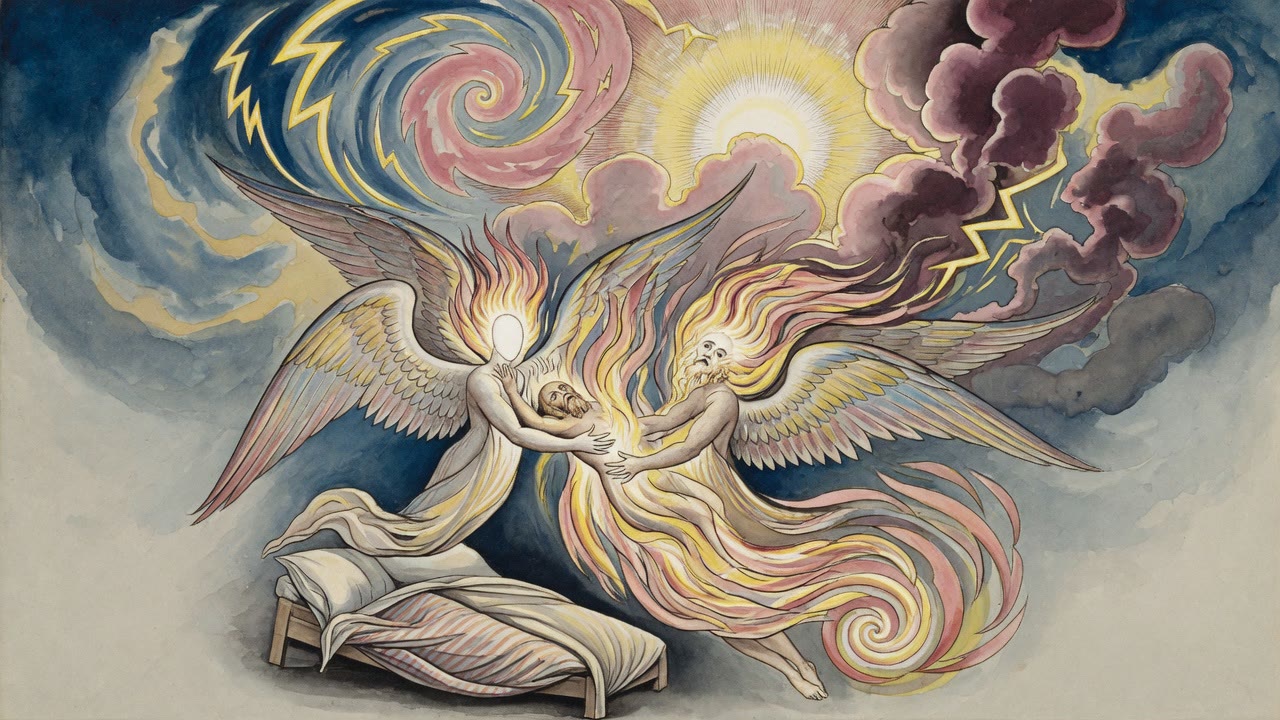
Elisha's mind snapped on a teaching he thought he knew. There is no sitting in heaven. No weariness. No fatigue above. If an angel sits like a king, are there two powers? The doubt cracked his world in half. Metatron was discovered in the violation of posture and flogged with sixty lashes from a fiery scourge. Smarting, the angel received permission to erase the merits Elisha had accumulated. One peek, and the rabbi's heavenly ledger went blank. The orchard does not refund entrance fees.

Before Metatron Was Metatron

The scribe Elisha misread had not always been an angel. Enoch walked with God, and he was not, for God took him (Genesis 5:24). The Targum names the destination. Hanok served in the truth before the Lord, was withdrawn from the sojourners of the earth, and ascended to the firmament by the Word. His name was called Metatron the Great Saphra, the Great Scribe. Service first. Fidelity first. Then withdrawal. Heaven took him the way a magnet pulls iron.

Elisha did not see Enoch's long climb. He saw only a seated figure and invented a second throne. The mistake was turning an officer into a rival. Metatron stands before the Throne of Glory. He is not the King. The flogging was heaven's correction of the posture Elisha misread as divinity. Sixty lashes of fire teach rank more clearly than a dozen lectures.

The Voice That Named Him Out

One Shabbat that fell on Yom Kippur, Elisha rode past the ruins of the Holy of Holies. A bat kol (a heavenly voice) called out, "Return, you backsliding children." Then it added the cut: Acher, remain in your sin. A disciple tried to pull him back through schoolrooms. In the twelfth room a boy with a speech impediment fumbled Psalm 50:16. In the stammer Elisha thought he heard his own name instead of rasha, the wicked. His face went dark. He cried that if he had a knife he would cut the boy into pieces. The decree, he decided, was sealed.

Rabbi Meir pressed him over Proverbs. "For the commandment is a lamp and the Torah is light" (Proverbs 6:23). Elisha explained that when a scholar sins, the unlearned point and say, look what learning came to. Meir asked if there was remedy. Elisha recalled Ben Azzai: even one who denied the foundation can be received through repentance. He would not take the road he could still describe.

Fire on the Grave

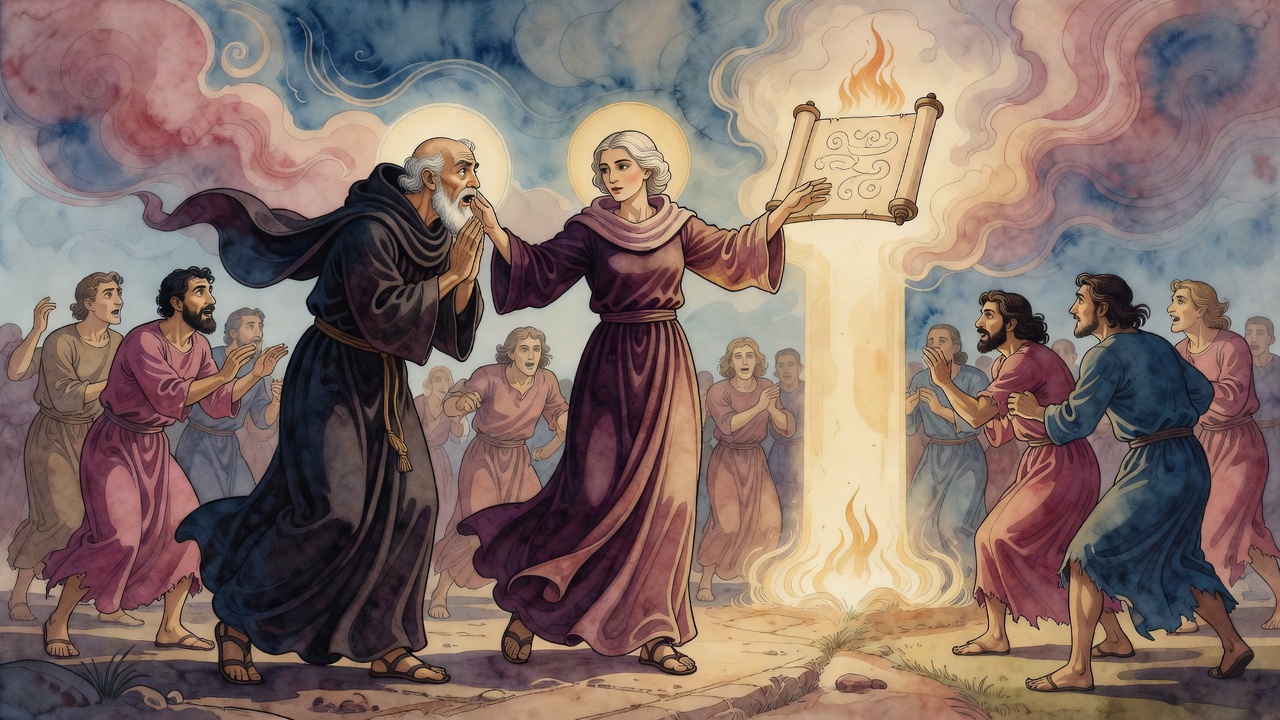
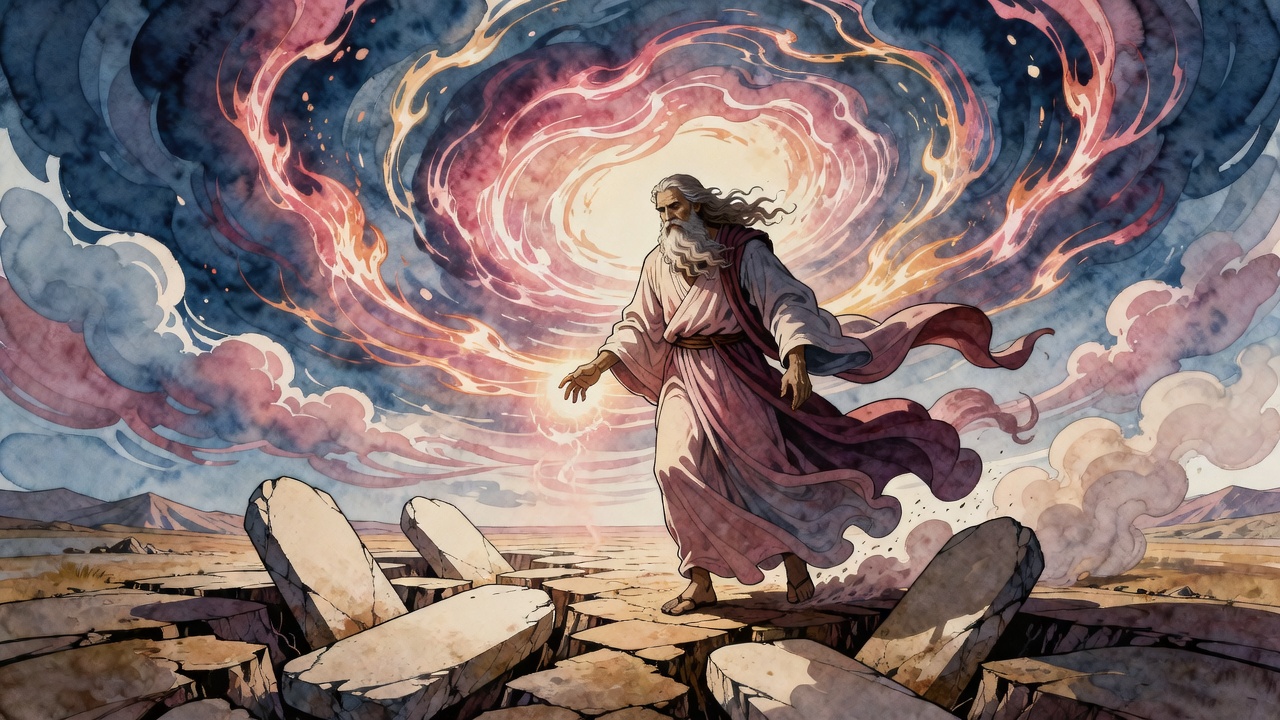
When Elisha died, fire burned over his grave. Rabbi Meir spread his cloak across the flame and pleaded with the words of Ruth: if the Good One will not redeem you, then I will. At the mention of the Name the fire went out. Happy, the Sages said, is the one who raises disciples who beg mercy for him.

The ledger Metatron had erased did not rewrite itself in public. Mercy arrived as a cloak and a verse. Acher stayed Acher. Meir stayed Meir. Between them the fire learned it could be quenched without pretending the orchard never burned a man.

What Sitting Cost

The seated scribe was Enoch transformed, not a second god. Elisha's eye failed the difference and paid with his name. The four who entered Pardes still mark the edge of safe ascent. Metatron writes merits. He does not share the Throne. A man who confuses the two walks out Other.

Years later a cloak on a grave is the last midrash the body gets. Meir claims the teacher the way Ruth claimed a field. The Name is spoken. The fire stops. No parade. Only a disciple who refused to let the orchard have the last word without a plea.

In the schoolroom dust the boys keep reciting after Elisha's face goes dark. Chalk and fear share the air. Meir will remember that dark face later when he spreads a cloak over fire, as if fabric could do what verses failed to do while the teacher still breathed.

Metatron returns to his writing with a scourged back and a cleaner posture. The merits of Israel continue down the page. Elisha's line is blank where a lifetime of learning once stood. Heaven keeps the books even when a sage misreads the furniture of the court.

The four who entered Pardes leave four different silences behind them. Elisha's silence is the loudest because it still has a name that means Other. Meir's cloak is the softest answer the sources allow. Between the flogged angel and the quenched grave runs the whole cost of misreading a seat for a second throne.


← All myths
From the tradition

Sources

3 sources

The texts behind this telling. Some cards carry a translation of the source; others are our own retelling of it, and each card says which. Every card links out to the original.

Chagigah 15a (Harris, Hebraic Literature, 1901)Hebraic Literature (1901)

Retold in our words. Read the original at the link below.Project Gutenberg eBook #14368, Hebraic Literature · PD-US-pre-1929

Of the four sages who entered Pardes, the mystical orchard of divine secrets, one emerged and lost his belief. His name was Elisha ben Abuyah, and the tradition eventually renamed him Acher, "the Other."

What did he see? In the account preserved in Harris's 1901 Hebraic Literature, Elisha was allowed to glimpse a higher heaven. There he saw the angel Metatron, the recording angel, seated on a throne and writing down the merits of Israel. Elisha was stunned. Is it not taught that there is no sitting in heaven, no weariness, no fatigue above? Two powers, then? The doubt cracked his world in half.

Metatron was discovered in his violation and was flogged with sixty lashes from a fiery scourge. The angel, smarting, was granted permission in turn to erase the merits Elisha had accumulated. One peek behind the curtain, and the Rabbi's heavenly ledger was wiped clean.

One Shabbat that fell on Yom Kippur, Elisha was riding past the ruins of the Holy of Holies when a bat kol, a heavenly voice, called out, Return, you backsliding children. But Acher, remain in your sin. A faithful disciple tried to bring him back through the children's schoolrooms, where young boys recited their verses. In the twelfth schoolroom the disciple called on a boy with a speech impediment, who fumbled the verse, But to the wicked God says, What right have you to declare my statutes (Psalm 50:16). In the boy's stammer, Elisha thought he heard his own name called instead of rasha, the wicked. The blow struck. His face went dark, and he cried that if he had a knife he would cut the boy into pieces and send one to each school he had visited. The tragedy of Acher is that he had already decided heaven would not forgive him, so nothing in heaven could reach him anymore.

Full source
Midrash Mishlei 6:6Midrash Mishlei

Translation of the source text.Midrash Mishlei (Buber) · CC-BY

There we learned: Rabbi [Yehuda HaNasi] says: make for yourself a lamp by whose light you may walk. And which is it? This is the light of Torah, as it is said (Proverbs 6:23): "For the commandment is a lamp and the Torah is light," etc. From here Rabbi Meir used to say: Happy is the person who has acquired Torah for himself. Why? Because it guards him from the evil way, as it is said (Proverbs 6:24): "To keep you from the evil way", everyone who has understanding in him will be guarded by it. "From the smoothness of the alien tongue", be careful of it, that it not lead you astray with its beauty, as it is said (Proverbs 6:25): "Do not covet her beauty in your heart, nor let her take you with her eyelids"; (Proverbs 6:26): "For on account of a harlot a man is brought to a loaf of bread, and a married woman hunts the precious soul."

Rabbi Meir asked Elisha ben Avuyah, his teacher; he said to him: What is the meaning of "and a married woman hunts the precious soul"? He said to him: A common person, if he is caught in a transgression, there is no disgrace to him. Why? Because he says, "I am a commoner, and I did not know the Torah's penalty." But a scholar (chaver), if he is caught in a transgression, it is a disgrace to him, because he mixes words of purity with words of impurity. That Torah which was precious to him, he degrades it, for the unlearned say, "See a scholar who was caught in a transgression and degraded his Torah." Therefore it is said, "hunts the precious soul." Rabbi Abbahu said: What is "hunts"? That he is caught in this net. Rabbi Alexandrai said: What is "precious"? This is the Torah, as it is said (Proverbs 3:15): "She is more precious than rubies, and all your desires cannot equal her." Therefore it is said, "hunts the precious soul."

He said to him: "Rabbi, what is the penalty of the married woman in the time to come?" He said to him: "My son, before you ask me about this, come and see what is written below in the matter: (Proverbs 6:27): 'Can a man take fire into his bosom and his garments not be burned?' etc.; (Proverbs 6:29): 'So is the one who goes in to his fellow's wife, none who touches her shall go unpunished.' It says here 'shall not go unpunished,' and it says there, concerning the profanation of the Name (Exodus 20:7): 'For the LORD will not hold guiltless the one who takes His name in vain.' Just as there it is all their wealth [that is forfeit], so too here 'shall not go unpunished' brings down all his merits." He said to him: "Rabbi, is there no remedy for him?" He said to him: "My son, once I was sitting before Ben Azzai, my colleague, and we were studying this passage; when we came to this verse, he said to me: 'Let him go and raise an orphan in his house, and let them learn Torah and occupy themselves with all the commandments, and his iniquities are atoned for in the world to come, on the condition that he not return to the transgression but do repentance.' I said to him: 'From where is the proof for this thing?' He said to me: 'It is written (Jeremiah 4:1): "If you return, O Israel, says the LORD, return to Me." Why? (Jeremiah 3:12): "For I am faithful, says the LORD; I will not bear a grudge forever."' I said to him: 'I already have another answer that is greater than this, as it is said (Hosea 14:3): "Return, O Israel, unto the LORD your God, for you have stumbled in your iniquity", even if you have denied the fundamental principle [of faith]. For if one who denies the fundamental principle the Holy One, blessed be He, receives in repentance, this one too the Holy One, blessed be He, receives in repentance.'"

Rabbi Meir, his disciple, responded; he said to him: "Rabbi, do your own ears not hear what you are saying? If these the Holy One, blessed be He, receives in repentance, how much more so you, in whom is all the whole Torah! And why do you not do repentance?" He said to him: "Once I entered a synagogue and saw a child sitting before his teacher, and his teacher was having him read aloud (Psalms 50:16): 'But to the wicked God says: What right have you to recount My statutes and take My covenant upon your mouth?' And the pupil was answering and saying, 'But to Elisha God says: What right have you to recount My statutes and take My covenant upon your mouth?' When I heard this, I said, 'Upon Elisha the decree has been sealed from above.'" Rabbi Meir answered and said: "Rabbi, do repentance in this world, and I will stand in your decree, in your watch-post, on the Day of Judgment in the time to come!" Even so, he did not accept it upon himself.

When he died, they came and said to Rabbi Meir: "Come and see the fire that is consuming on the grave of your teacher." At that hour Rabbi Meir spread his cloak (tallit) over the grave of his teacher, and he was adjuring the fire and saying (Ruth 3:13): "Stay this night, and it shall be in the morning, if he will redeem you, good, let him redeem; and if he does not wish to redeem you, then I will redeem you, as the LORD lives; lie down until the morning." "Stay this night", in this world, which is all night; "and it shall be in the morning", in the world to come, which is all light; "if he will redeem you, good, let him redeem", this is the Holy One, blessed be He, of whom it is written (Psalms 145:9): "The LORD is good to all, and His mercies are over all His works"; "and if he does not wish to redeem you, then I will redeem you, as the LORD lives!" When he mentioned over it the Name of the Holy One, blessed be He, the fire was extinguished. From here the Sages said: Happy is the man who raises up disciples who seek mercy upon him.

Full source
Targum Pseudo-Jonathan on Genesis 5:24Targum Pseudo-Jonathan on Genesis

Retold in our words. Read the original at the link below.The Targum of Jonathan ben Uzziel, trans. J. W. Etheridge, London, 1862 · Public Domain

The Torah says cryptically of Enoch: "he walked with God; and he was not, for God took him" (Genesis 5:24). Targum Pseudo-Jonathan tells us where he went.

"Hanok served in the truth before the Lord; and, behold, he was not with the sojourners of the earth; for he was withdrawn, and he ascended to the firmament by the Word before the Lord, and his name was called Metatron the Great Saphra."

Metatron. The Great Scribe. One of the most powerful angelic figures in all of Jewish mysticism, second only to God Himself in some mystical texts. In the Hekhalot literature and in later Kabbalah, Metatron is the heavenly scribe who records the deeds of humanity, the teacher of angels, the one who stands before the Throne of Glory. The Talmud (Chagigah 15a) and 3 Enoch expand on this: Enoch, the seventh generation from Adam, was taken alive into heaven and transformed into this angelic figure.

What makes a human ascend

The Targumist is careful about the verb. Enoch served in the truth. Before ascent, service. Before transformation, fidelity. He did not reach heaven by striving upward; he lived so truthfully on earth that earth could no longer contain him. Heaven took him the way a magnet pulls iron.

This is the Targumist's earliest hint of a tradition that will become enormous in Jewish mysticism: that a human being, by sufficient holiness, can cross the boundary into the angelic. Enoch is the prototype. The Tzaddik, in later thought, is a person whose life on earth has already begun to take on heavenly dimensions.

Full source