5 min read

Enoch Walks the Road Cain Would Not Take

After Cain is marked and left alive, Enoch sets his feet toward return, proving heaven built a path back before any pardon was ever spoken aloud.

Curated by Arthur · Told by Maggid ·
Table of Contents
  1. The Mark That Was Not Mockery
  2. Another Man Sets His Feet
  3. Counsel, Not Collapse, at the World's Start
  4. The Path That Outruns the City

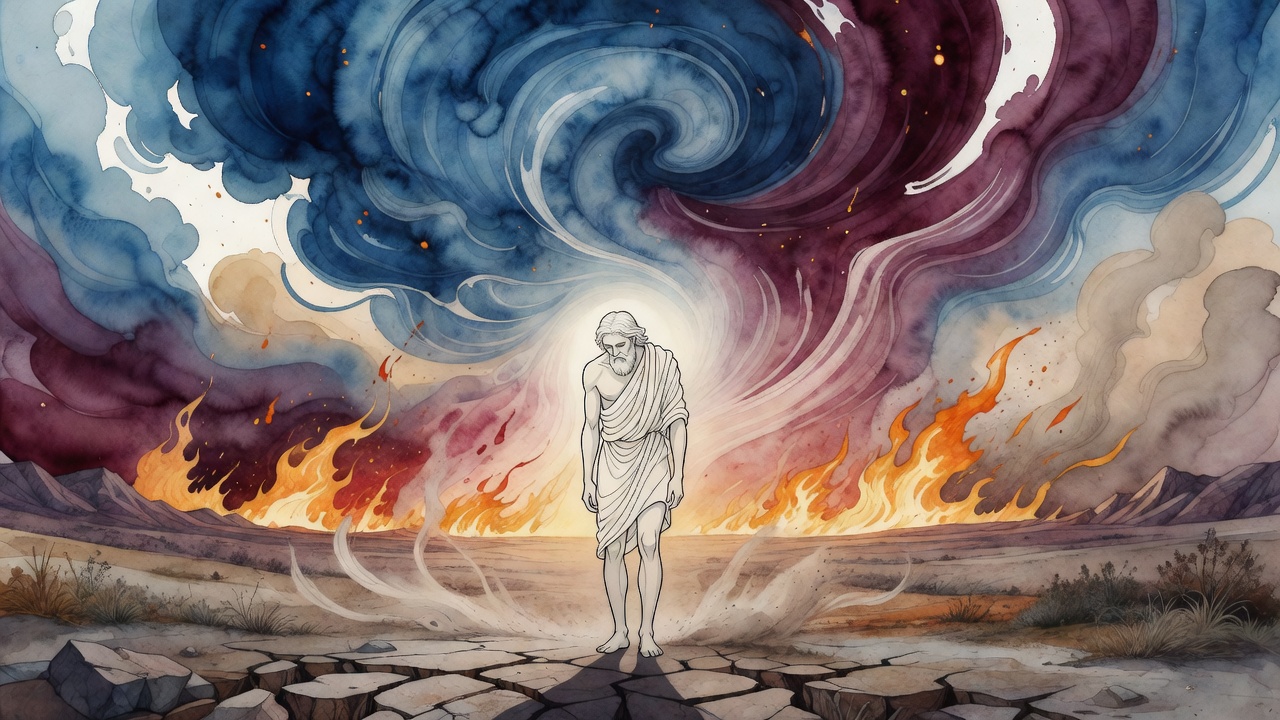
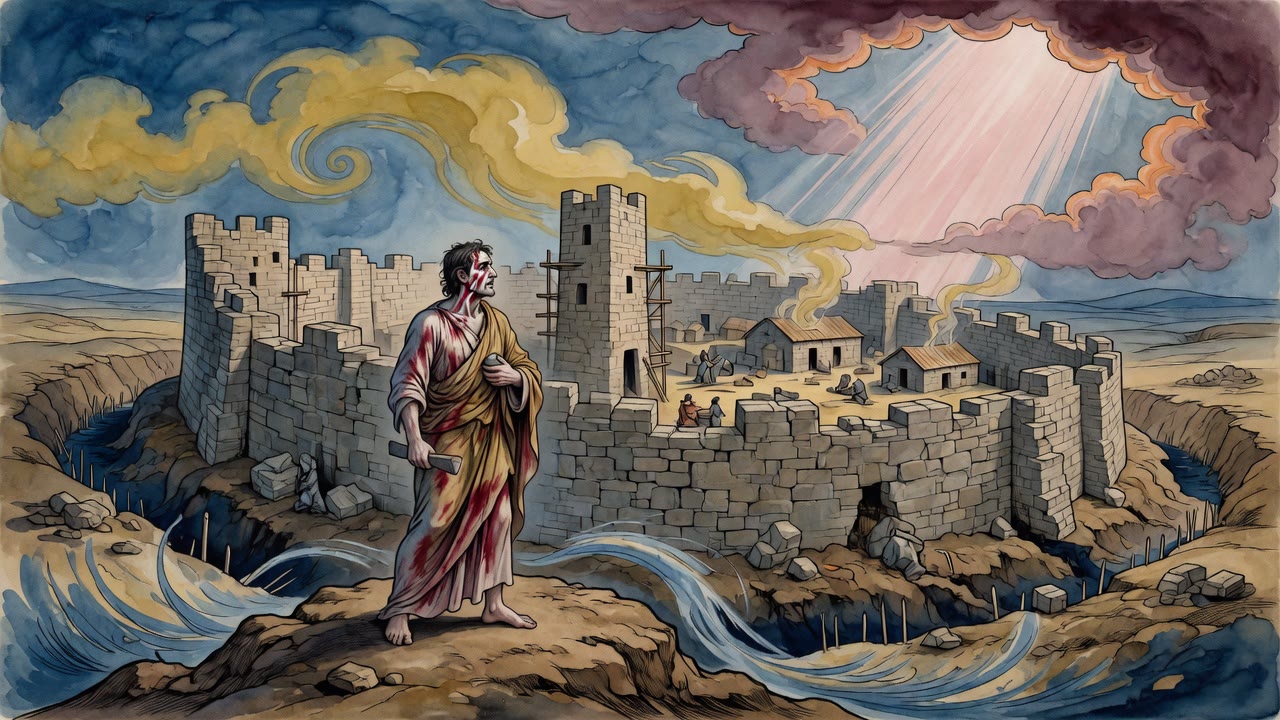
Cain walked east with a mark on his skin and murder still wet in his memory. The ground had spoken against him. God had not struck him dead. That mercy felt like a brand hotter than any fire. People stepped aside when he passed. He wanted the world to end the story at the field. The world refused.
Enoch Walks the Road Cain Would Not Take Click for full size

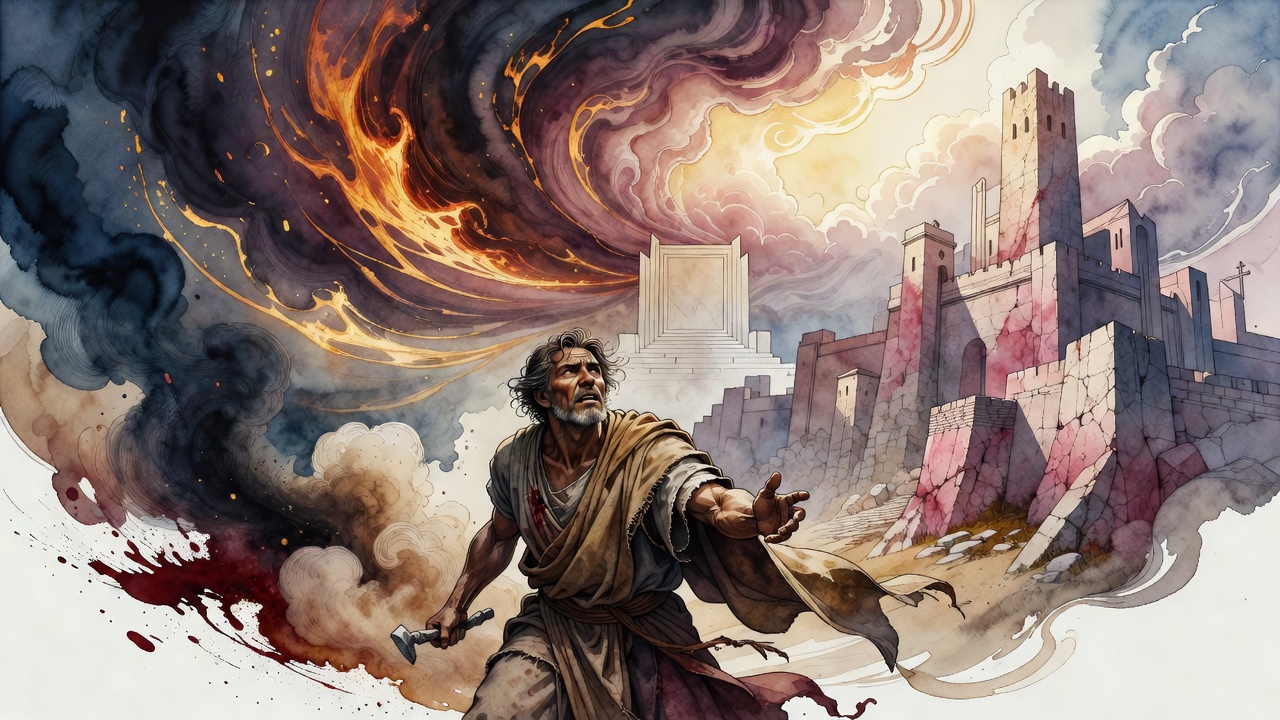
He built a city to drown the quiet. Walls rose. Sons were born. None of it washed the first blood from his hands.

The Mark That Was Not Mockery

In the long years after Abel, Cain expected scorn from heaven the way a man expects weather. He waited for a voice that would laugh at his ruin. It never came. The mark protected him from killers and also kept him from forgetting. He lived inside a mercy that did not flatter him.

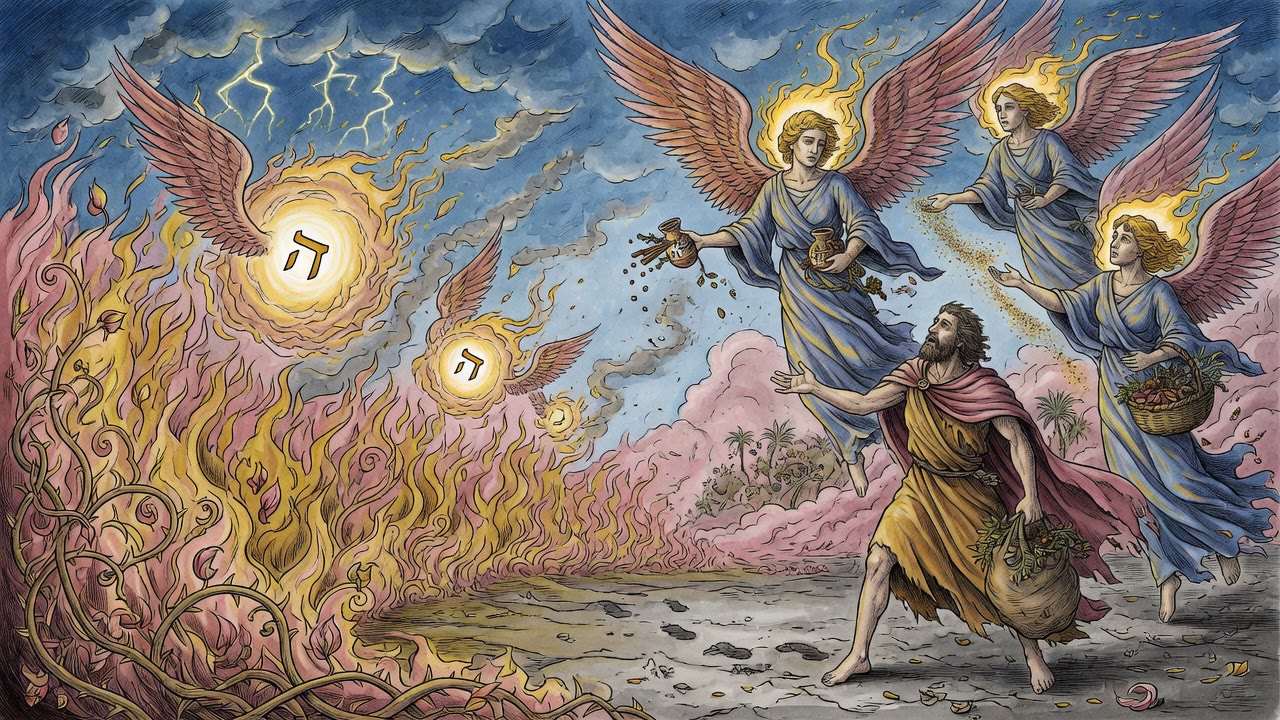
Travelers later told of a God who planned pardon only after watching humans fail. Cain knew a harder order. Before mercy was announced as policy, the chance to climb back had already been set into the grain of things. A soul that stumbled was not to be mocked from the throne. It was to be left a path, even if the first man on that path refused to walk it.

Cain sat at his city gate and watched younger men quarrel. He said nothing. Advice from a fratricide rots in the mouth. He had been indulged with life. He had not returned. When a fight broke near the forge, he turned his face away and let other hands stop it.

Another Man Sets His Feet

Enoch grew up in the shadow of that story. He heard Cain's name the way children hear a storm that once tore a roof. He did not want the mark. He wanted the road Cain would not take.

One morning Enoch left his house before dawn and walked without a destination, only a direction: away from the habits that made a man lift his hand against his brother. He prayed while walking. He turned when anger rose and named it before it hardened. Neighbors called him strange. He kept walking.

"What are you doing?" a kinsman asked. Enoch wiped dust from his mouth. "I am practicing return. If heaven left a door after Cain, someone has to use it."

The years he spent pleasing God began to count as a life, even the earlier years that had been ordinary and half-asleep. A man who becomes a husband and father can start late and still be gathered into goodness. Enoch felt that gathering like a rope tightening around a useful load. He taught his household the same rhythm: err, face it, turn, repair.

Counsel, Not Collapse, at the World's Start

Older teachers said God had once "repented" of making humankind, as if the Deity could stumble into regret. Enoch rejected the soft reading. An unchanging God does not thrash like a man who missed a turn. What the old language called agitation was counsel: a careful weighing of placing a soul-and-body creature on an earth that can be a place of misery, where flesh pulls and virtue must be chosen again each day.

Enoch held that counsel in his bones when he walked. The body was heavy. The lowest place was still home. He did not curse the weight. He used the path. If creation had been a reckless joke, there would be no road back. Because the counsel was kind and determinate, penitence (teshuvah, תשובה, return) sat in the structure before any single pardon was spoken.

He taught his household the same. When a son lied, Enoch did not mock him into despair. He set the boy on the path and walked beside him until the lie was repaired. The boy's face stayed hot with shame, then cooled into work. That was enough.

The Path That Outruns the City

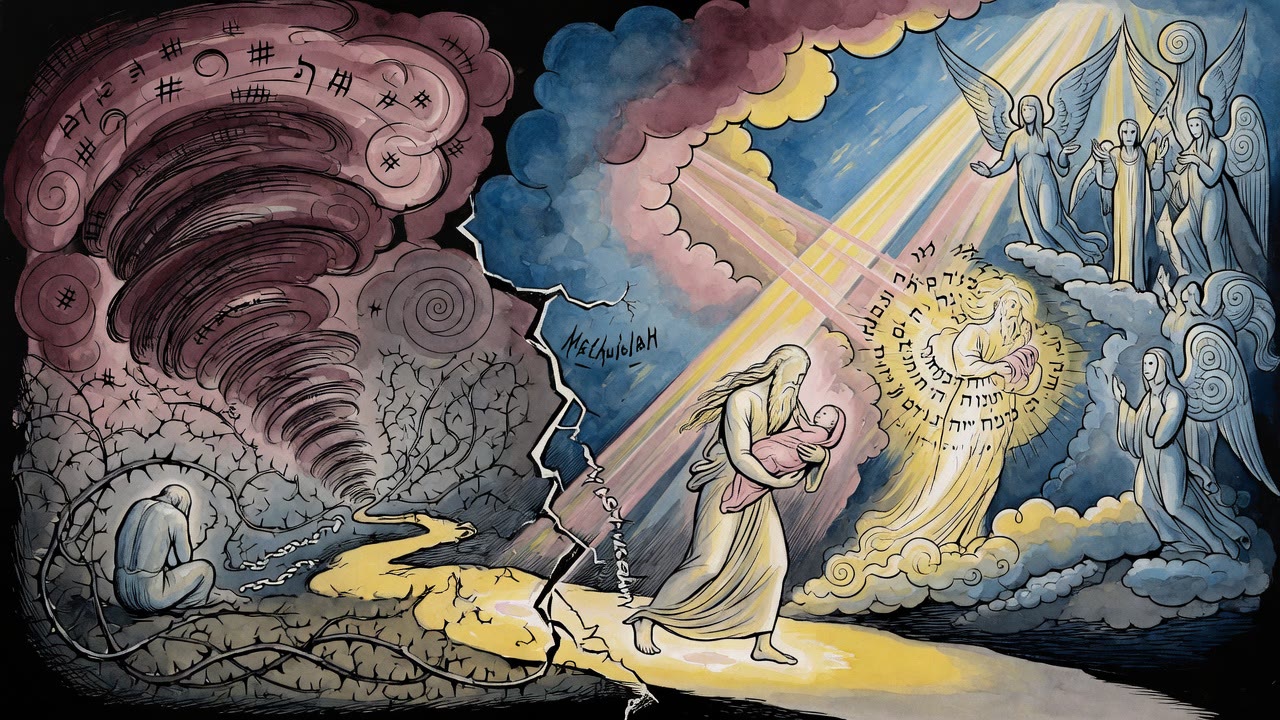
Cain's city grew loud with forges and songs. Enoch's road stayed quiet. One day the two lines of story crossed in a market. Cain, old and hard-eyed, saw Enoch pass with a calm that looked like insult. "You think walking fixes the field?" Cain asked.

Enoch stopped. "Walking does not fix your field. It keeps me from digging another." Cain laughed without joy and turned away. The mark still showed at his collar. The path still lay open behind him. He did not take it.

Enoch went on until the stories said heaven took him. What remained on the ground was simpler: after the first murder, God had left life and a door. Cain used the life. Enoch used the door. The turning point of the age was not only blood in the dirt. It was the proof that return had been built in from the start, waiting for feet willing to move.

Dust settled on the market stones. Somewhere a child practiced a better answer than a fist. The road stayed open.


← All myths
From the tradition

Sources

2 sources

The texts behind this telling. Some cards carry a translation of the source; others are our own retelling of it, and each card says which. Every card links out to the original.

The Midrash of Philo 21:2The Midrash of Philo

Retold in our words. Read the original at the link below.The Works of Philo Judaeus, trans. C. D. Yonge, London, H. G. Bohn, 1854-1890 · Public Domain

One fascinating perspective comes to us from a text known as The Midrash of Philo. Now, when we say "midrash (rabbinic interpretive commentary)," Philo, a Jewish philosopher living in Alexandria in the first century CE, engaged in this kind of imaginative interpretation.

In this particular passage, The Midrash of Philo 21, Philo explores the idea of God establishing the very principles of generation – of life itself – as being tied to goodness. That the wellsprings of all that is good are connected to the very act of bringing forth life.

Philo explains that before decreeing mercy and pardon, God set things up so that penitenceteshuvah (repentance) in Hebrew, the act of returning – would always be possible. It’s as if God is saying, "I'm not going to mock or reproach those who have stumbled. Instead, I’m giving the soul a chance to climb from wickedness to virtue." Think of it like someone narrowly escaping a trap.

He uses the example of a man becoming a husband and father. In that moment, he begins a path toward righteousness. Even if he wasn’t always pious from birth, the years he does spend pleasing God are counted as a life well-lived. It’s a beautiful image of grace and forgiveness.

Now, some might argue, "But shouldn't we be pious from the start?" Philo anticipates this. He emphasizes that God approves of this order of things. He says that after showing indulgence to Cain – yes, that Cain – God quickly introduces the story of Enoch practicing repentance. The message is clear: repentance is the key to unlocking God's indulgence. It's the bridge that allows us to cross from wrongdoing to redemption.

Perhaps it's a reminder that it's never too late to turn things around. That even after making mistakes, we have the power to choose a different path. That God, in creating the very fabric of life, built in the possibility of teshuvah, of returning to the good. Maybe the point isn't about perfection, but about striving, about recognizing our flaws and choosing to climb towards virtue, one step at a time. And isn’t that, in itself, evidence of the enduring power of hope?

Full source
The Midrash of Philo 6:2The Midrash of Philo

Retold in our words. Read the original at the link below.The Works of Philo Judaeus, trans. C. D. Yonge, London, H. G. Bohn, 1854-1890 · Public Domain

One that theologians and philosophers have wrestled with for centuries. We find it even bubbling up in the ancient texts. Consider the passage that talks about God "repenting" for creating humankind. Whoa. Does that mean God makes mistakes?

Well, hold on a minute. The Midrash of Philo, a collection of interpretations and expansions on the Hebrew Bible attributed to the Jewish philosopher Philo of Alexandria, tackles this very idea. And it offers a fascinating perspective.

The passage points out that some folks read those words – the ones about God "repenting" – and jump to the conclusion that God is capable of regret. But the Midrash (rabbinic interpretive commentary) immediately pushes back against that notion. It insists that the Deity is unchangeable. Immutable. How could God, the very definition of perfection, possibly repent?

So, what’s really going on here? If God isn't actually repenting, what does it mean when the text says that God "cared and thought about the matter, and agitated it in His mind?"

The Midrash suggests that these phrases aren’t signs of regret, but rather indications of a "kind and determinate counsel." In other words, God is carefully considering the reasons for creating humanity on this earth. This earth, which the text describes as "a place of misery." Ouch.: humanity is a blend of soul and body. And according to this Midrash, from birth to death, we are essentially slaves to the body. This body, which is by nature corruptible and stuck in a "terrible situation" - namely, the earth, "which is the lowest of all places."

Pretty bleak picture, huh?

Given this somewhat dire view of human existence, is it really so surprising that God would meditate and deliberate on the whole creation thing? The Midrash argues that it makes perfect sense, especially considering that so many people choose wickedness over virtue. Why? Because they’re driven by that "twofold impulse" – the corruptible body and the challenging environment of earthly existence.

So, the next time you stumble across a passage that suggests God is repenting, remember this Midrash. Remember that it might not be about regret at all. Maybe it’s about God, in His infinite wisdom and compassion, trying to understand the complexities of the world He created, and the struggles of the creatures who inhabit it.

Maybe it's about understanding the tension between our divine potential and our very human limitations. And maybe, just maybe, it's a reminder that even when things seem bleak, there's still a spark of the divine within us, waiting to be kindled.

Full source