Parshat Bereshit6 min read

Enoch's Ascent to the Crystal Palace and the Chained Stars

Michael leads a living man up through heaven after heaven to a palace of crystal, past the chained stars, to the day when time itself burns out.

Curated by Arthur · Told by Maggid ·
Table of Contents
  1. The Angel Comes for a Living Man
  2. The Palace Built Entirely of Crystal
  3. Past the Frayed Edge of the World
  4. The Stars That Missed Their Hour
  5. The Day That Has No Evening
Enoch's Ascent to the Crystal Palace and the Chained Stars Click for full size

The Angel Comes for a Living Man

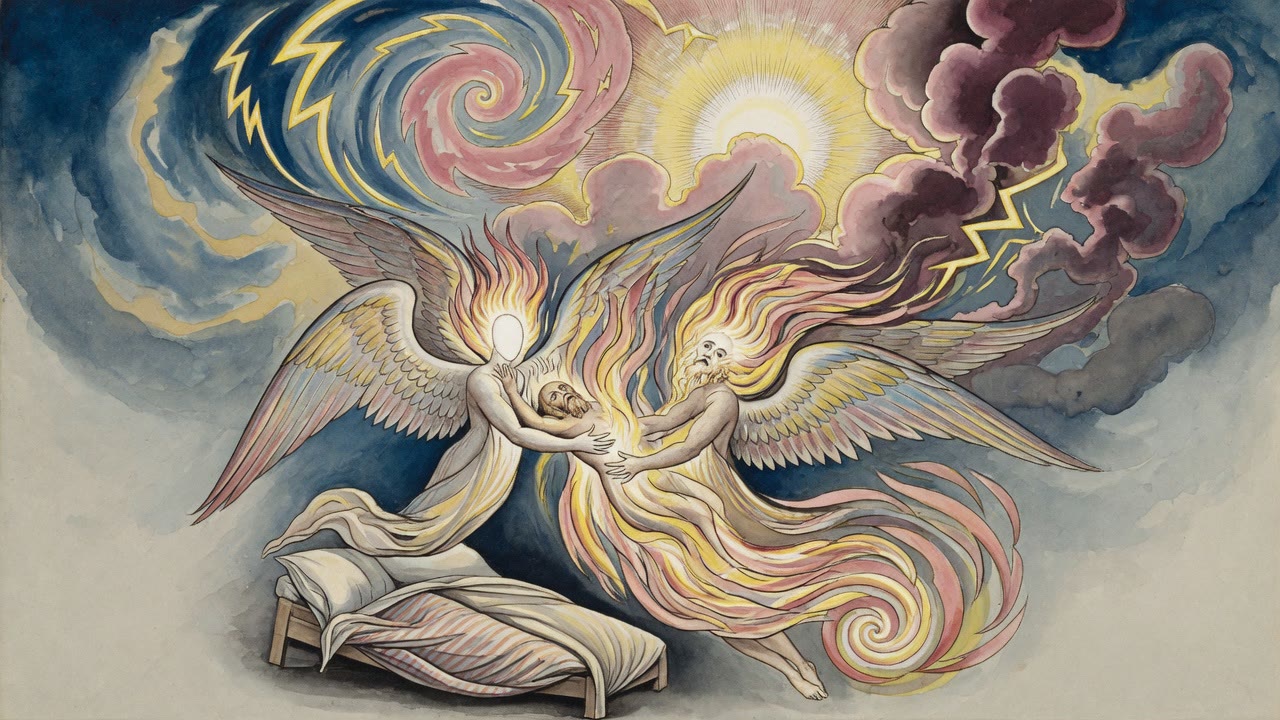
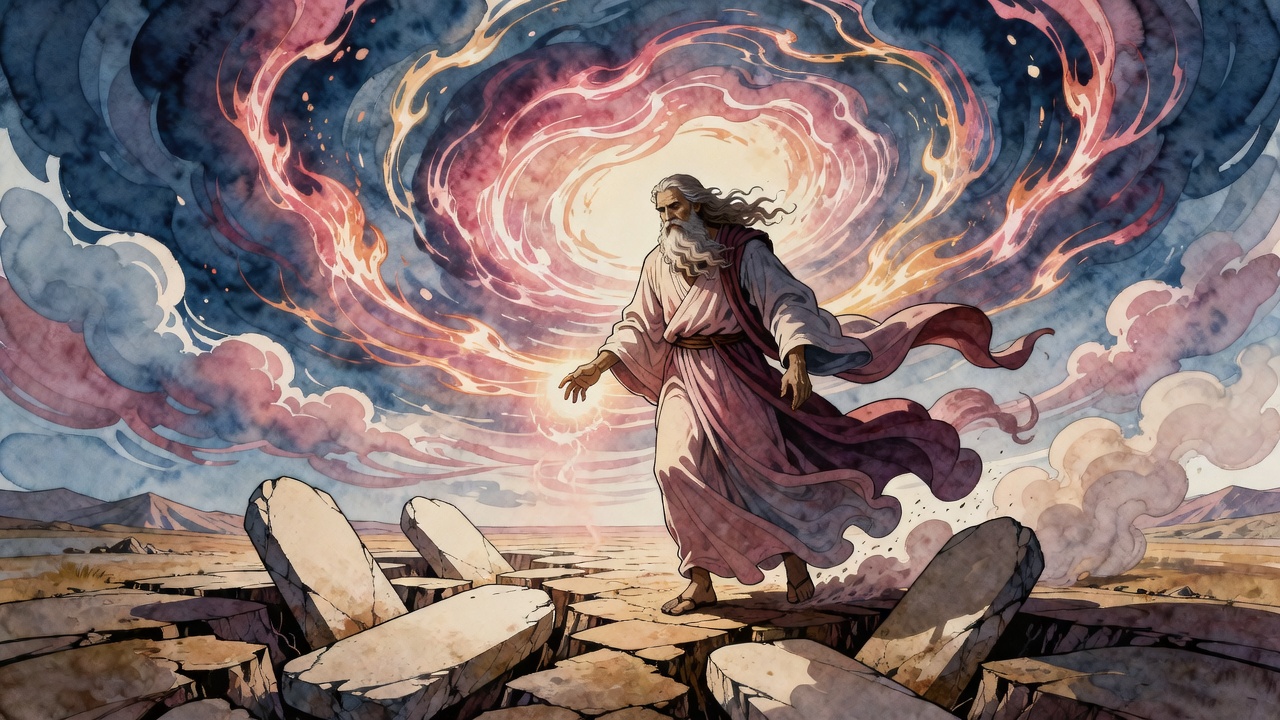
Enoch was still breathing when heaven opened under his feet. He had not died. He had walked with God until the ground simply let him go.

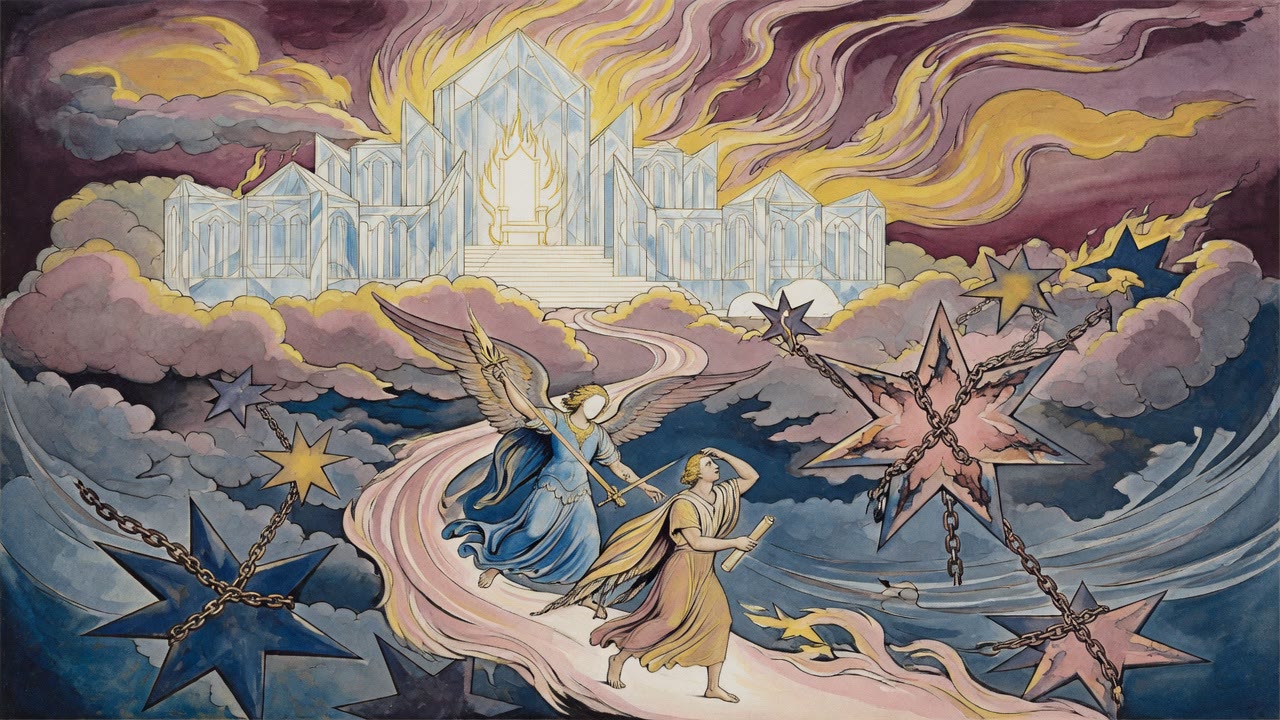
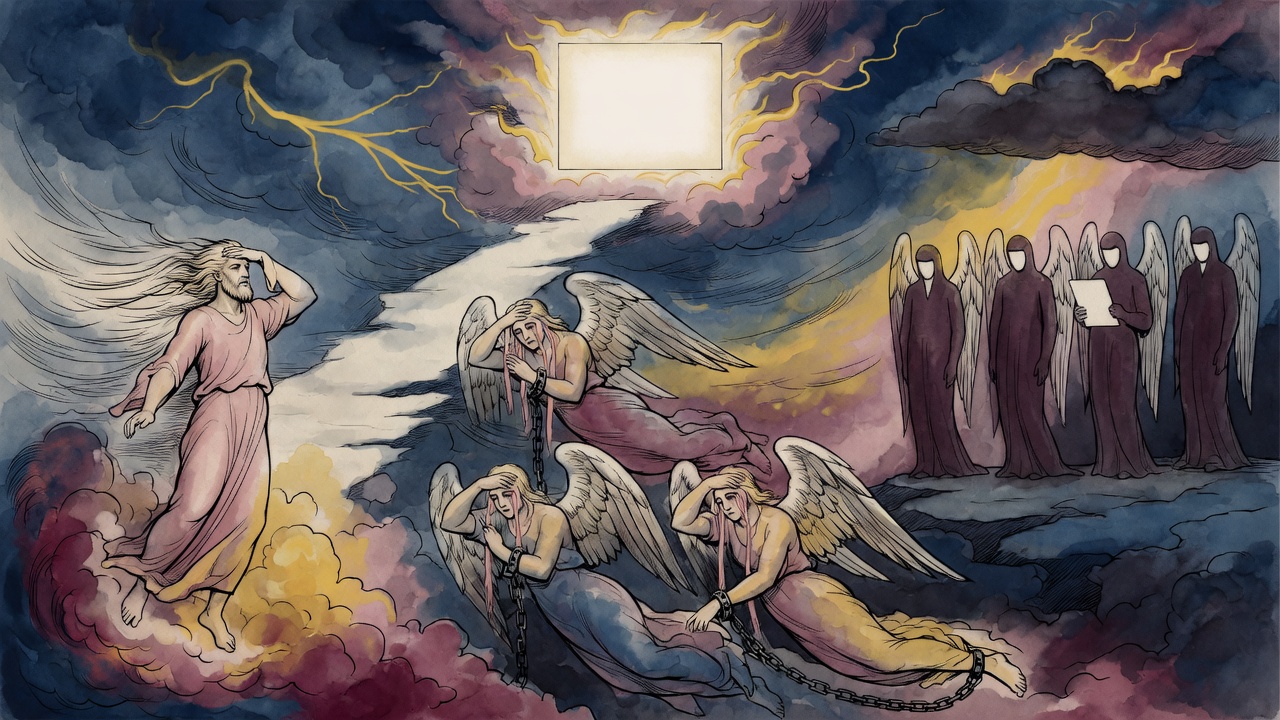
An angel caught his wrist. Michael, chief of the heavenly host, does not usually escort men made of dust, and here he was, hauling one upward past the first sky, then the second, climbing heaven after heaven while the air turned colder and thinner. Enoch counted the levels until counting stopped meaning anything. At the top of everything waited Aravot, the seventh and highest heaven, the roof above every other roof.

"Do not be afraid," Michael told him. A living man had never stood this high. Below them the lower heavens closed like doors, one after another, until only the highest was left open.

The Palace Built Entirely of Crystal

At the summit stood a palace, and the whole of it was crystal. Not stone dressed to look like crystal. Crystal to the foundations, walls clear as still water, so pure they seemed to hum.

Between the crystals ran fire. Living fire, Enoch would have called it, the kind that gives light without eating what it touches. Tongues of it moved along the seams of the walls. Rivers of the same fire circled the palace like a moat, so that the whole structure sat inside a ring of flame that burned and burned and consumed nothing.

Inside, angels crossed the floor on their errands. Gabriel was there, and Raphael, and Michael at Enoch's shoulder. Past them, on a throne of glory, sat a presence Enoch could not look at directly. The robe was brighter than the sun and whiter than snow. The hair of the head was white and pure, like clean wool. This was the Ancient of Days, and Enoch, a man, stood in a crystal room and watched God take counsel with his angels.

Past the Frayed Edge of the World

Then the angels took him out again, and they did not go back down the way they had come. They carried him to the place where creation stops.

There is an edge. Enoch reached it. The order of things frayed there like the hem of a torn garment, and past the fray there was no floor of earth and no dome of sky, only an abyss that dropped in every direction at once. The smell reached him first, sulfur, thick and sickening. Columns of fire stood in the dark and gave no warmth. Nothing lived. No bird crossed it, no water ran through it. It was a wasteland with no bottom, and it had been made on purpose, as a prison.

The Stars That Missed Their Hour

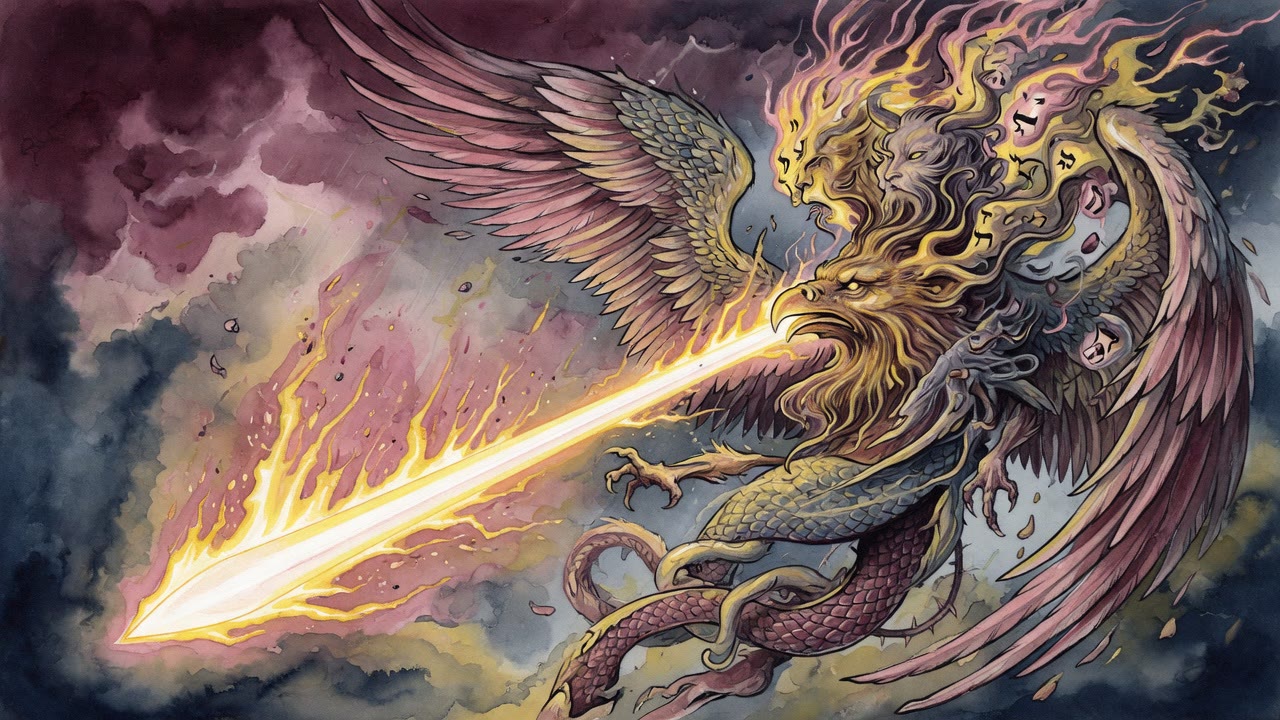
Enoch saw the prisoners. Seven of them burned in the abyss like mountains on fire, rolling, never resting, tumbling through the dark on and on. He asked what they were. Stars, his guides told him. Seven stars that had not risen when they were commanded to rise, that failed to appear at the hour set for them at the beginning. For that lateness they were bound in the abyss for ten thousand years, and their sentence was not finished.

Others were chained there too. These had once been Watchers, angels posted to watch over the earth. Instead they taught men to slaughter offerings to demons and to bow to them as gods, and they went down after the daughters of men and defiled themselves. Now they lay in the outer dark with the truant stars, angels and lights together, all of them held in the one place where the light of the crystal palace does not reach.

Enoch, still a man, still breathing, looked into the pit that swallows the disobedient of heaven and did not fall in.

The Day That Has No Evening

One thing remained to be shown him, and it was the largest of all.

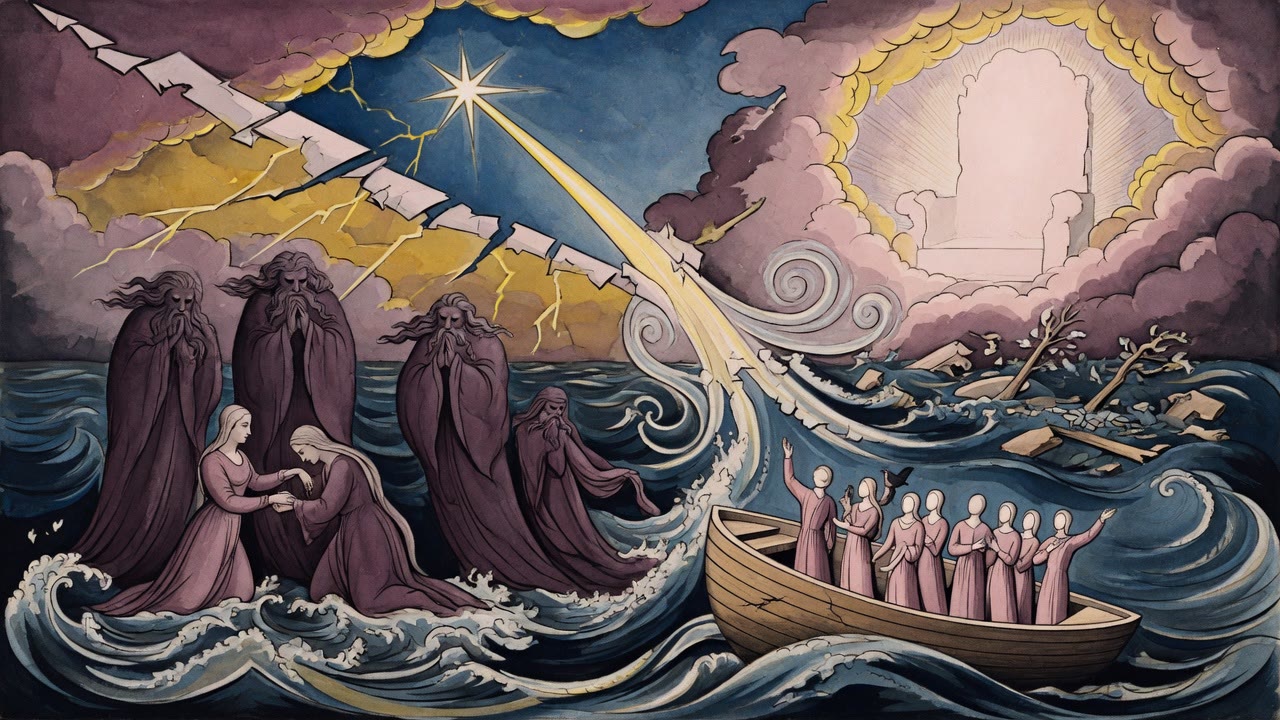
His guides told him of a day still coming. On that day the whole of creation, everything seen and everything unseen, comes to its end at once. Every creature that ever lived is gathered to be judged, the truant stars and the Watchers and the sons of men alike. When the judgment is finished, time itself is dismissed. The years stop. The months stop. Even the counting of the hours ceases, and zman, time as men live inside it, is over.

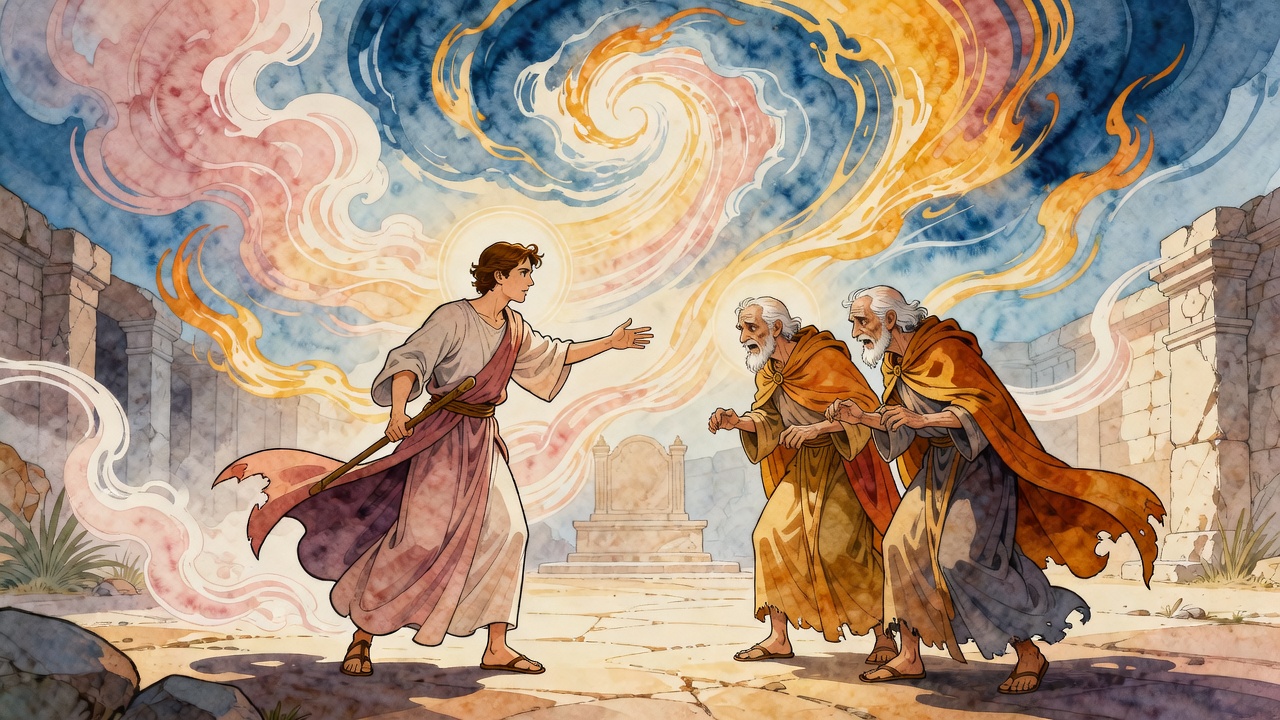
What comes after has a name. The great age. A single age with no evening and no morning to divide it, one unbroken expanse with no end. The righteous are gathered into it. They are given the great light of Paradise, a light that cannot be put out, and they live inside it as inside a shelter that will stand when everything else has fallen away. Their own faces shine. Enoch looked at the righteous of the last day, and each of them burned like the sun.

Then Michael brought the living man back down through the heavens to the world that still had years left in it, and Enoch went to tell his sons what waits at the top and at the edge and at the end.


← All myths
From the tradition

Sources

3 sources

The texts behind this telling. Some cards carry a translation of the source; others are our own retelling of it, and each card says which. Every card links out to the original.

1 Enoch 71:1-141 Enoch

Retold in our words. Read the original at the link below.The Book of Enoch, trans. R. H. Charles, in The Apocrypha and Pseudepigrapha of the Old Testament, vol. 2 (1913) · Public Domain

This is the journey of Enoch, a figure shrouded in mystery and legend. Led by the angel Michael, Enoch climbs through the heavens until he reaches the highest of them all: Aravot.

What does he find there? A palace… but not just any palace. A palace built entirely of crystal.

The Book of Enoch (1 Enoch 71:1-14) paints a breathtaking picture. And between those crystals? Tongues of living fire. Not destructive flames, but vibrant, pulsing light. Rivers of this same living fire encircle the crystal structure, creating a celestial moat of pure energy.

Within this dazzling palace, angels move with purpose and grace. Michael, Enoch’s guide, is there, along with Gabriel and Raphael, familiar figures in the heavenly host. But there’s another presence, even more awe-inspiring: The Ancient of Days.

Who is the Ancient of Days? It's another name for God. The text makes sure we know this because of the description of His hair: "white and pure like wool." This image, so central to this vision, comes directly from the Book of Daniel (Dan. 7:9): "And the hair of His head was like pure wool." This detail, seemingly small, is a crucial identifier.

The Ancient of Days, surrounded by angels, resides in this crystal palace. It's a scene that echoes another powerful image: God walking in the Garden of Eden (Gen. 3:8). Both evoke a sense of divine presence, close and accessible, yet still utterly beyond our comprehension.

What does this crystal palace mean? Is it simply a beautiful image, a poetic way to describe the indescribable? Perhaps. But it also speaks to the structure of the heavens, the order and beauty that underlies all of creation. The crystals, the fire, the angels, and the Ancient of Days – all working in harmony within this magnificent space. It suggests a place of unimaginable beauty, of vibrant energy, and of profound divine presence. A place we can only glimpse through the stories and visions of those who, like Enoch, dared to look up.

Full source
1 Enoch 17:9-16, 67:4-71 Enoch

Retold in our words. Read the original at the link below.The Book of Enoch, trans. R. H. Charles, in The Apocrypha and Pseudepigrapha of the Old Testament, vol. 2 (1913) · Public Domain

It speaks of a place far, far removed from the familiar landscapes of heaven and earth. A sort of cosmic timeout corner.

You’re at the very edge of everything, where the structure of creation seems to fray. There's no comforting dome of sky above, no solid ground beneath your feet. Instead, you're confronted with a terrifying abyss. The air itself is thick with the stench of sulfur, and pillars of unholy fire blaze all around. A desolate wasteland stretches out, utterly devoid of life – no birdsong, no refreshing water. According to Tree of Souls, Howard Schwartz calls this "God's prison."

Chilling. But who exactly gets sent there? What earns you a one-way ticket to this desolate locale?

It’s a place for rebellious stars and Watchers. Specifically, there are seven stars mentioned, burning like gigantic, fiery mountains. They endlessly roll through the abyss. Why? Because they failed to appear at their designated times. They're bound there for ten thousand years, a punishment detailed in sources like 1 Enoch 17:9-16.

And then there are the Watchers.

These are the ones who, as the text says, "deceived mankind into making sacrifices to demons as if they were gods." Think of them as the ultimate influencers gone wrong, leading humanity astray. And those who "went astray with the daughters of men and defiled them" are there too, referencing the story of the Watchers, angels who mingled with humans, a tale we explore more fully elsewhere. This bleak abyss, Schwartz notes, is a kind of proto-hell, holding these transgressors.

The ancient text of 1 Enoch (67:4-7) describes this prison as one of the places shown to Enoch during his celestial journeys. It’s a stark reminder that even in the vastness of creation, there are consequences for our actions, both cosmic and earthly.

So, what are we to make of this terrifying image?

Perhaps it's a cautionary tale, a reminder that even stars and angels aren't exempt from accountability. Maybe it's a glimpse into the divine justice system, a place where cosmic order is maintained, even if it means eternal fiery confinement for some. Or maybe, just maybe, it's a symbol of the internal battles we all face, the struggle to stay on the right path, to avoid the temptations that lead us astray, into our own personal "God's prison."

Full source
2 Enoch 65:6-112 Enoch

Retold in our words. Read the original at the link below.The Book of the Secrets of Enoch, trans. W. R. Morfill, ed. R. H. Charles (1896) · Public Domain

Olam Ha-Ba, the World to Come, is not only about what happens after a person dies. In this tradition, it is what happens after everything dies.

Some accounts say when the entire creation – everything visible and invisible – comes to its ultimate conclusion, each and every one of us will face judgment. Not a pleasant thought, I know. But it's also a moment of profound reckoning. And for those deemed righteous? Well, that's where the story gets truly extraordinary.

These righteous souls, so the story goes, will be gathered together into what's called the "great age," an era unlike anything we can currently fathom. It will be, as 2 Enoch 65:6-11 tells us, eternal. Eternity. But not just endless time as we understand it. No, this "great age" transcends even the very framework of time itself. All time, zman (זמן), will perish. No more years, no more months, no more days. Even the counting of hours will cease. Instead, there will be a single, timeless, unending age.

But what will it be like?

The tradition teaches that those who have been judged righteous will possess the "great indestructible light of Paradise." This light, almost beyond imagining, will serve as the shelter for their eternal residence. A constant, radiant, protective presence. And it gets even more vivid. We are told that the faces of the righteous will shine forth like the sun.

A world illuminated not just by an external source, but by the very essence of goodness radiating from within each person.

Even after existence, as we know it, has ceased, this light of Paradise will continue to shelter the righteous. Paradise, with all its attendant rewards, will endure when everything else is gone. It is a powerful promise, evidence of the enduring nature of goodness and righteousness.

So, what are we left with? A vision of a reality beyond time, beyond our current comprehension, where the righteous are bathed in eternal light. Is it a literal depiction of what awaits us? Or a powerful metaphor for the enduring nature of goodness and the ultimate triumph of the spirit?

Perhaps, it's both. Perhaps it's a reminder that even in the face of ultimate endings, there is a promise of something more, something eternal, something… radiant.

Full source