Retold in our words. Read the original at the link below.Townsend 1989 translation of Midrash Tanhuma, S. Buber Recension · CC-BY
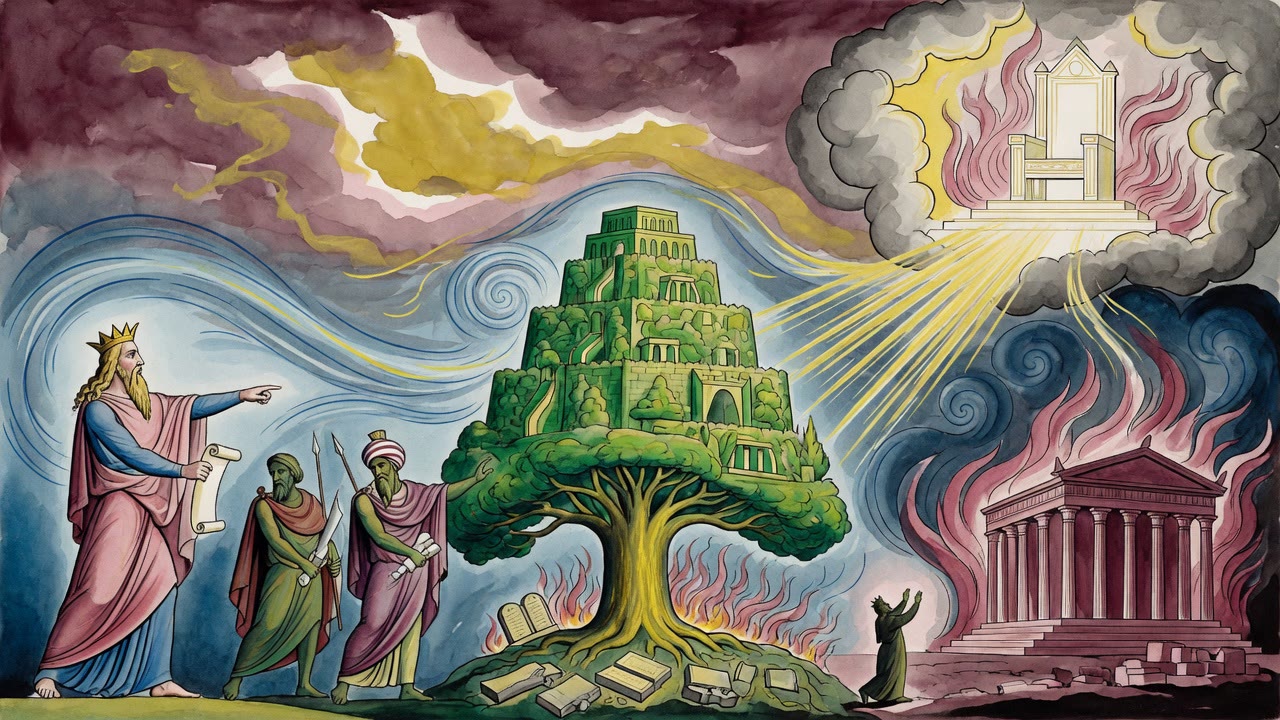
R. Isaac began [his discourse] (with Eccl. 7:23), “All this I tested with wisdom; I thought I could fathom it, but it eludes me.” It is written (in I Kings 5:9), “So God gave Solomon wisdom and discernment in great measure, with understanding...” R. Johanan said a parable in the name of R. Simeon ben Yehozedek, “This is comparable to a king who had a friend, and the king loved him exceedingly. The king said to him, ‘Ask me anything you want and I will give it to you.’ And that friend was very wise. He said [to himself], ‘If I ask him to make me a duke, it [alone] will come to me.” Rather I will ask him for something that is attached to all the advantages.’ Immediately he answered and said to the king, ‘Since you asked that I should ask for something in front of you, I am asking from you that you marry off your daughter to me.’ The king said, ‘By your life, I want this. Behold my daughter is [given] into your house.’ So [too] at the time that the Holy One, blessed be He, said to Solomon (in I Kings 3:5), ‘Ask what I should give to you,’ Solomon said [to himself], ‘What shall I ask; If I ask for silver and gold, it [alone] will come to me. If I ask for the monarchy, it [alone] will come to me. Rather I will ask for something that is attached to all the things.’ Immediately he said in front of the Holy One, blessed be He, ‘Master of the World, I only request from you wisdom.’ [Then] the Holy One, blessed be He, said to him, ‘You have asked well in asking for wisdom, as all the things are attached to it. Silver and gold are attached to it, as stated (in Prov. 8:19), “My fruit is better than gold, fine gold, and my produce than choice silver.” Monarchy is attached to it, as stated (in Prov. 8:15), “Through me kings reign.” Behold everything is given to you.’” Hence it is written (in I Kings 5:9), “So God gave Solomon wisdom,” as He gave him wisdom as a gift. (I (Kings 5:9), cont.) “As vast as the sand of the sea.” The rabbis say, “[This] teaches that He gave him as much wisdom as all Israel, who are compared to the sand, as stated (in Hos. 2:1), ‘The number of the Children of Israel shall be like that of the sands of the sea.’ How is this? The sages have knowledge, the elders of knowledge and the children have knowledge, but they are different, one from the other. And [so] if all of Israel would be on one side and Solomon on the other side, his wisdom would be greater than theirs.” R. Levi said, “Just as sand is a wall and a fence for [the sea], that it not go out and flood the world; so that his wisdom stand in front of his [evil] impulse, that he not sin.” The proverb says, “If you lack knowledge, what have you gained? If you have gained knowledge, what do you lack?” Like (in Prov. 25:28) “A city broken into with no walls,” so “is a person who does not restrain his spirit.” (I (Kings 5:10):) “Now Solomon's wisdom surpassed the wisdom of all the people of the East.” And what was the wisdom of the peoples of the East? [In that] they knew about astrology and were astute at divination (from birds). Rabban Simeon ben Gamaliel said, “I like three things about the people of the East: They do not kiss on the mouth, but only on the hand; When they cut meat, they cut only with a knife and not on the back of the hand; And when they take counsel, they take it only in the field.
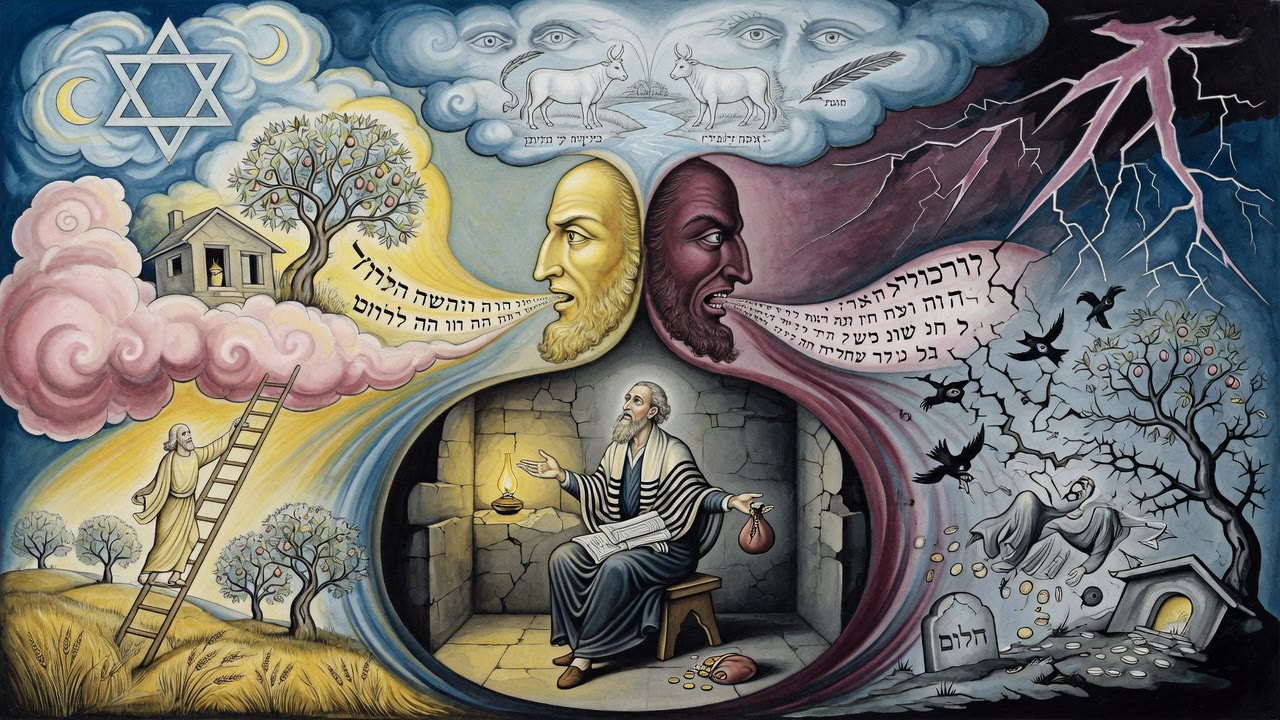
It is therefore stated (in Gen. 31:4), ‘So Jacob sent and called Rachel and Leah to the field where his flock was.’” (I (Kings 5:10), cont.) “From all the wisdom of Egypt.” What was the wisdom of Egypt? You find that when Solomon wanted to build the Temple, he sent to Pharaoh Necho and said to him, “Send me craftsmen [to work] for a wage, for I want to build the Temple.” What did Pharaoh do? He gathered all his astrologers and said to them, “Foresee which people are going to die this year and send them to him. So that I can come to him with a grievance and say to him, ‘Give me the value of the craftsmen that you killed.’” When they came to Solomon, he foresaw through the holy spirit that they would die during that year. He [therefore] gave them shrouds and sent them [back] to [Pharaoh]. He sent to him, saying, “Do you not have shrouds to bury your dead? Here they are for you with their shrouds. Go and bury your dead.” Hence it is stated, (I (Kings 5:10), cont.) “from all the wisdom of Egypt.” (I (Kings 5:11):) “And he was wiser than any man, than Ethan the Ezrahite, and Heman, Chalkol, and Darda the sons of Mahol.” “Wiser than any man (literally, than all of Adam),” than the first Adam. And what was his wisdom? You find that, when the Holy One, blessed be He, wanted to create the first Adam, he consulted with the ministering angels. He said to them (in Gen. 1:26), “Let us make humankind (Adam) in Our image.” They said to him (in Ps. 8:5), “What is a human that You are mindful of him?” He said to them, “This Adam that I want to create Adam shall have wisdom greater than yours.” What did He do? He gathered all cattle, wild beasts, and fowl pass before them. He said to them, “What are the names of these [beings]?” They, however, did not know. When He had created Adam, He made them pass before him. He said to him, “What are the names of these [beings]?” He said, “It is fitting to call this one an ox, this one a lion, this one a horse, [...]” and so on for all of them. It is so stated (in Gen. 2:20), “So Adam recited names for all the cattle.” He said to him, “And you, what is your name?” Adam said to him, “Adam, because I was created out of the ground (adamah).” The Holy One, blessed be He, said to him, “I, what is My name?” He said to him, “The Lord, because you are Lord over all creatures,” namely as written (in Is. 42:8), “I am the Lord, that is My name,” which the first Adam gave me. “That is my name,” the one which I have agreed to [for use] between Me and My creatures. (I (Kings 5:11), cont.) “[Wiser] than Ethan the Ezrahite.” This is Abraham, of whom it is stated (in Ps. 89:1), “A maskil (a psalm of erudition) of Ethan the Ezrahite.” (I (Kings 5:11), cont.) “And Heman (rt. 'mn).” This is Moses, of whom it is stated (in Numb. 12:7 with reference to Moses), “he is trusted (rt. 'mn) in all My house.” (I (Kings 5:11), cont.) “Calcol (klkl).” This is Joseph, of whom it is stated (in Gen. 47:12), “And joseph sustained (rt. klkl) [his father and his brothers].” The Egyptians said, “Has this slave come to rule over us for any reason but because of his wisdom?” What did they do to him? They brought seventy tablets and wrote on them in seventy tongues. Then when they cast them before him. He read each and every one in its own tongue. And not only that, but he spoke in the holy tongue, which they did not have the ability to understand, as stated (in Ps. 81:6), “He made it a statute upon Joseph, when he went out over the land of Egypt. I hear a language I had not known.” (I (Kings 5:11), cont.) “Darda (drd')].” This is the generation (dor) of the desert, which had knowledge (de'ah). (I (Kings 5:11), cont.) “The children of Mahol,” i.e., the Children of Israel whom the Divine Presence forgave (rt. mhl) for the deed of the calf. (I (Kings 5:12):) “Moreover he composed three thousand proverbs.” R. Samuel bar Nahman said, “We have gone over all of the scriptures and have found that Solomon only uttered prophetically close to eight hundred verses. Then what is meant by three thousand? [This number] teaches that each and every verse that he spoke contains two [or] three interpretations, just as it says (in Prov. 25:12), ‘Like an earring of gold, a necklace of fine gold, [so is a wise reprover to a listening ear].’” But the rabbis say, “Every verse has three thousand proverbs, while each and every proverb has a thousand and five interpretations.” [(I (Kings 5:12), cont.) “And his song numbered a thousand and five.”] “Songs” is not written here, but “song,” the song of the proverb. (I (Kings 5:13):) “And he spoke with/concerning ('al) the trees.” Is it possible that a person would speak with the trees? Solomon merely said, “For what reason is a leper cleansed through the tallest among the trees (the cedar) and through the lowest of the low (the hyssop); through (according to Lev. 14:4) cedar wood, [crimson stuff,] and hyssop?’ It is simply because he had exalted himself like the cedar, that he was stricken with leprosy. As soon as he humbled himself like the hyssop, he was therefore cured through hyssop”. (I (Kings 5:13), cont.) “He also spoke with/concerning ('al) the cattle and the fowl.” Is it possible that [a person] would speak with cattle and with fowl? Rather [the passage is concerned with] why the cattle are permitted [as food] with [the cutting of] two organs (the gullet and the windpipe); but the fowl, with [the cutting of] one organ (i.e., the gullet or the windpipe). Because cattle were created from the dry land, as stated (in Gen. 1:14), “Let the earth bring forth the living creatures after its kind, cattle, creeping things,” they are permitted with two organs. But in regard to fowl, because they were created from the mud, they were permitted with one organ. As one text says [they came] from the dry land, while another text says [they came] from the sea. [The text stating fowls came] from the dry land is what is written (in Gen. 2:19), “So from the ground the Lord God formed every beast of the field and every fowl of the heavens.” The other text says (in Gen. 1:20), “Let the waters swarm with swarms of living creatures and the fowl fly above the earth.” Bar Qappara said, “They were created from the mud which is in the sea.” R. Abbin said the name of R. Jose the Galilean said, “Nevertheless, the feet of the cock resemble the scaly skin of the fish.” (I (Kings 5:13), cont.) “And with/concerning ('al) the creeping things.” Is it possible that one would speak with a creeping thing? Solomon simply said, “What is the reason that in the case of the eight swarming creatures which are in the Torah, one is culpable for hunting or injuring them (on the Sabbath); but in the case of the rest of the swarming creatures, one is exempt? For the reason that they (i.e. the former) have skins.” (I (Kings 5:13) cont.) “And with/concerning ('al) the fish.” Is it possible that one would so speak? Solomon merely said, “For what reason do cattle, beasts, and birds require ritual slaughtering, while fish do not require ritual slaughtering?” Jacob the man of Kefar Gibburayya taught in Tyre with respect to fish, that they do require ritual slaughtering. When R. Haggai heard, he sent for him to come. He said to him, “On what basis did you decide this?” He said to him, “From here (in Gen. 1:20), ‘Let the waters swarm with swarms of living creatures, and let the fowl fly.’ Just as fowl require ritual slaughtering, so do the fish require ritual slaughtering.” He said to them (i.e., those standing by), “Lay him down to receive lashes.” He said to him, “Shall a person who speaks words of Torah be lashed?” He said to him, “You did not decide [the law] well.” He said to him, “On what basis?” He said to him, “From here (in Numb. 11:22), ‘Are there enough flocks and herds to slaughter for them; are there enough fish in the sea to gather for them?’ The former require ritual slaughtering, while the latter [is taken] through gathering.” He said to him, “Give [me] your beating, as it is good for retention.” And again did Jacob the man of Kefar Gibburayya teach in Tyre, [this time] with respect to an Israelite man, who came upon a foreign woman and had her bear him a son, that he should be circumcised on the Sabbath. When R. Haggai heard, he sent for him to come. He said to him, “On what basis do you hold this?” He said to him, “[From this which is written] (in Numb. 1:18) ‘then they registered their lineages according to their families according to the house of their fathers.’” He said to them (i.e., those standing by), “Lay him down to receive lashes.” He said to him, “Shall a person who speaks words of Torah be lashed?” He said to him, “You did not decide [the law] well.” He said to him, “Where is it shown?” He said to him, “Lie down and listen.” He said to him, “If one of the gentiles came to you in order to become a proselyte on condition that you circumcise him on the Sabbath day or on the Day of Atonement, would you profane the Sabbath on account of him or not?” He said to him, “One does not profane the Sabbath or the Day of Atonement for him but only for the son of an Israelite woman.” He said to him, “On what basis do you hold this?” He said to him (in Ezra 10:3), “So now let us make a covenant with our God to put away all (foreign) wives and (anyone] born of them […].” He said to him, “Would you lash me on the basis of [a non-Mosaic text]?” He said to him, “It is written (ibid.), ‘let it be done [according to] the Torah.’” He said to him, “From which [piece of] Torah?” He said to him, “From that of R. Johanan, when he said in the name of R. Simeon ben Johay, ‘It is written (in Deut. 7:3), “You shall not intermarry with them; do not give your daughters to their sons.” Why? (Deut. 7:4:) “Because they will turn your children away from following me.” Your child that comes from an Israelite woman is called "your child"; but that which comes from a foreign woman is called, not "your child," but "her child,” as stated (in Gen. 21:13), “And I will also make the son of the maidservant into a nation.”’" He said to him, “Give [me] your beating, as it is good for retention.” Solomon said, “About all these things I have knowledge; but in the case of the parashah on the red heifer, I have investigated it, inquired into it, and examined it. Still (at the end of the verse in Eccl. 7:23), ‘I thought I could fathom it, but it eludes me.’” (Eccl. 8:1:) “Who is like the wise person, and who knows the explanation of a saying?” (Eccl. 8:1:) Who is like the wise person? This is the Holy One, blessed be He, since it is stated about Him (in Prov. 3:19), “Through wisdom the Lord founded the earth.” (Eccl. 8:1, cont.) “And who knows the explanation of a saying?” This [also] is the Holy One, blessed be He, who explained the Torah for Moses. (Eccl. 8:1, cont.) “A person's wisdom lights up his face.” R. Judan said, “Great is the power of the prophets, as they [are able to] compare the Almighty above to the form of a man, as stated (Daniel 8:16), ‘And I heard the voice of a man.’” And R. Judah bar Simon says [the proof] is from here (in (Ezekiel 1:2)6), “and on the image of a chair was an image of a man.” (Eccl. 8:1, cont.) “And the radiance ('oz) of his face is changed (for the better),” in that he changes the principle of judgment into a principle of mercy with respect to Israel. R. Joshua of Sikhnin said in the name of R. Levi, “Over each and every word that the Holy One, blessed be He, spoke to Moses, He spoke to him of its [related] uncleanness and of its purification. When he made known the Parashah (starting with Lev. 21:1), ‘Speak (Emor) unto the priests,’ [Moses] said to him, ‘Master of the world, if a priest becomes unclean (through touching a human corpse), what means is there for his purification?’ When [the Holy One, blessed be He,] did not answer, at that time the face of Moses turned yellow (with shame). Then when the Holy One, blessed be He, reached the parashah on the [red] heifer, the Holy One, blessed be He, said to him, ‘Moses, [when I gave you] that saying which I spoke to you (in Lev. 21:1), “Go, speak unto the priests,” then you said to me, “If one becomes unclean, what means will there be for his purification,” I did not answer [you at that time. Now] this is his purification (in Numb. 19:17), “They shall take some ashes from the burning of the sin offering (i.e., the red heifer).”‘”

 Click for full size