Parshat Bereshit6 min read

Eve's Night Vision of the Blood Between Her Sons

Eve wakes screaming from a dream of Abel's blood, and every step Adam takes to keep his sons apart only walks them toward the first murder.

Curated by Arthur · Told by Maggid ·
Table of Contents
  1. The Blood Poured Into a Brother's Mouth
  2. Adam Reads the Dream Like a Verdict
  3. A Father Tries to Outrun a Prophecy
  4. Michael Brings the Word That Cannot Be Undone
  5. What the Earth Drank in the End

Eve came awake with a cry already in her throat, her hand closing on nothing. The dark tent smelled of sheep and ash. Beside her, Adam stirred. She was shaking, and when she spoke her voice would not hold steady.
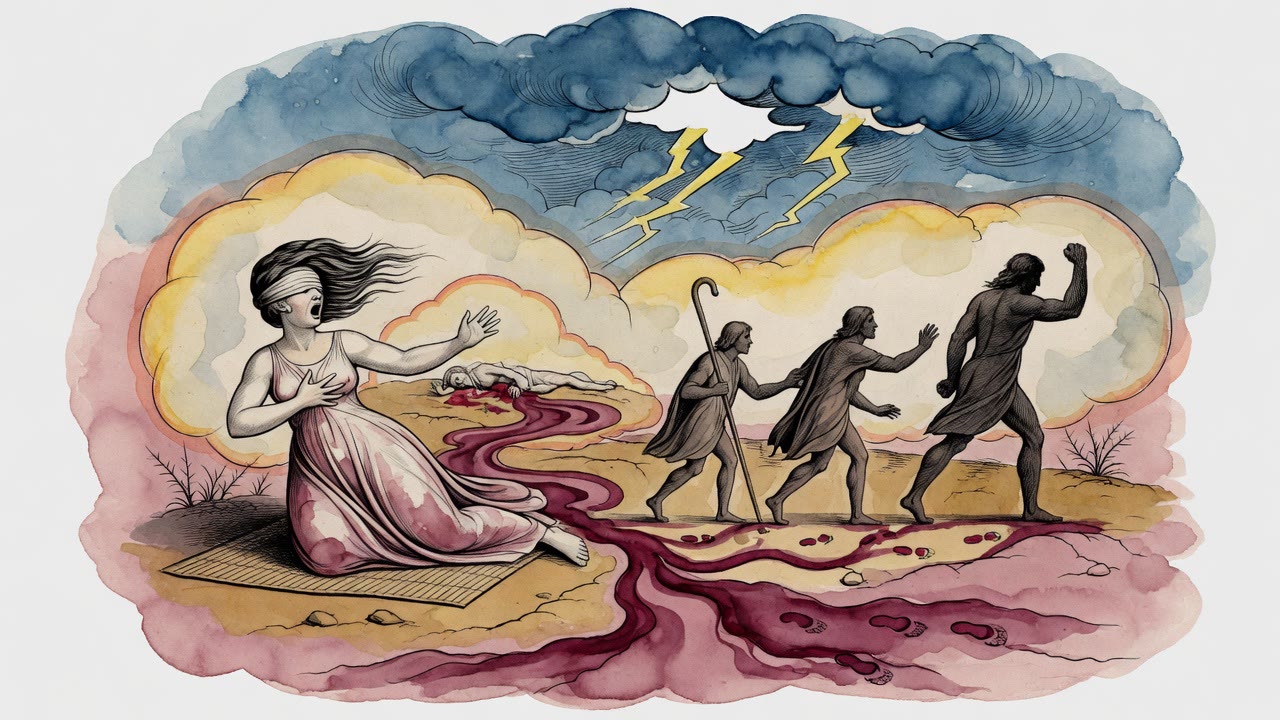
"I saw it," she said. "I saw the blood."

Adam sat up. Outside, the two boys slept where young men sleep, apart from their parents now, Cain in the field he worked and Abel among the folds. Eve gripped her husband's arm and told him what the night had shown her.

The Blood Poured Into a Brother's Mouth

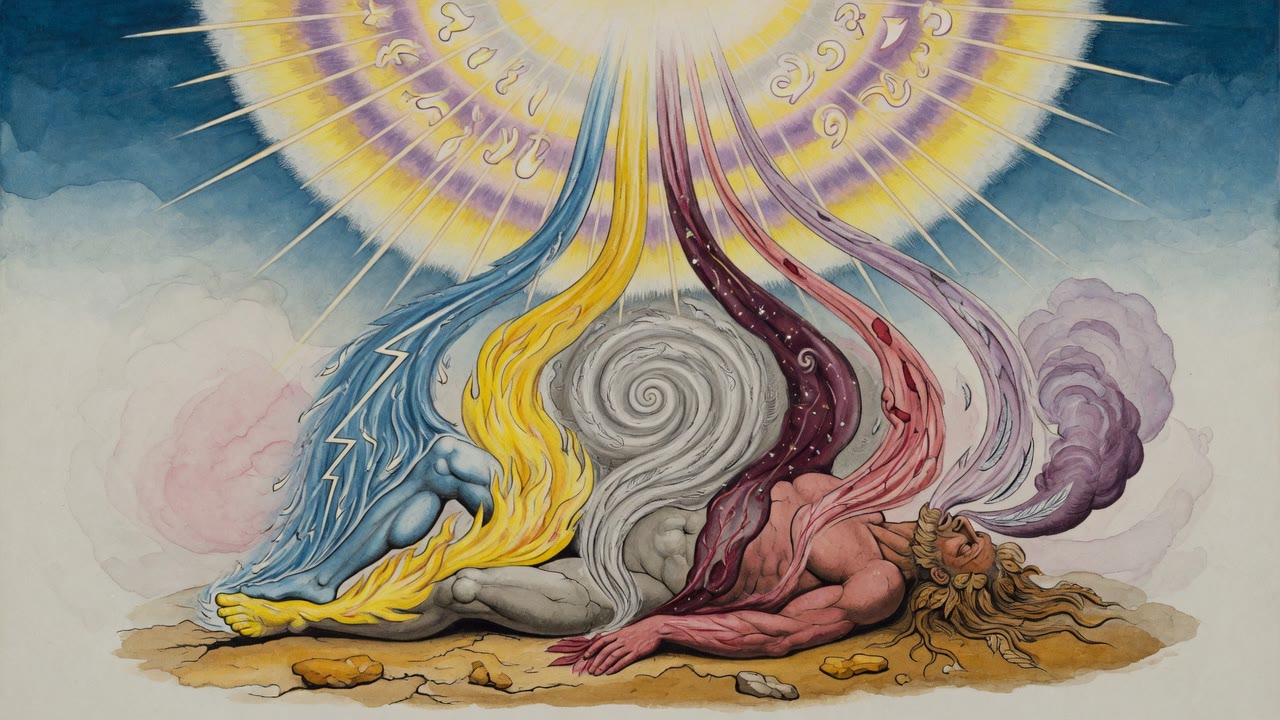
In the vision she had seen Abel's blood, bright and living, running out of him and into the mouth of his brother. Cain drank it. He drank without mercy, his throat working, his eyes fixed and empty. Abel begged him. "Leave a little," Abel pleaded in the dream, his voice growing thin. "Leave me a little." Cain did not leave a little. He drank his brother completely, down to the last of him, until there was nothing left to beg.

Eve pressed the heels of her hands against her eyes as if she could push the picture back out. The taste of the dream was still in her own mouth. She had carried both of these men in her body. She had felt the first of them kick beneath her ribs in a world that had no other mothers yet. And now one of them had swallowed the other and licked his lips.

Adam Reads the Dream Like a Verdict

Adam did not tell her she was foolish. He did not say it was only a dream and reach to pull her back down to sleep. He had walked with God in a garden and lost it. He knew that the unseen could be more real than the ground under his feet, and he understood at once what the blood meant.

"Cain means to kill Abel," he said.

The words sat between them in the dark. Eve had hoped he would argue. Instead he was already moving, already reaching for the only thing a father could reach for.

"We will keep them apart," Adam said. "Let each of them live in a separate place. We will not let them stand in the same field at the same hour. We will put distance between them, and the distance will keep the dream from coming true."

So it was decided before morning. Adam would not breathe a word of the vision to the boys. He would only divide their work and their ground, and call it nothing more than the ordinary parting of grown sons.

A Father Tries to Outrun a Prophecy

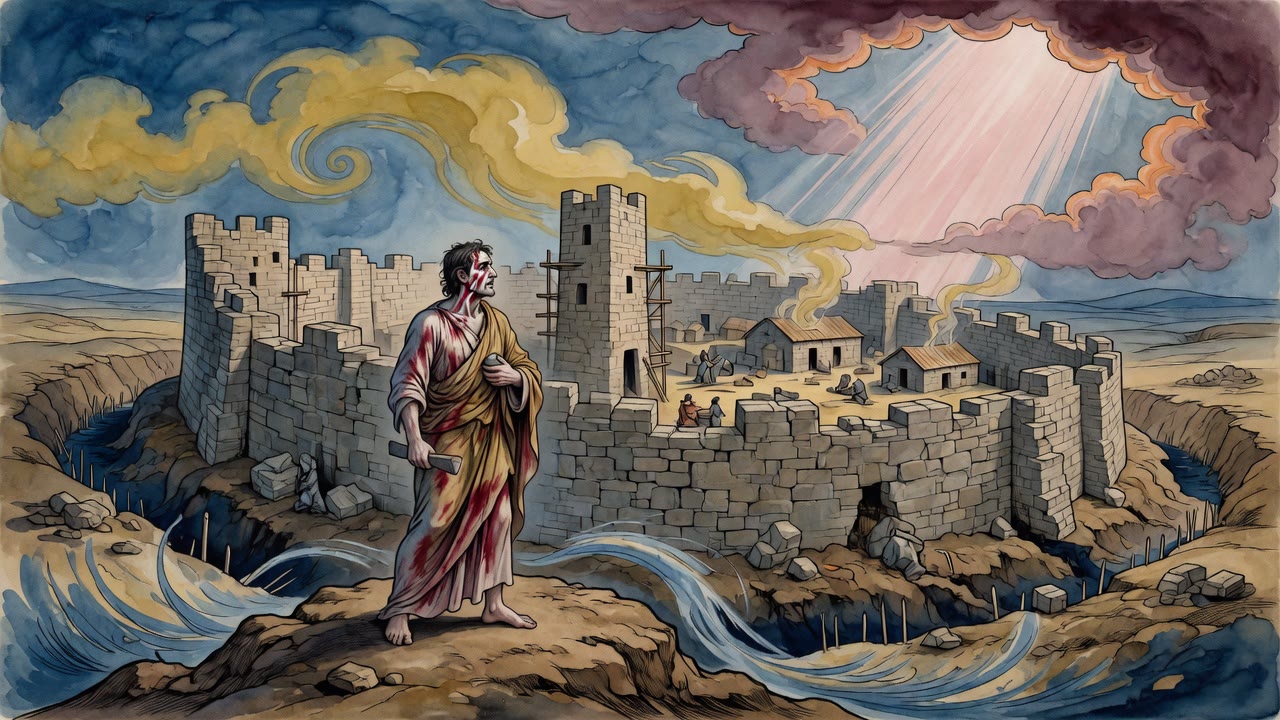
At first light Adam went out to them. He sent Abel deeper into the high pastures with the flocks, days of walking from the tilled land. He set Cain to his furrows and his harvest and told him the herds would foul the crops, that it was better, cleaner, for each to keep to his own portion of the earth. The brothers obeyed. They did not know they were being held apart by a dream their mother could not stop seeing when she closed her eyes.

For a while it seemed enough. The seasons turned. Smoke rose from two altars in two places, and the family that began the world went on. But the poison the serpent had once poured upon the fruit, the lust and the wrath that had entered the first parents in a garden, had not stayed in the garden. It had come down out of Eden in their blood, and it was awake now in the elder son. A field is wide, but it is not wider than a man's anger. Distance cannot unwrite what is already written into a person.

Michael Brings the Word That Cannot Be Undone

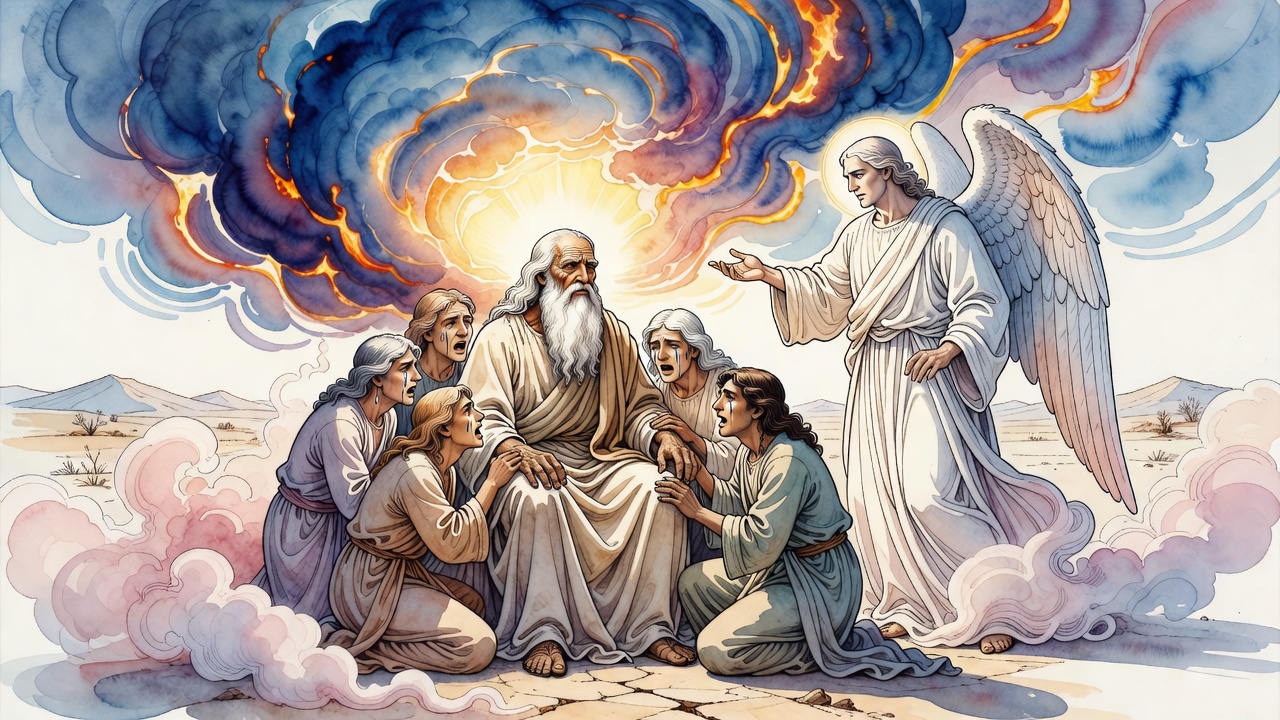
While Adam still believed separation might save them, God sent the archangel Michael down to him, the same Michael whose trumpet had once summoned all creation to hear the judgment in Eden. The angel found Adam and gave him a word that took the last of his hope.

"Do not reveal the secret of the vision to your son Cain," Michael said. "For Cain is a son of wrath, and he will kill Abel his brother. It is not yours to prevent. The thing your wife saw in the night is the thing that will be."

Adam stood and received it the way a man receives a sentence he has no power to appeal. Everything he had done, the sending away, the dividing of the ground, the careful silence, none of it had changed the road. It had only made him a man walking beside his son toward a grave he could see and could not move.

But Michael did not leave him with only the dread. There was a second word folded inside the first. God would give Adam another son in Abel's place, a son named Seth, who would bear the divine image as Abel had, and through whom many hidden things would one day be revealed. The line would not end in a field full of blood. It would go on through a child not yet conceived.

What the Earth Drank in the End

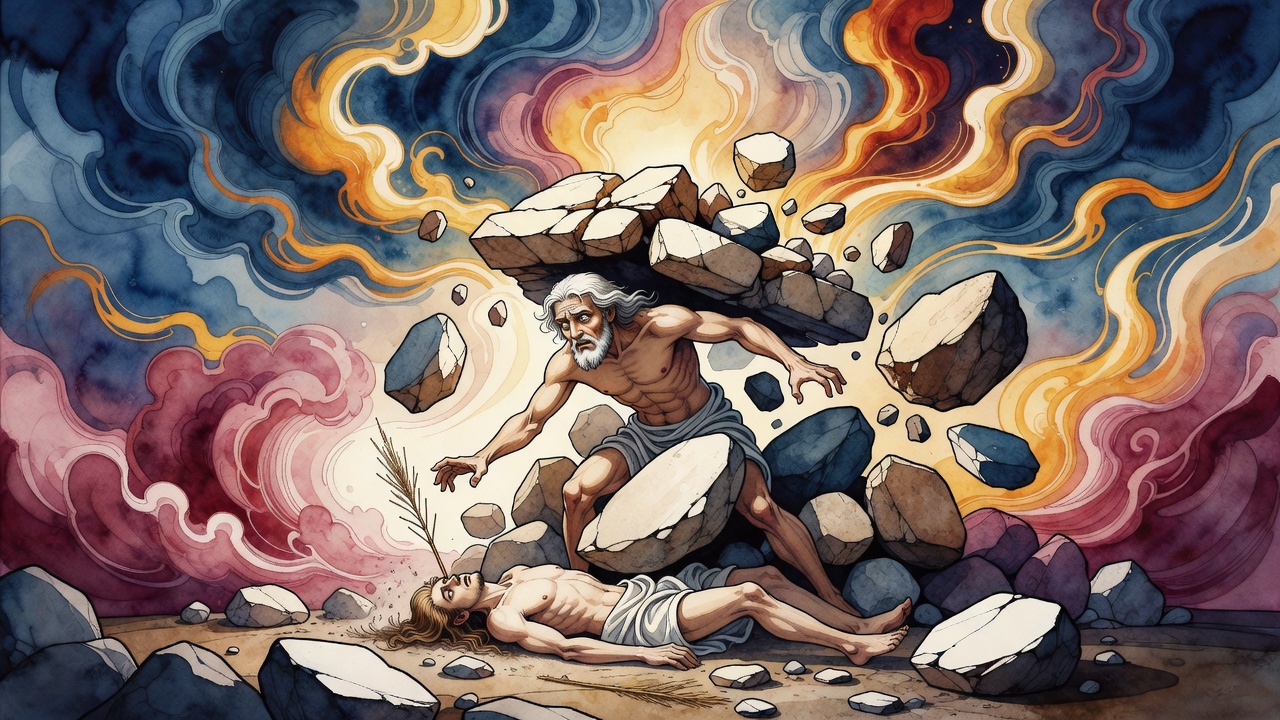
Then came the day the dream had always been pointing toward. The brothers met, as brothers do, the careful distance collapsing in a single ordinary morning. Cain rose against Abel where no parent stood between them. He struck, and Abel fell, and the blood that Eve had watched flow in her sleep flowed for real into the ground that her husband tilled. The earth opened its mouth and drank it down. The dream had only changed one detail. It was not Cain's throat that swallowed Abel. It was the dirt.

Far off, Eve already knew. She had known since the night she woke screaming. When the word reached the tent, she did not need to ask whose blood it was. She and Adam grieved together for the son they had tried to hide from his brother, and they waited, in the long ache that followed, for the other son God had promised, the one who would carry the image forward out of the wreckage of the first family on earth.


← All myths
From the tradition

Sources

2 sources

The texts this telling draws on, in full. Open a card to read inline, or expand it for a wider, quieter read.

Penitence of Adam 22:2:1-23:3:2Life of Adam and Eve

The story goes that one night, long after leaving Eden when Cain and Abel were young men, Eve was shaken awake by a horrific vision. As The Penitence of Adam (22:2:1-23:3:2) tells it, she recounts the dream to Adam: "While I was sleeping, I saw in a night vision that the blood of our son Abel was entering the mouth of our son Cain. Cain drank his blood without mercy. Abel beseeched him to leave a little, but he drank his blood completely."

Can you imagine the horror? Eve sees Cain, not just harming Abel, but consuming him, drinking his very life force. The image is brutal, primal.

Adam, upon hearing this, immediately understands. "Surely this means that Cain must intend to kill Abel," he says. His response is one of immediate, desperate action. He suggests separation, hoping to avert the impending tragedy. "Come, let us keep them apart. Let each of them live in a separate place." So, he commands his sons to go their separate ways.

Even Adam's efforts are not enough to change what is already destined.

According to the story, God then sends the angel Michael to Adam with a crucial message. Adam is not to reveal the details of Eve's vision to Cain. Why? Because, the message explains, "Cain is a son of wrath who will kill Abel, his brother." In other words, it's already written.

But there's also a promise of hope: God assures Adam that he will be given another son, Seth, to replace Abel. And Seth, crucially, "will bear my image, and through him many mysteries will be revealed."

Adam, after receiving this divine message, shares it only with Eve. Together, they grieve, knowing the fate that awaits Abel. Dreams and visions in Jewish tradition, as Rabbi Schwartz points out in Tree of Souls, are often understood to be prophetic. Eve's "night vision" is no exception. It’s a window into a dark future, a premonition of fratricide.

The story, as we find it in Penitence of Adam, paints a vivid picture of Cain's crime, portraying it in the stark and primitive terms of drinking his victim's blood. It's a disturbing image, a reflection of the raw, untamed emotions that can lead to such violence.

The promise of Seth, and the description of his special powers, suggests to some scholars a connection to ancient Jewish mystical traditions, where Seth plays a central role. The Apocalypse of Adam, for example, features Adam passing down secret esoteric knowledge to Seth. This makes you wonder: is this story a simple tale of sibling rivalry, or does it hold deeper, more esoteric meanings?

Eve's terrible dream and the events that follow offer a powerful meditation on fate, free will, and the enduring hope for renewal even in the face of profound loss. Is it possible to change a future that has been foretold? What role do our dreams play in shaping our reality? Food for thought, isn't it?

Full source
Apocalypse of Moses 18-23Life of Adam and Eve

The serpent wept for her. That was the cruelest part. It pretended to grieve for her ignorance while plotting her destruction.

"May God live!" the serpent said to Eve, its voice dripping with false compassion. "I am grieved on your account, for I would not have you remain ignorant. Come here. Listen to me. Eat, and understand the true value of that tree."

Eve hesitated. "I fear God will be angry with me, as He warned us."

"Do not fear," the serpent whispered. "As soon as you eat, you will become like God -- you will know good and evil (Genesis 3:5). God knows this. That is why He forbade it. He was jealous of what you might become."

Still Eve resisted. The serpent pressed harder: "Look at the plant. See its glory." But she would not reach for it. So the serpent changed tactics. "Come here. Follow me, and I will give it to you."

Eve followed. The serpent walked a short distance, then turned and said: "I have changed my mind. I will not give you the fruit unless you swear an oath -- swear that you will also give it to your husband."

Eve swore. By the throne of the Master. By the Cherubim. By the Tree of Life itself. She would share the fruit with Adam.

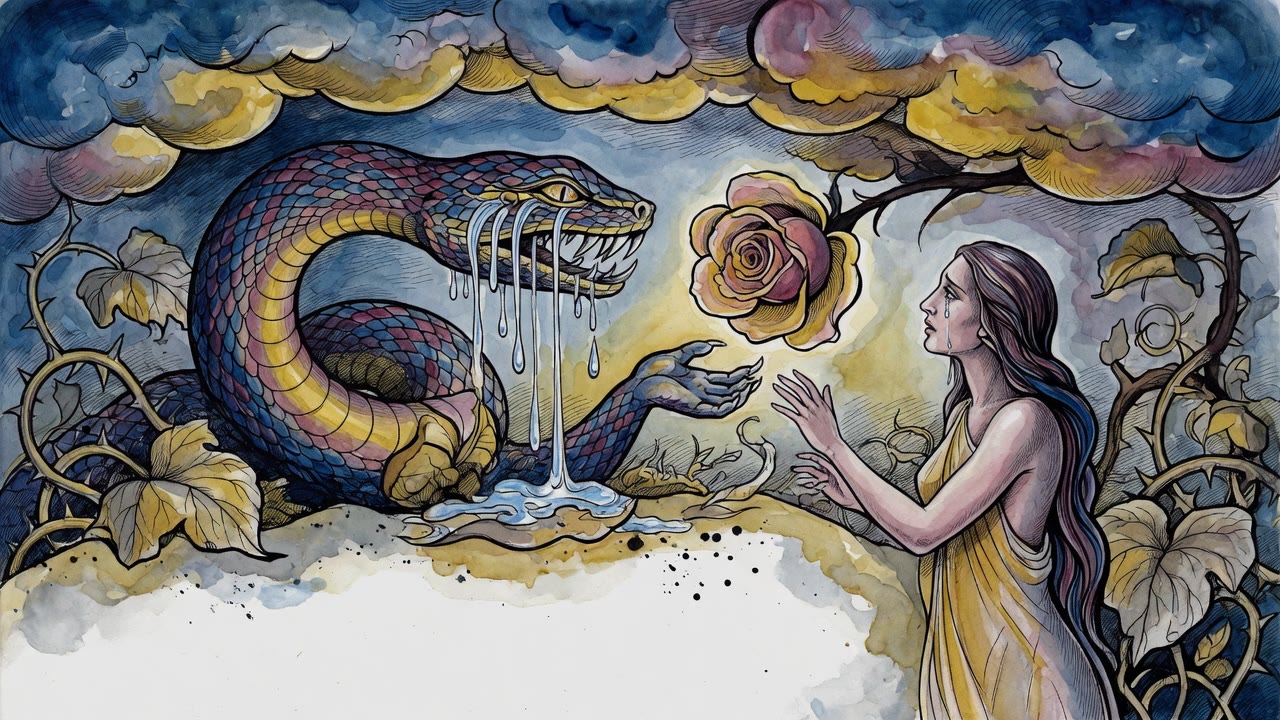
The serpent took the oath and poured upon the fruit the poison of its wickedness -- lust, the root and beginning of every sin. It bent the branch down to the earth. Eve took the fruit. She ate.

In that very hour, her eyes were opened. She knew instantly that she was stripped bare of the righteousness she had worn like a garment. The glory was gone. She wept. "Why have you done this to me? You have stolen the glory I was clothed in!"

But the serpent was already gone. It had descended from the tree and vanished, leaving Eve naked and alone in her portion of Paradise.

She searched desperately for leaves to cover her shame. There were none. The moment she had eaten, every tree in her territory shed its leaves -- every tree except the fig. From the fig tree she took leaves and made herself a covering. The very tree whose fruit she had eaten now clothed her shame (Genesis 3:7).

Then Eve called out: "Adam, Adam, where are you? Come to me -- I will show you a great secret!"

When Adam came, the Adversary spoke through her. Eve opened her mouth and the words of transgression poured out -- words that would bring them down from their glory. "Come, my lord Adam, eat of the fruit of the tree God told us not to eat, and you will be like God."

Adam said: "I fear God will be angry."

"Do not fear," Eve echoed the serpent's lie. "As soon as you eat, you will know good and evil."

He ate. His eyes opened. He saw his own nakedness. And his first words to Eve were devastating: "O wicked woman! What have I done to you, that you have stripped me of the glory of God?"

In that same hour, the archangel Michael blew his trumpet. The call rang across all of creation: "Thus says the Lord -- come with me to Paradise and hear the judgment I will pronounce upon Adam."

God appeared in Paradise, mounted on the chariot of His Cherubim, with angels going before Him singing hymns. At the sound of His approach, every plant in Paradise burst into flower -- as if the garden itself still loved its Maker, even as its guardians had failed Him. God's throne was set beside the Tree of Life.

"Adam, where are you?" God called. "Can a house hide from the one who built it?" (Genesis 3:9)

Adam answered from his hiding place: "I was not trying to hide from You, Lord. I was afraid because I am naked. I was ashamed before Your power."

"Who told you that you are naked," God said, "unless you have broken the commandment I gave you to keep?"

Adam remembered Eve's promise -- "I will make you safe before God" -- and turned to her: "Why have you done this?"

And Eve, stripped of glory, stripped of lies, finally spoke the truth: "The serpent deceived me" (Genesis 3:13).

Full source