5 min read

The Farmer Who Rejoiced Over a Forgotten Sheaf

A pious man left one sheaf in the field and sent two bulls as thanks. His son asked why accident outranked every careful commandment he kept.

Curated by Arthur · Told by Maggid ·
Table of Contents
  1. One Sheaf Left Behind
  2. The Measuring Rule
  3. Canaan Steps Aside
  4. From Days to Days
  5. Two Bulls and a Name
The Farmer Who Rejoiced Over a Forgotten Sheaf Click for full size

One Sheaf Left Behind

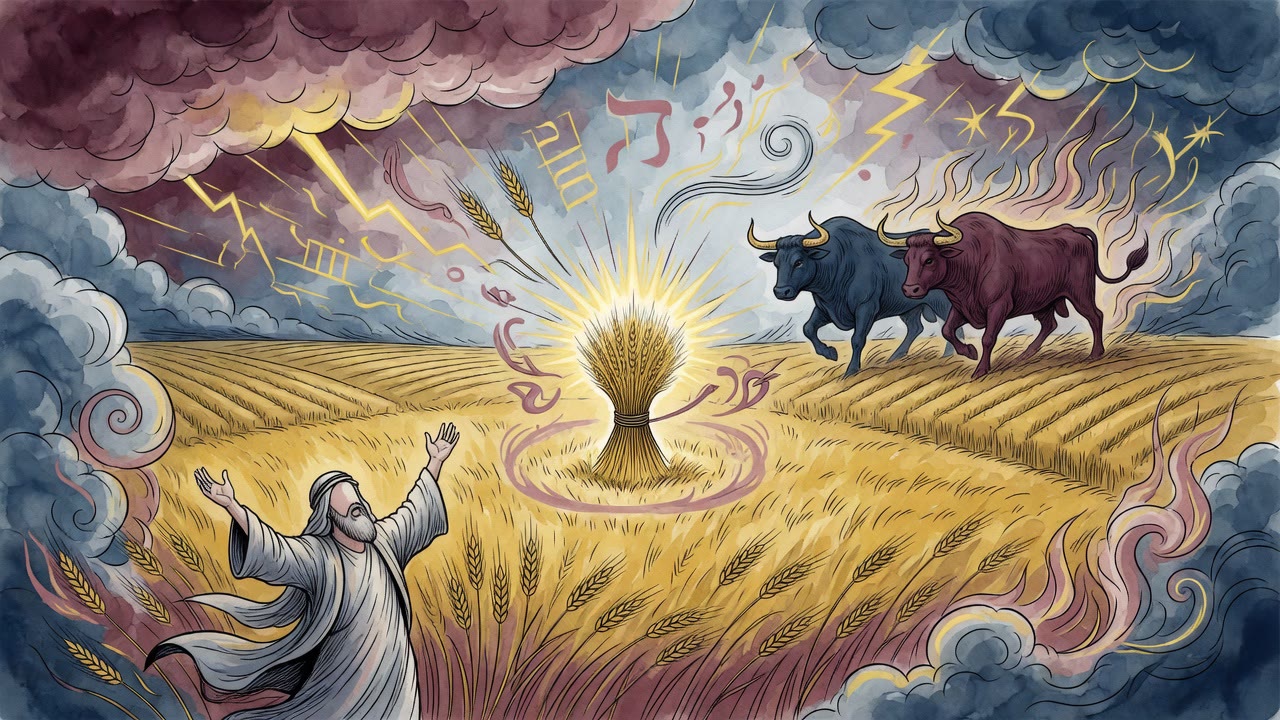
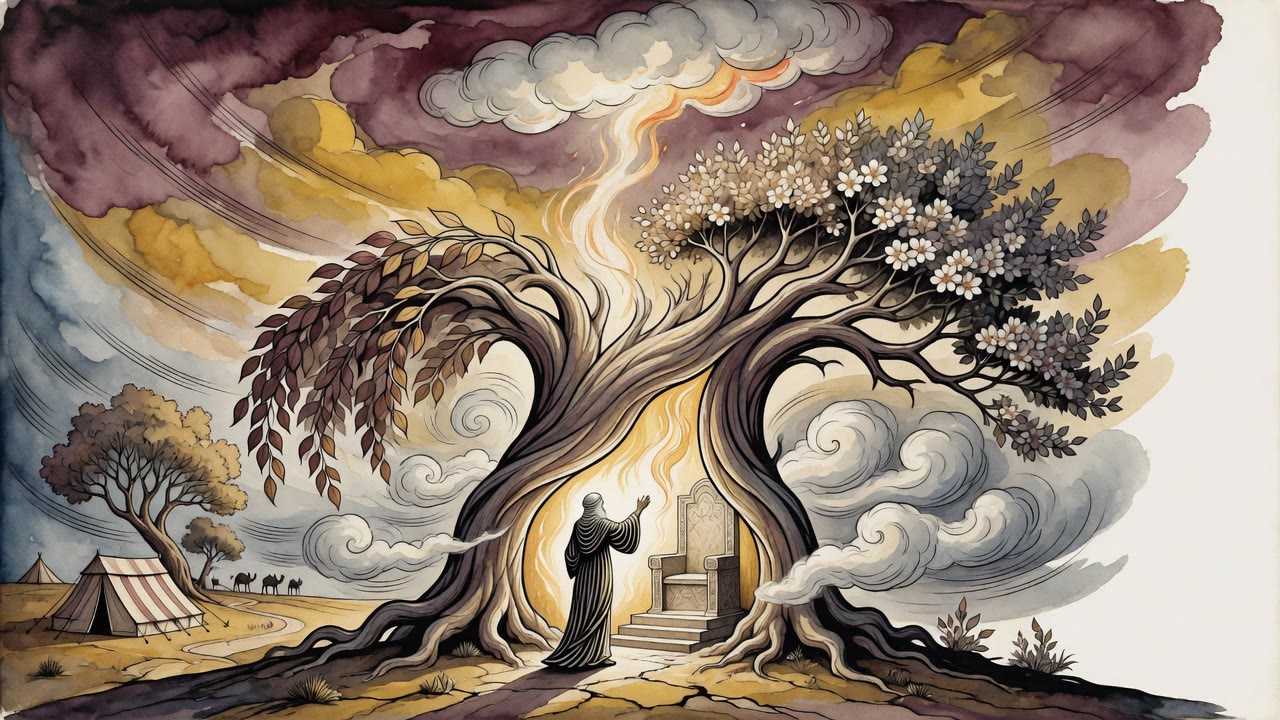
The pious farmer finished his harvest under a sky that had finally gone soft. Bundles stood in rows. The poor would come later for corners and gleanings already marked. Only afterward did he learn he had left a single sheaf farther out than he meant, a forgotten weight of grain waiting where no plan had put it. Joy took him so hard he sent his son to offer two bulls in thanksgiving. The son stared as if his father had lost the plot of ordinary piety. Why celebrate an accident more than the deliberate commandments a man keeps every ordinary day?

The father answered with a reframe that still stings. Every other commandment we fulfill with full awareness. This one reached us without our knowing. Had we noticed the sheaf, we might have gone back for it, and the commandment of the forgotten sheaf would never have landed in our hands at all (Deuteronomy 24:19). Heaven had forced a gift through their forgetfulness. The bulls were not payment for cleverness. They were thanks for being drafted.

The Measuring Rule

From this the sages draw a double edge. If a man earns blessing for good he did by accident, then good done on purpose earns far more. If a person is held for a sin he stumbled into, then deliberate sin weighs heavier still. The woman whose husband annulled her vow still needs atonement though she never knew she was released. When Rabbi Akiva reached that verse he would weep. If a man who reached for lamb and grasped pork by mistake still needs forgiveness, what waits for the one who reached for pork and got exactly what he wanted?

Issi ben Yehuda sharpens it with two pieces of meat, one forbidden and one permitted, and says of the willful sinner that over this matter let all the grieving grieve. The verses close loopholes until conscience has nowhere left to hide. The farmer's joy is the bright face of the same rule. Accidents count. Intent multiplies them. Heaven is not careless with either ledger.

Canaan Steps Aside

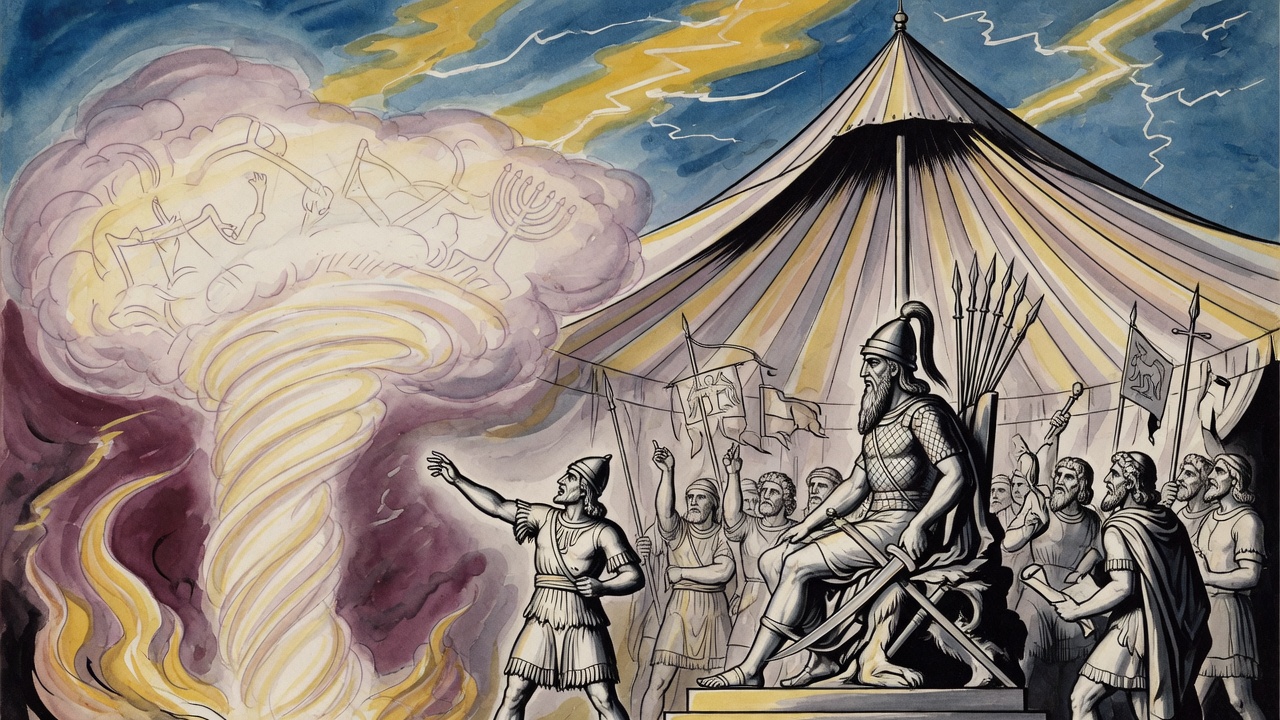
Another accidental-looking mercy sits at the edge of the Land. Canaan heard that Israel was coming and, in the Mekhilta's telling, made way rather than fight. No chariot charge. No last stand on a hill that would be renamed for blood. Heaven noticed. You made way for My children. I will call the land by your name, and I will give you a land as beautiful as yours. That replacement, the midrash says, was Africa. So the whole country can be called the land of the Canaanite (Exodus 13:11), not because every nation vanished from memory, but because one nation's deference earned the name.

Generosity from an unexpected hand is not overlooked. The farmer's sheaf and Canaan's step-aside both turn on gifts that look like loss until Heaven renames them. A sheaf lost becomes a mitzvah (a commandment). A land yielded becomes a name that sticks to the map of promise.

From Days to Days

The same anthologies that keep the sheaf also keep craftsmen's care. From days to days, the House of Hillel hears a span of twelve months and rules that tefillin (the leather boxes of scripture bound on arm and head) must be opened once a year to check that the parchment still holds. The body of the commandment can fail quietly if no one looks. Ink can flake. Moisture can enter. A man can bind his arm with holiness that has already gone hollow inside the box.

Forgetfulness cuts both ways. A forgotten sheaf becomes a mitzvah. Forgotten parchment becomes a hollow ritual on the arm. The farmer rejoiced because his forgetfulness had been drafted into holiness. The tefillin (prayer boxes bound on arm and head) owner must not trust forgetfulness at all. Wisdom is knowing which kind of accident you are in, and which kind you must prevent with a knife and a careful eye once a year.

Two Bulls and a Name

The son led the bulls because his father would not let the moment pass as mere luck. Smoke rose. Somewhere in the field a sheaf waited for the poor, and the poor would not know a debate had been held over it at a kitchen table. Somewhere at the border of the story Canaan walked away with a new land and an old name still stuck to Israel's map. The ledger of Heaven counts what people meant and what people failed to mean, and sometimes the failure is the only door through which the commandment can enter.

The farmer went back to ordinary work. He would still leave corners on purpose. He would still check tools, count bundles, sleep the sleep of a man who plans. The sheaf stayed forgotten on purpose now, left for whoever the Torah had always meant to feed. His joy remained the strange part: not that he kept the law when he aimed at it, but that the law found him when he was looking the other way.


← All myths
From the tradition

Sources

3 sources

The texts behind this telling. Some cards carry a translation of the source; others are our own retelling of it, and each card says which. Every card links out to the original.

Yalkut Shimoni on Torah 479:2Yalkut Shimoni on Torah

Translation of the source text.Torat Emet (Yalkut Shimoni) · CC-BY-NC

It happened that a certain pious man forgot one sheaf in the midst of his field, and he said to his son: Go out and offer up for me a bull as a burnt-offering and a bull as a peace-offering. His son said to him: Father, why have you seen fit to rejoice in this commandment more than in all the commandments stated in the Torah? He said to him: All the commandments of the Torah were given to us to perform with our awareness, and this one was performed without our awareness. Had we performed it knowingly before the Omnipresent, this commandment would not have come into our hands. Scripture says, "When you reap your harvest" and so forth (Deuteronomy 24:19), Scripture established a blessing for him. And is this not an inference from the lesser to the greater? If one who did not intend to gain merit and gained it is credited as though he gained it, then one who intends to gain merit and gains it, how much more so.

Similarly, "And if one soul sin in error" (Leviticus 4:27). And this is an inference from the lesser to the greater: if one who did not intend to sin and sinned is regarded as though he sinned, then one who intends to sin and sins, how much more so. Similarly, "her husband has annulled them, and the LORD will forgive her" (Numbers 30:13). Scripture speaks of a woman whose husband annulled her vow without her knowing, that she requires atonement and forgiveness. When Rabbi Akiva would reach this verse he would weep. He said: If one who intended to take up pork in his hand and took up lamb in his hand requires atonement and forgiveness, then one who intended to take up pork in his hand and took up pork in his hand, how much more so.

Similarly you say, "though he knew it not, yet is he guilty and shall bear his iniquity" (Leviticus 5:17). If one who intended to take up the flesh of a lamb and took up pork in his hand, such as a piece concerning which it is doubtful whether it is forbidden fat or permitted fat, shall bear his iniquity, then one who intended to take up pork in his hand and took up pork in his hand, how much more so. Issi ben Yehuda says: "though he knew it not, yet is he guilty and shall bear his iniquity", if one who intended to take up the flesh of a lamb and took up pork in his hand, such as two pieces, one of forbidden fat and one of permitted fat, shall bear his iniquity, then one who intended to take up pork in his hand, over this matter let all the grieving grieve.

And why are all these cases needed? They are all necessary. For had Scripture taught only the case of the woman, I might have said that there she requires atonement and forgiveness because she originally intended the forbidden thing; but the piece of doubtful forbidden fat or permitted fat, where he intended the permitted thing, I might say requires no atonement and forgiveness. And had it been stated only here, that he ate something forbidden, I might say that the woman whose husband annulled her vow, which is permitted, requires no atonement and forgiveness. And had these two been stated, I would have said that these suffice with atonement and forgiveness because no forbidden thing was definitely established; but two pieces, one of forbidden fat and one of permitted fat, where a forbidden thing was definitely established, atonement and forgiveness do not suffice. Therefore Scripture teaches us that it does.

Full source
Yalkut Shimoni on Torah 222:6Yalkut Shimoni on Torah

Translation of the source text.Torat Emet (Yalkut Shimoni) · CC-BY-NC

Another interpretation: "From days to days" (Exodus 13:10) tells that a person must examine his tefillin once every twelve months. It says here "from days," and it says elsewhere, "days shall be the time of its redemption" (Leviticus 25:29); just as "days" stated there means no less than twelve months, so "days" stated here means no less than twelve months, the words of the House of Hillel. The House of Shammai say: he need never examine them. Shammai the Elder says: these are the tefillin of my mother's father.

"And it shall be when the LORD brings you into the land of the Canaanite" (Exodus 13:11). Canaan merited that the land was called by his name. And what did Canaan do? Only this: when he heard that Israel was entering the land, he arose and cleared out before them. The Holy One, blessed be He, said to him: you cleared out before My people, so I too will call the land by your name, and I will give you a land as fair as your land, and which is it? This is Africa. And so it says, "And Canaan begot Sidon his firstborn, and Heth" (Genesis 10:15), and it is written, "And the sons of Heth answered Abraham, saying to him, Hear us, my lord" (Genesis 23:5–6). The Holy One, blessed be He, said to them: you honored My beloved, so I too will call the land by your name and give you a land as fair as your land, this is Africa.

"As He swore to your fathers" (Exodus 13:11). And where did He swear to the fathers? Of Abraham He says, "On that day the LORD made a covenant with Abram, saying" (Genesis 15:18). Of Isaac, what does He say? "Sojourn in this land" (Genesis 26:3). Of Jacob, what does He say? "The land on which you lie, to you I will give it" (Genesis 28:13). "And He will give it to you" (Exodus 13:11), that it should not be in your eyes like an inheritance from the fathers, but be in your eyes as though that very day He gave it to you.

Full source
Mekhilta Tractate Pischa 18:1Mekhilta DeRabbi Yishmael

Retold in our words. Read the original at the link below.Mechilta, translated by Rabbi Shraga Silverstein · CC-BY

Canaan heard the news that Israel was coming to claim the Promised Land, and he did something no one expected. Instead of fighting, he stepped aside. He voluntarily made way for God's chosen people to enter.

The Mekhilta records that this act of deference did not go unnoticed in heaven. The Holy One Blessed be He declared: "You made way for My children. I will call the land by your name, and I will give you a land as beautiful as yours." That replacement land, according to the midrash (rabbinic interpretive commentary), was Africa.

This teaching explains a puzzle that the rabbis found in (Exodus 13:11): "And it shall be, when the Lord brings you to the land of the Canaanite." Why is the entire Promised Land called "the land of the Canaanite" when multiple nations inhabited it? The Mekhilta answers: because Canaan earned the honor through his gracious surrender.

The lesson embedded in this midrash is striking. Even among the nations destined to lose their territory, an act of respect toward Israel is rewarded. God does not overlook generosity, no matter who performs it. Canaan's willingness to yield, rather than resist with violence, earned him both a name that would endure for millennia and a new homeland of his own.

Full source