6 min read

A Father Told His Son to Keep Silent on Idols

In Jubilees a father admits idols are shame and emptiness, then orders his son to stay silent, because the people will kill anyone who tells the truth.

Curated by Arthur · Told by Maggid ·
Table of Contents
  1. The Workshop After Dark
  2. The Son Trapped in Service
  3. Anger in the Brothers
  4. Vanity Spoken as Law
  5. The Cost of the Closed Mouth
  6. A Road Beyond the Rows
A Father Told His Son to Keep Silent on Idols Click for full size

The Workshop After Dark

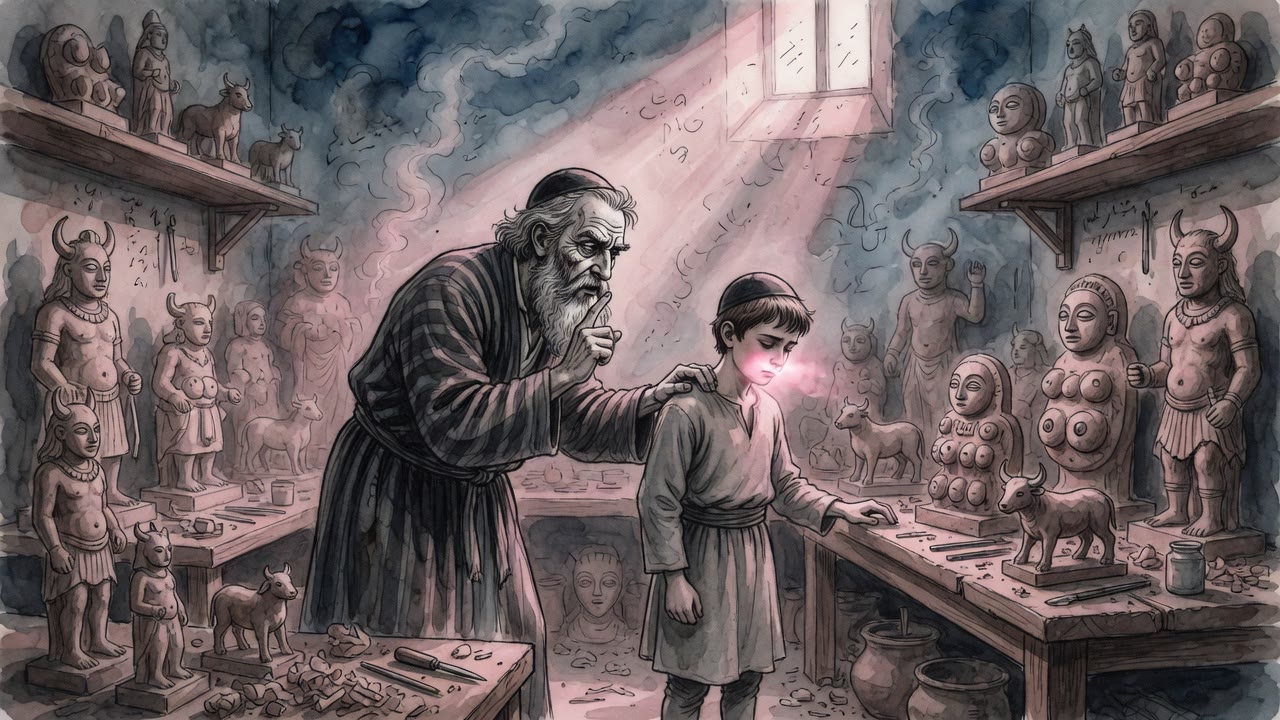
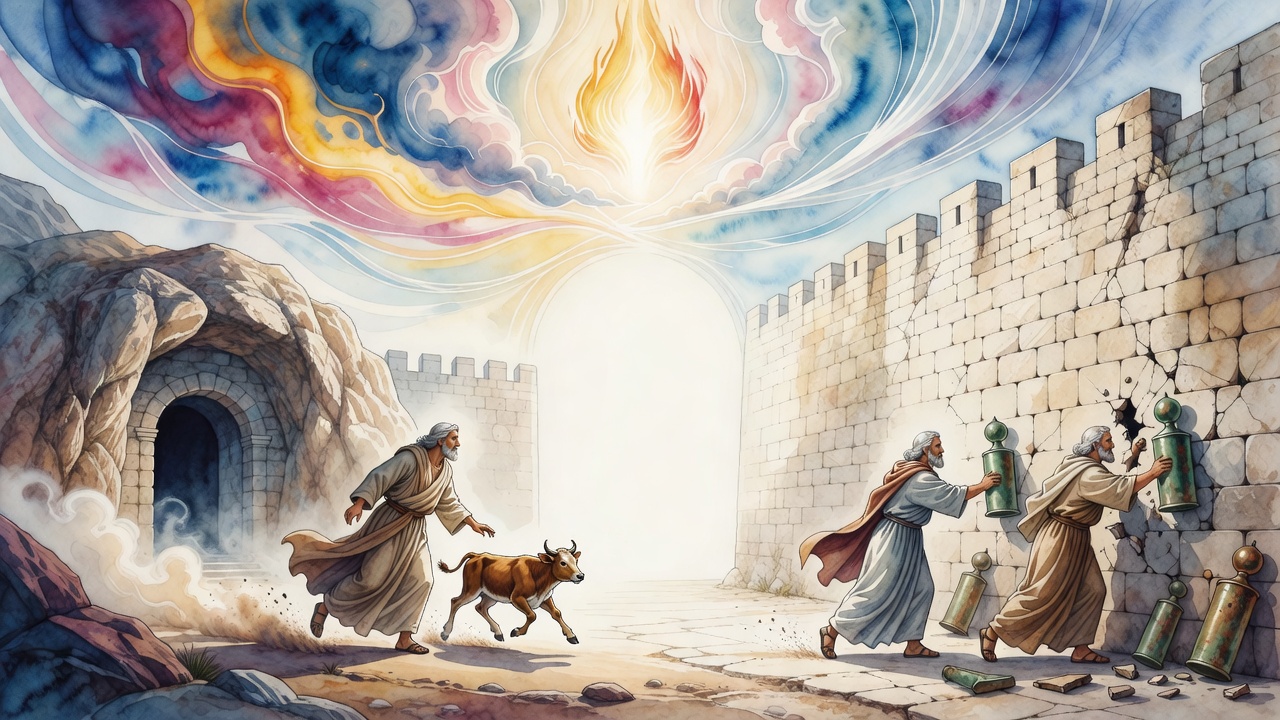
The idols stood in rows like a patient army. Wood grain under paint. Stone eyes that never blinked. The father had carved some of them with his own hands for neighbors who paid in silver and thanks. He knew the weight of a false god better than any worshiper. He had felt the chisel slip. He had smelled the lacquer drying. He had carried finished faces through streets that bowed to his work.

Now his voice dropped low enough that only his sons could hear over the settle of cooling tools. "You have no help from them. They are a great cause of shame to those who make them, and a misleading of the heart to those who worship them. Worship them not."

The words were true. They were also late. The city outside already loved the rows, and love of that kind does not take correction gently.

The Son Trapped in Service

One son did not answer with theology. He answered with a schedule and a bruise of habit. "What shall I do with a people who have made me to serve before them?" He was not a free critic in a quiet house. The town had pressed him into the cult. He poured oil. He bowed when the drum said bow. He walked in processions where the wood rode higher than the poor. His body already belonged to a calendar of false feasts.

The father heard the trap close. Truth was clear in the workshop under a single lamp. Truth in the street was a capital crime dressed as piety. "And if I tell them the truth, they will slay me, for their soul cleaves to them to worship them and honor them. Keep silent, my son, lest they slay thee."

Silence entered the room like a third person. Not peace. Strategy. A father's fear putting its hand over a son's mouth for love, and hating the shape of its own hand.

Anger in the Brothers

He spoke these words also to his two brothers. They were angry with him. Youth has less patience for survival math. They wanted the workshop speech carried into the square at noon. They wanted wood named as wood in public air, with witnesses. The father kept silent under their anger the way he kept silent under the city's zeal. Two pressures, one closed mouth, one unfinished confession.

The sons saw compromise and called it weakness. The father saw graves and called it timing. Both readings had blood in them. The idols kept their painted smiles through the argument, useless and patient, inventory that outlasted courage.

Vanity Spoken as Law

Elsewhere the same book hardens the verdict without softness for makers or buyers. All their works are vanity and nothingness. They have no heart to understand, and their eyes do not see what their works are. How they err in saying to a piece of wood, "Thou art my God," and to a stone, "Thou art my Lord and thou art my deliverer."

The father in the workshop already knew that sentence in his bones. He had made the wood that heard itself called God. Shame sat in his wrists and in the calluses that matched the chisel. Still he chose the living bodies of his sons over a public sermon that would end with stones thrown by neighbors defending their stones.

A later blessing in the book turns toward Jacob with a different hope, spoken by a patriarch who wants a cleaner road for the next generation. May the Most High God help thee and the God of heaven bless thee and remove thee from their uncleanness and from all their error. The line draws a path out that the silent father could only sketch in private, under fear of the knife.

The Cost of the Closed Mouth

Silence saved breath and postponed blood. It also left the idols on their shelves for one more market day, one more wedding fee, one more night watch where a servant bowed because the drum said so. The son who served before them went back to the rites with a new split inside him, truth in the ear, bow in the neck. Each prostration became a count. Each count became a debt he could not yet pay in public.

Some nights he almost spoke in the square. Then he remembered his father's voice and the word "slay," and the sound of a crowd that loves its statues more than its children. Love can be a muzzle. Fear can wear the face of wisdom. The book does not tidy the knot for comfort. It leaves the family in the tension, knowing right and choosing not to die for the announcement before the hour of smashing comes.

A Road Beyond the Rows

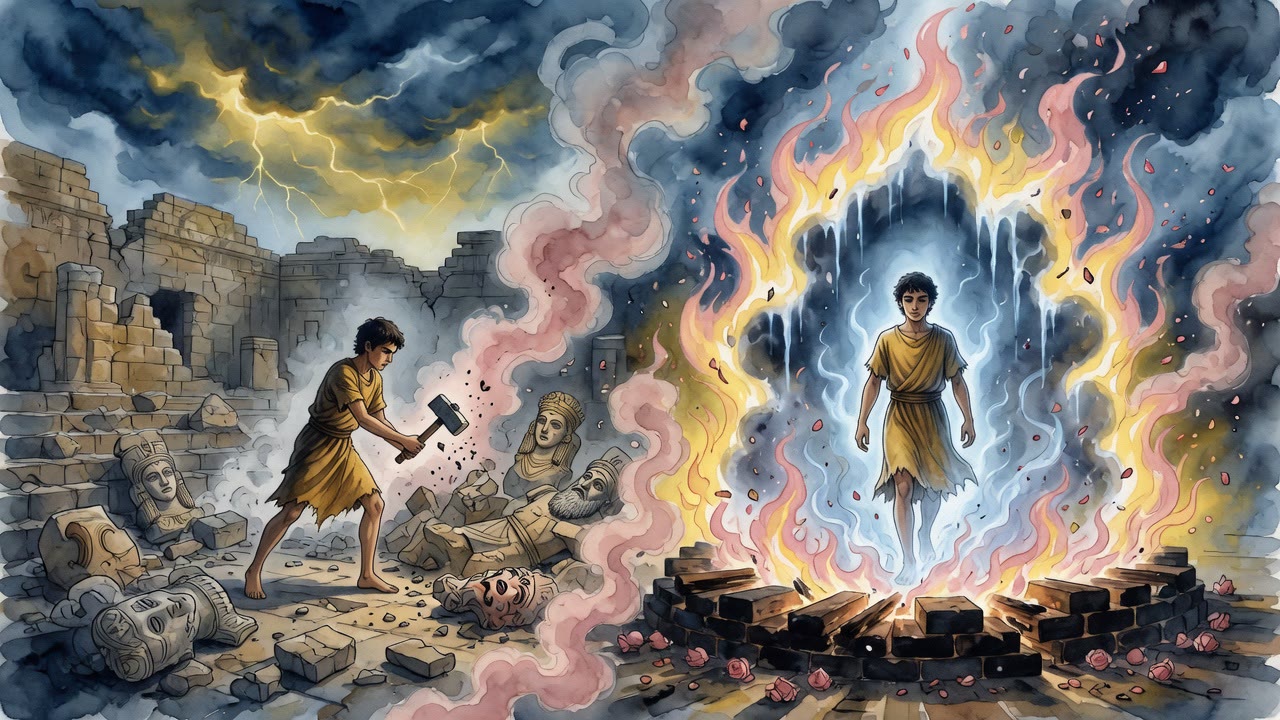
Other pages of the same tradition will show a younger man smashing the shop and walking toward a Name that needs no chisel and no paint. That courage has its own hour and its own fire. This hour is smaller and harder to praise. A father who sees through wood still teaches survival first. A son who wants clean hands still lives in a city that kills for its statues and calls the killing loyalty.

Between them, the idols wait, vanity with inventory, nothingness with a price list and a festival calendar. The Most High waits too, not in the grain of the painted face, but in the slow removal from uncleanness the blessing names for Jacob's line. The workshop lamp burns low. The rows do not blink. The silence holds until someone, someday, chooses the risk the father postponed.


← All myths
From the tradition

Sources

2 sources

The texts behind this telling. Some cards carry a translation of the source; others are our own retelling of it, and each card says which. Every card links out to the original.

Book of Jubilees 12:8Book of Jubilees

Retold in our words. Read the original at the link below.Sefaria Community Translation · CC-BY

That tension, that agonizing silence in the face of wrong, that’s the heart of our story today, drawn from the Book of Jubilees.

The Book of Jubilees, sometimes called Lesser Genesis, is an ancient Jewish text that retells the stories of Genesis with some… well, let's call them "expansions." It fills in gaps, adds details, and generally offers a unique perspective on those foundational narratives.

Our focus today is a short, but powerful passage from chapter 12. It centers on a father and his sons confronting idolatry. The father laments, "And ye have no help from them, But they are a great cause of shame to those who make them, And a misleading of the heart to those who worship them: Worship them not." He knows idols are worthless, even harmful. He sees the shame and delusion they bring.

Then comes the painful confession. His son asks, "what shall I do with a people who have made me to serve before them?" He's not just passively observing idolatry; he's being forced to participate. He's complicit, not by choice, but by circumstance. He's trapped.

And here’s the real gut punch: "And if I tell them the truth, they will slay me; for their soul cleaveth to them to worship them and honour them. Keep silent, my son, lest they slay thee."

Wow.

He knows the truth, but speaking it would mean certain death. His people are so deeply entrenched in their idolatry, so fiercely devoted to their false gods, that they'll kill anyone who challenges their beliefs.

It’s a terrifying situation. He's not just protecting himself, he's protecting his son. He chooses silence, a silence born of fear, a silence that eats away at him.

"And these words he spake to his two brothers, and they were angry with him and he kept silent." The sons, perhaps younger, perhaps more idealistic, react with anger. They can't understand their father's compromise. They see the wrong, and they want to fight it. But the father, hardened by experience, knows the cost of speaking out. He remains silent, the anger of his sons a further burden on his soul.

What does this brief passage from the Book of Jubilees tell us? It's not just about idolatry. It's about the complexities of power, the fear of speaking truth to power, and the agonizing compromises we sometimes make to survive.

Maybe not in the literal worship of idols, but in the subtle pressures to conform, to stay silent, to avoid rocking the boat. How often do we choose silence over truth, safety over conviction?

The Book of Jubilees doesn’t offer an easy answer. It doesn't condemn the father, nor does it celebrate his silence. It simply presents the situation, raw and unflinching, leaving us to confront the moral ambiguity. It forces us to ask ourselves: What would we do? And what price are we willing to pay for the truth?

Full source
Book of Jubilees 22:27Book of Jubilees

Retold in our words. Read the original at the link below.Sefaria Community Translation · CC-BY

Sometimes, the answer isn't what we expect.

The Book of Jubilees, an ancient Jewish text offering a unique retelling of Genesis and Exodus, wrestles with this very idea. In chapter 22, we find a powerful message about the dangers of misplaced faith and the importance of discerning true value.

It paints a stark picture: "And all their works are vanity and nothingness. They have no heart to understand And their eyes do not see what their works are…" The words are harsh, aren’t they? But they cut right to the quick. What does it mean to say that someone's works are “vanity and nothingness”? It's a condemnation of actions and beliefs that ultimately lead nowhere, that offer no real substance or lasting impact.

The passage continues, hitting even harder: "And how they err in saying to a piece of wood: 'Thou art my God,' And to a stone: 'Thou art my Lord and thou art my deliverer.' [And they have no heart.]" Ouch. This isn't just about idol worship in the literal sense. It speaks to the human tendency to place our trust, our hope, in things that are ultimately incapable of providing true salvation or meaning. – what "wooden idols" or "stone lords" do we cling to today?

Then, the tone shifts. A blessing, a plea, a father’s heartfelt wish for his son, Jacob. "And as for thee, my son Jacob, May the Most High God help thee And the God of heaven bless thee And remove thee from their uncleanness and from all their error." It’s a tender moment amidst the condemnation, a reminder that even in the face of widespread folly, there is hope for individuals to find their way.

The father’s concern extends to Jacob’s future, specifically his choice of a wife: "Be thou ware, my son Jacob, of taking a wife from any seed of the daughters of Canaan; For all his seed is to be rooted out of the earth." This isn’t just about lineage; it’s about preserving a way of life, a commitment to something greater than fleeting desires. It is about choosing a partner who shares a fundamental understanding of what truly matters.

So, what do we take away from this ancient wisdom today? Perhaps it's a call to examine our own lives. Are we pouring our energy into things that are ultimately "vanity and nothingness"? Are we mistaking fleeting pleasures for lasting fulfillment? Are we choosing partners, in life and in business, who share our core values?

The Book of Jubilees, in this short passage, reminds us that true meaning isn’t found in idols, be they made of wood or stone, but in something far more profound. Something that resonates with the heart and elevates the soul. And that, my friends, is a question worth pondering long after we've finished our coffee.

Full source