First Oil for the Lamp Aaron Kept Burning
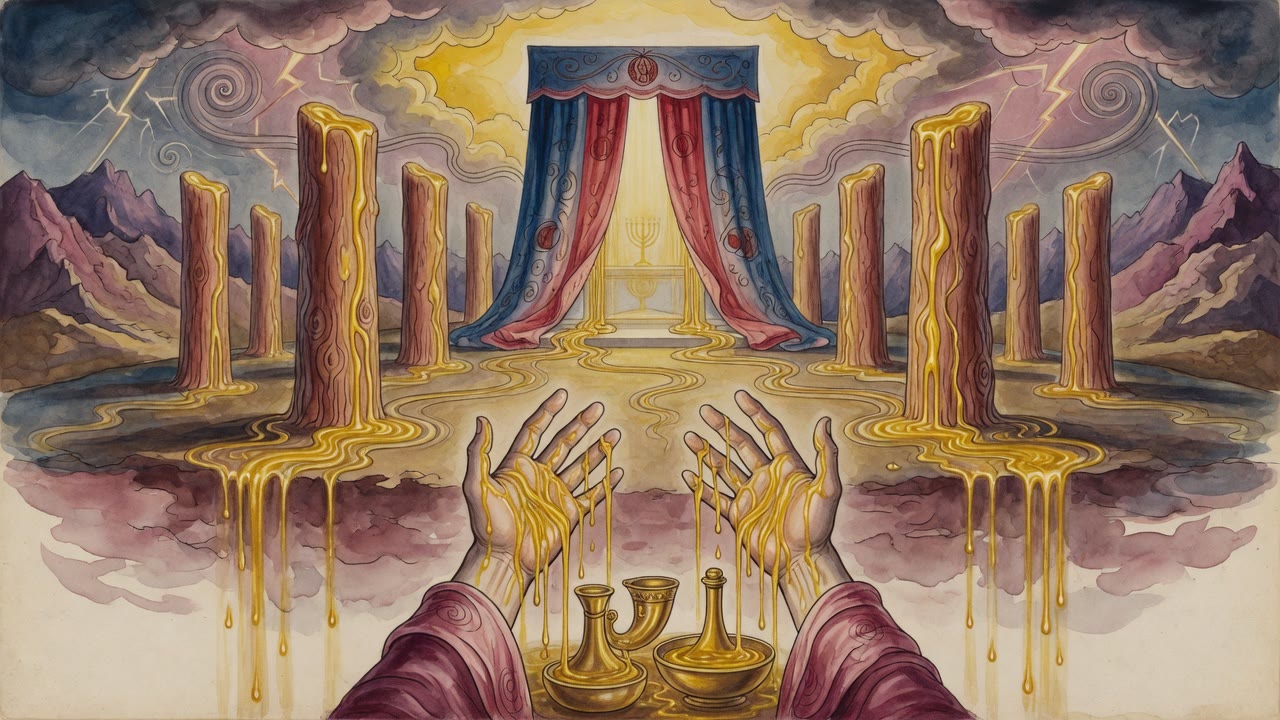
A boy poured second oil into a menorah jar. His father struck the flask aside. First press was for wicks, never for bread.
Table of Contents
 Click for full size
The First Stream
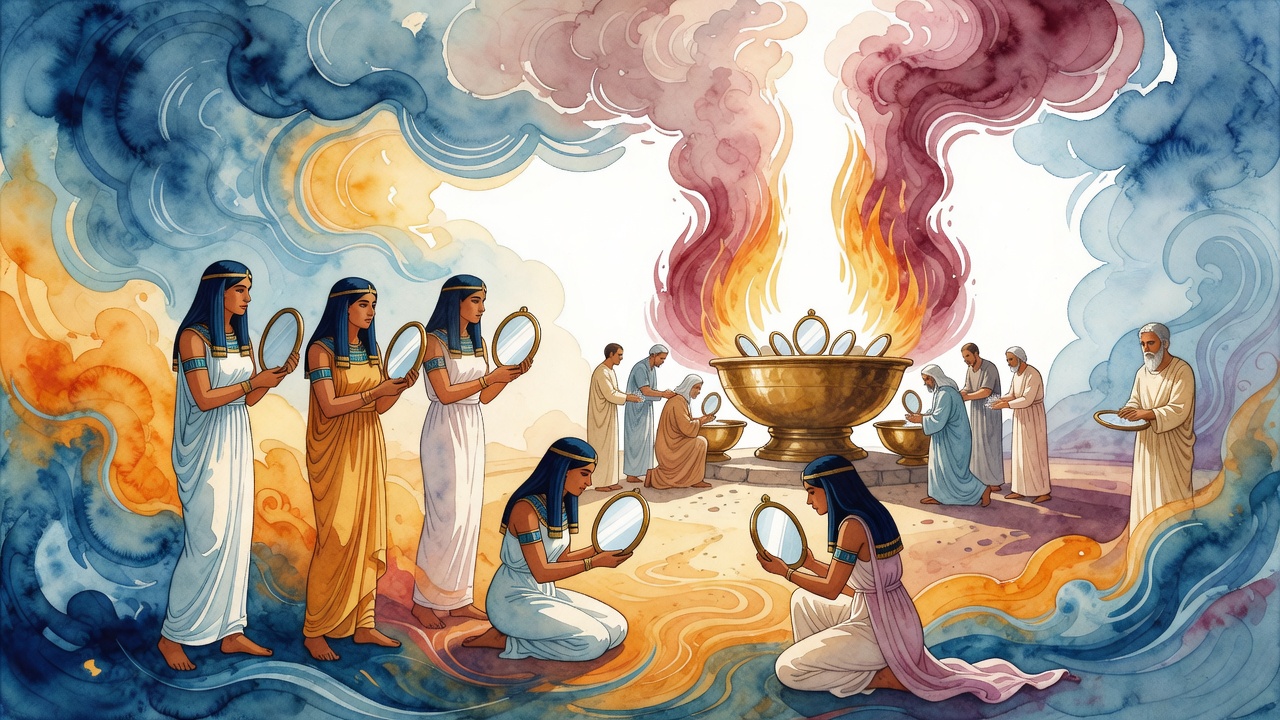
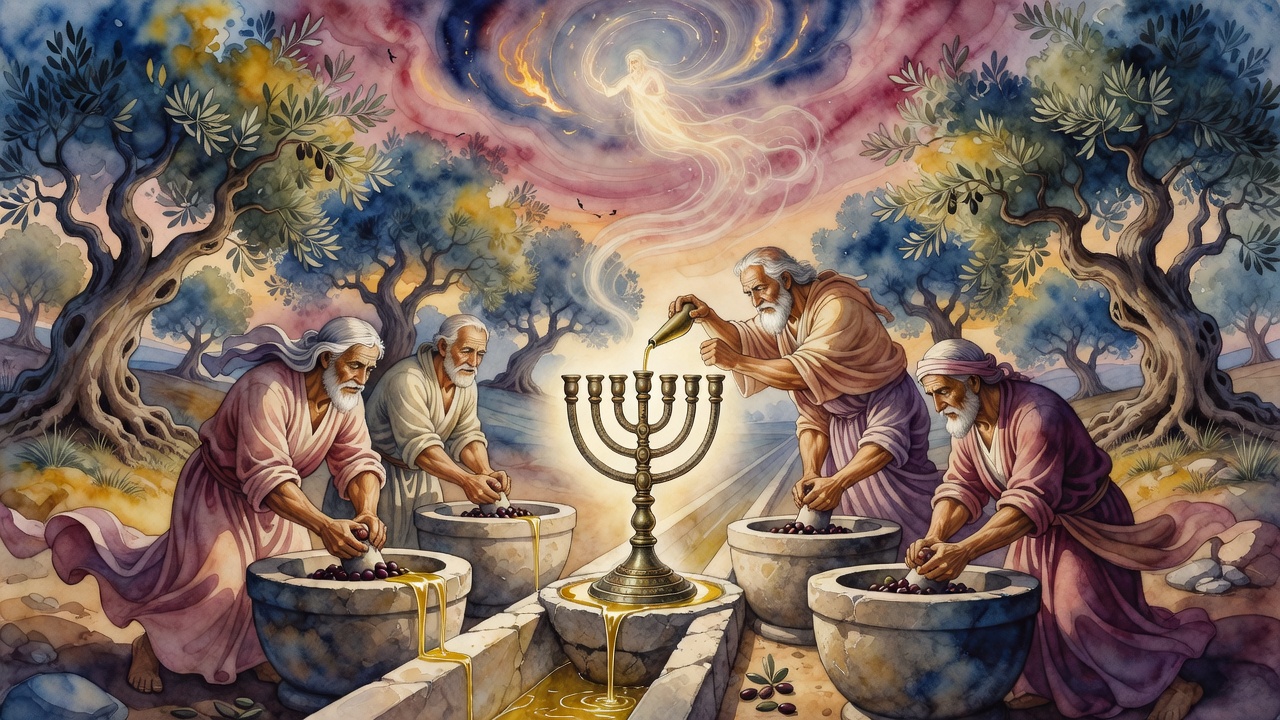
The grove keepers knew which trees gave the cleanest fruit. They climbed before full heat, filled baskets without bruising, and crushed olives by hand until the first oil ran clear as water and gold at once. That first stream was not for bread. It was for light.
Second pressings went to meal offerings. The pure beaten oil, the first to answer the press, was set apart for the lamp that Aaron and his sons would tend from evening to morning before God (Exodus 27:20). A child who reached for a drop from the first jar had his hand moved aside. That taste is not for tongues. It is for wicks.
On years when the groves failed, the keepers still hunted the best trees first and refused to stretch first-grade jars with cheaper blend. Scarcity does not rewrite holiness. It only makes the press quieter and the hands more careful.
The Boy and the Wrong Jar
A boy learning the craft once tried to pour second oil into a jar marked for the menorah (מנורה), the lampstand. His father struck the flask aside so that the stream hit dirt instead of the wick-store. The lamp does not take what the altar's companions may take. Grades of oil are grades of nearness.
The second oil could ride with flour and frankincense. The first oil belonged only to the seven branches that watched the night. The boy sat in the dust with the empty flask and learned the sort by the stain on the ground.
Hands, not millstones. Care, not volume. A stream thin enough to burn without smoke that would dirty the holy place. That is why the first drop belonged to fire.
Aaron Receives the Reluctant
People did not always come to Aaron gladly. A woman too poor for a lamb after childbirth delayed her offering until a mark on the skin drove her to the door she had been avoiding. "I asked you to come," God had said. "You did not. So you will be brought." "He shall be brought to Aaron the priest" became more than a medical order. It was the door that opens when pride will not walk through on its own (Leviticus 13:2).
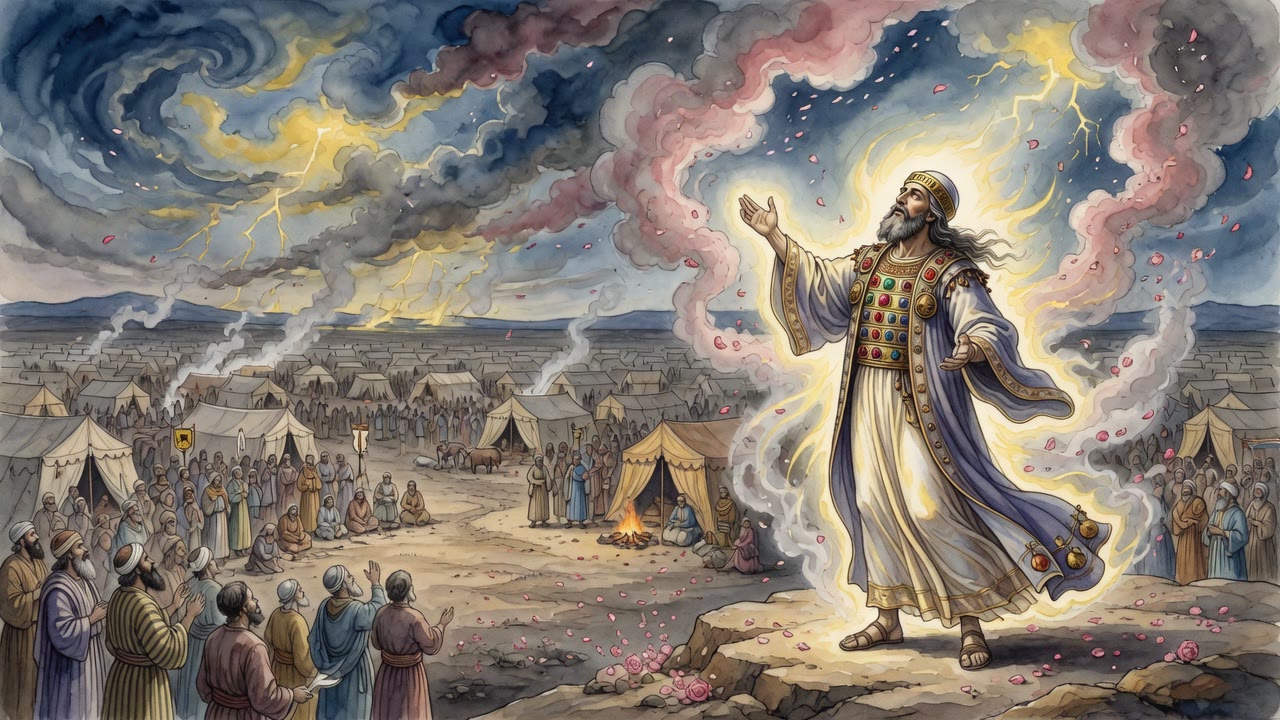
She stood in the court with her head down while Aaron washed, inspected, and taught. He sent some home clean. He kept some under watch. The glory of the office was not the gold on the breastplate. It was the line of people who would rather have stayed away.
Small dough set aside for the priest sat in the same web. Neglect of a pinch of ḥalla (חלה) was spoken of as if it propped up idol worship. Keeping it, as if idolatry fell. The priesthood lived where the tiniest kitchen act and the worst betrayal of God could share a threshold. Aaron received the reluctant the way he received oil. Without drama. With procedure.
Night Ash and First Oil
After dusk Aaron's sons moved through the compound with hands that had touched first oil. Light and blood shared the stones. Neither was casual. A deputy who treated the night ash as garbage was corrected. "You are handling the remainder of a night God accepted. Carry it as service, not as refuse."
What had already entered the court stayed, even if a later flaw showed, because the precinct had claimed it. What was disqualified before the gate never rose. Libations rode in on the back of a sacrifice and could be taken down, because they never stood alone. Vessels held only what they were made to hold. Night ash was cleared on a schedule that softened for the High Priest on the Day of Atonement, so his strength would last, and hardened when festival crowds packed the stones before cockcrow.
The boy from the grove, grown enough to carry a jar, watched his own oil catch and rise on the western lamp. He did not bow to the flame. He bowed to the command that had sorted his jars at the press. First for light. Second for flour. The rest for the house.
The Lamp That Points Past Itself
Heaven spoke a promise over the single lamp Israel tended in this world. By its merit the Messianic King would be brought, himself likened to a lamp prepared for David's line (Psalm 132:17). More than that, God would become Israel's everlasting light. The pressed olive of a small grove and the future face of redemption were tied by one wick.
Priests who trimmed the menorah at night did not always speak of kings. They spoke of oil that must not run out before morning, of wicks that must not smoke, of a duty that looked like housekeeping and was not. Sometimes, between trimmings, one would glance at the flame and remember the prepared lamp for the anointed, then go back to work before the thought made him slow.
So Aaron's house stood between crushed fruit and a fire not yet lit. They washed, they burned, they received the reluctant sick and the careful poor. When children asked why the first oil was never sold in the market, the answer was short. Markets feed bellies. This oil feeds a promise that is still burning.
← All myths