6 min read

The Mirrors of Egypt Became the Tabernacle Laver

Women in Egypt used brass mirrors to keep life going under slavery. Those same mirrors became the basin where every priest washed before service.

Curated by Arthur · Told by Maggid ·
Table of Contents
  1. Moses Wanted to Turn the Gift Away
  2. What the Basin Remembered
  3. Why Iron Stopped at the Altar Edge
  4. The Night Fire and the Morning Ash
  5. The Gift Moses Nearly Refused

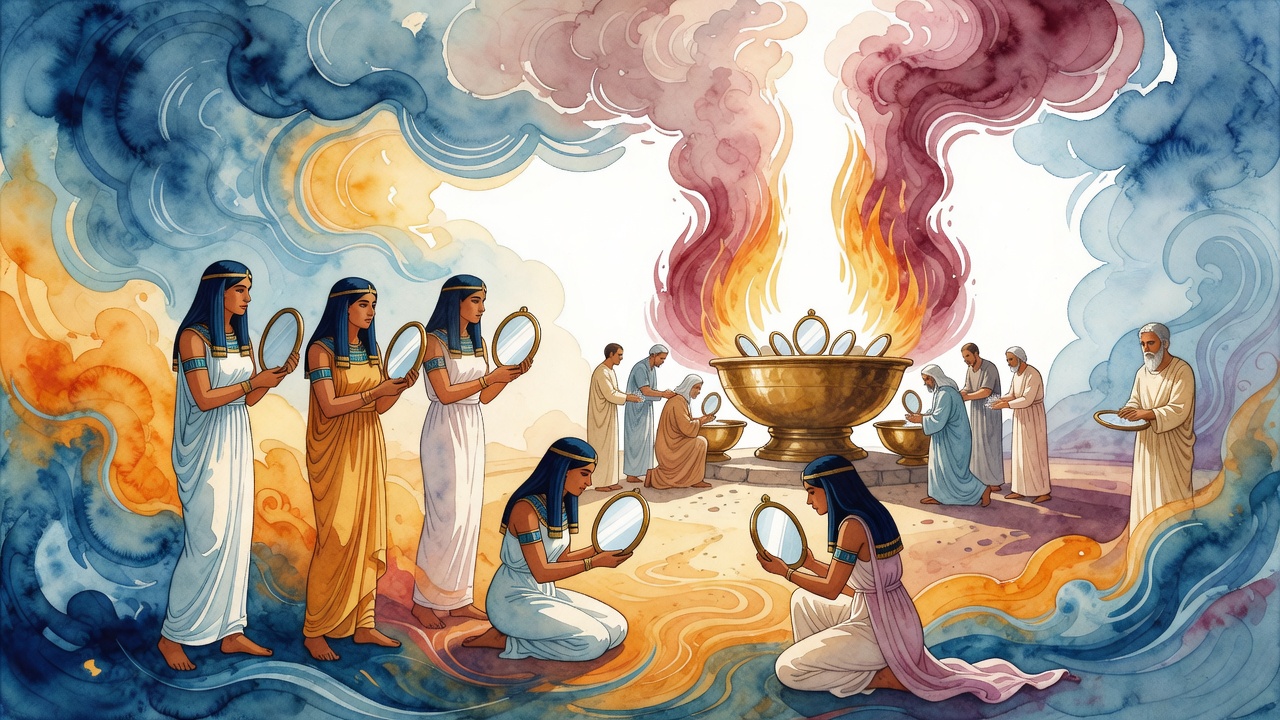
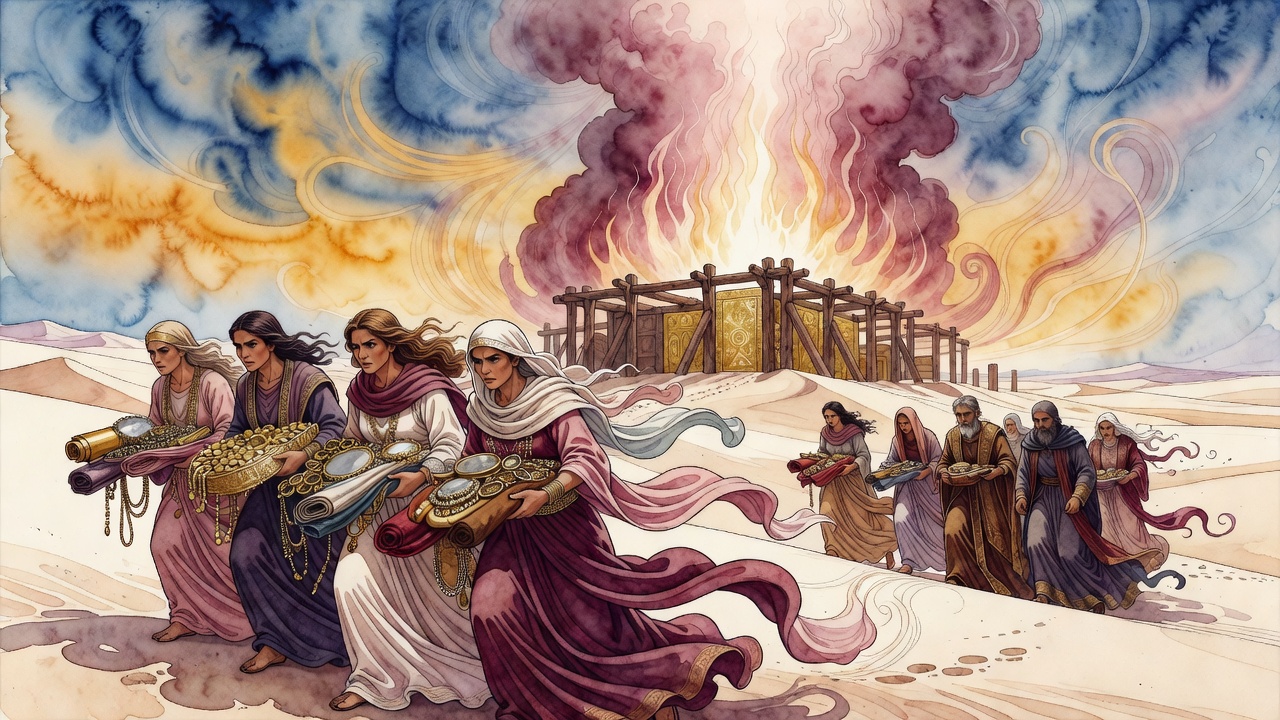
The brass was warm from the sun when Miriam's daughters pressed it into the collection basket. Not gold from the Egyptians. Not jewelry that had hung on necks in Goshen. Mirrors. Smooth faces of metal that had once shown exhausted husbands their own eyes and pulled them back toward bed, toward children, toward a future Pharaoh meant to drown.

The Mirrors of Egypt Became the Tabernacle Laver Click for full size

In Egypt the men came home with backs split by brick. They said the world was finished. The women took the mirrors into the fields at dusk, set them where light still caught, and called their men by name until desire returned. From those nights Israel grew. Now the same brass lay in a pile at the door of the Tent of Meeting, and Moses stood over it with a hard face.

Moses Wanted to Turn the Gift Away

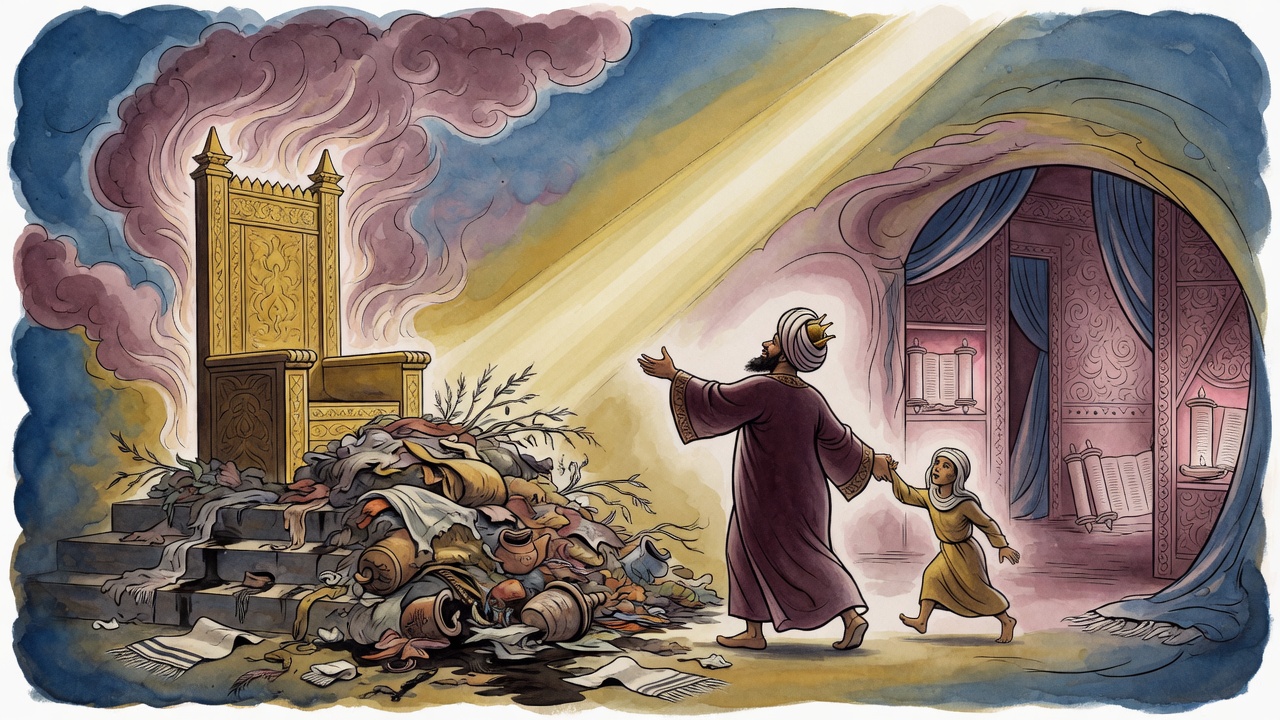
He had asked for freewill offerings for the sanctuary. He had not asked for tools of vanity. The mirrors smelled of oil and old perfume. They had watched women paint their eyes while their husbands' feet bled. Moses' hand hovered above the basket. He was ready to set them aside for common use, for scrap, for anything but the house of God.

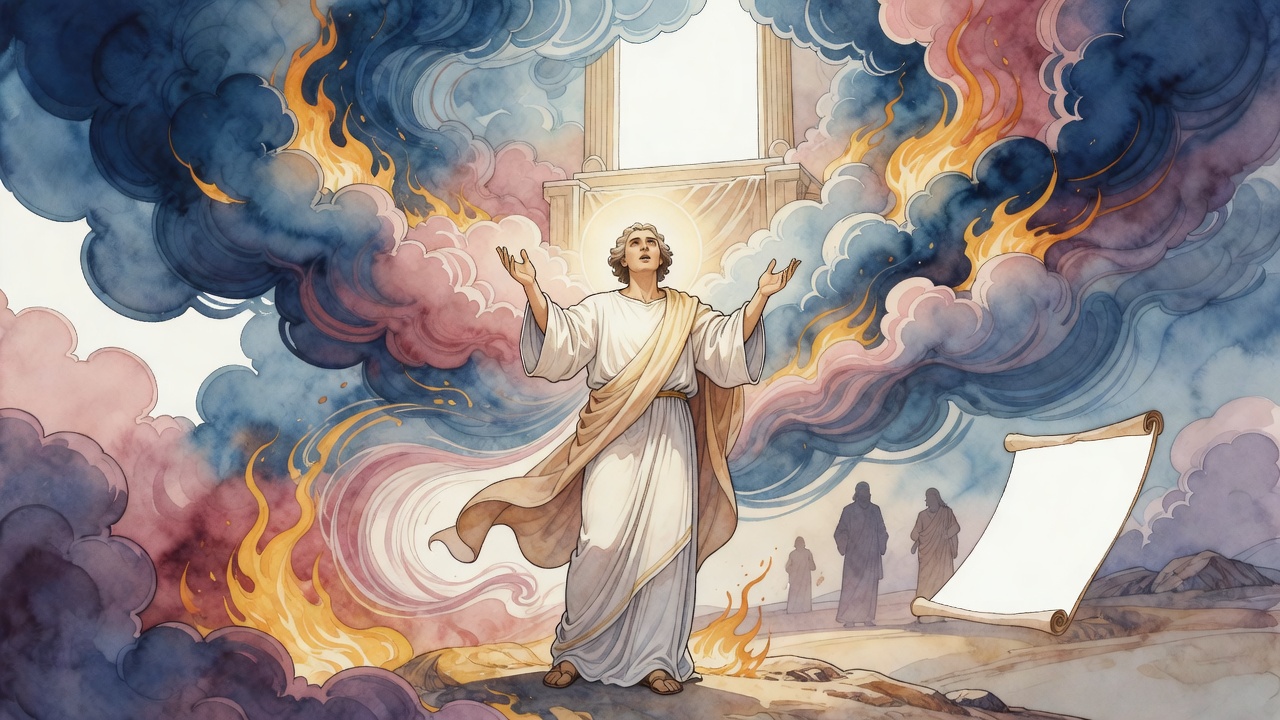
Heaven answered before the pile could be moved. These mirrors, the word came, are more precious than the gold you melted and the acacia you cut. They built the nation when the nation wanted to die. They will wash the hands that serve Me.

Moses stepped back. The craftsmen took the brass, melted and cast it, and raised the laver between the Tent and the altar. From that day every priest who approached fire first put his hands and feet into water that had once been a woman's face.

What the Basin Remembered

The women who gave the mirrors did not stop at the gift. In their seasons they came to the door of the Tent with offerings, stood in thanksgiving and confession, then went home to their husbands as mothers of living children. Prayer and household were one road. The basin held that road in metal.

A young priest named Eleazar learned the rule the hard way. He reached for the altar tongs with unwashed hands, and an older brother caught his wrist. First the water. Always the water. The altar does not take a man who has not passed through the women's brass.

Outside, other stones were rising. Iron rang on blocks meant for walls and chambers. That noise was allowed. The sanctuary and even the Holy of Holies could rise from stones cut by tools. Only the altar itself refused iron. Life-taking metal must never shape the place where life is offered. The ban was narrow and absolute. Hewn stones for walls, whole stones for fire.

Why Iron Stopped at the Altar Edge

Builders argued by logic. If the altar, the lesser structure, bars iron, then the house of greater holiness should bar it more. The teaching shut that door. Scripture named the altar alone. Cut the sanctuary stones outside the camp if you must. Dress them where hammers may shout. Inside the sacred floor, let silence hold while the walls go up. Solomon later built with the same discipline. Iron was heard in the quarry, never in the house.

The laver stood in that same grammar of care. Not every vessel sanctifies every thing. A liquid measure holds liquid holiness. A dry measure holds dry. A vessel with a hole can still sanctify if it still does the work it was made for. The precinct grips what is fit for it and releases what is not. Disqualified animals that never entered the court never touch the fire. What becomes unfit only after entry stays, because the court has already claimed it.

The Night Fire and the Morning Ash

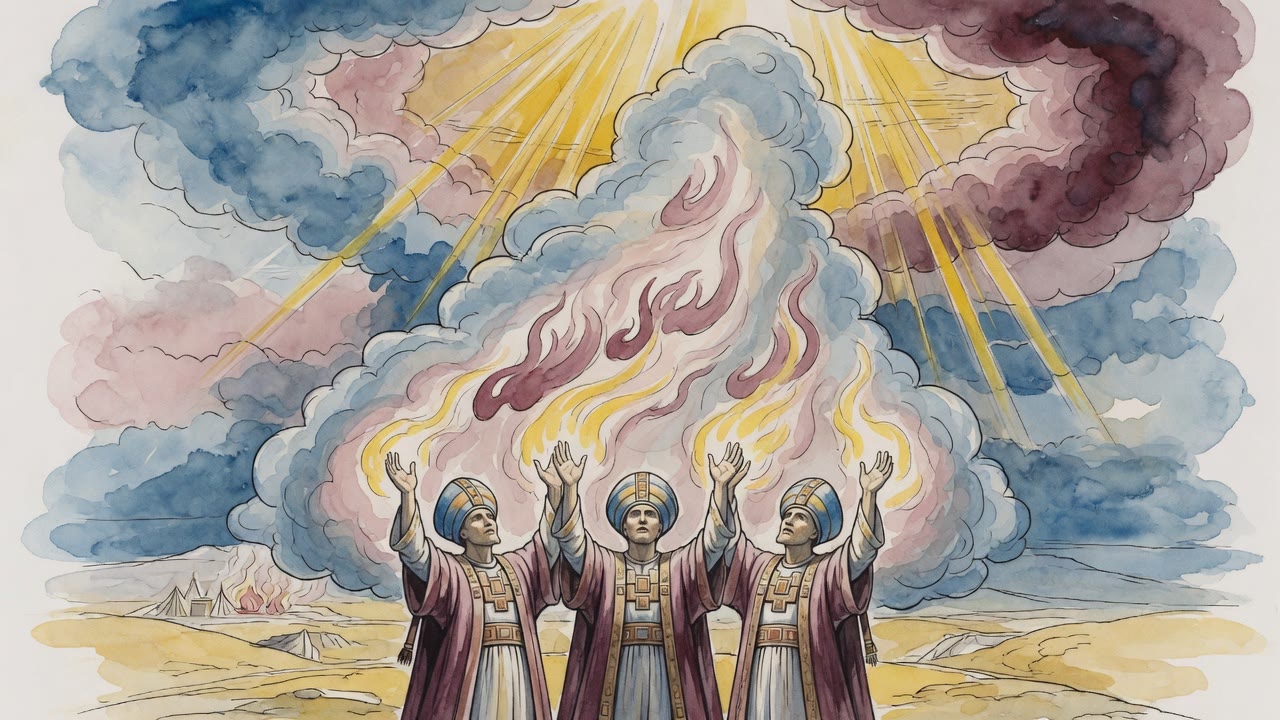
Before dawn the priests moved through ash and ember. On ordinary days they waited for the cockcrow. On the Day of Atonement they rose at midnight so the High Priest would not be worn thin. On festivals they started at the first watch, because the courtyard filled early with bodies and vows. The altar held the night fire until morning, and the reading of that phrase opened the dark hours for removing ash.

Every one of those acts began at the laver. Hands that had stacked wood, hands that had pushed a blemished beast back down the ramp as Rabbi Chanina's father once did, hands that sorted limbs and fat, all of them passed through water born of Egyptian mirrors.

On one festival dawn a deputy priest tried to hurry past the basin because the court was already packed. An elder blocked him with a look. The crowd can wait. The water cannot be skipped. The mirrors that saved Israel in Egypt still decide who may touch the fire.

The Gift Moses Nearly Refused

Years later, when children asked why the basin was brass and not gold, the old women still living from that generation would touch their own faces and laugh without humor. We gave what kept you alive, they said. Your father almost threw it out. Heaven did not.

So the holiest service of Israel began each day with a vessel that remembered desire under slavery. The altar would not take iron. The laver would not forget Egypt. Between them the priests washed and climbed, and the smoke rose from stones no weapon had cut.


← All myths
From the tradition

Sources

3 sources

The texts behind this telling. Some cards carry a translation of the source; others are our own retelling of it, and each card says which. Every card links out to the original.

Targum Pseudo-Jonathan on Exodus 38:8Targum Pseudo-Jonathan on Exodus

Retold in our words. Read the original at the link below.The Targum of Jonathan ben Uzziel, trans. J. W. Etheridge, London, 1862 · Public Domain

Of all the objects in the Tabernacle, the brass laver had the strangest origin. Targum Pseudo-Jonathan on (Exodus 38:8) preserves the story: it was made from the brasen mirrors of the pious women, who, at the season, came to pray at the door of the tabernacle of appointment, standing with their oblations, giving thanks and confession, and returning to their husbands, the mothers of righteous children, who had been purified from the uncleanness of their blood.

The Targum packs an entire theology of Jewish womanhood into a single verse. These women donated their mirrors. Not jewelry, not cloth, not gold. The objects by which they had made themselves beautiful. The rabbis of Midrash Tanchuma (Pekudei 9) tell the backstory. When the Israelite men in Egypt were exhausted by slavery and had stopped wanting to bring children into such a world, their wives used these mirrors to make themselves attractive, drawing their husbands back to them, rebuilding the Jewish family under the eye of Pharaoh. The mirrors were the instruments of the nation's survival.

When the women offered them to build the Tabernacle, Moses initially hesitated. Tools of vanity for the house of God? But God overruled him. These mirrors, God said, are more precious to Me than anything else you have gathered. They built the Jewish future in Egypt. Now they will build the Jewish sanctuary.

The Targum adds the women's spiritual practice: they came to pray at the tent, bringing oblations, offering thanks and confession, then returning home to their husbands as mothers of righteous children. Prayer, gratitude, family, woven into one continuous life.

The laver itself was used for ritual purification. The priest washed his hands and feet in it before every service. So every sacred act in the Tabernacle began with water poured from a vessel made from the mirrors of faithful women.

The takeaway: the Jewish future is built by the unnoticed tools of faithful women. Moses almost rejected these mirrors. God knew better. The holiest acts of every priest began with water drawn from the gift that Moses had nearly turned away.

Full source
Mekhilta Tractate Bachodesh 11:15Mekhilta DeRabbi Yishmael

Retold in our words. Read the original at the link below.Mechilta, translated by Rabbi Shraga Silverstein · CC-BY

"Do not build them hewn" (Exodus 20:22), said of the stones of the altar. The Mekhilta reads the prohibition narrowly. In the altar itself you may not build the stones hewn by iron tools, but you may build hewn stones into the sanctuary and into the holy of holies. The ban on iron-cut stone is confined to the altar alone.

The midrash shows why this restriction needs to be stated explicitly, because logic would have pushed the other way. One might argue by inference from minor to major: if at the altar, the less formidable structure, hewn stone is forbidden, then surely in the sanctuary and the holy of holies, the more formidable and more sacred structures, hewn stone should be forbidden all the more. To block exactly that inference, the verse specifies "do not build them hewn" of the altar in particular. In it, and only in it, hewn stone is barred; in the sanctuary and the holy of holies you may indeed build with hewn stone.

This raises a difficulty from the account of Solomon's Temple. How am I to understand (I Kings 6:7), "And hammers, chisels, or any iron tools were not heard in the Temple when it was being built"? If hewn stone is permitted in the sanctuary, why was no iron heard? The resolution preserves both verses: in the Temple itself the iron tools were not heard, but outside the building, where the stones were actually cut and dressed, the tools were heard. The stones could be shaped by iron, only not within the sacred space, so the silence of the Temple stands alongside the permission to use hewn stone for its walls.

Full source
Yalkut Shimoni on Torah 482:1Yalkut Shimoni on Torah

Translation of the source text.Torat Emet (Yalkut Shimoni) · CC-BY-NC

The rule that Rabbi Akiva states: Whatever became disqualified within the sacred precinct, the sacred precinct receives it [and it does not come down]; whatever was not disqualified within the sacred precinct, the sacred precinct does not receive it - except for a blemished animal, for a blemished bird is valid. Rabbi Chanina, deputy of the priests, says: My father used to push blemished animals down off the altar. One might think that even the libations, if they went up, do not come down; Scripture teaches "olah" - just as the burnt offering is distinct in that it comes on its own account, this excludes libations, which do not come on their own account. From here you say: if the sacrifice is valid and the libations disqualified, or the sacrifice disqualified and the libations valid, or even both disqualified, the sacrifice does not come down but the libations do come down.

Since it is said, "Whatever touches the altar shall become holy" (Exodus 29:37), we have learned that the altar sanctifies whatever is fit for it. From where do we learn that the ramp too sanctifies what is fit for the altar? Scripture teaches, "and to the altar they shall not go up for a pleasing aroma" (Leviticus 2:11-12). From where do we learn that the vessels too sanctify what is fit for them? Scripture teaches, "and you shall sanctify them, and they shall be most holy; whatever touches them shall become holy." A vessel for liquids sanctifies liquids, a dry measure sanctifies dry goods; a vessel for liquids does not sanctify dry goods, and a dry measure does not sanctify liquids. Sacred vessels that were pierced: if one can still do with them the kind of work they did when whole, they sanctify; if not, they do not sanctify. And none of them sanctify except within the sacred precinct.

"It is the burnt offering on its firewood upon the altar all night until morning" (Leviticus 6:2) - that one places it from sunset, and they go on being consumed upon the altar all night. I would know only things fit to be offered at night; from where things whose manner is by day, and so forth. You say that "all night" is stated for this purpose, that one places it from sunset and they are consumed on the altar all night - or perhaps it means only that one keeps bringing them up onto the altar all night? When it says, "and the fat of my festival offering shall not remain until morning" (Exodus 23:18), this teaches that one keeps bringing them up from the ground to the altar all night. [And how do I uphold "all night"?] That one places it from sunset, and so forth.

And what does "until morning" teach? If it does not apply to the consuming of the limbs, apply it to the removal of the ashes: it teaches that they may remove ashes from the altar all night. Each day they remove the ashes from the altar at cockcrow, or near it, whether before or after. On the Day of Atonement, from midnight. On the festivals, from the first watch. From where are these matters derived? Rabbi Yochanan said: From the implication of "all night," do I not already know that it is until morning? What then does "until morning" teach? Give a morning to the first morning of the night. Therefore each day, cockcrow or near it, before or after, suffices. On the Day of Atonement, because of the High Priest's weariness, they begin from midnight. On the festivals, since Israel are many and the offerings are many, they begin from the first watch - as the reason is taught: cockcrow would not arrive before the courtyard was already filled with Israel.

Full source