Women Outran Princes to Build the Tabernacle
Moses asked for a willing heart. Earrings hit the pile before noon. The princes still held the stones meant for Aaron's breastplate.
Table of Contents
Moses stood in the camp and said that anyone with a willing heart could bring an offering for the sanctuary. The camp answered like a dam breaking.
 Click for full size
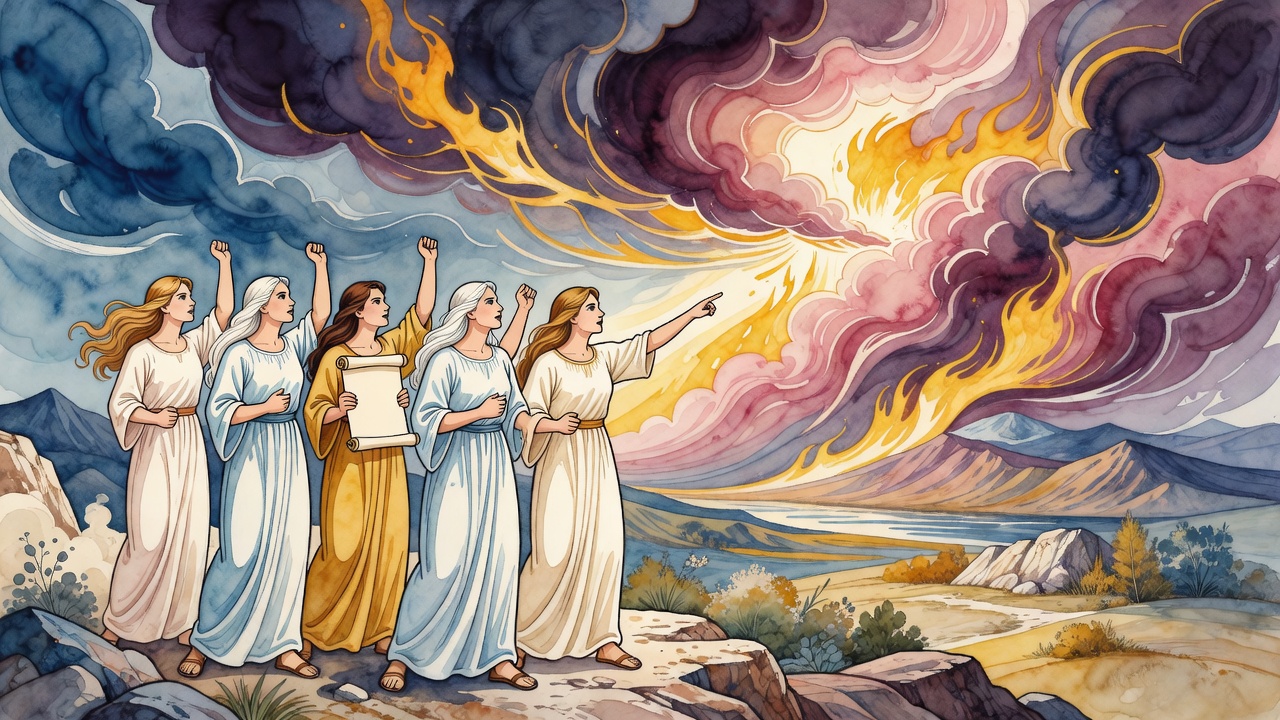
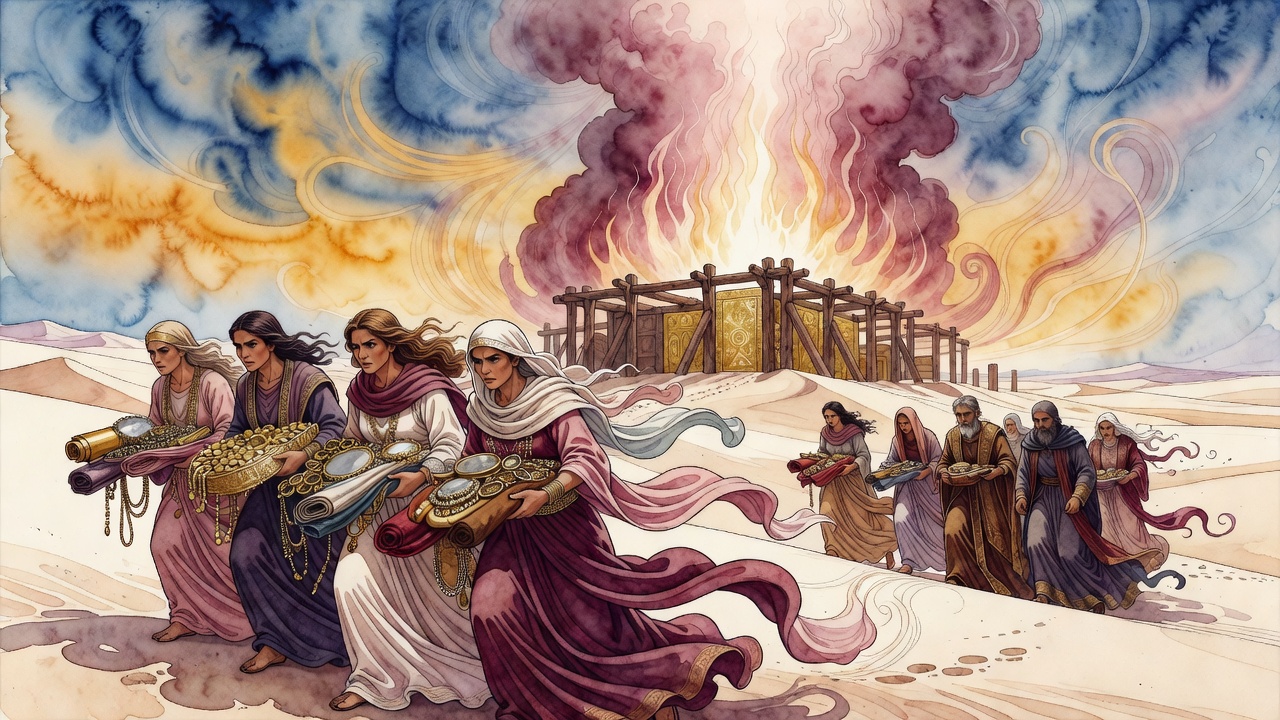
Men came. Women came faster. They pushed forward, laden, eager to be first. Earrings hit the pile. Cloth unrolled. A woman who could spin sat down where she was and spun goats' hair straight off the animal and carried the yarn over in her lap.
In two days Moses held everything required to begin. Two days. Not a slow season of gifts. Devotion arrived as speed.
Princes at the End of the Line
The tribal princes, used to precedence, arrived almost too late. At the last moment they brought precious stones for Aaron's garments, hoping to keep a share in the holy work after ordinary people had already flooded the inventory.
Heaven took the delay amiss. Later, when those same princes rushed to be first with dedication offerings for the altar, the haste read as repair for an earlier sluggishness. Holy work can use late gifts. Lateness is not leadership.
Moses needed gold and fabric more than he needed embarrassed nobility.
Gold Taken Out of Egypt
Where did the metal come from in a desert? The wealth fulfilled the old word to Abraham that his seed would leave Egypt with great substance (Genesis 15:14). Before the march, Moses had the people ask the Egyptians for gifts, and Egypt emptied into Hebrew hands.
Some of the treasure was older still, heirloom wealth from Jacob's years with Laban, carried down until it could be spent on boards and threads for God. The Tabernacle did not float on anonymous ore. It rode on a promise cashed after centuries of unpaid labor. Egypt had tried to bury Hebrew futures in mortar. Those futures walked out wearing Egypt's gold.
Wood Jacob Planted
Acacia in sand needs an origin. Jacob planted trees in Egypt and ordered his children to take them when the exodus came, timber stored for a sanctuary no one had yet been commanded to build. Faith that thinks in centuries looks like agriculture.
On the mountain the Holy One told Moses to make the altar of that acacia. "Tell them to erect an altar for burnt offerings so that it may atone for the sins of My sons." He had agreed with Abraham that if the children sinned, sacrifices would open a road back.
The same wood remembered the calf. They had acted foolishly and angered Him with gold. They brought shittim, acacia, and were forgiven for that foolishness. The boards that would hold fire were the boards of pardon.
The Cloud Covered Their Gifts
When the work finally stood, the Presence had an address made of slave-wages, patriarchal timber, women's haste, and princes' late stones. First were those who ran. Last were those who calculated.
Moses had asked for willing hearts. He received a definition written in jewelry unclasped quickly, yarn spun overnight, hands emptying before pride organizes a committee. The women who outran the princes wrote the opening line. The princes spent the rest of the dedication season trying to catch the echo.
The call for a willing heart sounds voluntary, and therefore optional for the important. The women treated it as a starting gun. Skills that had decorated Egyptian houses turned toward a different interior, one that would house fire and cloud.
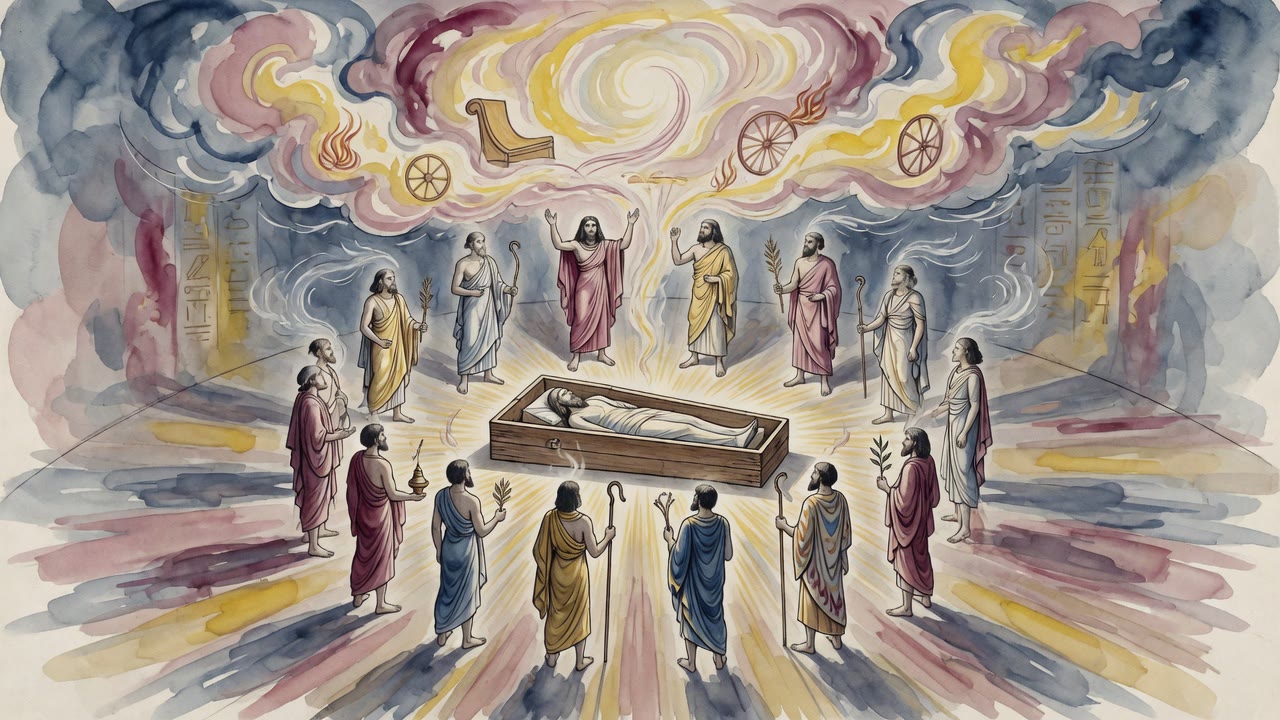
When the cloud covered the tent, it covered a collaboration between the hasty and the titled, with the hasty written first in the camp's memory. Abraham's great substance finally had an address: sockets, hooks, threads, and plates. Jacob's trees met Egypt's gold in a blueprint spoken to Moses on the mountain.
← All myths