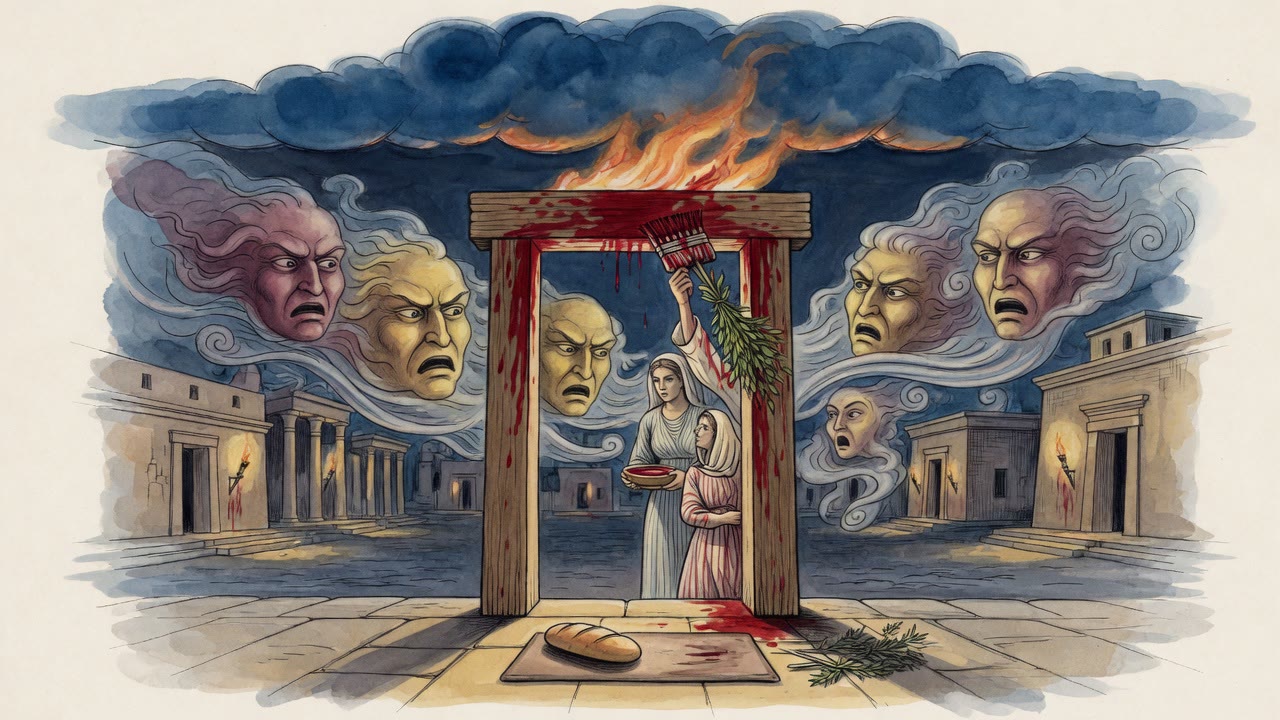
Hannah's Tears Were Bread at the Altar of Shiloh
At Shiloh, Hannah pushed her portion away and wept before the altar. Her tears were her bread, and her grief became the meal that fed her.
Table of Contents
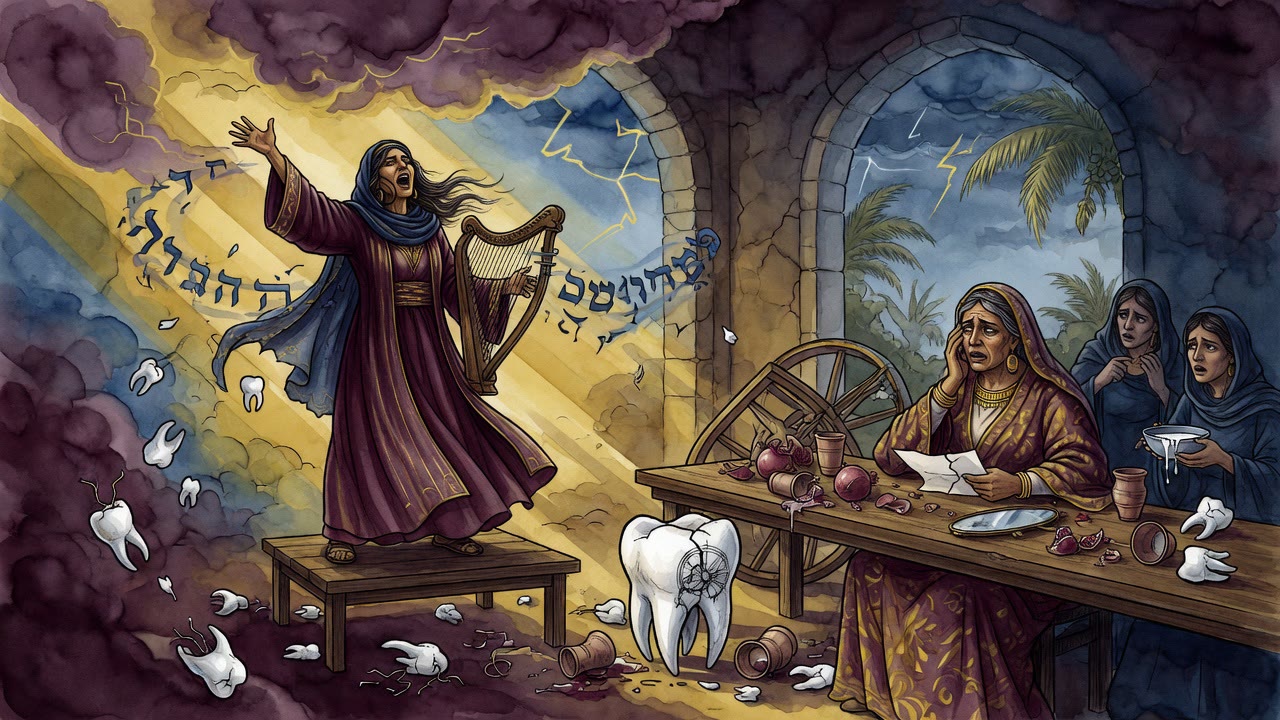
Every year Elkanah went up from Ramah to worship at Shiloh, and every year the same wound opened at the same table. The animal was slaughtered, the smoke climbed over the altar, and Elkanah divided the roasted portions among his household. To Peninnah and to all her sons and daughters he gave portions. To Hannah he gave a double portion, because he loved her, and the Lord had closed her womb (1 Samuel 1:5).
 Click for full size
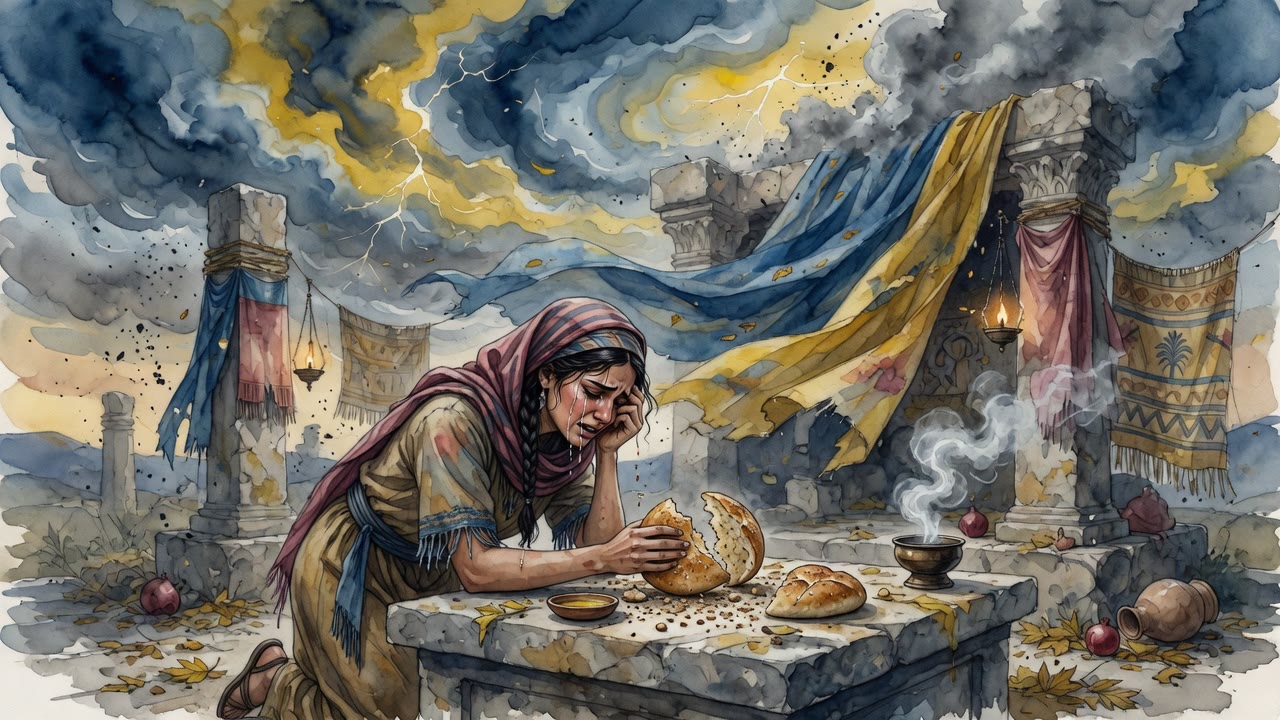
The double portion sat in front of her and went cold. The fat stiffened on the meat. Around her the family ate, Peninnah's children reached for more, and Hannah's hands stayed folded in her lap.
The Portion She Would Not Touch
It happened this way year after year. Her rival taunted her bitterly over the closed womb, and Hannah wept and would not eat (1 Samuel 1:7). She was not refusing the food to make a point, and she was not punishing her body for its silence. She could not want the meat. Something else had already filled her.
There is an old truth about weeping that anyone who has cried through a night knows in the stomach. Tears satiate. A person who weeps long enough loses all appetite, because the crying itself fills the body the way bread does. Hannah was not starving at that table. Her grief was feeding her, meal after bitter meal.
Two Questions in One Breath
Elkanah saw his wife shaking over an untouched plate and came to her with his arms open and his questions stacked together. "Hannah, why do you weep? Why do you not eat? Why is your heart sad? Am I not better to you than ten sons?" (1 Samuel 1:8).
He counted the weeping and the fasting as two separate troubles, as if drying her eyes were one task and filling her plate another. But the two questions were one question. She did not eat because she wept. The tears were already her food, and a woman being fed by sorrow has no room left for roasted meat. Elkanah loved her, and he stood one step away from her hunger without ever seeing what was on her plate.
Tears for Bread
Hannah was not the only one to eat that meal. A psalmist far from the sanctuary, taunted by enemies who asked all day where his God was, confessed the same diet: "My tears have been my bread day and night" (Psalm 42:4). He does not say he wept instead of eating. He says the tears were the bread. The grief came in the morning and again in the evening, regular as the two daily loaves, and it kept him alive when nothing else could.
Jerusalem herself would learn to eat this way, the widowed city weeping in the night until her eyes ran with water (Lamentations 1:16). What Hannah did alone at a festival table, a whole people would one day do in the rubble. Forgo the ordinary comfort. Be sustained by the sorrow itself, because the sorrow at least was honest.
The Deer Who Remembers
The psalm of the tear-eater opens with an animal. "As the deer longs for streams of water, so my soul longs for You, O God" (Psalm 42:2). The Hebrew word is ayal, the stag, and the grammar limps on purpose, for the verb beside it is feminine while the deer is male. It should have been ayala, the doe. The odd masculine form stands in the verse like a raised flag, a coded sign pointing toward remembrance.
The longing of that deer is not blind thirst. It is the thirst of a creature that remembers the stream, that once drank and now stands on dry ground with the taste still in its mouth. So with the soul. It does not ache for something unknown. It aches for what it once had and lost, and the remembering is the ache.
What the Soul Remembers
The psalmist says it plainly: "These things I remember as I pour out my soul" (Psalm 42:5). And what rises when Israel pours out its soul? First the betrayal in the desert, the gold melted and shaped while Moses stood on the mountain, and the shout that followed it: "These are your gods, O Israel" (Exodus 32:4). The calf. A wound centuries old and still open.
But the soul remembers a second thing in the same breath, the words Moses left behind: "These you shall offer to the Lord at your set feasts" (Numbers 29:39). A whole calendar built out of remembrance. The Passover lamb. The first fruits. The daily offering that kept the altar burning from morning to night. In fire and flour and fixed seasons, Moses constructed a system for doing deliberately what Hannah did naturally over her cold plate: drawing nourishment from memory when the present moment sets out food the soul cannot eat.
She Rose From the Table
After the others had eaten and drunk in Shiloh, Hannah rose (1 Samuel 1:9). She stood near the doorpost of the sanctuary, where Eli the priest sat on his seat, and she prayed with her lips moving and her voice silent. Eli watched her mouth and decided she was drunk (1 Samuel 1:13).
"I have drunk neither wine nor strong drink," she answered him. "I have poured out my soul before the Lord" (1 Samuel 1:15). The very words of the psalm, spoken generations before the psalm was sung. Eli blessed her, asking that the God of Israel grant her petition. And the woman went her way, and she ate, and her face was not sad any longer (1 Samuel 1:18). The tears had carried her as far as tears can go. Once the soul was poured out, the body could take bread again, ordinary bread, and within the year her arms were no longer empty.
← All myths