Parshat Terumah5 min read

Jacob's Cedars Sang for the Boards of the Dwelling

Jacob went down to Egypt with saplings in his baggage. He set them in foreign soil so his children would have timber ready for the day of building.

Curated by Arthur · Told by Maggid ·
Table of Contents
  1. Trees Planted for a Day Not Yet Seen
  2. Bezalel's Hands and the Midwives' Fear
  3. The Second Tablets and a Human Hand
  4. When the Boards Stood
  5. What the Wood Remembered
Jacob's Cedars Sang for the Boards of the Dwelling Click for full size

Trees Planted for a Day Not Yet Seen

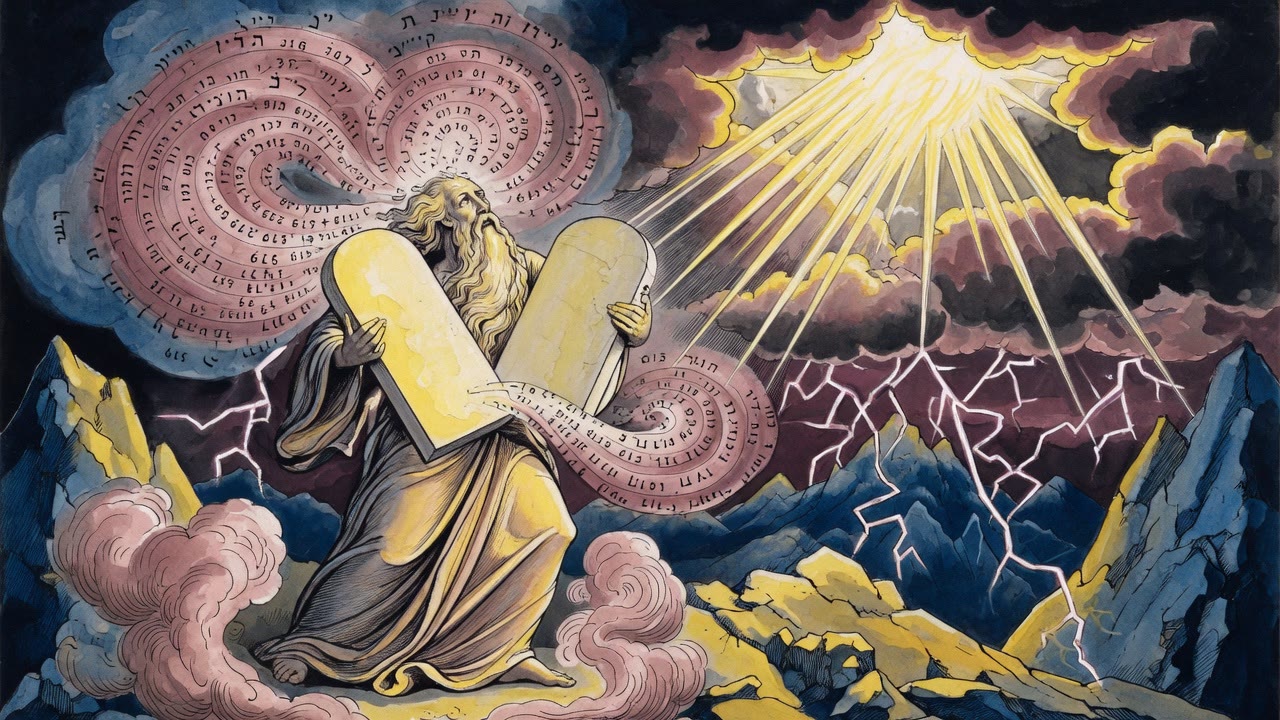
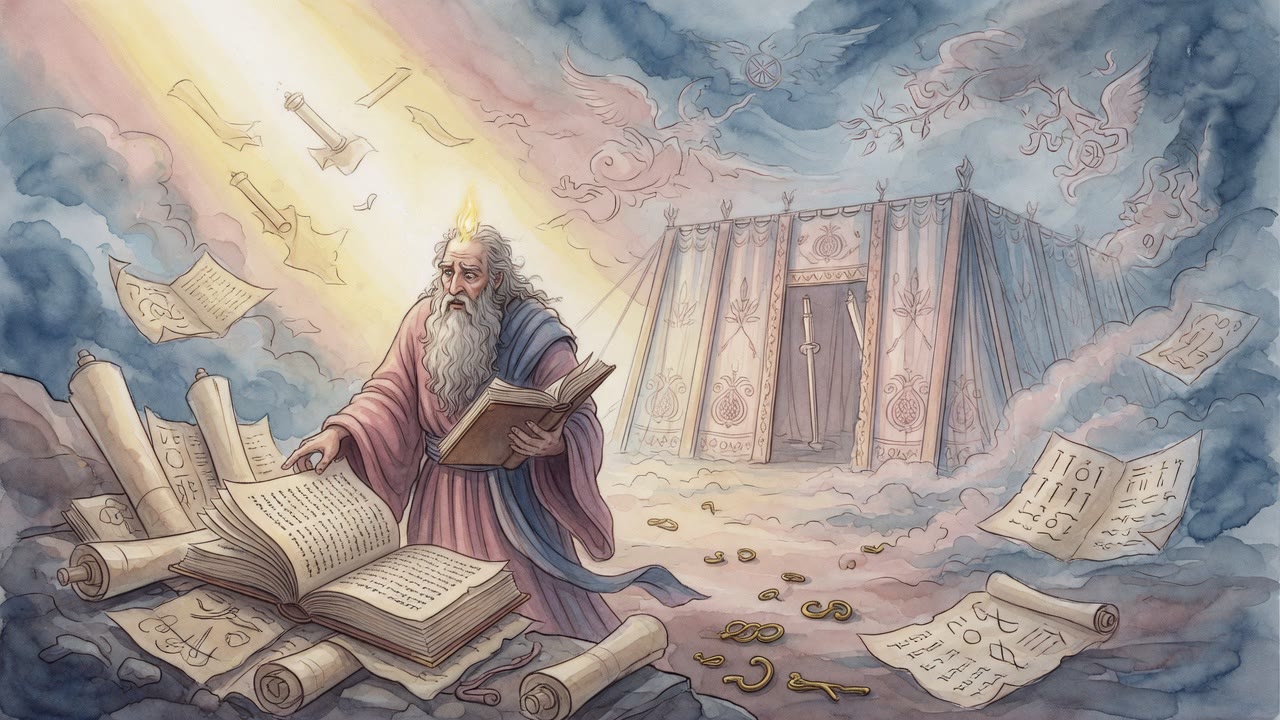
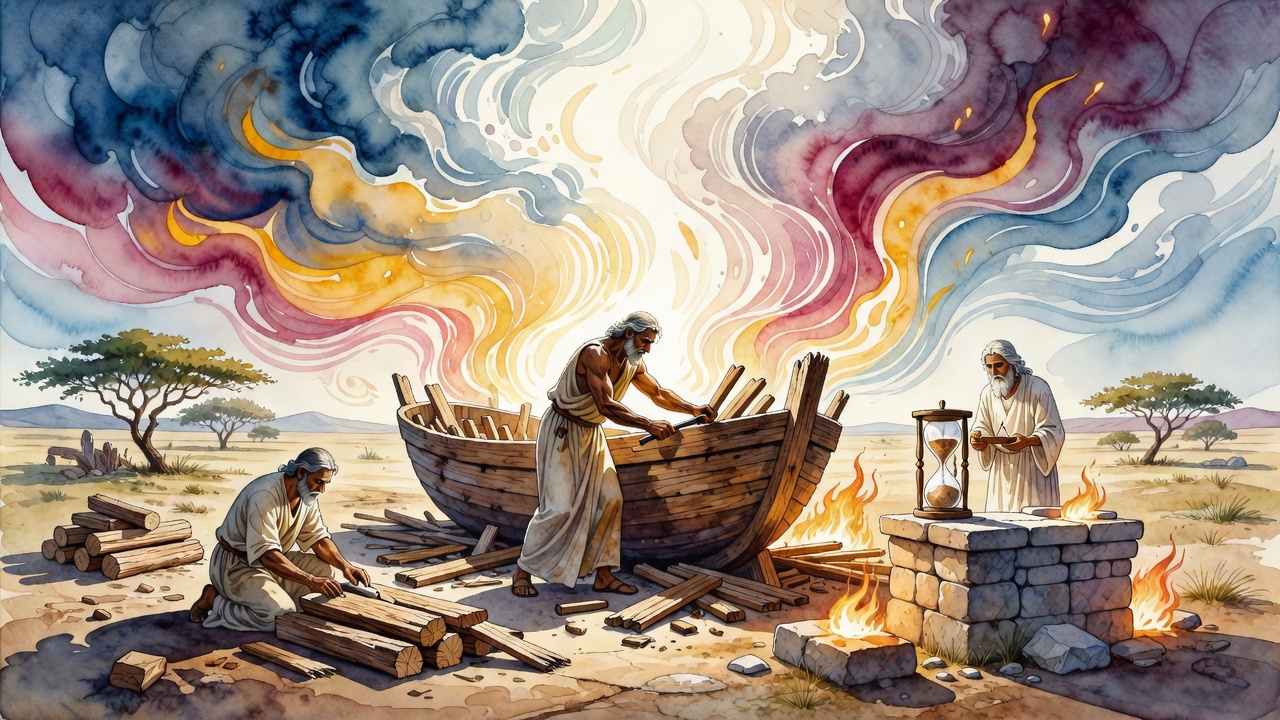
Jacob went down to Egypt with more than sons and flocks. He brought saplings. His hands set them in foreign soil while his eyes already saw boards that did not yet exist. The great center bar that would one day run end to end through the Tabernacle did not begin in the wilderness. It came down by Jacob's hand, who planted the trees so his children would have them ready for the day of building. When those cedars grew, they did not stand silent. The tradition says they sang. Wood that would become boards for God's dwelling learned praise before any adze touched it.

Acacia, shittim, carries another secret: it heals the wound of Shittim, the place of later failure, by becoming the material of holiness. The boards that wall the sanctuary are a cure worked in timber. Jacob could not have named every future sin. He could plant against the day when Israel would need walls that remember him. Exile, in his packing list, included a forest for God.

Bezalel's Hands and the Midwives' Fear

From where did all the glory of the Tabernacle's craftsman come? From the tribe of Judah, for Scripture names Bezalel "of the tribe of Judah." Job says: "Then He saw it and declared it; He established it and searched it out; and He said to man, the fear of the Lord is wisdom" (Job 28:27-28). Our rabbis taught that the Holy One rehearsed His wisdom twice in private before speaking it to Israel. Rabbi Acha said four times. Wisdom is not a sudden spark in a workshop. It is a long rehearsal that finally reaches human hands.

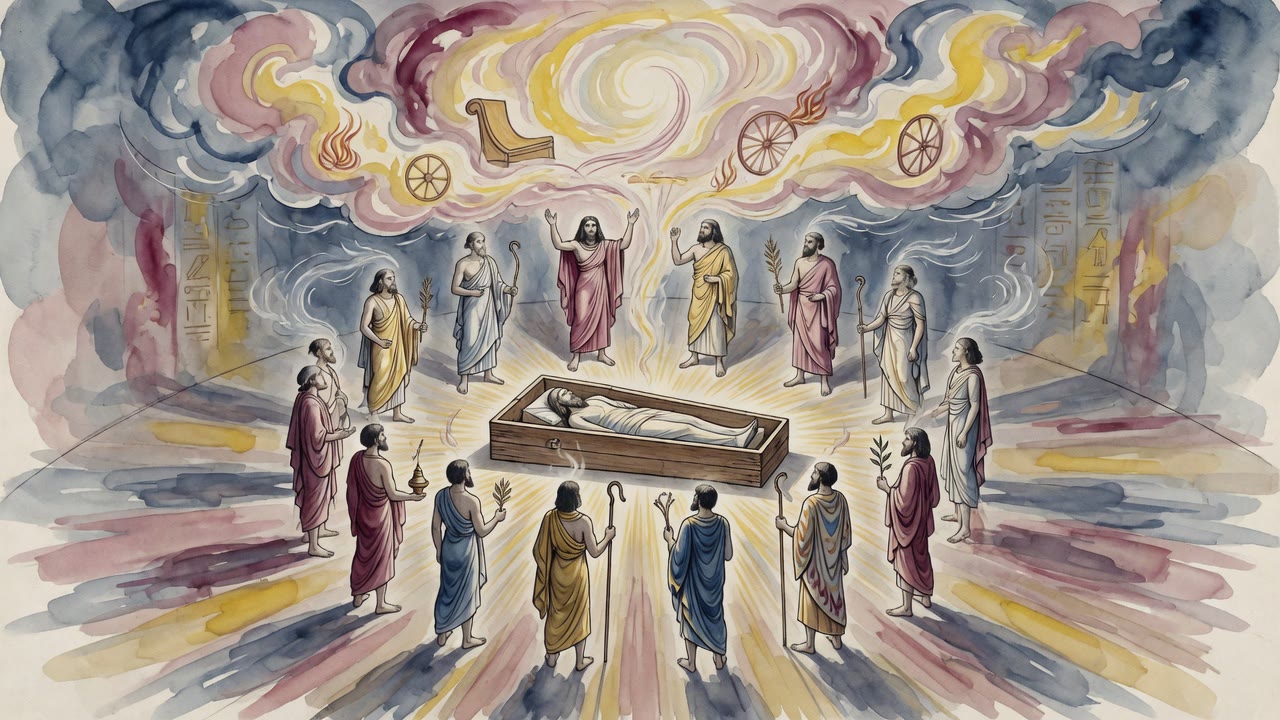
From whom do we learn that wisdom is repaid in kind? From two midwives. When the king of Egypt commanded Jochebed and Miriam to watch the birthstool, his astrologers had warned that Israel's redeemer would be born that day. He could not tell whether the child was Israelite or Egyptian, so he decreed every son into the river. The midwives feared God and would not kill. So the Holy One built them houses. Jochebed received priesthood and kingship through Moses and Aaron. Miriam received wisdom, and from her line came Bezalel, filled with the spirit of God, the wise hands that built the dwelling of the Most High. Fear of God at a birthstool becomes craft at a sanctuary a few generations later.

The Second Tablets and a Human Hand

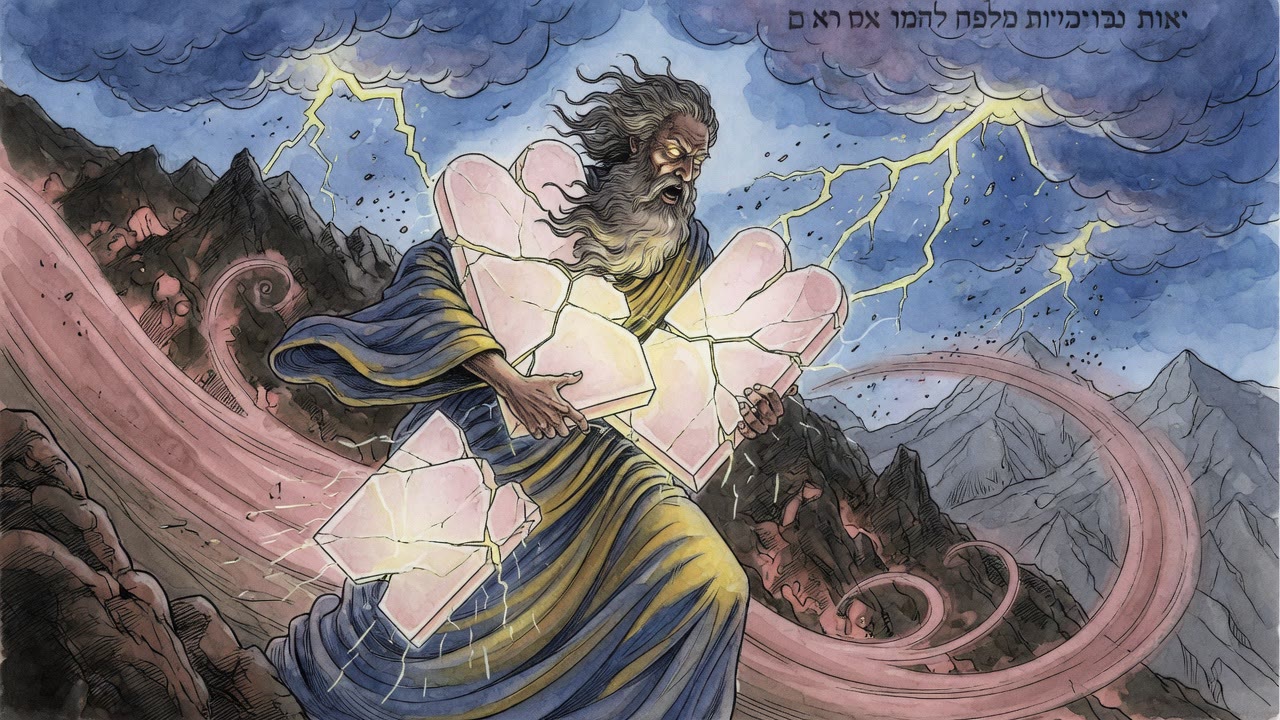
"Write for yourself these words." So the Holy One instructs Moses as the second tablets are prepared. The first tablets the Blessed One inscribed with His own hand, for Scripture testifies they were "written with the finger of God" (Exodus 31:18). The second set He places in Moses' care: write for yourself. The broken first pair had fallen to the calf. The second pair would rise through a human hand under a divine command. The Tabernacle would need boards and bars. The covenant would need letters cut by a man who had already shattered stone in grief and anger.

Moses writes. Bezalel carves and joins. The cedars that sang in Egypt become the ribs of a portable heaven. The midwives' fear becomes, generations later, a craftsman's wisdom. Nothing in the story is wasted: not a planted tree, not a refused murder of infants, not a second chance at the tablets. Repair is material. It has grain and ink and gold rings.

When the Boards Stood

In the wilderness the center bar ran true. The acacia healed its name by holding the curtains of meeting. Bezalel measured and the spirit filled the measure. Moses' writing on the second tablets stood where the first had been smashed. Israel walked with a house that remembered Jacob's foresight and Miriam's courage at the Nile. Every time the camp rose, the boards rose with it, a forest still traveling.

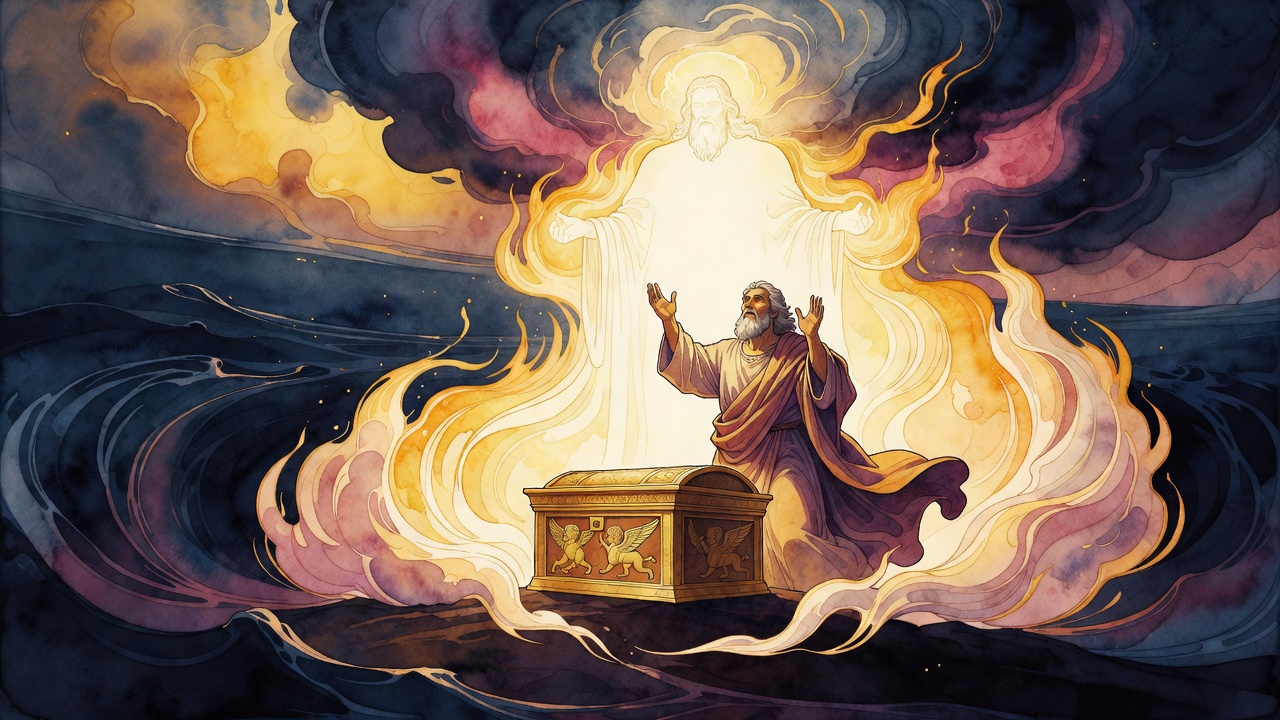
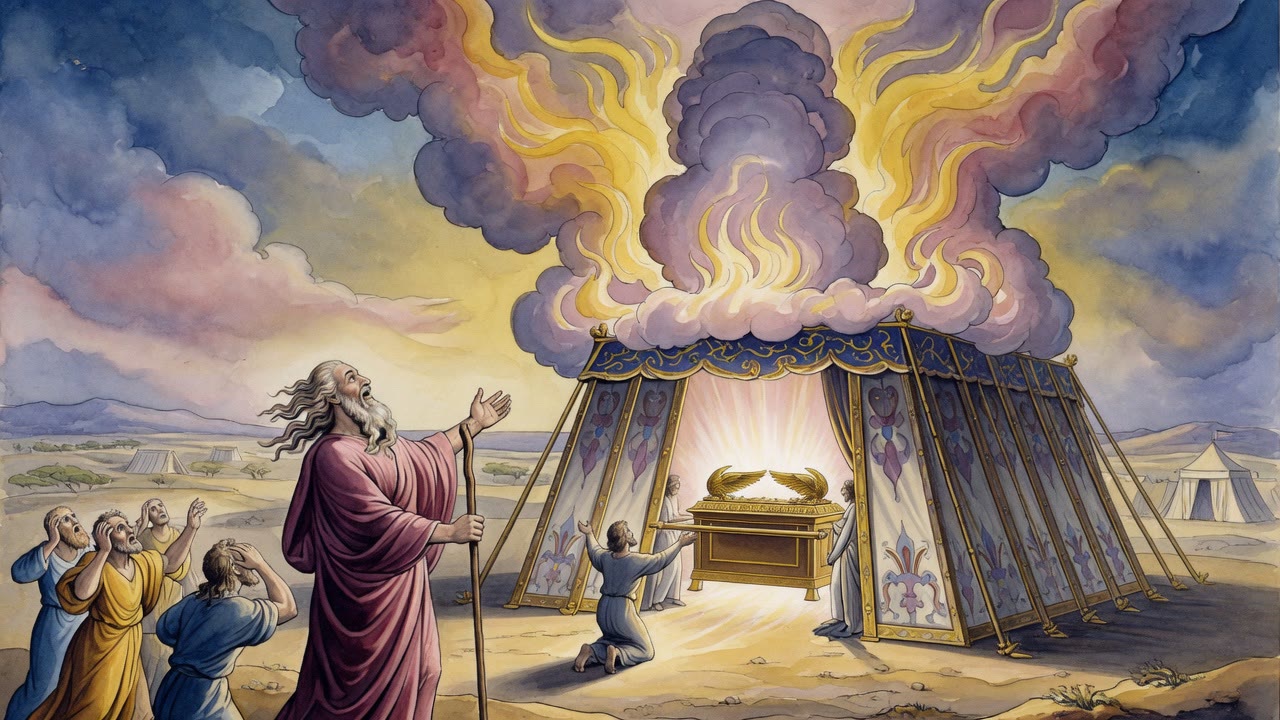
The singing of the cedars is not decoration. It is the claim that creation itself can rehearse praise before it is cut to holy size. Fear of God in two women becomes architecture. A prophet's hand becomes the second law's surface. The dwelling is a forest's long obedience and a midwife's long reward, fitted together under a cloud.

What the Wood Remembered

Jacob's saplings outlived Jacob. Bezalel's tools answered a spirit older than his apprenticeship. Moses' second writing answered a break he had made and a mercy he had won. Together they raise a sanctuary that is not only gold and blue wool. It is planted wood, refused blood, and rewritten stone, carried through dust toward every camp where Israel would pitch and rest. When later generations touched the boards, they touched a grandfather's gamble on a holiness he would not live to see finished.


← All myths
From the tradition

Sources

3 sources

The texts behind this telling. Some cards carry a translation of the source; others are our own retelling of it, and each card says which. Every card links out to the original.

Midrash Tanchuma Buber, Terumah 9:2Midrash Tanchuma Buber, Terumah

Translation of the source text.Midrash Tanchuma (Buber), Public Domain, on Sefaria · CC-BY-SA

Our masters said: The center bar came down to Egypt by the hand of Jacob, the one that served from end to end. Not only that, but the cedars uttered song. This is what David says, "Then shall all the trees of the forest sing for joy" (Psalms 96:12). "Then" (az) means nothing but a song that one utters to the Holy One, blessed be He, and it says: When will the Tabernacle be made? And when the Holy One, blessed be He, said [to Moses] that he should make the Tabernacle, what did He say to him? "And you shall make the boards for the Tabernacle" (Exodus 26:15), those same boards that their father had prepared for them.

Rabbi Samuel bar Nahmani said: There were twenty-four kinds of cedar, and of all of them only seven were chosen, as it is said, "I will plant in the wilderness the cedar, the acacia, the myrtle, and the oil tree; I will set in the desert the cypress, the plane tree, and the box tree together" (Isaiah 41:19). Cypress is altin; plane tree is ispandamon; box tree (te'ashur) is paksinon, which is the most approved (me'ushar) of all kinds of cedar. And of all of them, only the acacia (shittah) alone was chosen, [as it is said,] "acacia wood" (Exodus 26:15). And why did He call it shittim? Only in order to heal what Israel did at Shittim.

Another interpretation: "acacia (shittim) wood", they sinned at Shittim and they were stricken at Shittim. They sinned at Shittim: "And Israel dwelt at Shittim" (Numbers 25:1). And they were stricken at Shittim: "And those that died in the plague were [twenty-four thousand]" (Numbers 25:9). And they did not stir from there until they were healed. Phinehas arose and turned back the wrath from them, as it is said, "Phinehas the son of Eleazar" (Numbers 25:11). The Holy One, blessed be He, said: In the world to come I will heal the Shittim, as it is said, "And it shall come to pass in that day, that the mountains shall drop down sweet wine, and the hills shall flow with milk, and all the watercourses of Judah shall flow with water; and a fountain shall come forth from the house of the Lord, and shall water the valley of Shittim" (Joel 4:18).

Full source
Midrash Tanchuma Buber, Vayakhel 5:1Midrash Tanchuma Buber, Vayakhel

Translation of the source text.Midrash Tanchuma (Buber), Public Domain, on Sefaria · CC-BY-SA

And from where did all this glory come? From the tribe of Judah, [as it is said:] "of the tribe of Judah" (Exodus 35:30). This is what Scripture says: "Then He saw it and declared it; He established it and also searched it out. And He said to man, Behold, the fear of the Lord, that is wisdom" (Job 28:27-28). Rabbi Acha and our Rabbis [differ]. Our Rabbis say: Two times He spoke the utterance between Himself and Himself, and afterward He said it to Israel, as it is said: "Then He saw it and declared it" - that is one; "He established it and also searched it out" - that is two; and afterward "And He said to man." But Rabbi Acha said: Four times, as it is said: "He saw it and declared it; He established it and also searched it out" - that is four times.

From whom do you learn it? From Jochebed and Miriam. What is written? "[And] the king of Egypt said to the midwives" (Exodus 1:15). What did he say to them? "And you shall look upon the birthstool" (Exodus 1:16). Why did he do this? Rather, because the astrologers said to them: On this day the redeemer of Israel is born, and we do not know whether he is an Egyptian or not. At that hour he gathered all the Egyptians and said to them: Lend me your sons for one day, as it is said: "Every son that is born [you shall cast into the river]" (Exodus 1:22). "[Every son] of Israel" is not written here, but "every son" - whether of Israel or of Egypt. "And the midwives feared [God]" (Exodus 1:17). And how did the Holy One, blessed be He, reward them? "He made them houses" (Exodus 1:21) - houses of priesthood, houses of Levitical service, and kingship. Jochebed took priesthood and kingship as her reward - Moses and Aaron. And what did Miriam take as her reward? Wisdom, as it is said: "Behold, the fear of the Lord, that is wisdom" (Job 28:28). From her He raised up Bezalel, who was wise, "and I have filled him with the spirit of God" (Exodus 31:3).

Full source
Midrash Tanchuma Buber, Ki Tisa 17:2Midrash Tanchuma Buber, Ki Tisa

Translation of the source text.Midrash Tanchuma (Buber), Public Domain, on Sefaria · CC-BY-SA

(As it is said, in Exodus 34:27:) "Write for yourself." The first tablets, I wrote them, as it is said (in Exodus 31:18): "written with the finger of God"; but the second ones, "you write for yourself."

To what is the matter comparable? To a king who married a woman and wrote her a gamitos (that is, a marriage contract) at his own expense. She did nothing but corrupt herself, so he expelled her. Her bridal sponsor came and reconciled her to the king. The king said to her: "Behold, I have been appeased; only go and make another gamitos."

Full source