5 min read

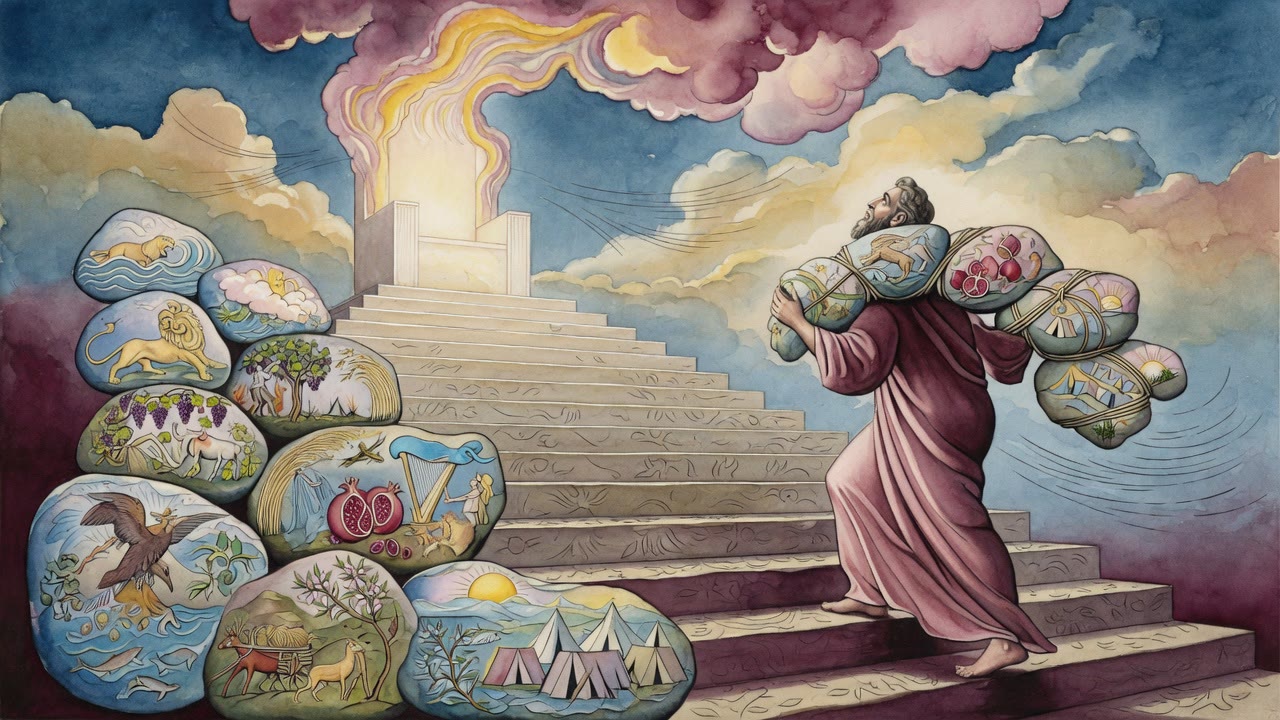
Jacob Set His Sons in Order Around His Bier

Dying in Egypt, Jacob places twelve sons around his coffin like a map. Later the same order rings the Tabernacle, and Moses camps at the door to make peace.

Curated by Arthur · Told by Maggid ·
Table of Contents
  1. A Father Arranges the Bearers
  2. The Camp Remembers the Coffin
  3. A Mile of Distance, Two Men Close
  4. Pearls, Not Glass
  5. From Deathbed to Doorway
Jacob Set His Sons in Order Around His Bier Click for full size

A Father Arranges the Bearers

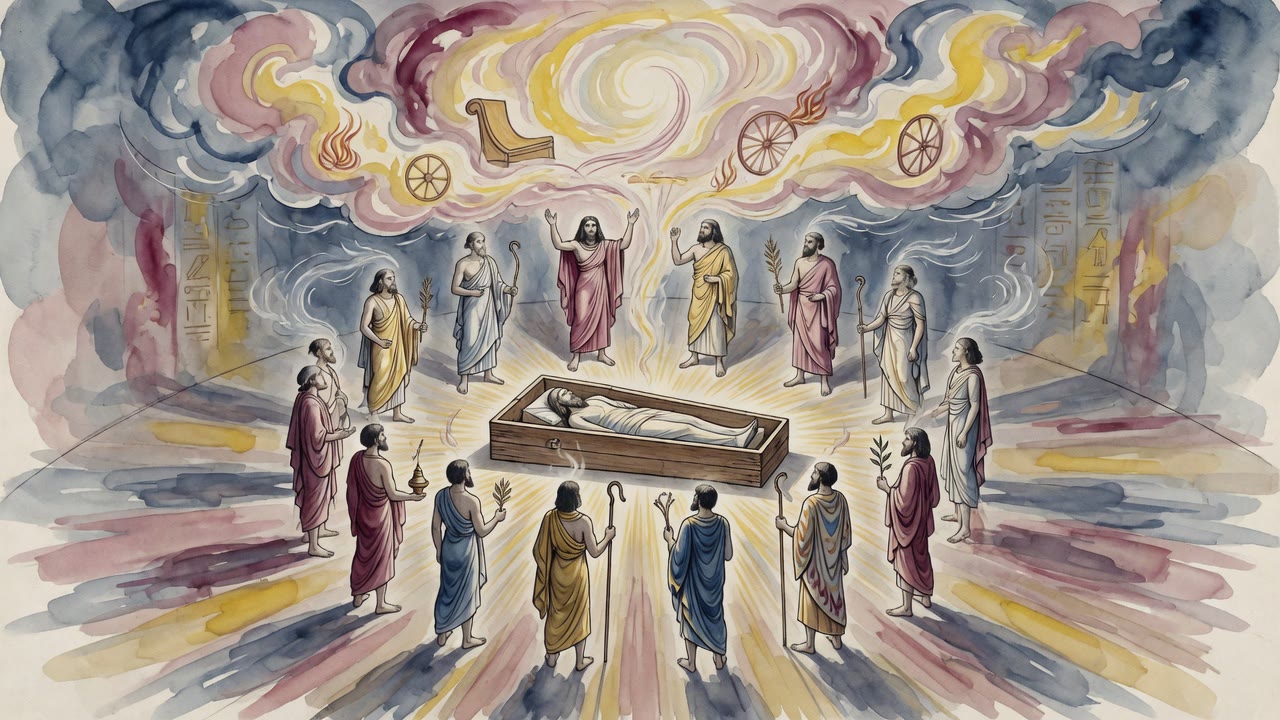
When Jacob felt death draw near in Egypt, he did not only bless his sons. He walked among them and set their hands on the future of his body. Carry me with reverence, he charged them. Let no stranger's hand touch my bier, not an Egyptian, not even a grandson born of Canaanite mothers. Only my own twelve sons shall lift me.

Then he assigned places as if the coffin were already a camp. Judah, Issachar, and Zebulun at the east. Reuben, Simeon, and Gad at the south. Ephraim, Manasseh, and Benjamin at the west. Dan, Asher, and Naphtali at the north. Joseph shall not lift the bier, for he is a king and must be honored. Levi shall not lift it either, for he will bear the Ark of the Life of the Worlds, and hands that carry the living God do not carry a coffin of the dead.

"Do this," said Jacob, "and the Holy One will one day settle you in standards upon standards." The dying man was mapping a nation that did not yet have a desert to stand in. His voice was thin. His geometry was not.

The Camp Remembers the Coffin

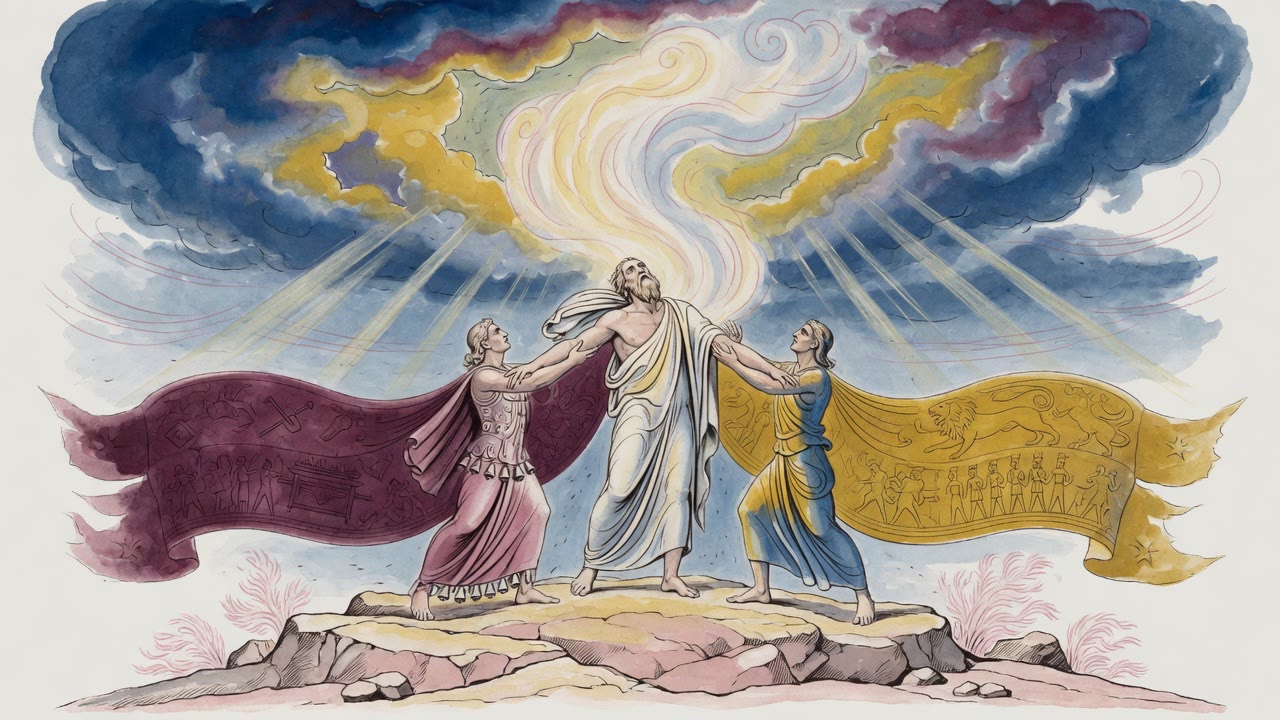
Generations later, Israel left Egypt, and God told Moses to make them their standards. Moses grew anxious. The tribes would quarrel over who camps where. The Holy One answered as if smiling: they need no help from you. Their father already gave them their order. Just as they once surrounded his bier, so will they surround the Tabernacle. "Each by his standard, with the signs of their fathers' house."

The coffin in Egypt became the blueprint for holiness in the wilderness. East stayed east. South stayed south. What grief arranged, glory kept. No lottery. No shouting match under the cloud. The old man's last orders still held the wind directions.

A Mile of Distance, Two Men Close

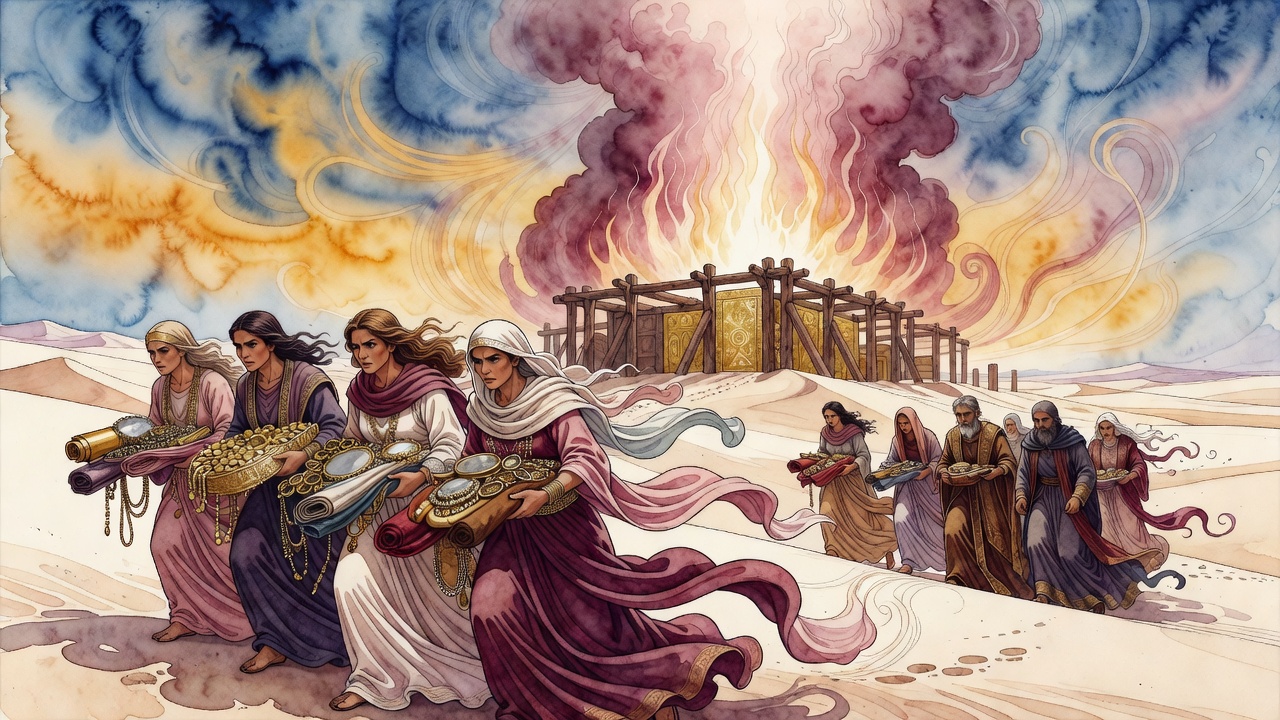
Around the Tent of Meeting the people were held back. "At a distance," the verse says, and Rabbi Isaac heard a full mile in the word, two thousand cubits between the tribes and the Ark, the same gap later commanded at the Jordan. Distance was protection and awe both. Ordinary feet do not crowd the fire that leads them.

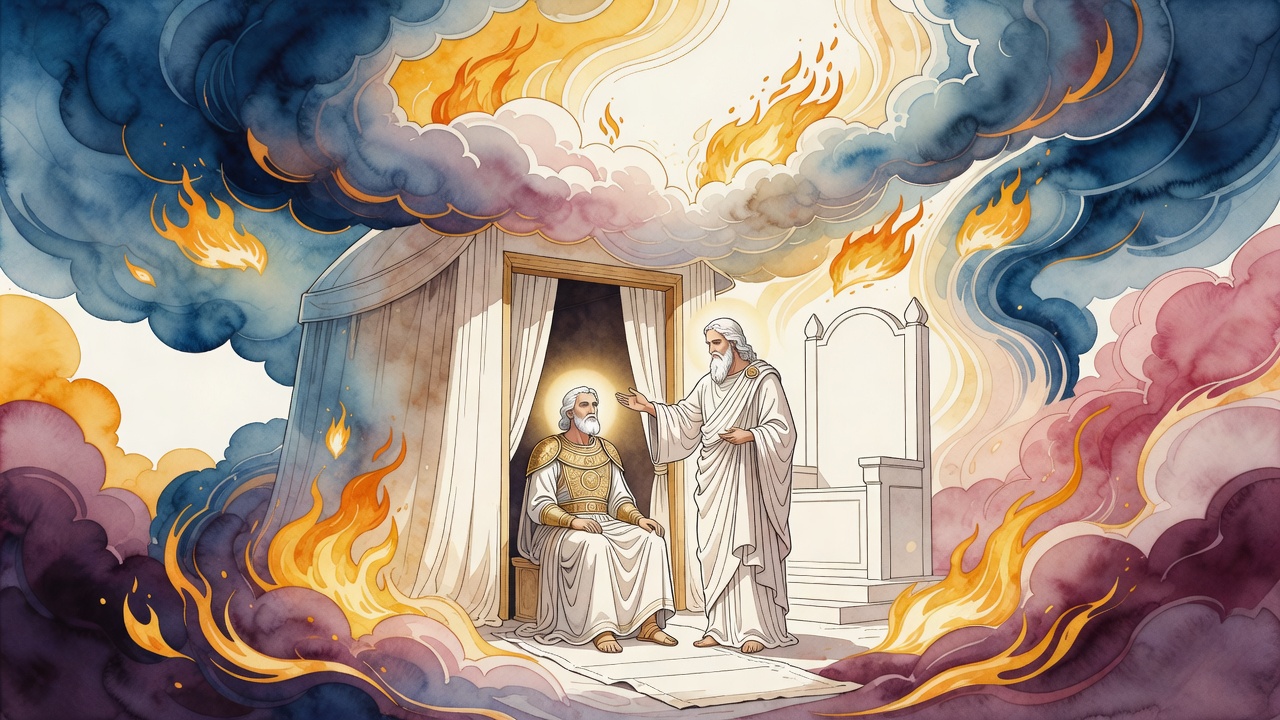
Two tents broke the rule on purpose. Those camping before the Tabernacle, eastward toward the sunrise, were Moses and Aaron and his sons. Why so near when all Israel was held off? Because the Holy One said: if I grow angry with My children, let these two be at hand to make peace between Me and them. Nearness was not a prize for pride. It was a post for peacemakers. The tribes camped round about at a distance. The reconcilers camped against the face of the Tent, ready to plead when wrath rose.

Pearls, Not Glass

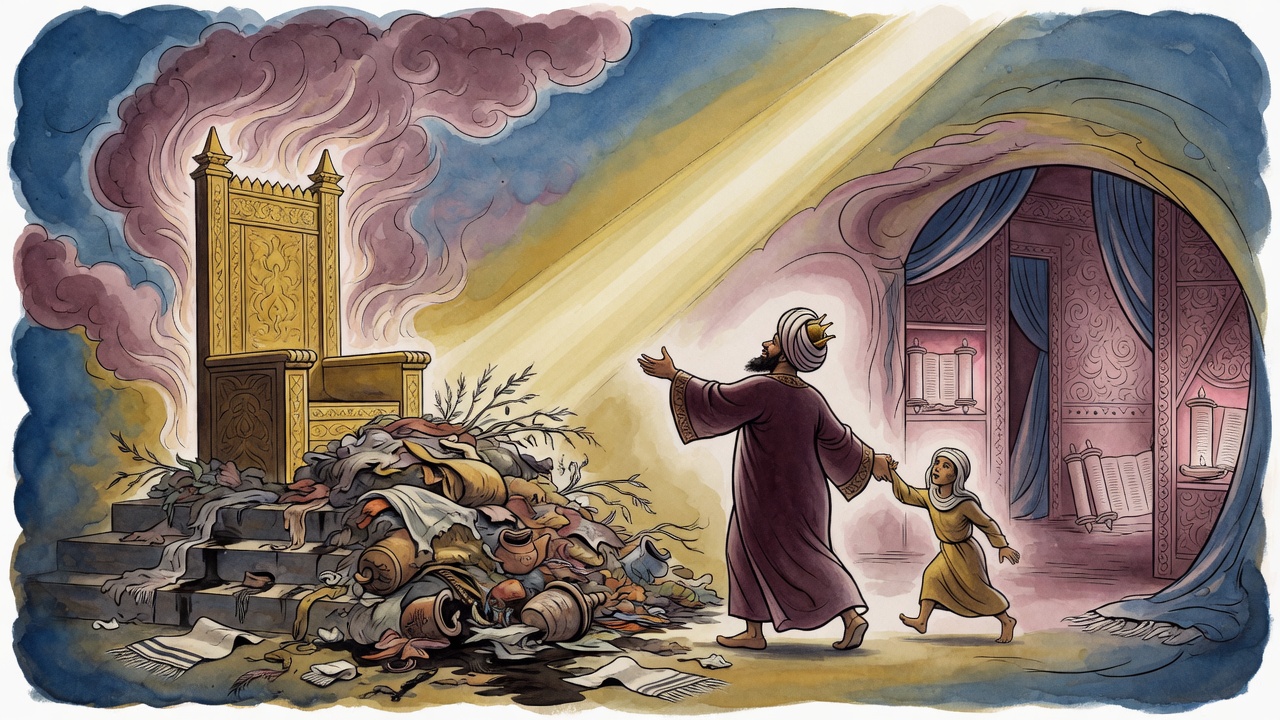
Why count this people at all, again and again, when the nations go unnumbered? A merchant hauls common glass beads in a careless heap. He does not tally them going out or coming back. One cracks in the gutter and the loss is nothing. But a string of flawless pearls he counts as he draws each one out and counts again as he locks them away.

So the Holy One carries Israel. The nations weigh as emptiness before Him. Israel He bears from the belly, carried from the womb, His children. That is why every firstborn is enrolled, every camp ordered, every bier and every standard fixed. The sixty queens and eighty maidens of the Song go unnumbered. "One alone is My dove, My perfect one." The beloved is counted, and counted, and counted again.

From Deathbed to Doorway

See the line from Jacob's room to Moses' tent peg. A father refuses foreign hands on his bones and turns his sons into a compass. Centuries later that compass rings the sanctuary. Two brothers of Levi's house pitch closest not to claim the center but to stand in the breach when anger comes. The same care that would not let Egyptians touch a patriarch's bier will not let the Ark sit without advocates at its door.

When Israel finally marched, the order held. No tribe needed a lottery for the wind directions. Jacob had already spent his last strength on the map. Moses only had to trust that a coffin once surrounded in Goshen still taught the desert how to stand. And when God counted them, He counted as a merchant counts pearls, because a people arranged with that much intention is never a heap of glass.

Levi's empty place at the bier was not absence. It was rehearsal. Hands kept free for the living God would later camp in the sunrise strip where peace is made. Joseph's empty place was honor. A king does not shoulder his father's coffin when the crown already weighs on him. The other ten filled the sides, and the wilderness inherited their geometry without argument. Egypt watched a Hebrew funeral leave with military precision and did not understand it was watching the first dress rehearsal of the camp of God.


← All myths
From the tradition

Sources

3 sources

The texts behind this telling. Some cards carry a translation of the source; others are our own retelling of it, and each card says which. Every card links out to the original.

Midrash Tanchuma Buber, Bamidbar 12:1Midrash Tanchuma Buber, Bamidbar

Translation of the source text.Midrash Tanchuma (Buber), Public Domain, on Sefaria · CC-BY-SA

[(Numbers 2:2:) "EACH BY HIS STANDARD, WITH THE SIGNS OF THEIR FATHERS' HOUSE." This is what Scripture says:] "I will fetch my knowledge from afar, and to my Maker I will ascribe righteousness" (Job 36:3). It need only have said "each by his standard, [with the signs shall the children of Israel encamp]." Why then does Scripture say "by his standard, with the signs [of their fathers' house]"? Rather, when Jacob our father departed from the world, he said to them, "When I sleep with my fathers, you shall carry me out of Egypt and bury me in their burial place" (Genesis 47:30). He went around to all his sons and blessed them and charged them. He said to them: When you carry me, carry me with reverence and with honor, and let no other person touch my bier, not one of the Egyptians, nor one of your children, because there are among them those who married from the daughters of Canaan. And so it says, "And his sons did for him just as he had charged them" (Genesis 50:12), "[and his sons carried him to the land of Canaan]" (ibid. 50:13), his sons and not his sons' sons. How did he charge them? He said to them: Judah, Issachar, and Zebulun shall bear my bier from the east; Reuben, Simeon, and Gad from the south; Ephraim, Manasseh, and Benjamin from the west; Dan, Asher, and Naphtali from the north. Let Joseph not bear, for he is a king, and you must apportion honor to him. And let Levi not bear, why? Because he bears the Ark; and one who bears the Ark of the Life of the Worlds does not bear the coffin of a dead man. If you do thus and bear my bier just as I have charged you, the Holy One, blessed be He, is destined to settle you in standards upon standards. When he departed, they bore him just as he had charged them, as it is said, "And his sons did for him just as he had charged them." What is written after it? "And his sons carried him to the land of Canaan." When Israel went forth from Egypt, the Holy One, blessed be He, said: Behold, the hour has come for them to make standards upon standards, just as their father heralded to them that they were destined to make standards. Immediately the Holy One, blessed be He, said to Moses: Make for them standards for My name. Immediately Moses began to be distressed. He said: Dissension is destined to arise among the tribes. If I say to the tribe of Judah to encamp in the east, it will say, "It is impossible for me to encamp except in the south," and likewise every single tribe in the same manner. The Holy One, blessed be He, said to him: [What concern is it to you?] They do not need you in this matter; of themselves they recognize their dwelling, because their father's charge is in their hands as to how to encamp by the standards. I am not introducing anything new upon them; the arrangement of their father is already in their hands. Just as they surrounded his bier, so shall they surround the Tabernacle. Whence? As it is said, "Each by his standard, with the signs [of their fathers' house]."

Full source
Midrash Tanchuma Buber, Bamidbar 16:1Midrash Tanchuma Buber, Bamidbar

Translation of the source text.Midrash Tanchuma (Buber), Public Domain, on Sefaria · CC-BY-SA

"Each man by his standard, with the ensigns [of their fathers' house, etc. At a distance, around the Tent of Meeting, shall they camp]" (Numbers 2:2). What is the meaning of "at a distance"? Rabbi Isaac said: At a distance of a mile. The Holy One, blessed be He, said: Israel shall be far from the Ark by two thousand cubits, as it is said, "Yet there shall be a distance between you and it of about two thousand cubits, etc." (Joshua 3:4). But Moses and Aaron shall be near to it, as it is said, "And those camping before the Tabernacle [eastward, before the Tent of Meeting toward the sunrise, were Moses and Aaron and his sons, etc.]" (Numbers 3:38). Why were Moses and Aaron near to it? Rather, the Holy One, blessed be He, said: If I become angry with My children, they shall make a reconciliation between Me and My children. Therefore they were near to it. But the tribes "at a distance, around the Tent of Meeting, shall they camp."

Full source
Midrash Tanchuma Buber, Bamidbar 23:1Midrash Tanchuma Buber, Bamidbar

Translation of the source text.Midrash Tanchuma (Buber), Public Domain, on Sefaria · CC-BY-SA

Another interpretation of "Number every firstborn male" (Numbers 3:40). This is what Scripture says: "There are sixty queens and eighty concubines, and maidens without number; one alone is my dove, my perfect one" (Song of Songs 6:8-9).

A parable: It is like a certain merchant who had stones of glass, and he would bring them out to the market. He did not pay attention to their number, for he did not bring them out by count, and when he came in to put them away he did not put them away by count, because they were of glass; he did not give heed to them. But he had a single string of fine pearls, and this one he would take and bring out by count and put away by count.

So too, as it were, the Holy One, blessed be He, said regarding the nations of the world: I have not given them a number, because they are not regarded as anything before Me, as it is said, "All the nations are as nothing before Him; they are counted by Him as less than nothing and emptiness" (Isaiah 40:17). But as for you, you are My children, as it is said, "Who have been borne by Me from the belly, carried from the womb" (Isaiah 46:3). Therefore I number you at every hour. Therefore it is said, "Number every firstborn male." Thus, "There are sixty queens [... and maidens without number]; one alone is my dove, my perfect one", these are Israel.

Full source