Five Destroying Angels Demanded the Torah He Learned in Life
The dogs howled when the Angel of Death came through the door, covered in eyes. Then God asked the dead man what Torah he had studied.
Table of Contents
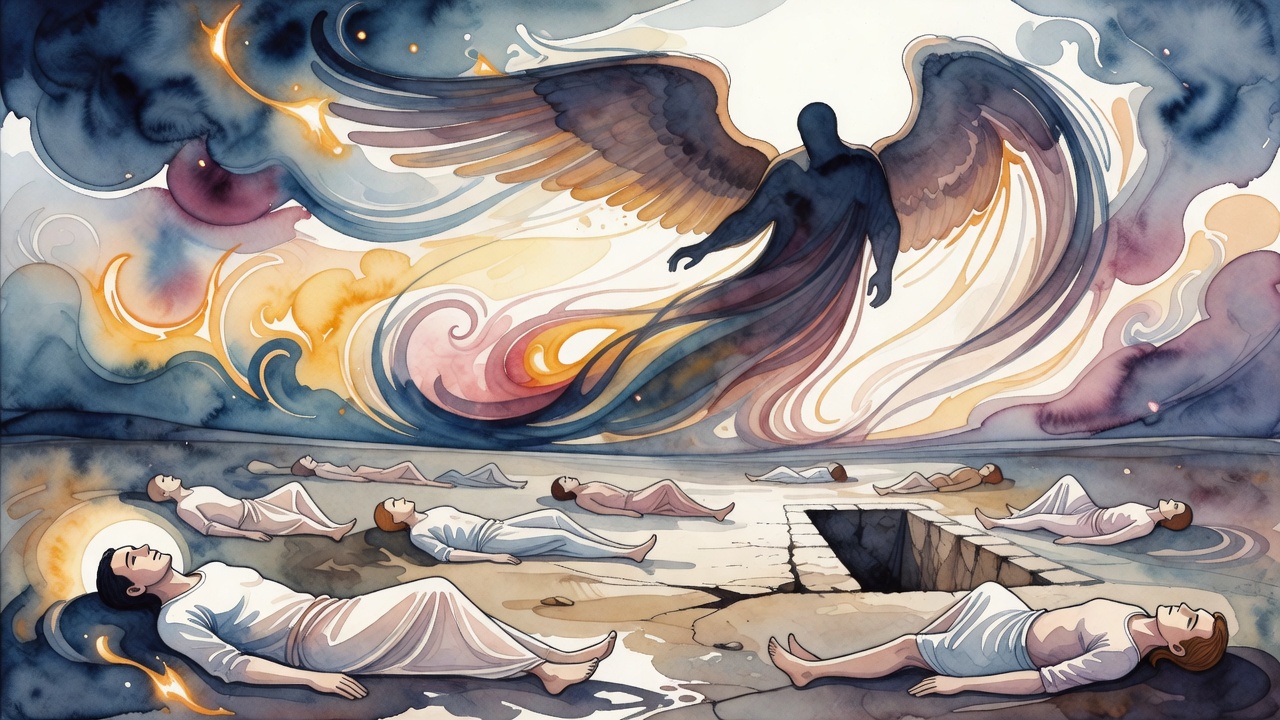
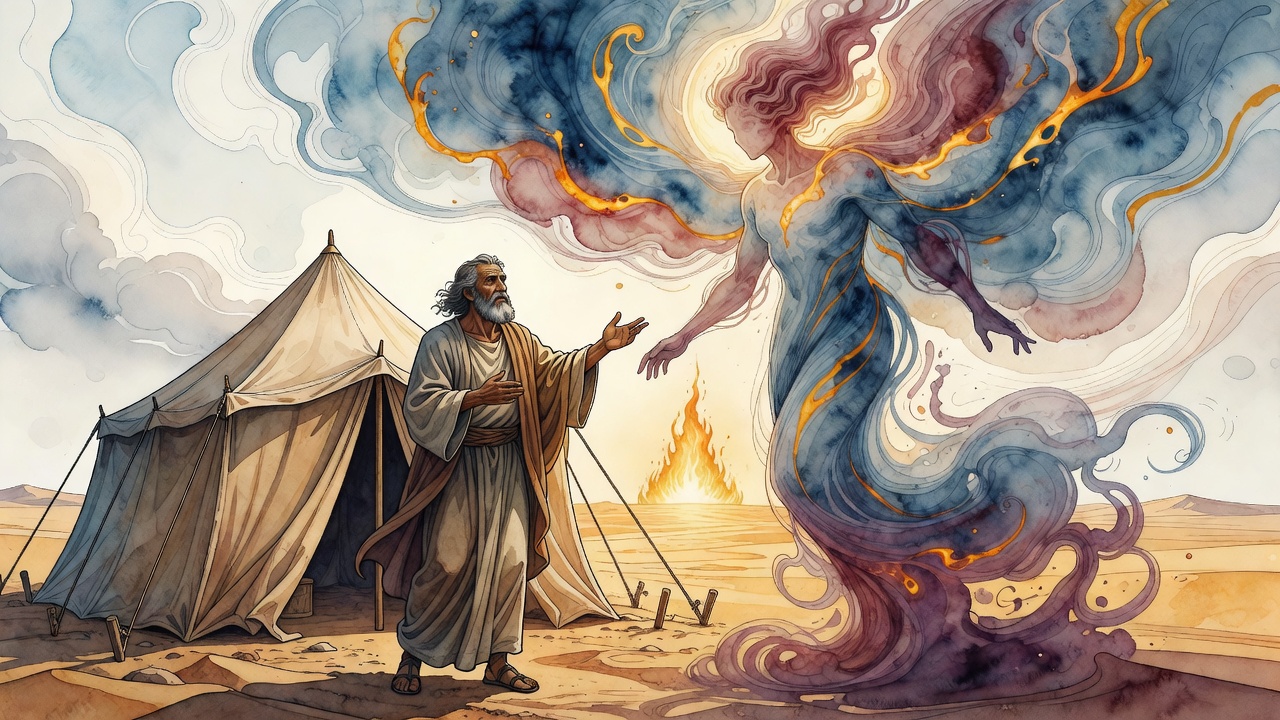
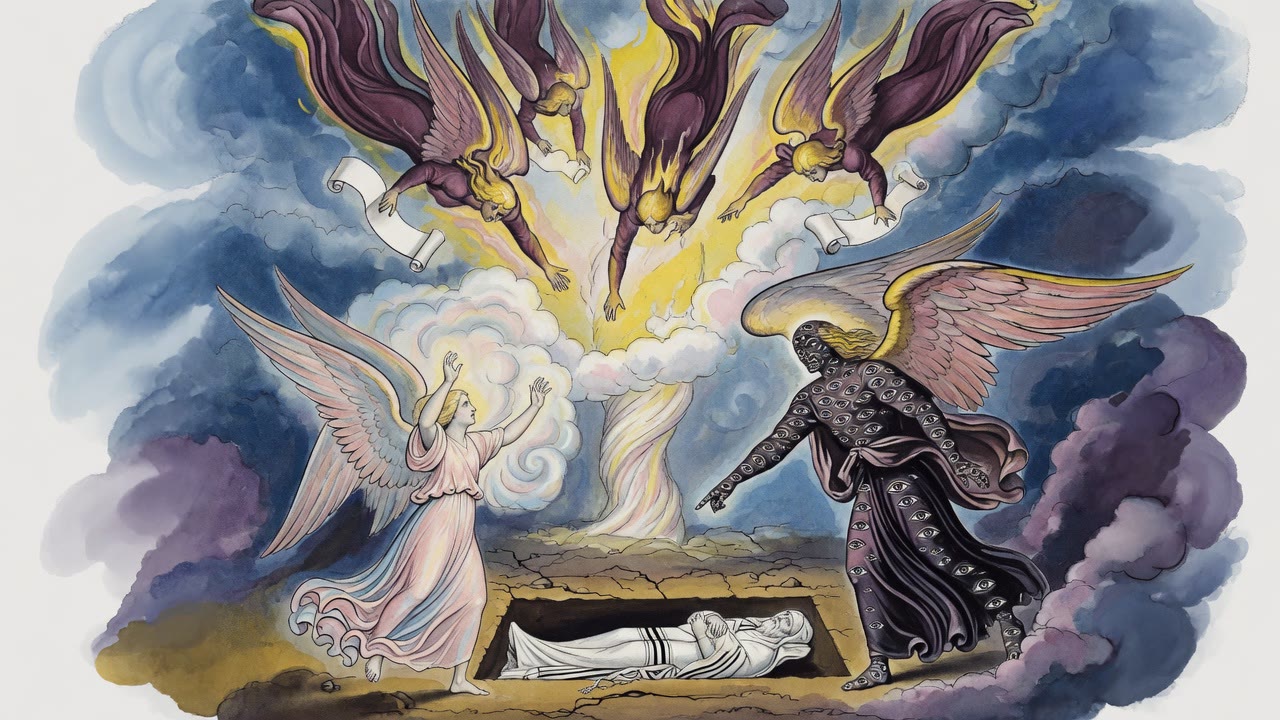
The angel of his fortune knew before he did. It stood at the dying man's shoulder, the guardian of his mazal, and it lifted its face toward the doorway, and what came through the doorway was covered in eyes. Eyes on its wings, eyes on its sword, eyes that did not blink. This was the Angel of Death, who took on its thousand eyes in the garden, when the first woman looked at the fruit because it was desirable to the eyes, and the eyes of both of them were opened, and they understood at last what they had let into the world.
 Click for full size
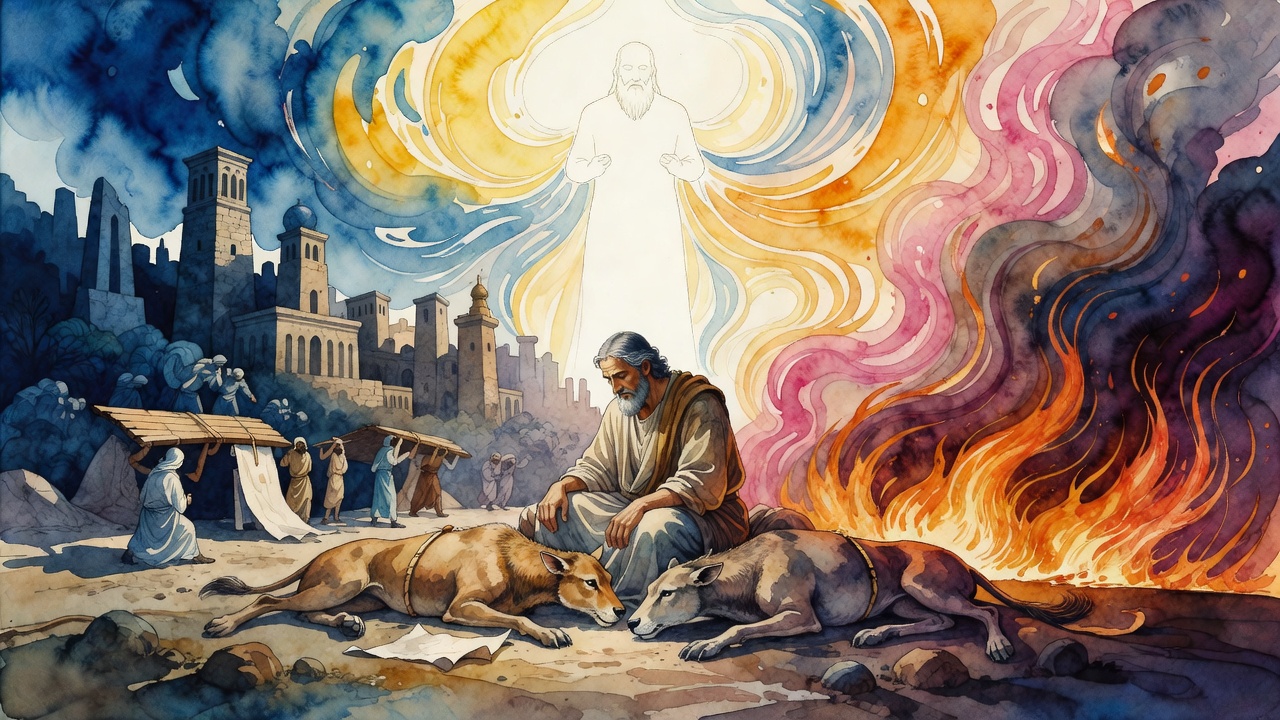
Outside, the dogs began to cry. They always cried at this hour. Animals see what people are spared from seeing. The donkey on the road to Moab had balked before an angel's drawn sword while its rider beat it and saw nothing, and ever since the beasts have known the decrees before the householder does. The dogs threw back their heads and howled at the thing in the doorway, and the man inside went still.
The First Voice Came From the Womb
When the body lay in the ground and the mourners had gone home, the judgment began, and the first to speak was not an accuser. It was the Holy One, blessed be He, who had been there from the start.
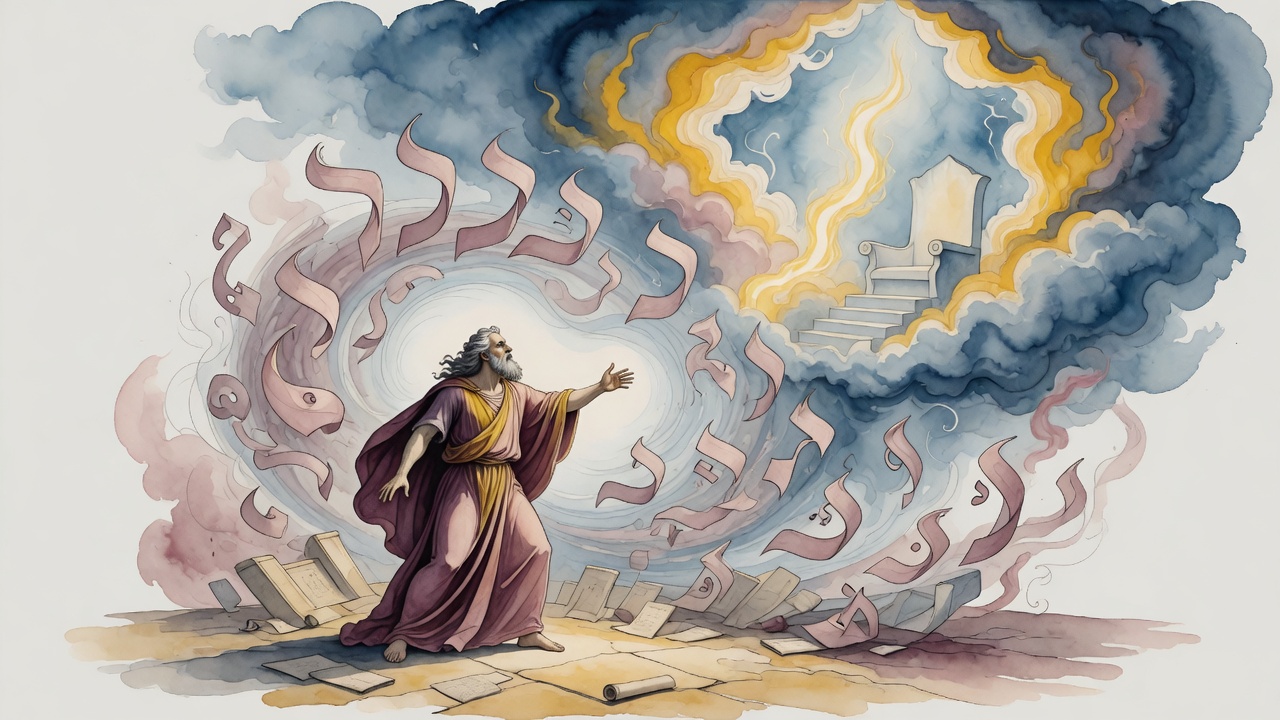
"I took great trouble over you," God said, "from the hour I formed you in your mother's womb, so that you would not come out a ruin. When you came into the air of the world I prepared your food. I kept the torments away from you." Then the voice sharpened into a single question, the only question that decided everything. "Did you study My Torah? Did you do acts of lovingkindness before Me?"
If the man could answer yes, if those two things were truly in him, the case collapsed on the spot. They released him from judgment that same instant, and the eyes in the doorway closed.
Five Came Down for the Five Books
But if the answer was no, the floor of the grave opened to five of them. Five destroying angels, one for each of the Five Books he had been given and had not opened, and they did not come to argue. They came to carry out a sentence.
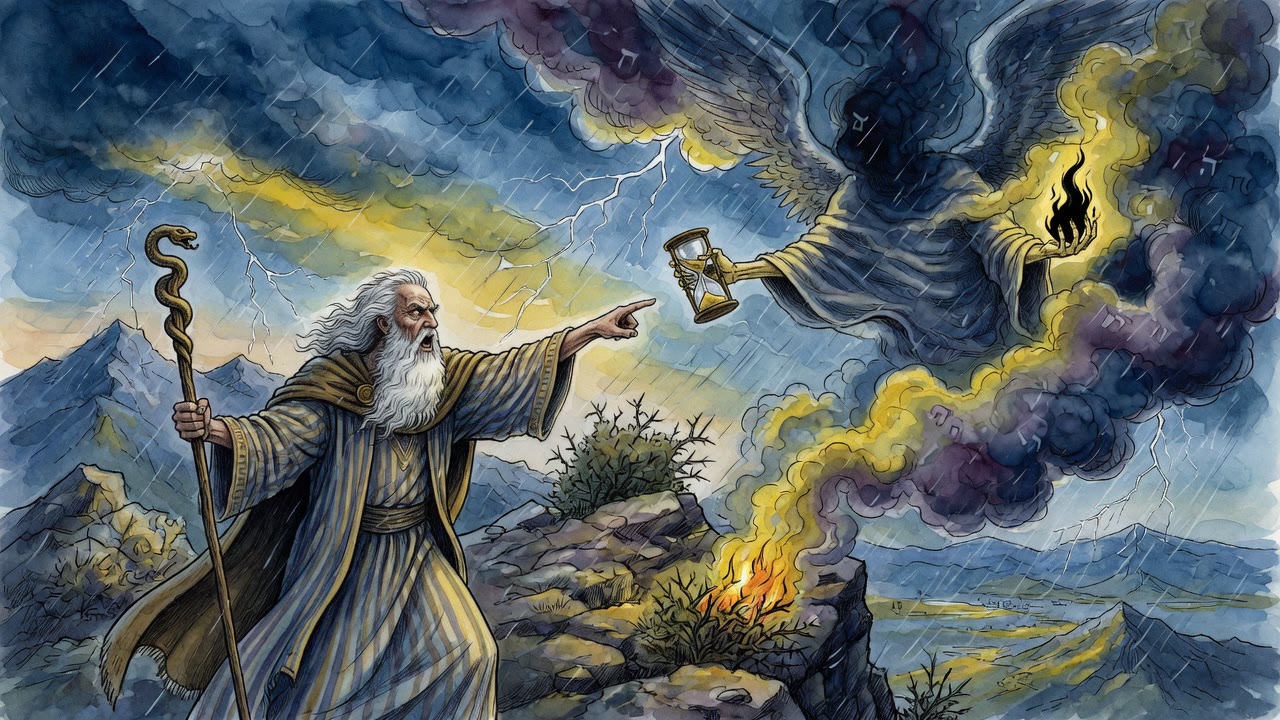
The first struck him. The second stood beside the first and counted the blows aloud, the way a court counts strokes when a man is sentenced to lashes, so that not one extra fell. The third opened the man's own body like the mouth of a furnace, and fire came out of him, his own fire, the heat he had stored and never spent on anything good.
The fourth went up into the mountains and came back with herbs, bitter ones, sour ones, the kind that twist the mouth. If the man had robbed his neighbor in life, the fourth held the herbs out to him. "Grind them with your teeth," it said. "You ate what you stole with these teeth. Now eat this."
The Fifth Went for the Parents
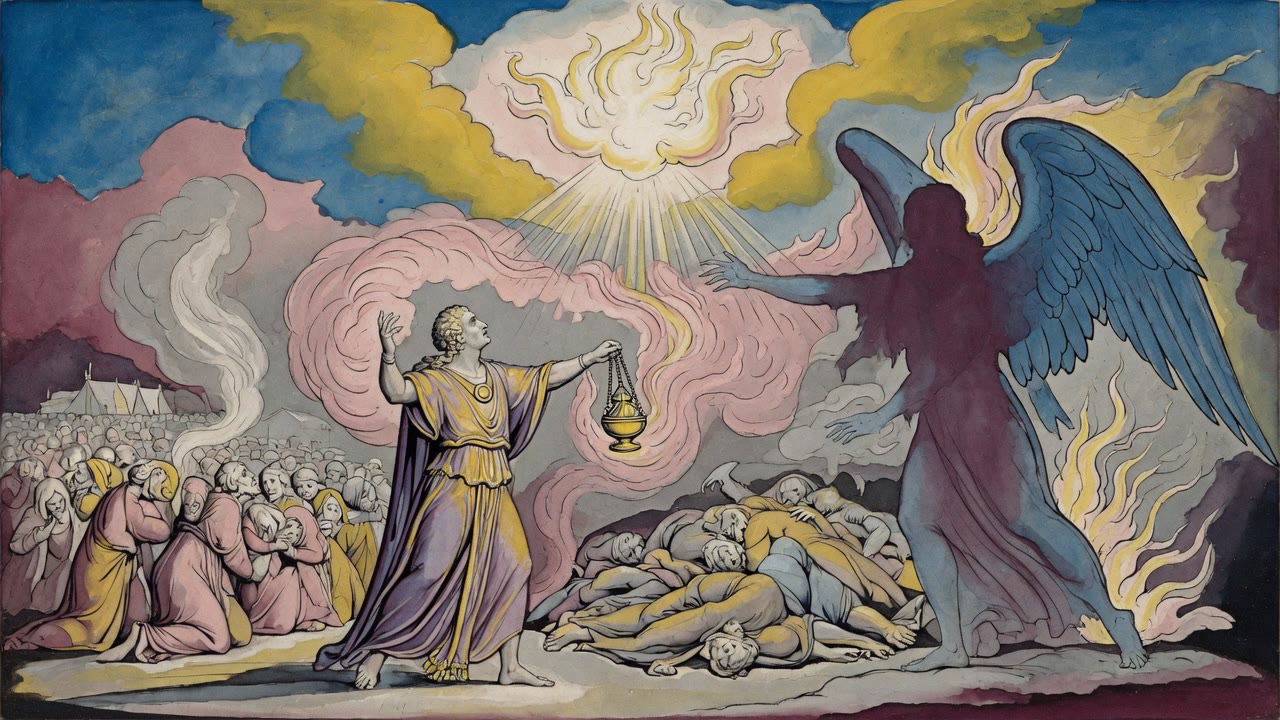
The fifth angel walked past the man and went to find his father and his mother.
It struck them where they stood. "Why did you not lead your children to the Torah?" it demanded of them. "Why did you not teach him the commandments and the good deeds, so that he would keep them and turn away from evil?" And then, in a reversal that turned the whole household inside out, the angel gave the dead man permission to strike the two who had raised him. The hands that should have been folded in a grave rose against the father and the mother who had let him arrive here unprepared.
One sentence was worse than a beating. The man who had read the words but never lived them, who had recited the Torah and done nothing it asked, was flogged in front of his own parents while they watched.
Even the Infant in the Cradle Is Judged
Rabbi Meir taught it in the name of Rabbi Eliezer, and it is a hard thing to hear. The day God judges a person in the grave is harsher than the fires of Gehinnom (the place of punishment after death) itself. Gehinnom, at least, has a gate that keeps some out. Its judgment falls on the wicked from the age of thirteen or twenty and upward, and the very young never see it.
The grave keeps no such gate. Into the beating of the grave goes everyone. The righteous man goes down into it. The weaned child goes down into it. The nursing infant who never spoke a word, the stillborn who never drew a breath, all of them are judged in the ground. This is what Jonah meant from the belly of the fish when he cried out of his distress, from the belly of Sheol. The distress was the beating in the grave. The belly of Sheol was the fire that waited after.
Ben Azzai counted three judgments, each one harsher than the last. Rabbi Akiva pressed him on it. The judgment of the grave stands alone, and the judgment of Gehinnom (the realm of judgment after death) stands alone, and only the judgment of heaven is laid out before the Throne. All three are waiting, and a man passes through them in order unless he has earned his way out.
The Narrow Door That Skips the Beating
There is a way through, and the sages laid it out like a map for a road no one wants to walk unprepared.
The one who loves charity escapes it. The one who loves rebuke, who lets himself be corrected and does not bristle, escapes it. The one who loves acts of lovingkindness, who brings the stranger in off the road and seats him at his table, who prays with his whole attention, escapes it. Do these things, the sages said, and even if you die far from the Land of Israel on an ordinary evening, you will not see the beating of the grave, nor the fire of Gehinnom.
And there was one last shelter, narrow as a blade. The man who lives in the Land of Israel, who dies on the eve of Shabbat before the sun goes down, who is lowered into the earth at the very moment the shofar (a ram's horn trumpet) sounds to call in the Sabbath, that man slips beneath the judgment entirely. The dogs do not cry for him. The eyes in the doorway find nothing to open. He goes down as the Sabbath comes in, and the five never descend.
← All myths