The Eyes Opened and the Angel Filled the World From End to End
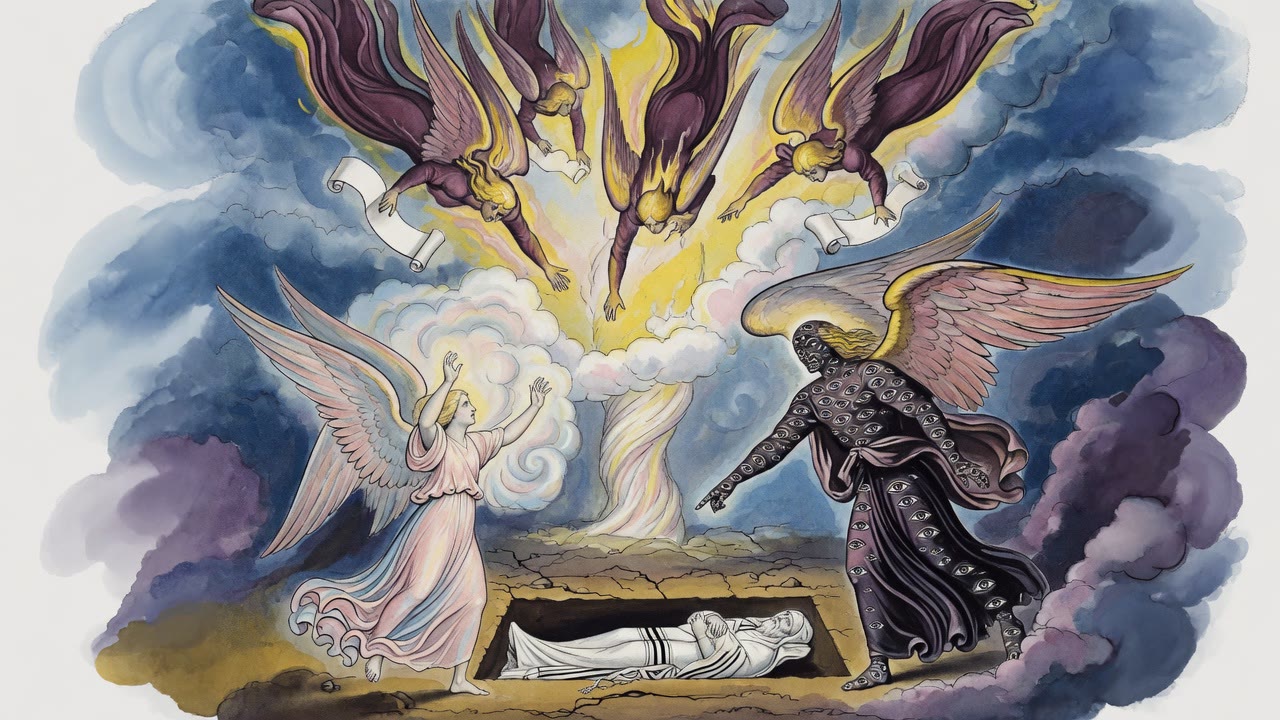
The dying open their eyes and the Angel of Death fills the world end to end, then waits at the grave for a name the dead cannot remember.
Table of Contents
The dying man kept counting on his fingers. He was sure the arithmetic was wrong.
 Click for full size
Four of them had come into the room, and only one wore a body soft enough to argue with. There was a ministering angel, a scribe already wetting his pen, an angel appointed to this house from the hour of the man's birth, and the fourth, who said nothing yet. The scribe sat down at the foot of the bed and began to add up days and years, the way a steward closes a ledger. The Angel of Death spoke first. "Rise. Your end has arrived." The man shook his head against the pillow. "My end has not yet arrived," he said. "Count again."
The Eyes Opened Onto a Body Made of Fire
So he opened his own eyes to prove it, and that was his mistake.
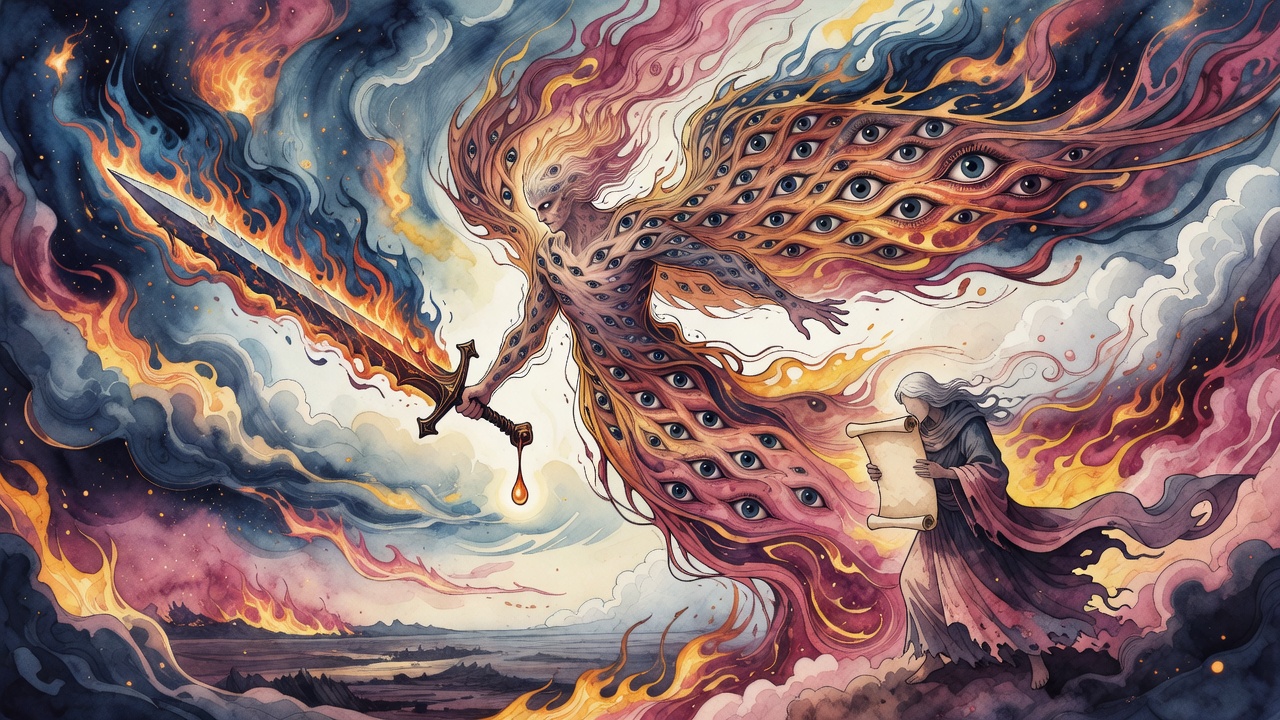
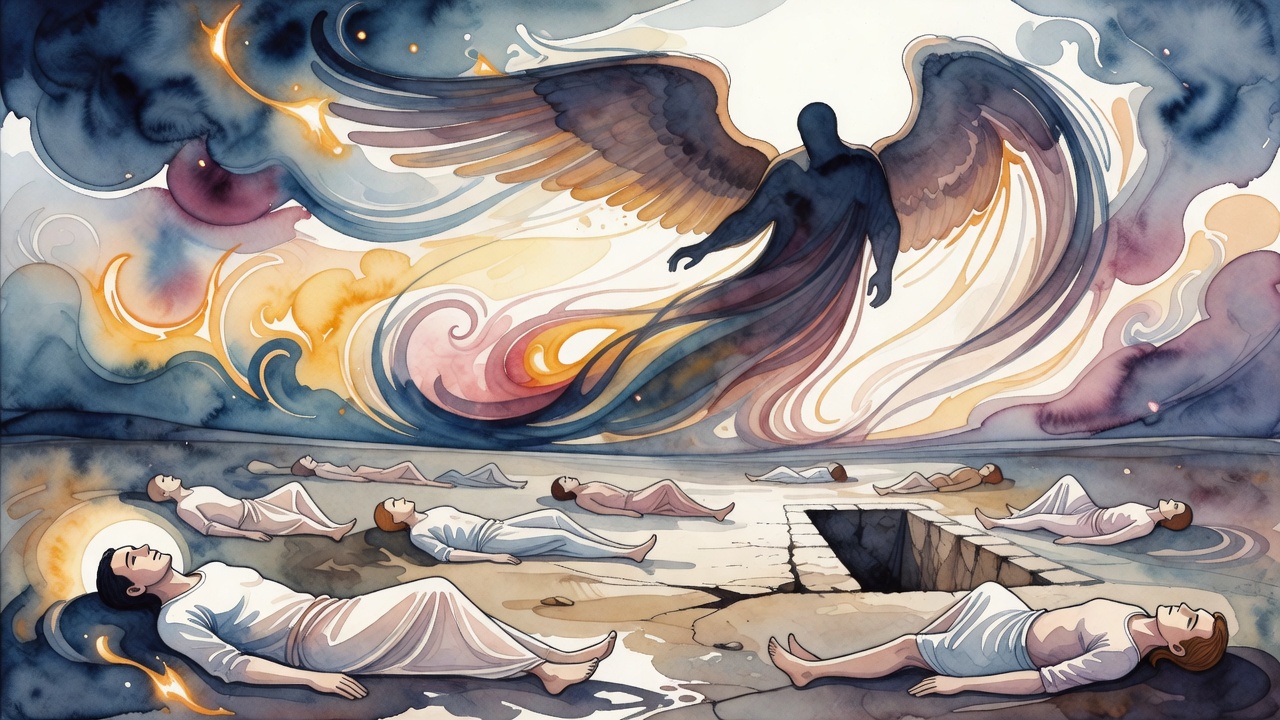
The fourth figure was no longer by the wall. It stretched. From one end of the world to the other it lay, and there was no part of it that was not watching. From the sole of the foot to the crown of the head it was covered in eyes, eyes without lids, eyes that did not blink and did not turn away. Its garment was fire. Its covering was fire. All of it was fire. In one hand it held a knife, and from the edge hung a single drop of gall, swollen and trembling, ready to fall.
The man fell on his face. He understood now what the drop was for. From that drop a person dies. From that drop the flesh begins to rot. From that drop the face turns green while the family still stands in the room. He had seen that green on others and never known where it came from. Now he knew.
No One Dies Until They See What Was Hidden
And still the soul would not leave. It clung inside the chest like a child gripping a doorframe, because a soul does not go out for an angel, however many eyes it carries. It goes out only when it sees the One it was never permitted to see. For no person shall see Me and live. In their living years they are spared the sight. At the hour of death the mercy is withdrawn, and they see, and seeing, they cannot stay. Before Him every body bows that goes down into the dust, and not one can keep its own soul alive a moment longer.
So the man saw, and testified to everything he had done, unable to stop his own mouth. And the Holy One signed beneath the testimony, the way a judge signs a sentence already spoken aloud.
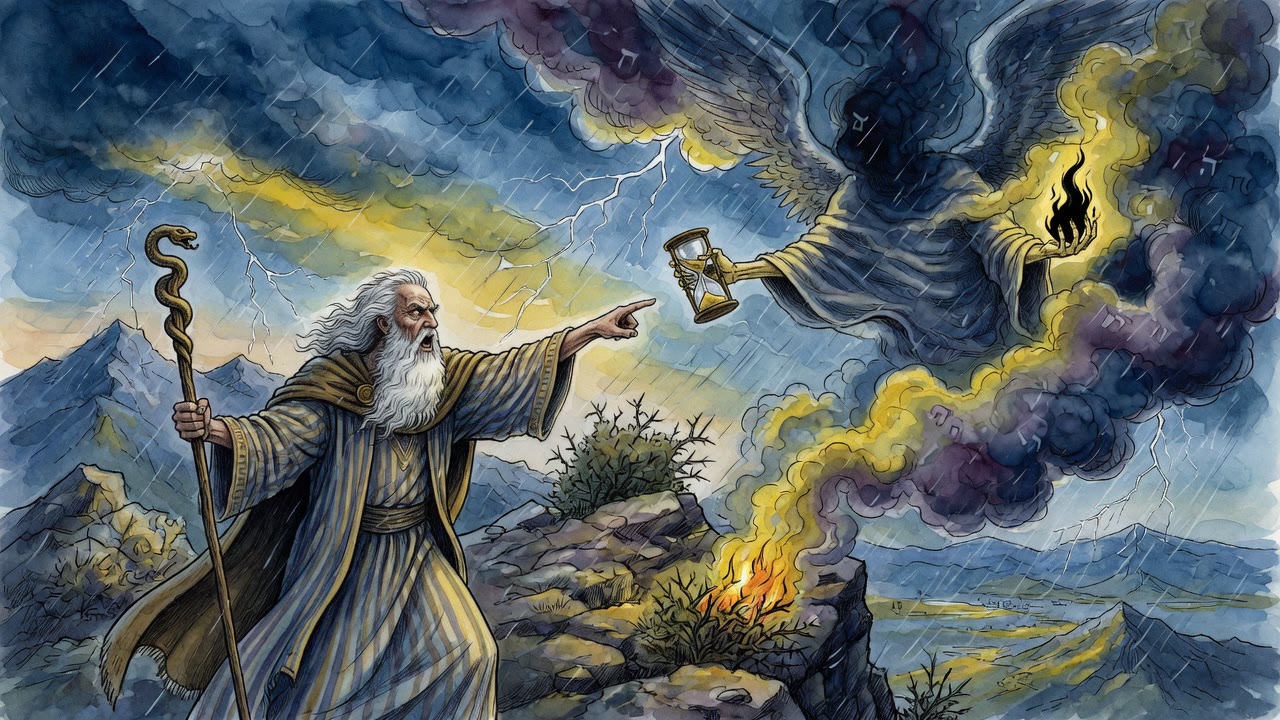
Then the parting. The righteous, when their turn comes, hand the soul over the way a trustee returns a deposit to its Owner, clean and accounted for. This man was not that. He stiffened his neck on the bed as he had stiffened it in the street. Even here his own appetite rose up and fought for him, urging him to refuse, to bargain, to lie one more time. So the sages said: even at the going out of a wicked man, his inclination overpowers him. He dies the way the worthless thornbush is thrown aside, never gathered by hand, only pushed away with iron.
The Knock on the Grave and the Name He Could Not Find
They buried him. The mourners went home. And the worst of it had not yet begun.
Rabbi Eliezer's students had once asked him what the beating in the grave was, the ordeal the tradition calls Chibut HaKever, and he told them. When a man leaves the world, the Angel of Death comes and sits down on the fresh mound as if it were a chair. It strikes the buried body with its hand. "Rise," it says into the earth. "Tell me your name."
And the man could not. He lay under the weight of the soil and reached for the one thing that had been his since the eighth day of his life, the name his mother had whispered, the name called across courtyards and written onto contracts, and his hand closed on nothing. "It is revealed and known," he answered from the dark, "before the One who spoke and the world came to be, that I do not know what my name is." A whole life of being summoned, and at the first summons that mattered he had forgotten who was being called.
The Chain of Fire and Iron Falls Three Times
So the angel gave him back what he needed in order to suffer. It pressed spirit and soul into the body again, into the very mouth that had spoken, and stood the corpse upright in its grave to be judged.
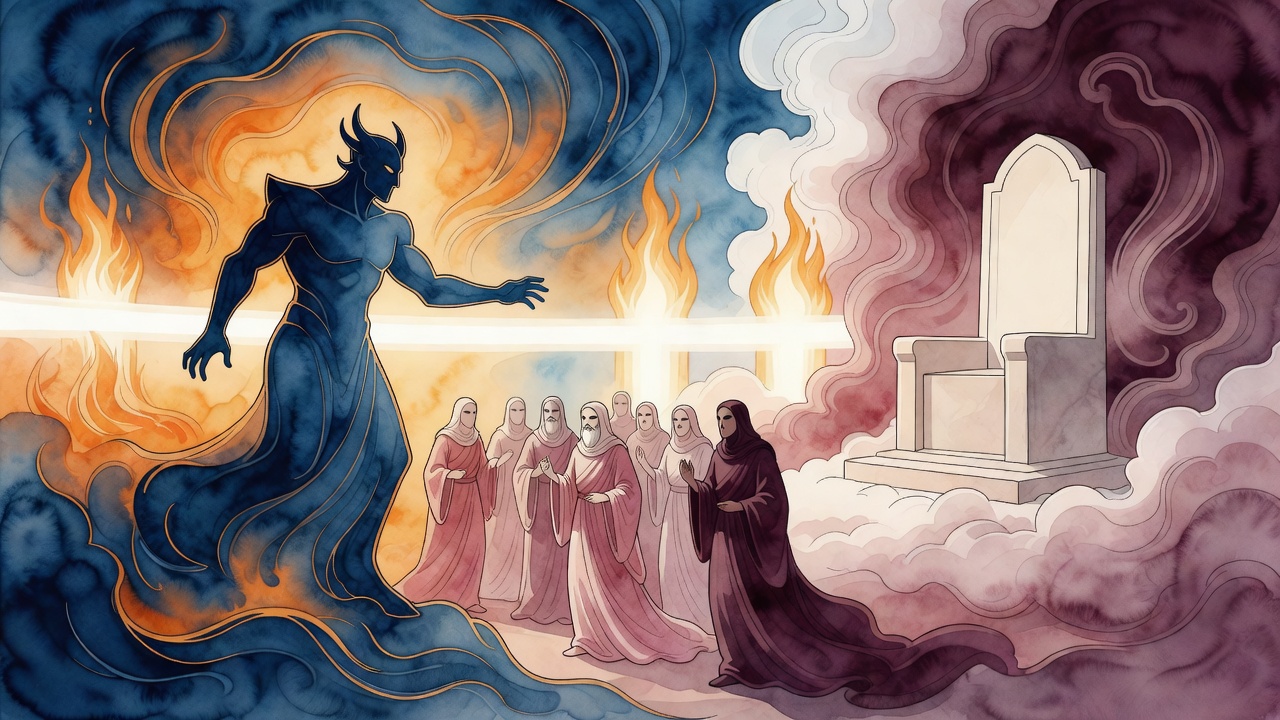
There was a chain in the angel's hand, half of it fire and half of it iron. It struck him once, and his limbs came apart at the joints. Ministering angels gathered the scattered pieces and set him on his feet again. It struck a second time, and the bones themselves came undone. Again they gathered him. A third blow, and a third, until what had been a man was ash. The first day they judged him this way. The second day the same. The third day they judged him harder.
Measure for Measure, Organ by Organ
And here the judgment turned exact, almost tender in its precision, taking him apart in the order of his crimes.
From the two eyes, because he did not see a thing and swore in court that he saw it. From the two ears, because he did not hear a word and swore that he heard it. From the lips, because they had filled so many idle hours with frivolous speech. From the tongue, because it had given false testimony and shredded the good name of his neighbors. From the feet, because they had hurried, quick and eager, toward the thing he should have walked away from. So the sages said: whoever rushes his feet toward sin, the Angel of Death rushes toward him in turn. And the one who runs to his neighbor with poisoned speech, who informs and slanders and ruins, that one does not even reach the grave whole. He dies first of askara, the throat closing, the breath caught, the voice that destroyed others strangled inside its own owner.
The drop of gall, the chain of fire, the unanswered name. Every joint of it had been earned, one limb at a time, in a life that thought no one was counting.
← All myths