The Day You Die Becomes the Day of Your Trial
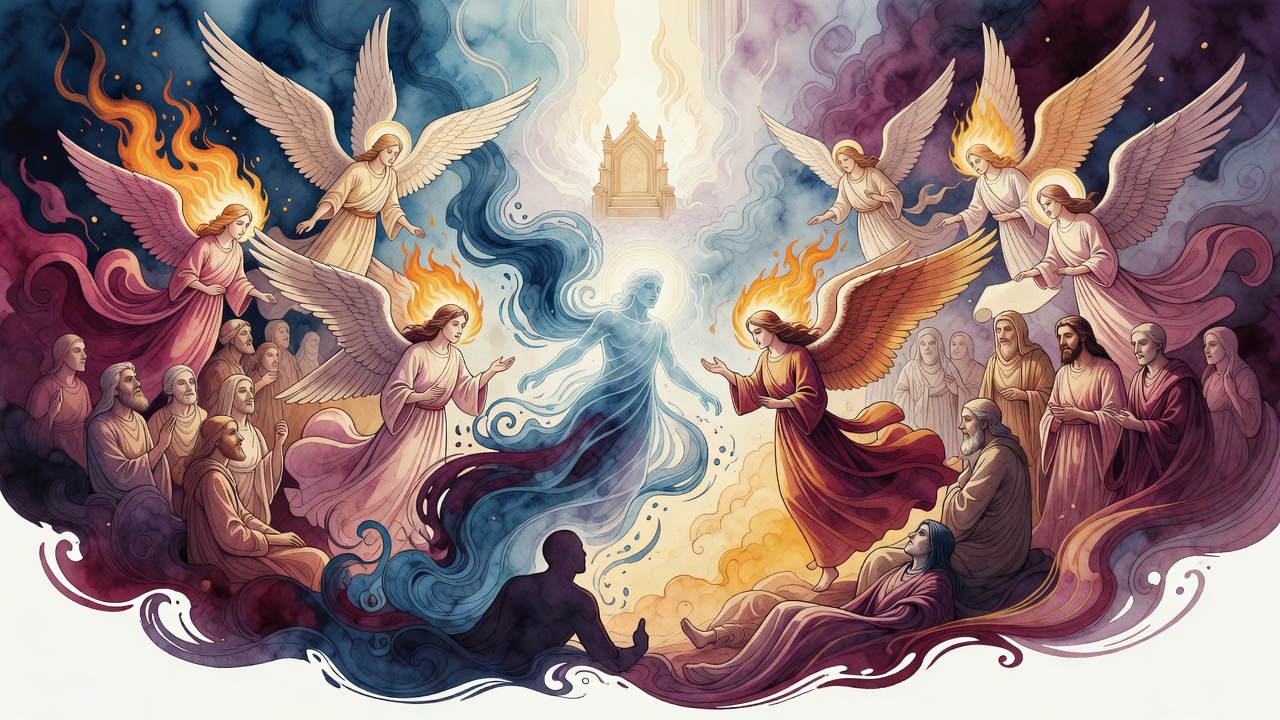
Angels stood by the bed before the man knew he was dying. His soul came loose at the feet, and his sight got sharper as it rose.
Table of Contents
The man did not know he was dying until the angels were already in the room.
 Click for full size
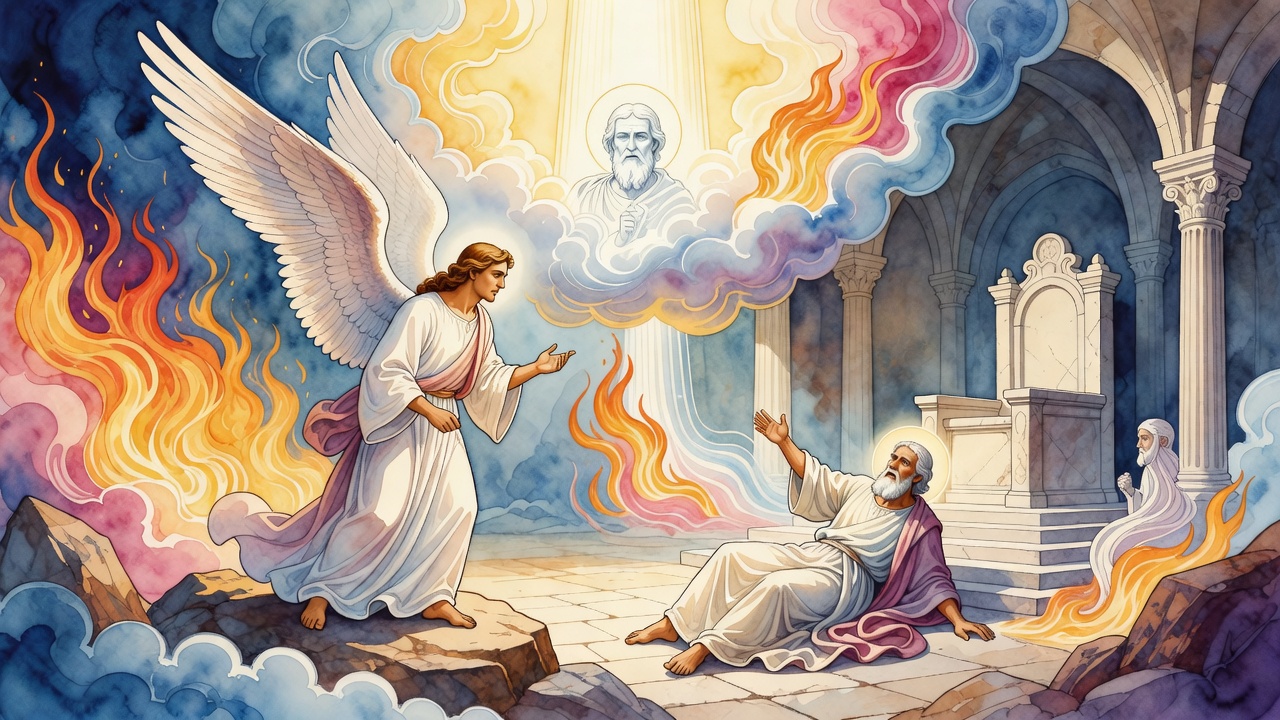
One stood at the foot of his bed and one at the side, and a third waited near the door with its hands folded, the way travelers wait at a threshold they have crossed many times before. He had seen faces like these once, in a story told at his grandfather's table, about three strangers who came to Abraham's tent in the heat of the day and ate curds under the terebinths. He had thought, as a child, that such visitors only came to the great. Now they had come for him, and the room had gone very quiet, and the light at the window had stopped moving.
"It is time," the one at his side said.
The Soul Pulled Loose Like a Thread From Cloth
For the righteous, the soul is drawn out the way a hair is lifted from milk, with tranquility of spirit, a single clean motion and no pain. The man had heard that too. He had hoped, dimly, to be counted among those drawn out gently. But the gentleness or the violence is not the angels' to decide. It is decided by the life, and the life was already finished, every page of it written down, and there was nothing left to add.
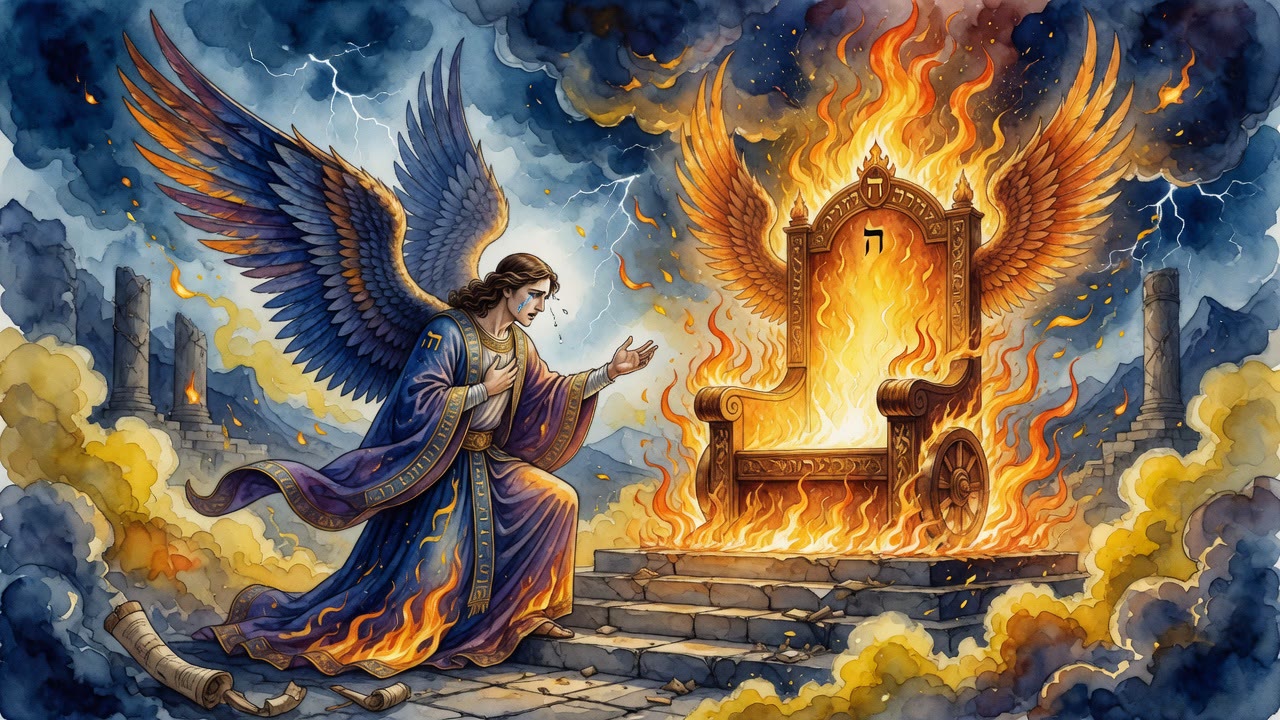
He felt the loosening begin at the soles of his feet. The thread of him came away from the weave of his body slowly, and as it lifted, his sight went strange. His own eyes, the eyes still lying in the body on the bed, had gone dim, as the eyes of all the dead go dim. But the soul rising out of them saw more sharply than it ever had in life. The walls thinned. The ceiling opened upward like a lifted lid.
"Where are you taking me," he asked, and his voice did not sound like his voice.
"To the place where the day is decided," the angel said. "This day. The one you are inside of now."
The Day He Died Became the Day of His Trial
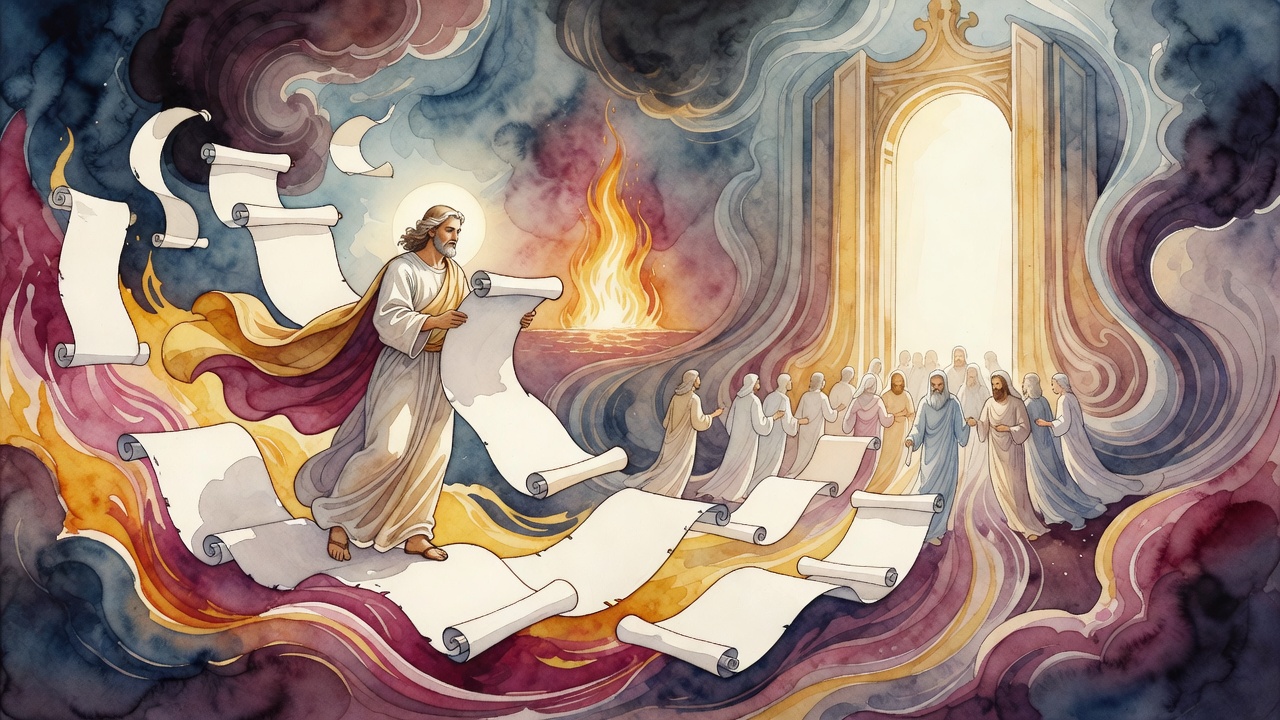
He had imagined judgment as something distant, a courtroom at the end of the world, summonses sent out across centuries. It was not distant. The hour the soul tore free was the hour the trial began, and the verdict for the whole of a life would be spoken in the time it took to draw one breath.
They led him upward. And as they climbed, he understood that he was not alone on the road. The dead were everywhere, rising from every house and field, and they turned their faces toward one another and knew one another. A woman who had sold bread in his street nodded to him as if they had an appointment. An old teacher he had buried years ago lifted a hand in greeting. The dead see the dead. They recognize each other on the climb, and they do not pretend they have not met.
"You are frightened," the angel at the door observed.
"I have excuses," the man said.
"Everyone arrives with excuses," the angel said. "None of them are new."
Every Excuse Already Had Its Answer Waiting
The court was not a room. It was a weighing, and the man felt himself set upon the scale before any word was spoken.
"I was poor," he said quickly. "I had no time to study. I worked from the dark of the morning to the dark of the night, and there was never a coin to spare for the house of study."
A voice answered him, and it did not raise itself, which was worse than shouting. "Were you poorer than Hillel?" And the man saw Hillel as if through a window, a young man with empty pockets climbing onto a cold roof to press his ear to the skylight of the study house, found the next morning under a blanket of snow, half frozen, still listening.
The man tried again. "Then say I was rich. Say my wealth swallowed my hours, my ships, my accounts, my fields."
"Were you richer than Rabbi Elazar ben Harsom?" A thousand cities had been his, and a thousand ships, and he had walked them all on foot with a sack of flour on his shoulder, studying as he went, so that his own servants did not recognize him.
The man's last defense was the oldest one. "My body betrayed me. Desire was too strong. I was beautiful, and the world would not leave me alone."
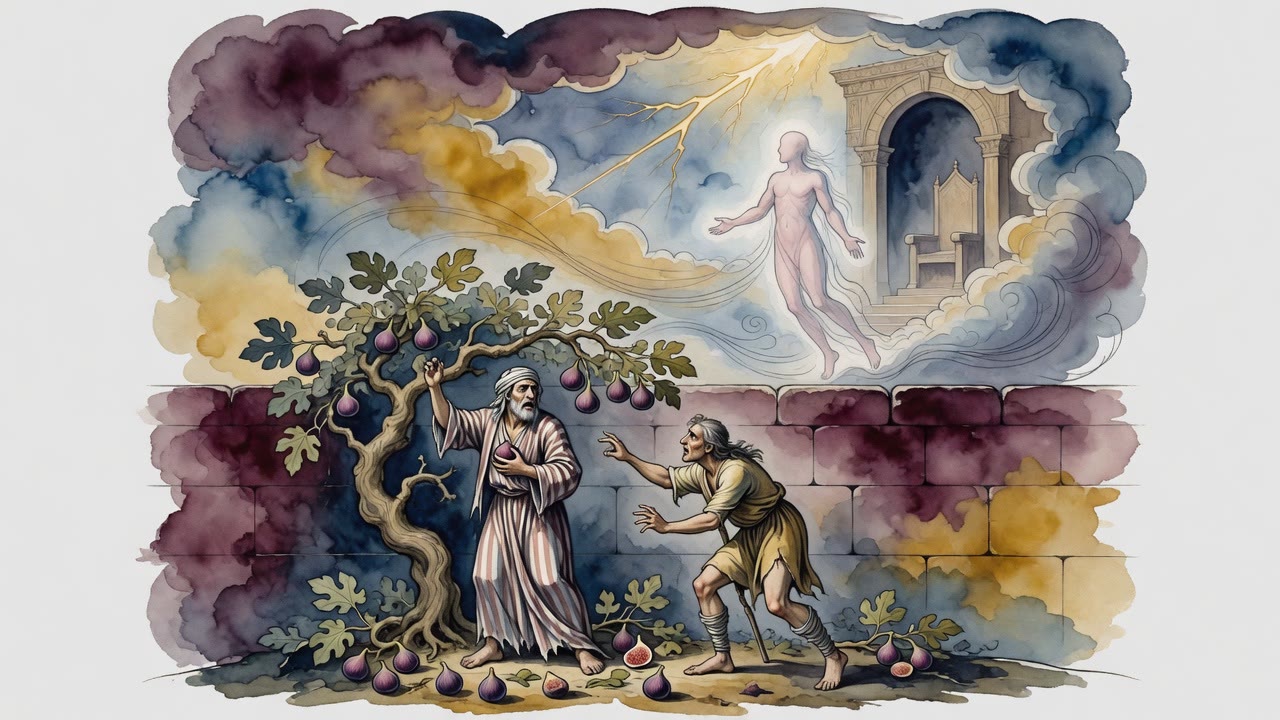
"Were you more beautiful than Joseph?" And there was Joseph in the house of Potiphar, the woman's hand on his garment day after day, the door standing open behind him, and Joseph turning and running into the street with his coat left behind in her fist.
The Verdict Was Spoken in a Single Breath
For every wall the man had hidden behind, someone had already climbed it. The court did not ask him to have been Moses. It asked only whether he had been the most that he could have been, and it had a witness for every door he claimed was locked.
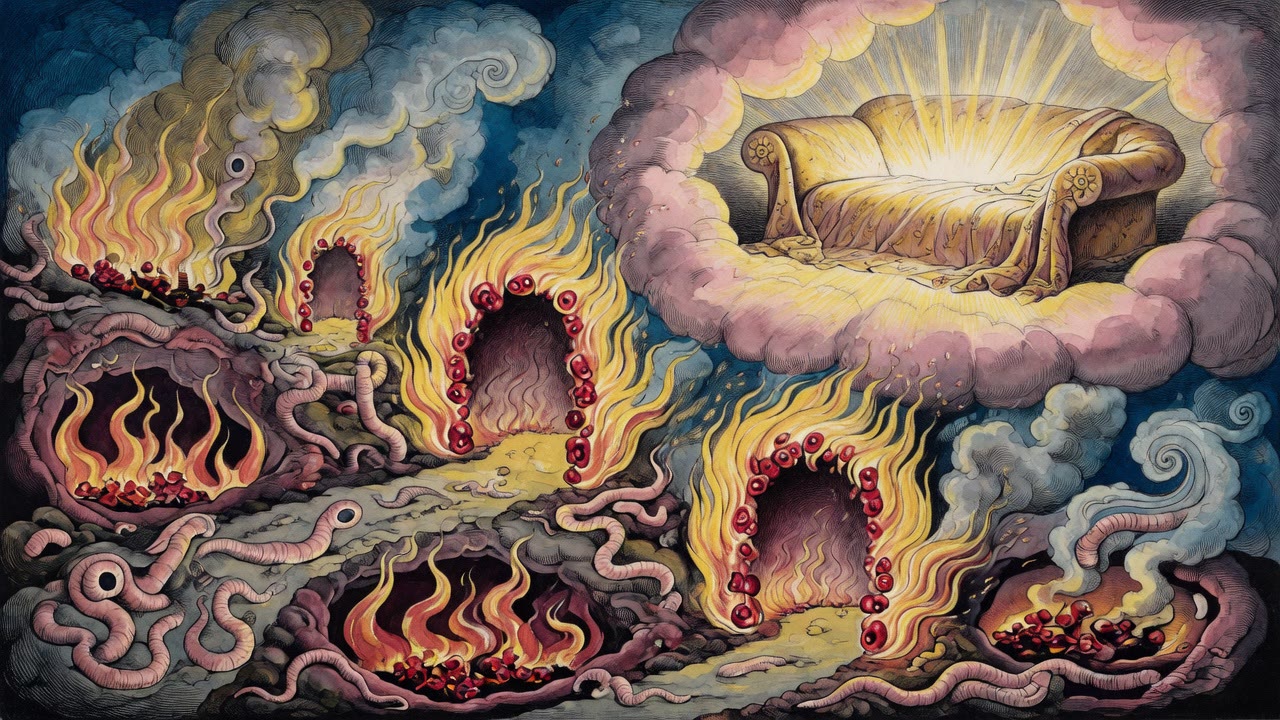
He understood, then, why the souls of the wicked are not drawn out gently. When the verdict turns against a person, the soul is not lifted like a hair from milk. It is handed to harsh angels, cruel ones, who wrench it out and take it down by a road that is not this bright climbing road at all.
The man stood on the scale and waited to learn which road was his. Below him, somewhere far below, his body lay on the bed with its dimmed eyes open to a ceiling it could no longer see. A neighbor would find it by morning. But the man was no longer there. He was here, among the dead who knew him, on the day that was his alone, hearing the sentence of his whole life arrive in the space of one indrawn breath.
← All myths