Fragrance, Doves, and the Rabbis Who Rebuilt After Hadrian
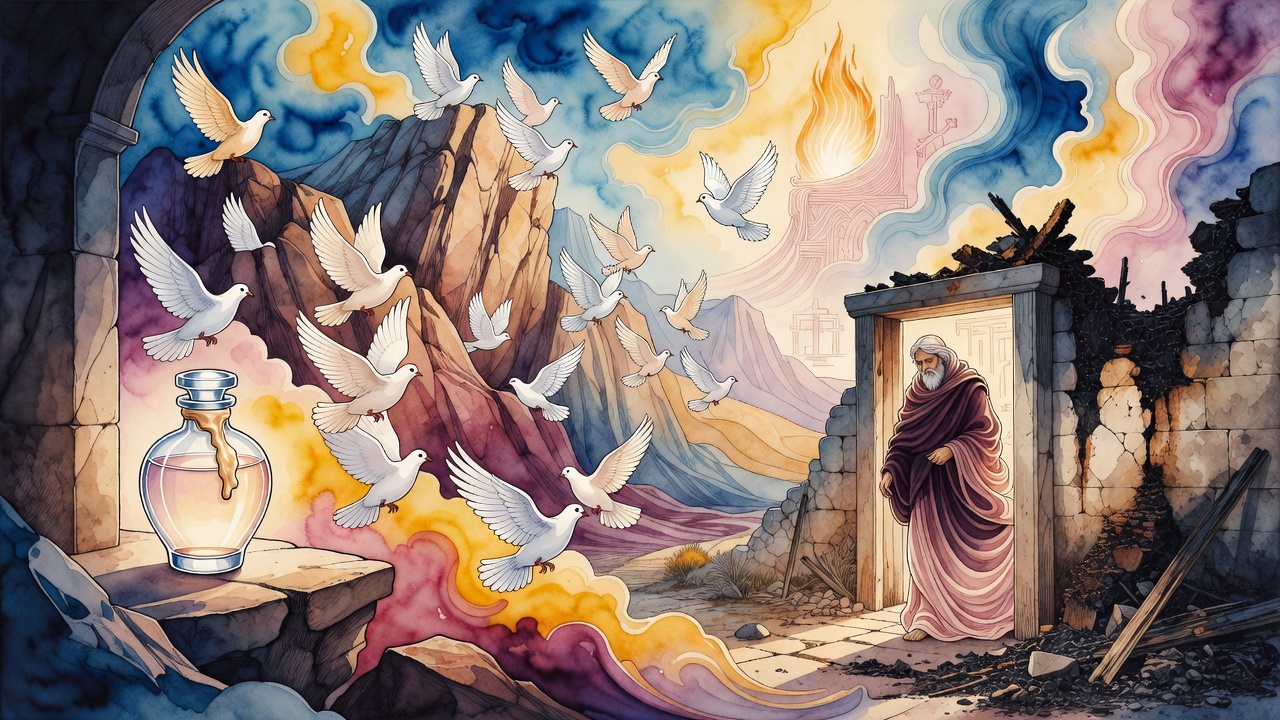
A flask of perfume sealed in a corner. Doves at the cliffs who cannot be caught without a partner. A teacher appearing at the door after everything burned.
Table of Contents
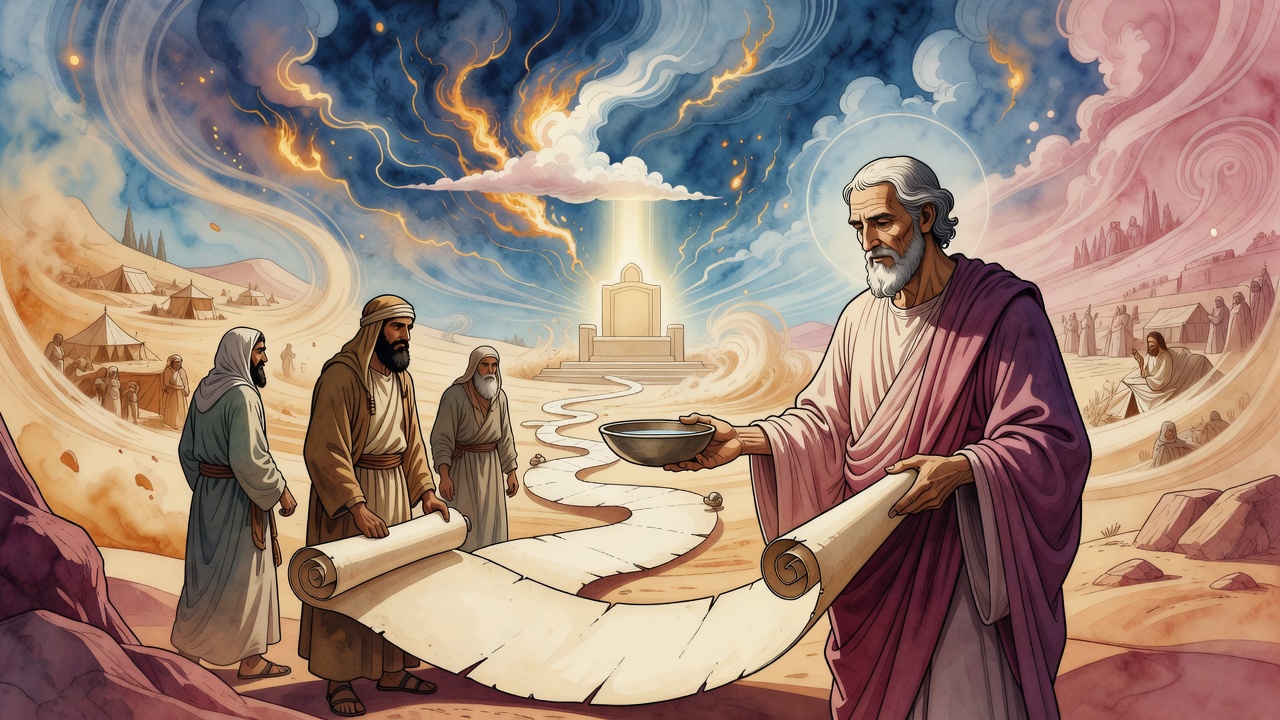
 Click for full size
The Balsam Flask in the Corner
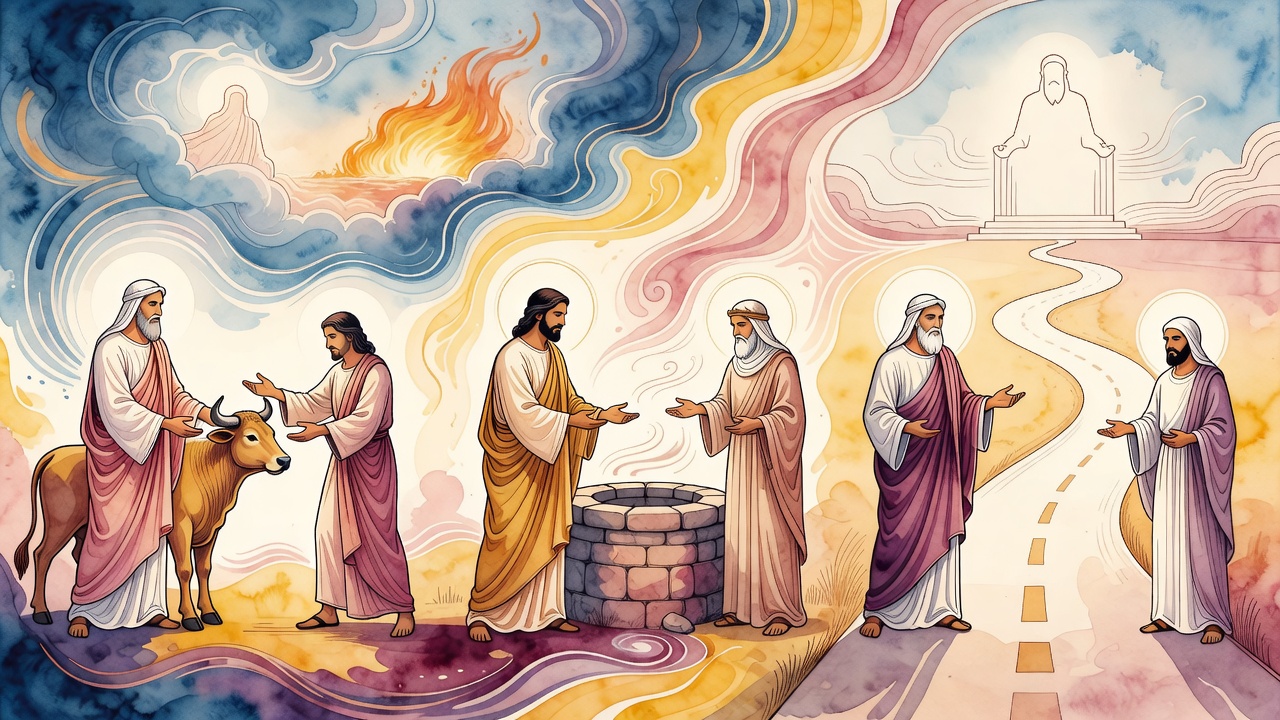
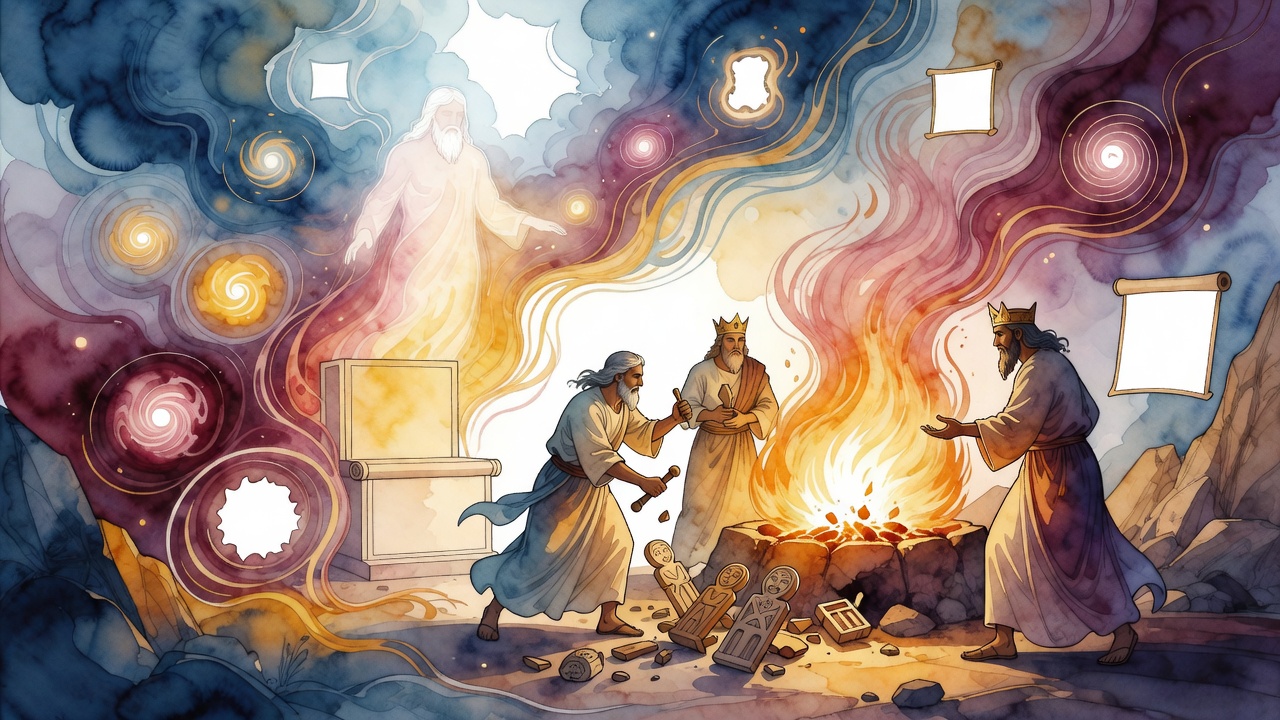
Abraham had been sitting in Haran for seventy-five years. He was righteous. He was full of good deeds and right intentions, a flask of balsam oil sealed inside glass. Precious. Full. And no one could smell it.
Rabbi Yochanan bent over the scroll and read Song of Songs 1:3: your ointments have a goodly fragrance, your name is as ointment poured out. The ointment poured out was the moment God said lech lecha: go forth, leave your father's house, go to the land I will show you. Until that command, the fragrance was sealed. After it, the whole world could breathe him in.
The tradition was not speaking only of Abraham. It was speaking of sealed containers. A righteous person who stays in one place, comfortable, surrounded by the same people, never disturbed, never required to move, is a full flask that no one benefits from. The command to move was not a test. It was a release valve. The world needed to smell him. A flask in a corner cannot do that work.
Reading Perfume in the Rubble
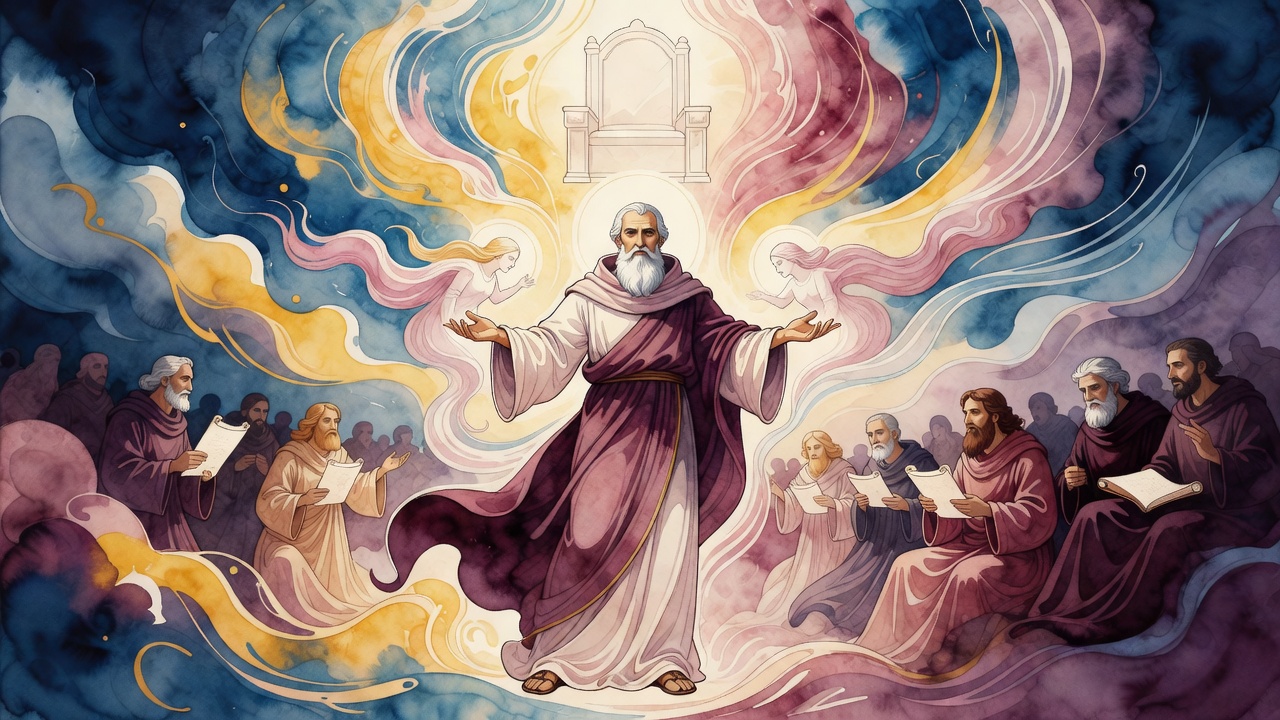
The rabbis sitting in ruined Palestine after Hadrian had broken Bar Kokhba's revolt knew what sealed containers looked like from the inside. Their academies were rubble. Their colleagues were dead. They were reading a line from a love poem about perfume and asking how to be useful again when the room you used to fill is gone.
They were a generation of full flasks with no one left to pour for. The men who had once filled a study hall with argument now sat in the wreckage of one, and the line about ointment poured out cut both ways. It was a comfort and an accusation. The fragrance only does its work when the glass breaks and the oil leaves the corner. To stay sealed, safe, intact in a quiet room, was to keep the perfume to yourself while the world went without. The command that pushed Abraham out of Haran was the same command pushing them out of their ruined towns and onto the roads of the Galilee, carrying whatever learning survived to whoever would open a door.
The Dove That Needs Its Partner
The second image came from Song of Songs 5:12: his eyes are like doves by the water brooks. The tradition reached for natural history. Doves, the rabbis noted, cannot be trapped with a standard net. They are too quick and too wary. To catch a dove, you must first trap one, then use that dove to lure the second. A dove separated from its companion becomes reckless, circling back again and again, unable to stay away.
The rabbis who had survived Hadrian's persecution read this as a description of the Sanhedrin after the destruction. The court had once sat in the Chamber of Hewn Stone in Jerusalem, seventy-one scholars gathering to decide questions of law and life. Now they were scattered. The tradition said the court had moved eleven times, driven from one city to the next across the Galilee, before settling again. Each move was a dove looking for its partner. Each settlement was two doves by a water brook, finding each other again after the net came down.
The image carried a practical instruction underneath the poetry. Do not wait until the institution rebuilds to begin studying. Find one other person. Begin with two. The dove circling back to its trapped companion is not weakness. It is the whole method of survival. The court did not reassemble all seventy-one at once. It came back the way doves come back, one pair at a time, two scholars over a single question, until a chamber existed again wherever those pairs gathered.
The Teacher at the Door
The third image in this cluster was about hospitality forced by circumstance. The rabbis had scattered. A teacher might appear at a door anywhere, unexpected, hungry, needing a room. The tradition connected this to a verse about the Shulammite woman in Song of Songs: her steps were beautiful in sandals, a daughter of the noble one.
Rabbi Yochanan read the verse and gave it to every householder in Galilee who had taken in a sage after the academies closed. The person who opened a door to a Torah scholar, who gave food and a bed and a space to teach, was the woman whose steps were beautiful in sandals. Not because she had studied. Because she had walked across her own threshold and opened it. The beauty was in the motion of the feet, the crossing of the floor, the hand on the latch. A scholar with no academy left was fed at her table and slept in her spare room, and the tradition lived another night because she had set a place.
The tradition after Hadrian was a tradition held together by hospitality as much as by learning. When the buildings were gone, the relationship continued at tables and in spare rooms. The fragrance moved because people moved. The doves found each other because they kept flying. The teacher's sandals were beautiful because someone swept a floor and set a place.
← All myths