Abraham Could Not Be Circumcised on the Ear or the Lips
There are four coverings on a person, the ear, the lips, the heart, and the body. A priest who cut any of the first three could never serve again.
Table of Contents
 Click for full size
A Priest Before There Was a Priesthood
Abraham was ninety-nine years old and there was no sanctuary anywhere in the world. No altar of hewn stone, no courtyard, no tribe set aside to serve, no garments, no oil. There was a man, some tents, and a flint.
Rabbi Yishmael read a line in the Psalms about a priest forever, sworn in by an oath God would not take back, and said it was addressed to this man. A High Priest with nothing to preside over, ordained centuries before the office existed.
Then the command came down. Circumcise the flesh of your covering.
And Abraham had to work out where.
Not the Ear, Not the Mouth, Not the Heart
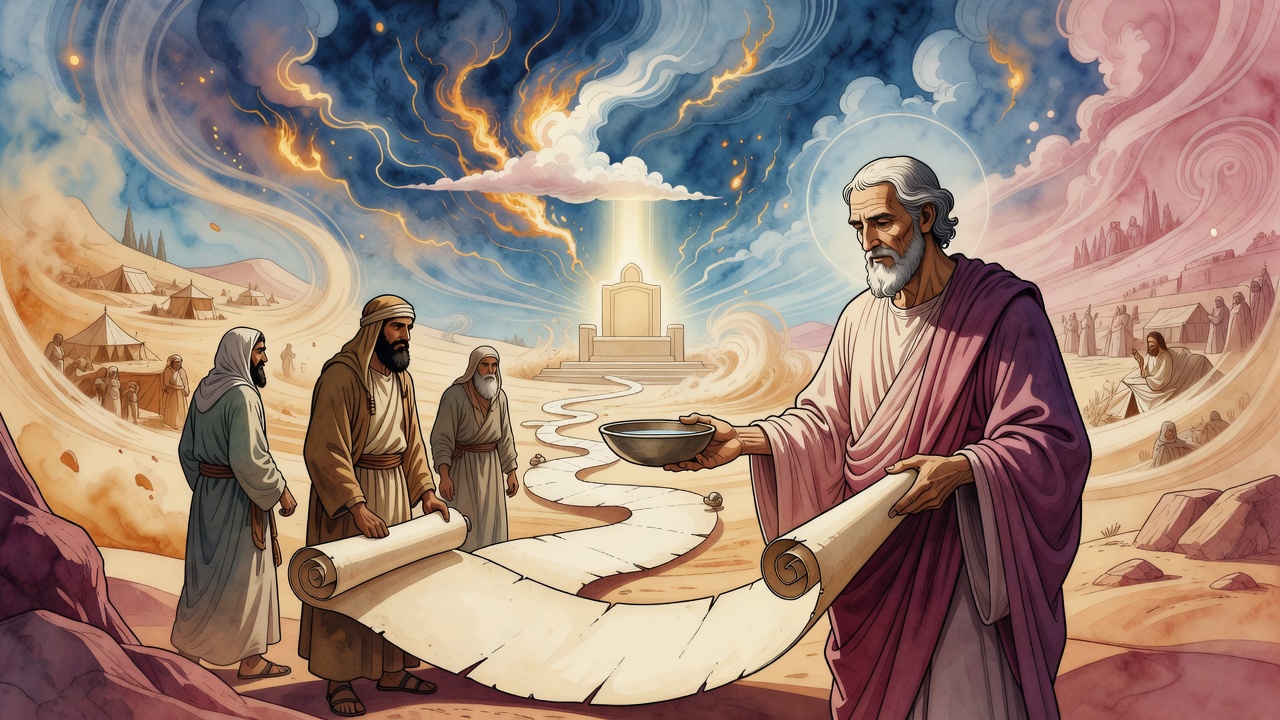
Rabbi Akiva counted the coverings. Scripture puts one on the ear, where a prophet complains that the people's hearing is stopped up. One on the mouth, where Moses calls himself a man of obstructed lips. One on the heart, where a prophet says the whole house of Israel goes about with an uncircumcised heart. And one on the body.
Four places a covering can sit. Only one of them can be cut.
Take it off the ear, and the man who does it is disqualified from bringing an offering for the rest of his life. Take it off the mouth, same. Take it off the heart, same. A priest with a piece missing from his face does not go up to the altar again, and he had been told to walk before God and be faultless, and a scar in any of those three places is not faultlessness, it is a blemish that ends a career.
A sage named Mikra pushed it further, into the ordinary damage. The command is also given for infants at eight days old, so it has to be survivable by a child. Cut the ear and he will never hear. Cut the mouth and he will never speak. Cut the heart and he will never think. Rabbi Tanhuma settled it with a question nobody could answer. The verse warns about an uncircumcised male. Has anyone ever met an uncircumcised female? So the cut belongs at the one site on a human body where you can tell which of the two you are looking at.
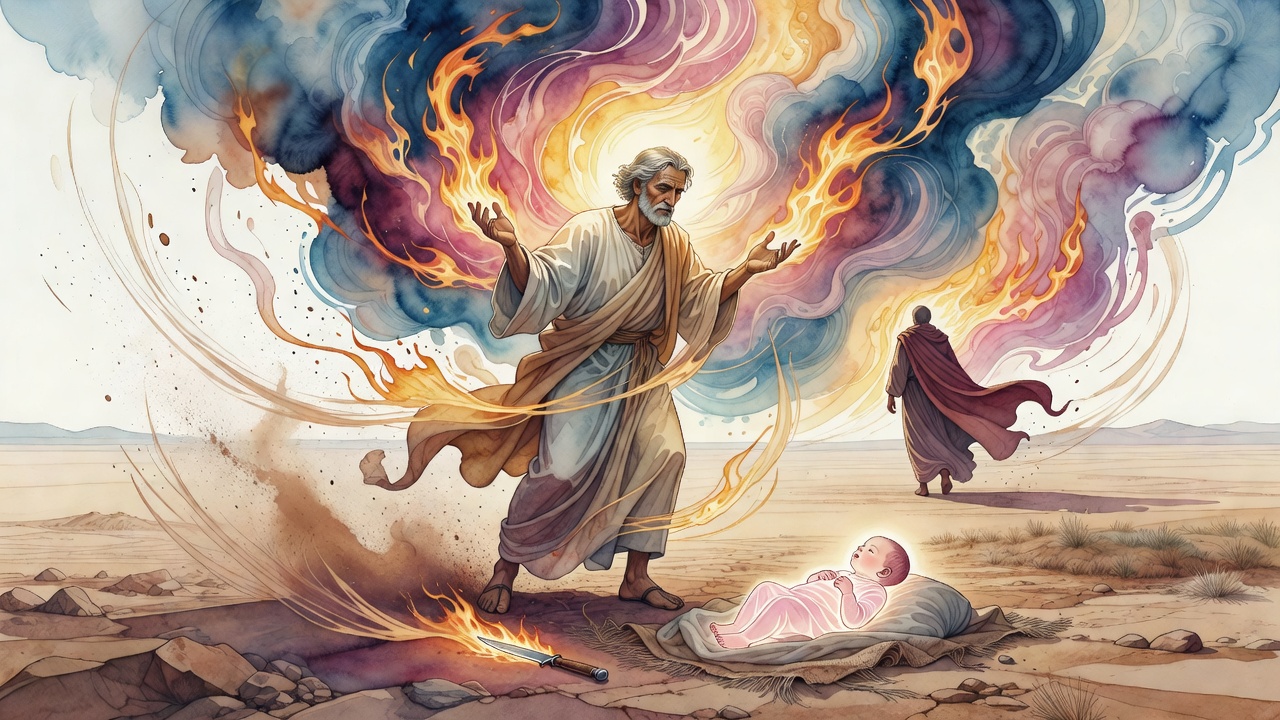
He was ninety-nine. He did it himself, with a stone.
Not a Thread and Not a Shoelace
Three days later he was sitting in the door of his tent in the worst heat of the day and would not stay down.
Everything the sages liked about him is on that ridge. Clean hands, because when the king of Sodom offered him the recovered plunder of five cities after the battle, Abraham had already raised his hand and sworn he would not take a thread from him, not a shoelace, nothing that could later be called payment. A pure heart, because when the sentence on Sodom came down he stood in front of God and said, far be it from You to do a thing like this, to kill the righteous along with the wicked.
One soul was on his hands. Nimrod. The sages who worked through the psalm about clean hands stopped at the line about a man who has not taken a life in vain and said Nimrod's death was not in vain, because Nimrod had been hunting him to kill him.
The Angels Cried Outside
Beauty came at him from both directions and the word in the psalm doubles to say so. Fair among the ones below, fair among the ones above.
Below, it looked like this. He went to buy a burial cave from the Hittites and they stood up in the gate and called him a prince of God in their midst and tried to hand him the field for nothing.
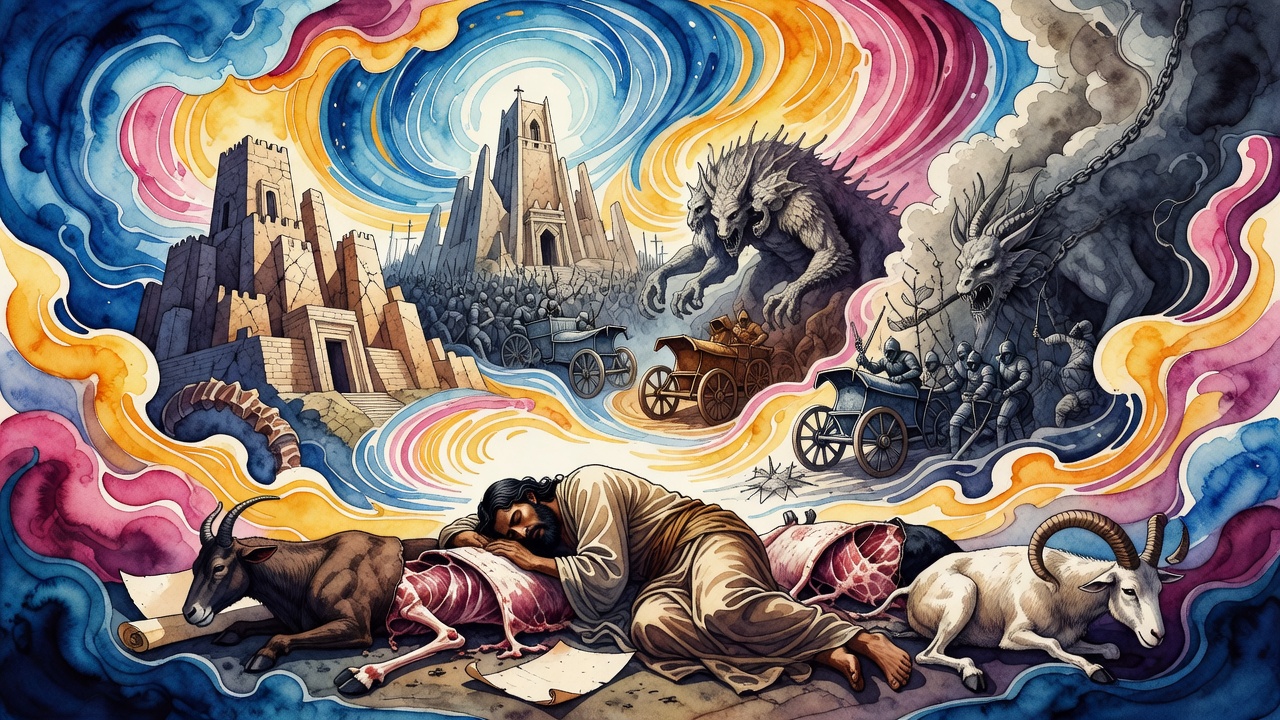
Above, it looked like this. On Moriah, with the boy tied and the knife going up, the angels stood outside and wept. The prophet's line about them crying outside is the one the sages attached to that morning. Heaven had no procedure for what it was watching. It stood at the edge of the mountain and cried like a crowd at a funeral.
He Got Up Early and Went Back to the Place
The valley burned all night. In the morning Abraham got up early and walked back to the place where he had stood arguing, and looked down at the smoke coming off the plain like the smoke of a furnace.
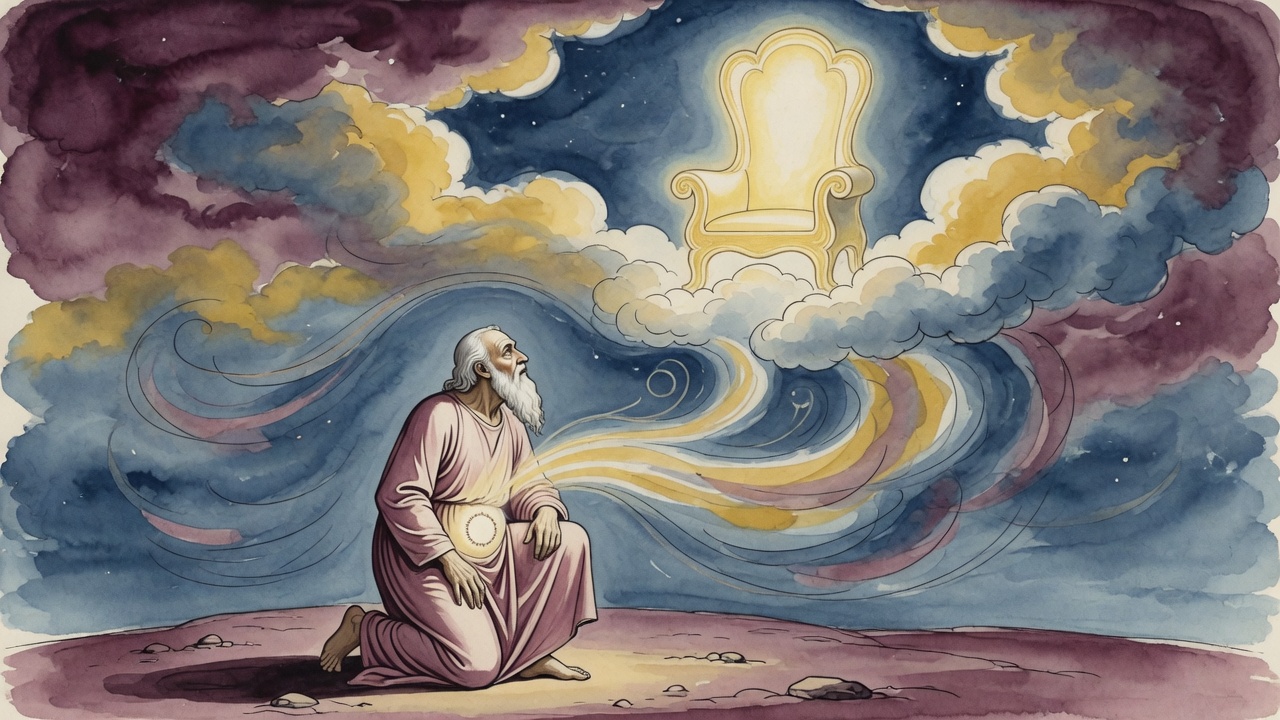
Standing is prayer. That is how Rabbi Yehoshua ben Levi read it, and that walk back at dawn is where the morning prayer comes from. Isaac went out into a field toward evening and gave the afternoon one its name. Jacob ran into a place after dark and gave the night one its name.
Rabbi Abba bar Yudan had an image for what a man is doing when he stands in a place and speaks. A warrior rides a horse and his robes hang down over both flanks of the animal. The horse is not carrying itself. God is the place of the world and the world is not His place, so there is no ground a man can stand on to call across a gap.
Rabbi Shmuel bar Nahman gave the three sentences for the three times the light turns. At nightfall: may it be Your will to bring me out of darkness into light. At dawn: I thank You that You brought me out of darkness into light. In the afternoon: as You let me see the sun come up, let me see it go down. Abraham said the first of those over a burning valley, with three days of stone-cut pain still in him and nothing yet built anywhere on earth for a priest to stand in.
← All myths