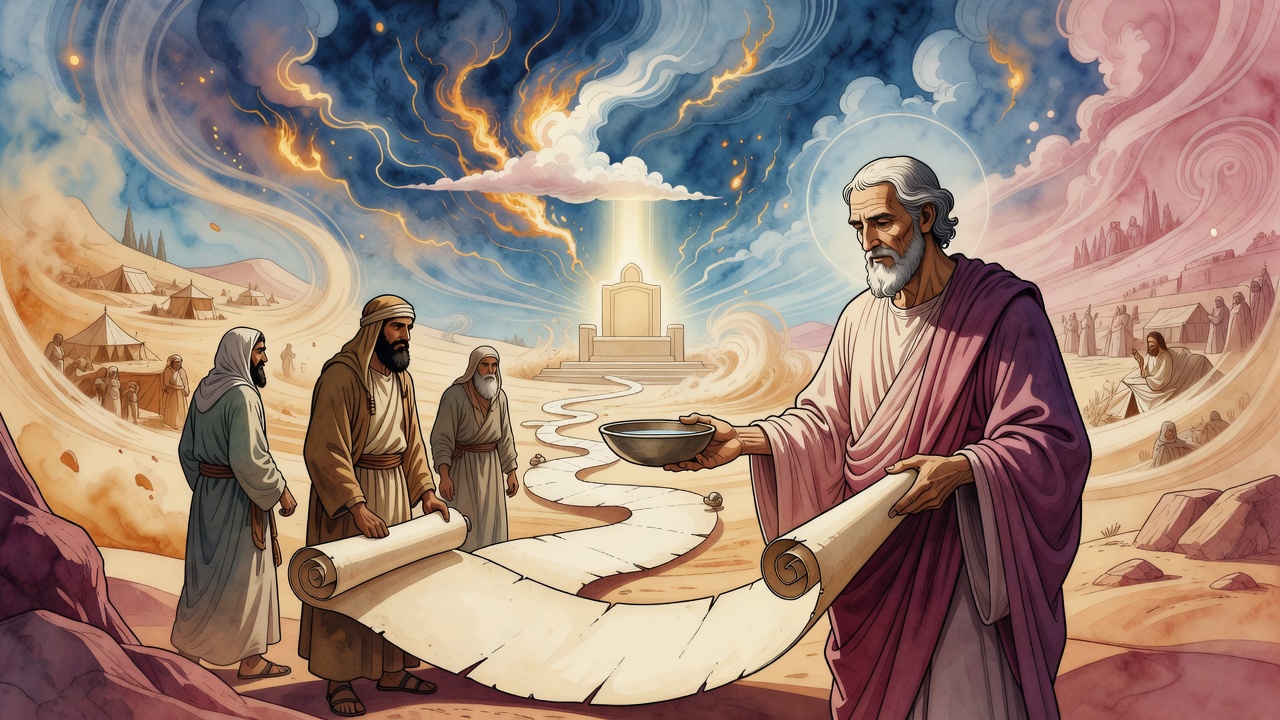
The Chapter Where God Remade Abraham at Ninety-Nine
Walk before Me, and be complete. Abraham went down so fast the dirt filled his beard. The laugh never left his mouth.
Table of Contents
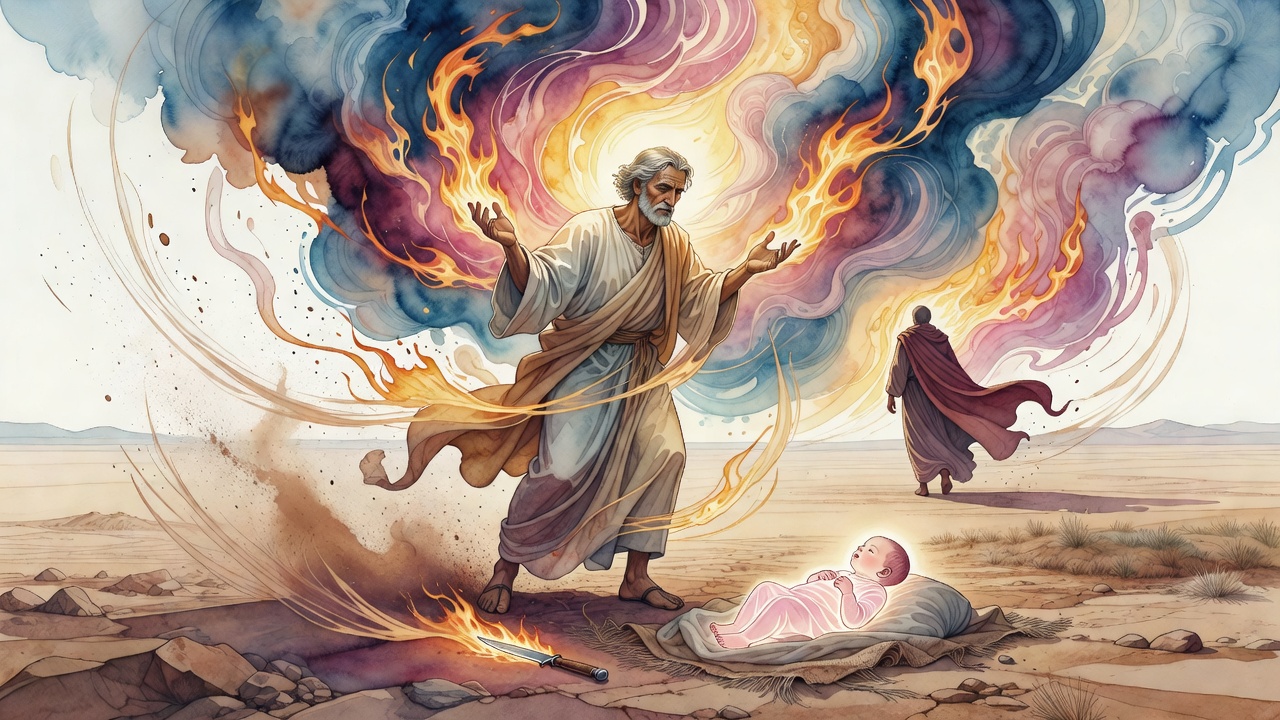
Abraham was ninety-nine when he went down so fast the dirt filled his beard. Walk before Me, and be complete. The voice was not new. The demand was.
 Click for full size
He had walked for decades already. He had left a city, crossed a river, fought kings, and taken a son from an Egyptian mother. Completeness still sat on the other side of a knife.
Walk Before Me and Be Complete
God did not ask him to be a statue. The word was tamim (תמים), complete, the same word that attached to Noah and to lambs brought up the ramp. A piece of Abraham still hung outside the covenant, and it had to come off.
He stayed on his face. Somewhere in his chest a laugh started that never reached the air. It was not the laugh Sarah would give later in the tent, the one that named a son. It was the sound a man makes when the rules he has lived by are cancelled in a single sentence.
God pointed at the one flaw that still sat on him, the way a king points at a long fingernail on a woman he has already chosen. Remove that, and the rest is finished. Abraham heard it and did not get up.
A Name Spoken Into an Old Man
While he was still in the dust, God changed what he was called. Abram would not do. The new name was Abraham, father of a multitude of nations. One letter entered the middle of the old name, the letter heh (ה), the same breath God had used when He formed the world and when He breathed into the first man.
Abraham heard surgery, not praise. Before that hour he had been a great man with a household and a boy named Ishmael. After it he was being told his children would include people who had not yet decided to belong to him. The name made him public. He laughed into the dirt, a private sound, and the new name sat on him whether he wanted it or not.
Where the Knife Could Fall
The covering was orla (ערלה), a barrier. If the knife had gone to the ear, Abraham would have gone deaf to the voice that had just renamed him. If it had gone to the mouth, he would have had no words left for the plea he was about to make. If it had gone to the heart, he would have been unable to love the God who was cutting him.
The cut had to leave a priest able to serve. Abraham had no Temple and no vestments. He had an altar, a knife, and a body. Only there could he bleed and still walk, still hear, still speak, still love. He took the knife. He did what he was told. The blood was his.
A blemished priest cannot approach. The foreskin was the one blemish that could be removed without silencing him. God remade him in the place a man can lose blood and remain a servant.
Would That Ishmael Might Live
Then God named the next impossibility. Sarah would bear a son. Sarah was ninety. Abraham fell on his face a second time. This time there was no laugh.
He said, quietly, what a father says when a second child is announced while the first is still in the house. "Would that Ishmael might live before You."
Before You. In Your sight. Under Your care. He was not asking God to spare Ishmael from death. He was asking God not to look away from the boy he already had, the son who had eaten at his table and learned his walk.
God answered him point for point. Ishmael would be fruitful. Twelve princes would come from him. He would become a great nation. The covenant, the name, the cut, the land, would pass through Isaac, the son who was not yet a weight in anyone's arms.
He Walked Out a Stranger
Abraham had come into that chapter of his life as one man. He stood up with a wound that would not close in a day, a name that made him public property, a promise of a son he had not asked for, and a word that his firstborn would not be abandoned.
The impossible had a date. Next year, at this time.
He left the dust a stranger to the man who had fallen into it. The laugh was gone. The knife had already done its work. God had remade him, and the new man had to learn how to walk.
← All myths