God Spoke the Name El Shadai Before Abraham Was Circumcised at Ninety-Nine
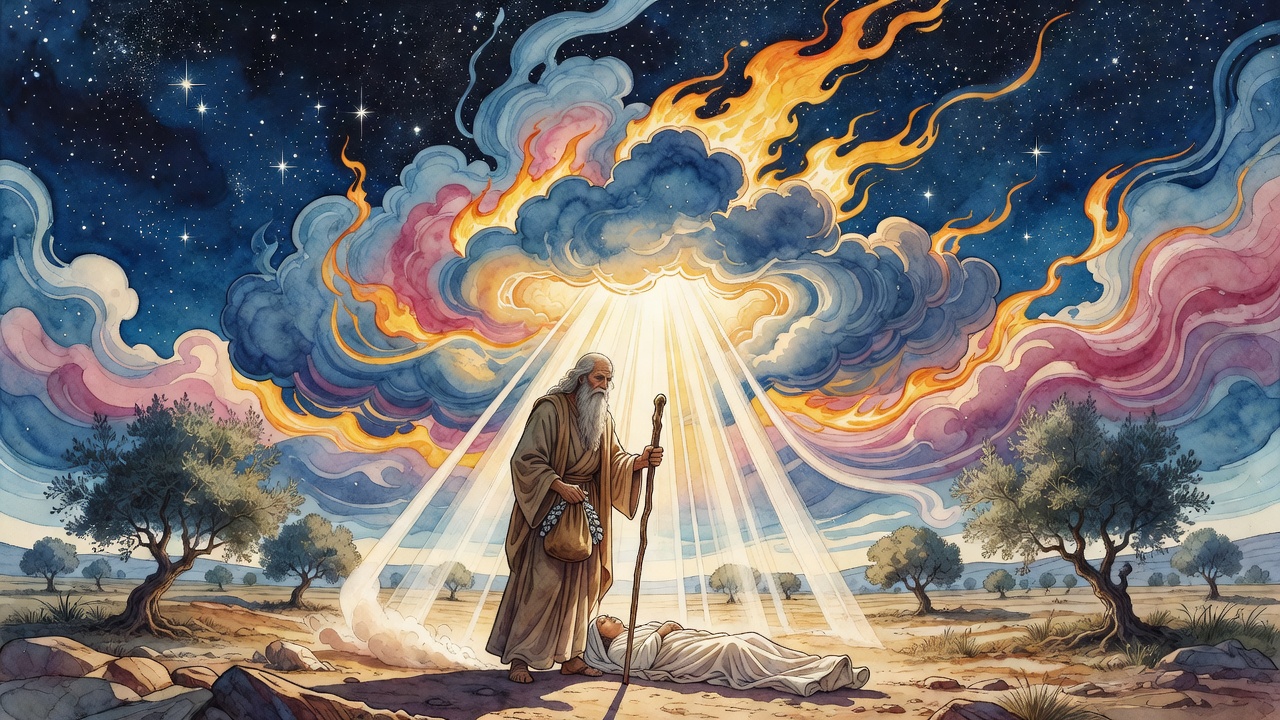
God appeared to Abraham and used a name meaning enough. Enough for the foreskin to have existed until now. At ninety-nine, the body became the covenant's seal.
Table of Contents
 Click for full size
The word that arrived before the blade
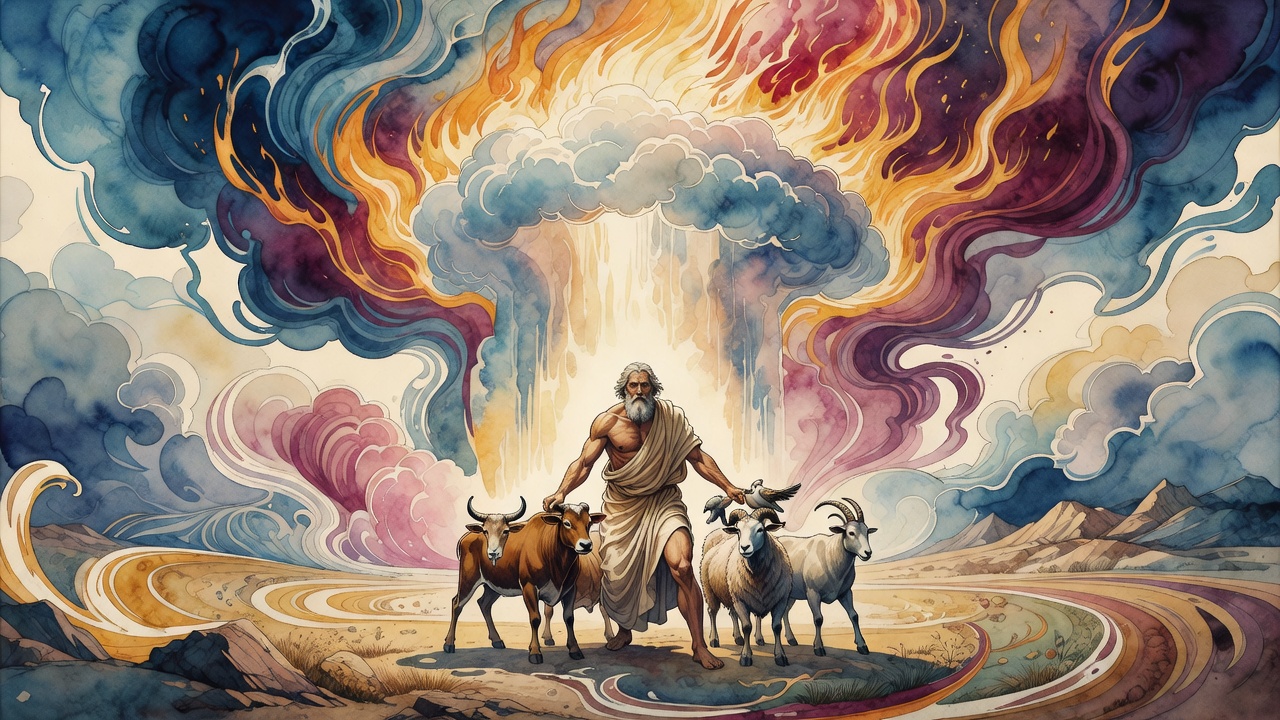
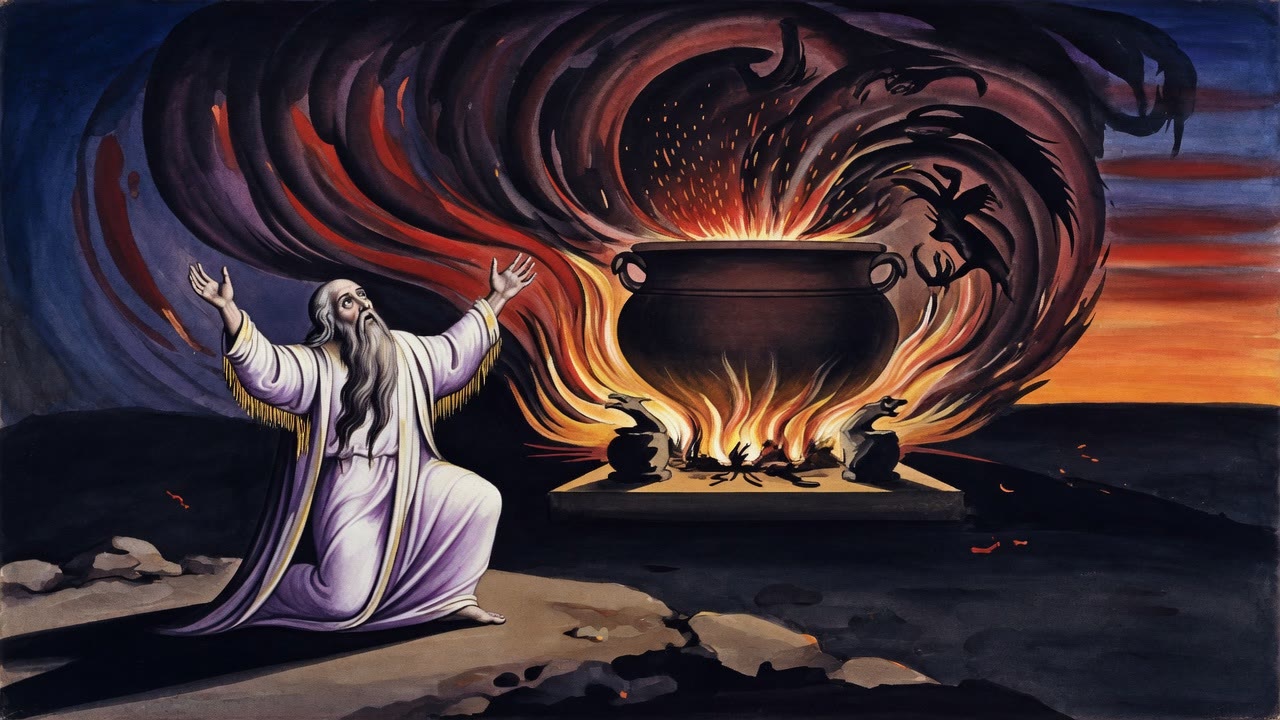
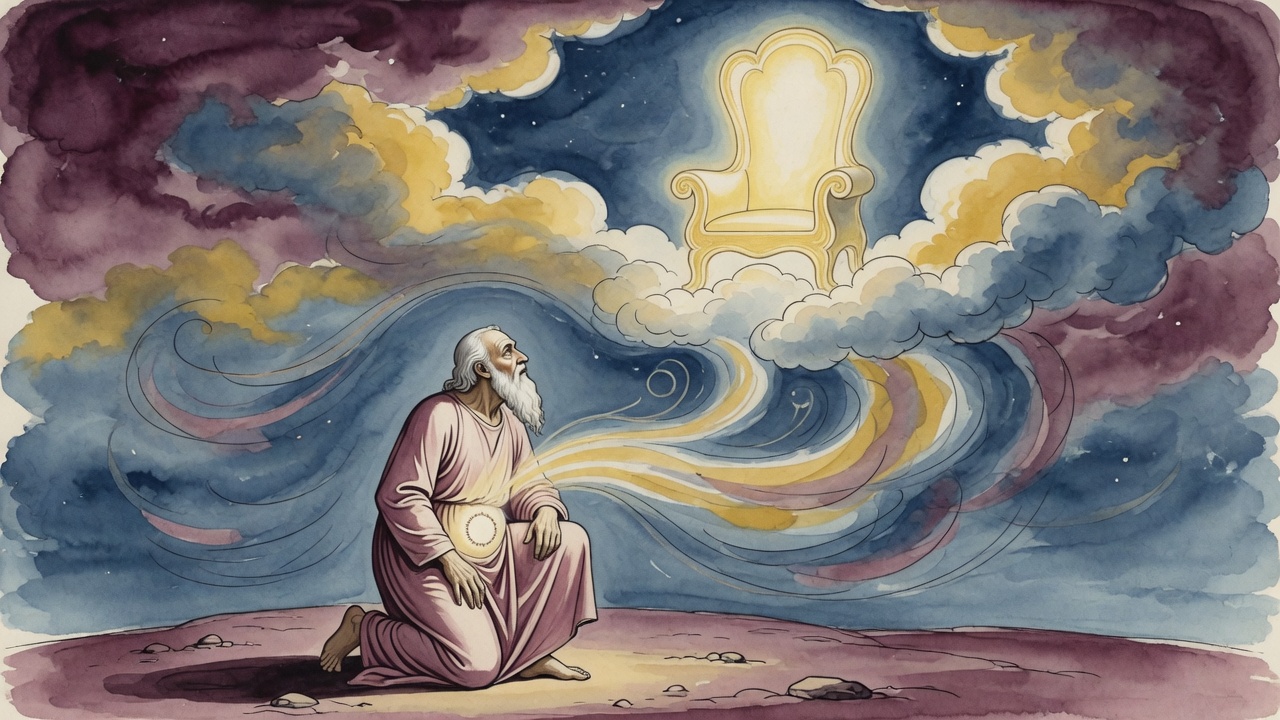
God appeared to Abraham when Abraham was ninety-nine years old, and the first words spoken were a name. El Shadai. The name opens Genesis 17, the chapter of circumcision. The rabbis heard in the name a sentence compressed into two Hebrew syllables.
Shadai shares a root with dai, the Hebrew word for enough. The same word God had said to the oceans on the second day, drawing the waters back and setting the shore as their boundary. The same word spoken to the heavens when they threatened to keep expanding. Enough. Stop here. This is the limit.
Now God said it to Abraham's body. Enough for the foreskin to have existed until now. The time for that existence has passed. The same divine word that stopped the ocean and the sky now stopped the body's original form and set the covenant in skin.
Abraham hesitated. He was not a young man. He already had enemies. A wound now would make him weaker. And God's answer was the same syllable again. Enough for Me to be your protection. The name that drew the limit and the name that guaranteed safety were the same word.
Ninety-nine and not a day sooner
The question of timing occupied the rabbis. Why did God wait until Abraham was ninety-nine? Why not earlier, when the command could be fulfilled with an intact body? Why not at the covenant between the pieces, years before, when the original promise was laid out?
Several answers were offered and the rabbis considered each of them. Abraham needed the years first. He needed to have already been known as a righteous man, a host to strangers, a warrior and a protector, a man whose tent was open from all four sides. If he had been circumcised at thirty, his reputation would have been built on a marked body, and the mark would have been seen as the reason for the righteousness. At ninety-nine, the righteousness came first. The circumcision came after. The sequence protected the meaning of both.
A second reason was physical and pedagogical. A man circumcised at ninety-nine had chosen this in the full consciousness of age and consequence. He was not a child whose parents made the choice. He was not a young man carried by idealism. He was an old man, in his full mind, making a mark on his own body at the command of the God he had served for decades. The covenant required a witness of that quality.
The hand under the thigh and what was sealed there
Years later, Abraham called his servant and asked him to swear an oath. The servant was to go to Mesopotamia and find a wife for Isaac from among Abraham's own people, not from the Canaanites surrounding them. The oath was serious. Abraham asked the servant to place his hand under his thigh.
The gesture looked strange until the rabbis explained what the thigh held. The place where Abraham had been circumcised was the place of the covenant. Swearing by the hand placed there was swearing by the covenant itself. Not by Abraham personally, not by the household authority of a patriarch, but by the sign cut into Abraham's body at God's command, the most sacred object available in that tent on that day.
The servant understood. He placed his hand under the thigh and he swore. The oath was not merely social. It was sealed against the covenant's own mark. If the servant failed, he was not merely failing his master. He was swearing against the covenant seal and then breaking the oath sworn on it.
The servant went to Mesopotamia. He found Rebekah. He brought her back. The oath held. The covenant, written in Abraham's body at ninety-nine, became the anchor of the next generation's founding.
The body that was the text
Bereshit Rabbah read Abraham's body the way a scribe reads a Torah scroll. The name Shadai was a commentary on the circumcision command. The age of ninety-nine was a commentary on the righteousness that circumcision confirmed. The hand under the thigh was a citation of the covenant text, placed there so the sworn oath drew its weight from the original mark.
The rabbis were doing what they always did with sacred texts. They found the layers of meaning embedded in gesture and number and sequence, and they read them as a unified argument. Abraham's body was not incidentally the site of the covenant. It was the book in which the covenant was written. The seal was the text and the text was the seal, and every subsequent generation that kept the covenant was, in the rabbis' reading, writing themselves into the same book that Abraham's body had opened.
← All myths