God Repaid Abraham's Bowl of Water Across Three Eras
Abraham offers three strangers a bowl of water and opens a ledger that runs for centuries. Every drop he gives is paid back across three eras of Jewish history.
Table of Contents
It was the worst hour of the afternoon and there was nothing on the road. Abraham sat in the door of his tent anyway. Then there were three men standing in front of him, and he did not send a servant and he did not walk.
 Click for full size
He ran at them.
Three Runnings in the Heat of the Day
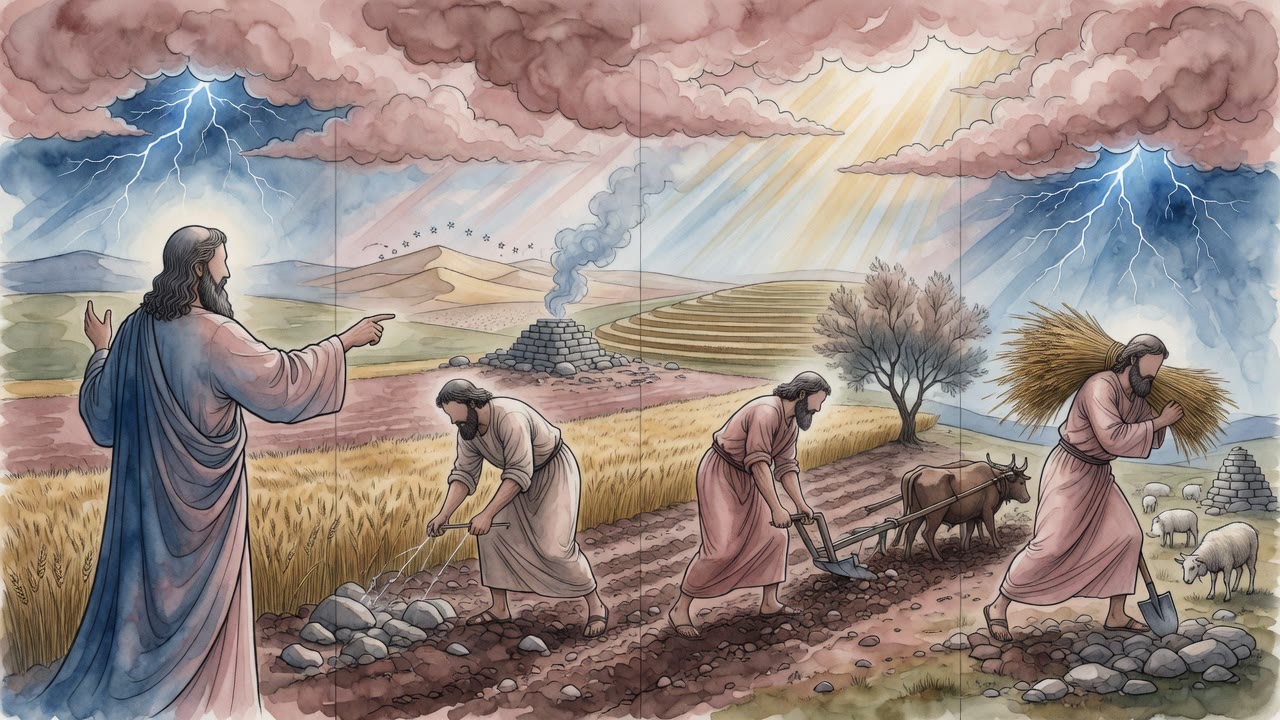
He ran to meet them at the road. He ran out to the herd for the calf. He hurried into the tent to get the flour started. Three runs in one afternoon out of an old man, for three strangers who had not asked him for anything and who might have kept walking if he had let them.
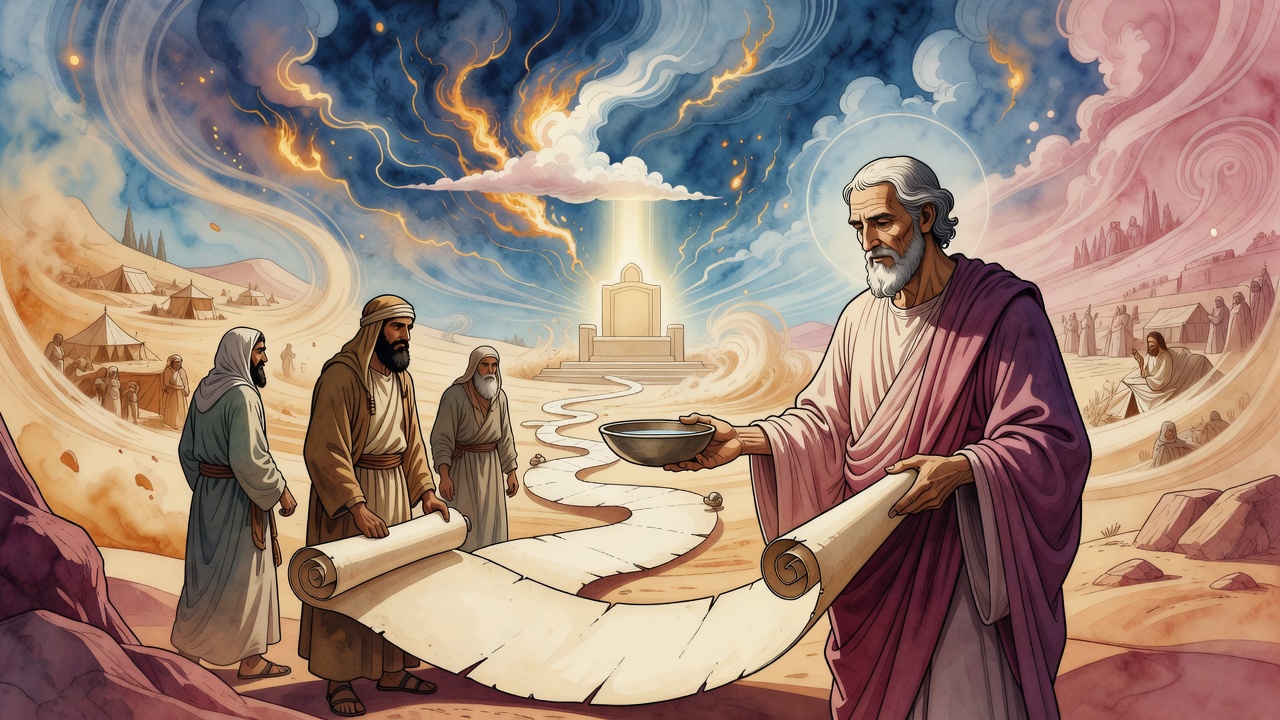
What he offered first was the smallest thing on the whole list. "Let a little water be taken, and wash your feet, and recline beneath the tree." A bowl, some shade, and then the bread and the calf and the curds after it. He stood over them while they ate instead of sitting down, which is where a servant stands.
Rabbi Simai heard those three runnings and would not let them go. "Because you ran three times for strangers," God told Abraham, "I will run three times in front of your children when I come to give them the Torah." That is why it says the Lord came from Sinai (Deuteronomy 33:2).
The Bowl Turned Into a Debt
Then God took the bowl of water.
"You said, let a little water be taken. By your life, I will repay your descendants in the wilderness, and in inhabited land, and in the future."
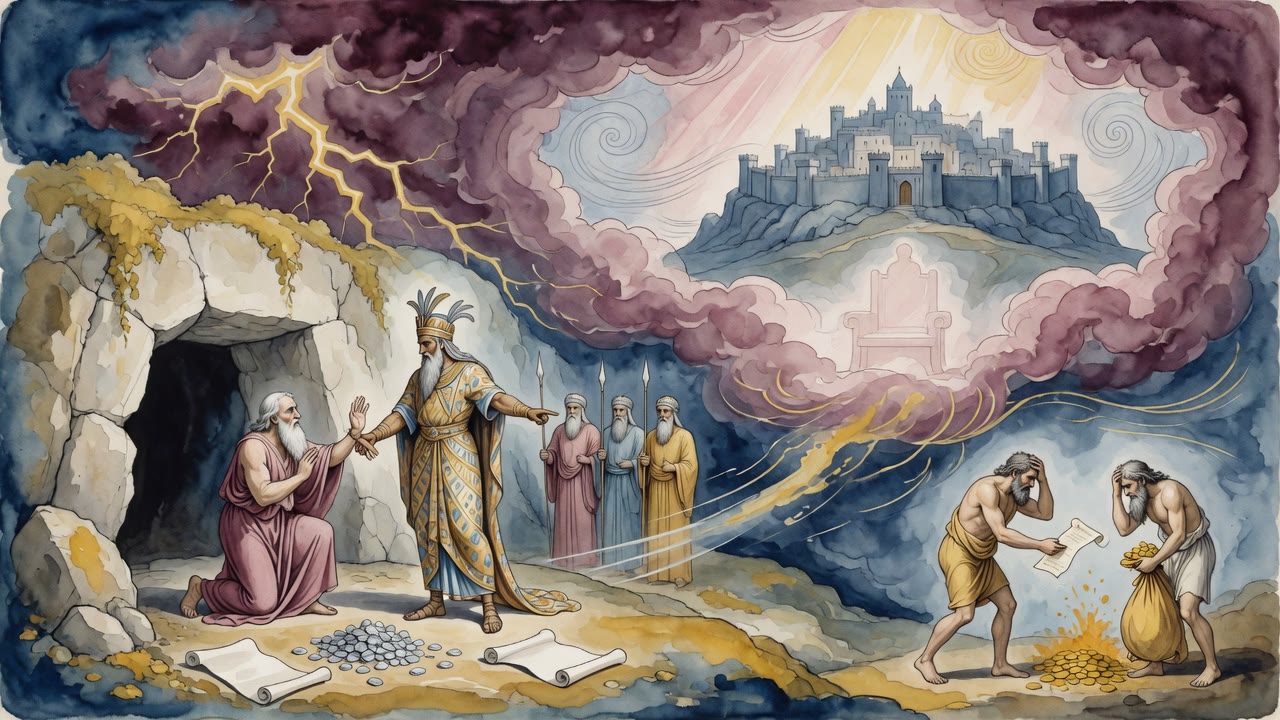
Abraham had brought the water so the men would sit down. He had not been keeping accounts, and until that sentence he had no idea anyone else was. A courtesy he had already forgotten by evening had been written into a ledger with three payment dates on it, and none of them fell in his lifetime.
The first payment was the well that came up in the desert, when Israel sang at the ground, "Rise, well, call out to it" (Numbers 21:17). The second was the country itself, a land of streams of water, of springs and depths, coming out in the valley and on the mountain (Deuteronomy 8:7). The third had no date at all, only a promise that spring water will come out of Jerusalem (Zechariah 14:8).
Dust the Wagons Could Not Finish
A debt paid to descendants has one weakness. The descendants have to survive long enough to collect it.
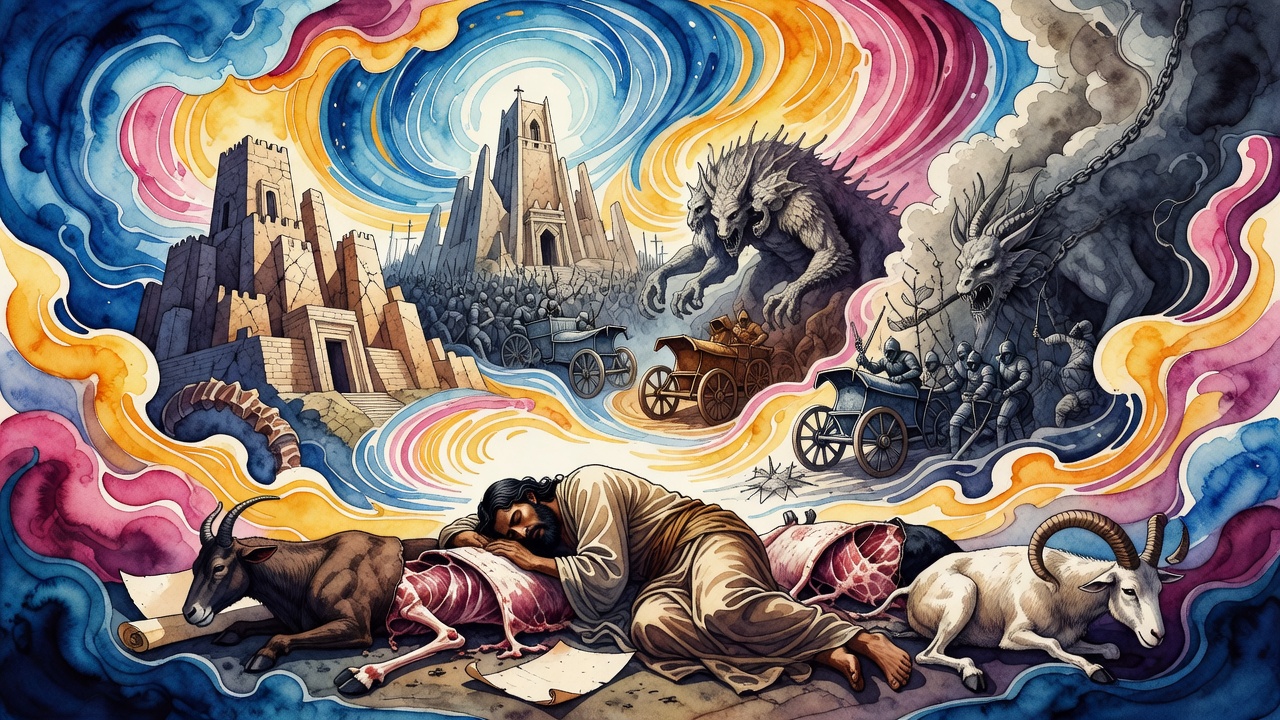
So when God told Jacob at Beit El that his children would be like the dust of the earth, the sages refused to hear it as a promise about numbers. Dust outlasts every metal vessel ever made. Dust is also walked on by everybody, and the sages did not soften that half either. The oppressors in the verse are the ones who make the wounds run, who torment and drain the strength out of a person, and what they did was lay people down in the street and drive wagons with plows over them.
Rabbi Azarya said in the name of Rabbi Aha that this is a fortunate sign, because the street outlasts the men who walk down it. And dust only comes to anything when water reaches it, which is why the same teaching says these descendants are blessed only through Torah, and Torah is the water.
Jacob Made Them Swear
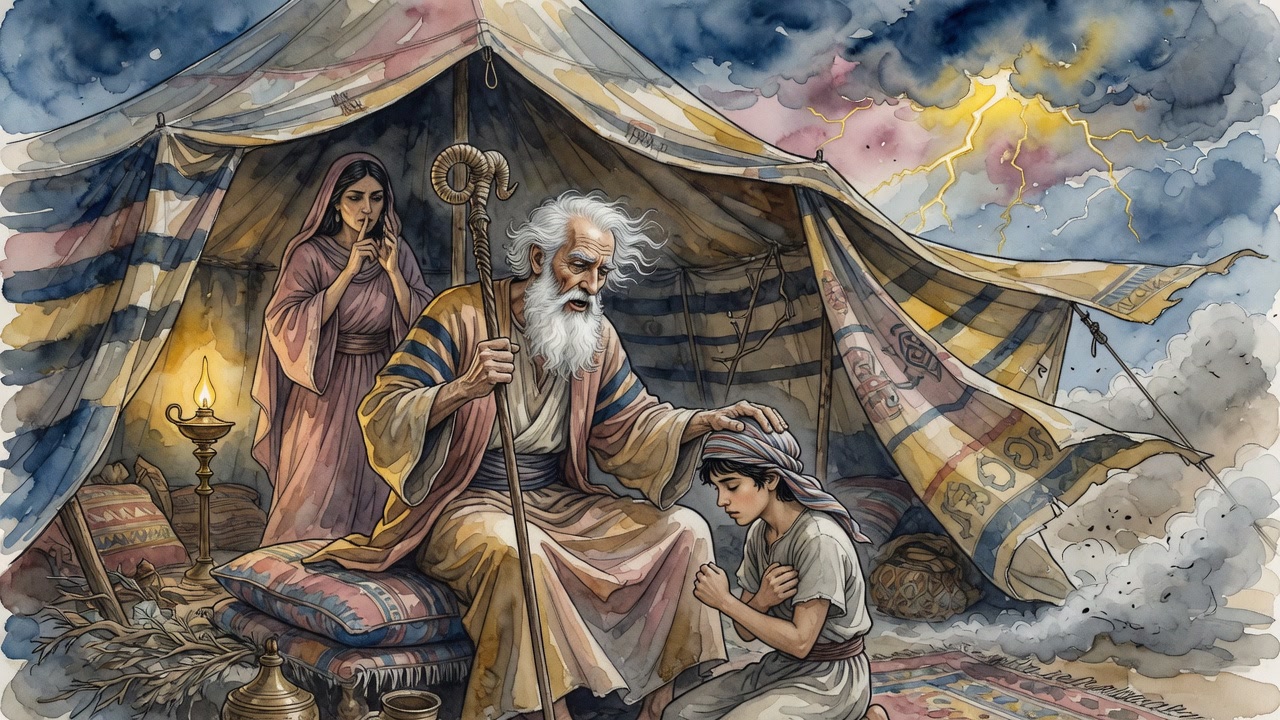
Seventeen years in Egypt, and Jacob was dying in a country his grandfather had never been promised anything in. He called Joseph in and made him put a hand under his thigh, the old oath, the one Abraham had used on his own servant. Do not bury me in Egypt. Carry me out and put me in the grave my fathers dug.
Then he told all of them, "I am to be gathered to my people," and what the sages heard under it was a condition. If they earned it, they would keep him. If they did not, then when he went out of the world he would go to his fathers and stop there.
He drew his feet up onto the bed and died. His sons did exactly what he had told them: they embalmed him, and they carried him up out of Egypt in his bier, because a man who is owed three payments in three eras does not lie down in the country where the first one has not arrived yet.
Rise, Well
Generations later the account came due in sand.
They were out past Moab with nothing to drink and no rain coming, and they did not dig. They sang at the ground. "Rise, well, call out to it." The princes cut at it with their staffs and the people stood around a patch of dry wadi floor singing at it like men calling a dog.
The sand went dark, and then wet, and then the water came up into it, and the singing turned into the noise of people shoving to get to the front.
← All myths