6 min read

The Day God Cut the Corrupting Desire Out of Every Heart

In Jubilees, the end of days arrives as surgery, the foreskin of every heart cut away so Mastema loses his grip and the nations turn whole.

Curated by Arthur · Told by Maggid ·
Table of Contents
  1. The Spirits That Pushed From Behind
  2. The Promise of a Circumcised Heart
  3. When the Binding Came for Mastema
  4. The Healing of the Servants
  5. When All Nations Turned With Their Whole Strength

The plague of spirits worked in the dark, and no one could see the hand that pushed them. A father struck his son and did not know why his arm had risen. A woman swore an oath at noon and broke it before the sun set, and the breaking felt like her own choosing. Behind every one of them stood Mastema, the prince of the spirits of enmity, and behind him stood the host he commanded: the demons that lead the children of men astray, the mazzikim that whisper at the threshold of every decision. They had been loosed across the earth since the days after the flood, and the earth had grown sick with their work.
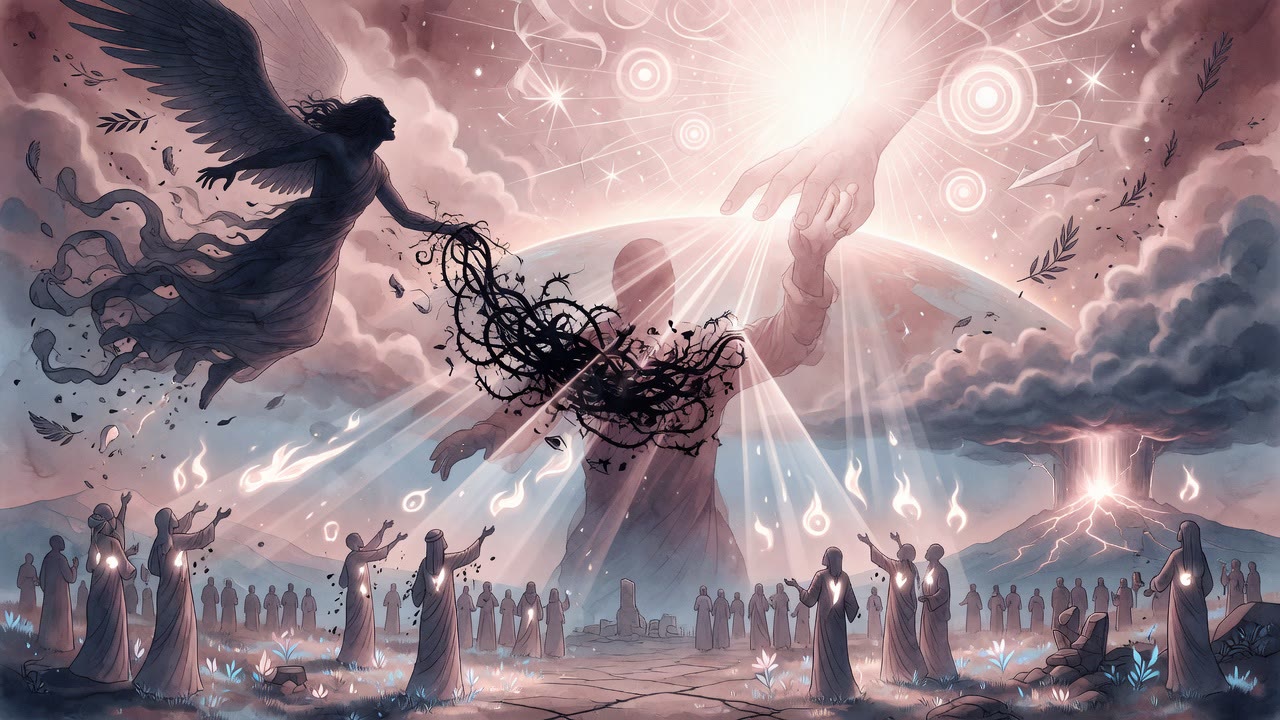
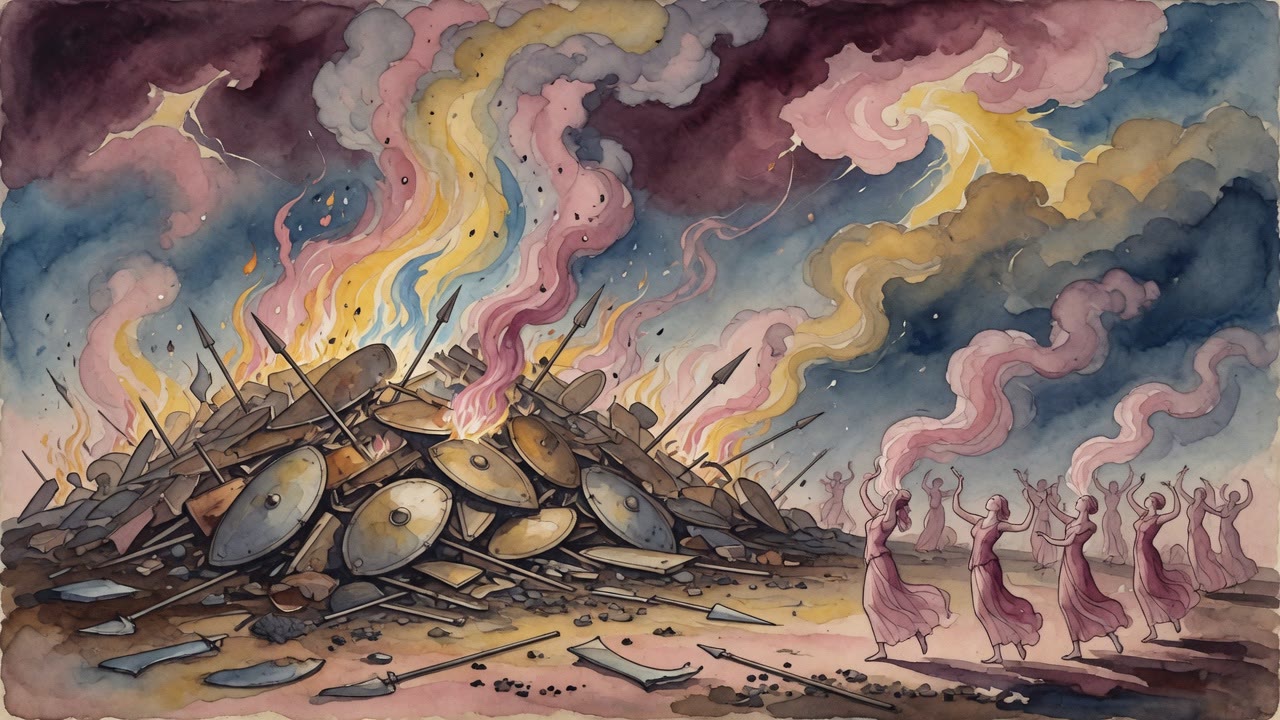
The angels of destruction stood ready in their ranks, swords drawn, waiting for the order to fall. They were patient. They had stood so long that patience had become their shape.

The Spirits That Pushed From Behind

Sin did not look like sin from the inside. That was the genius of it. A man caught in fornication believed he had wanted it. A people sliding into uncleanness and pollution believed they were only living. The error grew in them like a second heart, beating beneath the first, and the first heart could not feel it. Mastema needed no army at the gate. He had a foreskin over every heart, a thickened layer of skin that kept the Divine voice outside and the appetite inside.

So the generations passed, measured in jubilees, each jubilee a span of forty-nine years. Guilt accumulated like silt. The land itself carried the weight of what was done upon it, and the prince of enmity counted his harvest and was satisfied.

The Promise of a Circumcised Heart

Then God spoke a promise into the long dark, and it was not a promise of armies. It was a promise of surgery.

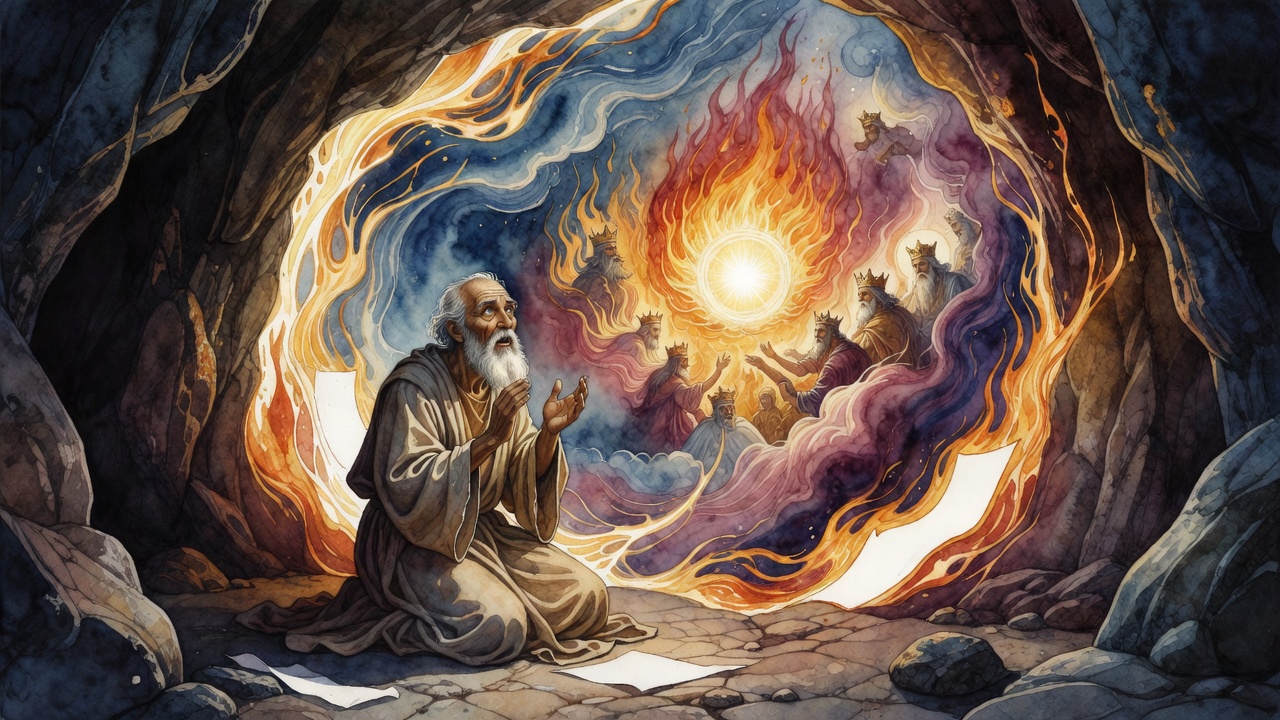
"And after this they will turn to Me in all uprightness and with all their heart and with all their soul," God said. The turning would not be partial. It would be the whole of a person bending back toward the source. And in answer to that turning, God named what He would do to the flesh that kept them deaf. "I shall circumcise the foreskin of their heart and the foreskin of the heart of their seed, and I shall create in them a holy spirit, and I shall cleanse them so that they shall not turn away from Me from that day unto eternity."

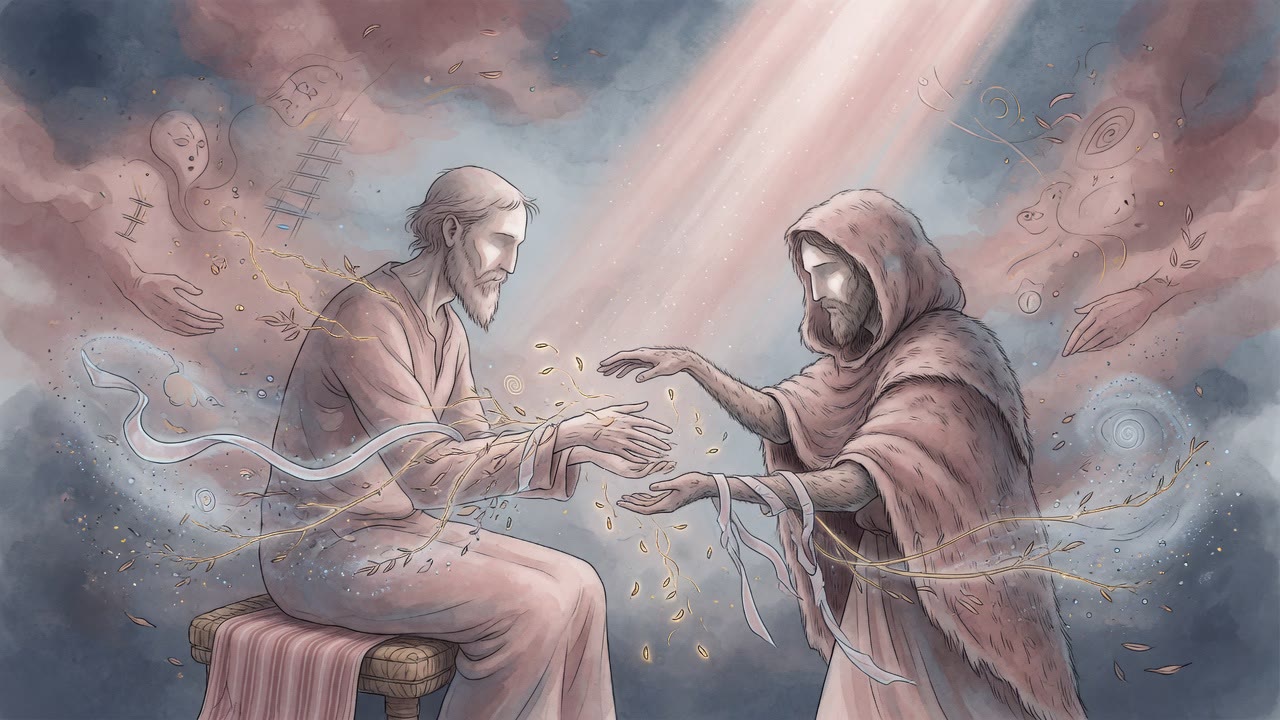
It was the knife taken to the inner thing. The hardened layer that Mastema had laid over every heart would be cut away, not by the person straining against his own nature, but by the One who made the nature. A new spirit set inside the chest. A ruach hakodesh, a holy breath, breathed into the cleaned place. After it, the desire that corrupts would have no door left to enter, because the door would be gone.

When the Binding Came for Mastema

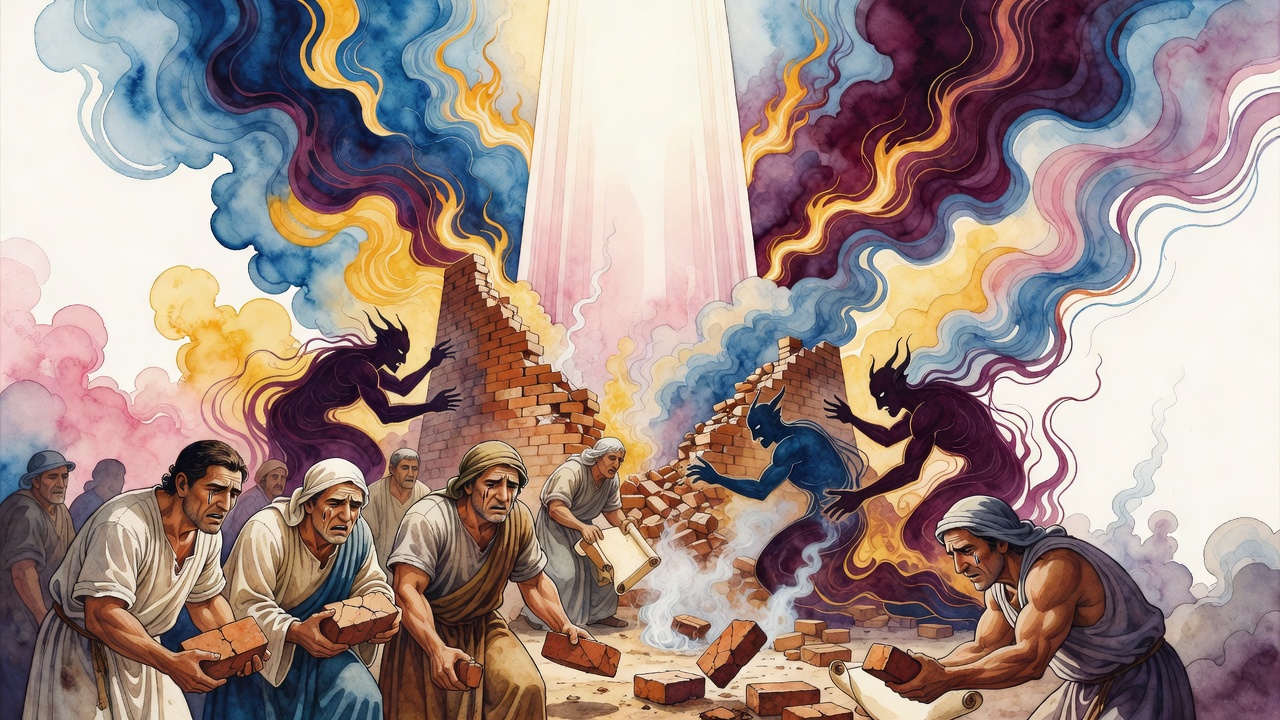
What happens to a prince when his foothold is taken away? Mastema's whole power had lived in the foreskin of the heart, in the gap between a man and his own will. Close that gap, and the prince has nothing left to grip. The spirits that pushed from behind found no one leaning. The whispers reached the threshold and found the door sealed.

"And there will be no Satan nor any evil destroyer," ran the promise, "for all their days will be days of blessing and healing." The destroyer named here was not only the accuser in the heavens. It was the whole machinery of leading-astray, the prince and his host together, stilled in a single word. The land would be clean of him from that time for evermore. No more temptation arriving disguised as one's own thought. No more internal war fought against a saboteur wearing your face.

And the angels of destruction, who had stood so long with their swords ready, lowered them. There was nothing left for their patience to wait upon.

The Healing of the Servants

Into that cleared ground the healing came. "At that time the Lord will heal His servants, and they will rise up and see great peace, and drive out their adversaries." The righteous would see and give thanks and rejoice with joy forever. The bones of those who had suffered would rest in the earth, and their spirits would have much joy, and they would know that it was the Lord who executes judgment and shows mercy to thousands upon thousands who love Him.

The relationship that grew in the cleaned heart was a family one. "Their souls will cleave to Me and to all My commandments," God said, "and I shall be their Father and they will be My children." The cleaving was not strain. It was the natural inclination of a heart with nothing in it to pull the other way.

When All Nations Turned With Their Whole Strength

The surgery did not stop at Israel's border. God reached out past it, into the wide field of the nations. "I shall gather them from amongst all the Gentiles, and they will seek Me, so that I shall be found of them," He said. They would come turning with all their heart and all their soul and all their strength, the same totality, the same whole-bodied return.

What they found was abounding peace with righteousness, a peace that ran over its banks like a flooded river. They would be a blessing and not a curse, the head and not the tail. A people who had followed would now lead. And every angel and every spirit in the cosmos would look at the gathered children and know them. "They will all be called children of the living God, and every angel and every spirit will know that these are My children, and that I am their Father in uprightness and righteousness, and that I love them."

Mastema bound. The destroyer gone. The foreskin of every heart lifted away like a peeled skin, and underneath it, beating clean for the first time, a heart that obeyed because nothing in it wanted otherwise.


← All myths
From the tradition

Sources

4 sources

The texts this telling draws on, in full. Open a card to read inline, or expand it for a wider, quieter read.

Book of Jubilees 23:49Book of Jubilees

The Book of Jubilees, an ancient Jewish text that expands on the stories in Genesis and Exodus, gives us a glimpse of just such a time. It’s a breathtaking vision of the future, one free from the influence of Satan.

This isn’t just some vague hope; it’s a promise. The text assures us, "And there will be no Satan nor any evil destroyer; For all their days will be days of blessing and healing." Imagine a world without that constant pull towards negativity, where healing and wholeness are the norm. word: Satan. In Hebrew, ha-Satan literally means "the accuser" or "the adversary." He's the one who throws obstacles in our path, whispers doubts in our ears. But the Book of Jubilees envisions a time when that voice is silenced.

What happens then?

"And at that time the Lord will heal His servants, And they will rise up and see great peace, And drive out their adversaries." Notice the active verbs: heal, rise, see, drive out. This isn’t a passive experience. It’s a world where we are empowered, where we actively participate in creating peace and overcoming challenges. Healing isn't just physical; it’s spiritual, emotional, and communal.

And what about those who have suffered, who have been wronged? The Book of Jubilees offers them solace, too. "And the righteous will see and be thankful, And rejoice with joy for ever and ever." It's a vision of ultimate justice and vindication, a world where the scales are finally balanced.

The text goes on, "And will see all their judgments and all their curses on their enemies. And their bones will rest in the earth, And their spirits will have much joy." This can be a difficult passage for modern readers. It speaks of enemies and curses. But remember, this is ancient language, reflecting a world where survival often meant conflict. Perhaps it’s best understood as a symbolic representation of the triumph of good over evil, of justice prevailing in the end. It's about finding peace and joy, even after death.

The passage brings us back to the source of this transformation: God. "And they will know that it is the Lord who executeth judgment, And showeth mercy to hundreds and thousands and to all that love Him." It's a reminder that this future of peace and healing isn’t something we can achieve on our own. It requires faith, love, and a connection to something greater than ourselves.

So, what do we take away from this ancient vision? Is it just a far-off dream, or can it inform our present? Maybe the Book of Jubilees is challenging us to actively create a little bit of that future in our own lives, right here, right now. What would it look like to choose blessing over negativity, to actively work towards healing and peace, to trust in a higher power? Maybe, just maybe, that's how we begin to usher in a world without Satan.

Full source
Book of Jubilees 1:36Book of Jubilees

Book of Jubilees turns to Angels of Destruction.

A future where the very core of your being is altered, where the desires that lead you astray are… well, removed. Jubilees promises exactly that. It says: "And after this they will turn to Me in all uprightness and with all (their) heart and with all (their) soul…"

This isn’t just a surface-level commitment. It's a complete turning, a full-hearted return. And what does God promise in return? Something radical: "…and I shall circumcise the foreskin of their heart and the foreskin of the heart of their seed, and I shall create in them a holy spirit, and I shall cleanse them so that they shall not turn away from Me from that day unto eternity."

The image of circumcising the heart might seem strange to us. But think of it metaphorically. Circumcision, in its physical form, is a ritual of purification, a marking of belonging to the covenant. Here, it's about removing the barriers, the hardened layers that prevent us from truly connecting with the Divine. It's about opening ourselves up to receive a "holy spirit," a ruach (spirit) hakodesh, and being cleansed from the inside out.

And the promise continues, growing even more intimate. "And their souls will cleave to Me and to all My commandments, and they will fulfil My commandments, and I shall be their Father and they will be My children."

It's a reciprocal relationship, a deep and abiding connection. Our souls, our very essence, will cleave – the Hebrew word used here is powerful, suggesting a clinging, an inseparable bond – to God and God's will. We become children, inheritors of a divine legacy.

The passage concludes with a breathtaking vision of cosmic recognition: "And they will all be called children of the living God, and every angel and every spirit will know, yea, they will know that these are My children, and that I am their Father in uprightness and righteousness, and that I love them."

Imagine that! Every angel, every spirit – the entire cosmos – recognizing us as children of the living God. It's a powerful statement about our inherent worth, our potential for greatness. And perhaps most importantly, it speaks to the unwavering love of a Divine parent.

So, what does this ancient promise mean for us today? Maybe it's an invitation to examine our own hearts, to identify those "foreskins" that need to be removed. What are the barriers that prevent us from fully embracing our spiritual potential? What keeps us from cleaving to the Divine?

The Book of Jubilees offers a hopeful message: transformation is possible. We can break free from the cycles that bind us and embrace a future filled with purpose, connection, and divine love. It suggests that even when we feel most distant, the possibility of return, of being recognized as beloved children, always remains.

Full source
Book of Jubilees 50:9Book of Jubilees

A world without evil. Sounds pretty good. The Book of Jubilees, a text from around the 2nd century BCE, paints just such a picture. It's not part of the standard Hebrew Bible, but it was hugely influential, especially among certain Jewish groups. Jubilees 50, in particular, offers a powerful glimpse into a future where Israel, and, by extension, the world, is finally, completely cleansed.

It says, plainly, that the jubilees will pass (a jubilee being a period of 49 years), until Israel is cleansed from all guilt, from all the "fornication, and uncleanness, and pollution, and sin, and error." It's a complete spiritual and moral overhaul. Imagine a society free from those burdens, living with confidence in their land.

Then comes the kicker: "there will be no more a Satan or any evil one." Gone. Vanished. The land will be clean "from that time for evermore." No more temptation. No more internal battles against our worst impulses. A world where goodness isn't just a struggle, but the natural state of things. What would that even look like?

It's not all just future hope. The Book of Jubilees immediately grounds this grand vision in the present, in the here and now. It follows that hopeful passage by reiterating the importance of the Sabbath. "Behold the commandment regarding the Sabbaths," it says. "I have written (them) down for thee and all the judgments of its laws. Six days wilt thou labour, but on the seventh day is the Sabbath of the Lord your God."

It's a reminder that this future isn't just going to magically appear. We have to work towards it, starting with the basics: observing the Sabbath, taking a day to rest, to reflect, to connect with something larger than ourselves.

The text continues with a very strict, almost jarring command: "In it ye shall do no manner of work, ye and your sons, and your men-servants and your maid-servants, and all your cattle and the sojourner also who is with you. And the man that doeth any work on it shall die."

Whoa. Strong words. While we might interpret the details differently today, the core message is clear: the Sabbath is sacred. It’s a non-negotiable part of building a better world, a constant reminder of our connection to something beyond the daily grind.

So, what does this all mean for us today? Maybe it's about recognizing that the vision of a world free from evil isn't just a distant dream. It's something we can actively work towards, one Sabbath at a time. Maybe it's about finding ways to cleanse ourselves from the "fornication, and uncleanness, and pollution, and sin, and error" that hold us back. Maybe it's about creating spaces, even small ones, where goodness can flourish.

The Book of Jubilees offers a powerful and challenging vision. It asks us to imagine a world without evil, and then challenges us to start building it, one Sabbath, one act of kindness, one step at a time. What kind of world will we choose to create?

Full source
Book of Jubilees 1:24Book of Jubilees

This particular passage is about a time of profound transformation. It paints a picture of people turning towards the Divine, "with all their heart and with all their soul and with all their strength." That’s a totality of being, isn’t it? Not a half-hearted attempt, but a complete and utter commitment.

Who are these people? The text says "from amongst the Gentiles." Now, "Gentiles" typically refers to non-Jewish people. So,

It's about finding. “I shall gather them from amongst all the Gentiles, and they will seek Me, so that I shall be found of them.” There's a promise here, a divine guarantee that the search won't be in vain. It reminds me of the idea that when we take a step towards the Divine, the Divine takes two steps towards us.

What will they find? "Abounding peace with righteousness." That phrase, abounding peace, sounds like a river overflowing its banks, a sense of tranquility and justice that permeates everything. And, "I shall remove them the plant of uprightness, with all My heart and with all My soul..." Now, this is a bit trickier. Some scholars interpret “plant of uprightness” as referring to something positive being established, a foundation of righteousness. Other interpretations are possible too, of course.

The passage concludes with a powerful reversal of fortune. "And they will be for a blessing and not for a curse, and they will be the head and not the tail.” imagery! To be the head is to lead, to guide, to be a source of blessing. To be the tail? Well, that's to follow, to be dragged along, to be associated with negativity. This is a vision of empowerment, of a people transformed into a source of good.

So, what does it all mean? Is this a literal prophecy? A metaphor for inner transformation? Perhaps it's both. Maybe the Book of Jubilees isn't just predicting the future, but inviting us to create it. To turn towards the Divine with all our heart, with all our soul, and with all our strength. To seek peace and righteousness, and to become a blessing in the world.

What do you think? Could this ancient vision hold a key to our future? Perhaps the answer lies not just in waiting for the prophecy to unfold, but in actively participating in its fulfillment.

Full source