5 min read

God Publicized Pinchas for Praise and Zimri for Rot

At Baal Peor, Zimri and Cozbi fell to a spear. Heaven publicized Pinchas for blessing and Zimri for shame, naming Cozbi Midian sister.

Curated by Arthur · Told by Maggid ·
Table of Contents
  1. Three Names for One Prince
  2. Cozbi, Sister of a Nation
  3. Covenant of Peace, and What Came After
  4. Public Blessing, Public Rot
  5. After the Spear

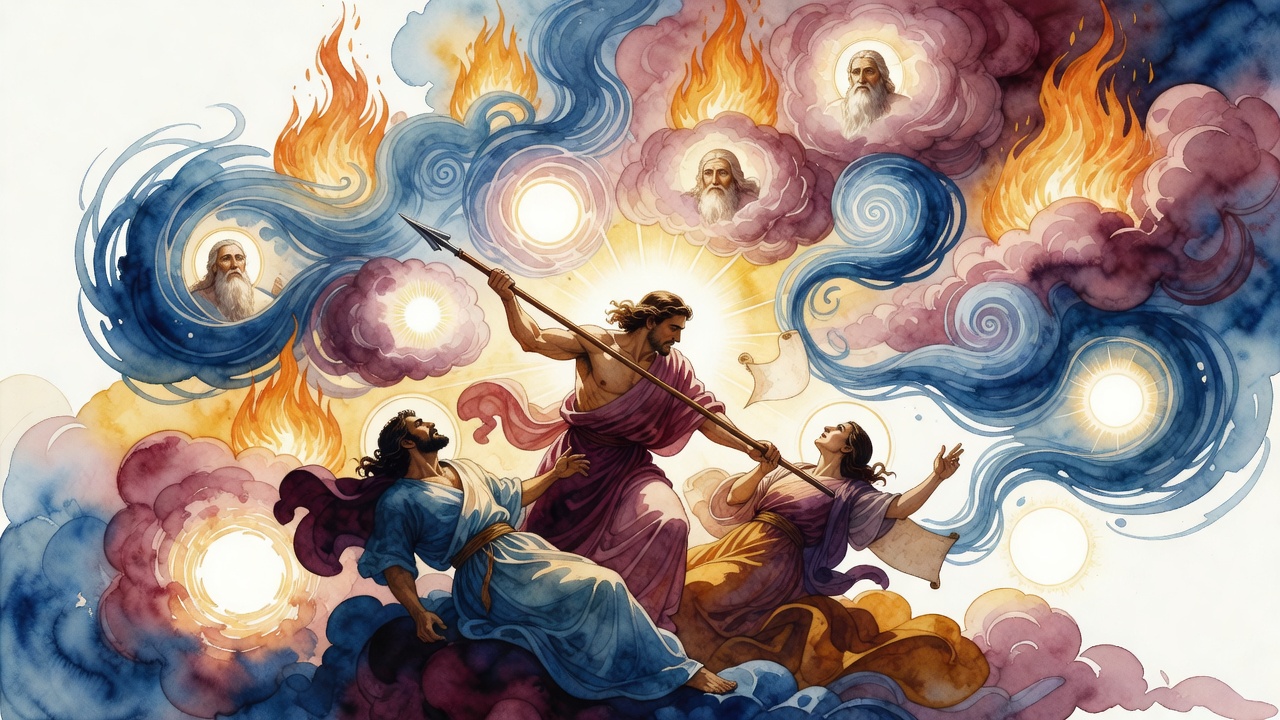
The camp reels at Baal Peor. A prince of Israel takes a Midianite woman in the sight of Moses and the whole congregation. Plague has already begun to eat the people. Pinchas rises, spear in hand, and drives it through the man and the woman in the chamber. The plague stops. Heaven opens a ledger of names.

God Publicized Pinchas for Praise and Zimri for Rot Click for full size

Just as the Holy One is concerned to publicize the praise of the righteous throughout the world, so He is concerned to publicize the disgrace of the wicked. He publicizes Pinchas for praise and Zimri for disparagement. "The remembrance of a righteous one is for a blessing, but the name of the wicked shall rot" (Proverbs 10:7). Private sin becomes public curriculum.

Three Names for One Prince

Zimri son of Salu, prince of a clan, carries other names the sages refuse to leave quiet. Saul son of the Canaanite woman. Shelumiel son of Zurishaddai, his true name. Zimri, because he became like an addled egg through excess. Ben Salu, because he dragged his family's sins into the light. Saul, because he lent himself to sin. Son of the Canaanite woman, because he performed an act of Canaan. Whoever discredits himself discredits his family with him.

The verse is astounded at him. "The one who breaks through a barrier will be bitten by a snake." His ancestor Simeon once took a sword with Levi against the shame of Dinah. Zimri breaks the barrier his house once raised against harlotry. The spear finds the breach he made. A prince who should have guarded borders opens the border in his own tent.

Cozbi, Sister of a Nation

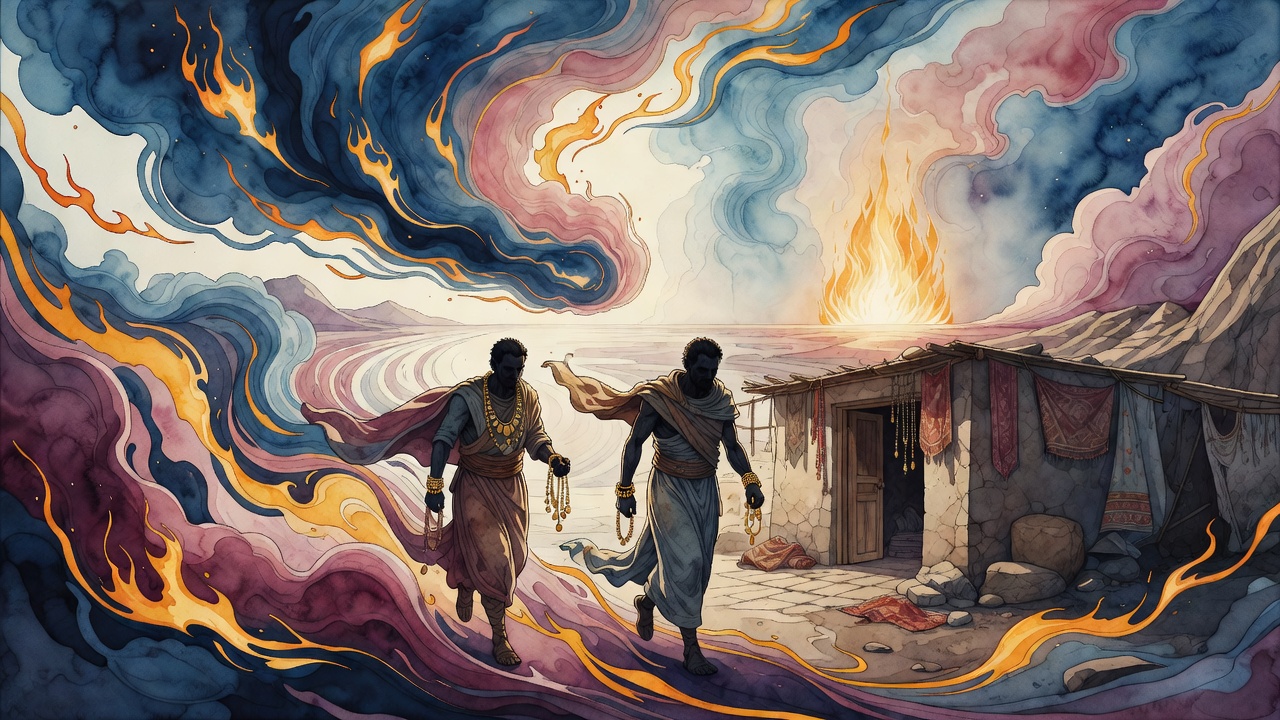
Cozbi daughter of Zur is slain with him. Zur was head of a Midianite father's house, greatest of their kings, later listed third among the slain because he abandoned his daughter to shame. The Torah calls her "their sister." The Mekhilta objects. Was she sister to all Midian? The answer stings. Because she risked her life for her people. She walked into the Israelite camp knowing she might not walk out. For that self-sacrifice on behalf of Midian, the whole nation is called by her name. Sister earned by danger, not by poetry.

The rabbis are not blessing her morality. They are measuring enemy courage with a straight edge. Hatred sent a king's daughter. She went. Midian's policy becomes a woman's body, and heaven records the policy in her title.

Covenant of Peace, and What Came After

"Behold, I give to him My covenant of peace." From Pinchas, the Sifrei counts twelve high priests in the First Temple. Leadership that holds. In the Second Temple the count swells to eighty, and lives shorten, because men begin to sell the high priesthood for money. Two urns of silver rimmed with silver. Two of gold rimmed with gold. Bribes for the right to enter the Holy of Holies on Yom Kippur. The spear that once stopped a plague becomes, generations later, an office auctioned by weight of metal.

Peace was a gift to zeal for heaven. Peace does not automatically police the grandsons of zeal. The covenant can be inherited as name and sold as merchandise. That later chapter hangs over the first spear like a warning no one in the camp can hear yet.

Public Blessing, Public Rot

Heaven's method is publicity. Pinchas is not left as a quiet assassin. Zimri is not left as a private scandal. Names are published in opposite directions. One becomes blessing on the tongue. One becomes rot. Midian's hatred is published too, in the figure of a princess spent like a weapon. The camp that watched the chamber must also watch the aftermath: plague lifted, priesthood promised, genealogy of shame spelled letter by letter.

Simeon's old sword hangs over Zimri's head as irony. The house that once killed for a sister's honor now dies for a prince's appetite. Memory works both ways. Righteous remembrance blesses. Wicked remembrance rots. The midrash forces the camp to say both names aloud.

After the Spear

Blood dries on wood. The covenant of peace settles on a man who did not wait for a committee. Later ages will argue the edges of zeal. This telling keeps the scene concrete. Two bodies. One spear. A God who advertises both hero and villain. A foreign sister who died for her people the way Pinchas killed for his. Between them the plague stops, and the long story of the priesthood begins its climb and its later sale.

Remember the righteous for blessing. Let the wicked name rot. The midrash writes both sentences in the same ink, while the spear is still warm. Moses weeps or stands stunned, depending on the telling. Pinchas walks out under a new title. Zimri's three names scatter like ash that still smells of the chamber.


← All myths
From the tradition

Sources

3 sources

The texts behind this telling. Some cards carry a translation of the source; others are our own retelling of it, and each card says which. Every card links out to the original.

Midrash Tanchuma, Pinchas 2Midrash Tanchuma

Retold in our words. Read the original at the link below.Townsend 1989 translation of Midrash Tanhuma, S. Buber Recension · CC-BY

(Numb. 25:14:) “And the name of the slain man of Israel..” Just as the Holy One, blessed be He, is concerned with the praise of the righteous to publicize them throughout the world, so is he concerned with the disgrace of the wicked to publicize them throughout the world. He publicized Phinehas for praise and publicized Zimri for disparagement. About them is it stated (in Prov. 10:7), “The remembrance of a righteous one is for a blessing, but the name of the wicked shall rot.” (Numb. 25:14, cont.) “Zimri ben Salu, the prince of a clan.” The sages said Zimri had three names: Zimri ben Salu; and Saul the son of the Canaanite woman; and Shelumiel ben Zurishaddai. [He was called] Zimri because of the fact that he became like an addled (hamuzeret) egg (as a result of engaging in multiple acts of intercourse); ben Salu because he evoked [shehisli] the sins of his family; Saul [Shaul] because he lent [shehishil] himself to sin; the son of the Canaanite woman because of the fact that he performed an act of Canaan. And what is his [true] name? Shelumiel, son of Zurishaddai. (Numb. 25:14, cont.) “Zimri ben Salu, the prince of a clan,” as whoever discredits himself discredits his family along with himself. (Numb. 25:14, cont.) “Zimri ben Salu, the prince of a clan.” The verse is astounded by him (in Eccl. 10:8), “The one who breaks through a barrier will be bitten by a snake.” [As it was] his [ancestor Simeon) who was the first to display zeal against harlotry, as stated (in Gen. 34:25), “then two of the sons of Jacob, Simeon and Levi, [the brothers of Dinah, each] took [his sword]….” And [yet] this (Zimri) broke through the barrier which his [ancestor] had made. (Numb. 25:15:) “And the name of the Midianite woman who was slain [was Cozbi bat Zur; Zur was the tribal head of a clan in Midian].” [These words are there] to inform you how far the Midianites hatred went. Thus they had abandoned a daughter of kings in to shame, as stated (in Numb. 31:8), “[And along with their other victims] they killed the kings of Midian:…, Zur.” Zur was the greatest of them all; and [since] he abandoned his daughter, who would not abandon [his own daughter]? But because he had disgraced himself and abandoned his daughter to shame, the text has demoted him and numbered him third (on the list). He was, however, the king of them all, as stated (in Numb. 25:15), “[Zur] was leader of the nations of the clan [in Midian].”

Full source
Mekhilta Tractate Shirah 10:15Mekhilta DeRabbi Yishmael

Retold in our words. Read the original at the link below.Mechilta, translated by Rabbi Shraga Silverstein · CC-BY

The Mekhilta asks a question about Kazbi (also known as Cozbi), the Midianite woman who played a central role in the sin at Baal Peor. The verse calls her "the daughter of a prince of Midian, their sister" (Numbers 25:18). But the rabbis immediately object: was she really the "sister" of all Midian?

Her father Tzur was "the head of the peoples of a father's house in Midian" (Numbers 25:15), a tribal chief, not a brother to every Midianite. So why does the Torah call Kazbi "their sister," as though she were a blood relative of the entire nation?

The Mekhilta's answer is stunning: because she risked her life for her people. Kazbi's act, seducing Israelite men to draw them into idolatry, was not done for personal gain or pleasure. She deliberately put herself in mortal danger to protect Midianite interests. She walked into the Israelite camp knowing she might not walk out alive. And for that act of self-sacrifice on behalf of her nation, all of Midian was called by her name. She became their "sister", their representative, their embodiment.

The rabbis are not praising Kazbi's morality. They are recognizing a principle: when someone risks everything for their people, that people becomes identified with them. The title "sister" is earned through sacrifice, not blood. Even an enemy's courage is acknowledged in the Mekhilta's unflinching analysis.

Full source
Sifrei Bamidbar 131:4Sifrei Bamidbar

Retold in our words. Read the original at the link below.Sifrei by Rabbi Shraga Silverstein · CC-BY

Our story today explores just that, a cautionary tale woven from the threads of ancient Israel.

We find ourselves in Bamidbar, the Book of Numbers, specifically chapter 25, verse 12. It's a seemingly simple promise: "Therefore, say: Behold, I give to him My covenant to be to him a covenant of peace." But within these words, the Sifrei Bamidbar, an ancient commentary on the book of Numbers, finds a fascinating and disturbing narrative about the priesthood.

The Sifrei Bamidbar tells us that from Pinchas, the one to whom this covenant of peace was given, descended twelve high priests during the First Temple period. Not too shabby. Twelve generations of spiritual leadership. But then, something shifts.

Fast forward to the Second Temple. Suddenly, instead of a handful of high priests, we have eighty! What changed? According to the Sifrei Bamidbar, their lives began to be shortened because they started selling the high priesthood for money. Selling spiritual authority? The role of the High Priest, the one who would enter the Holy of Holies on Yom Kippur (the Day of Atonement), reduced to a transaction.

The commentary even gives us a glimpse: "Once, a man sent by his son two urns of silver rimmed with silver (as a bribe), and another, two urns of gold rimmed with gold." Gold and silver, precious metals, used to purchase a position of utmost spiritual significance. The image is jarring, to say the least.

The sages of the time, witnessing this corruption, coined a rather poignant phrase: "The foal has outweighed the menorah." The menorah, of course, is the golden candelabrum, a symbol of divine light and spiritual illumination. And the "foal"? That’s the bribe, the payment, the thing that has now become more important than the sacred object. It's a stark reminder of misplaced priorities.

Think about the weight of that statement. The menorah, a symbol of holiness, outshone by a mere foal, a simple transaction. What a powerful, and ultimately tragic, commentary on human nature and the corrupting influence of power.

This story, though rooted in a specific historical context, resonates even today. What compromises are we willing to make, and what sacred principles are we willing to sacrifice, for personal gain or worldly power? The Sifrei Bamidbar offers us more than just a historical anecdote; it presents us with a timeless ethical challenge. A challenge to ensure that the true light of the menorah always outweighs the fleeting allure of the "foal."

Full source