Parshat Matot5 min read

Twelve Thousand Marched on Midian With Pinchas

Twelve thousand came home from Midian with no man dead and no man accused. Then they set gold in front of Moses, and he asked what it was for.

Curated by Arthur · Told by Maggid ·
Table of Contents
  1. A Thousand From Every Tribe
  2. Arm Before Head
  3. They Went In Two at a Time
  4. Not a Man Missing
  5. Moses Asked What the Gold Was For

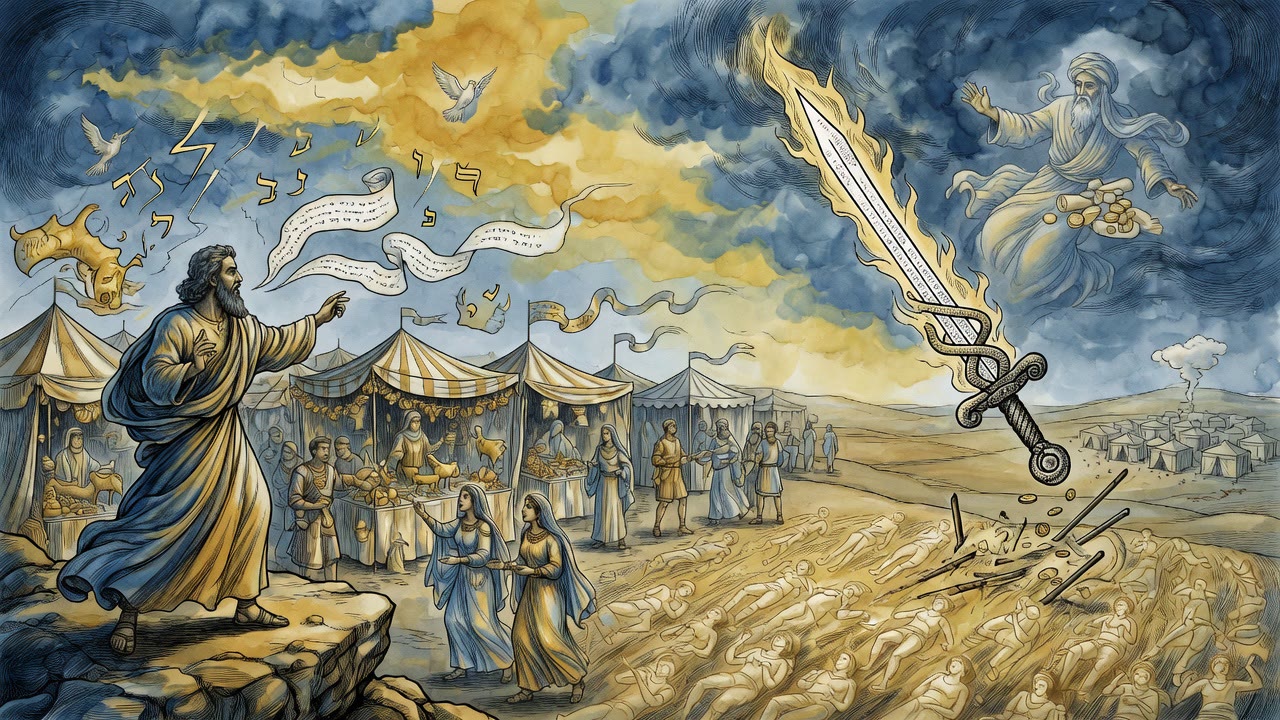
Twenty-four thousand graves were still fresh at Shittim when the muster went out. The plague had come through the camp after the Midianite women came through the tents, and the dead had been buried by their own brothers.
Twelve Thousand Marched on Midian With Pinchas Click for full size

A Thousand From Every Tribe

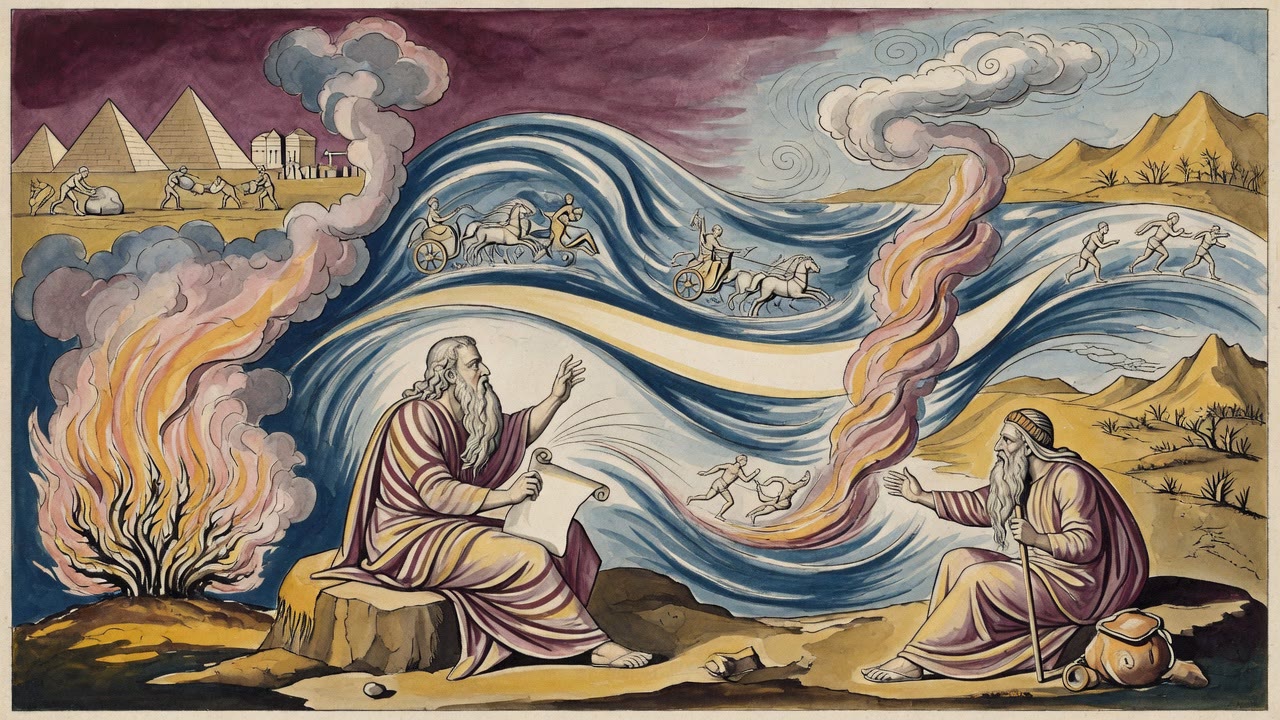
Moses did not raise a mob. He took a thousand men from each tribe and no more, so that the count came out even at twelve thousand, and he sent them out with Pinchas.

Pinchas did not walk behind them carrying a horn. He walked in the count. The man who had put a spear through a couple in a tent and stopped the dying was numbered with the rest of the soldiers, as though zeal had enlisted like everybody else and drew the same rations.

They went out ordered, tribe beside tribe, the way a flock stands when a shepherd has counted it that morning.

The graves at Shittim were behind them. Most of these men had a brother or a cousin under that ground, dead of a plague that had started inside a tent, and they were marching back toward the tents.

Arm Before Head

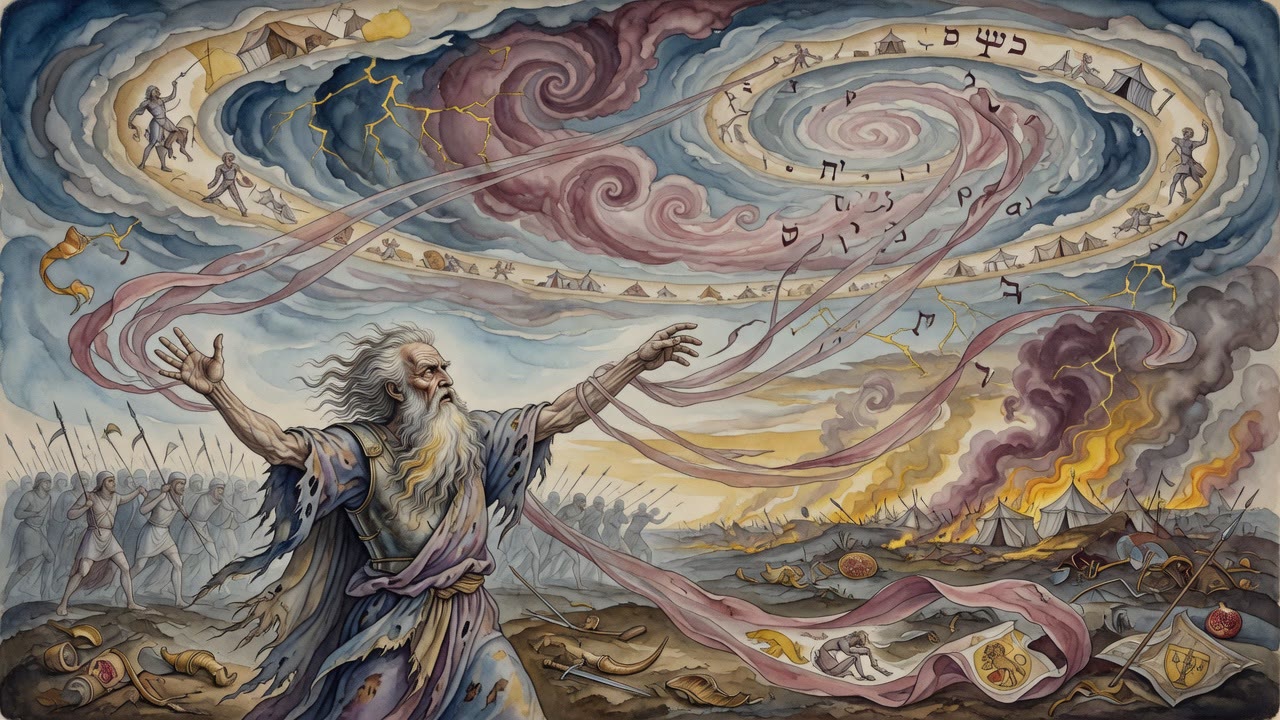
Every man of them put the arm strap on first.

It is a small sequence and easy to reverse in a hurry, and they were arming for a war. Not one of them crowned his head before he had bound his arm. Moses would say later that this was why he could praise them, and why they came up off that field without a body to carry home.

Twelve thousand pairs of hands, wound, knotted, then the spear.

They Went In Two at a Time

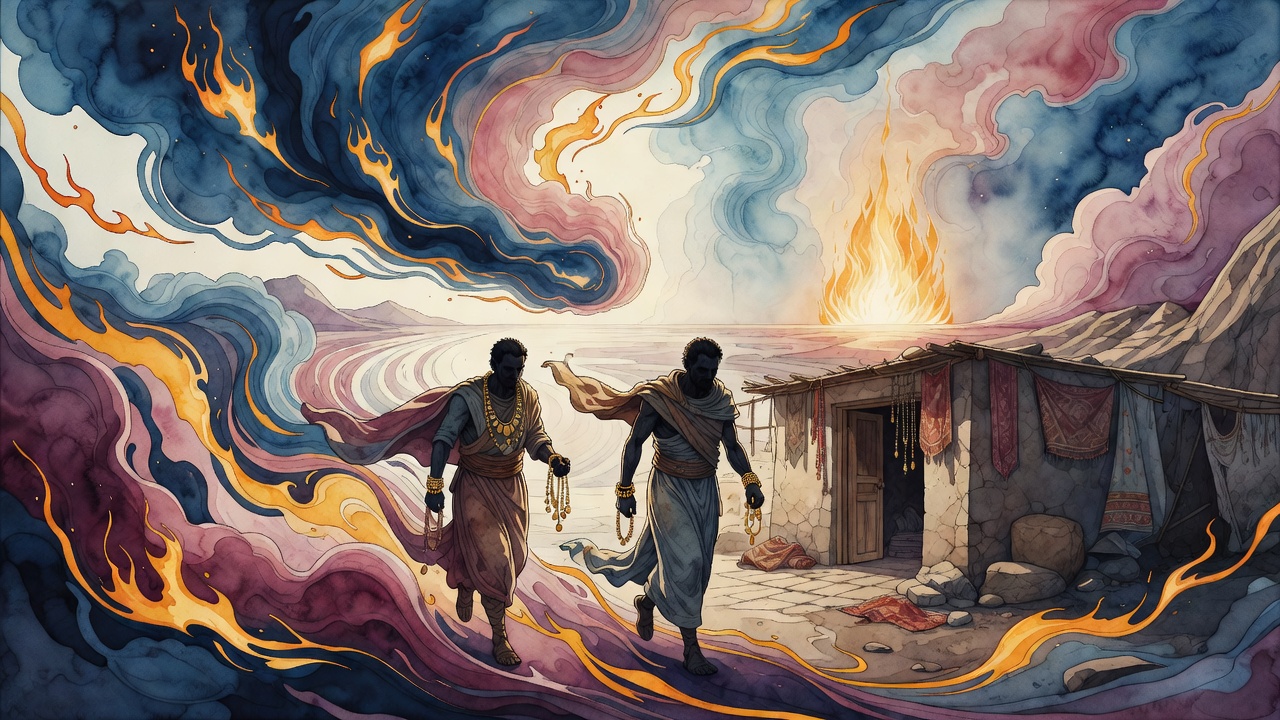
When the Midianite army broke and the camp lay open, the soldiers went into the women's dwellings to take the spoil. They went in pairs, never alone. One man smeared soot across the woman's face. The other stripped the rings from her ears and the bracelets off her wrists and dropped them in a sack.

The women fought them over it. "Are we not creations of the Holy One, that you should do this to us?"

The answer came back flat. "Is it not enough for you that our own people were punished because of you?"

Nobody in that room was pretending the war was about grazing land. The soot and the stripped gold were a confession of what these men knew about themselves, written on somebody else's face.

Not a Man Missing

They came back and counted. The officers stood in front of Moses and reported that not a man was missing from among them, and they did not only mean the dead. Not one soldier had been suspected of touching a captive.

Then they set down the gold. Anklets, bracelets, signet rings, earrings, the whole take from the tents, heaped on the ground in front of the old man. We have brought an offering for the Lord, they said.

Moses Asked What the Gold Was For

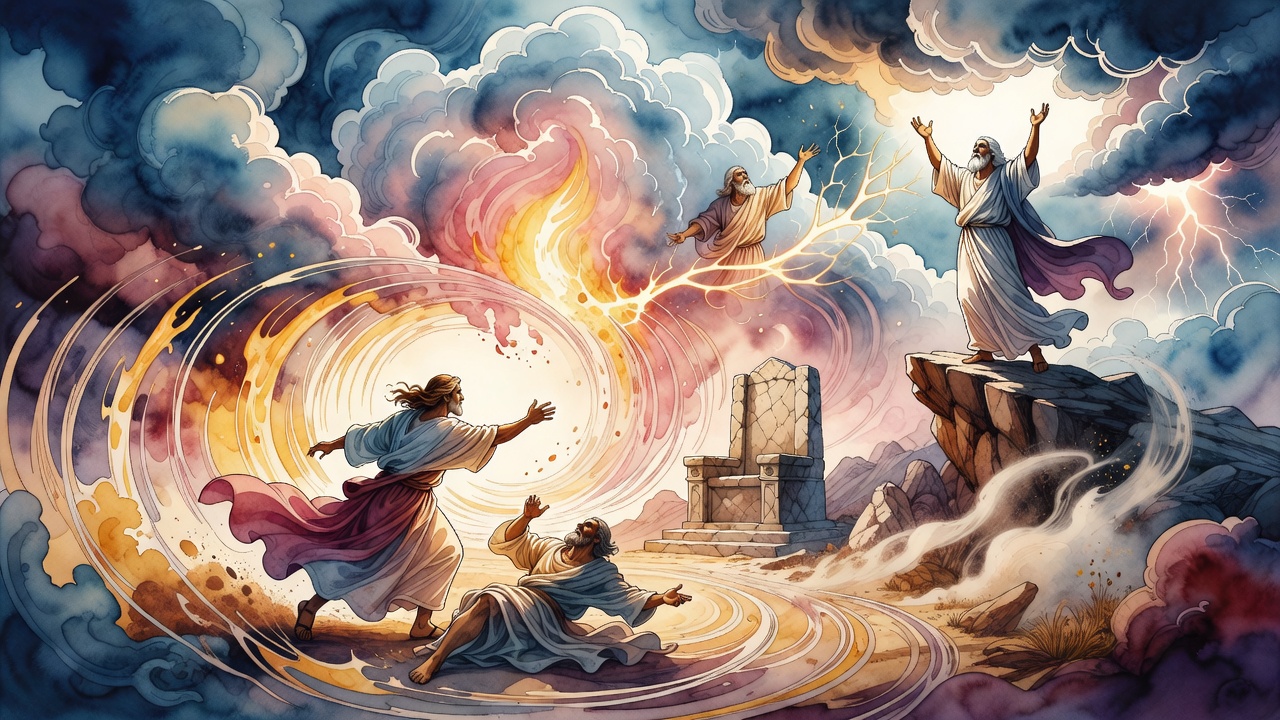
Moses looked at the heap and then at the officers and told them their two statements were fighting each other.

You say not one man is missing, he said, not in death and not in sin. And then you bring me an offering. If none of you sinned, what is this for?

They answered him. We went in two at a time. One of us blackened her face and one of us took her jewelry. Is it possible that the inclination was not moved at all? For that moving, we bring an offering.

It was a confession of something no witness could have testified to and no court could have charged. They had done nothing. They had wanted to, for the length of a breath, standing over a woman with soot on their fingers, and they had walked out of the tent and gone on wanting to, and they would not come home with that unpaid.

Moses began to praise them where he stood. Even the emptiest man among you, he said, is packed with good deeds the way a split pomegranate is packed with seed.

They took the land of Midian afterward and kept it. The ridge where the war ended was left standing as a memorial the other nations could see from a long way off, and what these men carried down from it was not only plunder.

The gold stayed where they had set it down. A heap of what they had taken from Midian, and a receipt for what they had wanted and had not touched.


← All myths
From the tradition

Sources

2 sources

The texts behind this telling. Some cards carry a translation of the source; others are our own retelling of it, and each card says which. Every card links out to the original.

Shir HaShirim Rabbah 4:2Shir HaShirim Rabbah

Retold in our words. Read the original at the link below.The Sefaria Midrash Rabbah, 2022 · CC-BY

Shir HaShirim Rabbah turns to Israel Won Against Midian Through Moses and Pinchas.

The text even seems to play with the wording of (Numbers 31:6) – "Moses sent them, a thousand of every tribe, to the war, them and Pinḥas." Some suggest understanding this verse as equating Pinḥas with the rest of the soldiers! Powerful. The verse continues, "That streams down [shegaleshu] from Mount Gilad" (Song of Songs 4:1). Here, the Rabbis cleverly link the word shegaleshu, "streams down," with shegelashten, "you took away." The mountain, in this interpretation, represents the Midianite war, a "memorial for the nations of the world." But what was taken away? "Your teeth are like a flock of ordered ewes" (Song of Songs 4:2) – representing the meticulously organized army of twelve thousand, "One thousand per tribe from the thousands of Israel" (Numbers 31:5).

There's a fascinating detail here about the army's piety. Rabbi Huna says that not one of them put on their head t’fillin (phylacteries) before their arm t’fillin. This seemingly small act of religious devotion was so significant that Moses praised them, and they returned unharmed! It speaks volumes about their righteousness.

Then comes a rather… intense image. "That are all paired" (Song of Songs 4:2). The Rabbis, reflecting on the historical context, explain that the soldiers, remembering the earlier sin at Shittim where Israelite men were enticed by Midianite women, entered the women's dwellings in pairs. One soldier would blacken the woman's face, while the other would remove her jewelry. The idea? To make them less appealing, preventing further sin.

The women, understandably, protested: "Are we not creations of the Holy One blessed be He that you do this to us?" The Israelites responded, "Is it not enough for you that our people received their punishment because of you?" A stark reminder of the consequences of unchecked desire and the need for boundaries.

The verse "And there is none missing among them" (Song of Songs 4:2) is interpreted to mean that not a single soldier was suspected of wrongdoing. When they reported to Moses, "Your servants took a census of the men of war under our command, and not a man is missing from among us" (Numbers 31:49), they weren't just talking about physical absence, but also moral purity.

But then, a twist! Moses challenges them. "Your statements contradict each other. You said: 'Not a man is missing from among us'… and you said: 'We brought the offering of the Lord.' If you did not sin, what is the purpose of this offering?"

The soldiers then reveal their internal struggle. Even though they didn't commit any explicit transgressions, the yetzer hara (evil inclination) was still present. The very act of resisting temptation, of blackening faces and removing jewelry, stirred something within them. The offering was for that – the acknowledgement of their human fallibility.

Moses, moved by their honesty and self-awareness, then praises them: "Your temple [rakatekh] is like a pomegranate slice" (Song of Songs 4:3) – even the empty among you is packed with mitzvot (good deeds) like this pomegranate. Resisting temptation, the Rabbis say, is a great mitzvah in itself.

The interpretation goes on, connecting the Israelites to the legacy of King David, acknowledging that Israel merited to inherit the land of Midian. It ends by circling back to the beginning: the victory was achieved through "your two breasts" (Song of Songs 4:5) – Moses, the head of the Sanhedrin, and Pinḥas.

So, what does all this tell us? It shows us that even in the midst of war, questions of morality and temptation are ever-present. And perhaps most importantly, it highlights the power of self-awareness and the importance of acknowledging our internal struggles, even when we outwardly appear righteous. Maybe that's the most beautiful and enduring lesson hidden within this interpretation of the Song of Songs.

Full source
Bereshit Rabbah 98:13Bereshit Rabbah

Retold in our words. Read the original at the link below.The Sefaria Midrash Rabbah, 2022 · CC-BY

The Torah gives us stories of such people again and again, and one of the most striking is Samson.

Our text from Bereshit Rabbah (98) explores the strength – and the thirst! – of this legendary figure. The passage begins by quoting (Genesis 49:16): "Dan will avenge his people, as one of the tribes of Israel." But it doesn't stop there. It cleverly interprets the Hebrew word for "one" (ke'aḥad) to mean "like the most outstanding" (kamyuḥad) of the tribes. Who is that? Judah, of course, the tribe of King David. The text then links Samson, from the tribe of Dan, to David, suggesting that Samson, like David, battled against Israel’s enemies.

Rabbi Yehoshua bar Neḥemya adds a fascinating point: if the tribe of Dan hadn't "cleaved to the most outstanding of the tribes," it wouldn't have even produced the one judge it did produce – Samson! It's as if Samson's greatness is somehow dependent on being connected to something even greater.

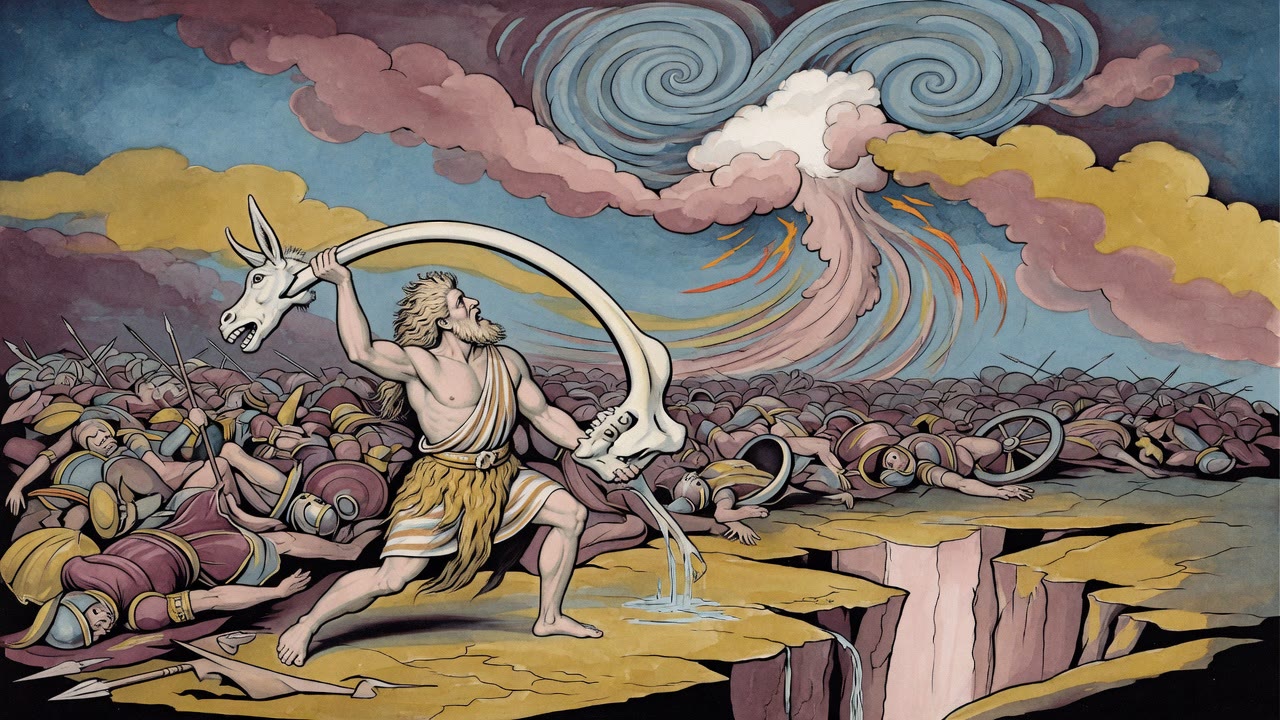
The text then compares Samson to "the unique One [kiḥido] of the world" – God. Just as God needs no assistance, neither did Samson. Remember the story? "He found a fresh jawbone of a donkey, and he extended his hand and took it, and he smote one thousand men with it" (Judges 15:15).

But what does "fresh [teriya]" really mean? It was from a donkey that was only three days old! Rabbi Avun takes it even further, suggesting that the donkey was a twin, making the jawbone even weaker and more underdeveloped. Talk about a seemingly impossible weapon! Samson’s strength wasn’t just physical; it was rooted in something beyond the natural.

The story takes a turn when Samson, after his incredible feat, becomes incredibly thirsty. "He became very thirsty" (Judges 15:18), and the text explains that "one who prattles becomes thirsty." Interesting connection. Rabbi Ḥunya and Rabbi Azarya, citing Rabbi Yoḥanan, suggest that even if there had been water nearby, Samson wouldn't have been able to reach it, so exhausted was he.

So, what does Samson do? He cries out to God, saying, "You have delivered this great salvation at the hand of Your servant; shall I now die of thirst and fall into the hand of the uncircumcised?" (Judges 15:18). He pleads that even the difference of circumcision should be enough to save him from his enemies.

And God answers. "God split the hollow [hamakhtesh] that was in Leḥi, and water emerged from it" (Judges 15:19). Rabbi Levi says Leḥi was the name of the place, while the Rabbis say Makhtesh was. But Rabbi Abba bar Kahana and Rabbi Berekhya, in the name of Rabbi Eliezer, offer a beautiful image: God brought him a spring between his teeth. What was the merit for this miracle? The text connects it to Moses' blessing: "Leaps from [min] the Bashan" (Deuteronomy 33:22) – interpreted here as "from between his teeth [mibein shinav]."

So, what does this all mean? This passage from Bereshit Rabbah paints a portrait of Samson as more than just a strongman. He's a figure connected to both the strength of Judah and the power of God. His victories, even with a seemingly weak jawbone, are miraculous. And even in his moment of weakness, God provides, literally putting the answer to his prayers right in his mouth. It's a reminder that even when we feel alone and depleted, connection to something greater – to community, to tradition, to the Divine – can bring forth unexpected strength and sustenance.

Full source