Parshat Balak5 min read

Twenty-Four Thousand Fell and Midian Still Waited

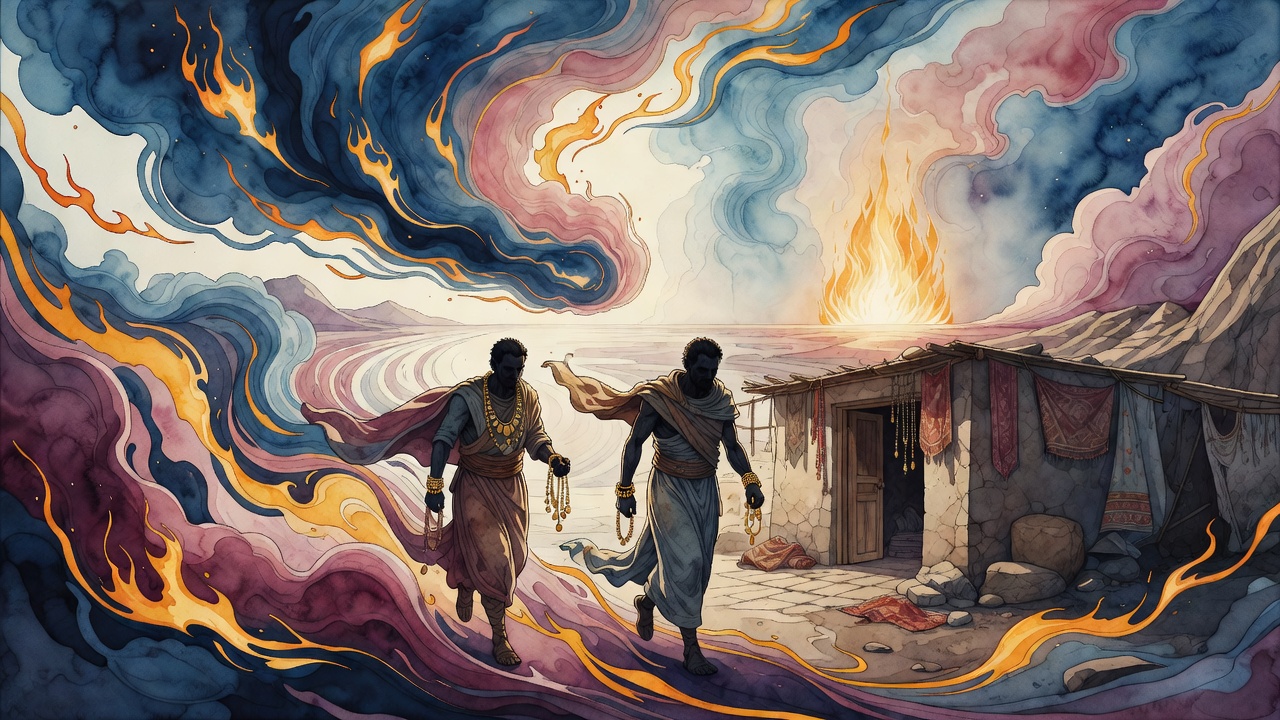
Israel had bowed to Baal Peor, and a plague killed the guilty. When the war with Midian came, soldiers blackened women's faces and took their jewelry.

Curated by Arthur · Told by Maggid ·
Table of Contents
  1. Twenty-Four Thousand
  2. Pairs in the Doorways
  3. The Maidservant and the Coal
  4. Fear at the Sea, Fear at Peor
  5. After the Bodies
Twenty-Four Thousand Fell and Midian Still Waited Click for full size

Twenty-Four Thousand

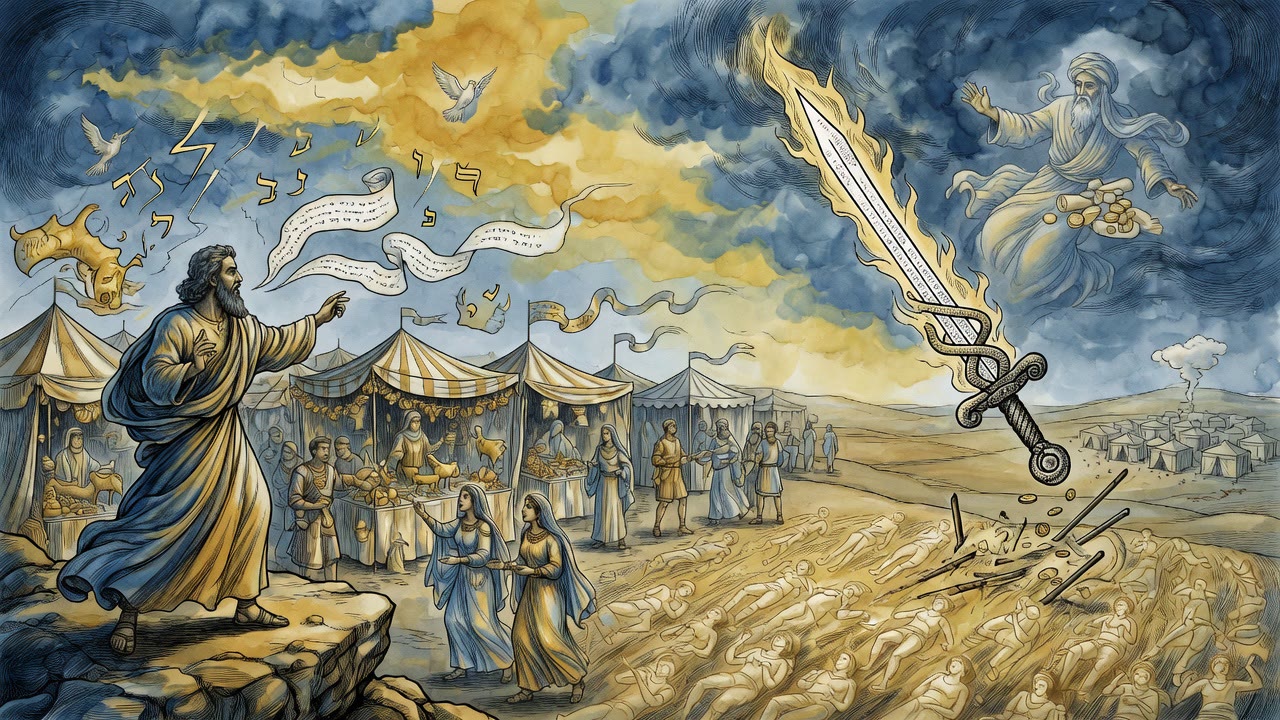
The plague that followed Baal Peor did not whisper. Twenty-four thousand of Israel fell after the people cleaved to the Midianite and Moabite lure, after idolatry and bodies tangled at the edge of the camp (Numbers 25). Moses heard the command to hang the leaders opposite the sun so that wrath would turn back. The ground took names faster than graves could be dug.

When the dying slowed, the war with Midian still waited. Memory did not cool. It hardened.

Pairs in the Doorways

According to Rabbi Yitzchak, when the Israelites went to war with Midian, they entered the homes of Midianite women in pairs. One would blacken a woman's face. The other would strip her jewelry. The women cried out, "Are we not creations of the Holy One, blessed be He? Why are you doing this to us?"

The Israelites answered with the plague still in their mouths. "Isn't it enough that we received our punishment because of you?"

Tit for tat. A brutal arithmetic of shame. The same hands that had reached for foreign cults now reached to mark the faces that had pulled them under.

The Maidservant and the Coal

Rabbi Yitzchak set a parable beside the war. A provincial woman had a Kushite maidservant. The maidservant overheard gossip that the master might divorce his wife because he saw her hands blackened with coal. The maidservant dreamed of becoming the new wife. A friend crushed the dream. If he divorces the wife he loves for a little coal on her hands, what chance do you have, you who are black from the womb?

The nations taunt Israel the same way after Peor. This nation exchanged its Glory. If the Holy One punishes Israel so fiercely for a stain, what hope have the nations who never bore the covenant? The parable is harsh on every side. It does not excuse Midian's snare. It also refuses to let the nations claim moral high ground while Israel burns for a single breach.

Fear at the Sea, Fear at Peor

Elsewhere the Song midrash remembers another crisis of fear. A princess is held captive. Her father the king is on the way, but she does not know if he will succeed. In terror she signals to her captors, "I am for you, I am yours, and I will follow you." The father hears the false surrender and answers, "Do you believe I cannot redeem you? Be silent." Duma dimitikh.

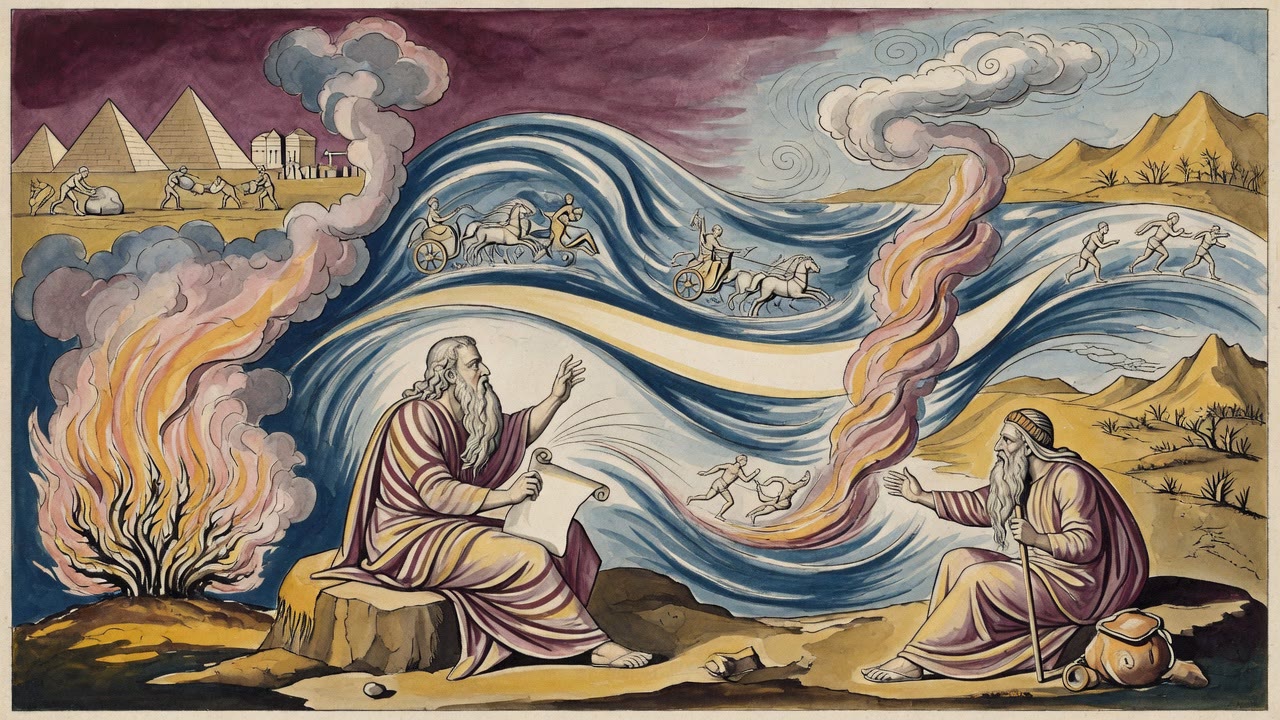
So at the sea, when Egypt pressed and Israel faltered toward surrender, God silenced the panic. "The Lord will fight for you, and you shall hold your peace" (Exodus 14:14). The beloved is not permitted to rewrite herself as property of the enemy just because fear is loud.

Peor is the inverse wound. Not fear of Egypt, but desire and idolatry. Still the same people. Still the same need for a voice that will not let Israel define itself only by the last failure. The plague was judgment. The war was consequence. The parable of the princess is the older memory that God claims Israel even when Israel's mouth makes the wrong offer.

After the Bodies

Twenty-four thousand is not a symbol. It is a count. Midianite doorways and blackened faces are not a tidy moral. They are what grief and rage look like when a camp has buried a generation's slice in a few days.

The midrash does not sand the scene smooth. It leaves the women's protest, the Israelites' retort, the coal-parable's sting, and the older silence at the sea in one ledger. Israel can be punished without being abandoned. Israel can strike Midian without the nations earning the right to gloat. And the Holy One who once said "be silent" to fear still stands as the Redeemer who will not let the last disaster become the people's only name.

Baal Peor remains the name of the wound. The midrash will not rename it as a minor slip. Cleaving to that cult was a full turn of the neck away from the Glory. The leaders hanging opposite the sun were a public answer to a public collapse. Twenty-four thousand is the number that teaches how wide the turn had spread.

When pairs later enter Midianite houses, the scene is not holy war painted in soft colors. It is a people acting out the cost of having been pulled under. The women's protest, "Are we not creations of the Holy One," lands because it is true of every human face, and still the Israelites answer from inside their own graves. Their reply is built out of the punishment they received.

Set beside the princess at the sea, the whole arc of fear and failure shows two mouths. One mouth, terrified, offers surrender to Egypt and is told to be silent for redemption. Another mouth, after Peor, answers Midian with humiliation and counts it as justice. The Song midrash holds both without forcing them into one moral slogan. God claims Israel in panic. God judges Israel in desire. The nations do not get to close the book either way.


← All myths
From the tradition

Sources

2 sources

The texts behind this telling. Some cards carry a translation of the source; others are our own retelling of it, and each card says which. Every card links out to the original.

Shir HaShirim Rabbah 6:3Shir HaShirim Rabbah

Retold in our words. Read the original at the link below.The Sefaria Midrash Rabbah, 2022 · CC-BY

Rabbi Yitzchak, in Shir HaShirim Rabbah 6, offers a fascinating, if unsettling, interpretation of the events following the plague that killed twenty-four thousand Israelites. This plague, of course, was brought on by the Israelites' involvement with idolatry after being seduced by Moabite and Midianite women (Numbers 25). According to Rabbi Yitzchak, when the Israelites went to war with Midian, they would enter the homes of Midianite women in pairs. One would blacken her face, while the other would remove her jewelry.

The women would protest, "Are we not creations of the Holy One, blessed be He? Why are you doing this to us? " A brutal tit-for-tat, a stark reminder of the verse, “The Lord said to Moses: Take all the leaders of the people, and hang them for the Lord opposite the sun, [and the enflamed wrath of the Lord will be withdrawn from Israel]” (Numbers 25:4).

Rabbi Aivu points to the core sin: “They cleaved to Baal Peor” (Psalms 106:28). Baal Peor was a deity whose worship involved… well, let's just say it was deeply immoral and offensive to Jewish values. The Israelites had succumbed, and the consequences were devastating.

Then, Rabbi Yitzchak shares a parable. A provincial woman had a Kushite (Ethiopian) maidservant – a detail that emphasizes the maidservant’s dark skin tone. The maidservant overhears her mistress’s friend gossiping about how the master might divorce his wife because he saw her hands blackened with coal. The maidservant, in her naivete, dreams of becoming the new wife. But the friend quickly bursts her bubble. "If he's divorcing his wife, whom he loves, for a little coal on her hands, what chance do you have, you who are completely black from your mother's womb?"

Ouch. But Rabbi Yitzchak uses it to illustrate a deeper point.

The nations of the world taunt Israel, saying, "This nation has exchanged their Glory," referencing the verse, “They exchanged their glory [for the cast image of a grass-eating bull]” (Psalms 106:20). In other words, they accuse Israel of abandoning God for idols.

But Israel retorts, "If we, who did so for a single moment, are liable in this manner, you, all the more so!" It’s like saying, "Yeah, we messed up, but you've been doing it your whole lives!"

And then comes another, more hopeful, parable. Israel compares itself to a prince who goes out into the wilderness and gets sunburned. His face darkens. But when he returns to the city, a little water and a bath restore his former beauty. "So it is with us," Israel declares. "Even if the sun of idol worship has darkened us, you are darkened from your mother's womb."

Why? Because even in the womb, those nations were steeped in idolatry. As the Midrash Rabbah tells us, when a pregnant woman enters her house of idol worship, she bows and prostrates herself to the idol, she and her unborn son.

What's the takeaway here? It's not just about pointing fingers. It’s about recognizing the potential for redemption, even after a period of darkness. While others may be steeped in negative behavior from birth, Israel has the ability to cleanse itself and return to its former glory. The image of the prince regaining his beauty after being darkened by the sun is a powerful metaphor for the resilience and the inherent goodness within the Jewish people.

It's a complex and challenging passage, filled with uncomfortable truths and a glimmer of hope. It forces us to confront the consequences of our actions, the dangers of idolatry, and the enduring promise of renewal. It begs the question: How do we ensure we are constantly striving to cleanse ourselves, to return to our "former beauty," and to avoid the darkness that threatens to engulf us?

Full source
Shir HaShirim Rabbah 1:9Shir HaShirim Rabbah

Retold in our words. Read the original at the link below.The Sefaria Midrash Rabbah, 2022 · CC-BY

The tradition turns to Shir HaShirim Rabbah, the classic rabbinic commentary on the Song of Songs (also known as Song of Solomon). The rabbis, in their infinite wisdom, find layers of meaning within the text, often using parables to illuminate profound spiritual and historical truths.

Here, Rabbi Eliezer offers a powerful analogy. He interprets the phrase "I have likened you, my love" as a moment of profound crisis. Her father, the king, is on his way to rescue her, but she doesn't know if he will succeed. In her fear, she signals to her captors, pleading, "I am for you, I am yours, and I will follow you."

Why would she say such a thing? Out of fear, of course. She's trying to protect herself, to appease her captors, unsure if her father will actually be able to save her. It's a desperate act of self-preservation.

Her father sees through her charade. He knows her heart. He hears the fear in her voice. And he says to her, "Do you believe that I do not have the wherewithal to redeem you? I am silencing you." Or, as the text puts it in Hebrew, "duma dimitikh, be silent."

This, Rabbi Eliezer suggests, mirrors the plight of the Israelites at the Red Sea. Picture this: the Israelites, having just escaped slavery in Egypt, find themselves trapped between the sea and Pharaoh's pursuing army. According to the book of Exodus (14:9), "Egypt pursued them and overtook them encamped by the sea". Terrified, they begin to falter. They start signaling to the Egyptians, perhaps even saying the unthinkable: "We are for you, we are yours, and we will follow you."

The crushing weight of their situation pushing them to utter those words?

But just as the princess's father wouldn't allow her fear to define her, God wouldn't allow the Israelites' fear to define them either. The Holy One, blessed be He, says to them, "Do you believe that I do not have the wherewithal to redeem you? I am silencing you." Duma dimitikh. I have silenced you.

This echoes the words of (Exodus 14:14): "The Lord will wage war for you, and you shall be silent." God is telling them to trust, to have faith, even when all seems lost. To be silent, not in the sense of being passive, but in the sense of letting God's power take over. How often do we find ourselves in situations where fear grips us? Where we say things we don't mean, make compromises we regret, just to get by?

The message here is powerful. Even in those moments of weakness, we are not defined by our fear. There is a force, a power, a loving presence that sees our true selves and is ready to redeem us. We need only to trust, to allow that power to work, and sometimes, perhaps, to simply be silent and let God fight for us.

Full source