5 min read

God Remembers Beasts Before Cattle on the Ark

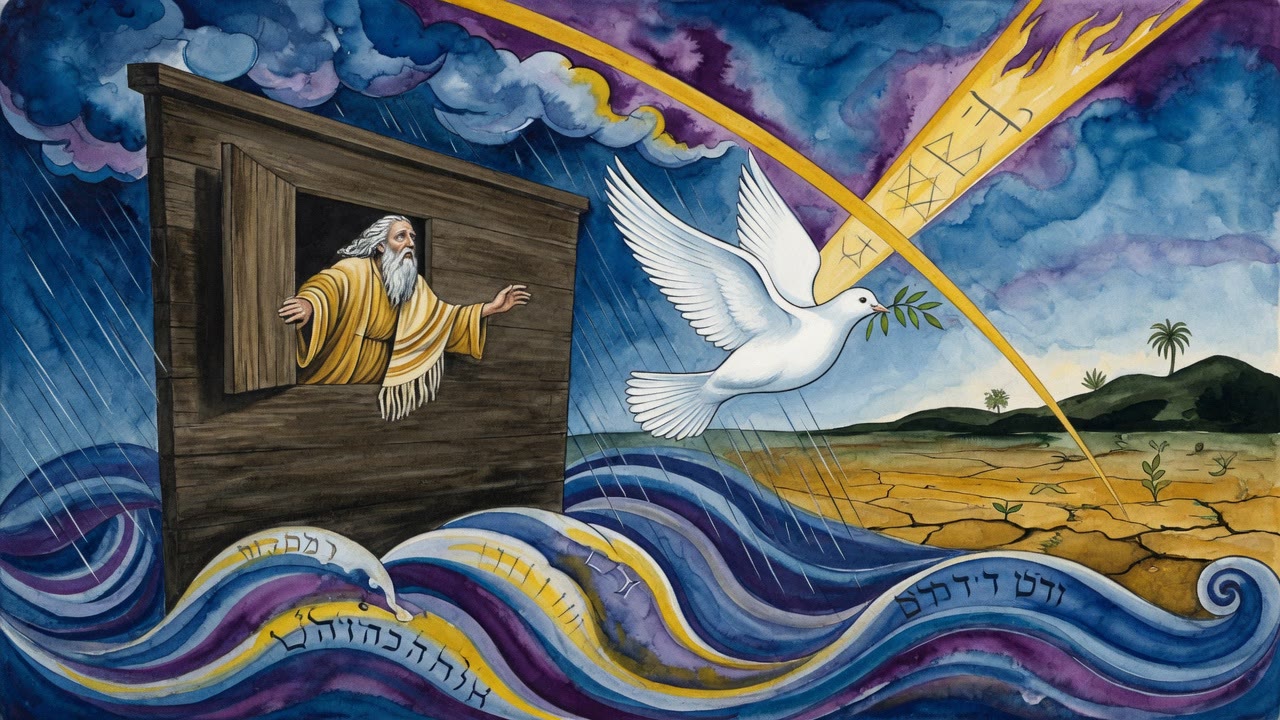
On the sealed ark Noah listens for heaven and hears wild beasts first in God's memory, pressed between him and the cattle until the waters finally fall.

Curated by Arthur · Told by Maggid ·
Table of Contents
  1. The Deck Where Wild Things Breathe
  2. When Memory Came in Order
  3. A Second Start With the Same Charge
  4. The Ark That Keeps Walking

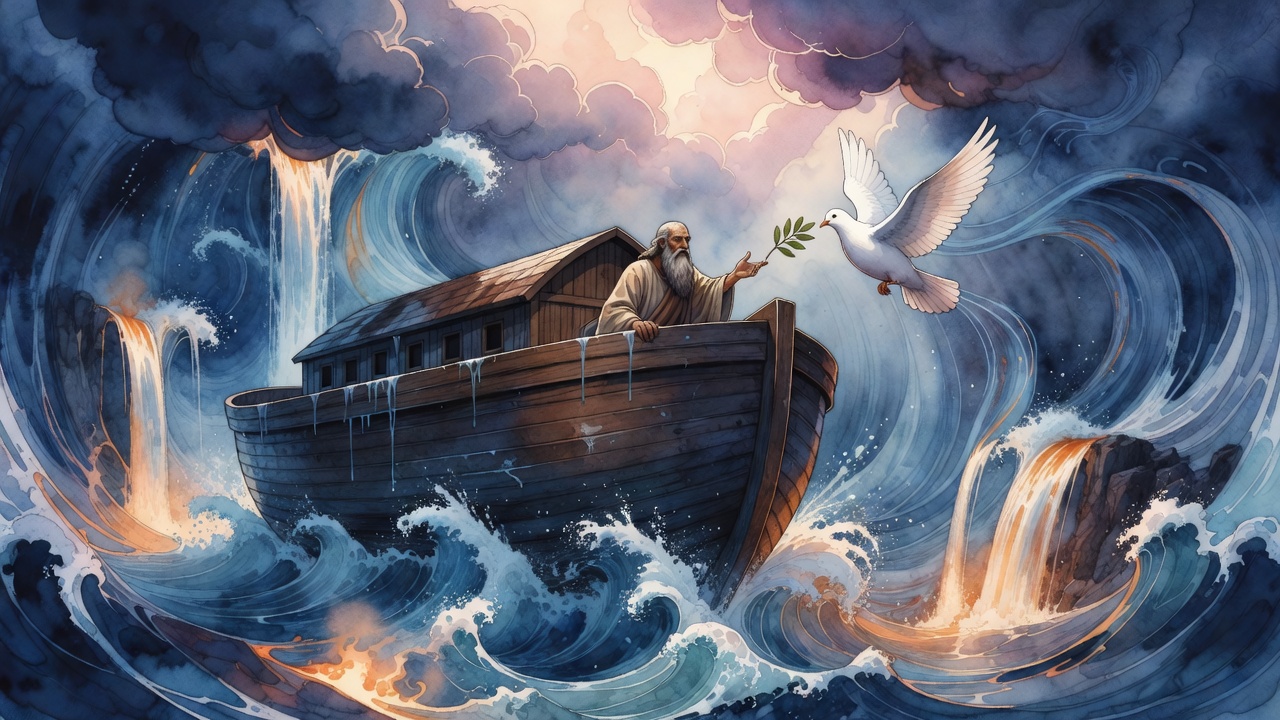
Noah pressed his palm to the pitch and felt the hull still roll. Rain had stopped. The silence after rain was worse. Outside, black water slapped wood. Inside, claws scraped planks two decks below. He had not heard God speak since the door sealed (Genesis 7:16).
God Remembers Beasts Before Cattle on the Ark Click for full size

He wanted one word. Not weather. Not a map. A name said aloud so the long night would break.

The Deck Where Wild Things Breathe

The ark was a stacked body of noise. Cattle lowed on the lower boards. Above them the lions and wolves shifted, restless, hungry in a way no feed could settle. Birds beat the rafters and settled again. Noah walked the middle corridor barefoot so he would not wake his sons. The wild smell hit him first, hot and iron, then the soft dung-sweet of the herds.

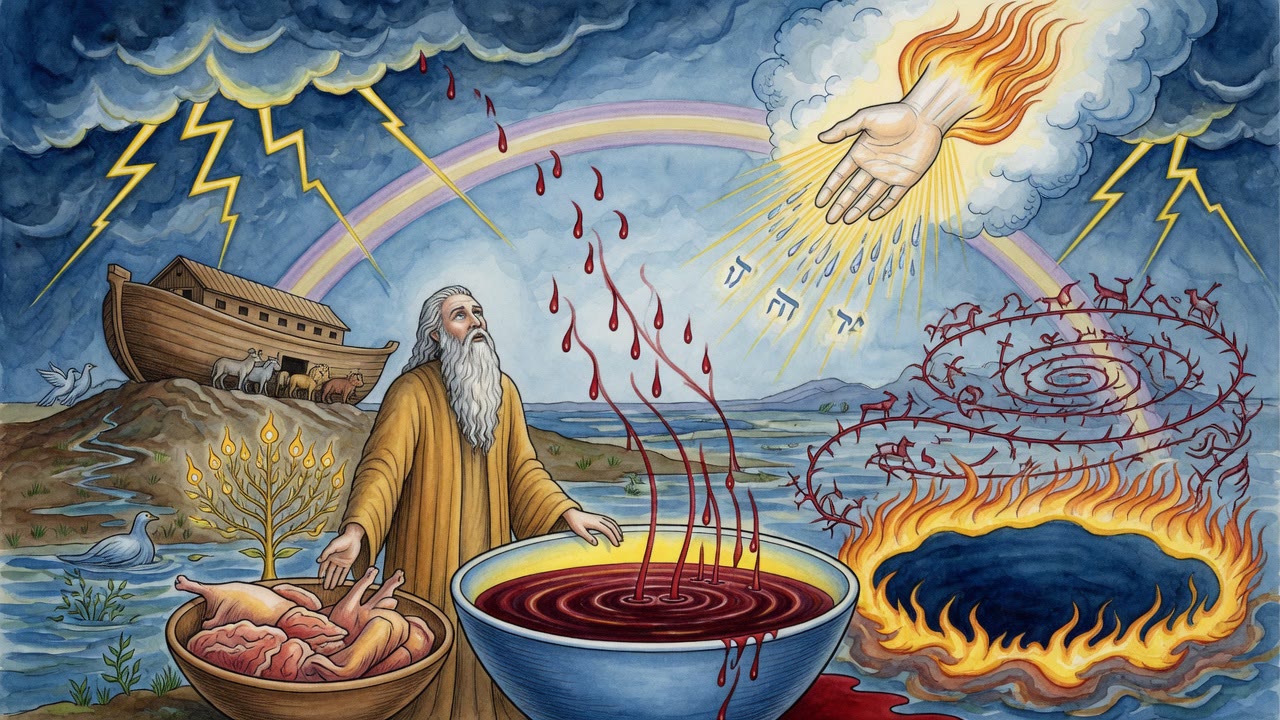
He stopped where the partitions met. On one side a domestic ox blinked slow. On the other a leopard paced the width of its stall. Between them, Noah stood as the only man who had to keep both alive. He could not favor the ox because the leopard would break the wall. He could not free the leopard because the ox would die screaming. So he fed both. He cleaned both. He let the wild sit in the middle of the house of the tame, and he prayed the pressure of that middle would calm the teeth.

His wife found him there. "They will tear each other when the door opens," she whispered. Noah shook his head. "If heaven still wants a world, they will learn the neighbors first."

When Memory Came in Order

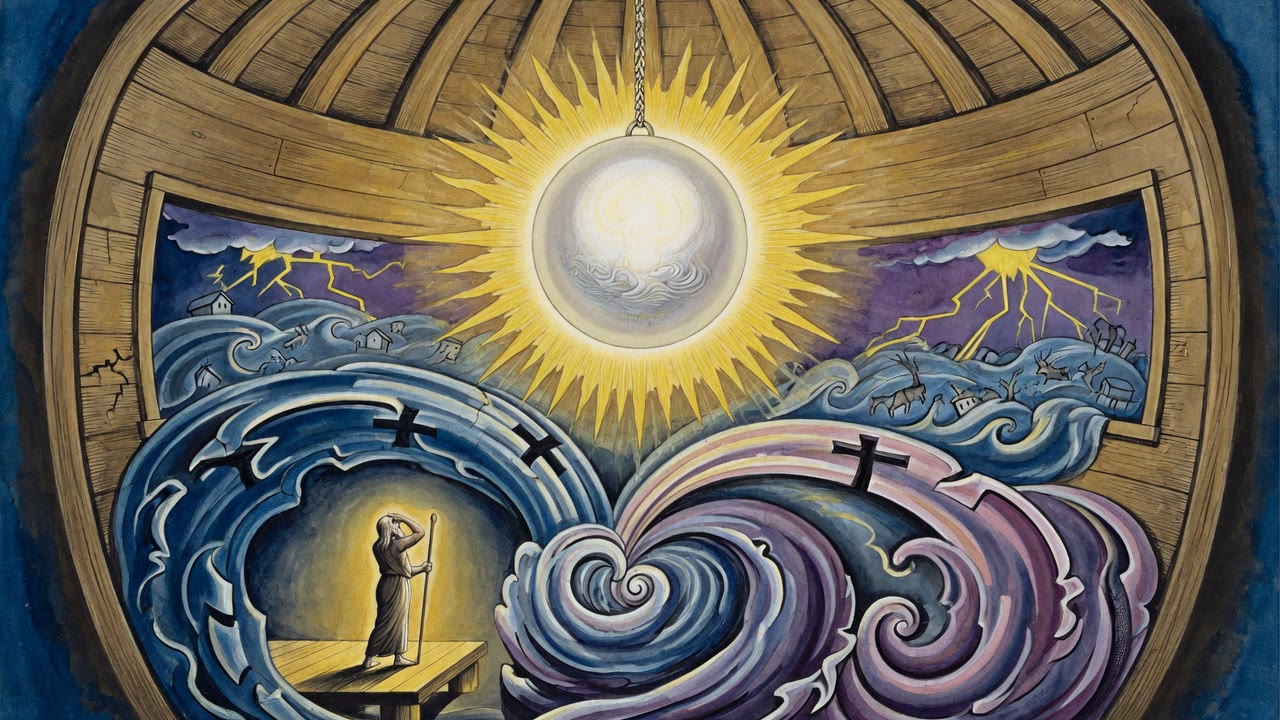
Then the wind rose, not as storm but as a long hand across the deep. The ark shuddered once and stilled. Noah climbed toward the upper window and waited with his mouth dry.

The voice did not arrive as thunder. It arrived as order. God remembered Noah, and the beasts, and the cattle (Genesis 8:1). Beasts before cattle. The wild named before the herd. Noah flinched as if struck. He had expected his own name, then the soft animals that trusted him. Heaven named the dangerous ones first.

He went back down into the middle deck. The leopard had stopped pacing. The ox still chewed. Noah put one hand on each stall post and felt the wood answer the same. "You were listed before the quiet ones," he told the leopard. "That means you still belong in the count."

The waters began their slow retreat. Days lengthened into the long wait of the mountain. Birds left and returned. Still the order of that remembering stayed in Noah's chest like a second heartbeat: man, wild, herd. Good, hard, good. The bad pressed into the middle so it could not rule the ends.

A Second Start With the Same Charge

When the earth finally showed itself, God spoke of dominion the way the first week had spoken it. Be fruitful. Fill the emptied places. Rule the living things (Genesis 1:28). Noah heard the echo of Adam and almost refused the title. He was not the first man of clay. He was a survivor with dirt under his nails and the stink of the ark still in his hair.

Still the charge landed. Rule did not mean only the rope and the pen. It meant the beasts inside the skull: hunger that wanted more than a share, pride that wanted the top deck alone, fear that wanted to leave the wild ones to drown next time. Noah watched a wolf step onto wet ground and not leap for a calf. The sandwich of the voyage had done some work. The middle had been held long enough to learn the sides.

He walked the new grass with his sons and pointed at the tracks. "Heaven remembered those first," he said. "So we do not treat them as trash when we rebuild fences." Ham shrugged. Japheth measured the ground for a fold. Shem stayed quiet, already weighing what rule would cost a man who had just watched a world die.

Noah drove a stake and tied the first rope. His shoulders burned. Dominion, if it meant anything, began as sweat and a refusal to let the wild scatter into chaos again.

The Ark That Keeps Walking

At night Noah dreamed the hull was his own ribs. The just mind sat at the window. Below it the raw powers of seed and heat and anger prowled, the animals without which no soul can even enter flesh. A fool, in the dream, threw meat to every poison and called it freedom. A wise man led the same beasts to the trough of the cattle until their wildness learned a use.

He woke sweating. Outside, real cattle slept. Real beasts watched the fire from the dark line of trees. Noah rose and checked the rope lines again, body under the same old pressure: keep the middle from eating the ends, keep the ends from pretending the middle never existed.

When the first altar smoke rose, he did not ask to be the only name in heaven's mouth. He asked that the order of memory stay true. Name the hard things. Hold them between the quiet ones. Let a second world begin without pretending the teeth have gone away.


← All myths
From the tradition

Sources

2 sources

The texts behind this telling. Some cards carry a translation of the source; others are our own retelling of it, and each card says which. Every card links out to the original.

The Midrash of Philo 1:5The Midrash of Philo

Retold in our words. Read the original at the link below.The Works of Philo Judaeus, trans. C. D. Yonge, London, H. G. Bohn, 1854-1890 · Public Domain

Take the story of Noah and the Ark. (Genesis 8:1) says, "God remembered Noah, and the beasts, and the cattle…" Beasts before cattle? What's going on here?

Philo, the 1st-century Jewish philosopher from Alexandria, wrestled with this very question. He didn't think the Torah was just throwing words around randomly. Everything, even the order, was deliberate, pregnant with meaning. So, why beasts before cattle?

Philo offers a couple of intriguing explanations. First, he suggests it’s a matter of poetic structure. “That poetical rule has not been expressed in vain, that he led the bad into the middle.” Think of it like a sandwich: good (humans & cattle), bad (beasts), good (humans & cattle). By placing the wild beasts between the domestic animals – humans and cattle – the hope is that the beasts will be "tamed and civilized by having an intimate association with both. Like trying to mellow out a chaotic middle child by surrounding them with calmer influences.

Philo doesn’t stop there. He delves deeper, seeking the "inner meaning." He sees Noah’s Ark as a metaphor for the human body, and Noah himself as the "just intellect" dwelling within. Within this "ark," we all possess "beasts and living animals." Now, he's not talking about literal lions and cows running around inside us! Instead, he uses this imagery to represent the principles of seed and origination, the raw, untamed aspects of our nature. Without these primal forces, Philo argues, the soul can't even manifest in the body.

The key difference, according to Philo, lies in how we use these inner "animals." "Moreover, the soul of the foolish man employs all poisonous and deadly animals, but that of the wise man those only which have changed the nature of wild beasts into that of domestic creatures." In other words, a wise person learns to manage and channel their inner impulses, transforming the wild, destructive tendencies into something constructive and useful.

It might just be a clue, a breadcrumb leading you to a deeper understanding of yourself and the world around you. Maybe the beasts come before the cattle because taming our inner "beasts" is a crucial step on the path to wisdom and a more harmonious life. What "beasts" are you working to tame within yourself?

Full source
The Midrash of Philo 1:2The Midrash of Philo

Retold in our words. Read the original at the link below.The Works of Philo Judaeus, trans. C. D. Yonge, London, H. G. Bohn, 1854-1890 · Public Domain

Philo, the great Jewish philosopher of Alexandria, grappled with these questions centuries ago. And his interpretations, preserved in what we call The Midrash of Philo, offer a fascinating perspective. Philo dives deep into the creation narrative, exploring not just what happened, but why. He asks: What does it mean that God gave humans dominion over the animals? Was Noah, after the flood, granted the same honor as Adam?

Philo points out that the scripture says, "And God made man; in the image of God created he him; male and female created he them. And God blessed them, and said, Be fruitful, and multiply, and replenish the earth; and be ye lords over it…” (Genesis 1:27-28). God bestows this power upon humanity right from the start. And this echoes in the story of Noah, who, after the deluge, receives a similar mandate. Philo sees a profound connection here, suggesting that Noah, in a way, represents a "second creation" of humanity.

Philo distinguishes between two versions of man's creation. He argues that the first Adam, the one created "in the image of God," is different from the Adam fashioned from clay. He sees the first Adam as an "incorporeal entity," a being of pure spirit, created on the sixth day, a number considered perfect. The second Adam, formed from the earth, comes later, on the seventh day, after the world is complete.

Why this distinction? Philo suggests that it's about more than just physical creation. It's about the potential for humans to cultivate wisdom and virtue. He interprets the dominion over animals allegorically. It's not just about physical control, but about the soul's ability to master its own base instincts. What does it mean to "rule over" beasts? Philo argues it means subduing wickedness, which he sees as untamed and savage. "Flying fowls," with their lightness and pride, represent arrogance and mischief. And the "creeping things?" Those are the destructive vices that slither through the soul: concupiscence (strong sexual desire), sadness, cowardice. Even the "fishes," pursuing a life of fleeting pleasure, represent a lack of wisdom and sobriety.

So, according to Philo, God wants the souls of wise people to cultivate beauty and virtue, filling their minds like the earth is filled, leaving no room for folly. And this inner transformation is what truly allows us to fulfill our role as stewards of creation.

Philo's interpretation might seem a bit different from what you might have heard before. But it invites us to consider: What does it truly mean to be created in God’s image? Is it simply a matter of physical form? Or does it involve cultivating inner qualities of wisdom, virtue, and self-mastery? Perhaps, according to Philo, it’s both.

Full source