Retold in our words. Read the original at the link below.The Minor Tractates of the Talmud, trans. A. Cohen, Soncino Press (1965) · CC-BY
1This paragraph has no connection with the theme of this chapter, which is an extensive commentary on Aboth 5. Such commentary begins with §2. Accordingly it has been suggested that this paragraph should be joined to the previous chapter. This arrangement has been adopted by Schechter.R. Aḥai b. Josiah said: He who buys grain in the market,2Not having land of his own, he must resort to the market for grain for his household. This was considered a precarious existence; cf. Men. 103b (Sonc. ed. p. 637). to what may he be compared? To a child whose mother has died; though it is taken around to the homes of nursing mothers, it is not satisfied. And he who buys bread in the market, to what may he be compared? To a man who digs his own grave.3lit. ‘is dug and buried’. His is a wretched existence; cf. the statement in Men. loc. cit. ‘And shalt have no assurance of this life (Deut. 28, 66): this refers to one who has to rely upon the bread dealer [for his daily needs]’ (Sonc. ed. p. 638). But he who eats of his own produce is like a child reared at his mother’s breast.He used to say: When a man eats of his own labour his mind is at ease. Even when he is dependent upon his father or mother or children, his mind is not at ease; and needless to say when he is dependent upon strangers.
BY TEN SAYINGS WAS THE WORLD CREATED. What need is there for mankind to [know] this? It is to teach that if a person performs one precept, or keeps one Sabbath, or saves one life, Scripture imputes it to him as though he had saved a whole world which was created by ten sayings.4The importance of the world is enhanced by the fact that God, in view of His omnipotence, took so much trouble with its creation, for instead of a single fiat He resorted to ten utterances to perfect the world. And if a person commits one sin, or profanes one Sabbath, or destroys one life, Scripture imputes it to him as though he had destroyed a whole world which was created by ten sayings. We find it so with Cain who slew his brother Abel; as it is stated, The voice of thy brother’s bloods crieth unto Me.5Gen. 4, 10, E.V. brother’s blood. The Heb. noun is plural. He shed the blood of one person, yet Scripture speaks of many bloods! But it teaches you that the blood of his sons, of his sons’ sons and of his descendants to the end of all generations that were destined to issue from him, all stood and cried to the Holy One, blessed be He. Hence you learn that one man is equal in worth to the entire creation.6Cf. Sanh. IV, 5 (Sonc. ed. pp. 233f.).
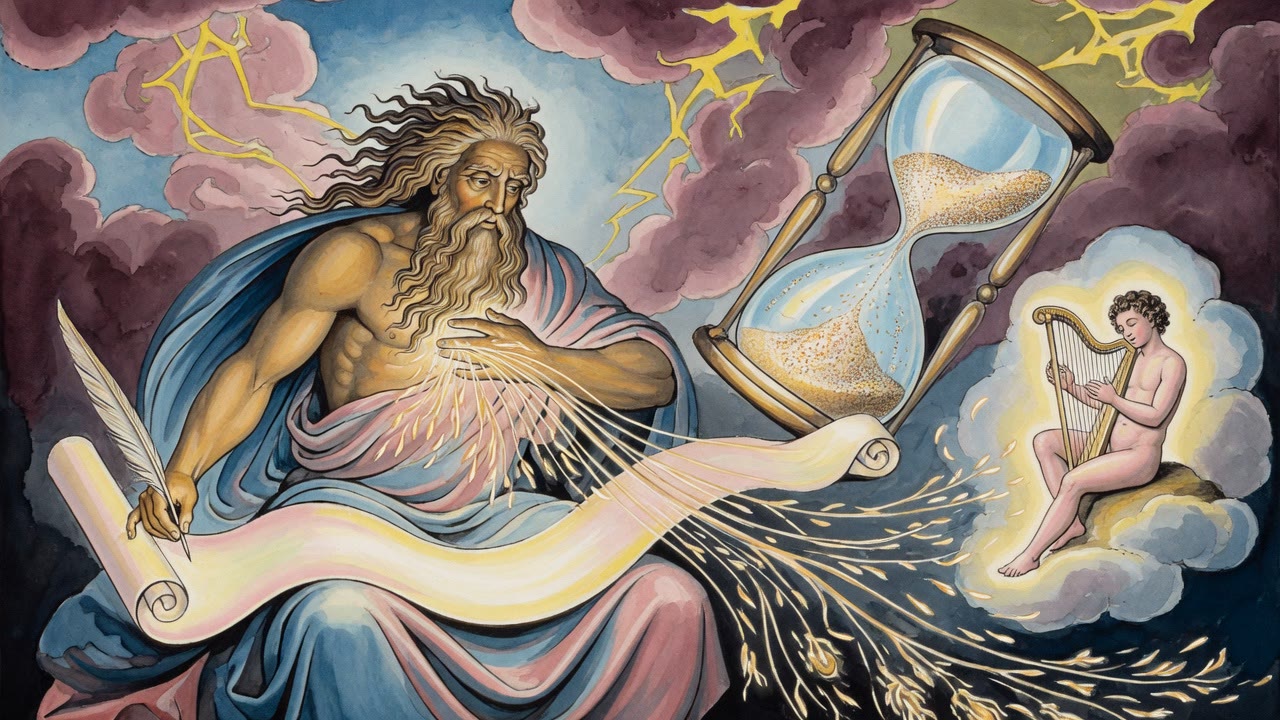
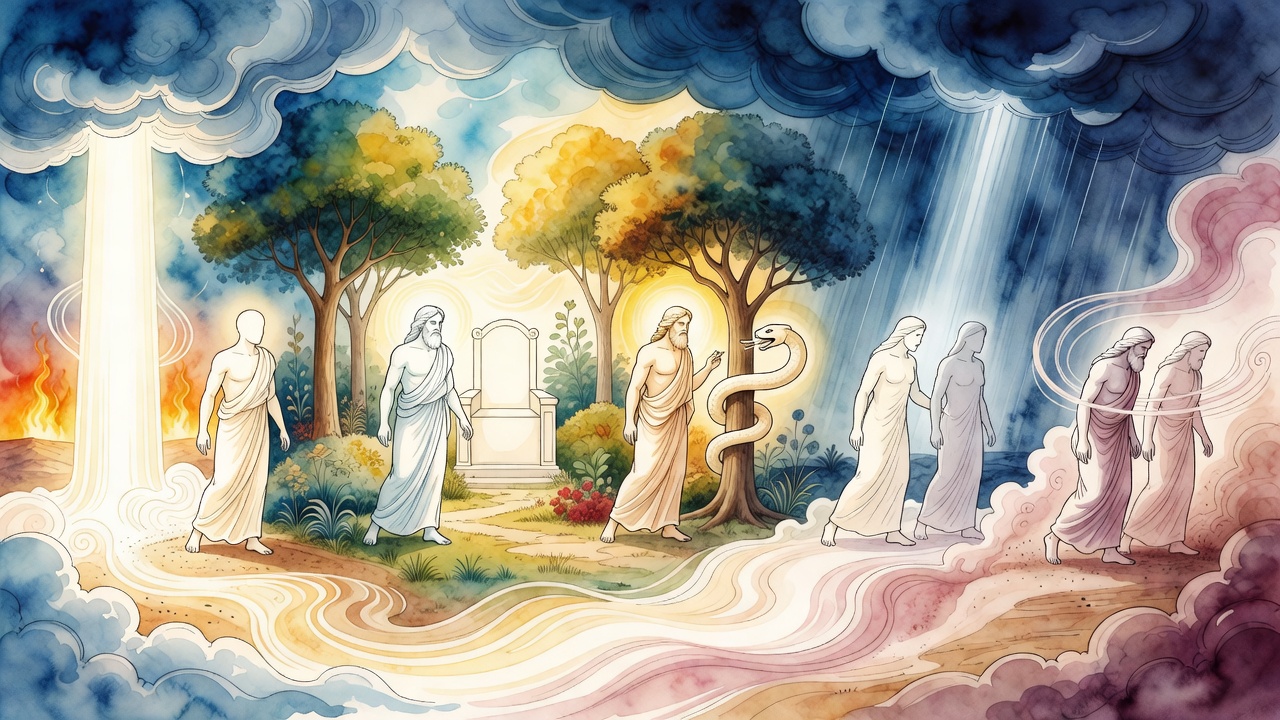
R. Nehemiah said: Whence do we know that one man is equal in worth to the entire creation? For it is stated, This is the book of the generations of Adam. [In the day that God created man, in the likeness of God made He him];7ibid. V, 1. and elsewhere it states, These are the generations of the heaven and of the earth when they were created, [in the day that the Lord God made earth and heaven].8ibid. II, 4. As in the one verse [which describes the creation of the world] the terms created and made are used, so in the other verse [which describes the creation of man] the terms created and made are used. This teaches that the Holy One, blessed be He, showed Adam all the future generations that were to issue from him standing and sporting, as it were, before him. Some say that He showed him only the righteous [of every generation], as it is stated, Every one that is written unto life in Jerusalem.9Is. 4, 3. The verse refers to the righteous, God’s elect, whose names are inscribed in the ‘Book of Life’, which is identical with the book of the generations of Adam.R. Joshua b. Ḳorḥa said: It states, Thine eyes did see mine unformed substance, and in Thy book they were all written.10Ps. 139, 16. Thy book is interpreted as the book of the generations. This teaches that the Holy One, blessed be He, showed Adam, the first man, every generation and its teachers, every generation and its administrators, every generation and its leaders, every generation and its prophets, every generation and its heroes, every generation and its transgressors, every generation and its pious men, and that in a certain generation such a king will arise and in a certain generation such a Sage will live.R. Eliezer the son of R. Jose the Galilean said: Nine hundred and seventy-four generations before the creation of the world the Torah was already written11The Divine plan, as intimated ibid. CV, 8: The word (i.e. the Torah) which He commanded to a thousand generations, was that a thousand generations were to pass before the giving of the Torah to man. Since, in fact, Moses received the Torah and he lived in the twenty-sixth generation from the creation, it follows that the Torah must have been in existence for nine hundred and seventy-four generations before the creation. Cf. Ḥag. 13b, 14a (Sonc. ed. p. 82, n. 7). and lay in the bosom of the Holy One, blessed be He, singing praises together with the ministering angels; as it is stated, Then I was by Him as a nursling; and I was daily all delight, [playing always before Him,] playing in His habitable earth.12Prov. 8, 30f.[R. Jose the Galilean said: All that the Holy One, blessed be He, created in the world, He also created in man.13This sentence is omitted in V. It is found in the Oxford MS. of this work [cf. Bacher, Ag. d. Tannaiten, I, p. 365, n. 1] and serves as a fine introduction to the parable and the extensive paragraph which follow.] This may be illustrated by a parable. To what can it be compared? To a man who takes a piece of wood intending to engrave many designs on it; but as he has insufficient space for his designs, he is dejected. He, however, who draws his designs on the ground can do so interminably, and keep everything distinct and apart. On the other hand,14So according to Schechter’s text which has MS. authority. V reads ‘so too’. The contrast in the thought is this: whereas man requires the whole surface of the earth to draw his designs, God formed within the confined space of his body everything which He had created in the world. This is the concept of the ‘microcosm’: that man is regarded as an epitome of the universe, a world in miniature. the Holy One, blessed be He, may His great name be blessed for ever and to all eternity, in His wisdom and understanding created the whole world: He created the heaven and the earth, the celestial beings and terrestrial creatures. He likewise fashioned in man all that He had created in His world: He created forests in the world and forests in man, viz. his hairs; He created wild beasts in the world and wild beasts in man, viz. the intestinal worms;15The text varies between ‘the intestines of man’ and ‘the worms in man’. Both readings apparently refer to the same thing, the intestinal worms. He created destructive agents16Heb. ḳorẓin, a difficult word with doubtful meaning. According to Jastrow ‘destructive insects’, but he emends the end of the line to ‘intestines’ in place of ‘ears’. Bacher, R.E.J. XXXVII, pp. 301f, compares this word with the Aramaic expression in Dan. 3, 8: wa’akalu ḳarẓehon, ‘and they brought accusations’ and translates here ‘accusers’, ‘slanderers’. in the world and destructive agents in man, these [act via] the ears of man;17Which are the receptacles of slanderous and malicious talk. He created odours18Another reading is ‘wind’. in the world and odours in man, these are [sensed by] the nose of man; He created a sun in the world and a sun in man, viz. the light of [the countenance of] man;19Another reading is ‘his forehead’. fetid water in the world and also in man, viz. his nasal discharge; salt water in the world and also in man, viz. his tears; streams in the world and also in man, viz. the secretions;20lit. ‘tears’; but as tears have just been mentioned with the qualification ‘of the eyes’, the word might mean ‘secretions’. GRA reads ‘the urine’. ramparts21Another reading is ‘seals’. in the world [29b] and also in man, viz. his lips;22Cf. ‘Arak. 15b (Sonc. ed. p. 87) where it is stated that the tongue is surrounded by two walls, one of bone (the teeth) and one of flesh (the lips), to guard it from speaking evil. doors in the world and also in man, viz. his teeth; vaults in the world and also a vault in man, viz. his tongue;23Or, the palate, which is the vault of the mouth. sweet water in the world and also in man, viz. his sputum; contours24lit. ‘jaws’. GRA reads ‘stars’; cf. Shab. 151b (Sonc. ed. p. 774) where the stars represent man’s cheeks. in the world and also in man, viz. his jaws; towers in the world and a tower in man, viz. his neck;25Cf. Cant. 7, 5 where the neck is likened to a tower of ivory. riggings26The word is unique in Heb. literature and the meaning is a matter of conjecture. Jastrow’s translation is adopted here. [Krauss, Lehnwörter, p. 413, suggests a connection with סרדיוטות, ‘officers’, which is also found in the commentary Tummath Yesharim.] in the world and also in man, viz. his arms; pegs in the world and also in man, viz. his fingers; a king in the world and also in man, viz. his head; [wine-bearing] clusters in the world and also in man, viz. his blood;27The red juice of the grape is designated ‘blood’ in Deut. 32, 14. In the MSS. ‘his breasts’ is read in place of ‘his blood’; for this cf. Cant. 7, 8. counsellors in the world and also in man, viz. his kidneys;28For this and the following two comparisons, cf. Ber. 61a, b (Sonc. ed. p. 384): ‘the kidneys prompt [thought]’. grinding mills in the world and also in man, viz. his stomach; crushing mills in the world and also in man, viz. his spleen; refuse bins in the world and also in man, viz. the belly; pits in the world and also in man, viz the navel;29Which forms a slight depression on the body. running waters in the world and also in man, viz. the urine; life in the world and also in man, viz. his blood; trees in the world and also in man, viz. the bones; hills in the world and also in man, viz. the hips; a pestle and mortar in the world and also in man, viz. his knees;30These articulate in ball and socket fashion, i.e. like a pestle and mortar. horses in the world and also in man, viz. his shanks;31[GRA reads ‘deers in the world and also in man, viz. his legs’.] the angel of death in the world and also in man, viz. his heels;32Man can crush to death beneath his heel. hills and valleys in the world and also in man, for erect he is like a hill, fallen he is like a valley. Hence you learn that all that the Holy One, blessed be He, created in His world He also created in man.

 Click for full size