Goliath Fell Face First and Drove His Idol Dagon Into the Dirt
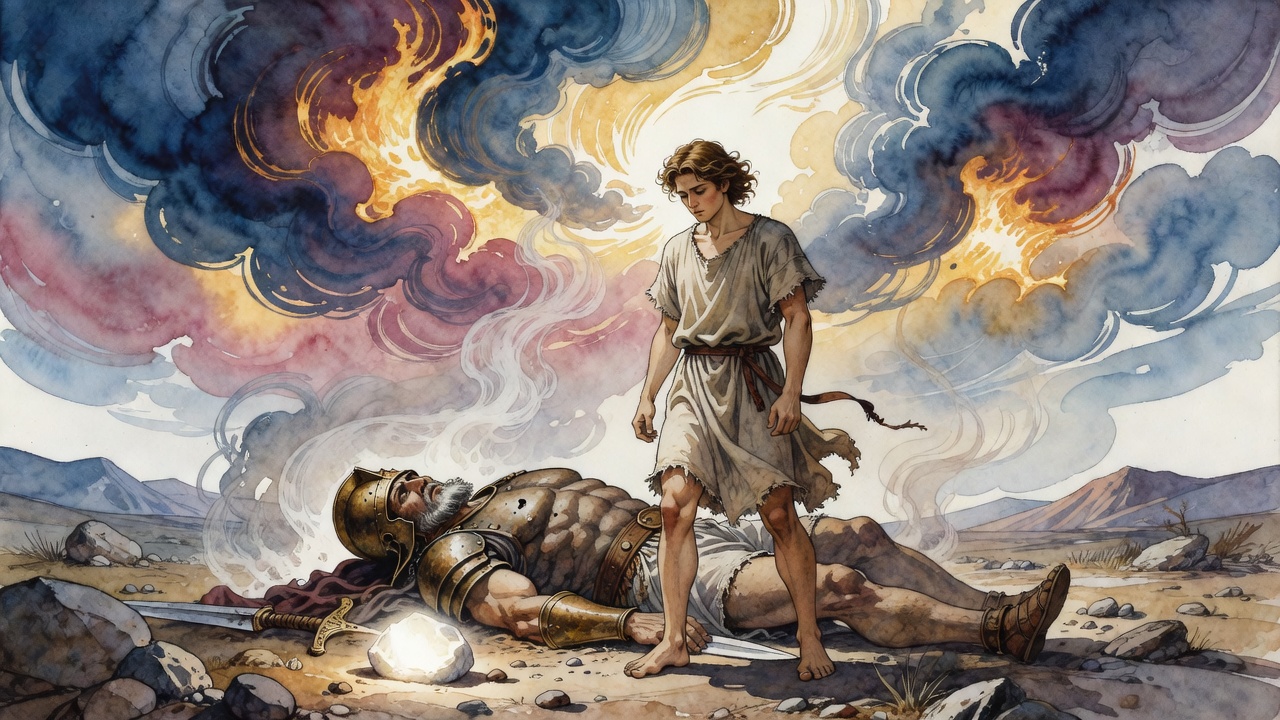
The Philistine giant hit the dust face-first so Dagon on his chest met the ground before David's blade reached his neck.
Table of Contents
For forty days the giant had walked out in the morning and again in the evening and said the same thing to the same silent hillside. Nobody on the Israelite side answered him, because there was no answer that was not also a volunteer.
 Click for full size
Then Yishai's youngest came down into the camp with bread and roasted grain and ten cheeses for his brothers' commander, heard the speech once, and asked who this uncircumcised Philistine thought he was talking about.
The Image on the Breastplate
Six cubits and a span of him, and bronze from the helmet down. The shaft of his spear was like a weaver's beam and a man walked in front of him carrying the shield, because the shield was too much to carry and fight behind at the same time.
On the breastplate, over the heart, was Dagon. The Philistines took their god into the field the way other armies take a standard, and Goliath wore his on the front of his chest where everyone could see whose mouth was doing the cursing.
The Stone and the Lean
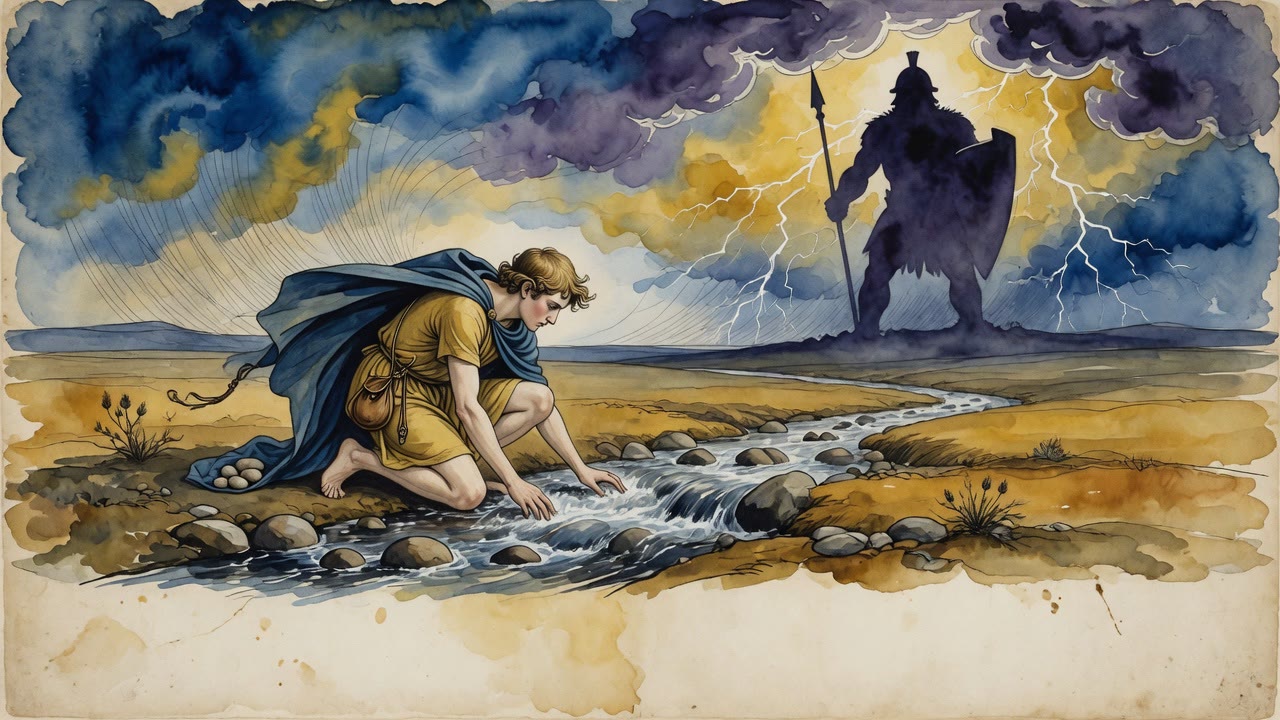
They had tried to put Saul's armor on David first. He got as far as walking a few steps in it and then took all of it off again, because he had never worn any of it and a man cannot fight in equipment he is still thinking about. He went down to the wadi instead and picked five smooth stones out of the bed and put them in the shepherd's bag.
He did not answer the speech. He ran at the line while the giant was still talking, and he had the sling turning before he was in range.
The stone went into the soft place above the eye and the giant stopped. For a moment he was still standing, which is the part that decides everything, because a body that size can go down in any direction it likes and there was nothing left inside him to choose. Sideways would have made a hill of armor with the head at the far end of it. Backwards would have put the throat up and the face out of reach.
He went forward.
Carcass Upon Carcass
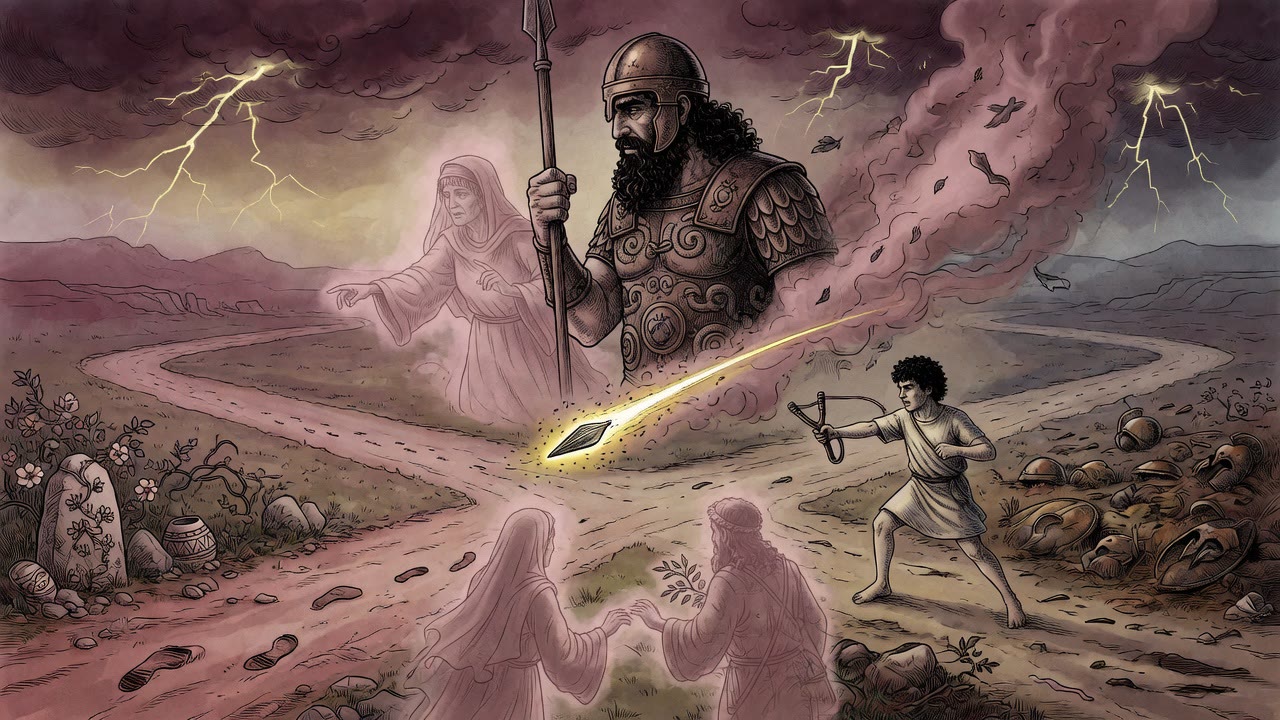
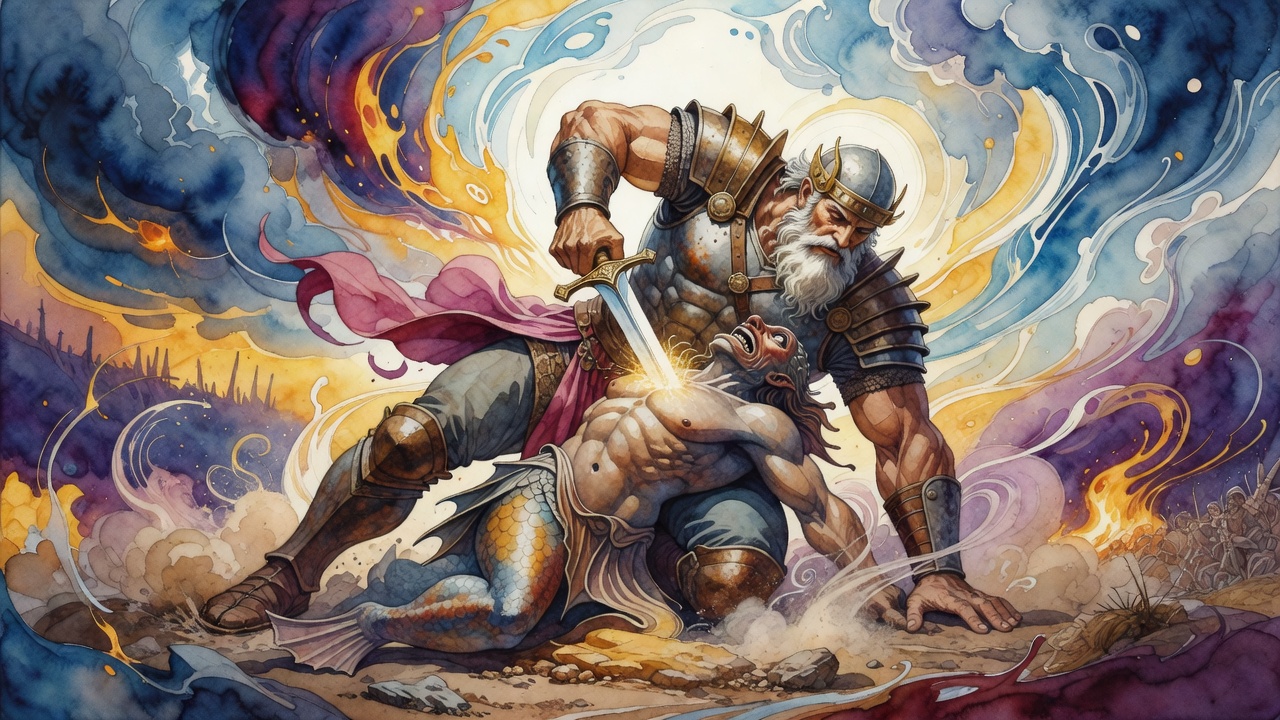
Dagon hit the valley floor first, with the full weight of the man who had been wearing him coming down on top. Carcass upon carcass of idols, the way the warning in Leviticus had said it (Leviticus 26:30). The god went into the dirt and then his soldier landed on him and pressed him in.
The mouth went in with him. Forty mornings of cursing the armies of the living God, and it ended with a face full of valley floor, hidden in the dust together, faces covered in concealment (Job 40:13).
And the fall left the nape of the neck up in the air where anyone could reach it. "You will tread on their high places," the blessing says, and the high place of a man is the back of his neck (Deuteronomy 33:29). So David did not have to climb six cubits and a span of dead Philistine to finish the work. He came up on the body from behind, pulled the giant's own sword out of the giant's own sheath, and took the head off at ground level.
The Philistine line watched all of it from close enough to see which way the armor had gone. They had come out that morning behind a champion with a god on his chest, and what they had in front of them now was a boy standing on a dead man's back with the sword going up, and their god somewhere underneath the whole arrangement where nobody could get at him.
The Son Yishai Never Meant to Have
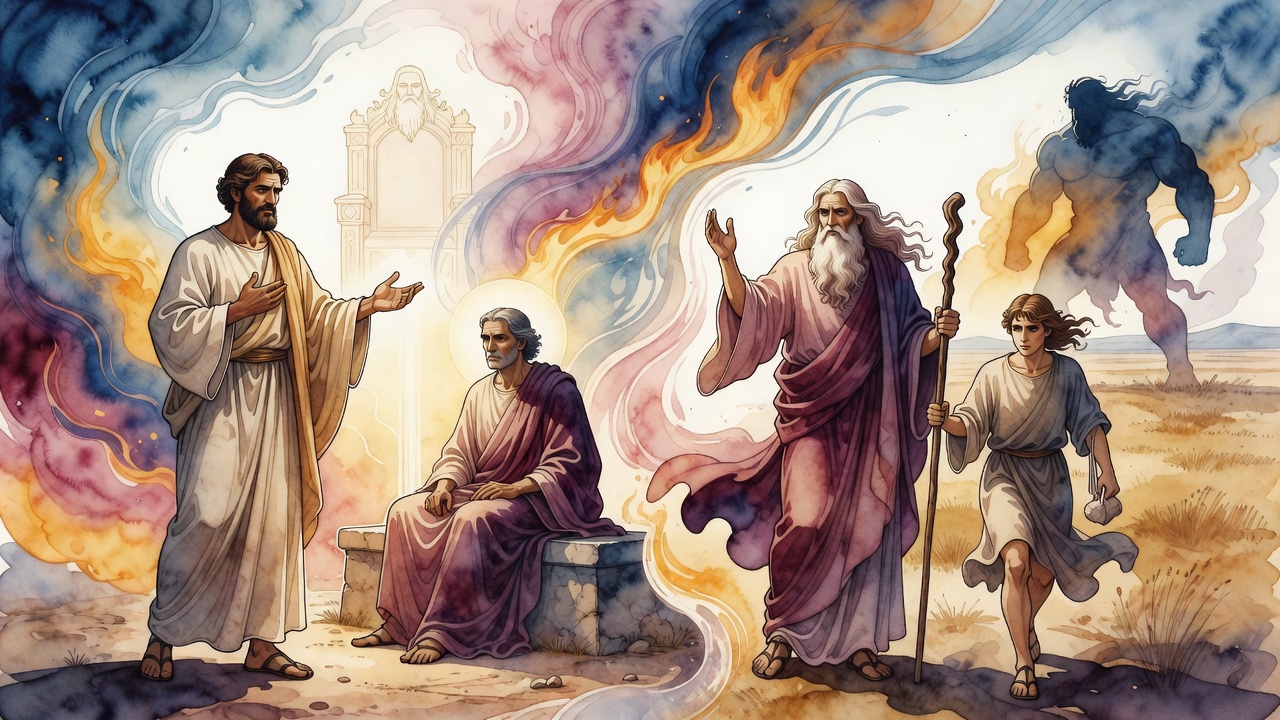
Long afterward, when he was king and had learned what he was capable of, David said something before the Holy One about his own beginning.
"Master of the universe, did my father Yishai intend to produce me? Was his intention not for his own pleasure? When they had finished, this one turned his face one way and that one turned her face the other way, and it was You who put every drop where it had to go."
He was not confessing on anyone's behalf. Rabbi Aha had already said that even the most pious of the pious cannot get through that act without one aspect of iniquity in it, so David was only refusing to be told he came from something cleaner than everyone else does. "For my father and my mother have forsaken me, but the Lord will take me" (Psalms 27:10).
Yishai had not intended him and had not sent him either. He sent bread and cheese and instructions to come back with news of his brothers. What came back was a head.
The Philistines were already running by then, and nobody stopped to pick anything up. The image on the breastplate stayed where it had landed, face down in the dirt of the valley, under the weight of the man who had carried it out every morning for forty days.
← All myths