5 min read

Judah's Surety Paid When David Struck Goliath

Judah offers his life for Benjamin before the viceroy. Generations later Jesse sends David to redeem that old surety against Goliath on the field.

Curated by Arthur · Told by Maggid ·
Table of Contents
  1. A Bond Spoken Before the Throne
  2. Forty Days of Blasphemy Bought Cheap
  3. Jesse Names the Hour
  4. Temple Between Two Borders
  5. What a Surety Sounds Like in a Throat
Judah's Surety Paid When David Struck Goliath Click for full size

A Bond Spoken Before the Throne

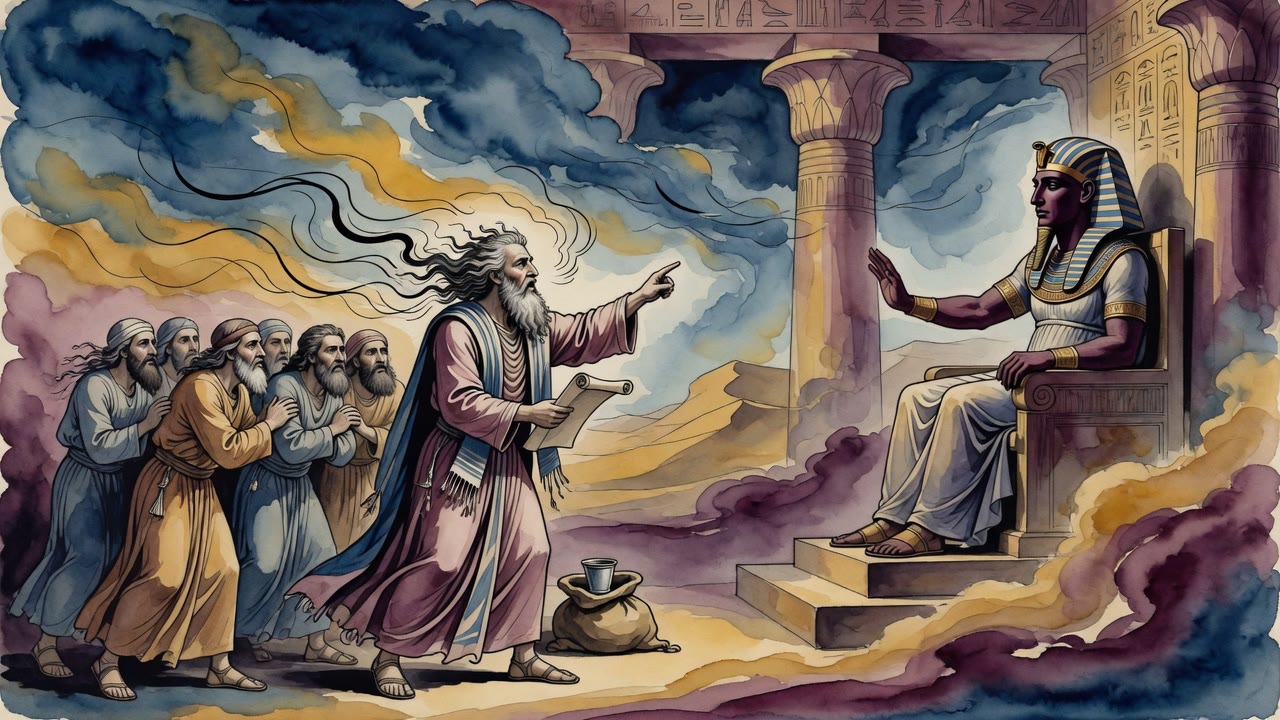
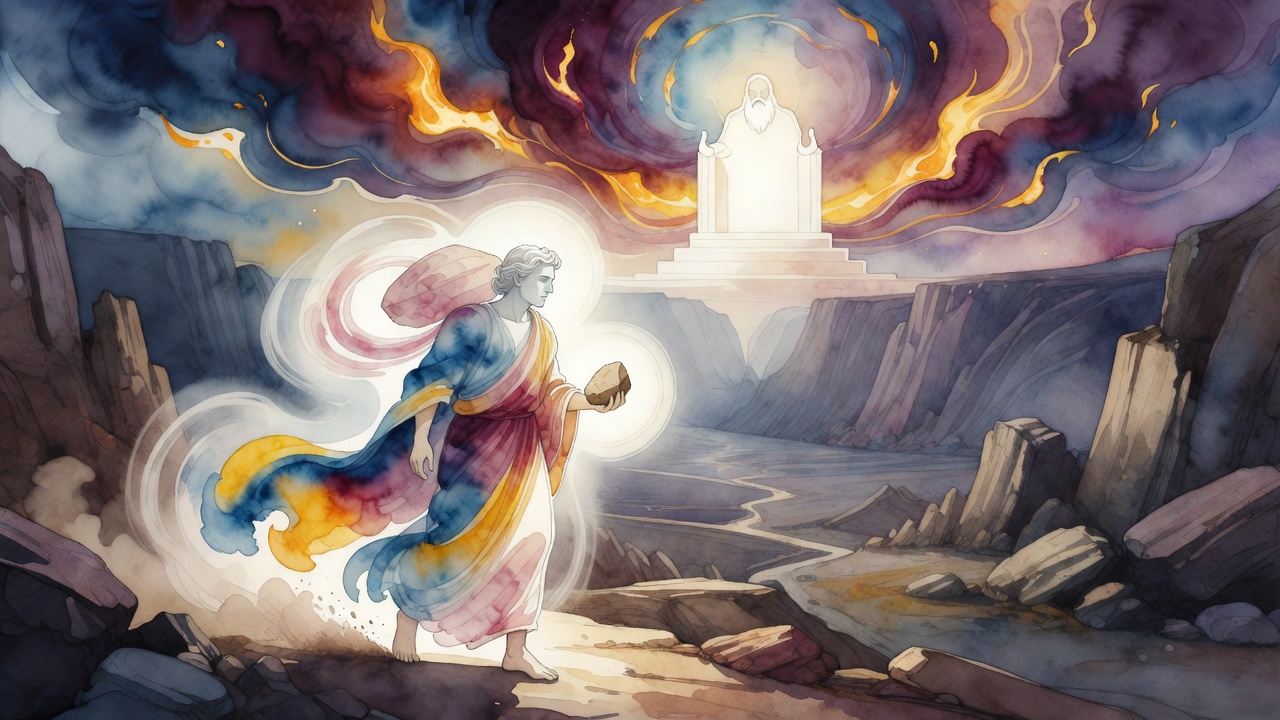
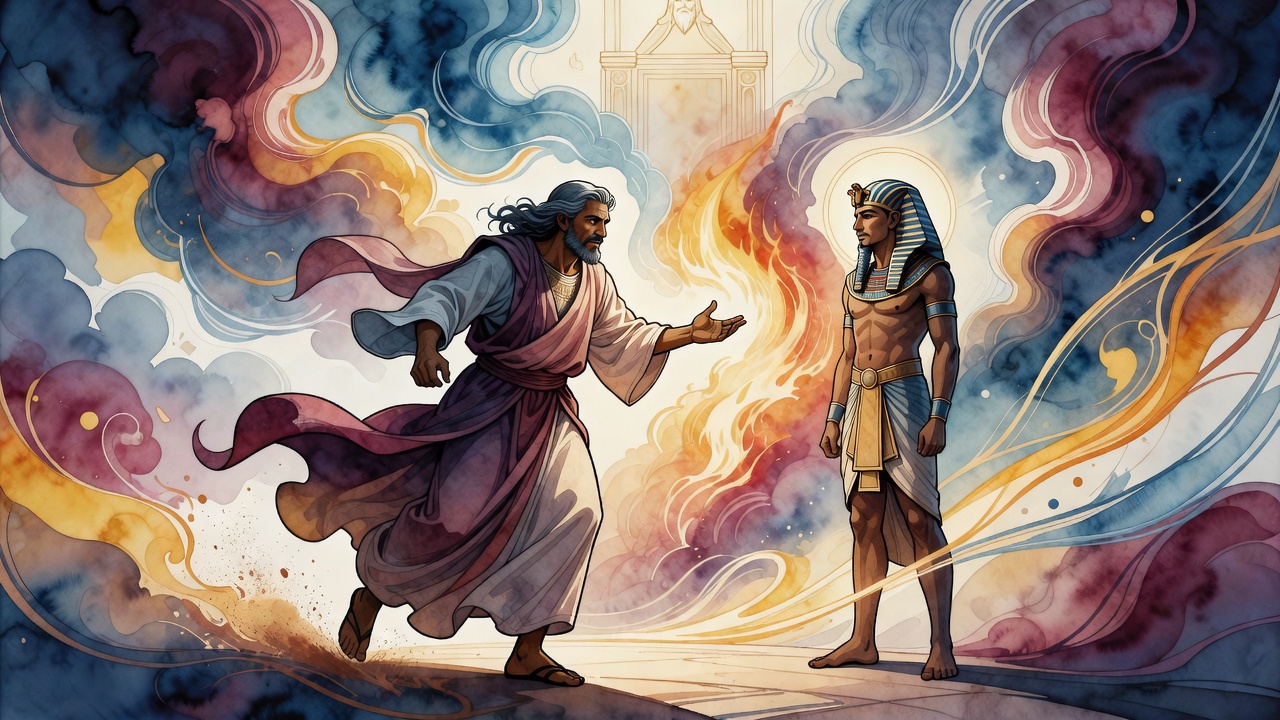
Judah stood before the viceroy of Egypt with his brothers' fear thick in the room. The silver cup had been found. Benjamin stood marked. Judah did not invent a new story. He named an old debt. "Your servant became surety for the lad" (Genesis 44:32). The words sealed a bond that would outlive the famine, the palace, and the man hearing them.

In that hour the lion and the wolf and the other beasts of Jacob's house finally fed as one. Isaiah had seen a wolf and a lamb grazing together. Egypt was the place. Benjamin, the ravenous wolf of his father's blessing, walked guarded by brothers who had once sold a different son of Rachel. The tribes became a wall around the boy on the road. Joseph, the ox of majesty, sat at a table with Judah the lion, and they ate as if prophecy had borrowed their chairs (Isaiah 11:6).

Forty Days of Blasphemy Bought Cheap

When was the pledge paid? Not in Egypt. The Maggid points to the valley where a Philistine walked for forty days, morning and evening, reviling the living God. One who blasphemes the Name is liable to death. Still Goliath lived long enough to shout twice a day.

Heaven was paying an older account first. His mother Orpah had once walked with her mother-in-law a short stretch of road, four miles in one counting, forty paces in another. For each step, a reward: four giants raised, or forty days granted. Heaven pays even the wicked what they are owed, then casts the payment back in their face. Goliath's mouth ran on credit earned by a woman's few miles of company. The credit expired on a field opposite the ranks of Israel.

Jesse Names the Hour

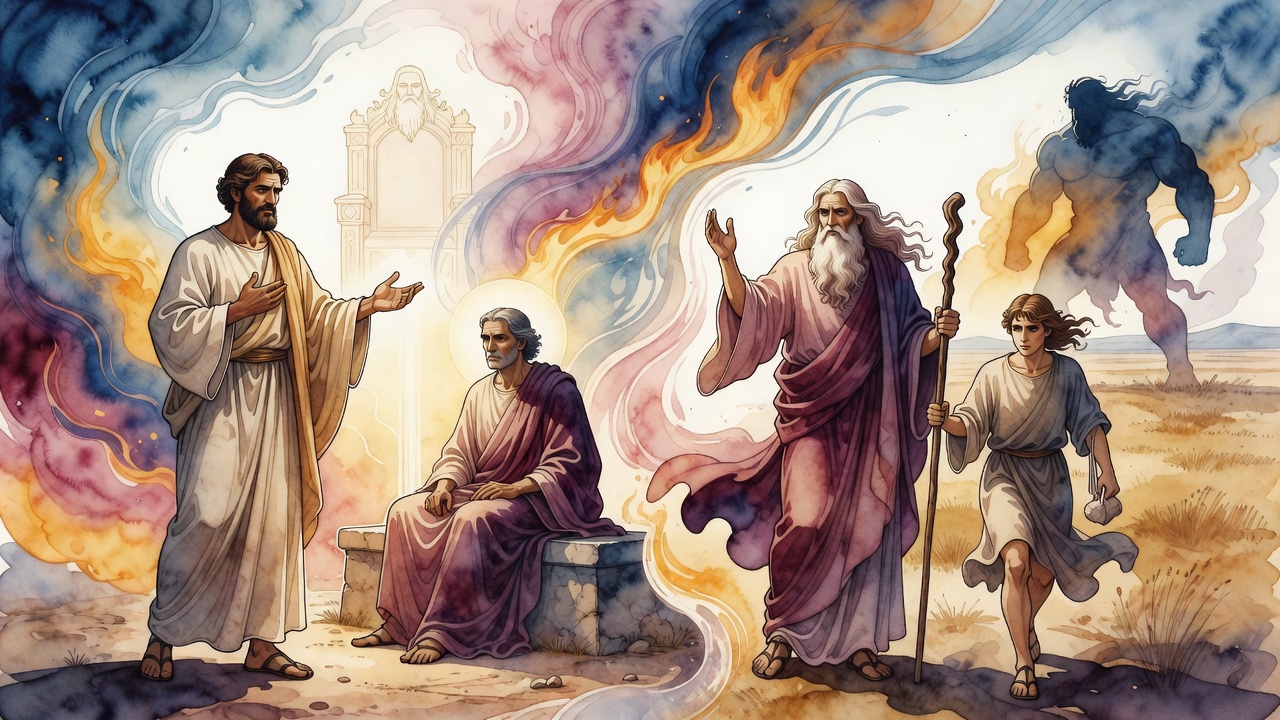
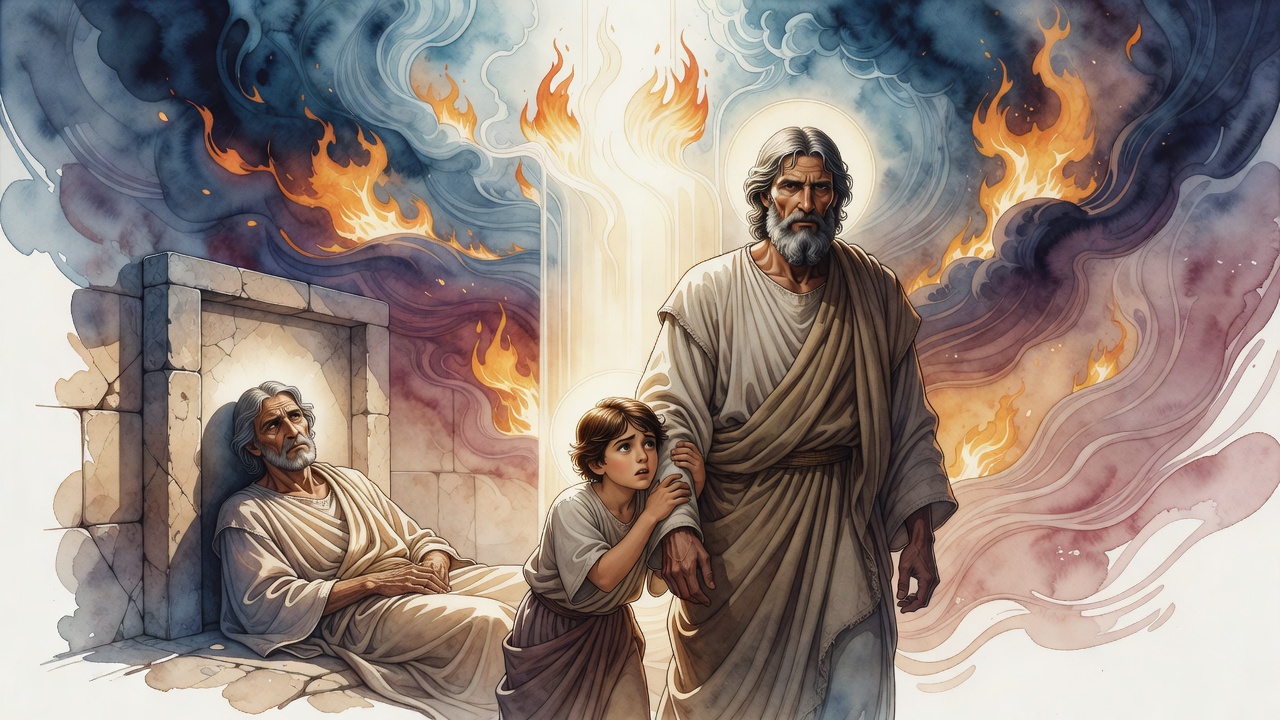
Jesse looked at his youngest and said the thing the house of Judah had been waiting to hear. The hour has come to fulfill your forefather's surety. Go. Take your brothers' pledge. "Their pledge" was nothing but Judah's old surety, still unpaid, still live, still waiting for a body willing to stand where Benjamin once stood.

David went down with a name heavier than iron. He struck the giant. The bond of Judah discharged at last in a single thrown stone and a fallen blasphemer. The boy who had watched sheep finished the work the lion had begun in Egypt with words alone. Surety is not a metaphor when blood is the collateral. David paid in risk what Judah had promised in speech.

Temple Between Two Borders

Then the Holy One answered the symmetry. As you gave your life for Saul of Benjamin, as Judah once offered himself for Benjamin, so I plant My Temple between your two borders. Morning sacrifice and evening spoil. When the tribes go into exile, Judah and Benjamin will not go as the others go, for these two sanctified the Name in the long story that began at a table in Egypt and ended with a giant's head in a shepherd's hands.

Wolf and lamb had already sat together once. Lion and ox had already shared straw. The later war only collected interest on a debt spoken when a brother refused to let another boy of Rachel disappear into a foreign prison. Judah's mouth in Egypt wrote a check. David's arm in the valley cashed it.

What a Surety Sounds Like in a Throat

Judah did not speak abstract law. He spoke a body offered in place of another body. Let the lad go up with his brothers. I will bear the sin forever. That sentence is heavy enough to bend a spine. Generations later, when Goliath's shadow fell across the ranks, the same sentence still had unpaid weight. A house that once refused to lose Benjamin would have to risk a son again for the Name that the giant spit on twice a day.

David did not know the Egyptian courtroom. He knew sheep, a harp, and a God who had already delivered him from lion and bear. Jesse's charge connected the rooms. Take the pledge. The old surety is due. When the stone left the sling, it carried more than a shepherd's aim. It carried Judah's mouth from a foreign house, finally landing on a forehead that had been allowed forty days too many.

Orpah's short walk had bought the giant his season of noise. Heaven is exact about small kindnesses and exact about collecting when the noise is done. Wolf and lamb had already practiced peace at Joseph's table. Lion and ox had already shared a meal. The valley only cashed a check written when Judah refused to let another son of Rachel vanish into a stranger's power. Temple stones would later sit between Judah and Benjamin because both lines had learned what it costs to stand in someone else's place.


← All myths
From the tradition

Sources

2 sources

The texts behind this telling. Some cards carry a translation of the source; others are our own retelling of it, and each card says which. Every card links out to the original.

Midrash Tanchuma Buber, Vayigash 8:2Midrash Tanchuma Buber, Vayigash

Translation of the source text.Midrash Tanchuma (Buber), Public Domain, on Sefaria · CC-BY-SA

"And he said: Pray, my lord" (Genesis 44:18), "for your servant became surety for the lad." When did Judah discharge his surety? In the days of Goliath. Since Israel was in distress at that hour, what is written? "And the Philistine drew near morning and evening" (I Samuel 17:16), reviling and blaspheming. Saul began to send out a herald: "And it shall be that the man who strikes him down, the king will enrich him" (I Samuel 17:25). And you find that everyone who reviles is liable to death, as it is said: "And he who blasphemes the name of the LORD shall surely be put to death" (Leviticus 24:16). And that wicked one was reviling for forty days (I Samuel 17:16). Moses said: "And He repays those who hate Him to their face, to destroy them" (Deuteronomy 7:10), a wicked one who performs a righteous deed, the Holy One, blessed be He, casts it back in his face in this world, in order to destroy him in the world to come; but for the righteous He sets aside their righteous deeds for the world to come.

What did this wicked one do that he was reviling for forty days? Rabbi Yitzchak and Rabbi Levi. Rabbi Levi said: Because Orpah his mother walked four miles with her mother-in-law, [the Holy One, blessed be He, rewarded her,] and the Holy One, blessed be He, raised up from her four mighty men, as it is said: "These four were born to the giant in Gath" (II Samuel 21:22). Rabbi Yitzchak said: She walked forty paces with her; therefore the Holy One, blessed be He, gave her her reward and gave her Goliath, and he was reviling before the Holy One, blessed be He, for forty days, as it is said: "And he presented himself forty days" (I Samuel 17:16).

Jesse said to David his son: Behold, the hour has come to fulfill that surety of your forefather, who became surety for Benjamin from the hand of his father, as it is said: "I myself will be surety for him" (Genesis 43:9); rather, go and bring him out from his surety, as it is said: "And you shall visit your brothers for welfare, and take their pledge" (I Samuel 17:18), and "their pledge" (arubatam) is nothing but a surety (arevut). What did David do? He went and fulfilled the surety, and killed Goliath. The Holy One, blessed be He, said to him: By your life, just as you gave your life for Saul, who is from the tribe of Benjamin, just as Judah your forefather did for Benjamin, as it is said: "And now, let your servant remain in place of the lad as a slave to my lord" (Genesis 44:33), so I place the Temple within your border and within the border of Benjamin.

And from where do we know that the Temple was in the portion of Benjamin and in the portion of Judah? For one verse says: "Benjamin is a wolf that tears; in the morning he devours the prey" (Genesis 49:27), this is the morning daily offering; "and at evening he divides the spoil" (Genesis 49:27), this is the twilight daily offering; and another verse says: "Beautiful in elevation, the joy of all the earth" (Psalms 48:3). And not only that, but by your life, all the tribes will go into exile, yet the tribe of Judah and Benjamin will not go into exile with them. Why? Because these two tribes believed in Me and sanctified My name at the sea with Moses.

Rabbi Abba bar Kahana said in the name of Rabbi Levi: When the sea was split for Israel, there was mire in it, and the tribe of Reuben said to the tribe of Simeon: From mire you came forth and to mire you go, as it is said: "Ephraim has surrounded Me with falsehood, and the house of Israel with deceit" (Hosea 12:1). What did the tribe of Judah and Benjamin do? They sanctified the name of the Holy One, blessed be He, as it is said: "There is Benjamin, the youngest, ruling them, the princes of Judah their company" (Psalms 68:28).

Full source
Midrash Tanchuma Buber, Vayigash 9:2Midrash Tanchuma Buber, Vayigash

Translation of the source text.Midrash Tanchuma (Buber), Public Domain, on Sefaria · CC-BY-SA

Another interpretation (of Isaiah 65:25): "The wolf and the lamb shall feed together." The wolf, this is Benjamin, as it is said (Genesis 49:27): "Benjamin is a ravenous wolf." And the lamb, these are the tribes, as it is said (Jeremiah 50:17): "Israel is a scattered sheep, etc." "They shall feed together", when? When Benjamin went down with them. For Jacob had said (Genesis 42:38): "My son shall not go down with you." Once the time arrived and he went down with them, they placed him in their midst and guarded him. And so Joseph (Genesis 43:29): "lifted his eyes and saw his brother Benjamin, his mother's son, etc." "The lion", this is Judah, as it is said (Genesis 49:9): "Judah is a lion's whelp." "Like the ox", this is Joseph, as it is said (Deuteronomy 33:17): "His firstling bullock, majesty is his." "Shall eat straw", that they were found eating as one, as it is said (Genesis 43:33): "And they sat before him, the firstborn according to his birthright." Therefore, "and Judah he sent before him" (Genesis 46:28).

Full source